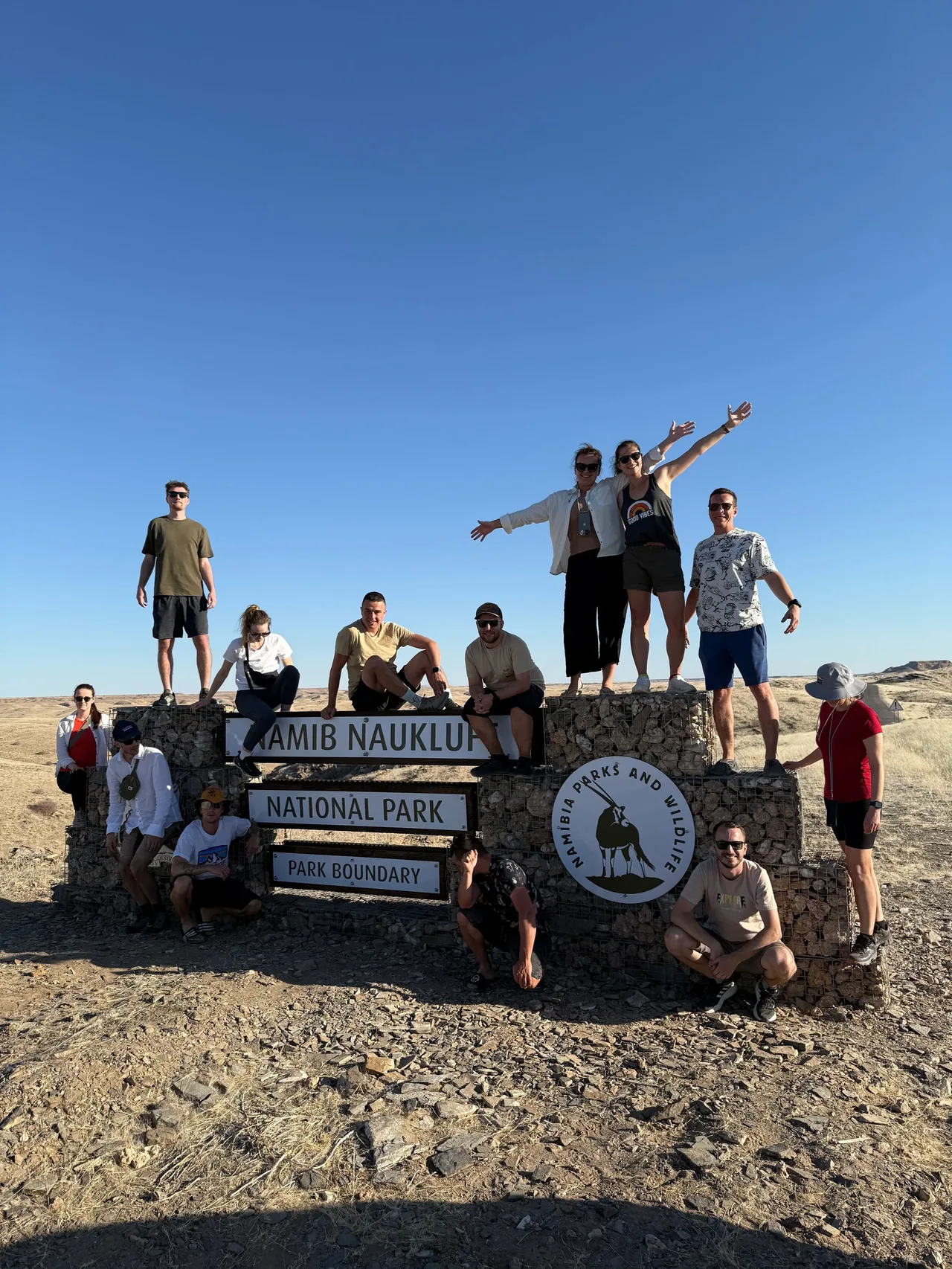
Namibia
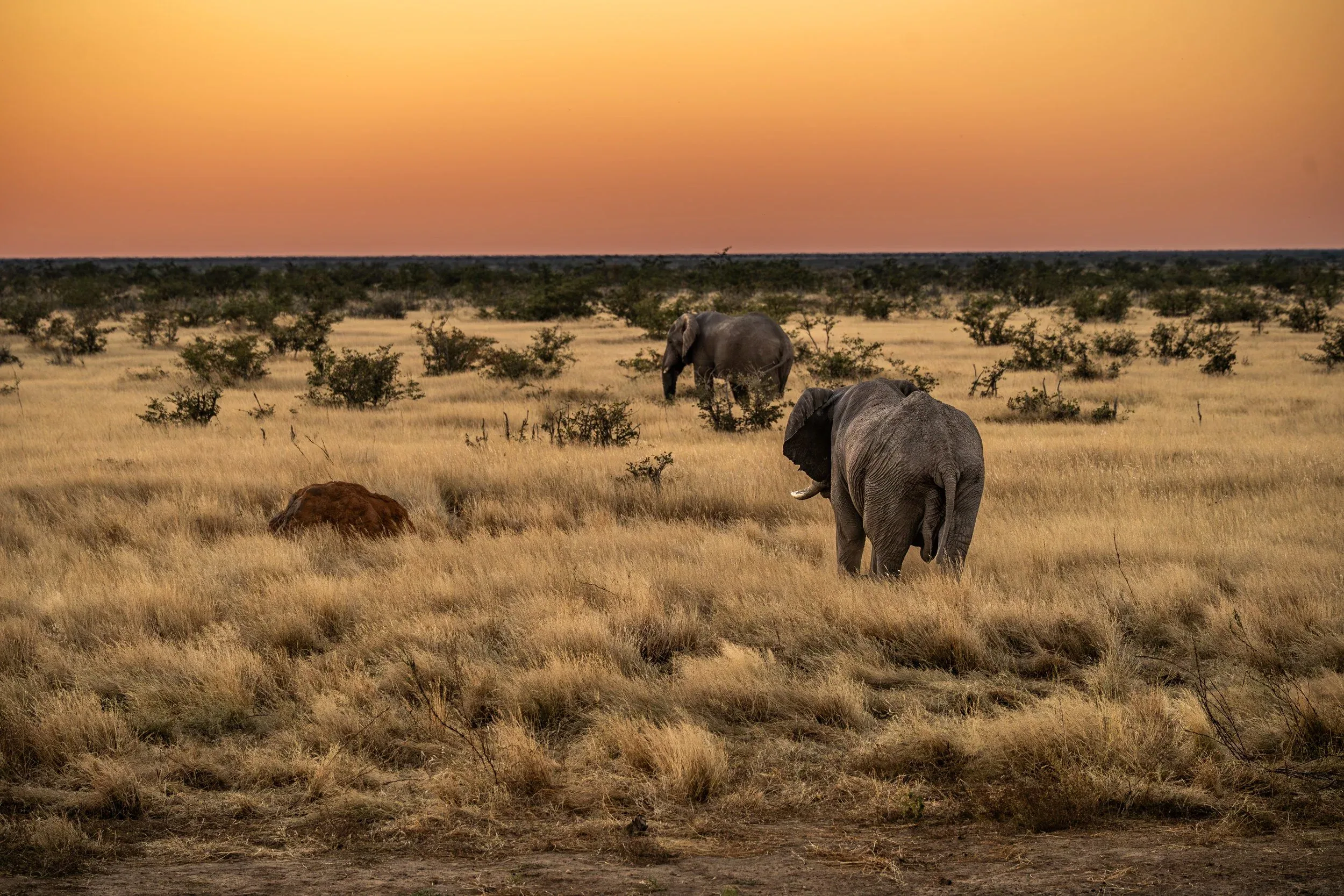
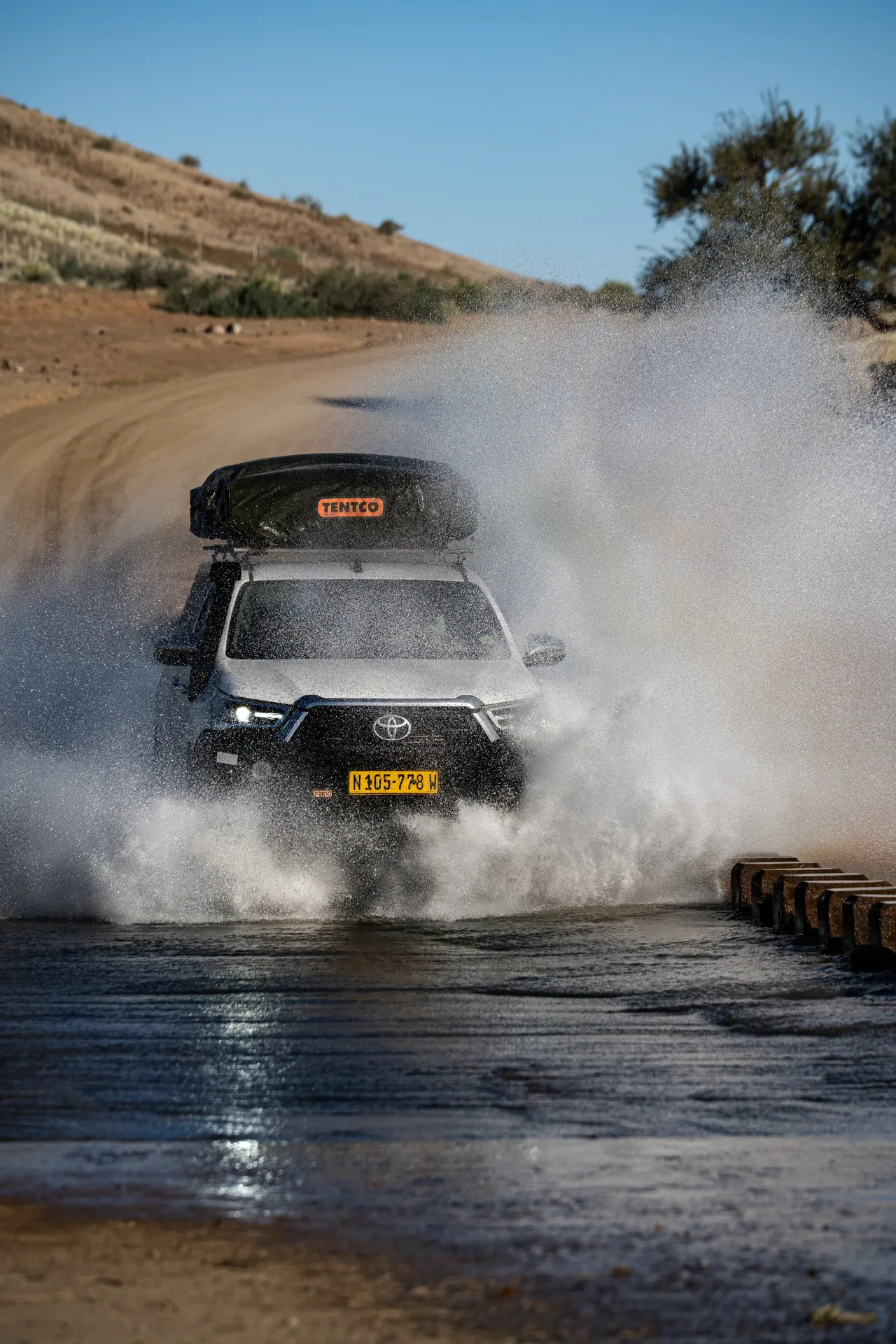
What’s it like to drive a 4x4 Toyota Hilux through the landscapes of Namibia and sleep in rooftop tents beneath one of the darkest skies on Earth?
Scroll through the photos and get a glimpse.
Day 1
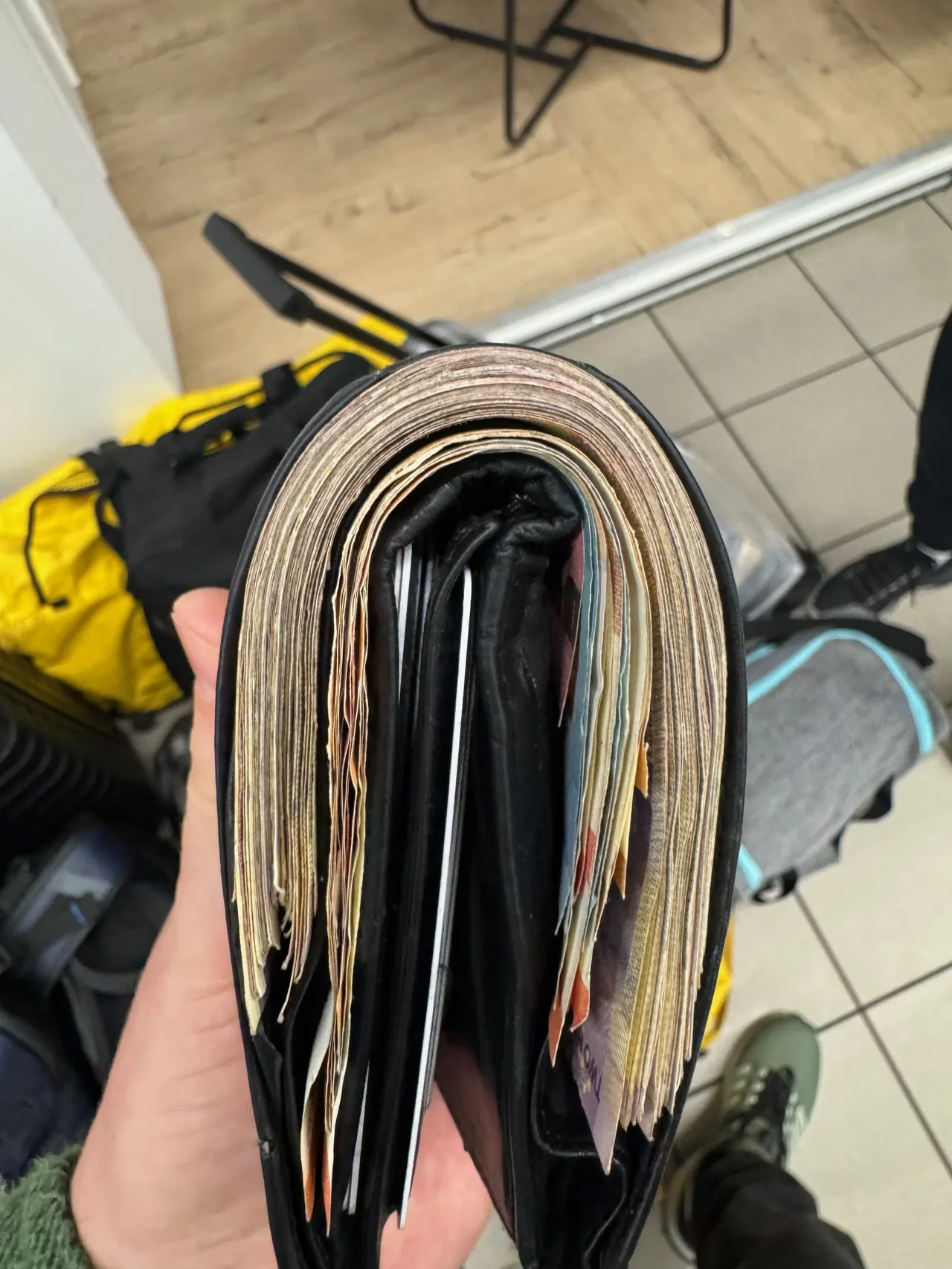
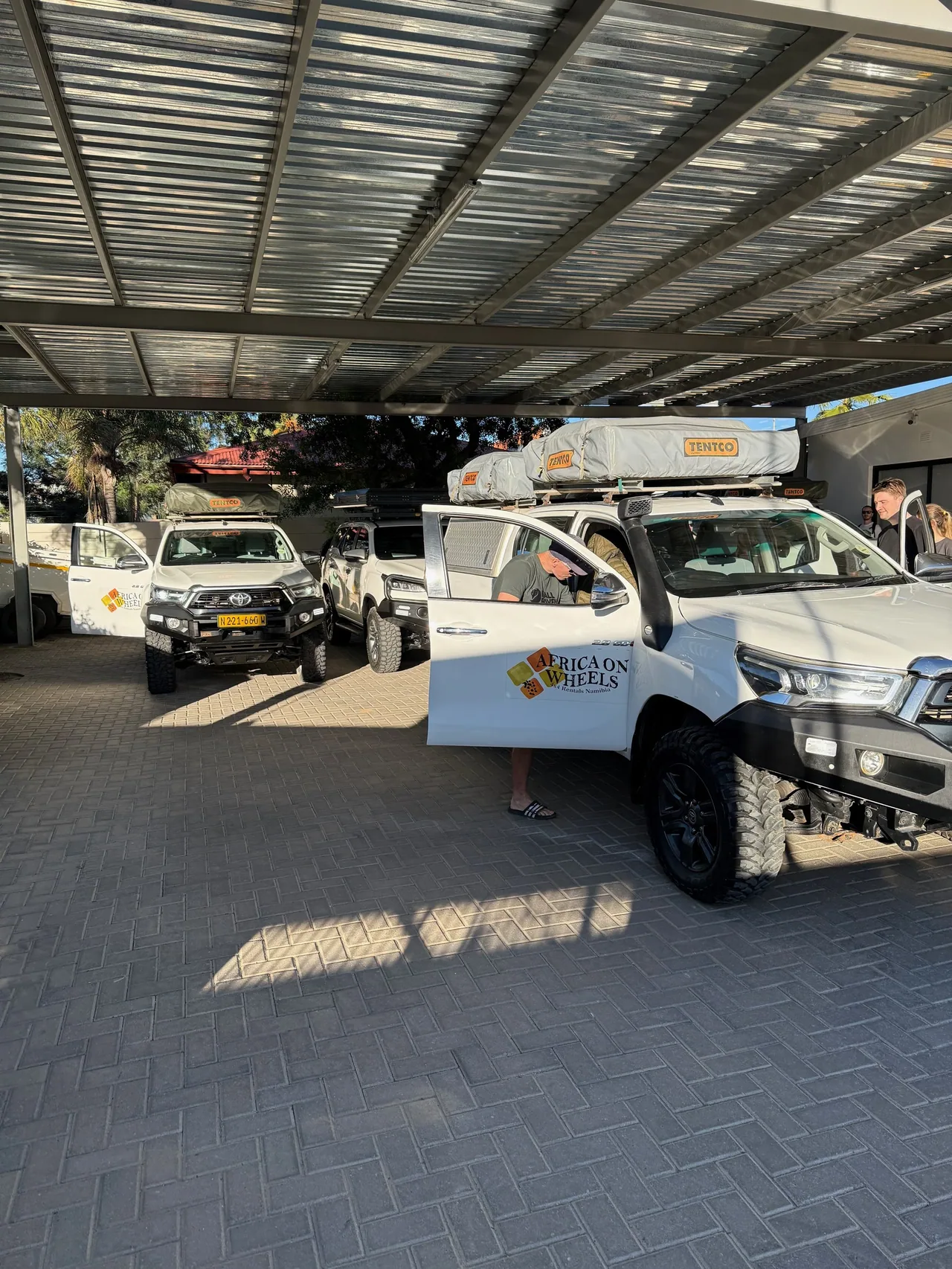
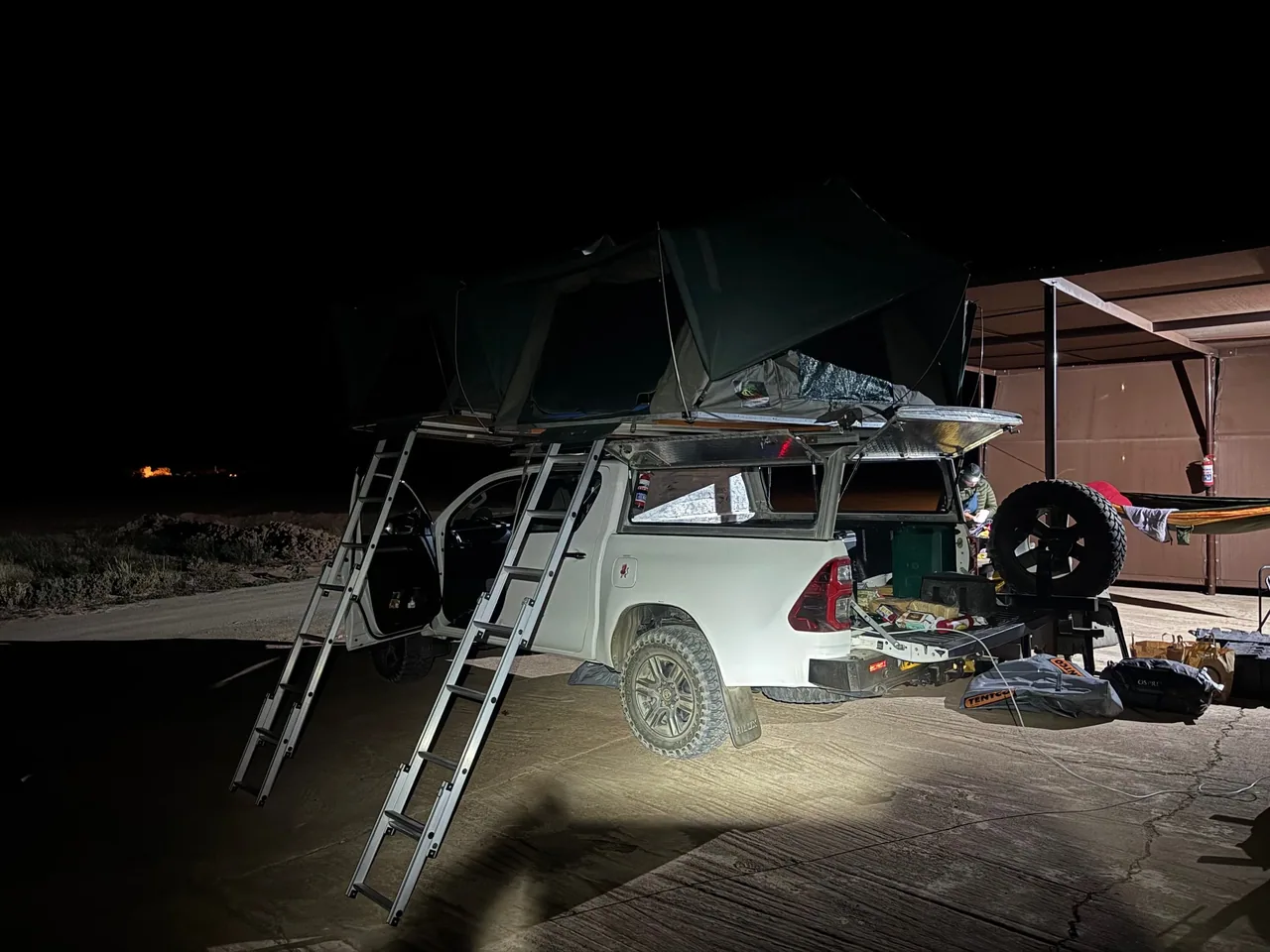
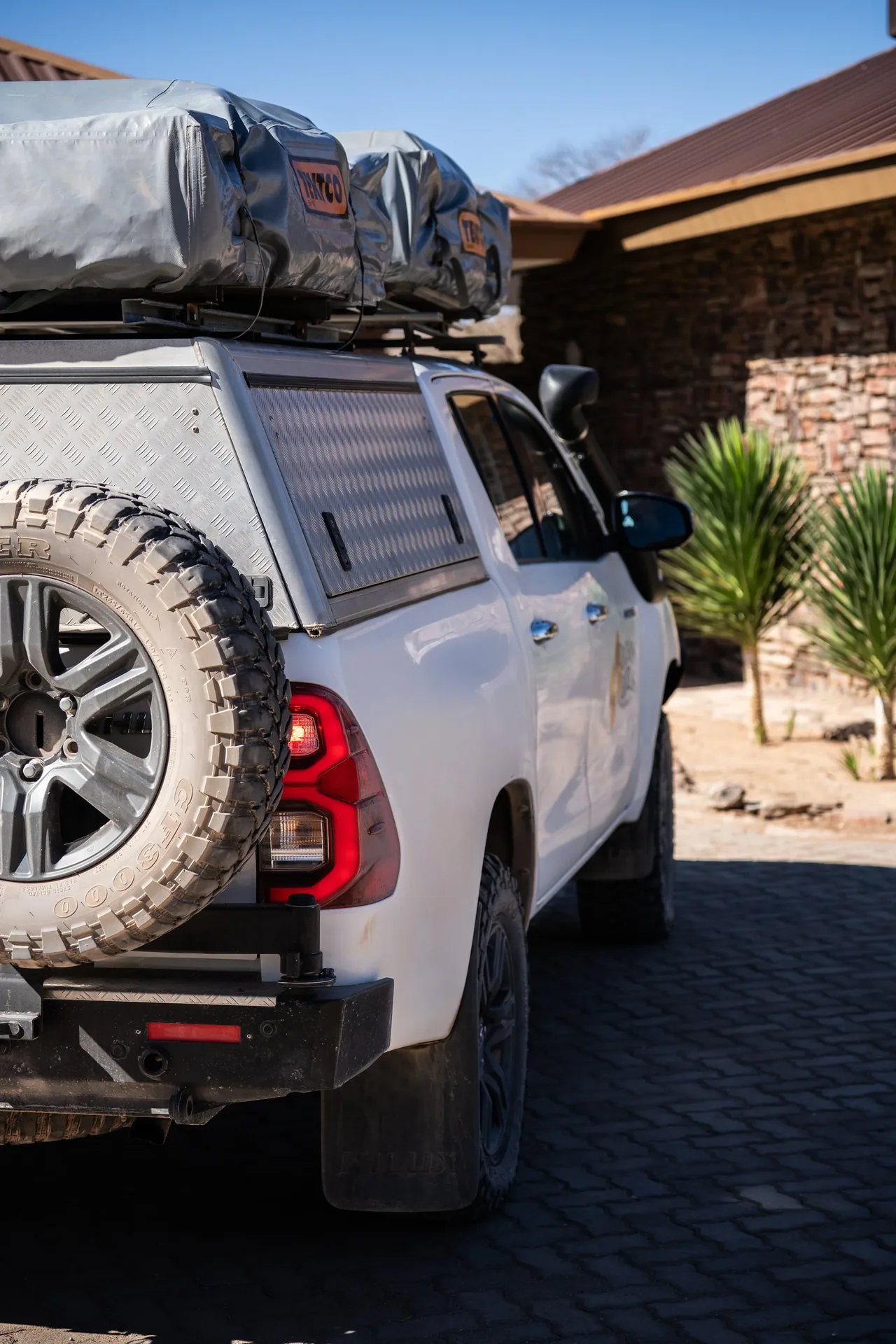
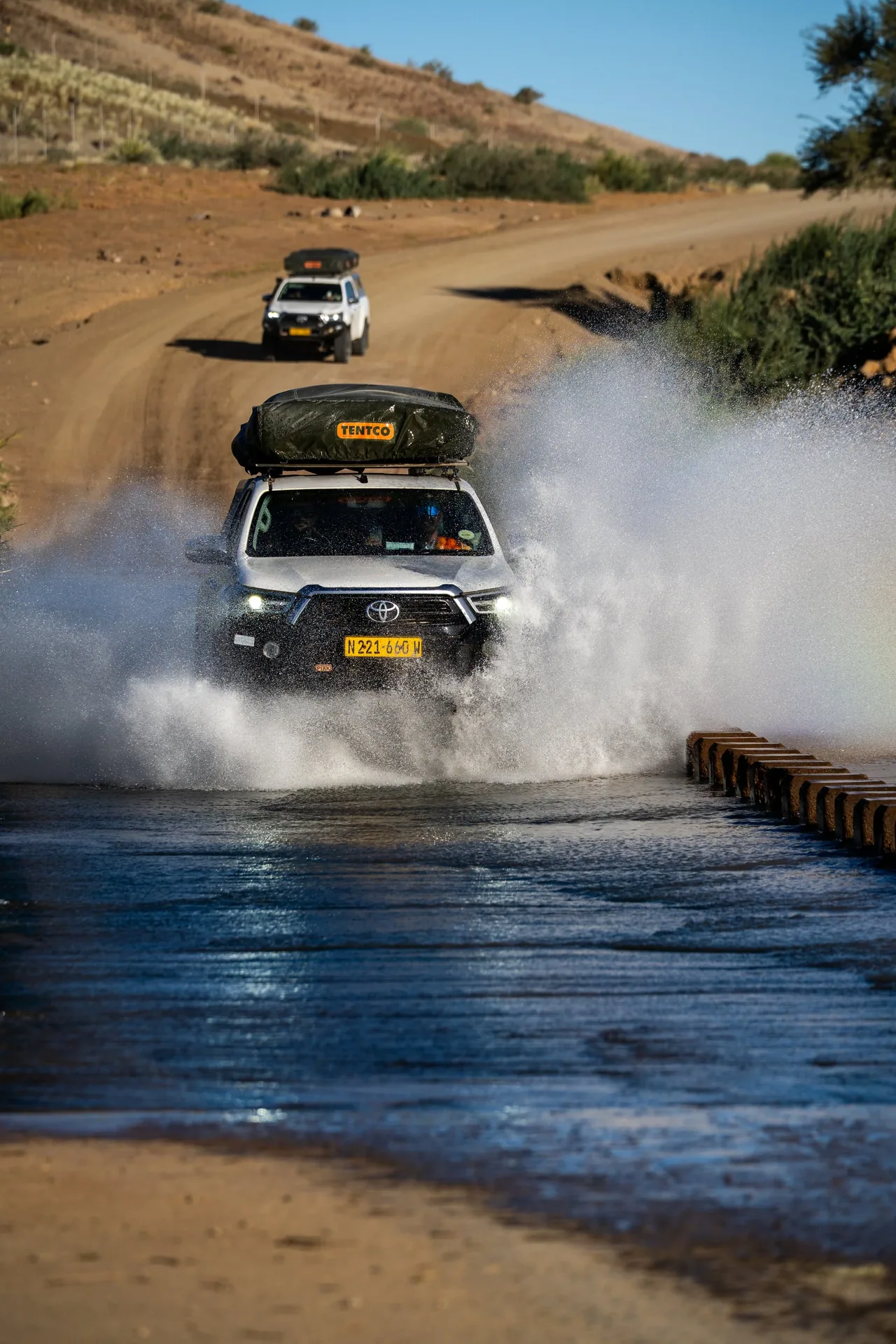
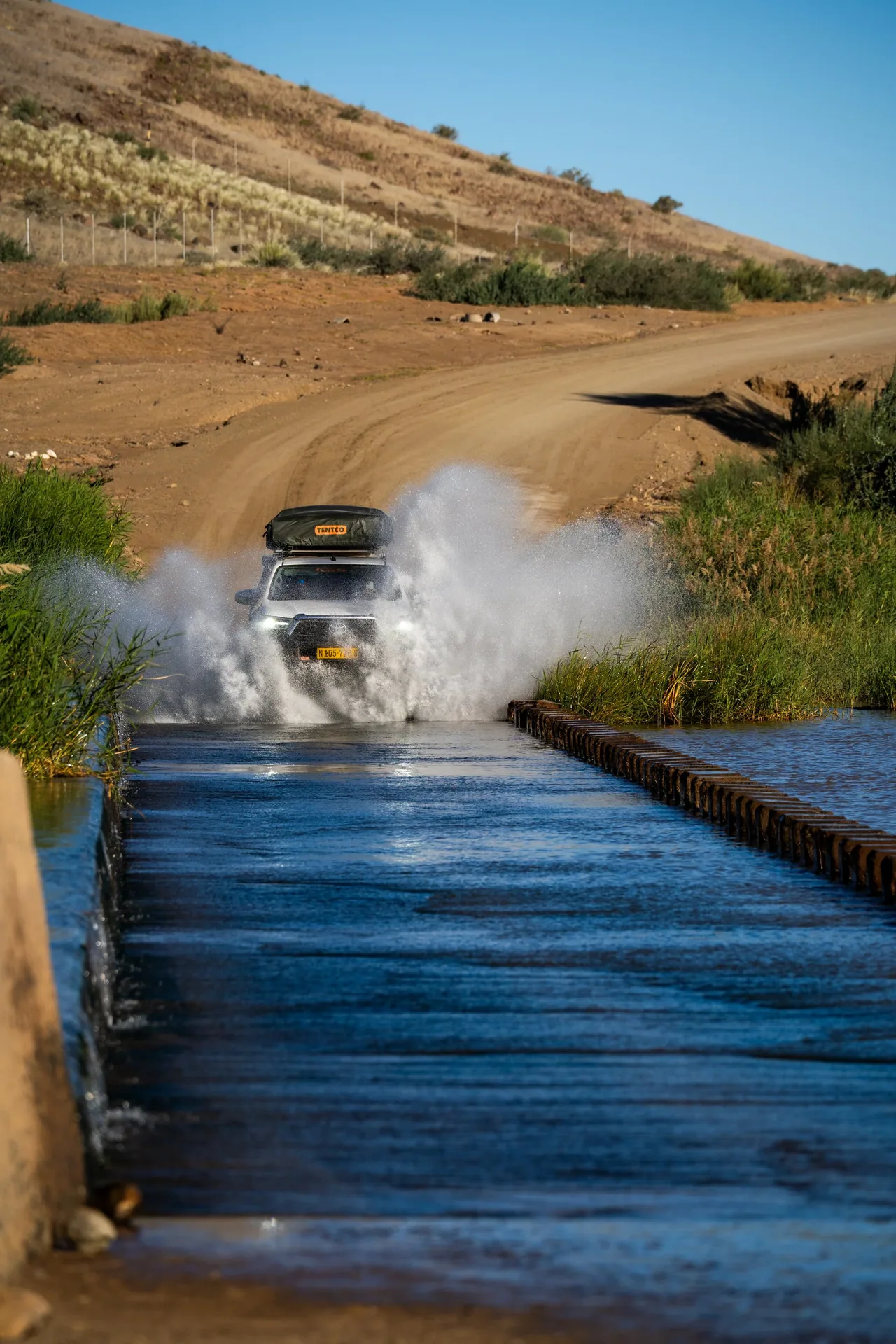
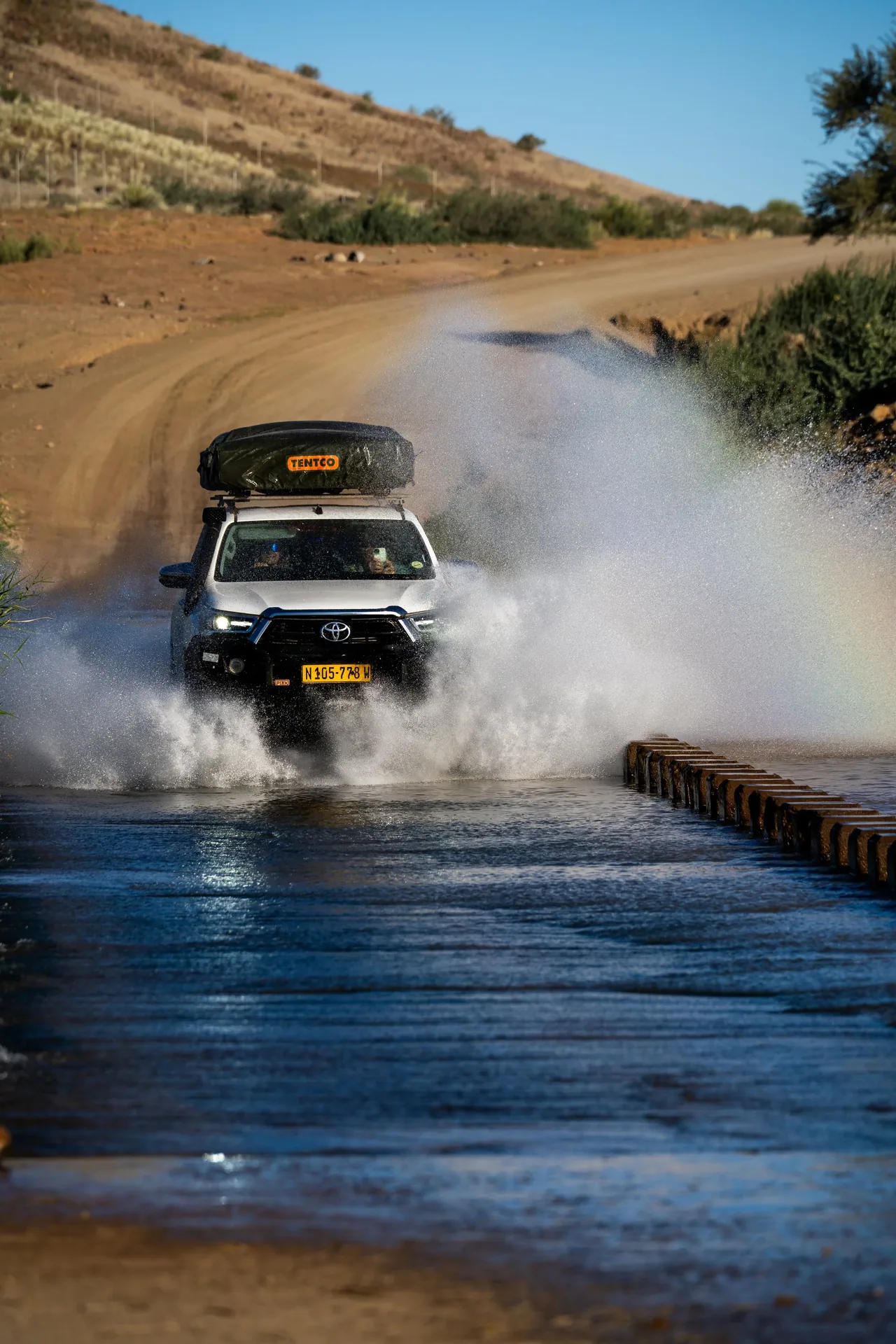
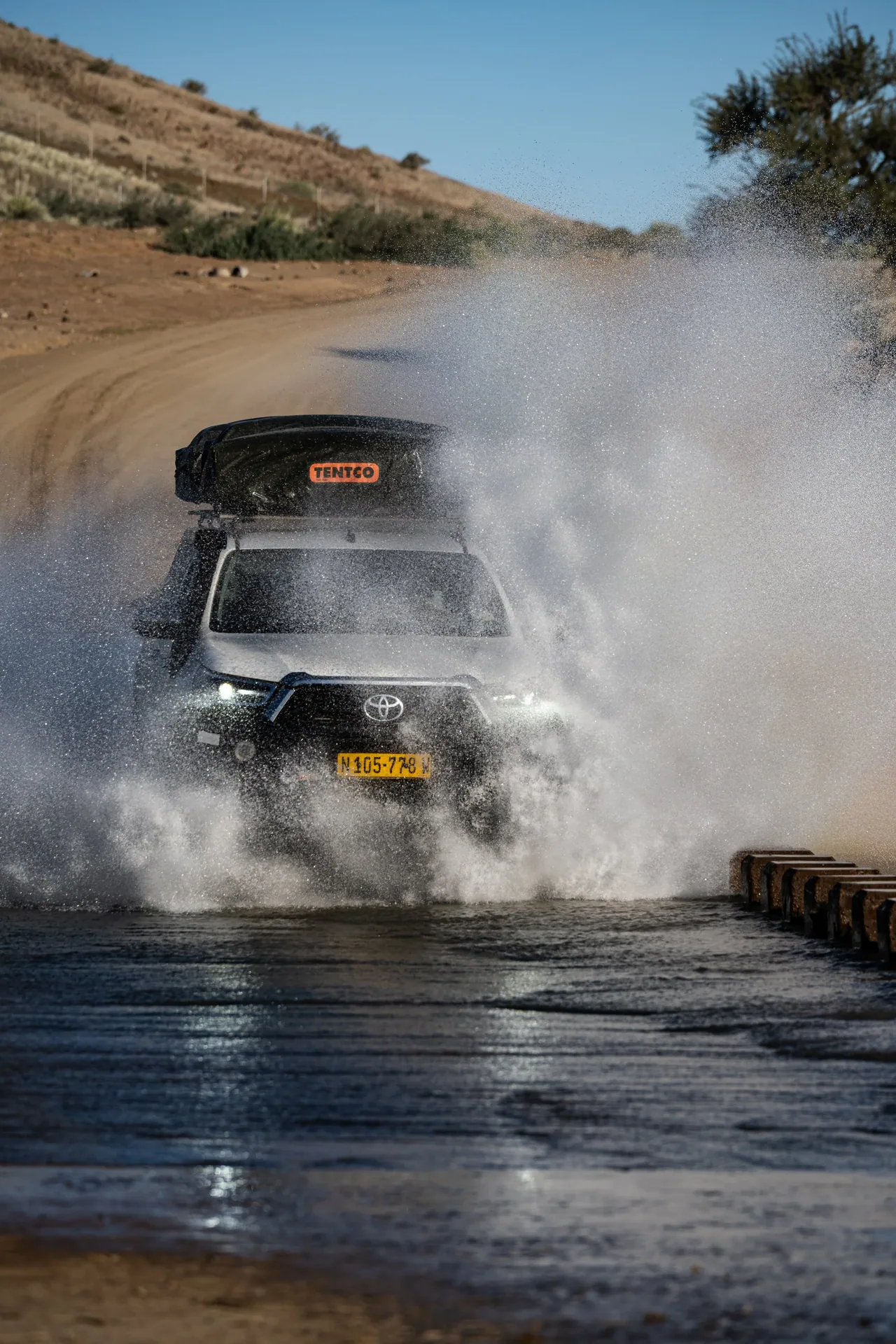
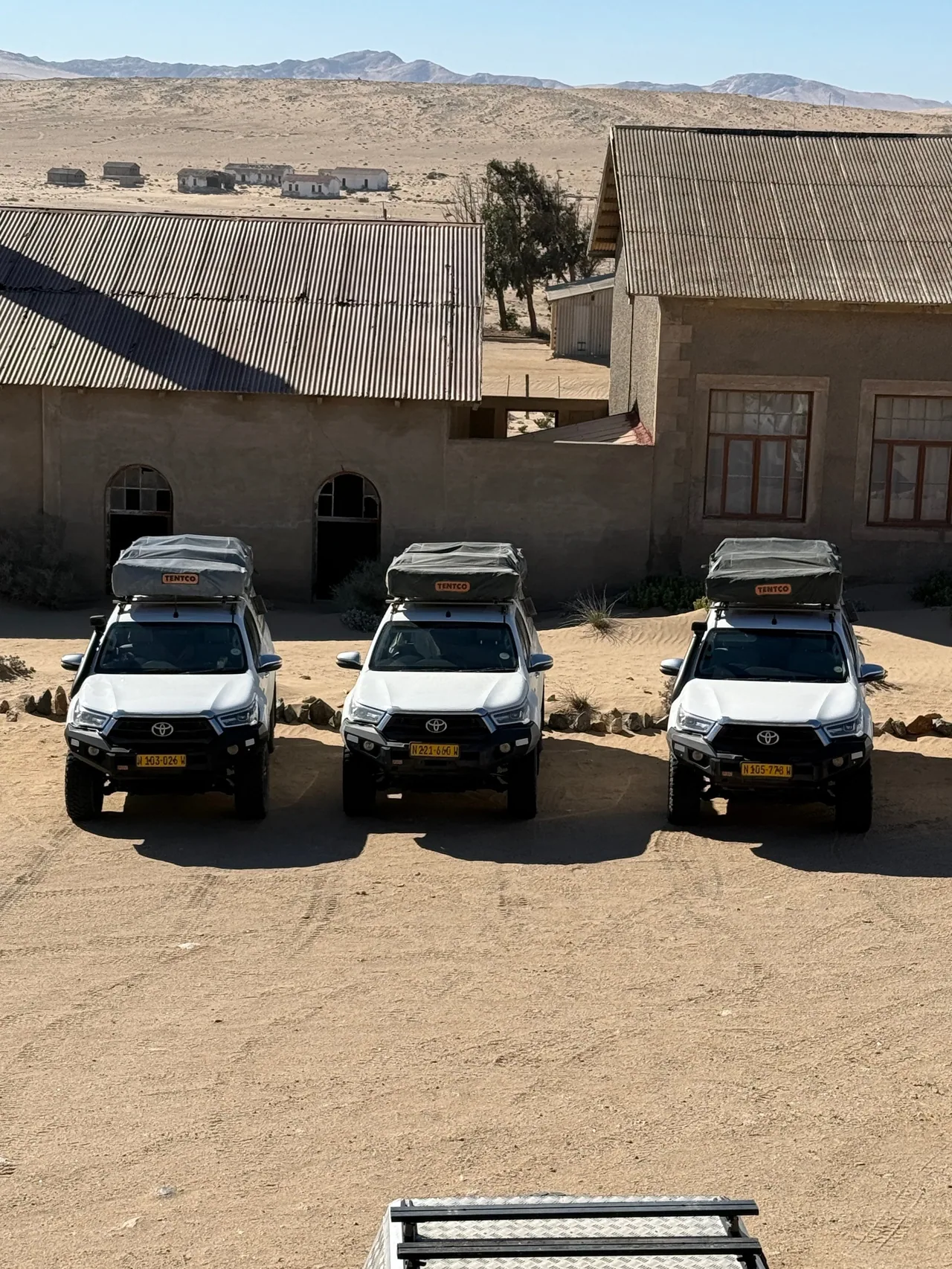
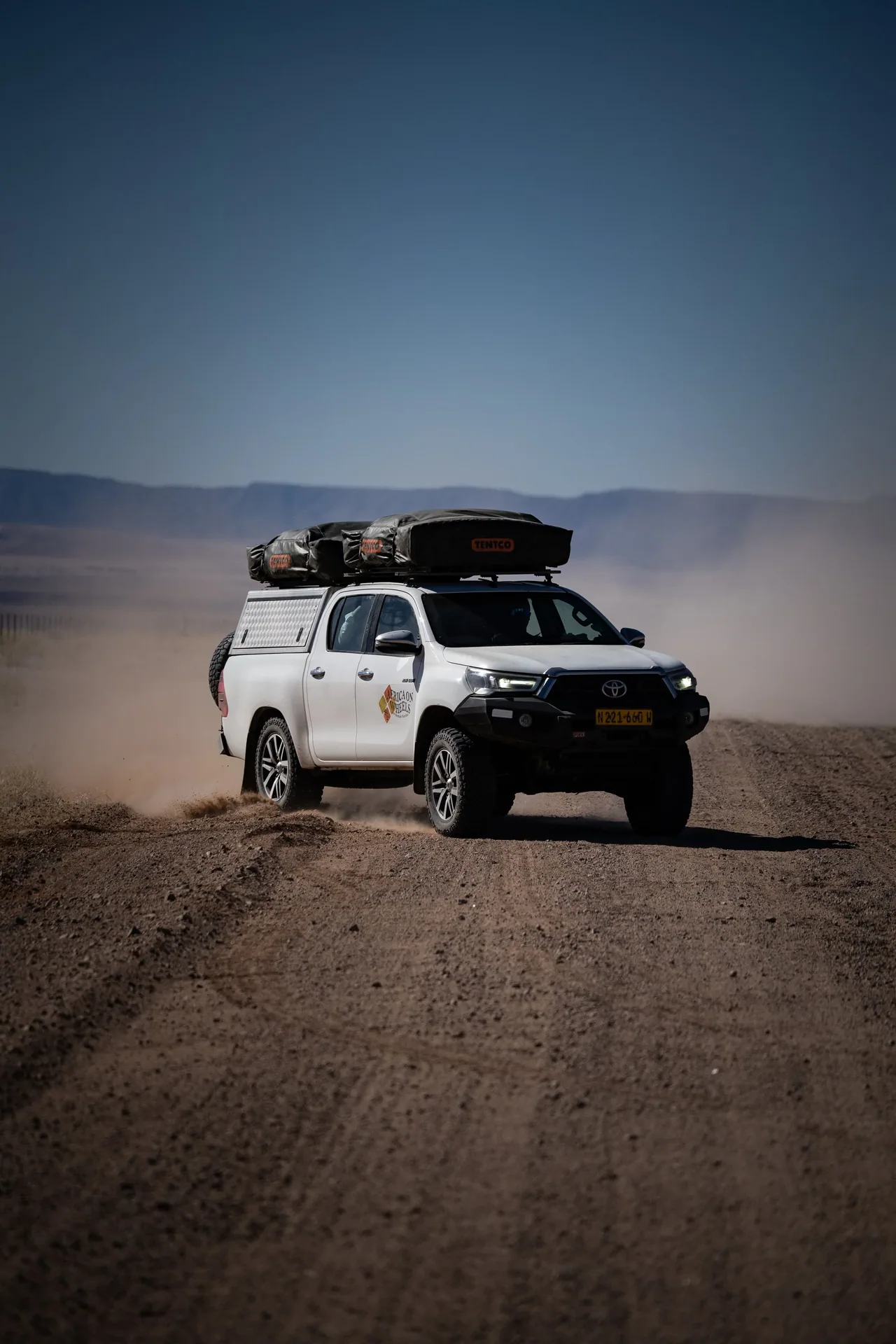
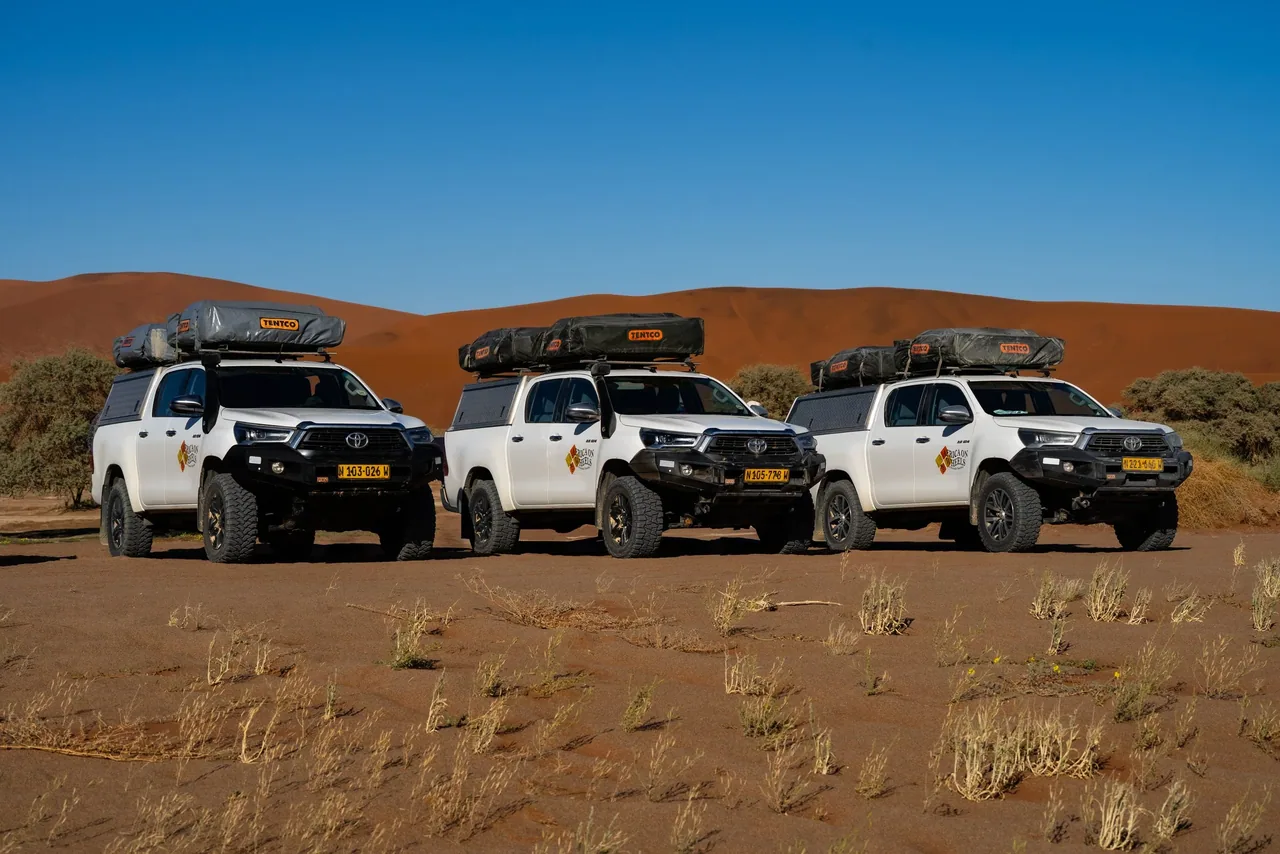
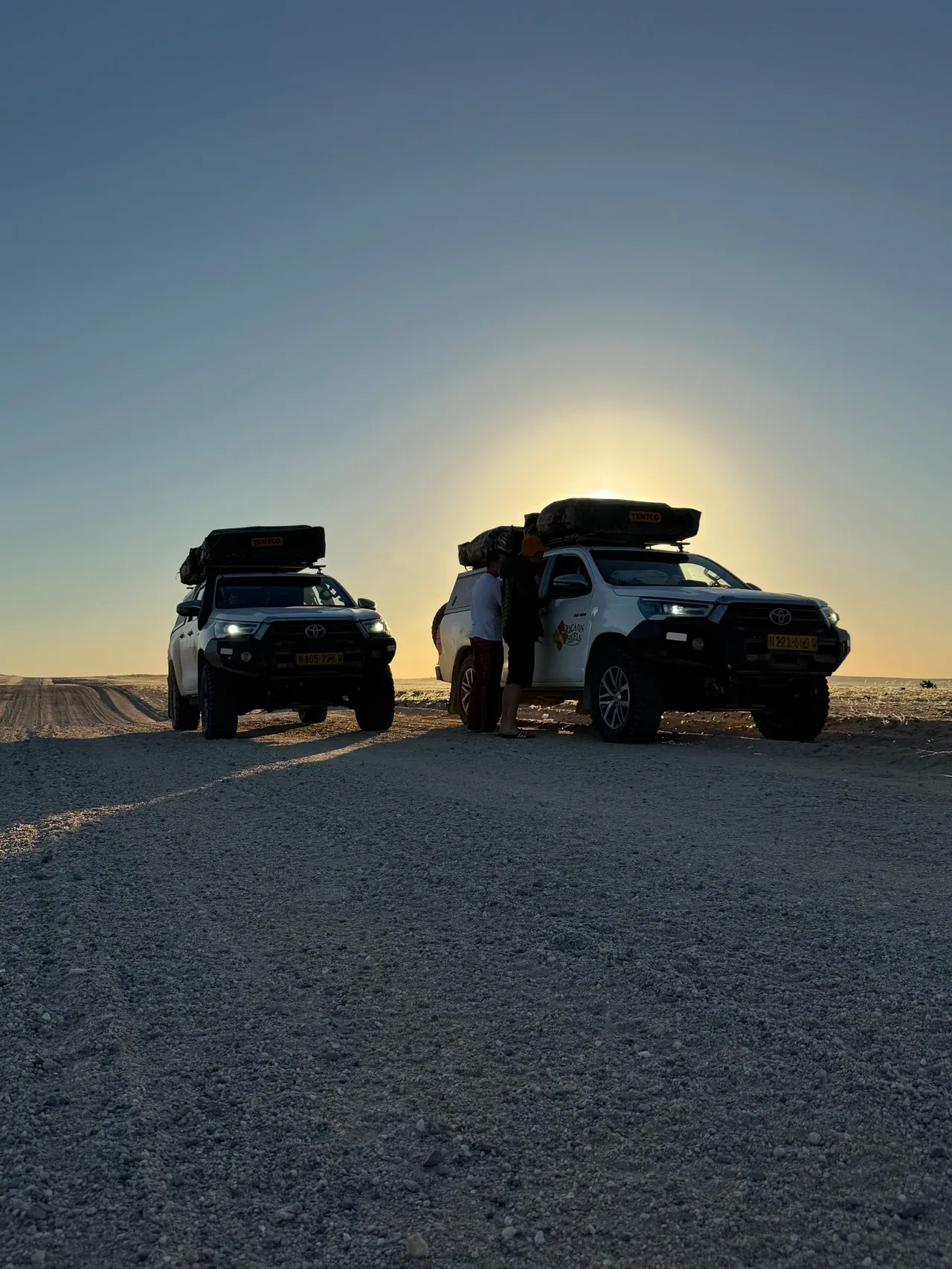
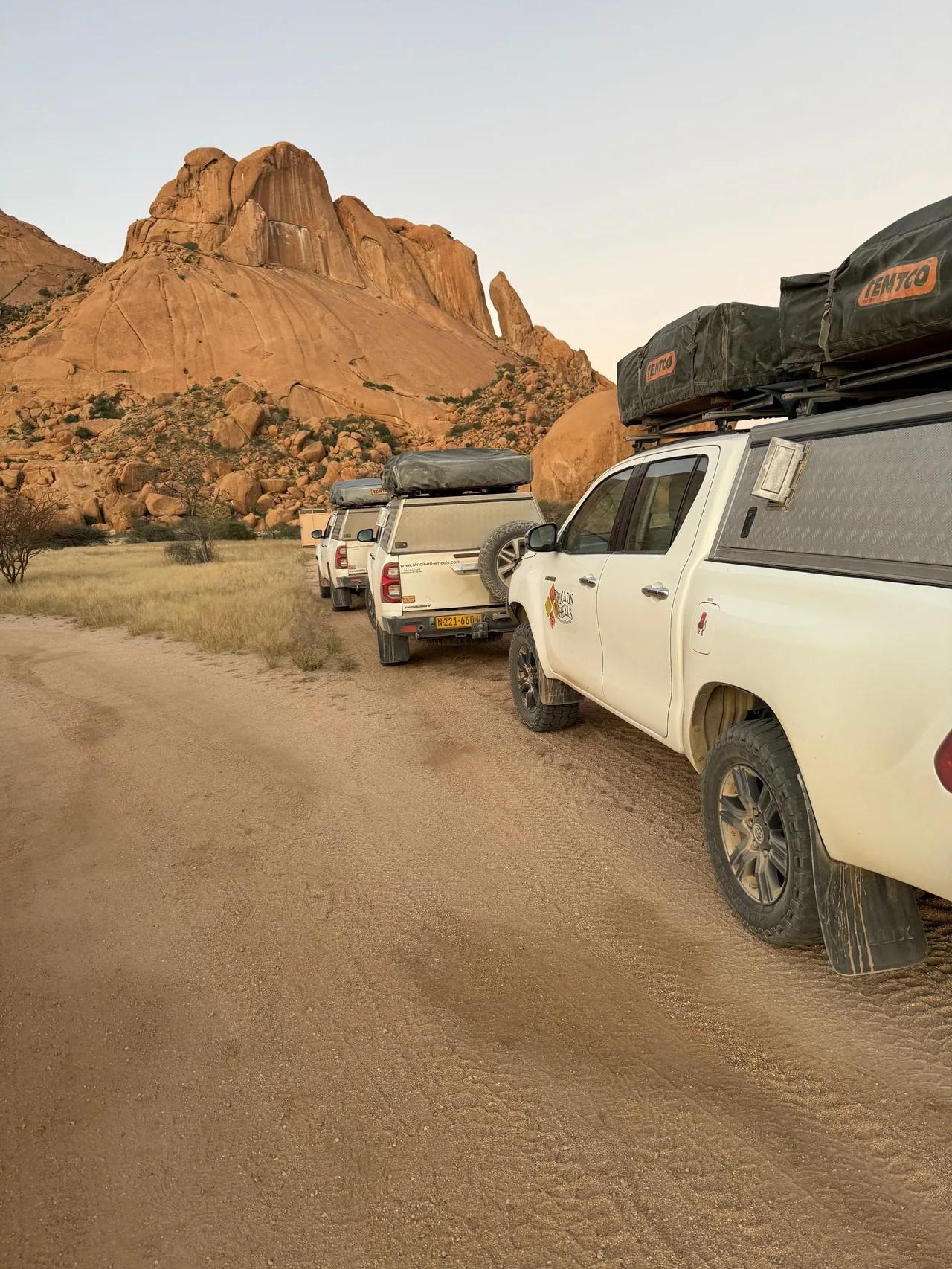
After landing in Windhoek, Namibia, we buy local SIM cards, exchange euros for Namibian dollars and hop into a pre-arranged shuttle to the city. There, we pick up our three Toyota Hilux double cabs — each with two rooftop tents and full camping gear: chairs, tables, gas stoves, fire grates, dishes and large water tanks.
Before sunset we quickly stock up on food for the next two or three days and head south toward our first campsite, Die Skuur Campsite, not far from the town of Mariental. That’s where we spend our first night.
Day 2
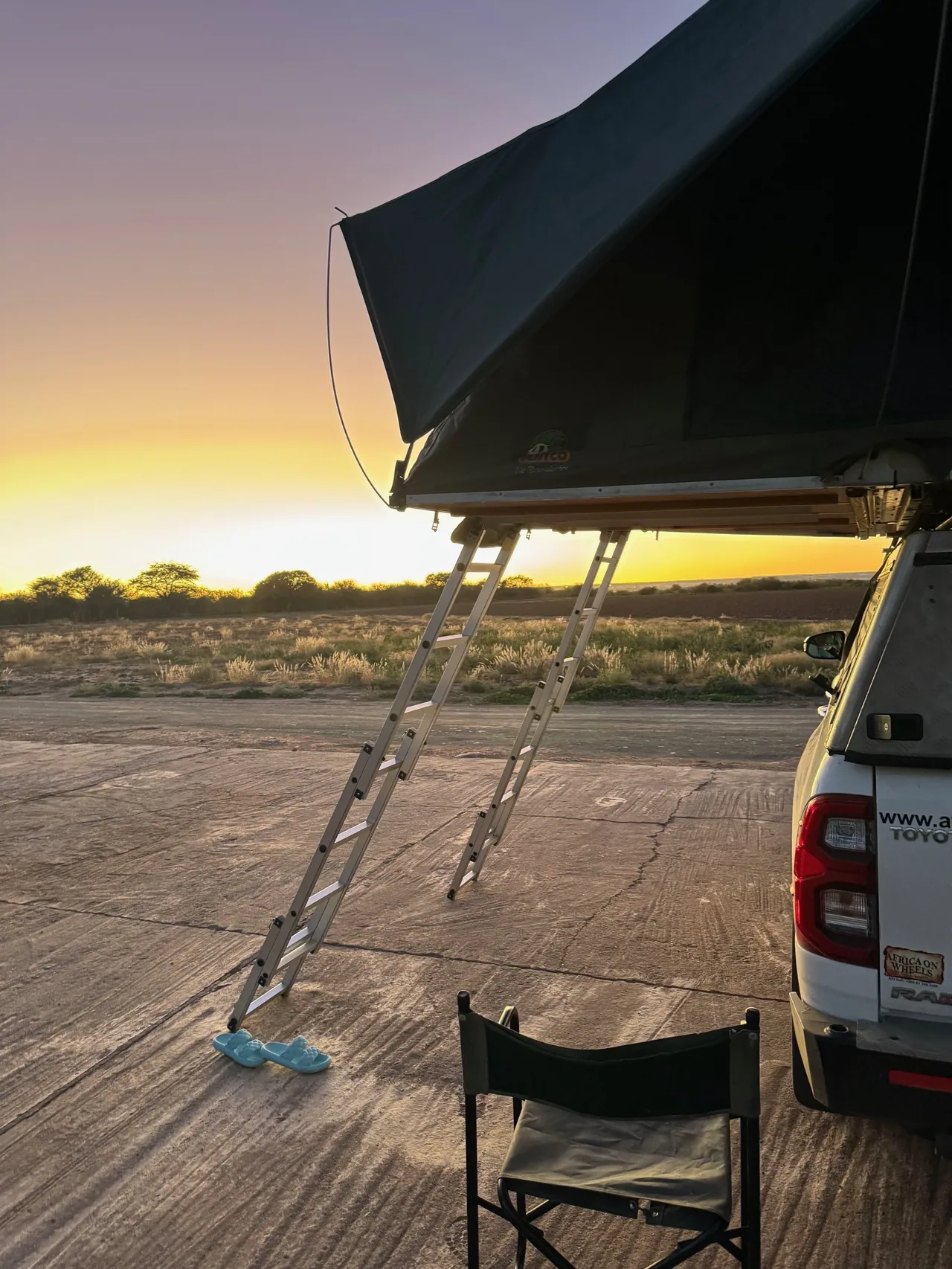
The first night is shockingly, brutally cold. I honestly can’t remember the last time I was that cold in a tent. Canvas tents, thin mattresses and sleeping bags even thinner than the ones I use back home in summer. You think, “I’m going to Africa, evenings will be warm,” but the reality is the exact opposite. In the morning, we wake up into icy air just a few degrees above zero.
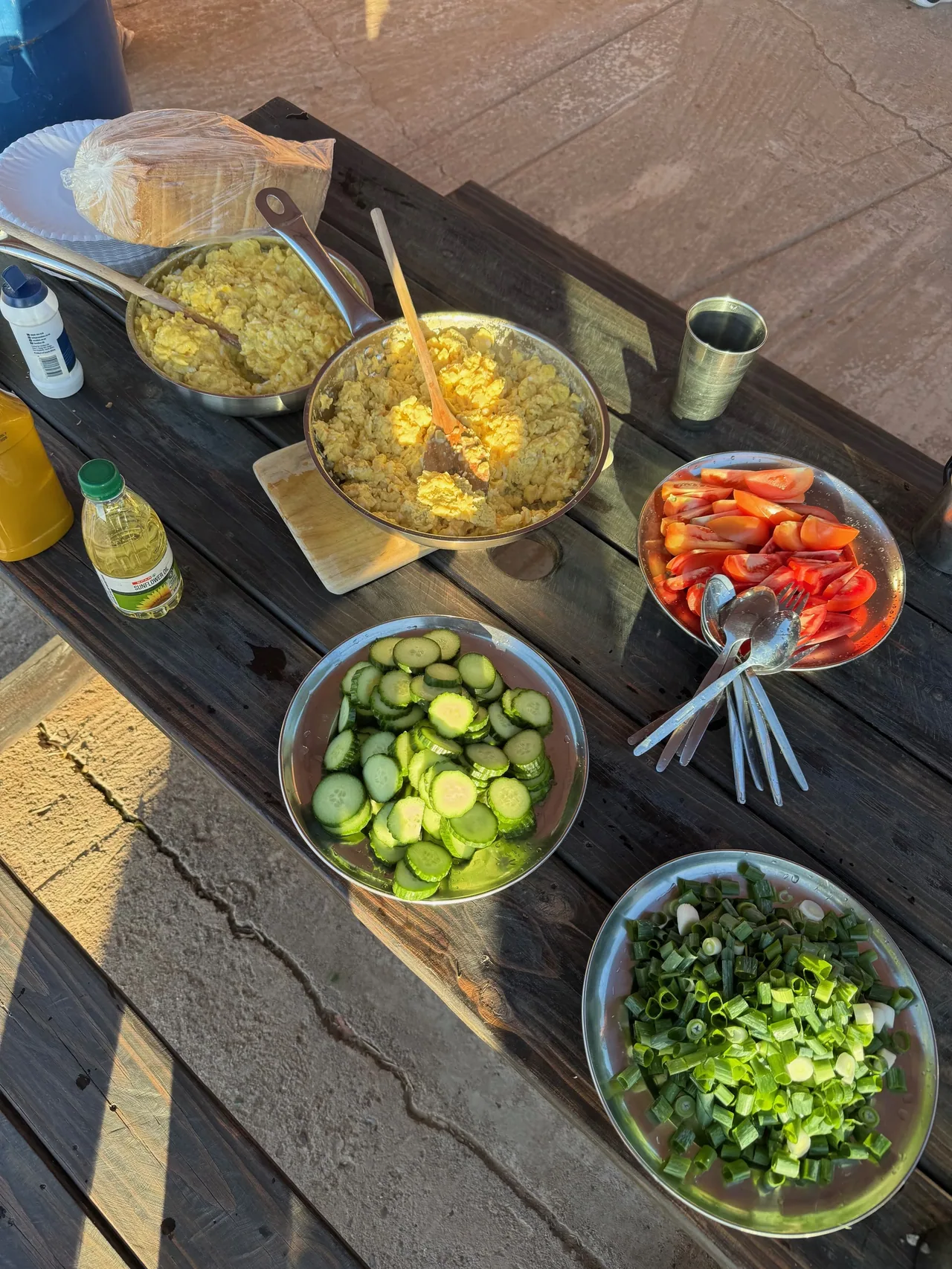
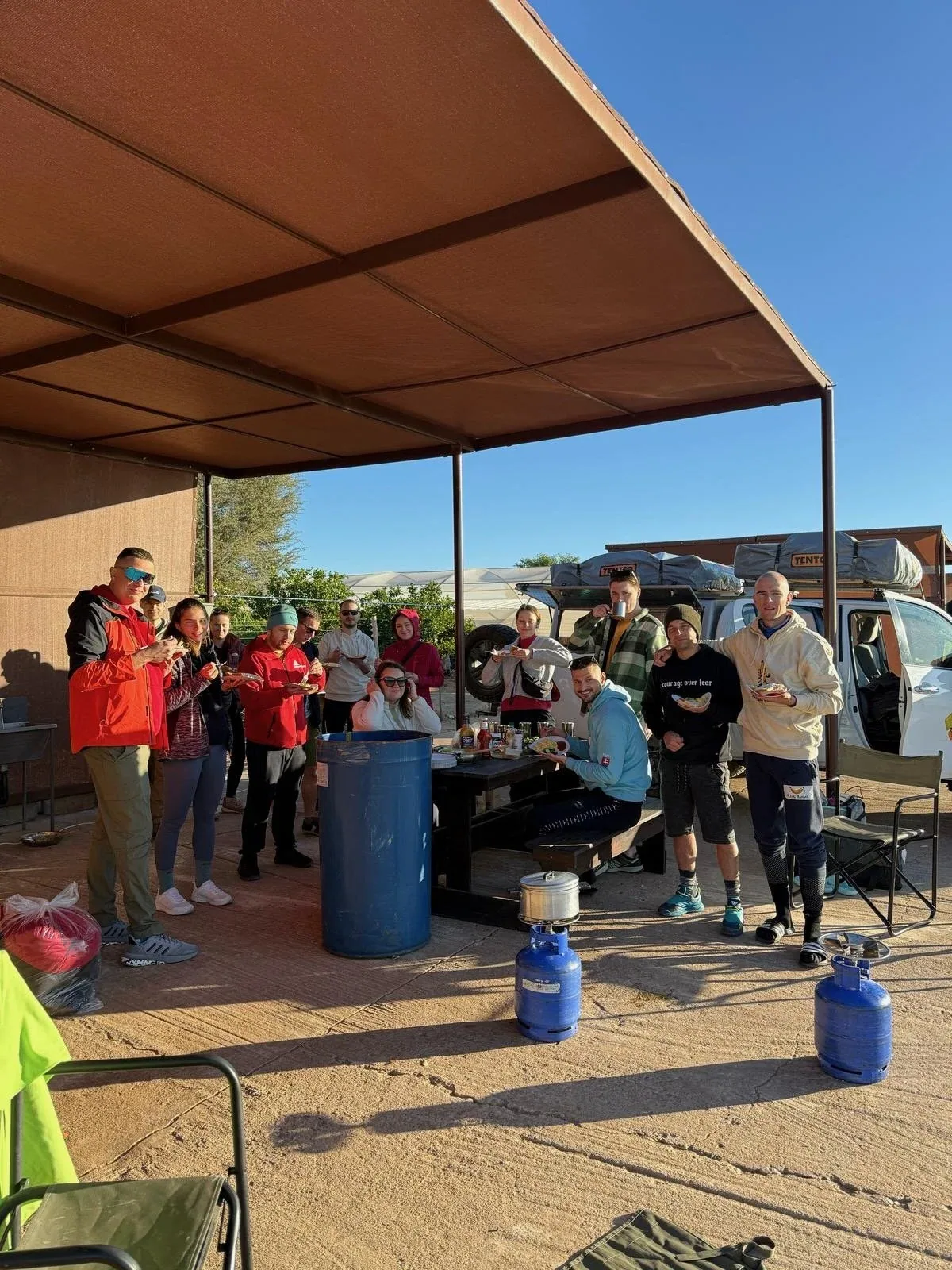
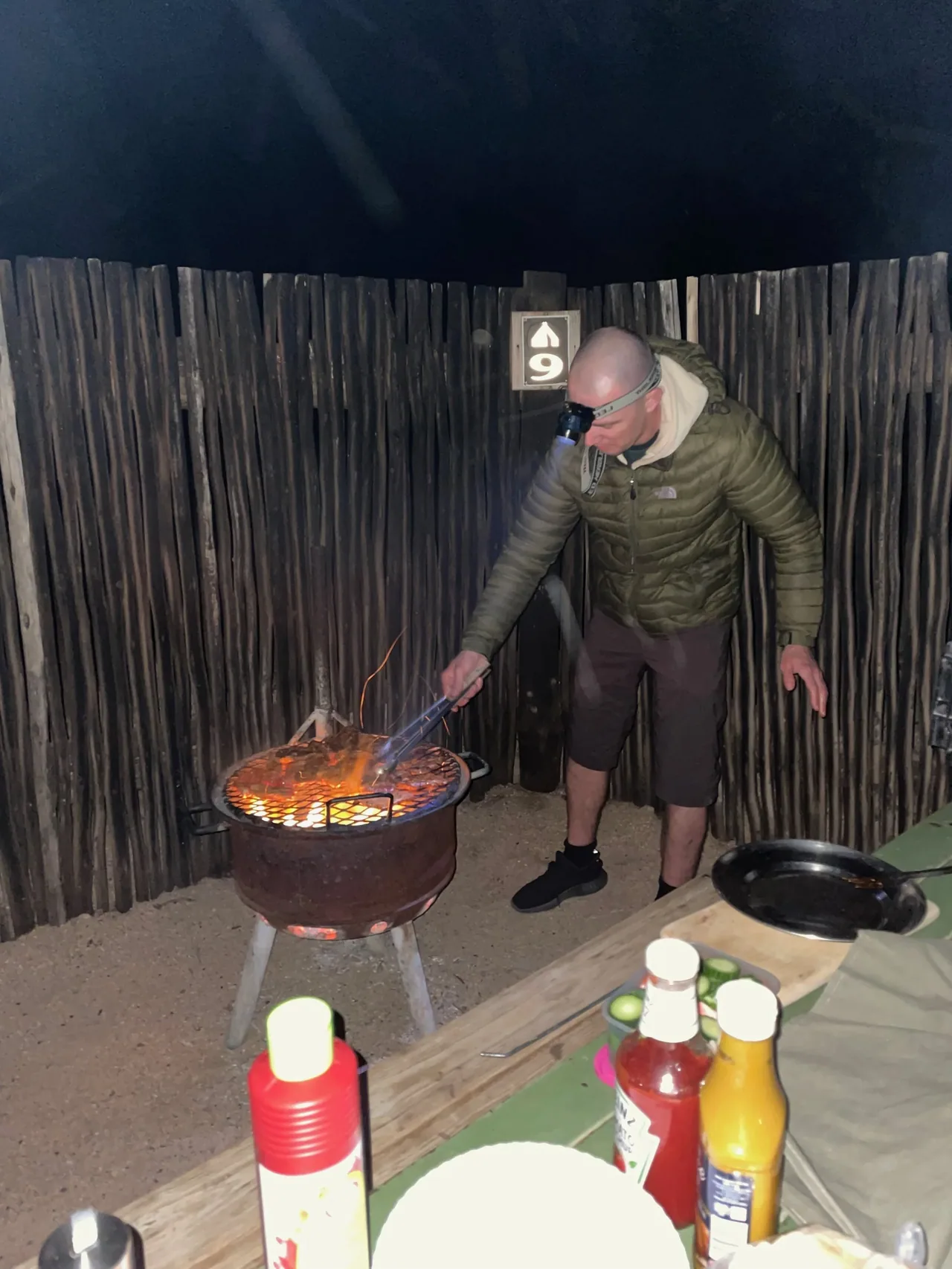
Everyone naturally falls into a role: someone folds the rooftop tents, others prepare scrambled eggs from 30 eggs with sausages, vegetables and hot tea, while a few lucky ones sprint off to catch a warm shower.
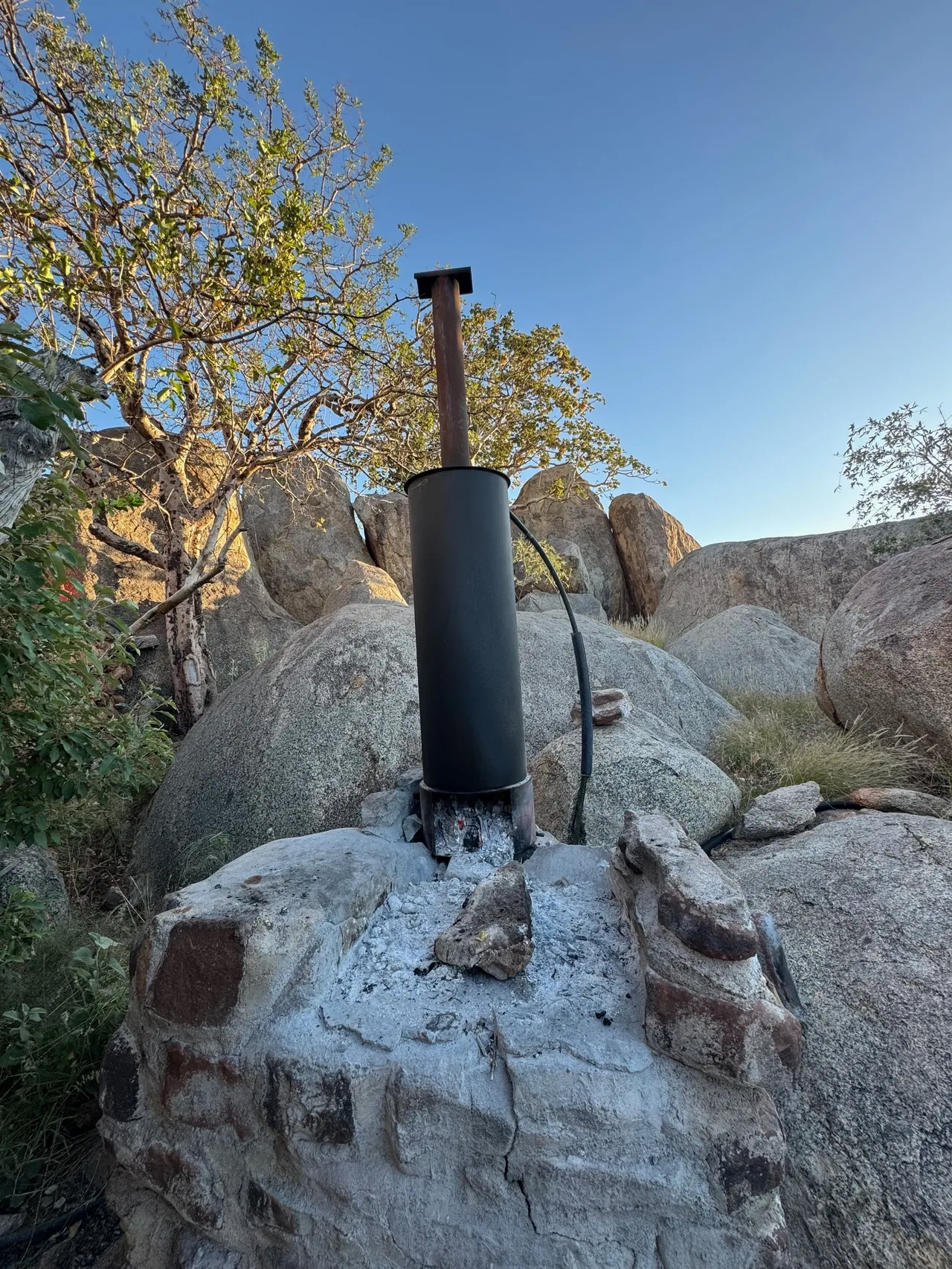
And how do they actually heat water in a place like Namibia where there’s no electricity everywhere? This campsite had separate bathrooms for men and women, with the entrances on opposite sides of the building. Next to each entrance stood a small fireplace. The owners lit a fire there, and through the fire ran a passive heat exchanger that constantly heated the water. Simple, clever and incredibly effective — very much like the wood-fired hot tubs you find in Scandinavia.
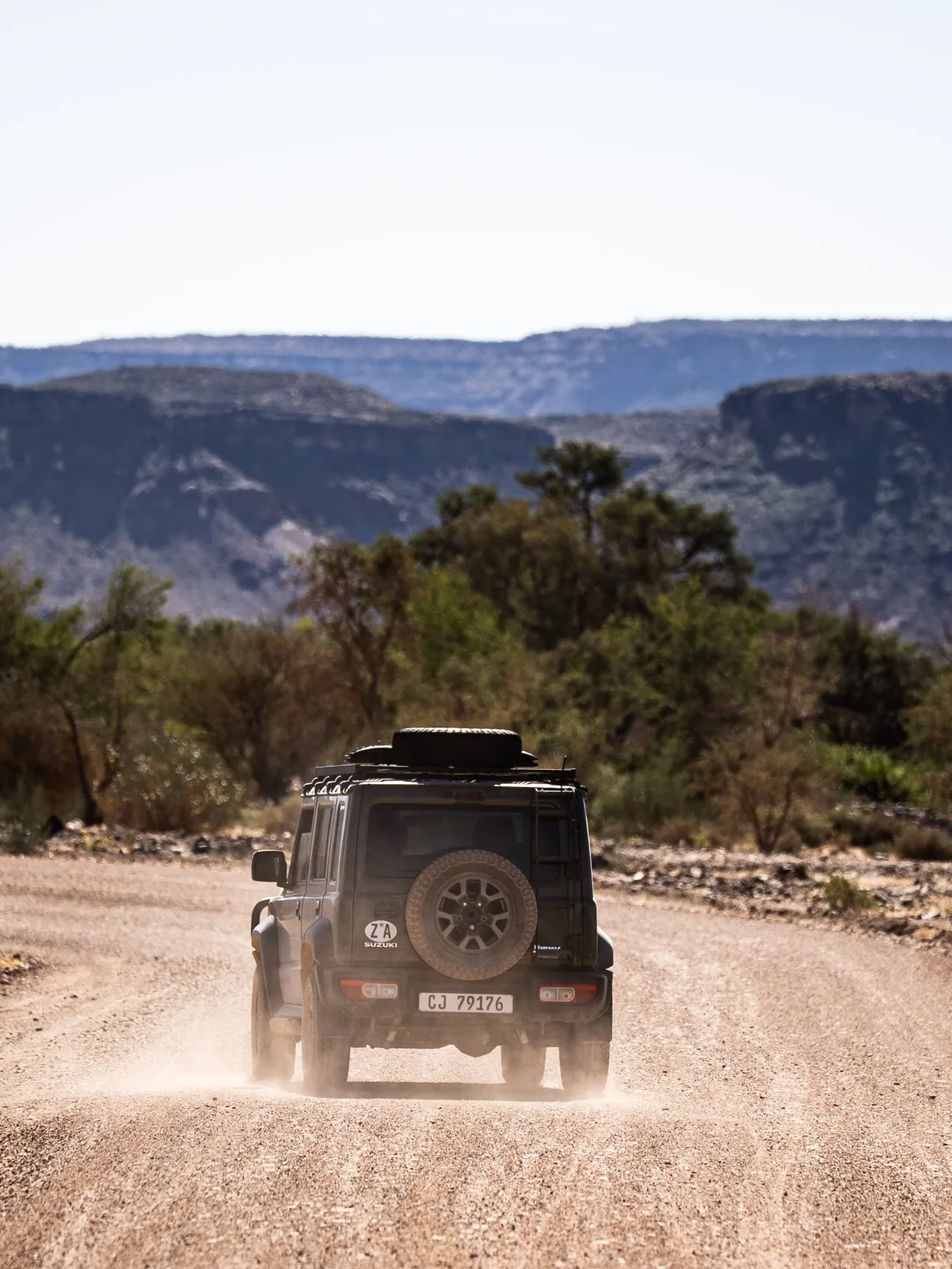
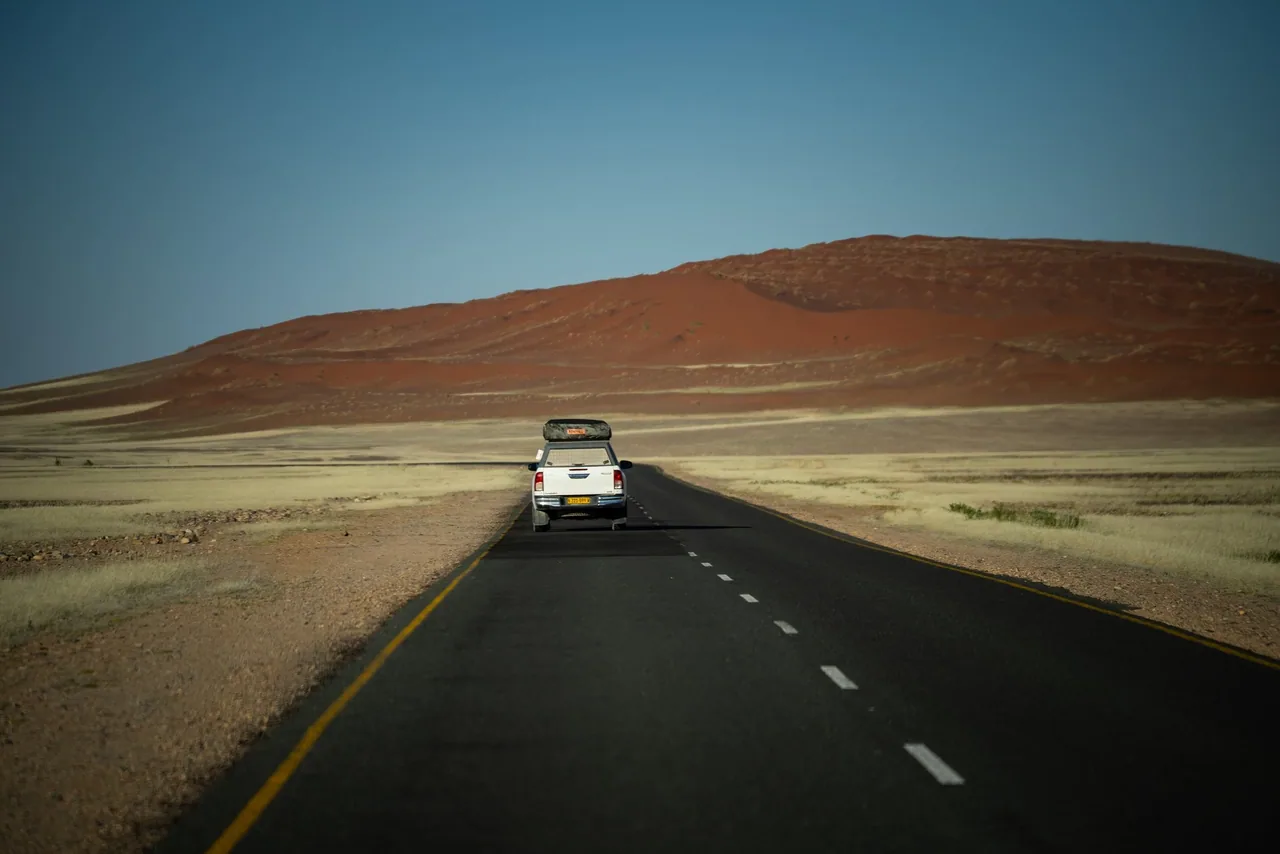
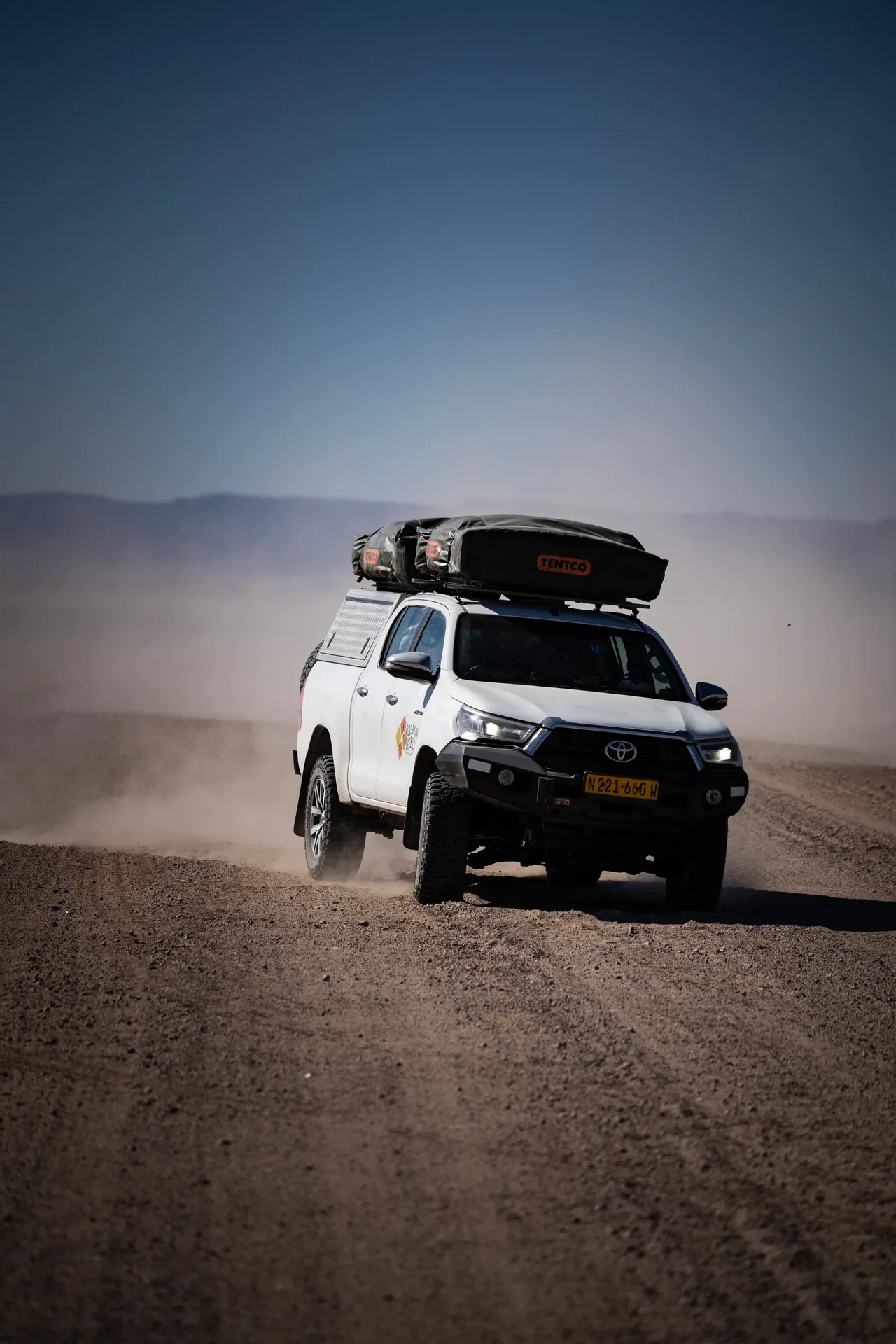
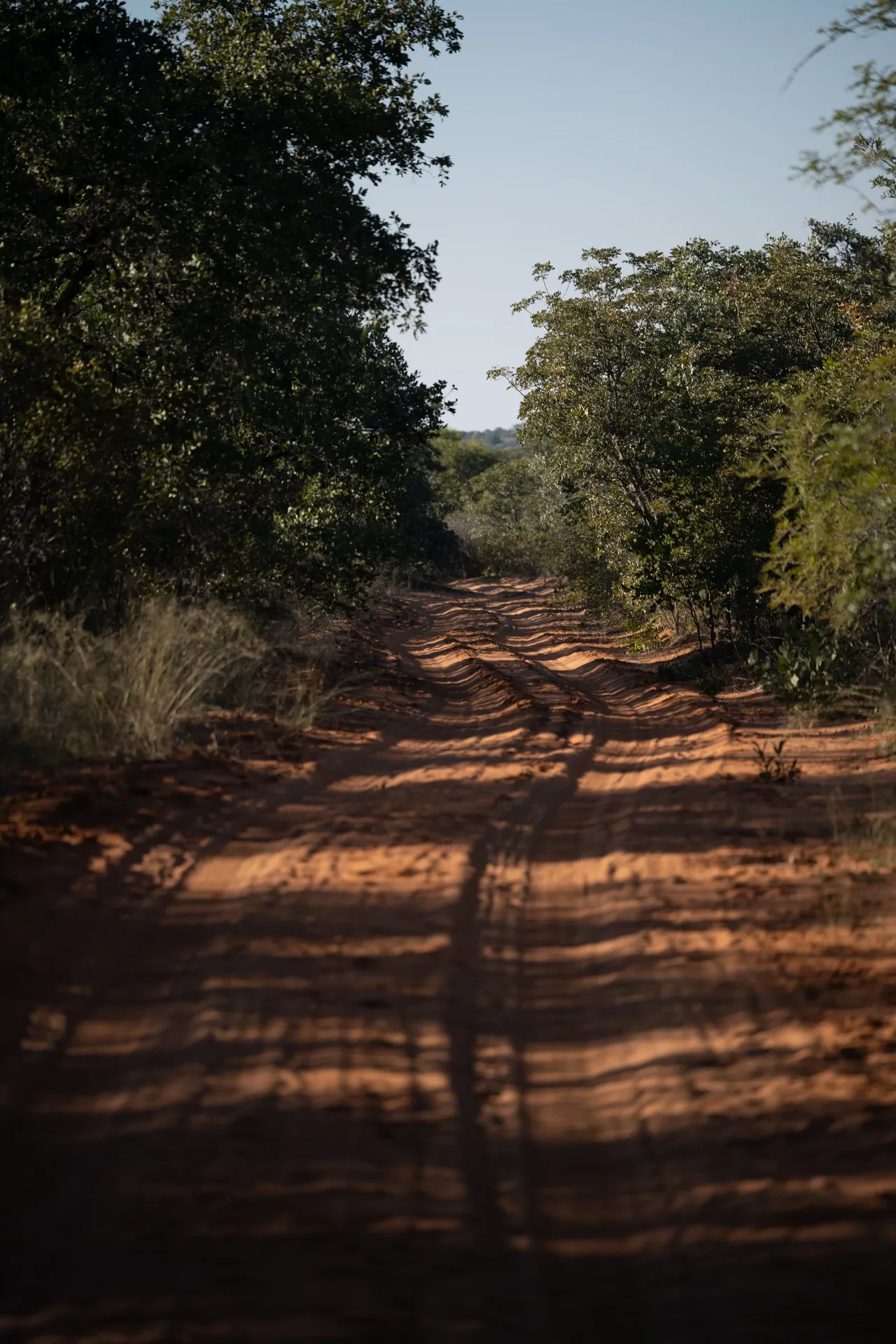
After breakfast we set off for Fish River Canyon, the second-largest canyon in the world. The drive takes a few hours. We start on paved tarmac, but the closer we get, the more the road turns into gravel and eventually into sand. Fish River Canyon lies in a national park, so at the gate we pay the fee and sort out a permit.
An hour later we park at the edge of an enormous chasm that cuts through the landscape like an endless scar.
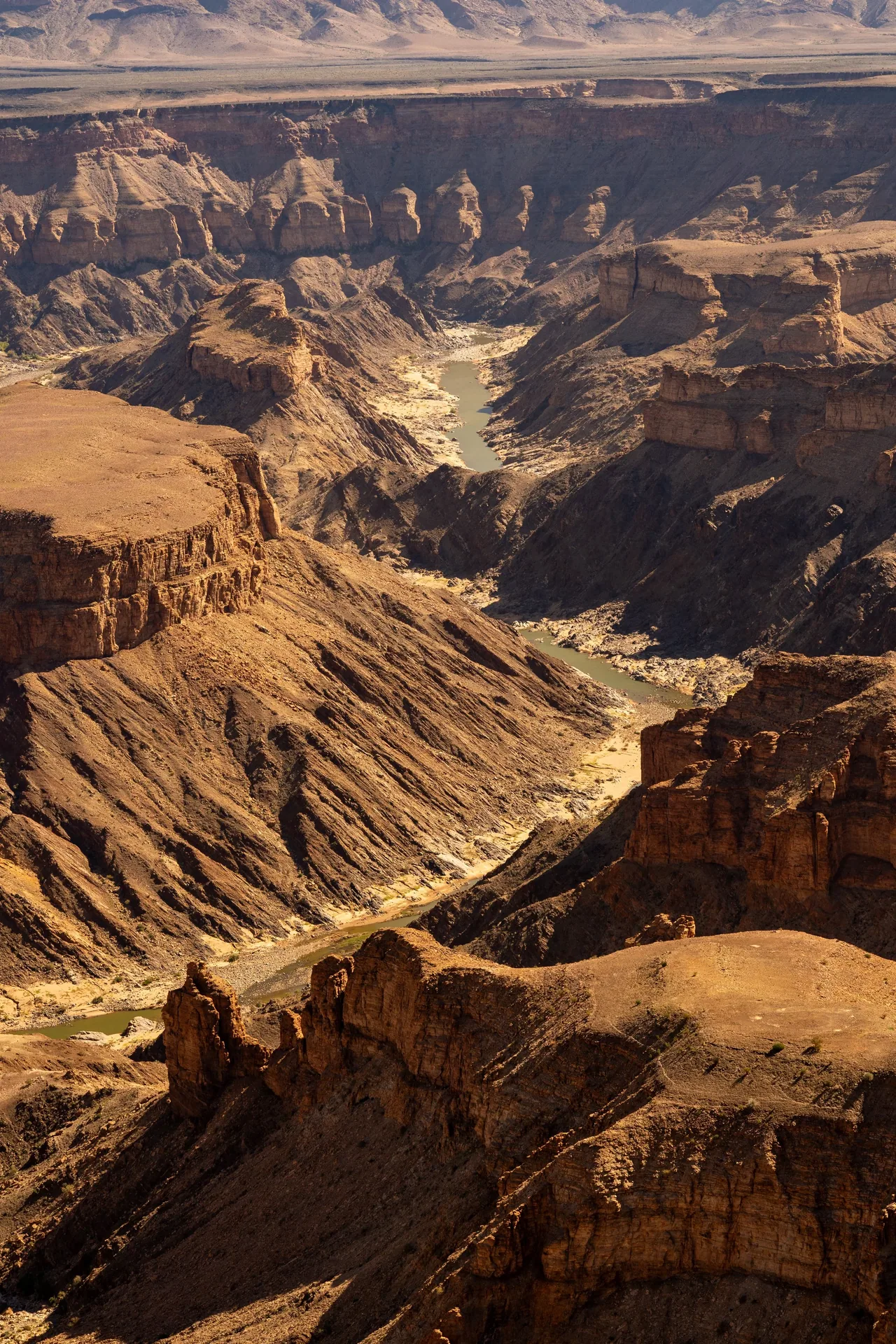
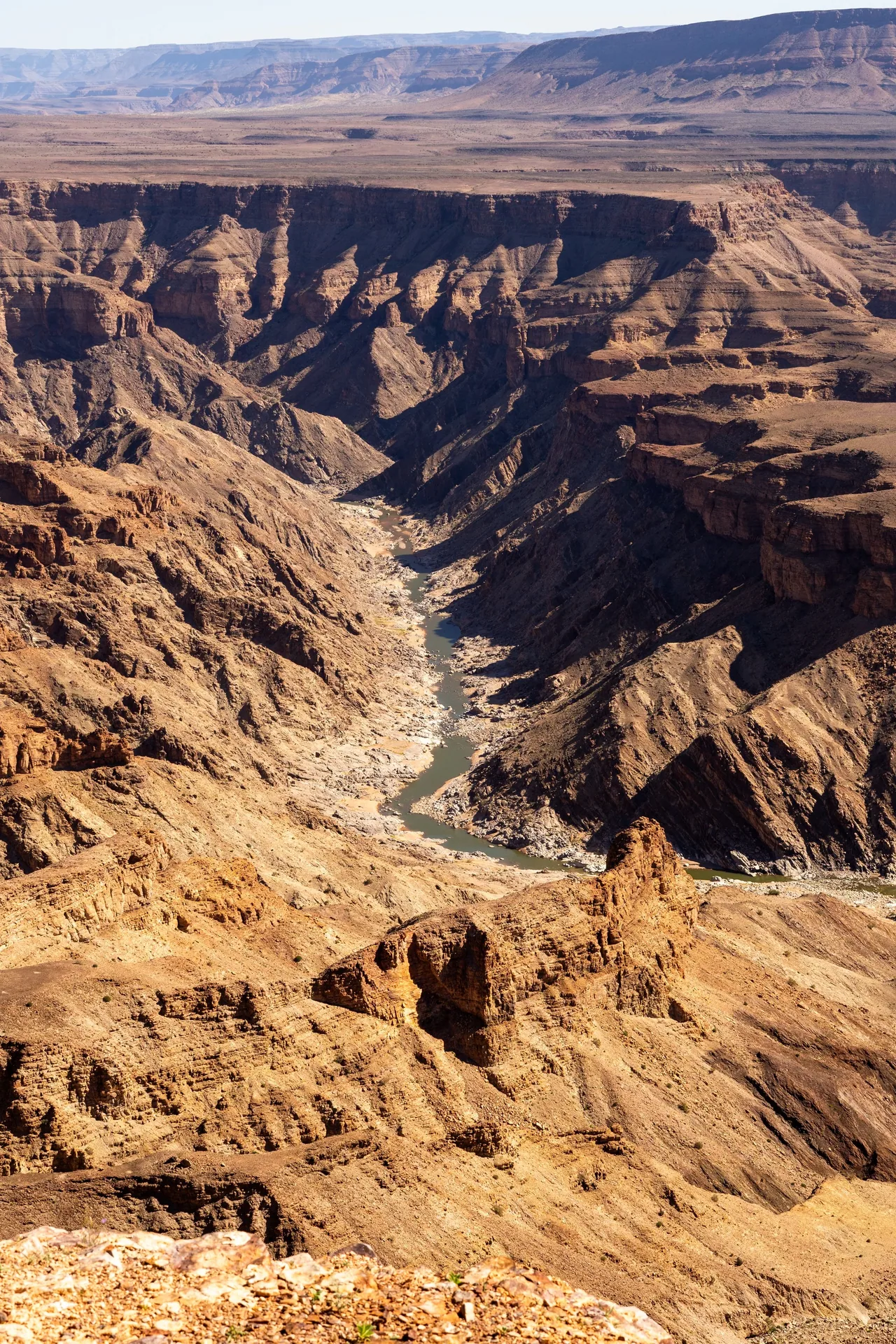
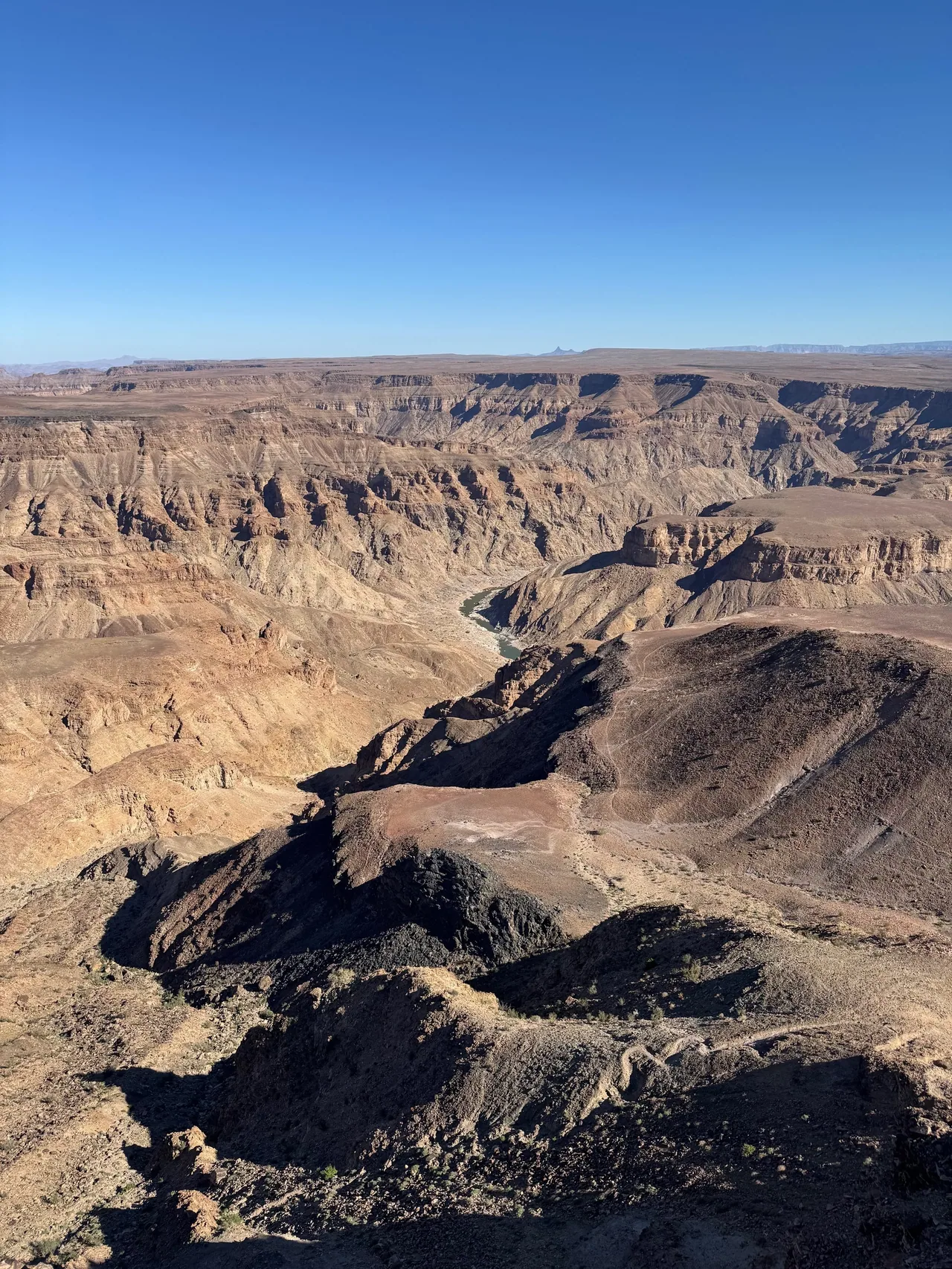
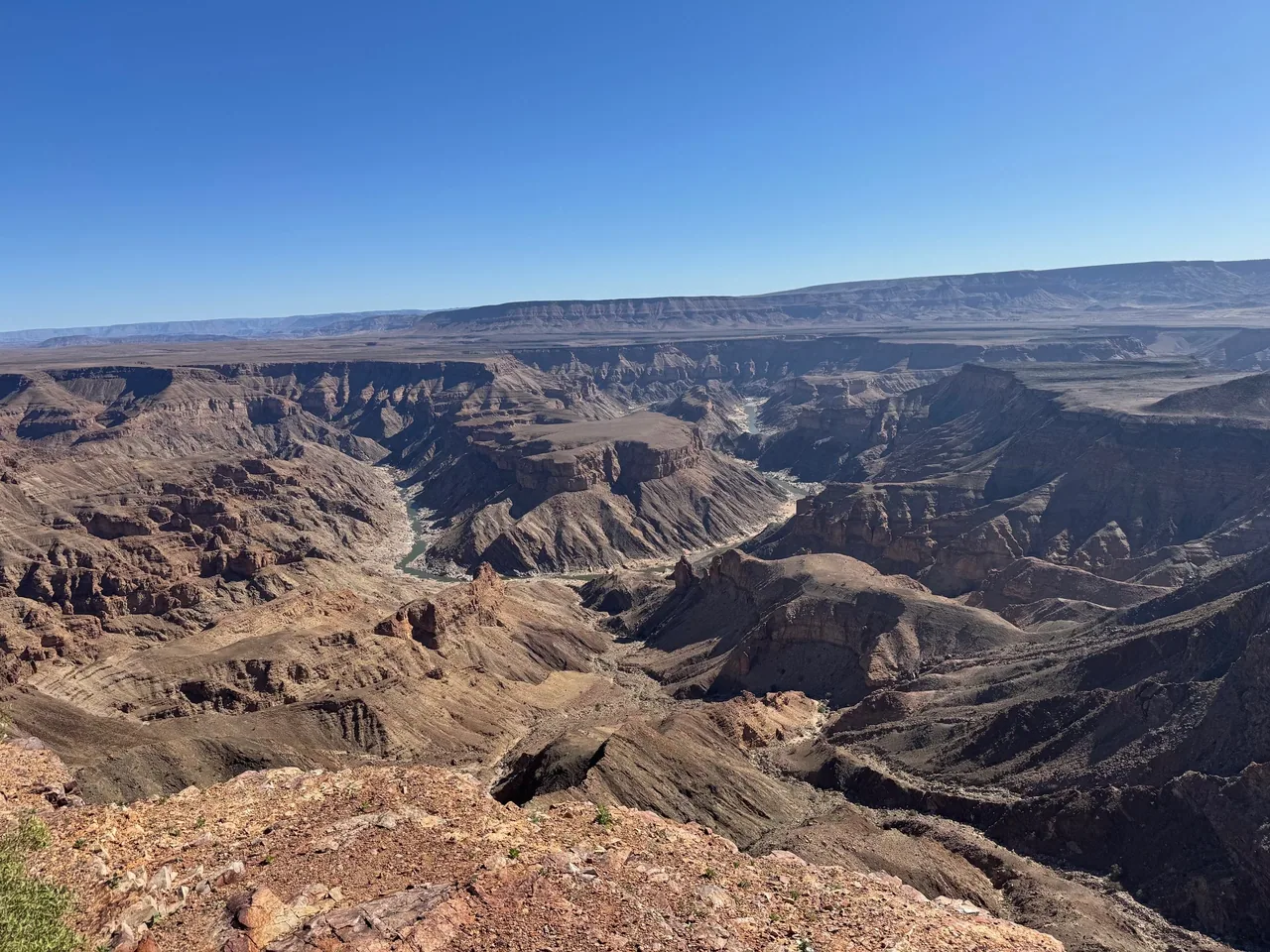
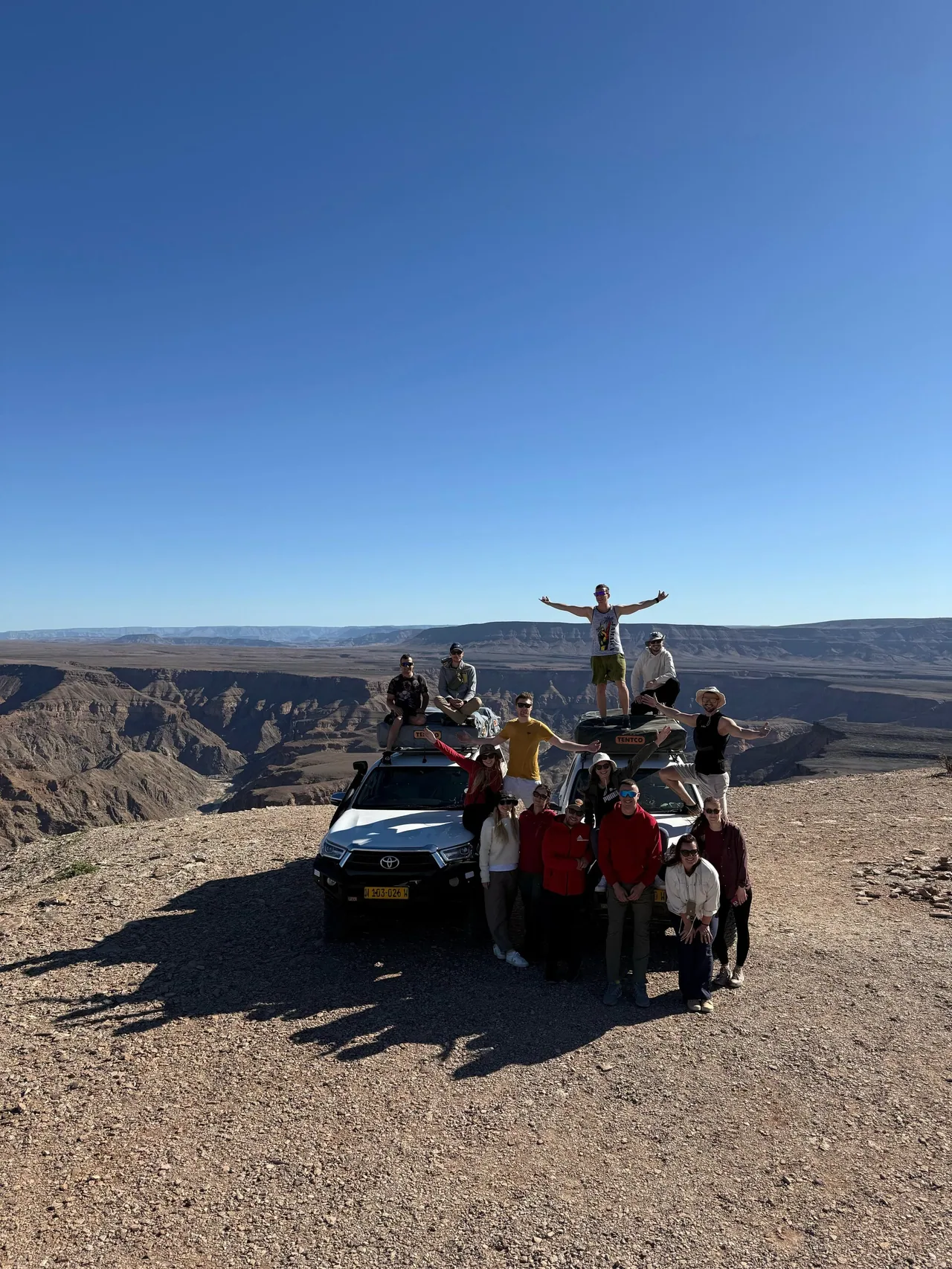
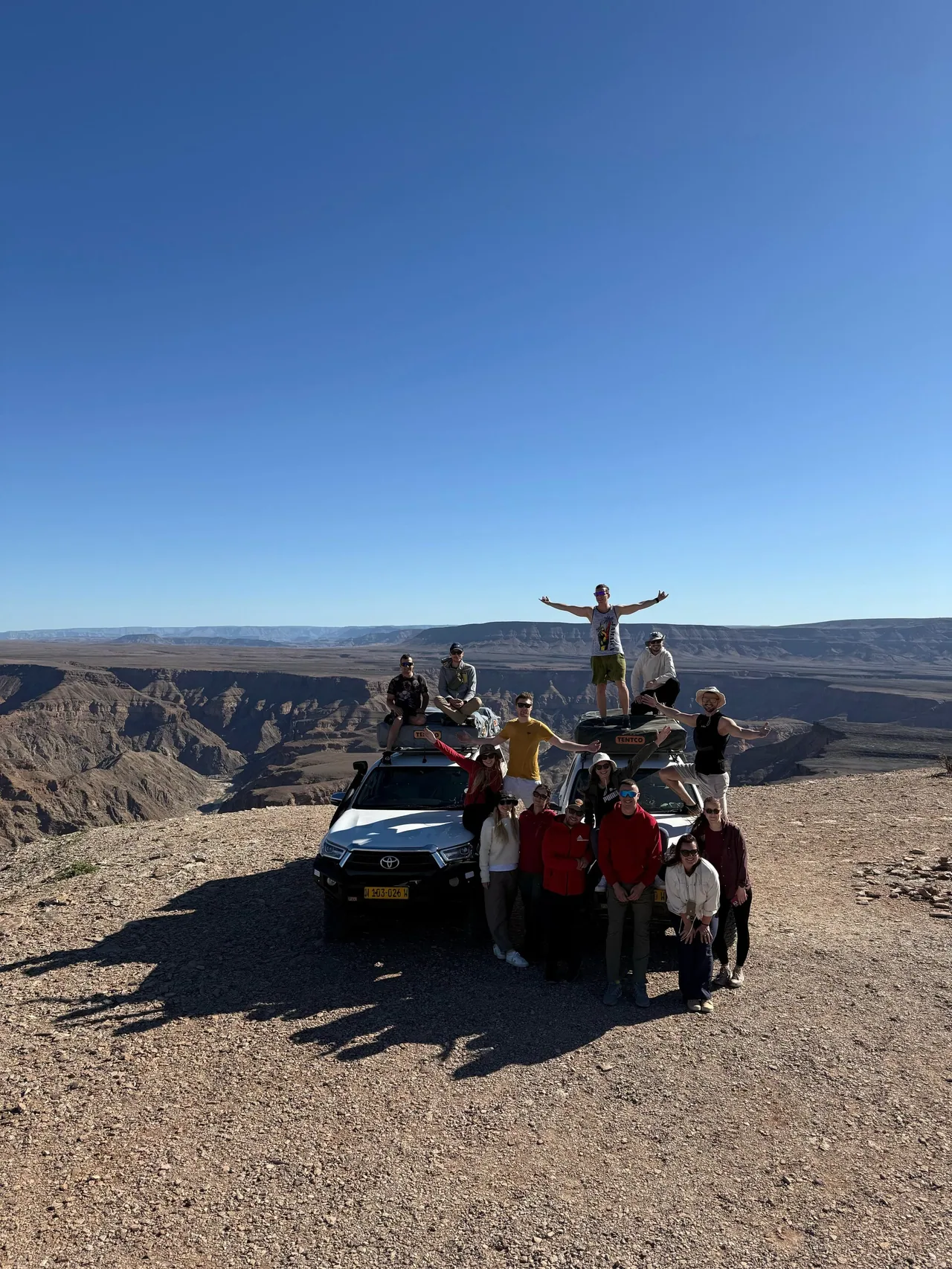
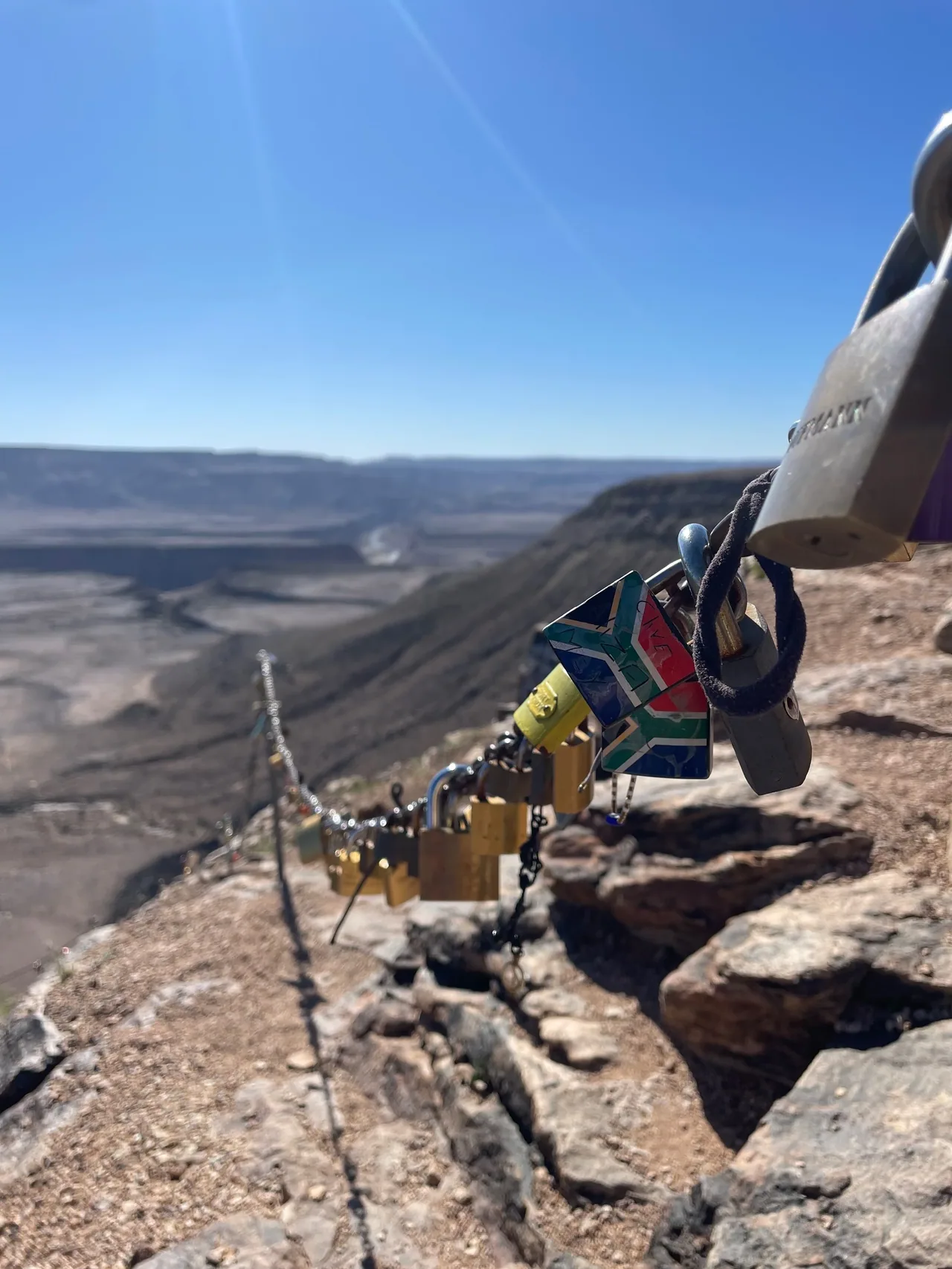
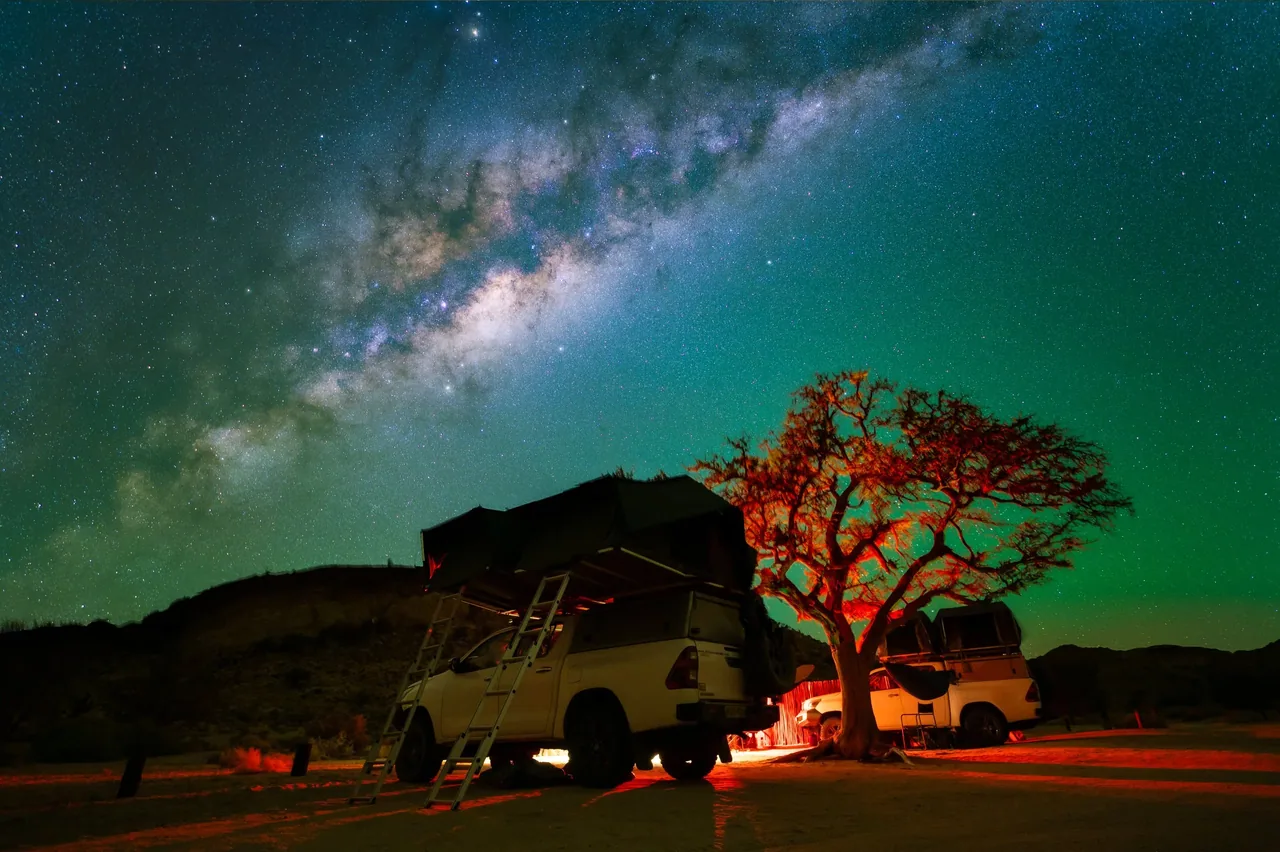
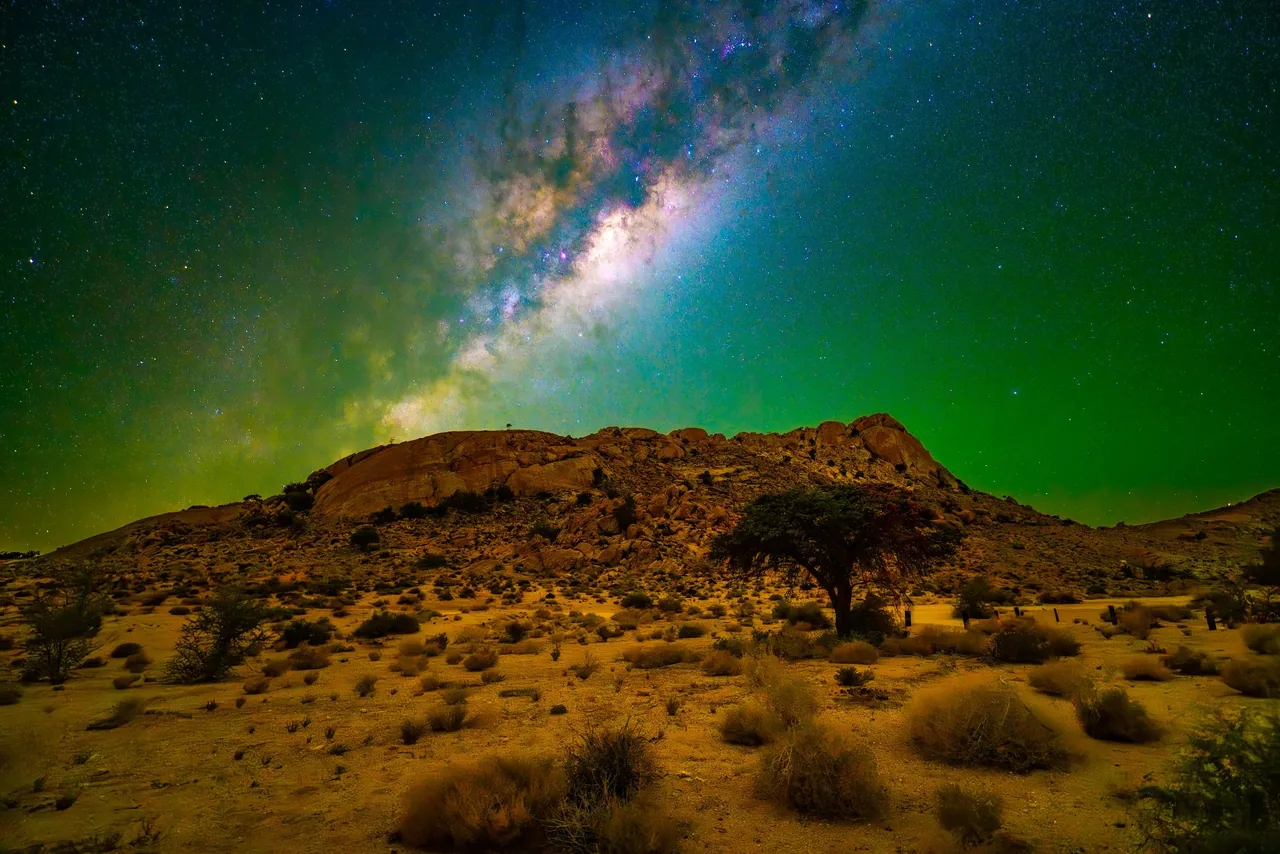
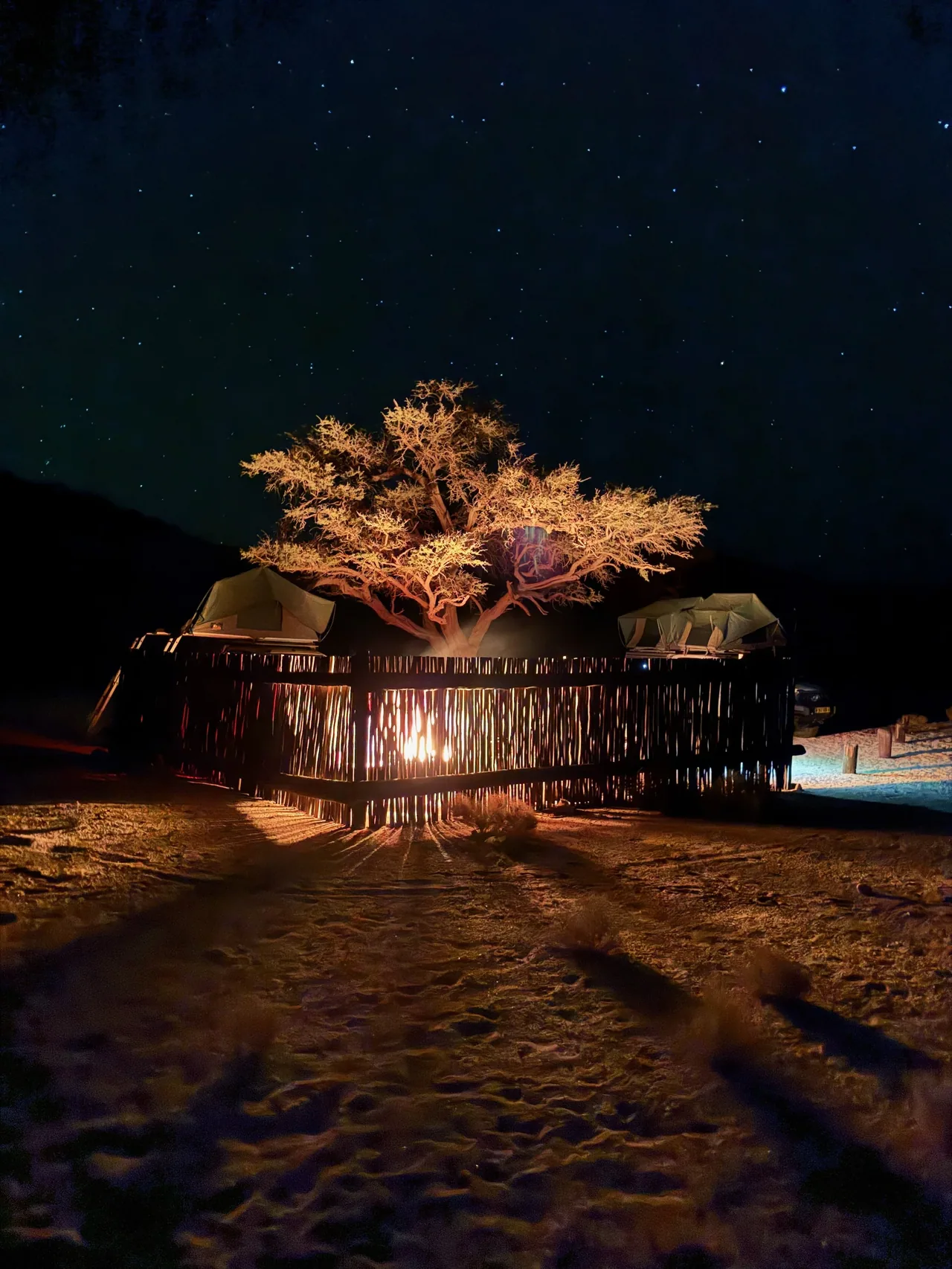
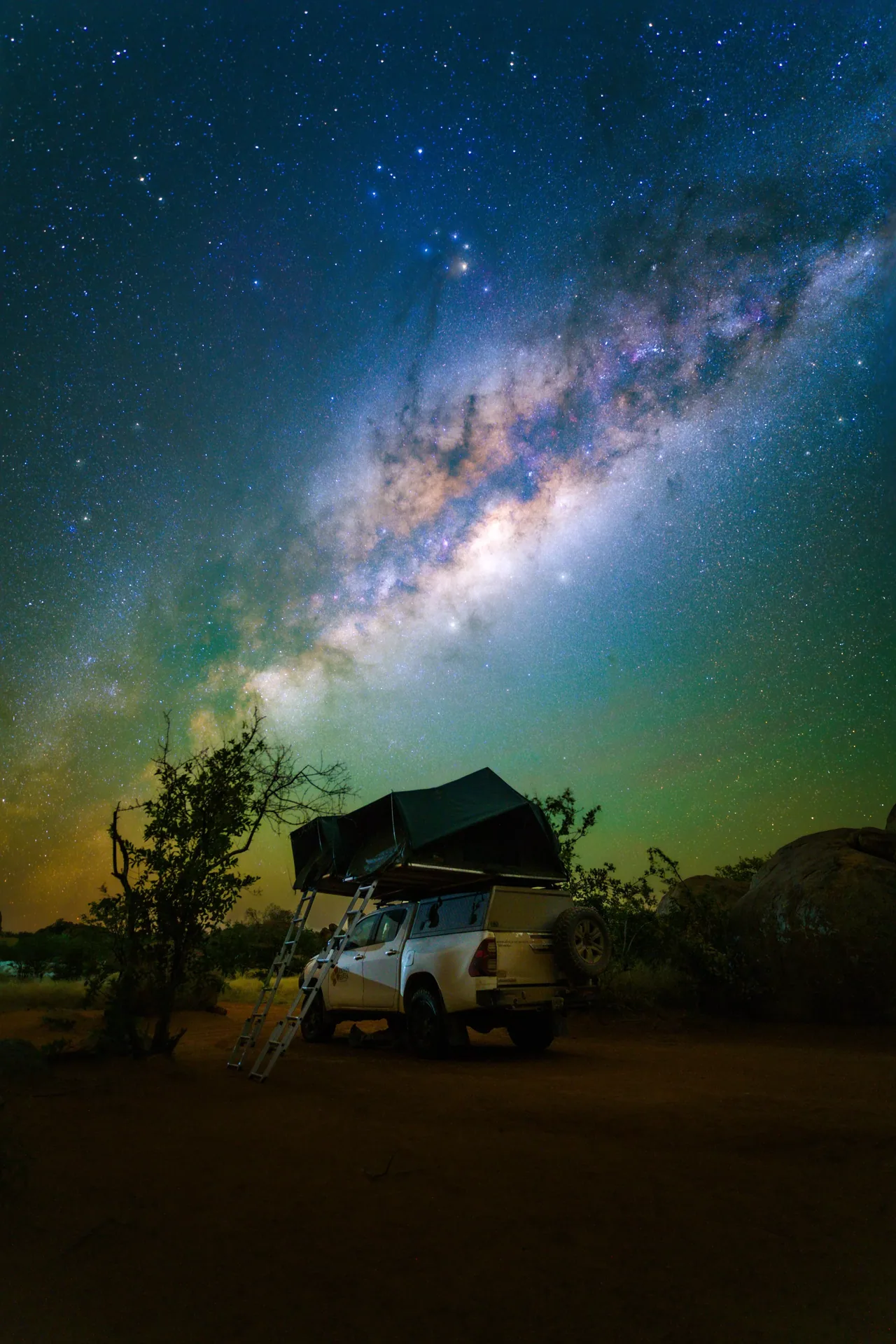
After walking between the main viewpoints and taking our photos, we head to Klein Aus Vista Desert Camp. The campsite is beautifully set among rocky hills, far away from any town. It’s the first time on this trip we really see a dark, starry sky.
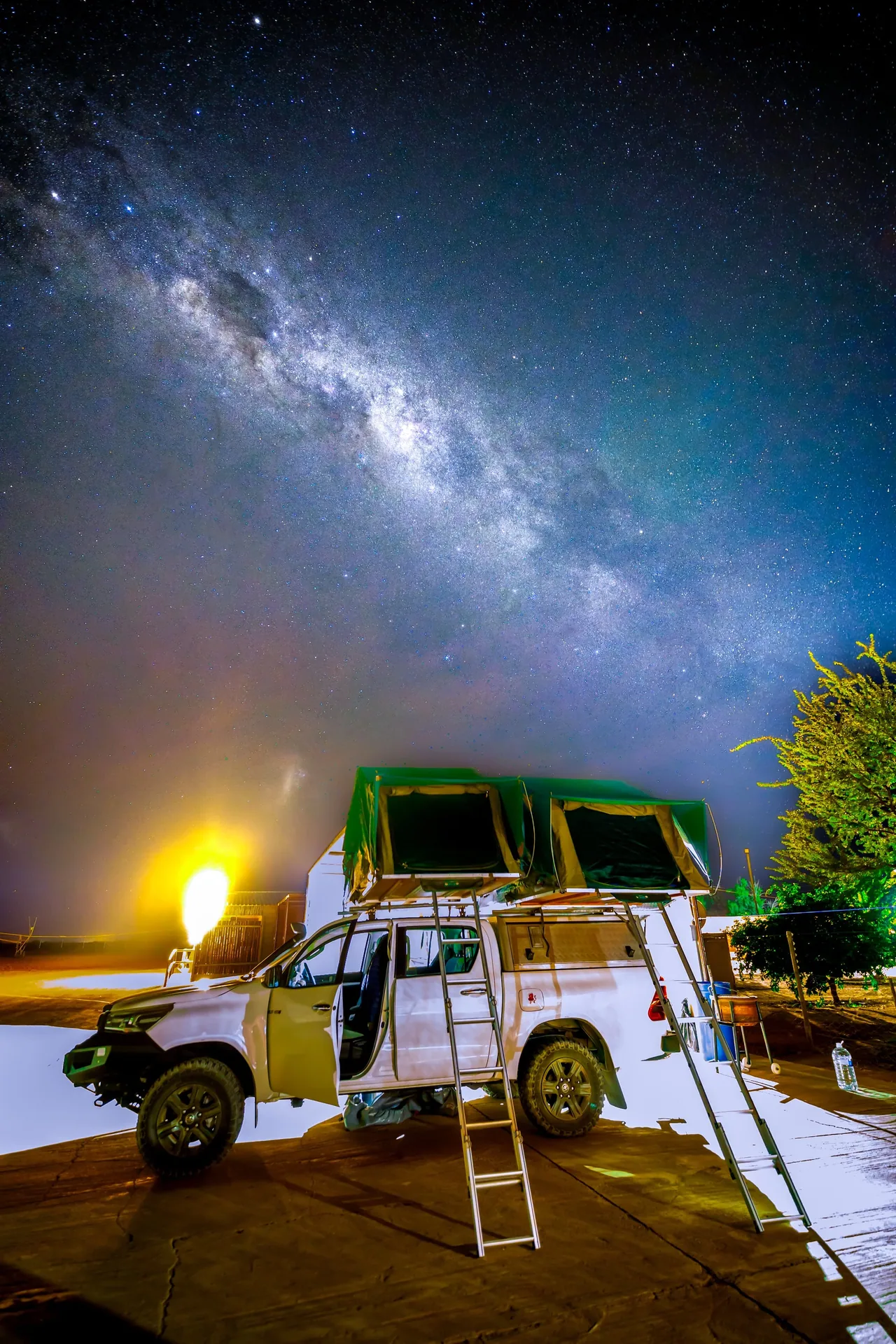
After dinner — grilled pork steak with vegetables — I grab my camera and walk a short distance away from our campsite to photograph the night sky. For the first time in my life I capture airglow on my photos: a faint natural emission in the upper atmosphere caused by excited atomic oxygen radiating green light as it returns to a lower energy state. It has nothing to do with aurora or light pollution — but it makes the sky look otherworldly.
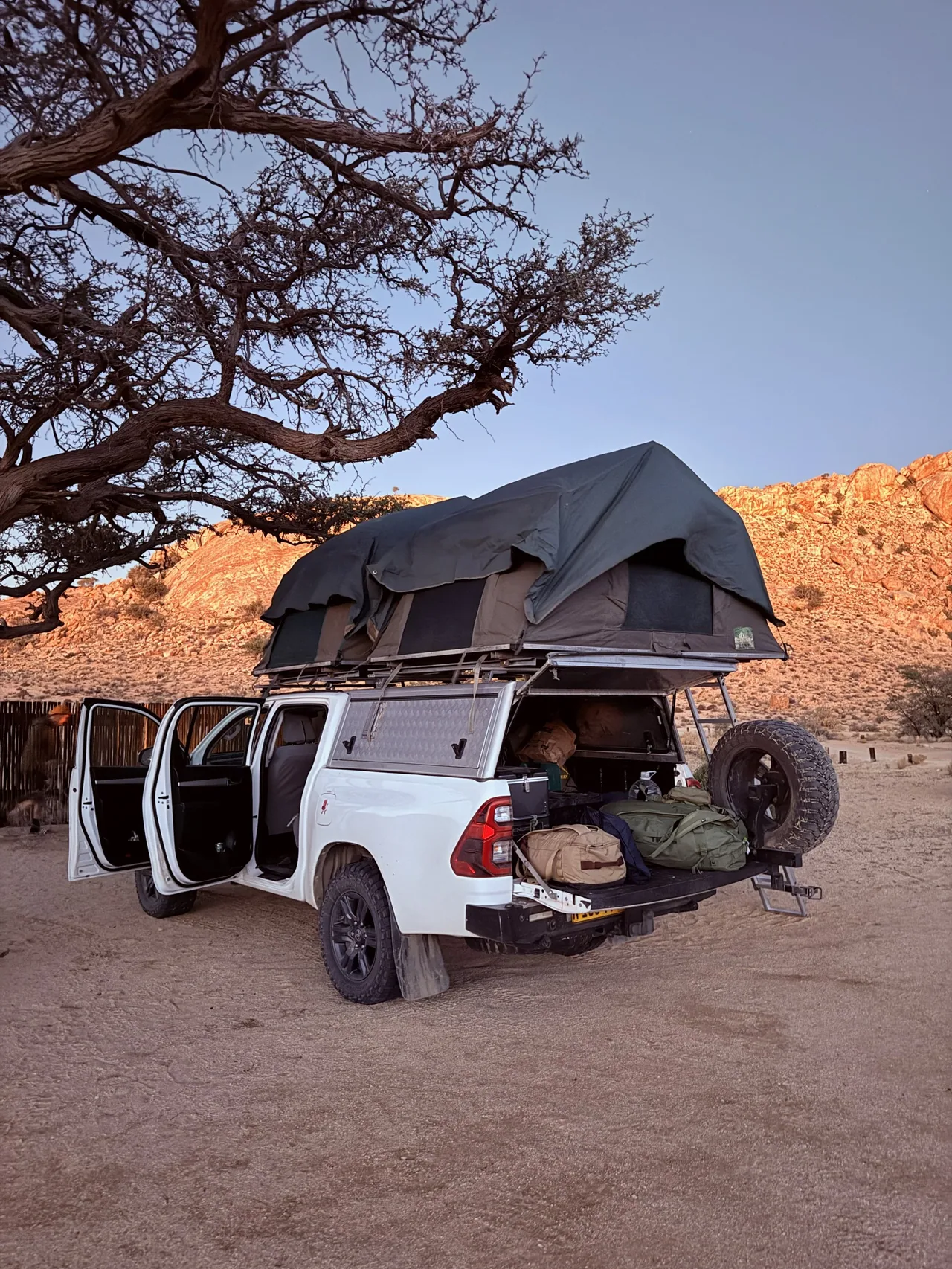
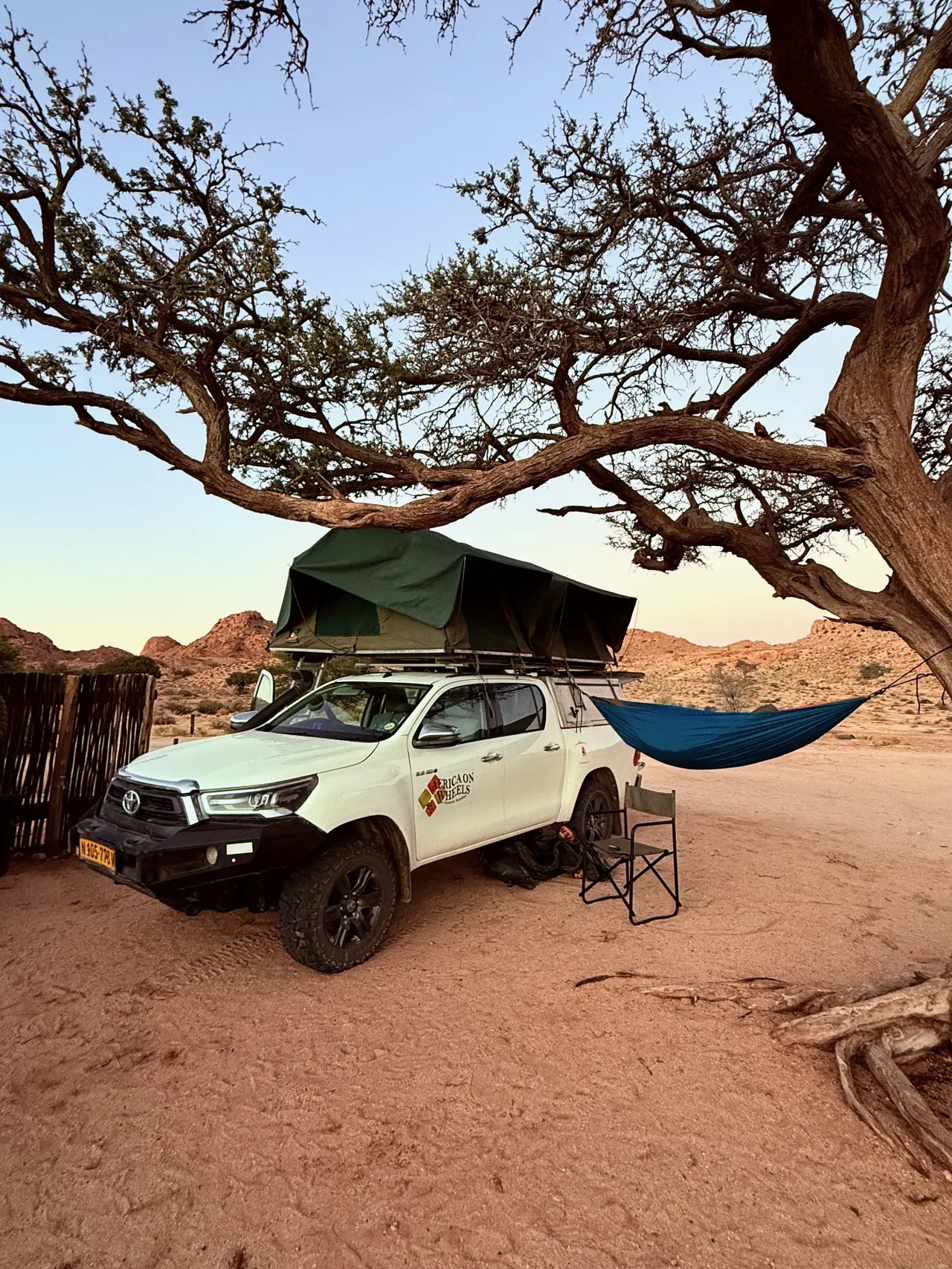
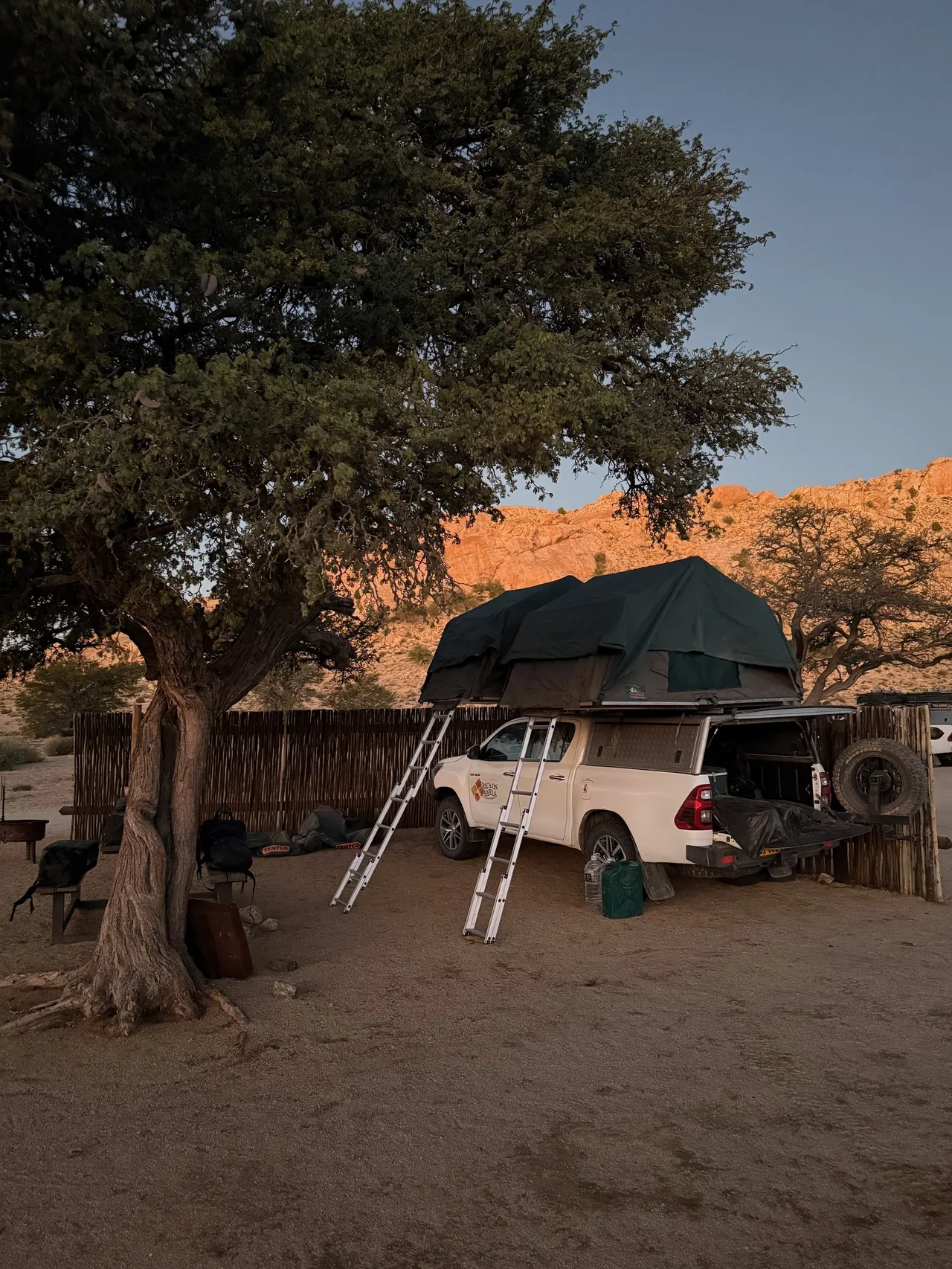
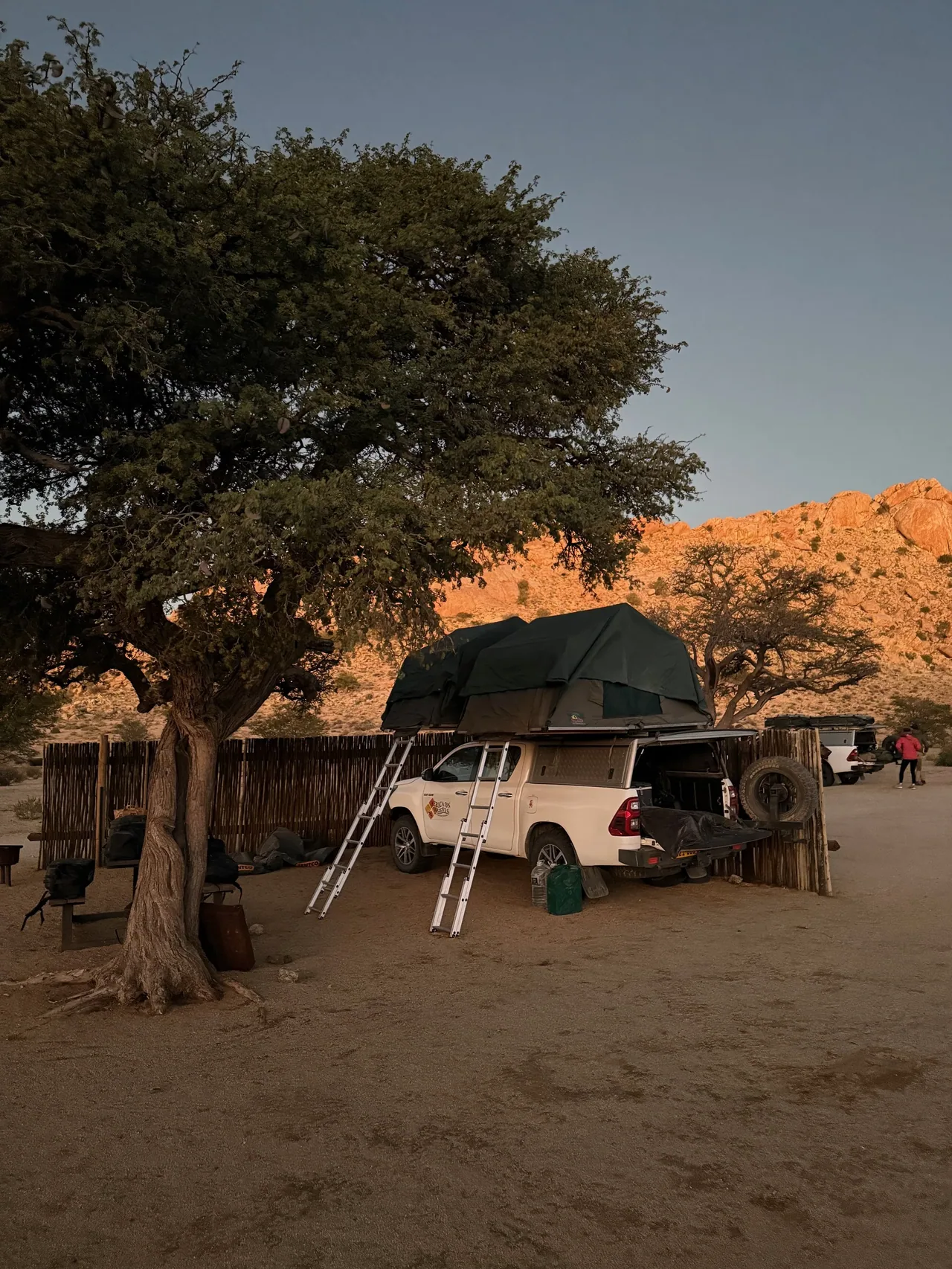
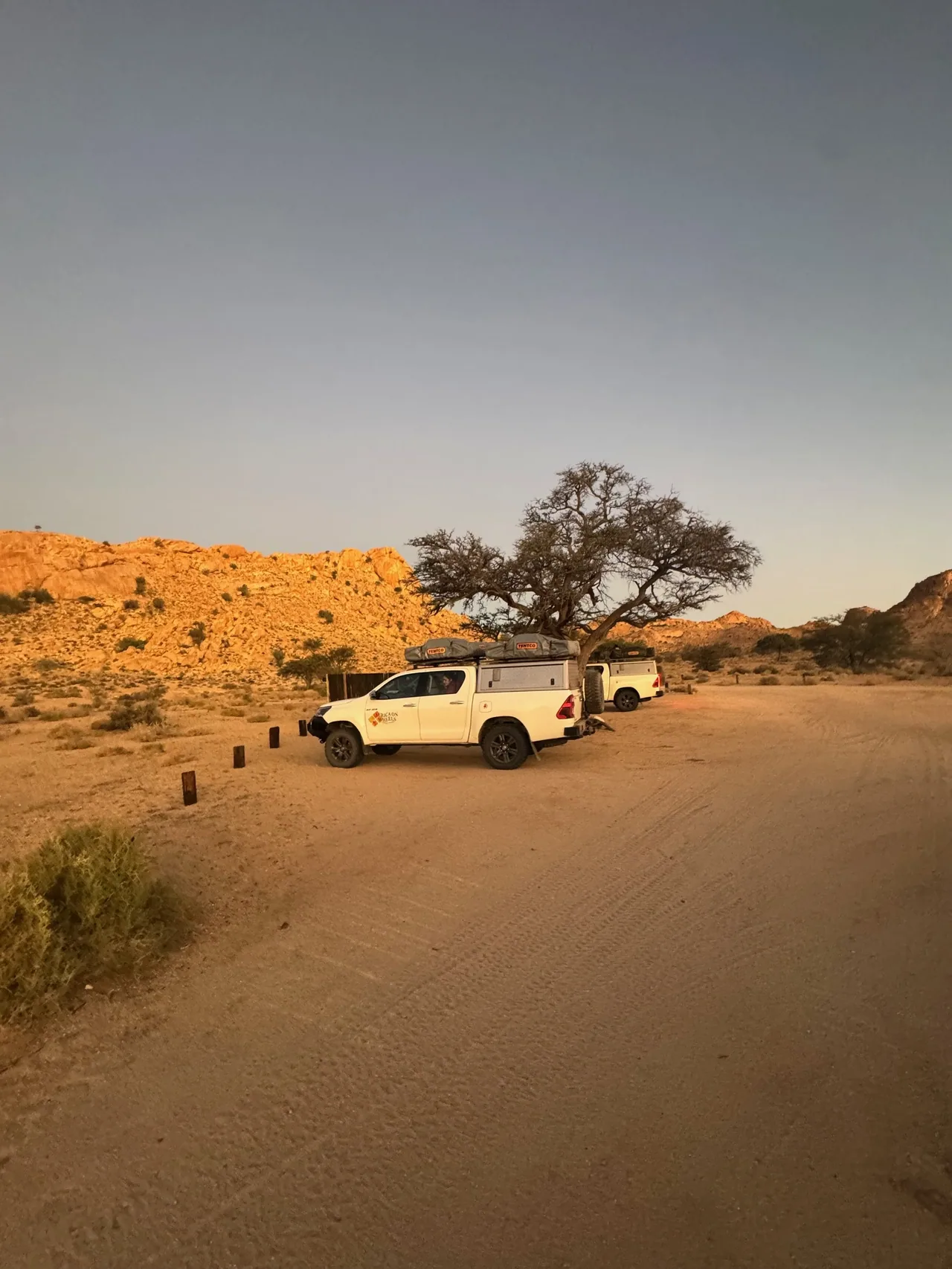
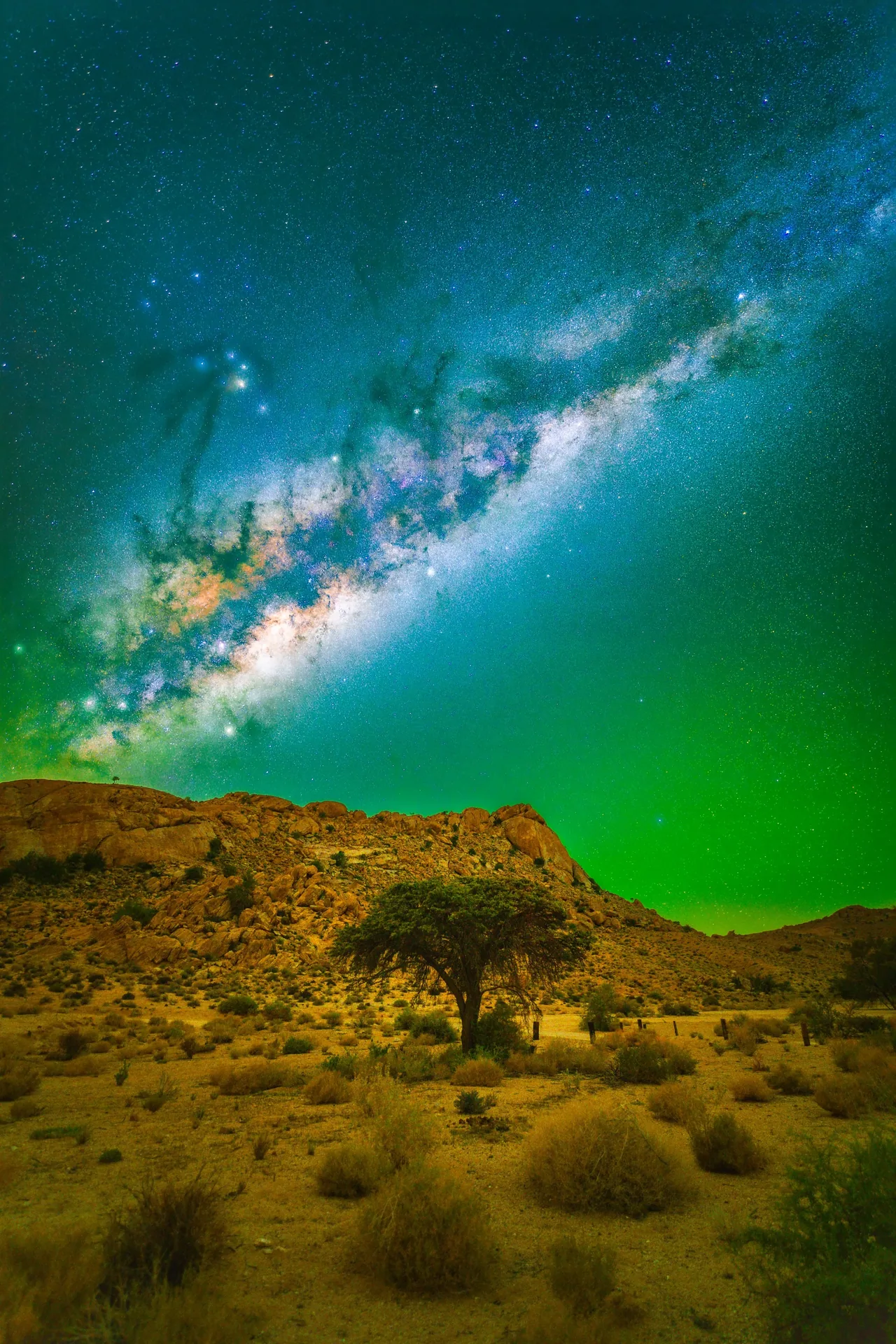
In the middle of the night my girlfriend wakes me up. She hears noises and is convinced someone is trying to rob us. Half-asleep, I reassure her that it’s probably just monkeys or the wind, and that the guys sleeping outside in hammocks will notice anything serious. And yes, most likely, it really was just a bunch of curious monkeys.
Day 3
After the previous freezing night, we go to sleep dressed in warm thermal underwear. It’s almost perfect — next time I just need to deal better with cold feet and layer more socks. In the morning we have our now-classic breakfast: eggs with vegetables, tea and this time also peanut butter.
At the same time, some of us start to feel the first real signs of stomach issues. At that point we don’t know yet that it’s caused by a bacterial infection — likely from the food on the flight from Ethiopia to Namibia — and that it will make the next two days quite miserable.
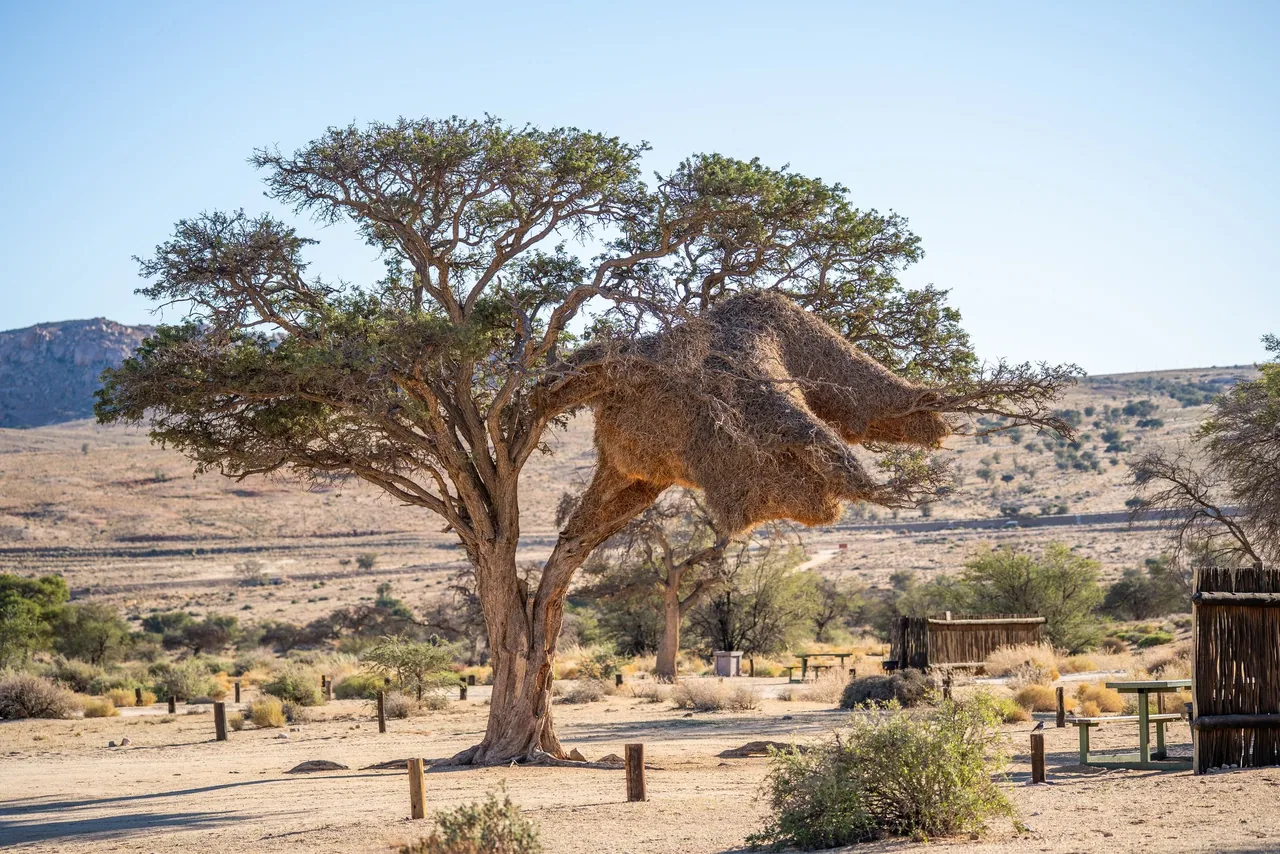
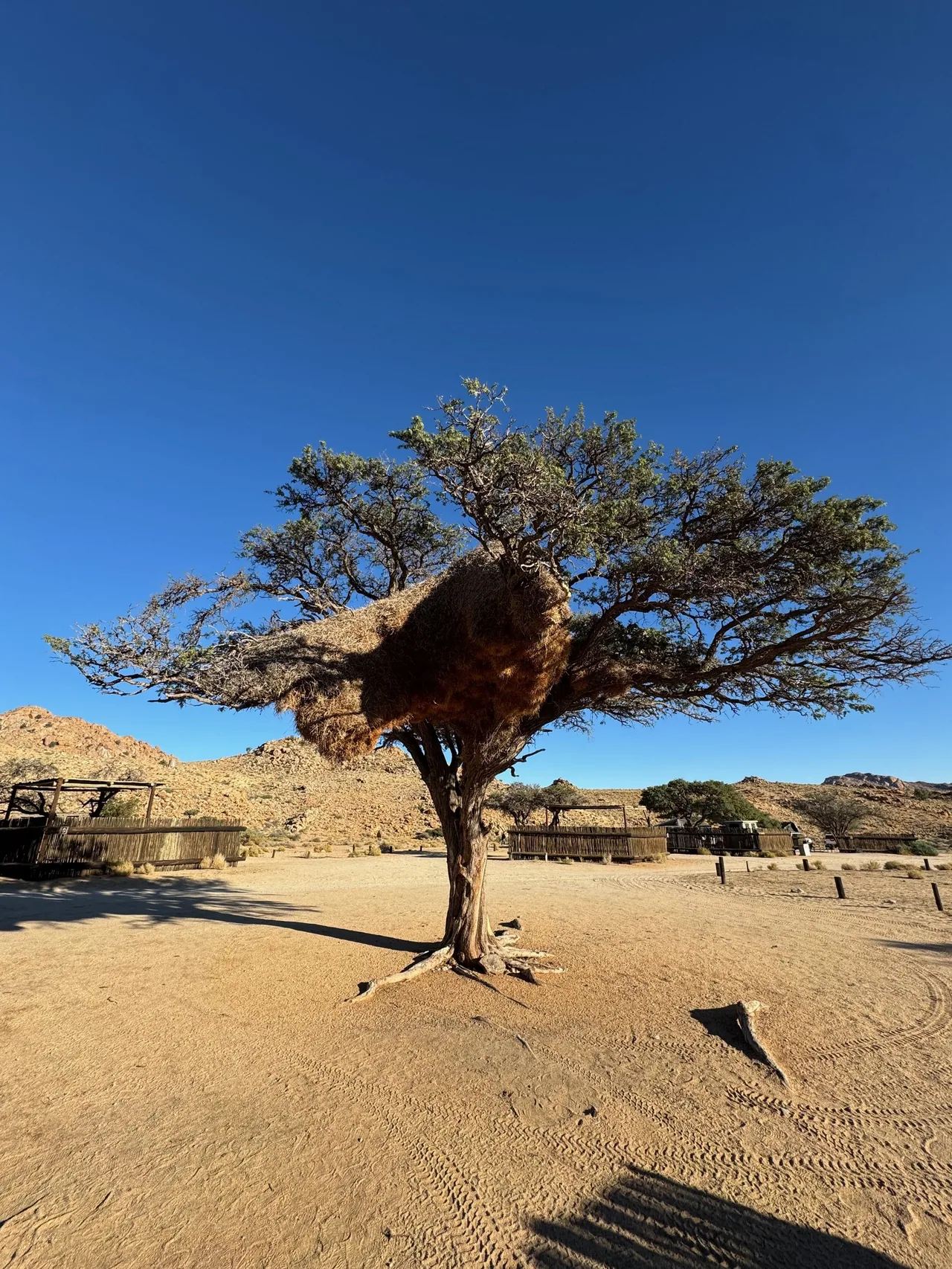
In the daylight we notice the massive nests in the crowns of the camel thorn trees around the campsite. Our guide explains that they belong to birds called sociable weaver (Philetairus socius). They are extremely social and build huge communal nests — complex structures where dozens to hundreds of birds live together. These nests can weigh over 1,000 kg.
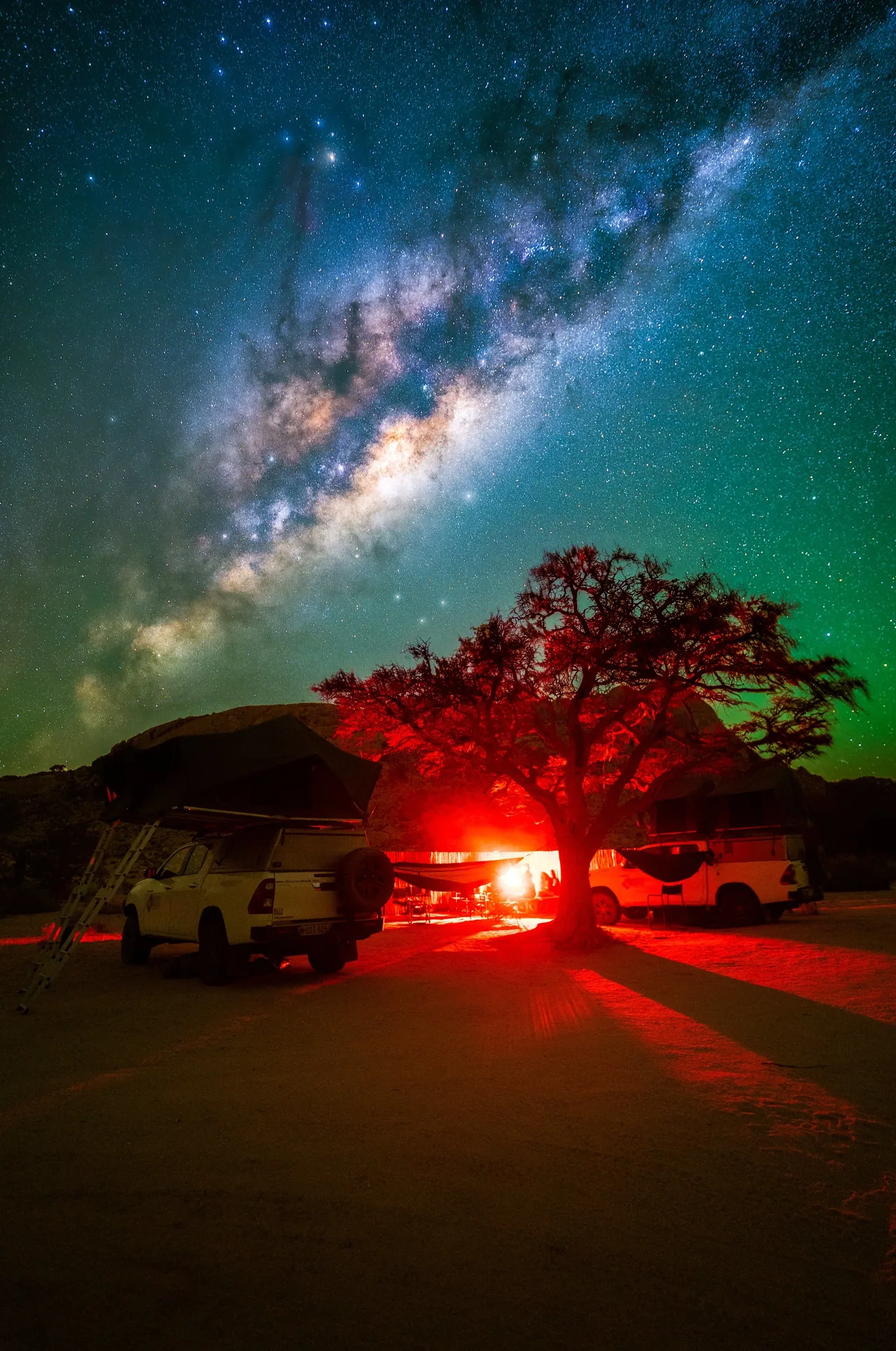
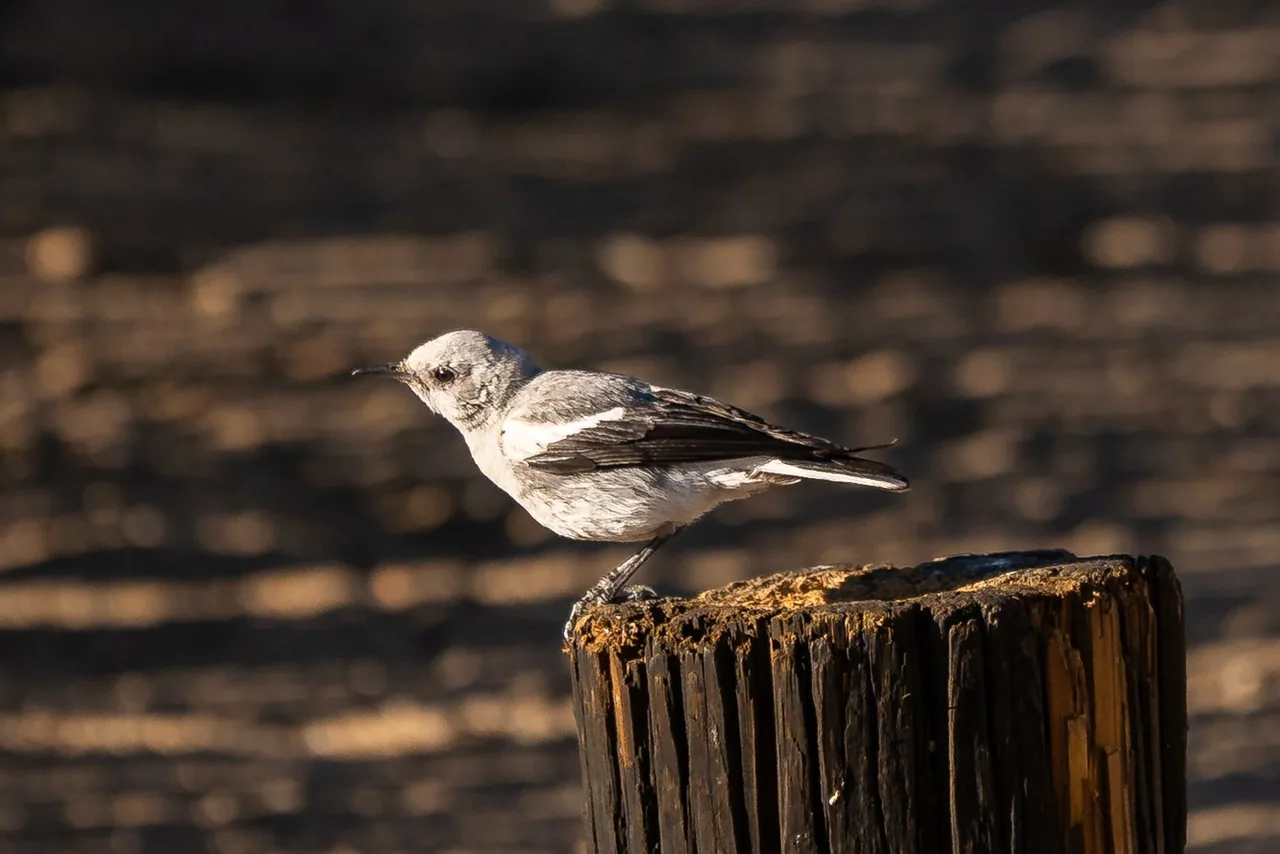
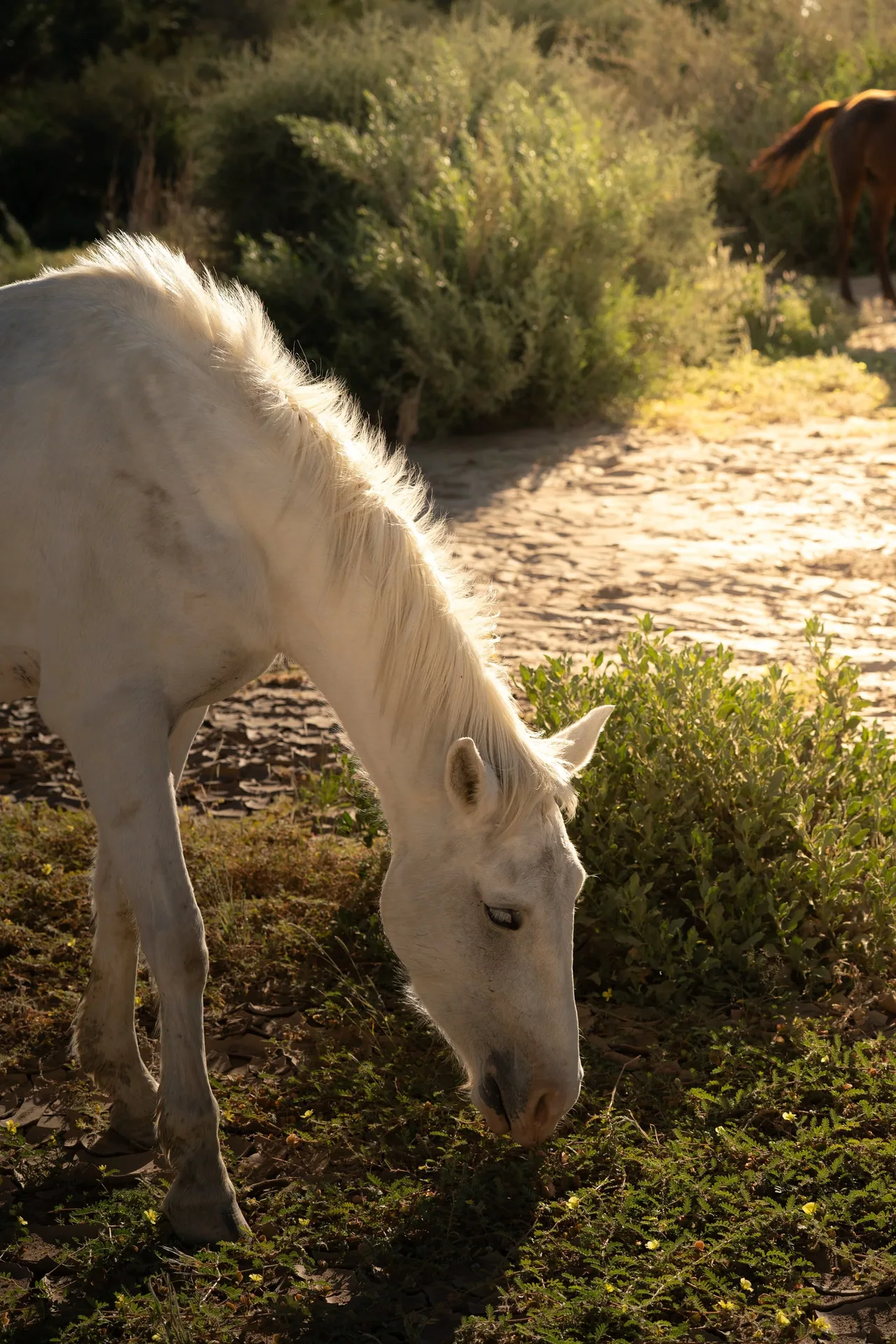
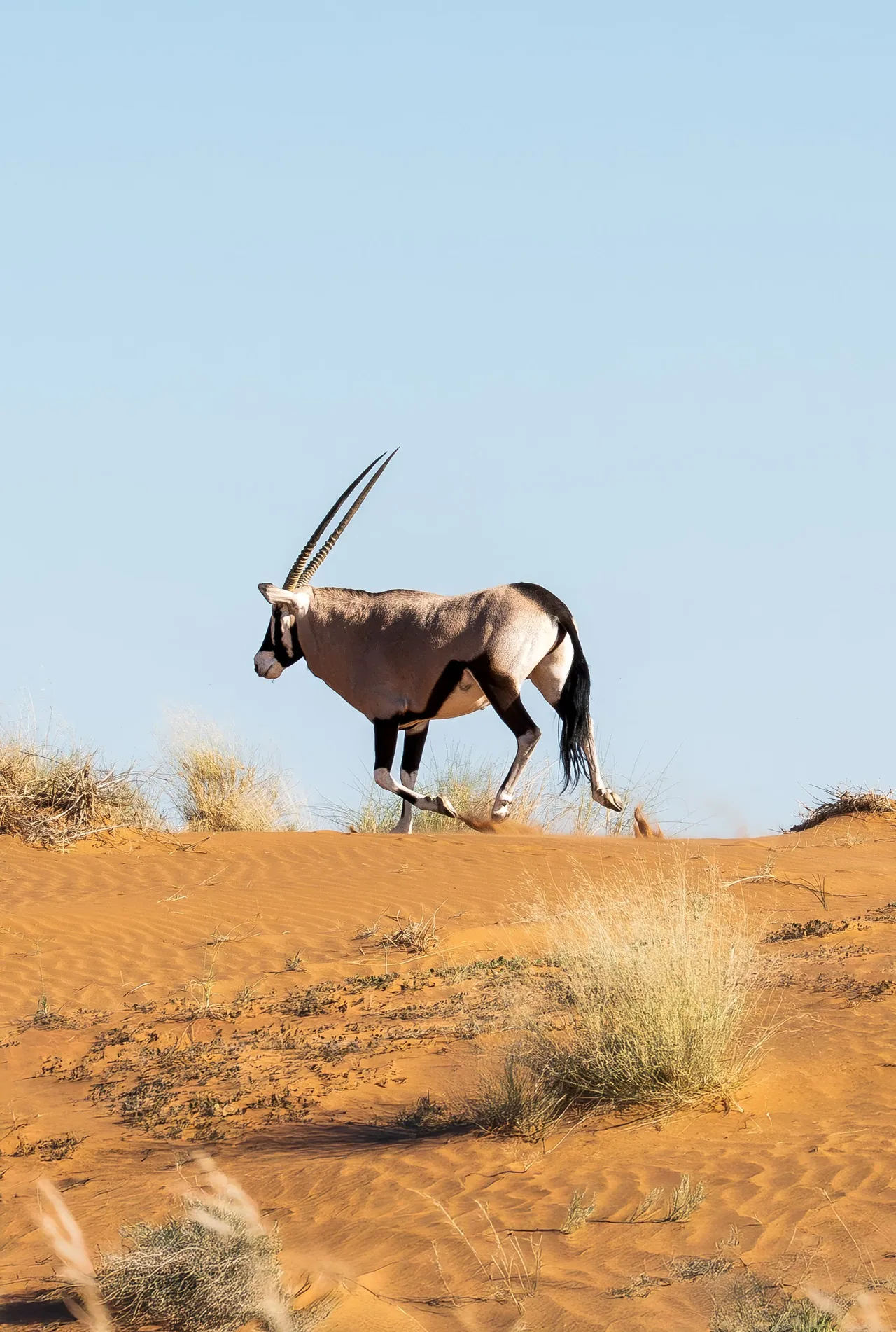
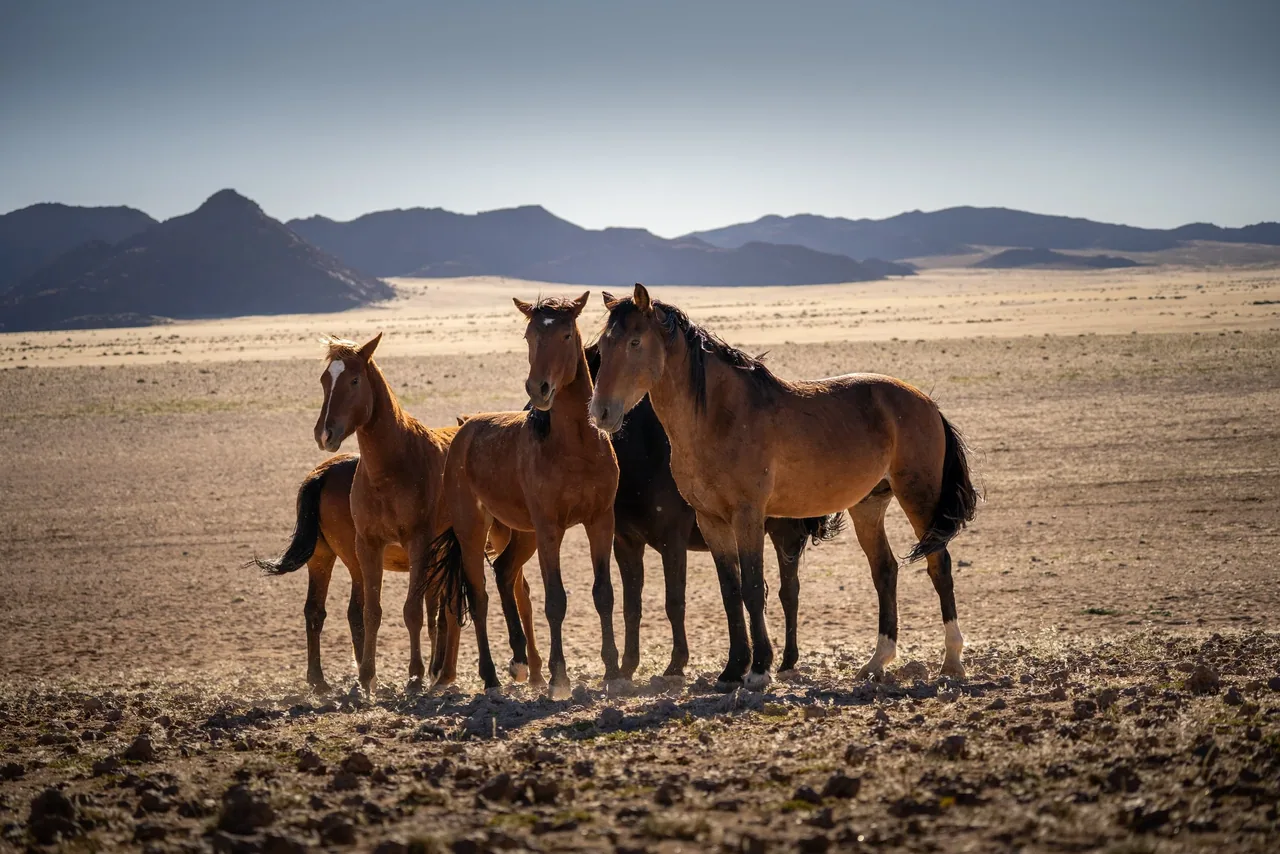
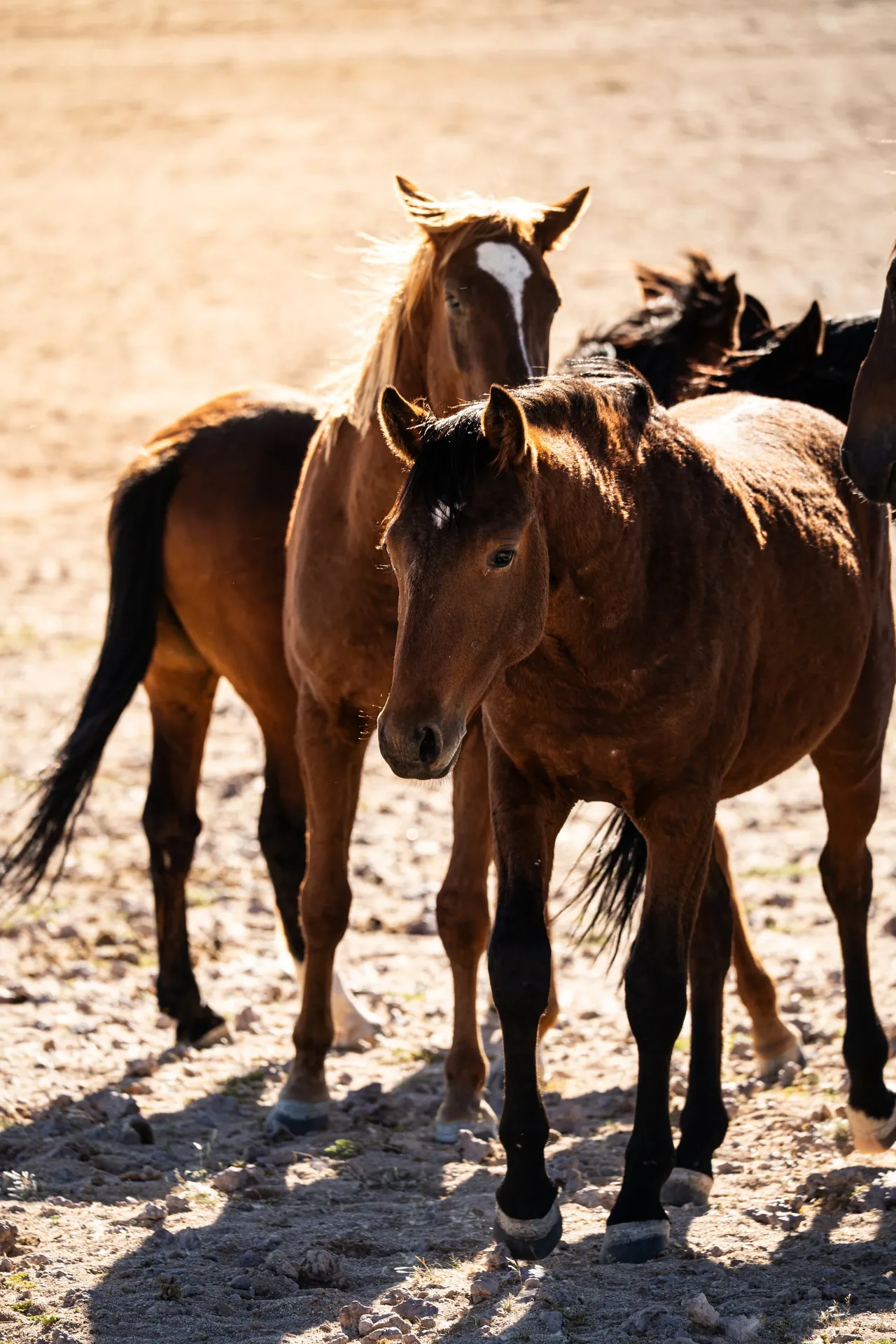
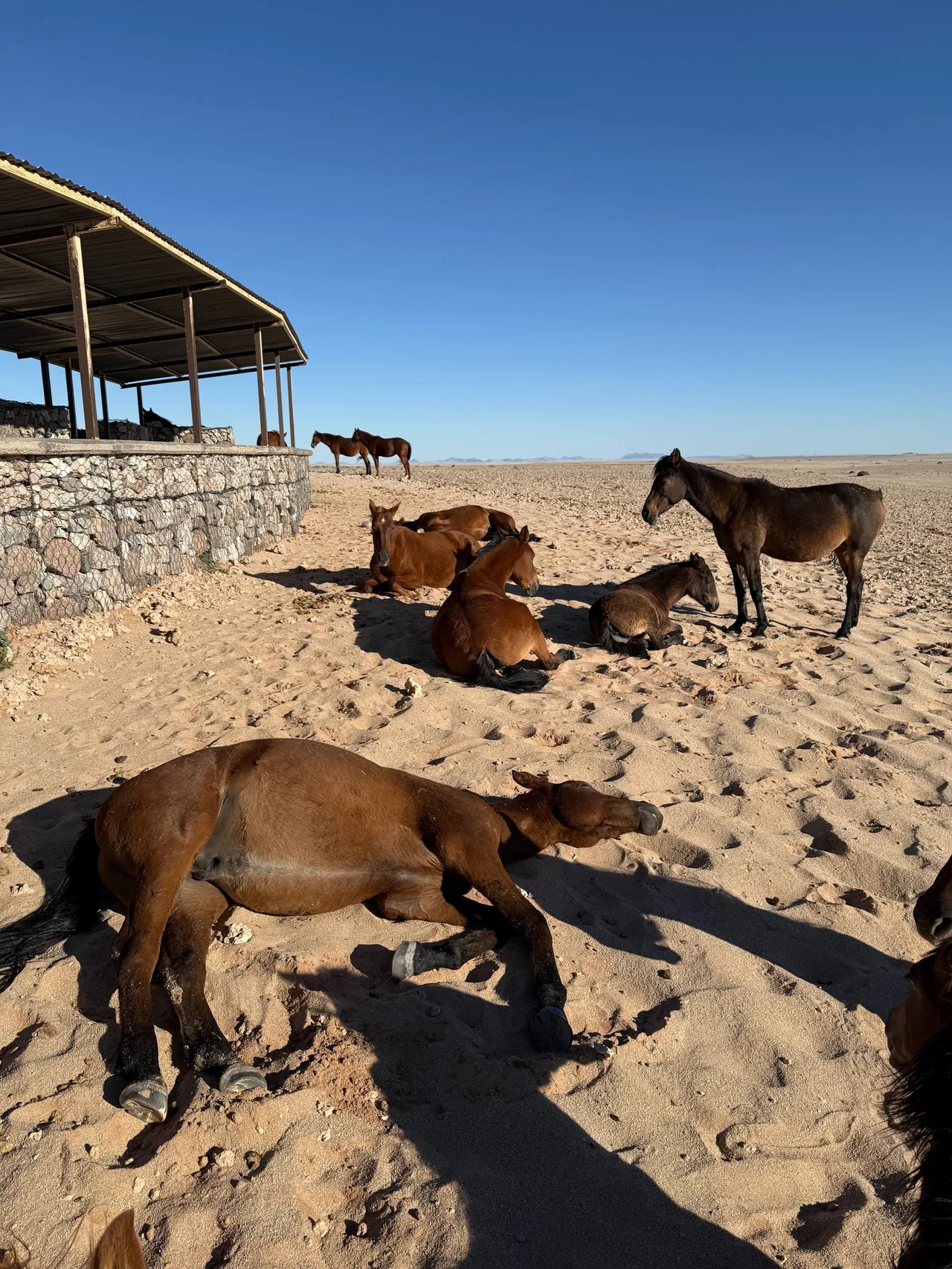
After packing up camp we head out across the Namib Desert. On the way we spot our first oryx. A little later we stop by a waterhole where wild horses gather — the famous Namib Desert Horses. They are feral horses that have adapted to the harsh desert environment and can survive up to 30 hours without water. Their origin is uncertain, but genetic tests suggest they come from European riding or military horses from the colonial period or World War I.
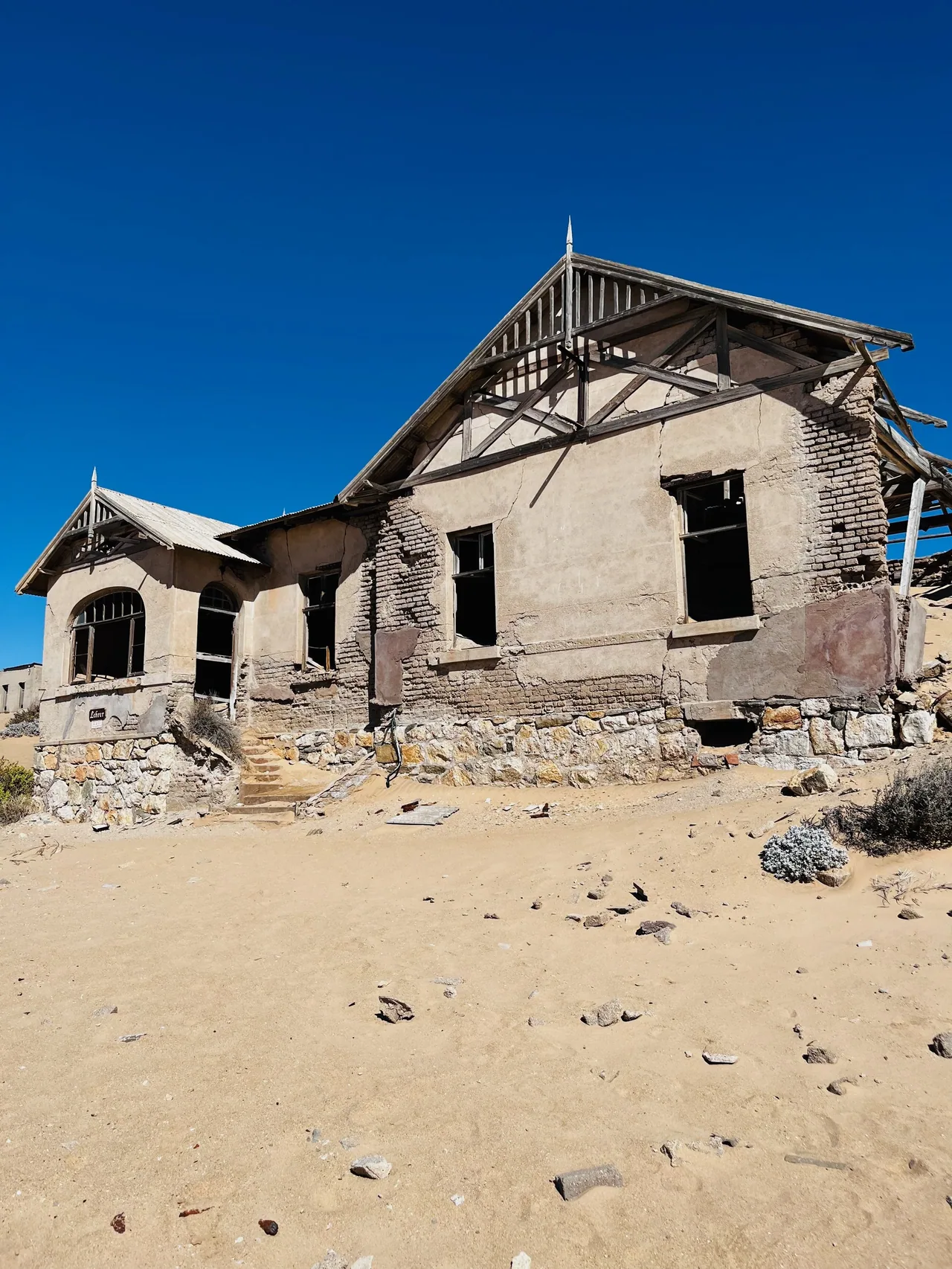
In the afternoon we reach Kolmanskop, a ghost town and one of the most fascinating places in Namibia — a town literally being swallowed by the desert. It was founded after a diamond was discovered here in 1908 by a German railway worker, Zacharias Lewala. Within a few years, a rich German town rose out of the sand, with a hospital, school, theatre, ice factory, power plant, bowling alley, casino and even the first X-ray machine in Africa.
For a long time, people simply picked diamonds off the surface.
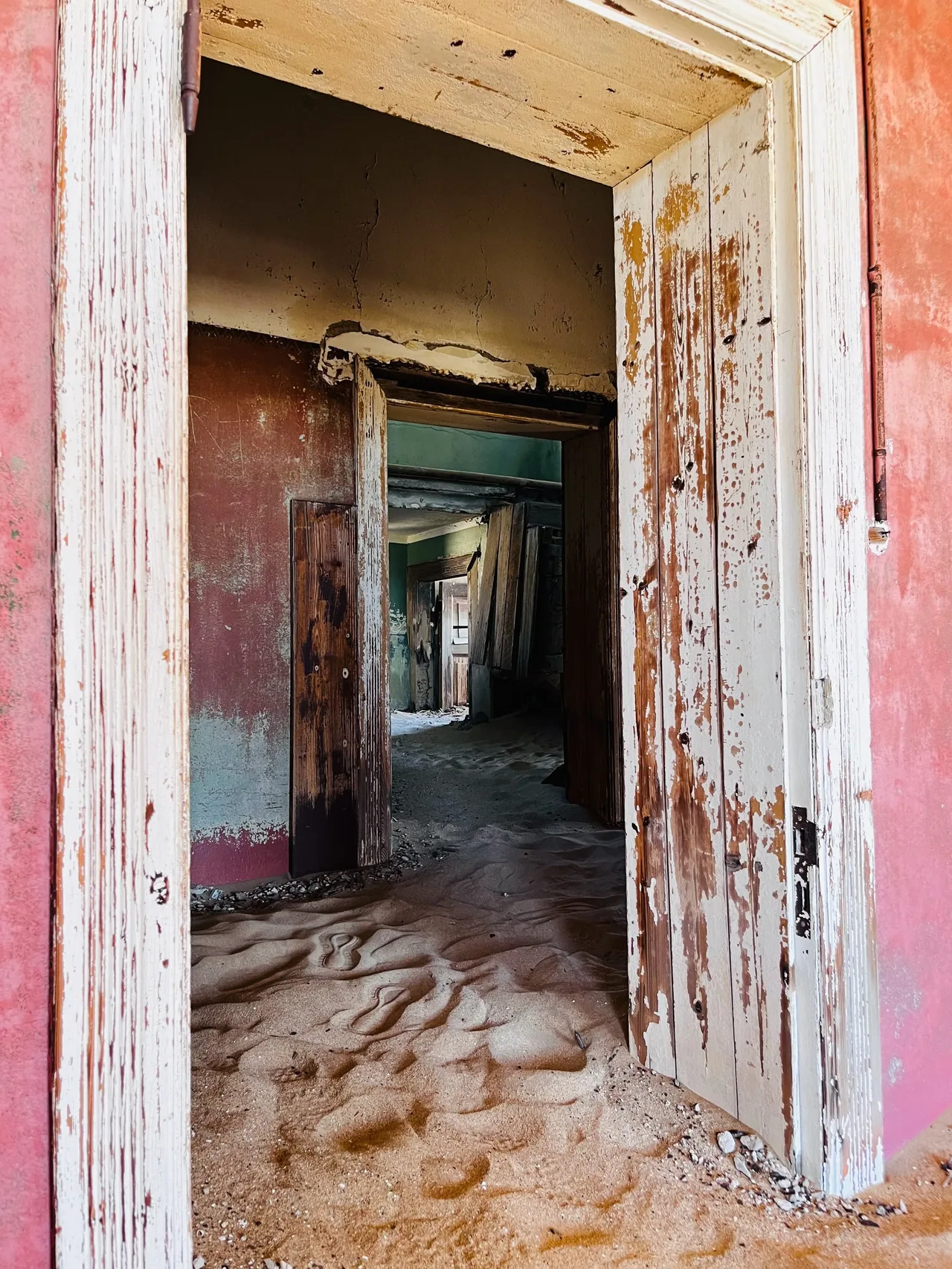
After World War I, the quality and quantity of diamonds decreased, and in 1928 a much richer deposit was found further south. Kolmanskop slowly lost its importance and by 1956 it was completely abandoned. Today, dunes fill the streets and rooms, sand pours through windows and doors into houses.
Our tour doesn’t last long. My girlfriend faints from dehydration, and shortly after that I start feeling really bad as well. The rest of the group continues exploring while we retreat to the car to rest. The combination of huge temperature differences, the beginning of an infection and not drinking enough water is a bad recipe. All the photos I show from this place are from our friends who finished the tour.
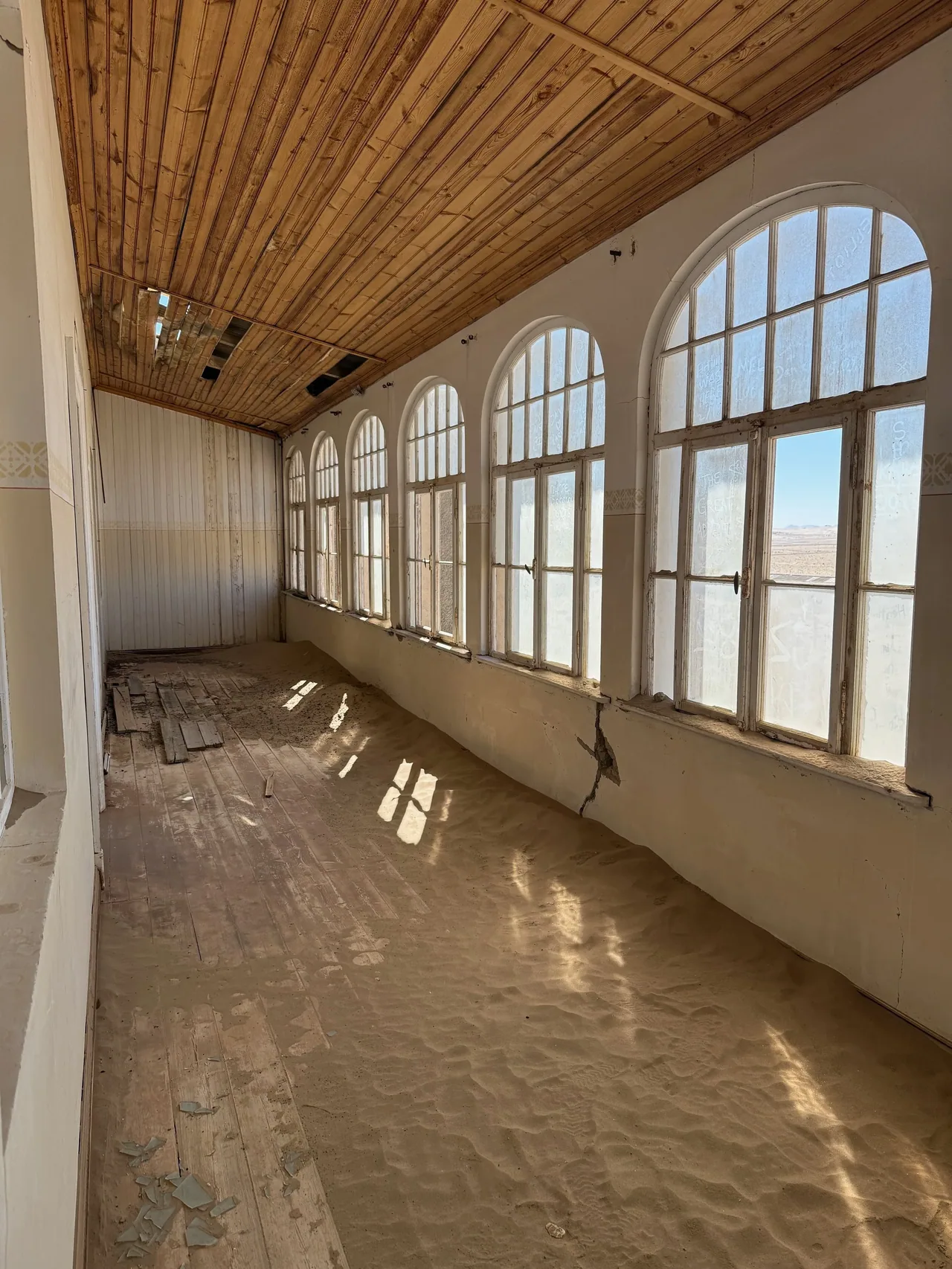
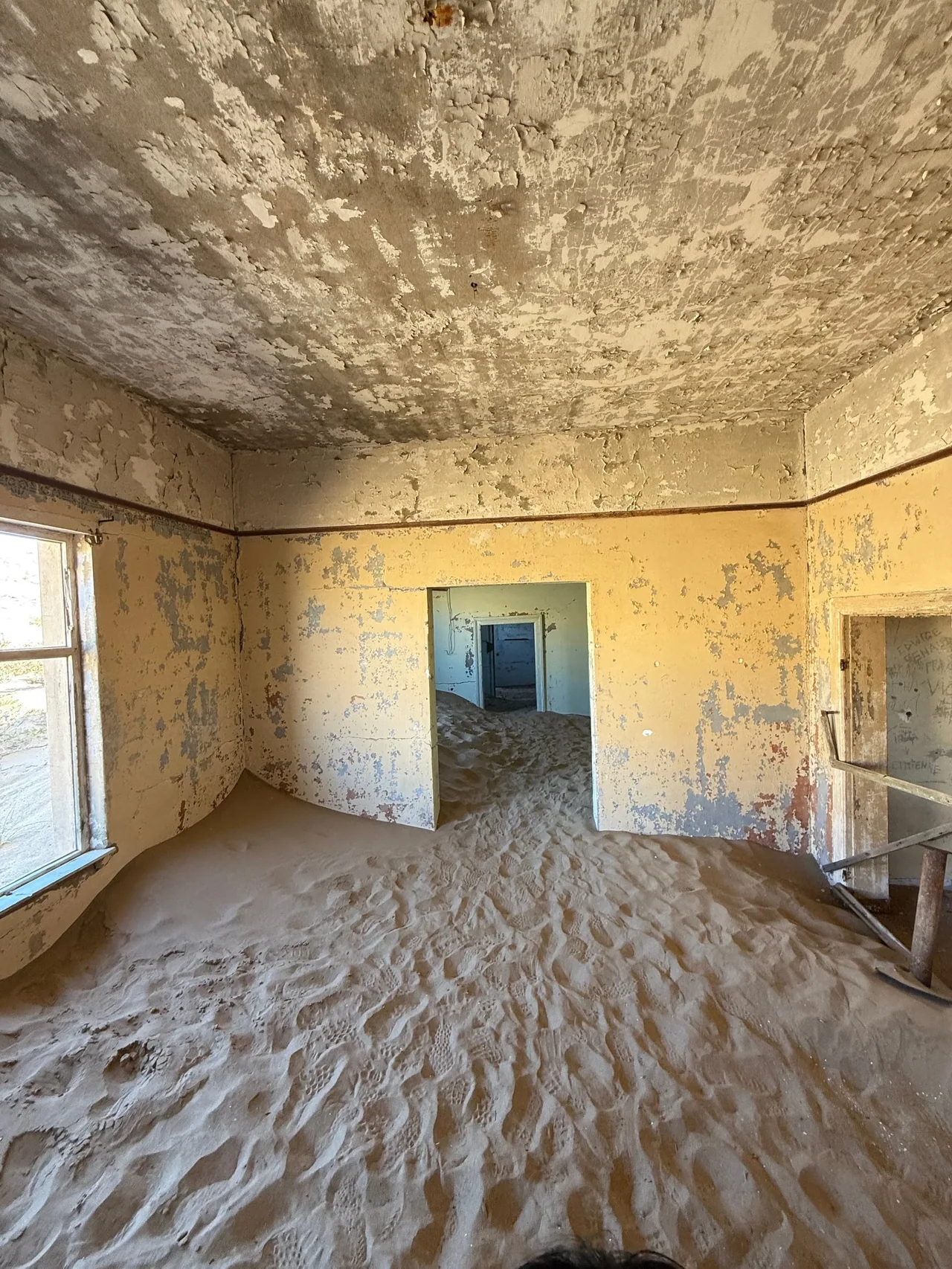
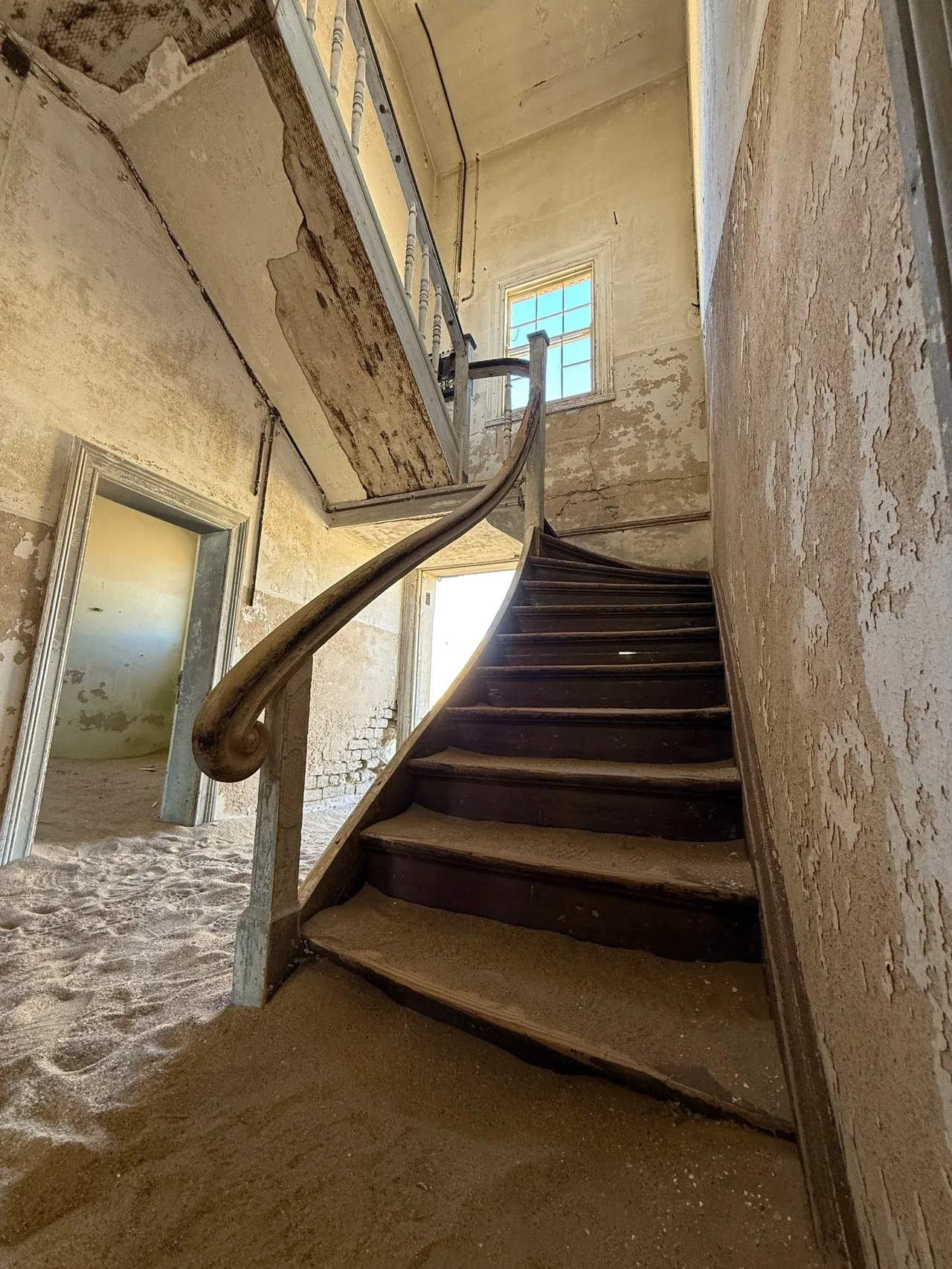
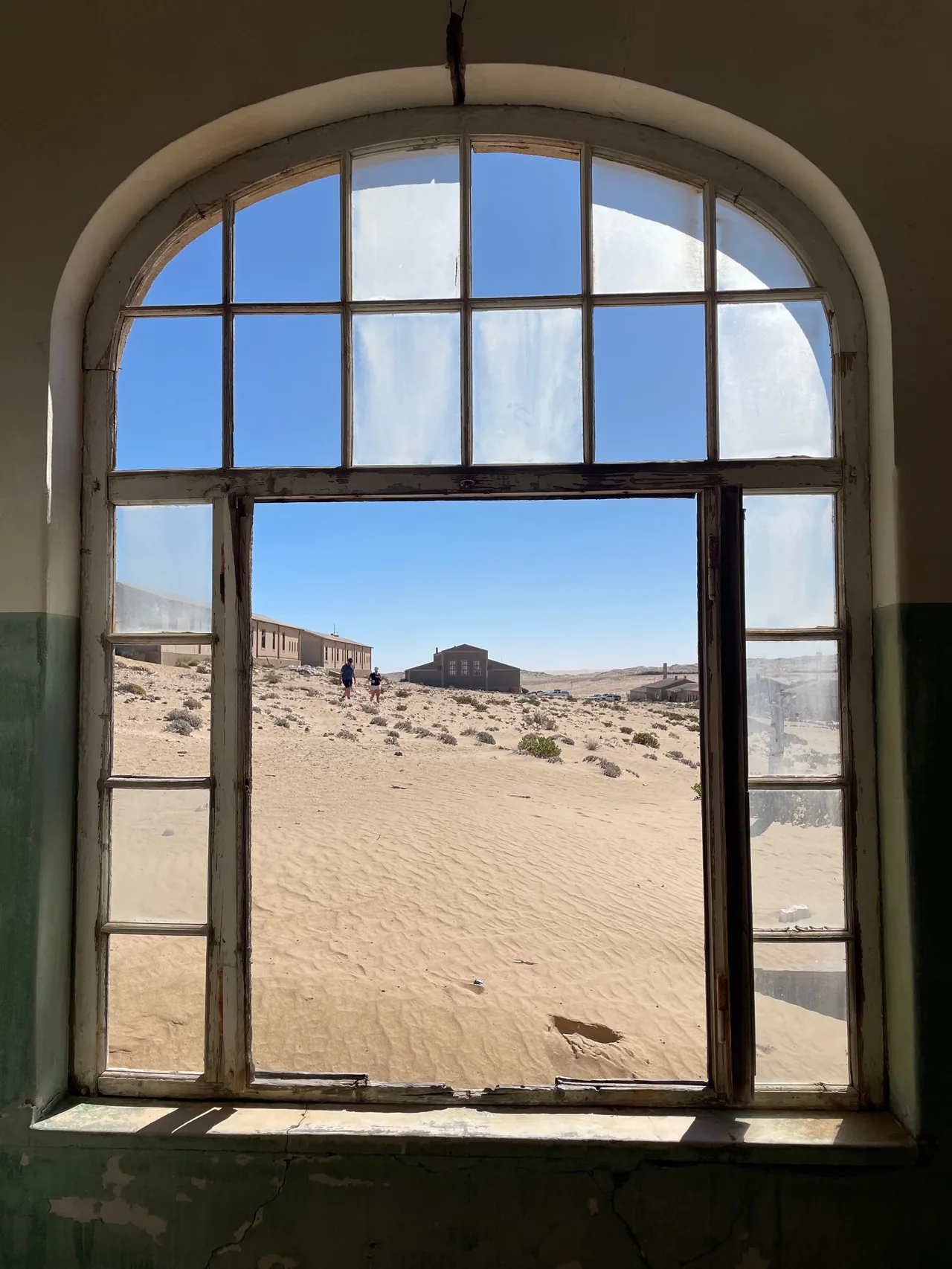
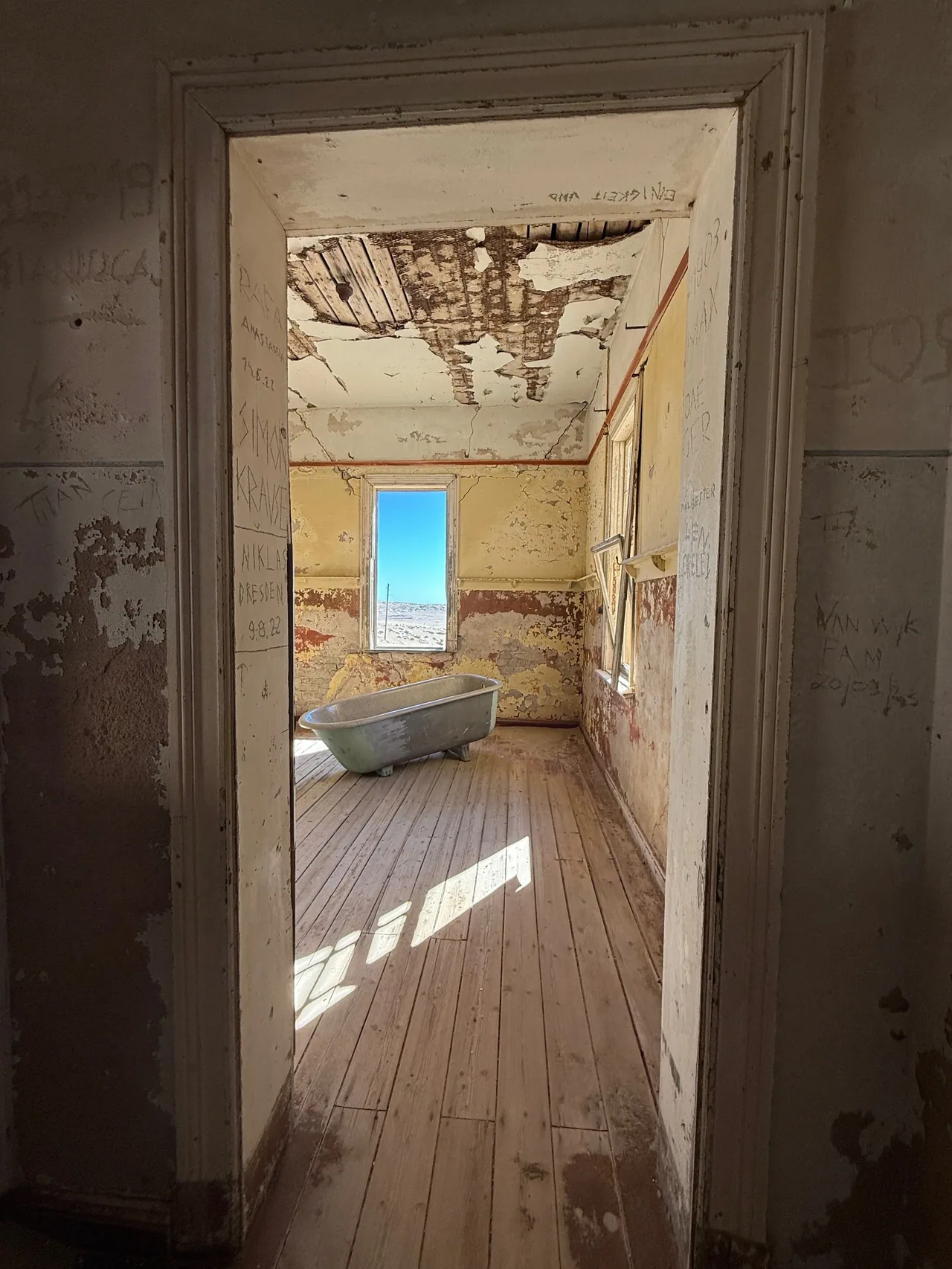
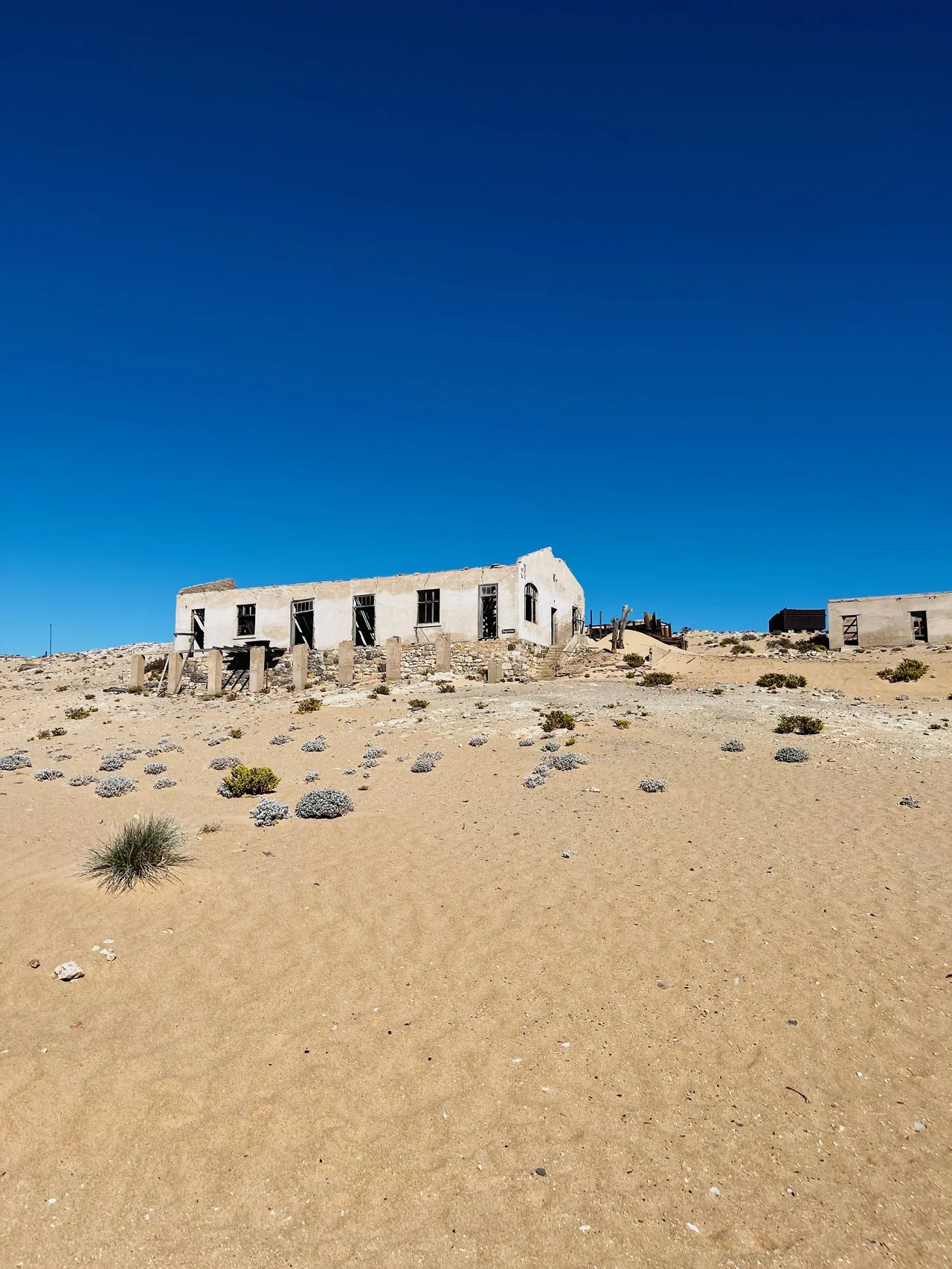
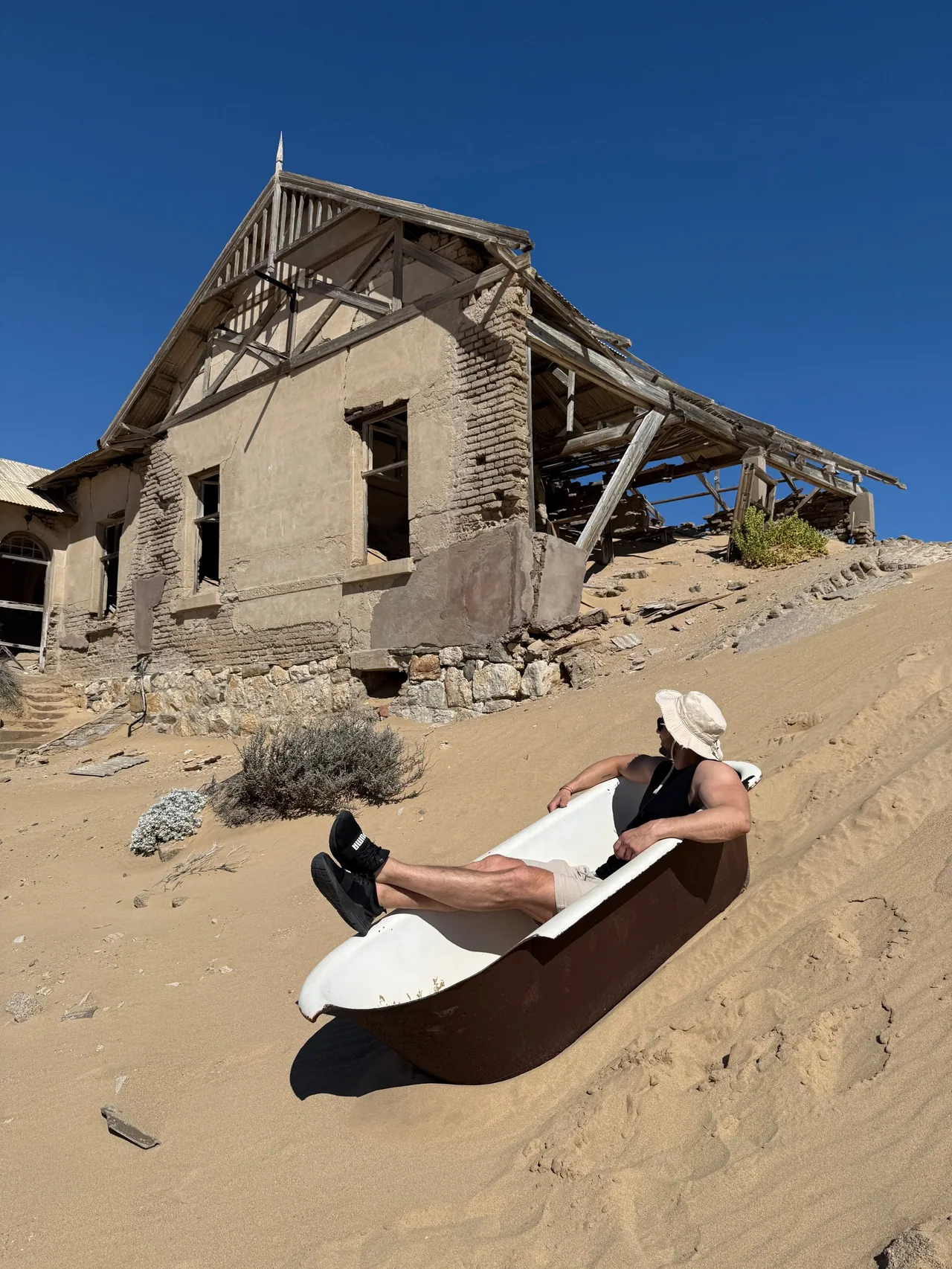
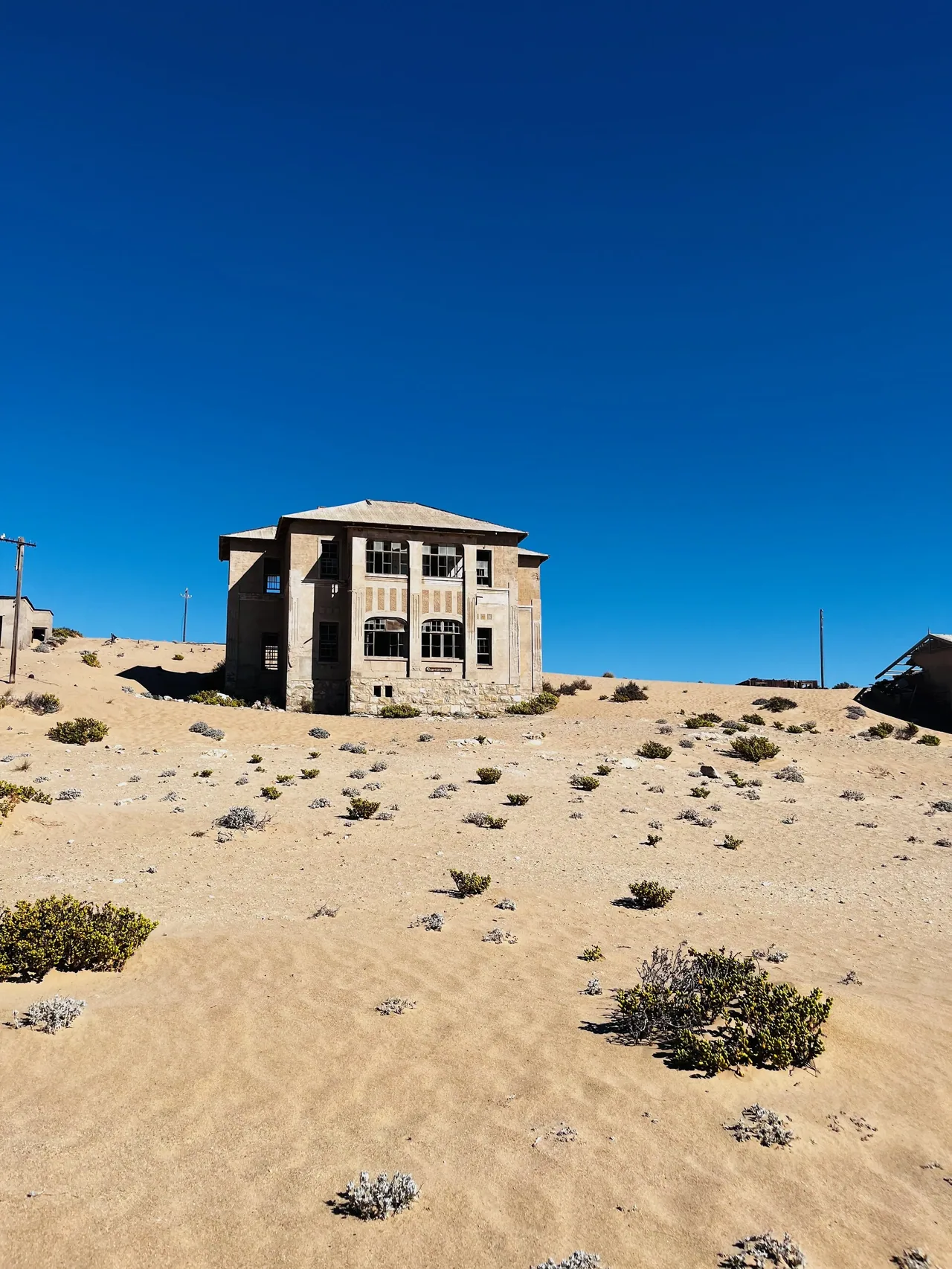
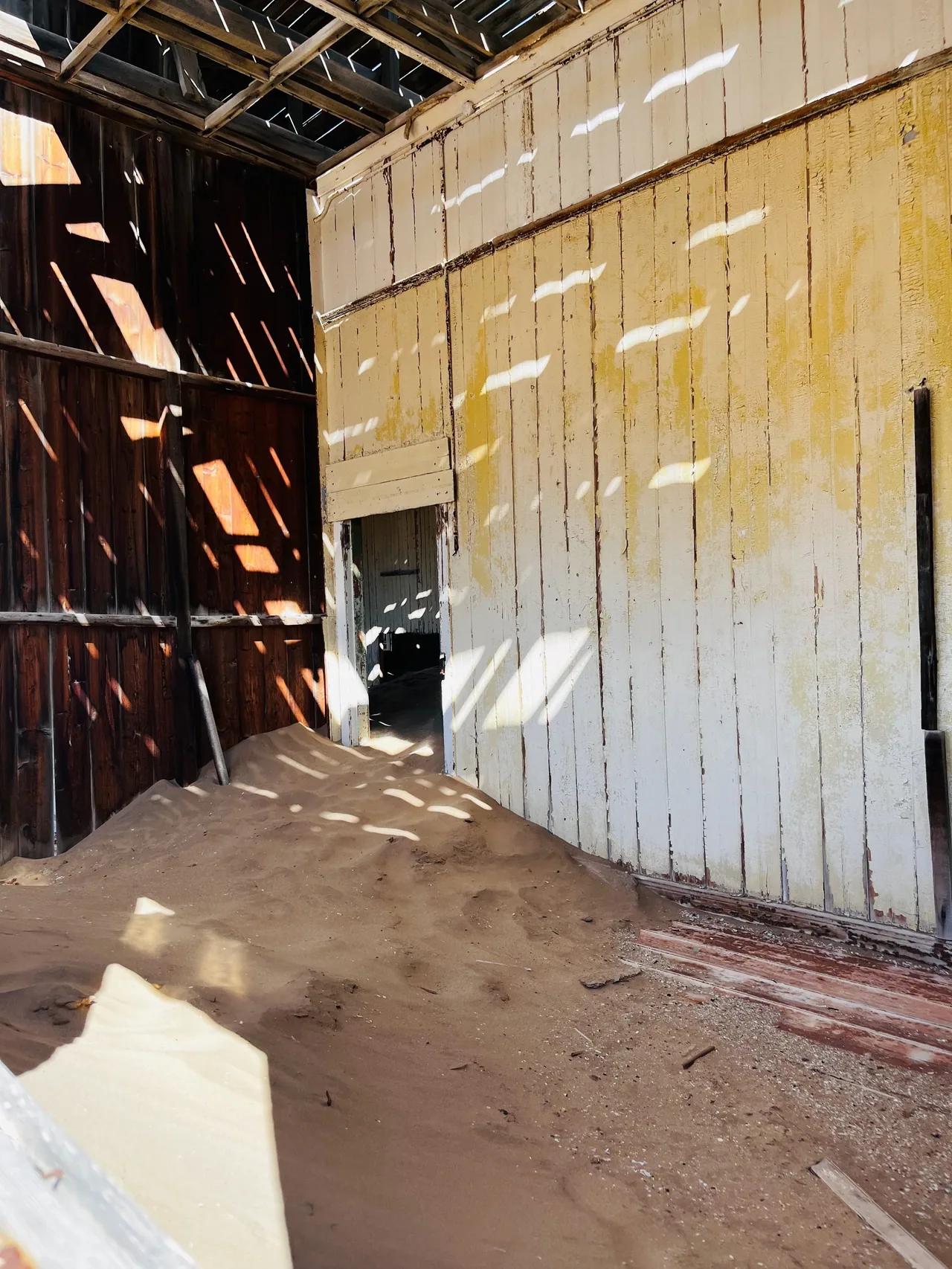
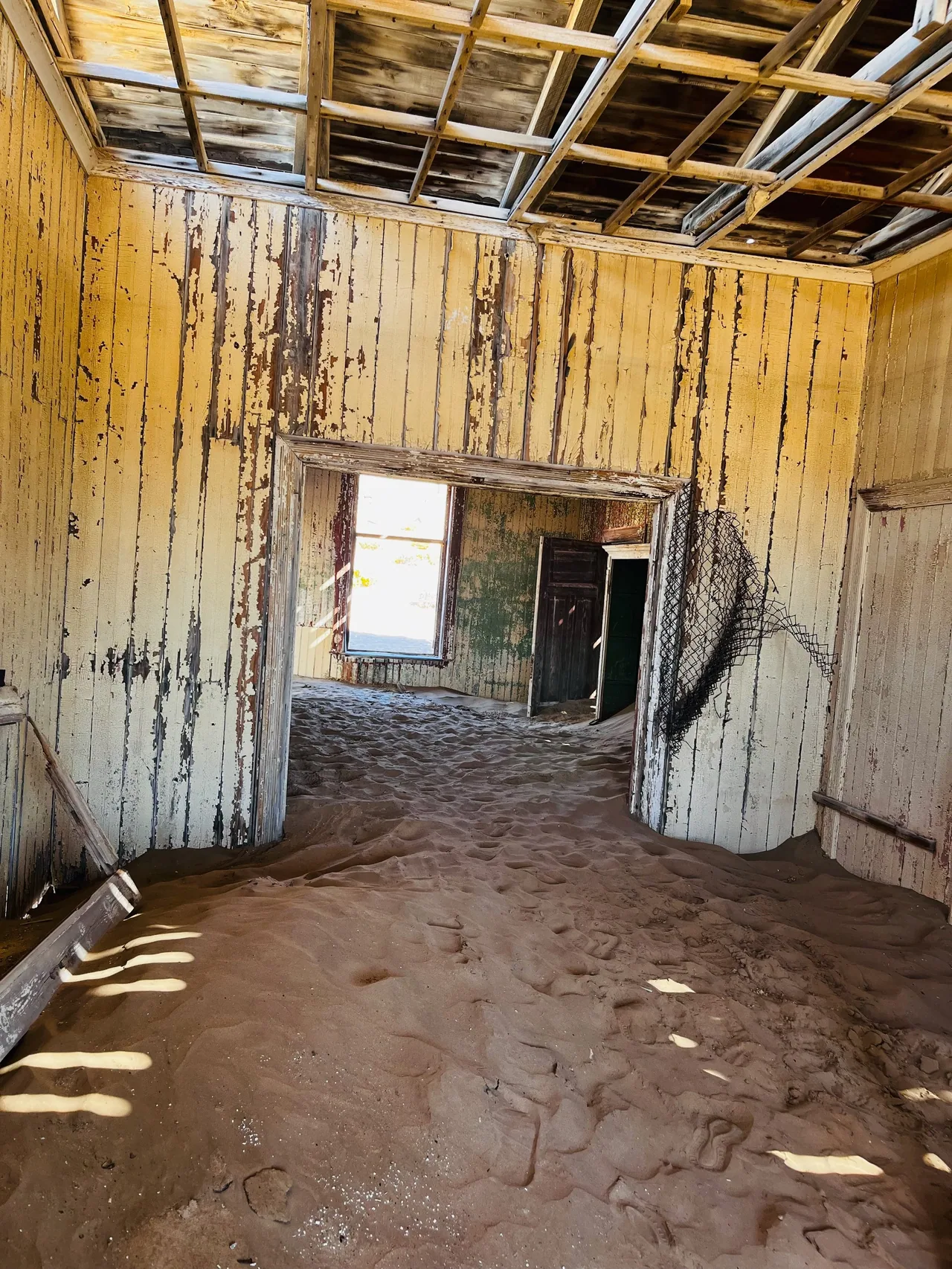
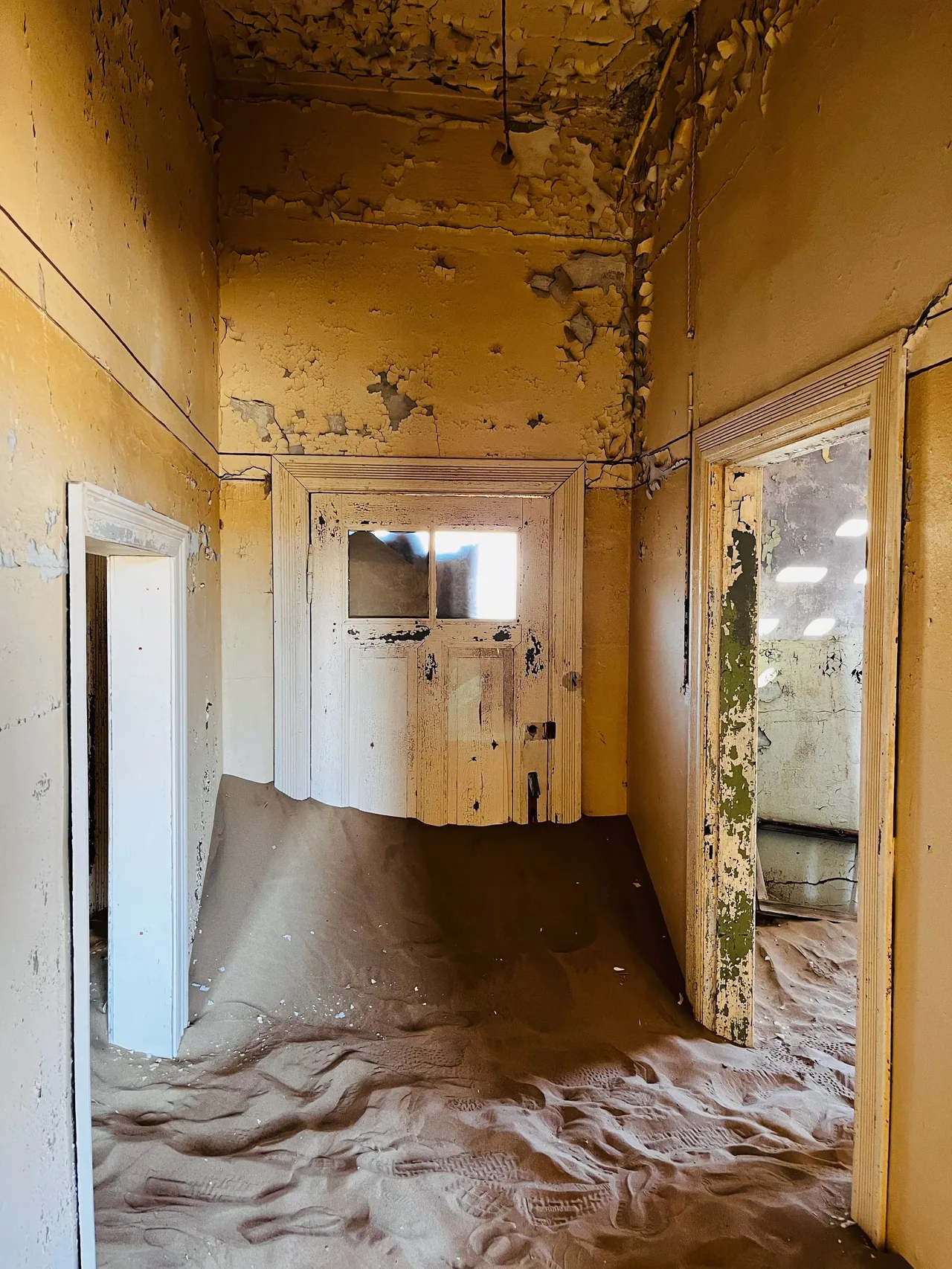
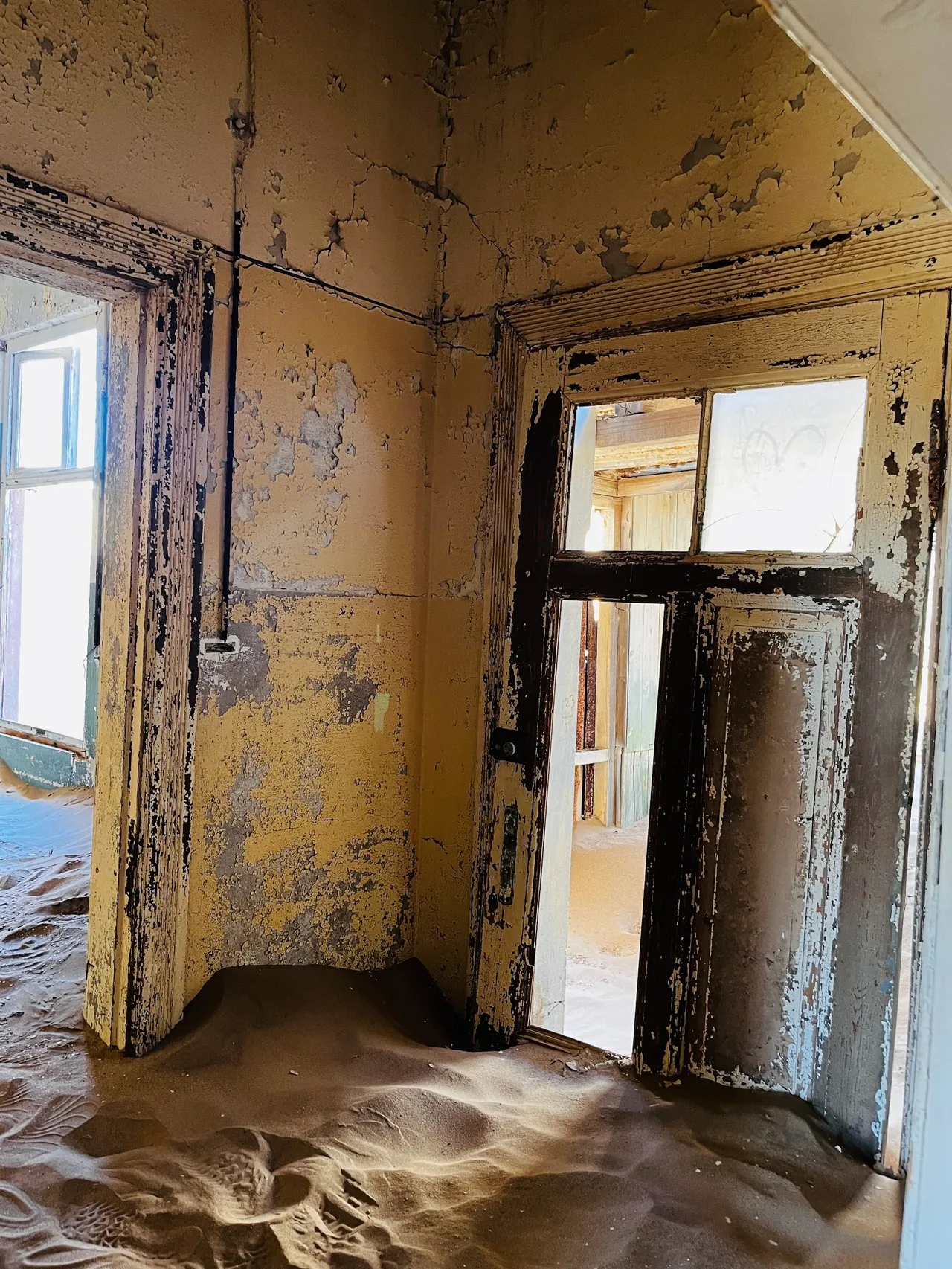
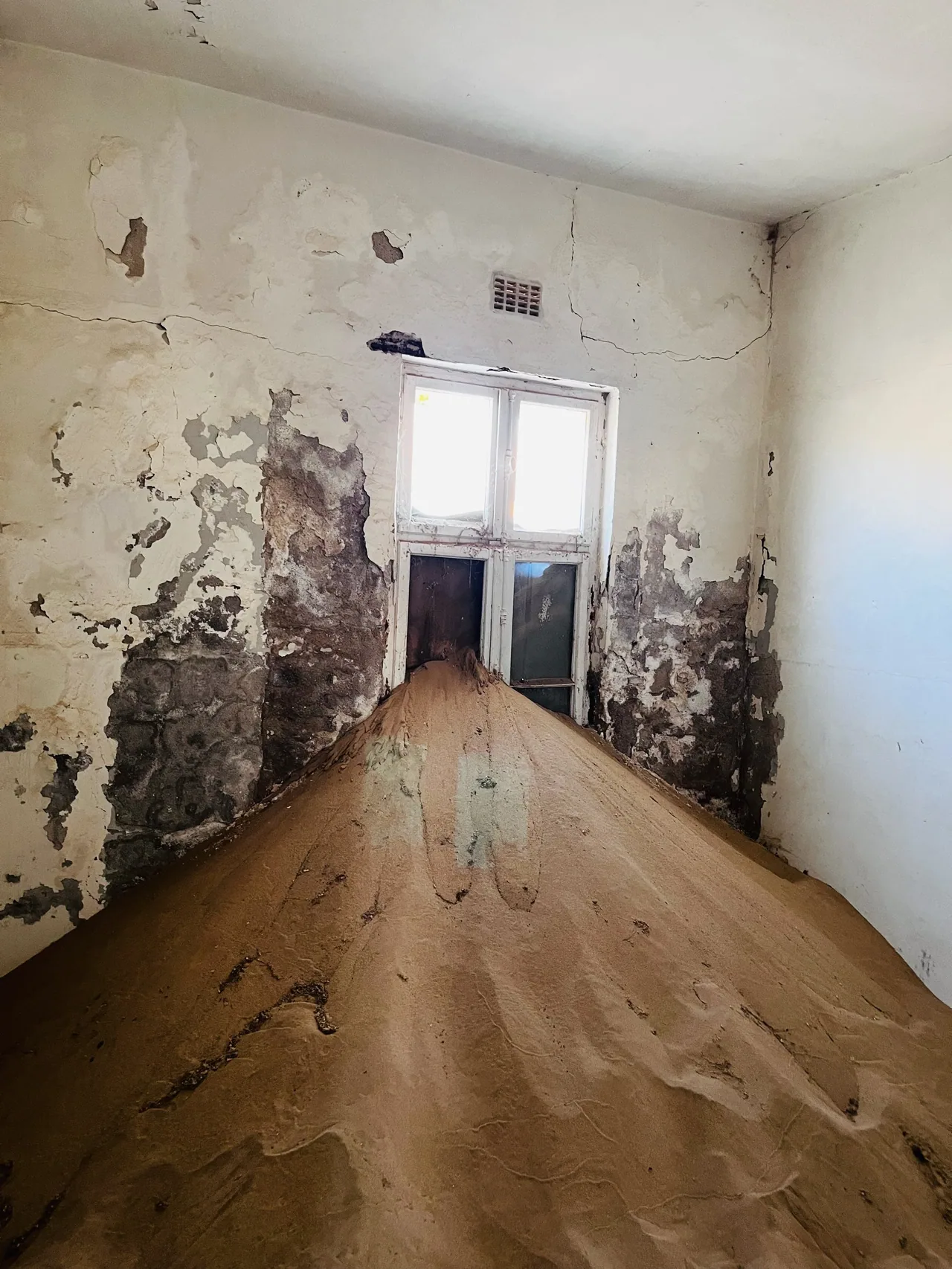
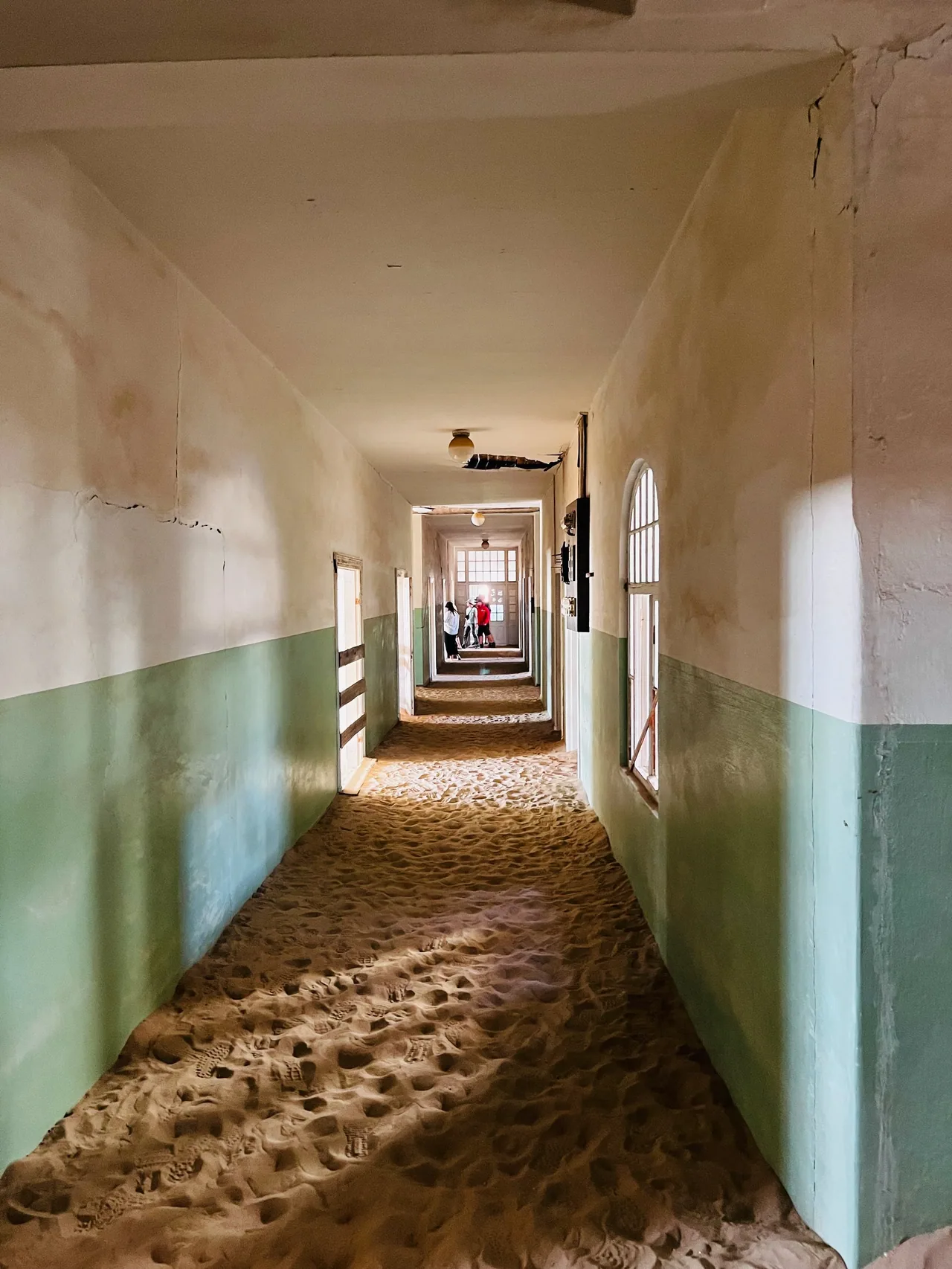
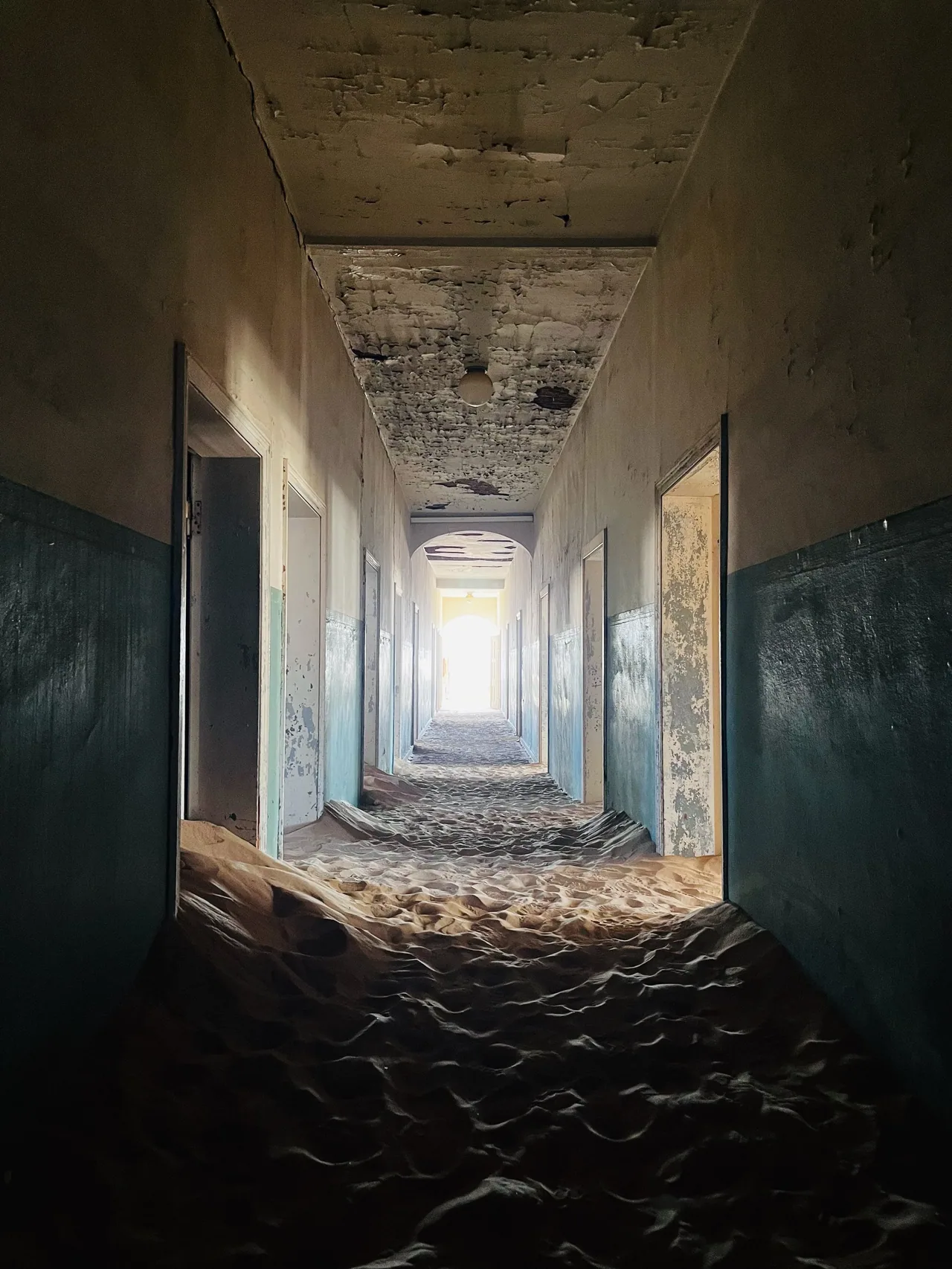
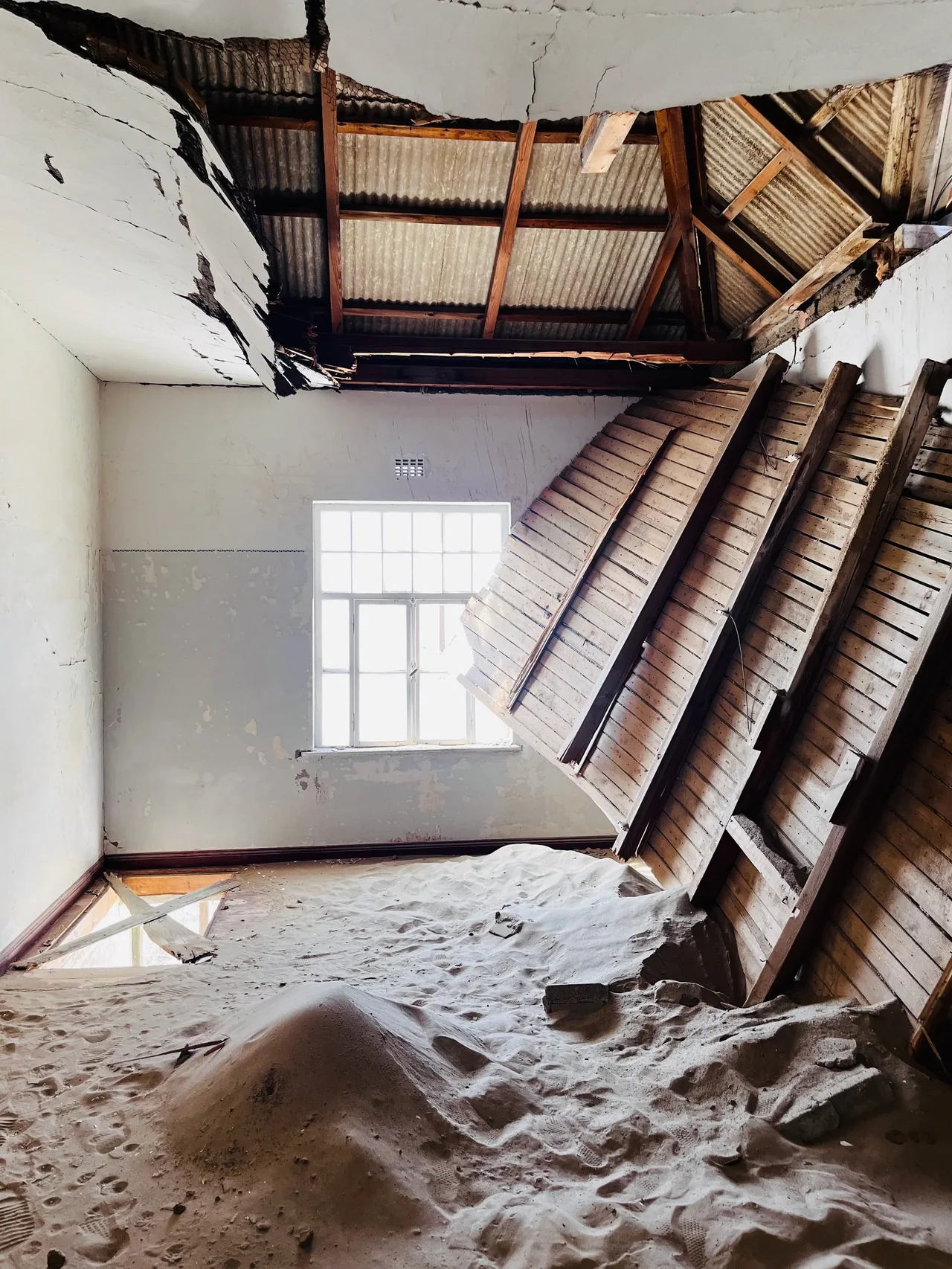
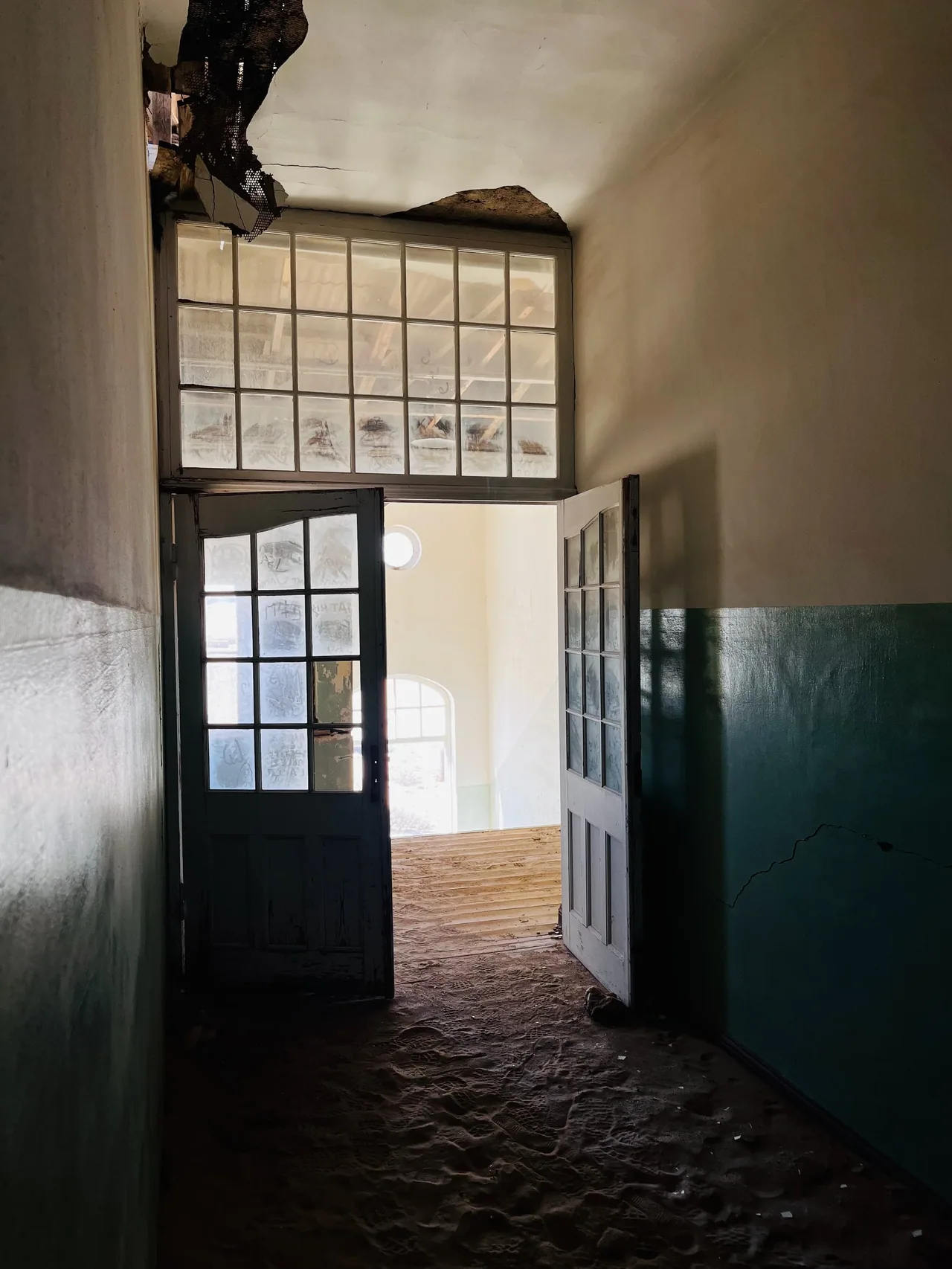
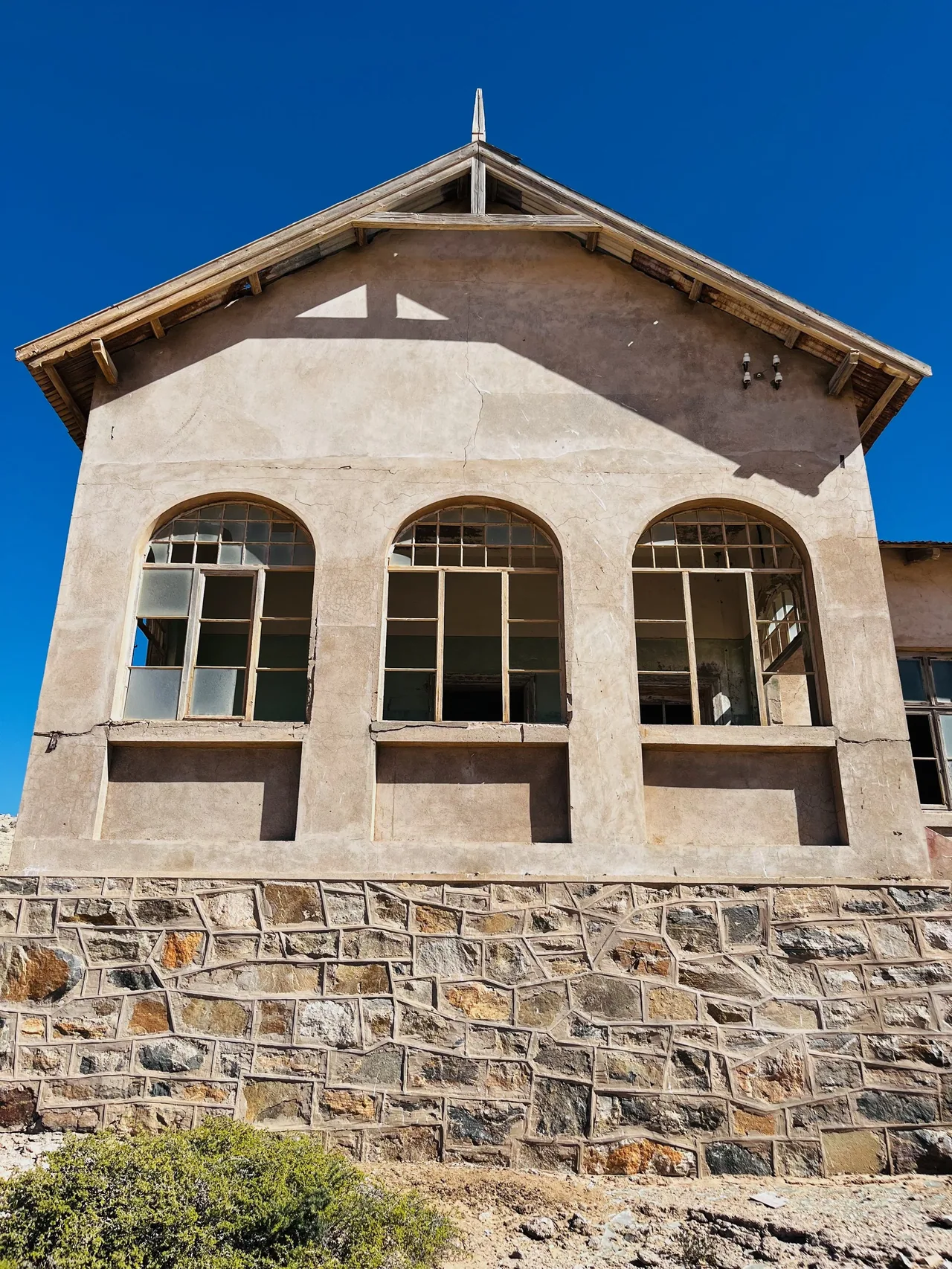
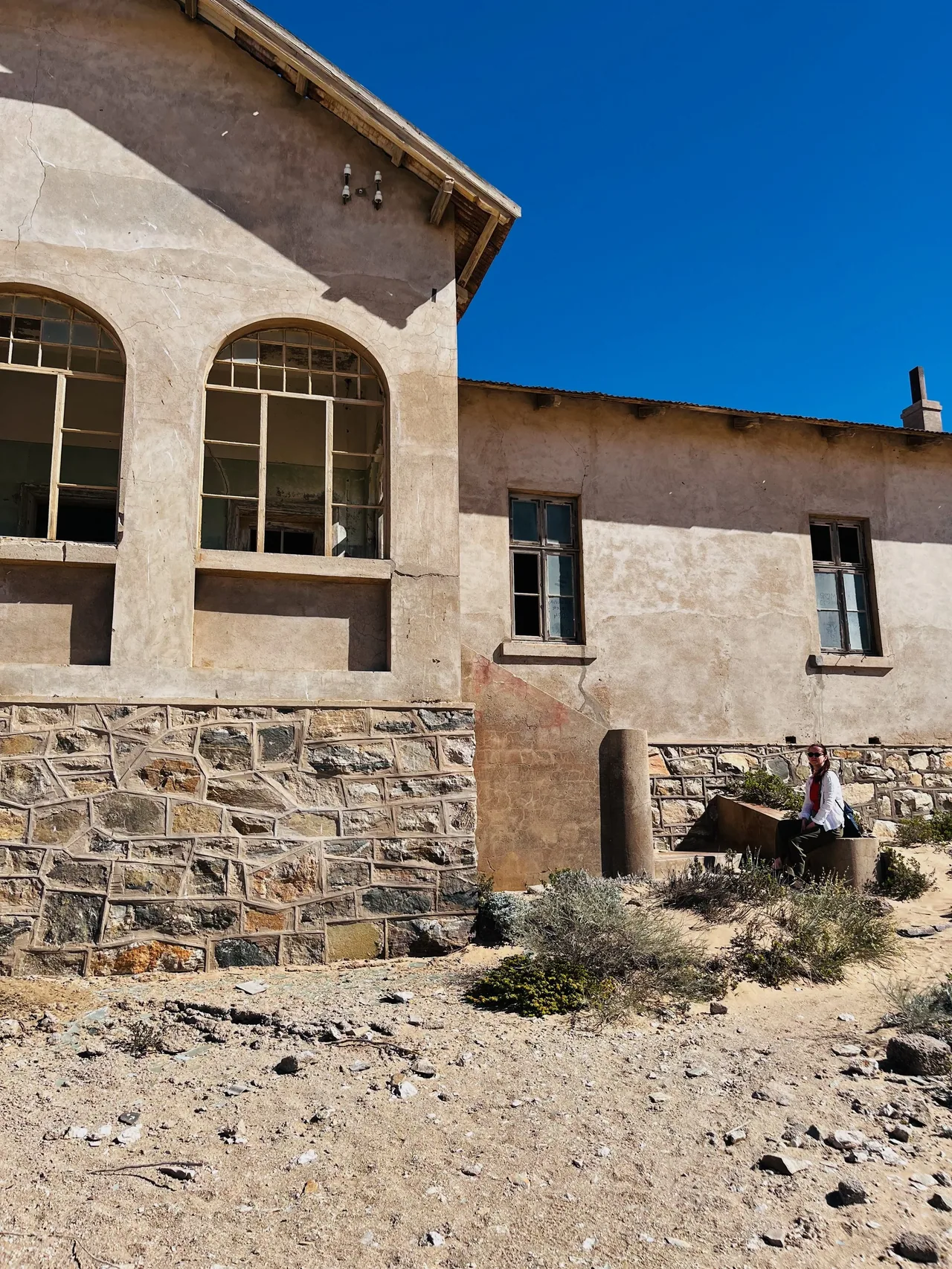
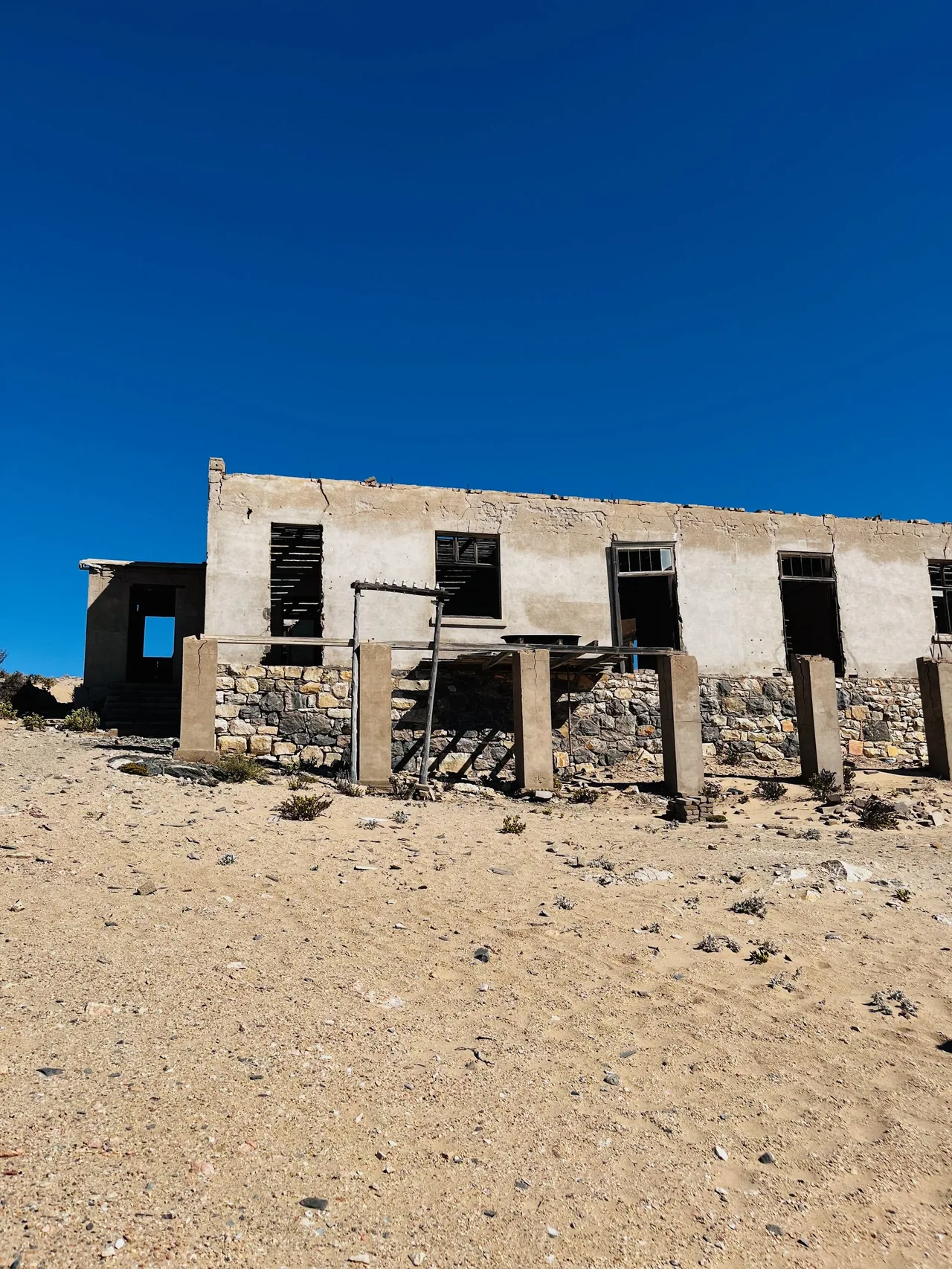
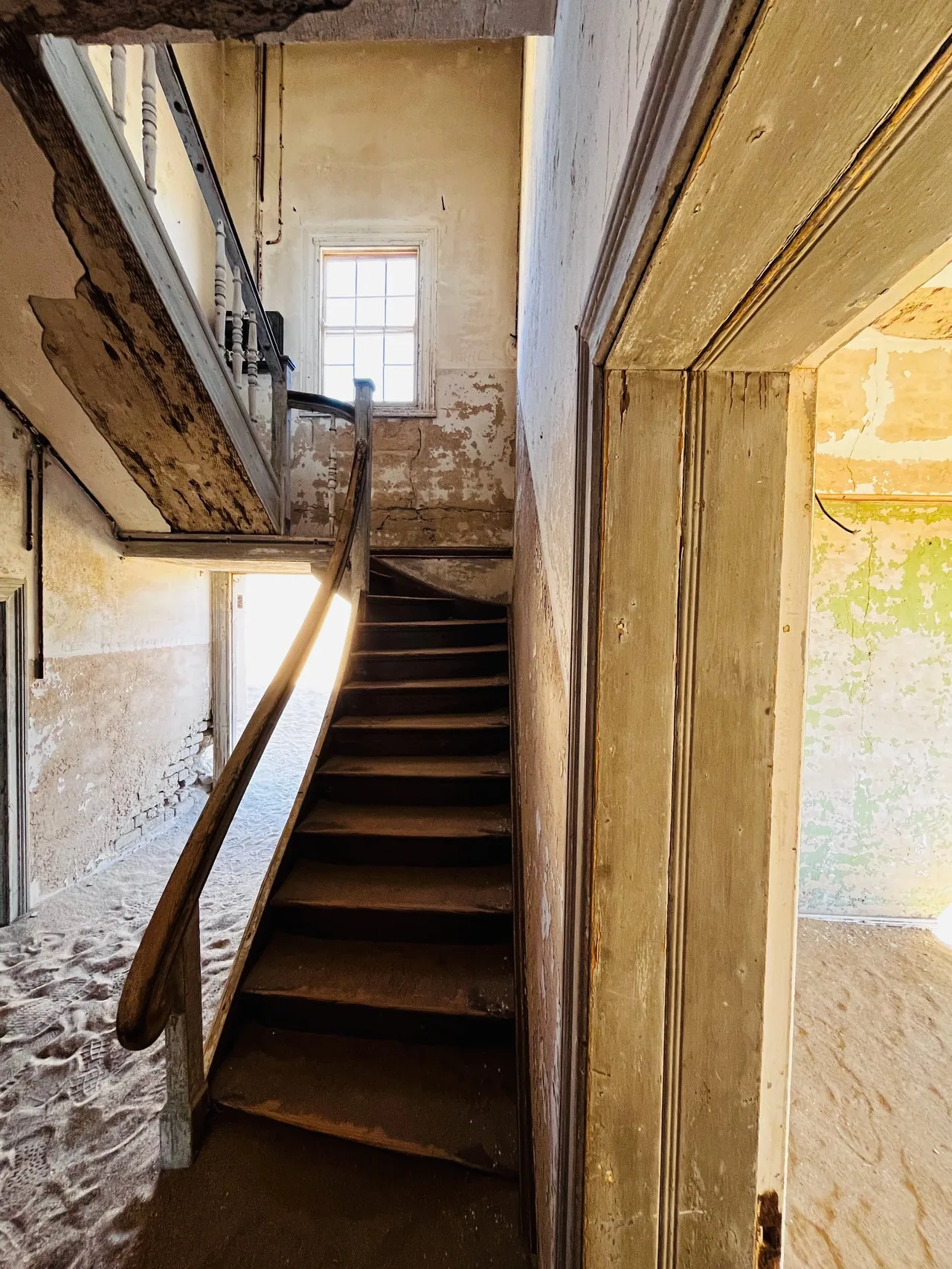
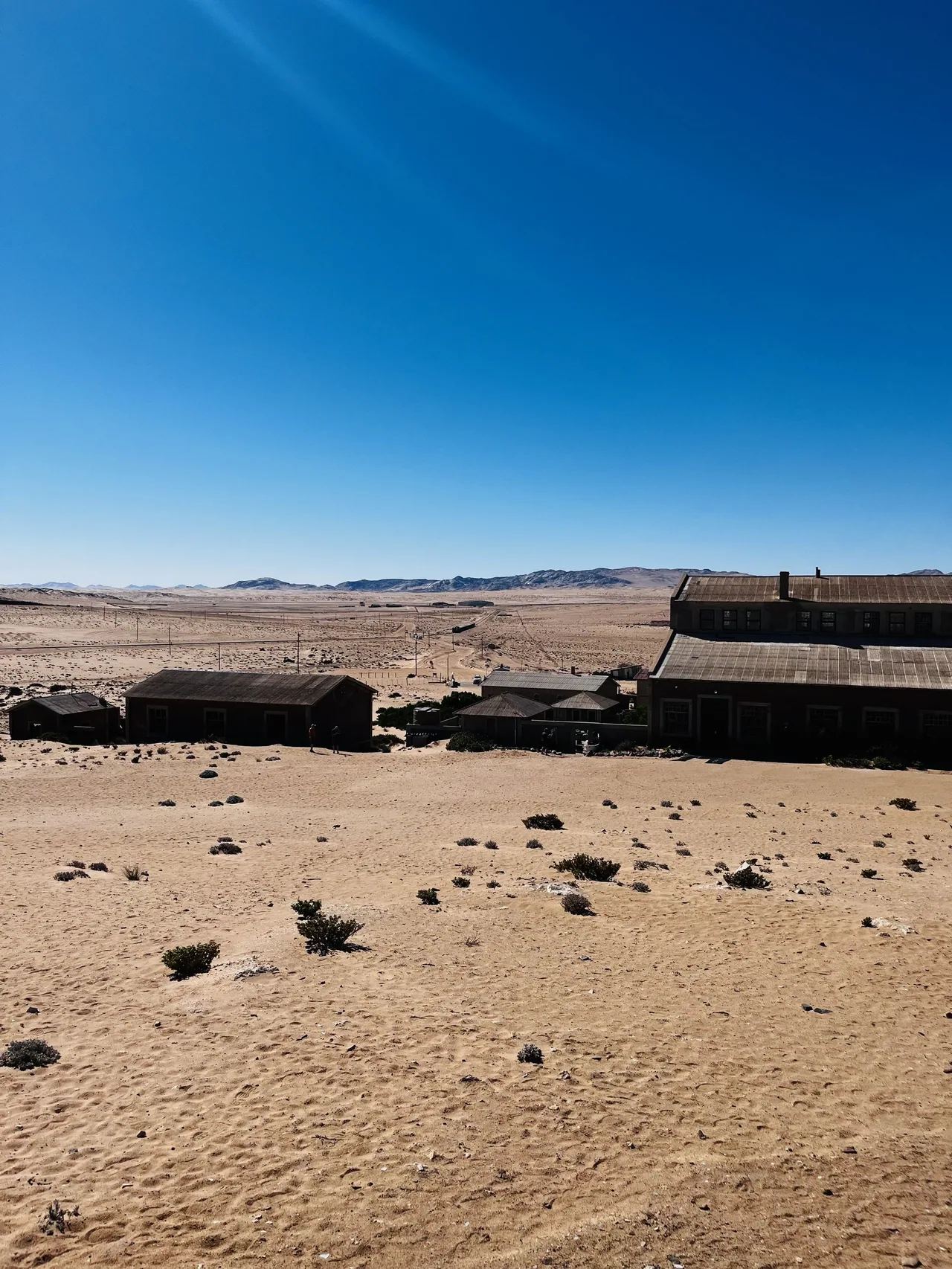
From Kolmanskop we drive to the coastal town of Lüderitz. Our first stop is a local restaurant — where I pass out from dehydration as well. Out of the whole group, the only two Czechs are the ones who faint. Funny :D
I spend lunch lying on a bench with ice on my head. Afterwards we finally move into our first real beds at Timo’s Guesthouse. In our condition, we’re incredibly grateful for it. We skip the afternoon walk around town and end the day in bed, exhausted, with high fevers and electrolyte drinks.
Day 4
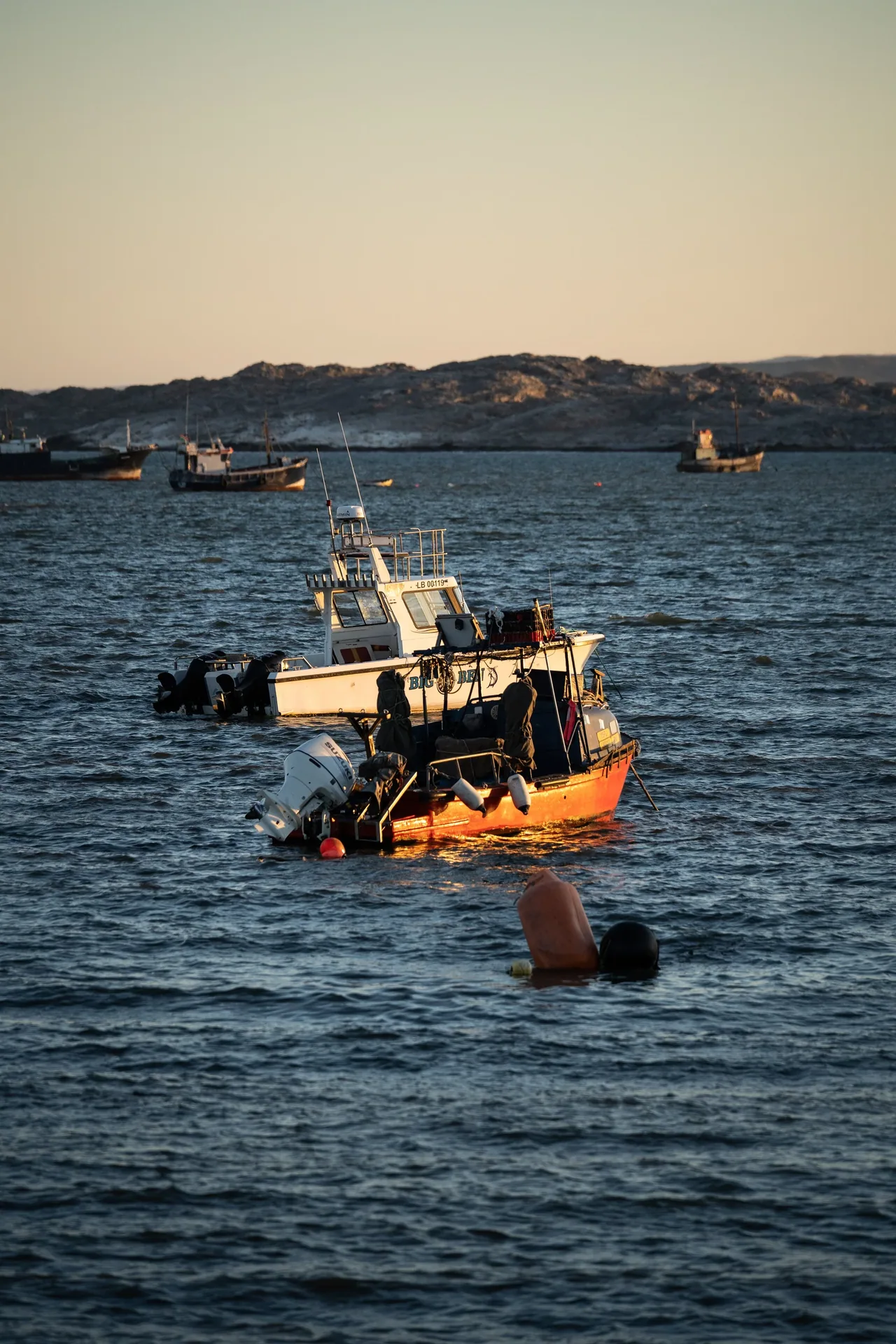
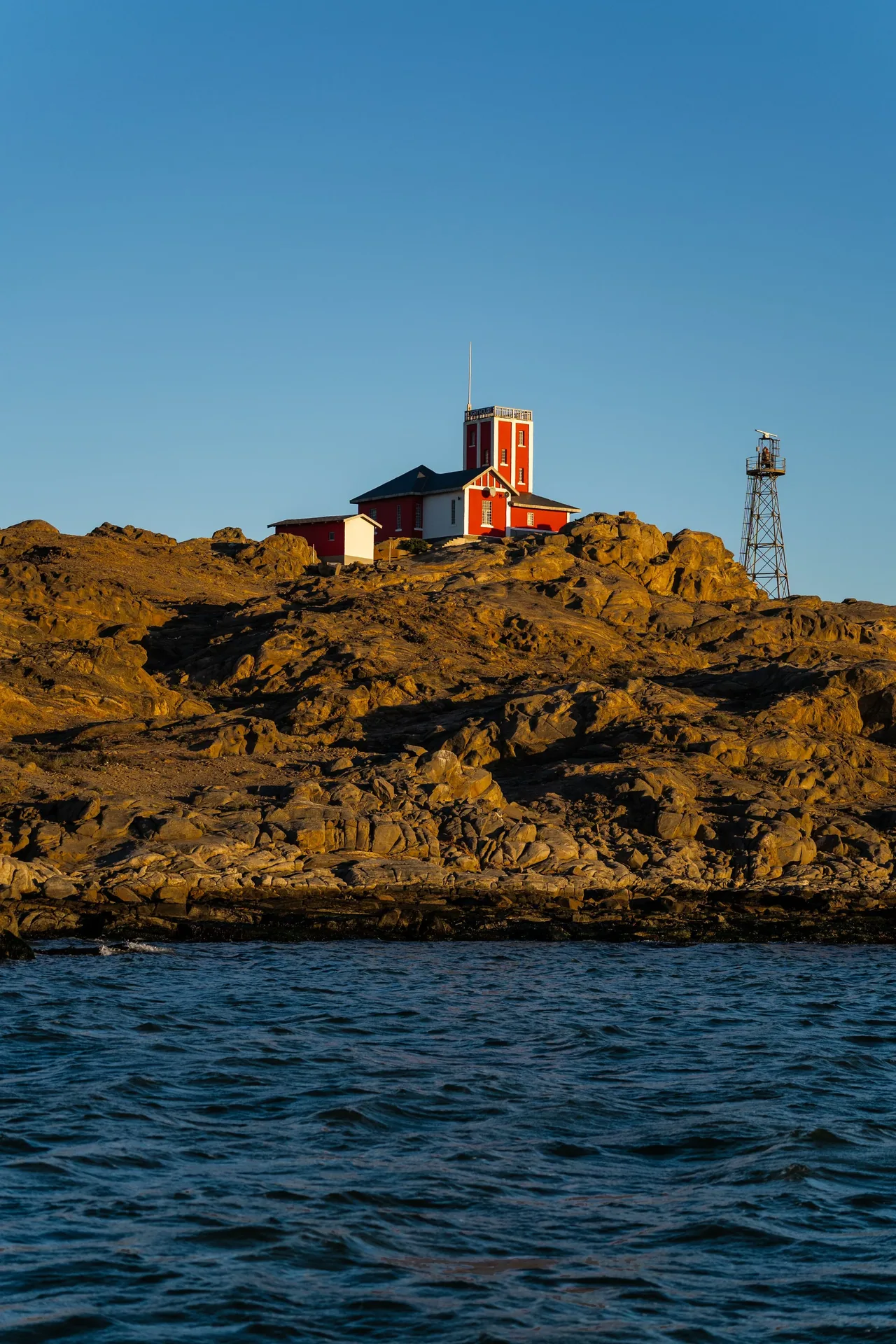
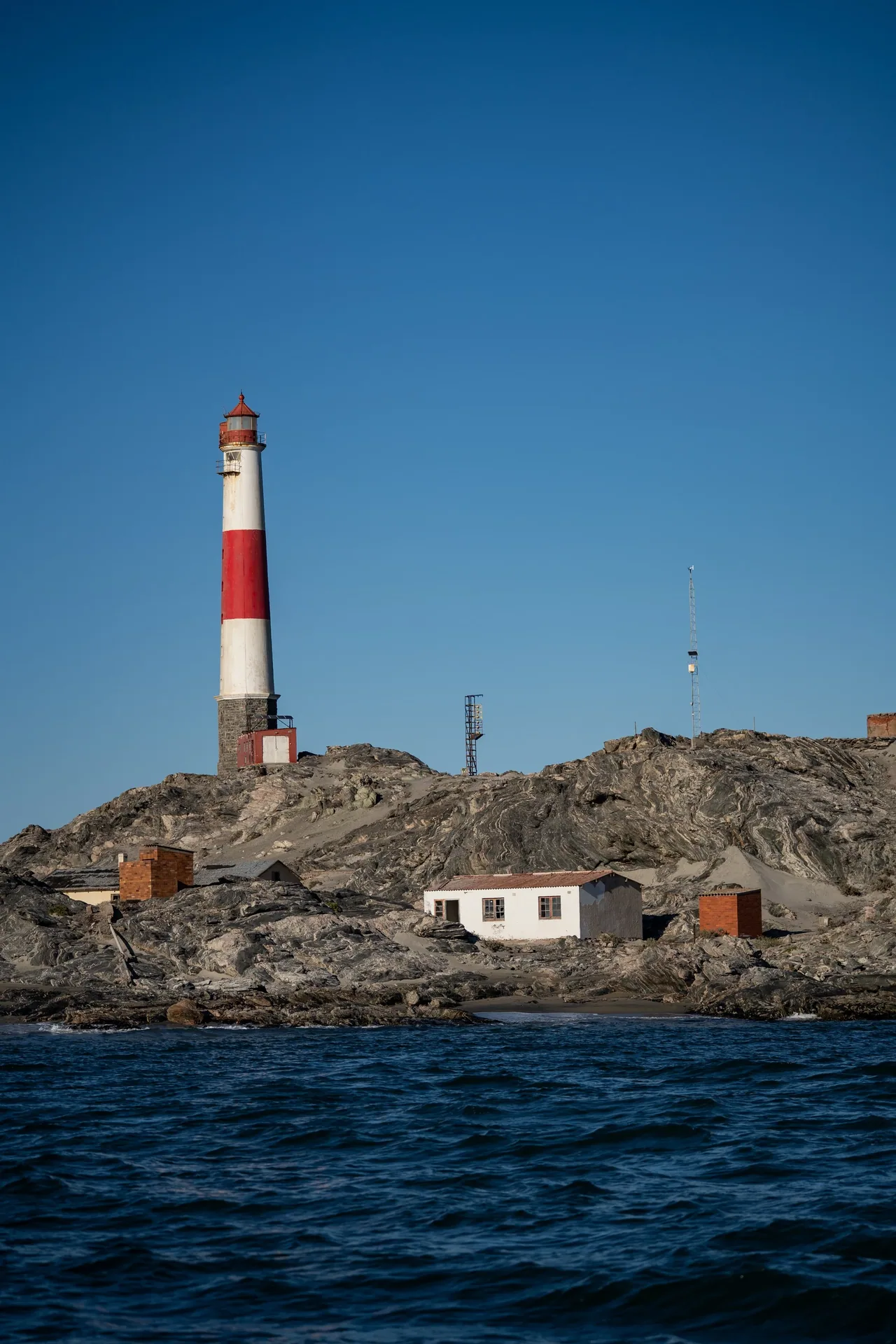
We wake up surprisingly rested and definitely feeling better. The worst seems to have passed during the night, even though we’re still far from fully healthy. But this is an expedition, and there’s no time to waste — we head out on a boat trip along the local coastline to look for African penguins.
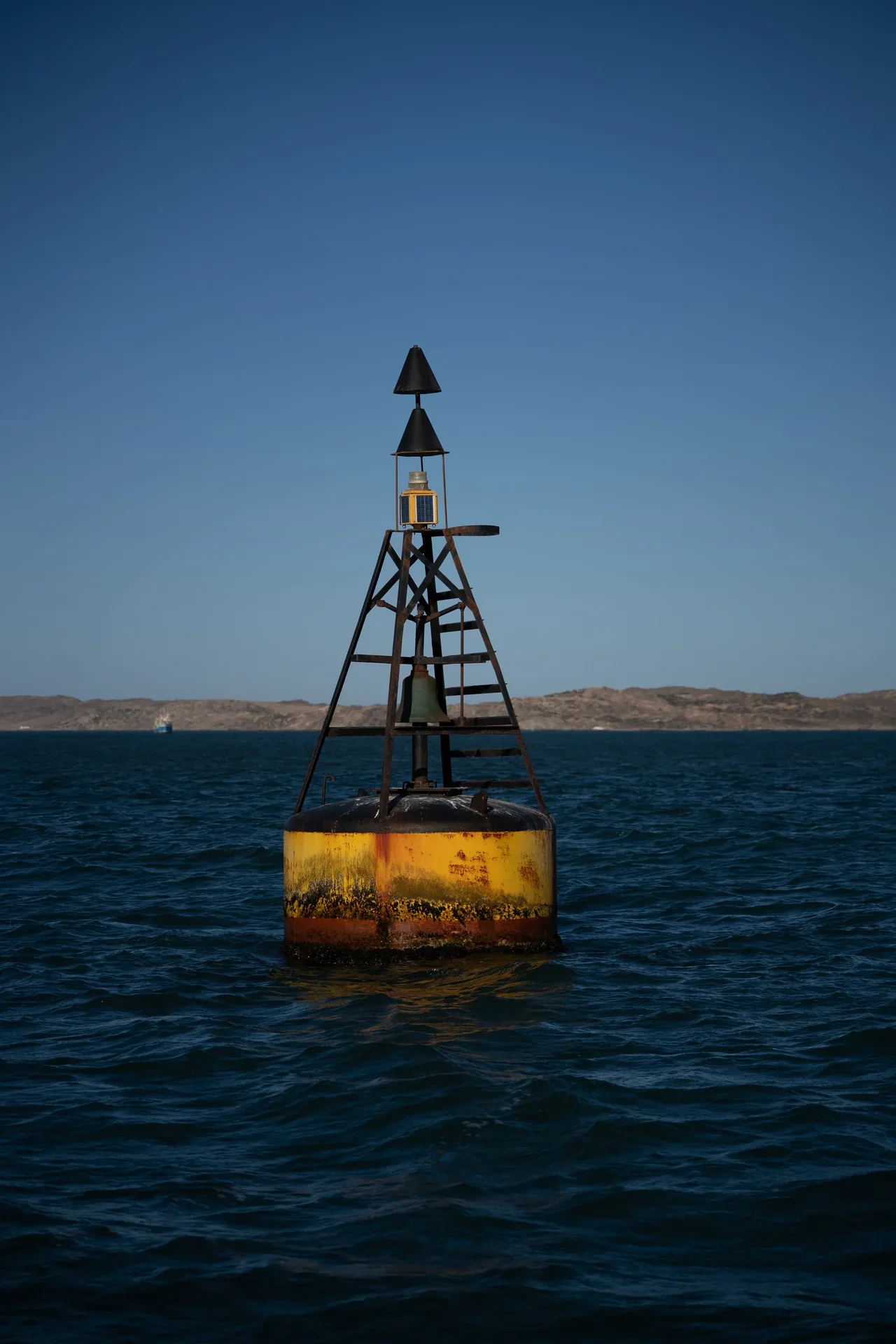
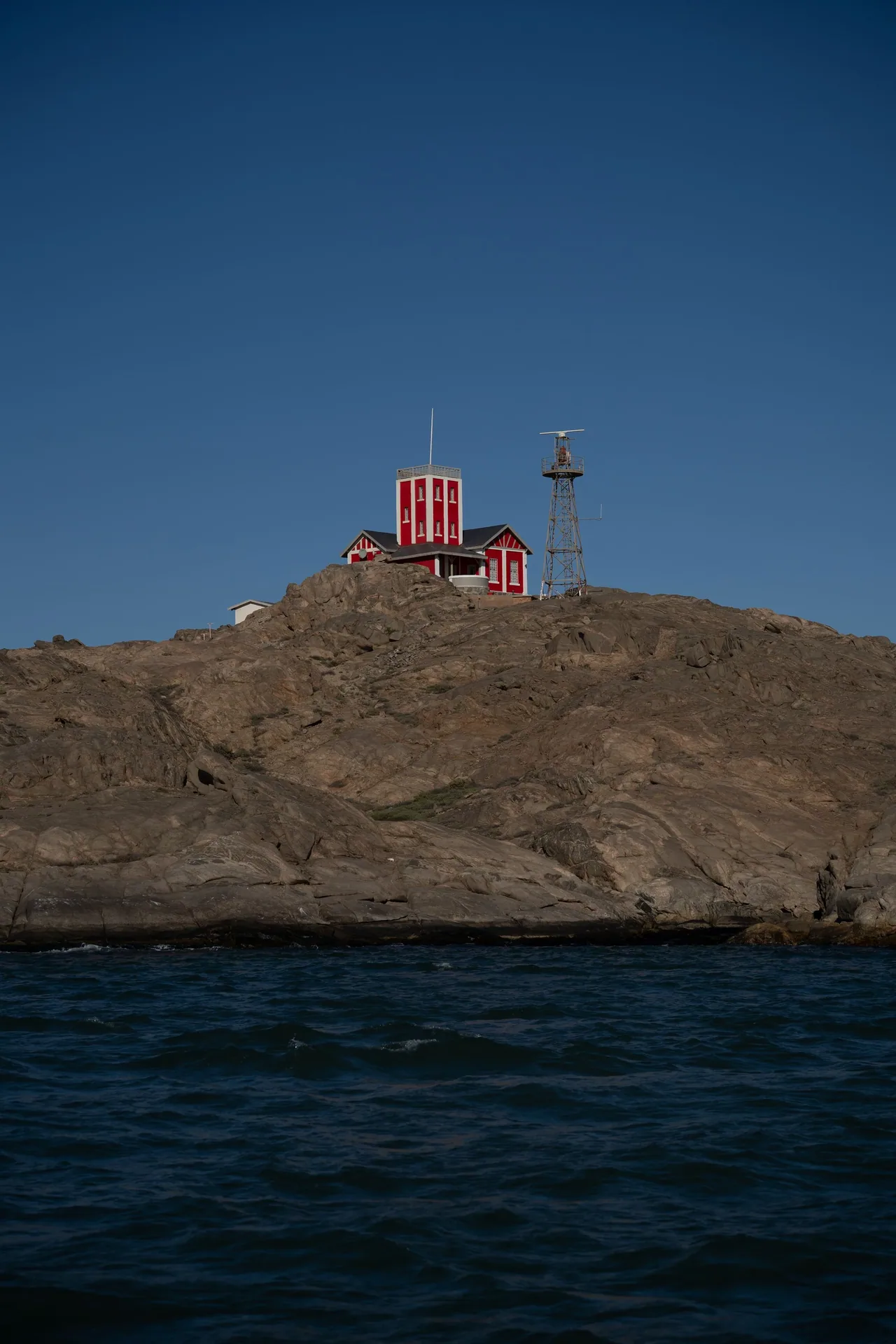
From the catamaran we see plenty of seabirds, dolphins leaping from the water close to us, seals and, in the distance, a small group of penguins standing on the rocks.
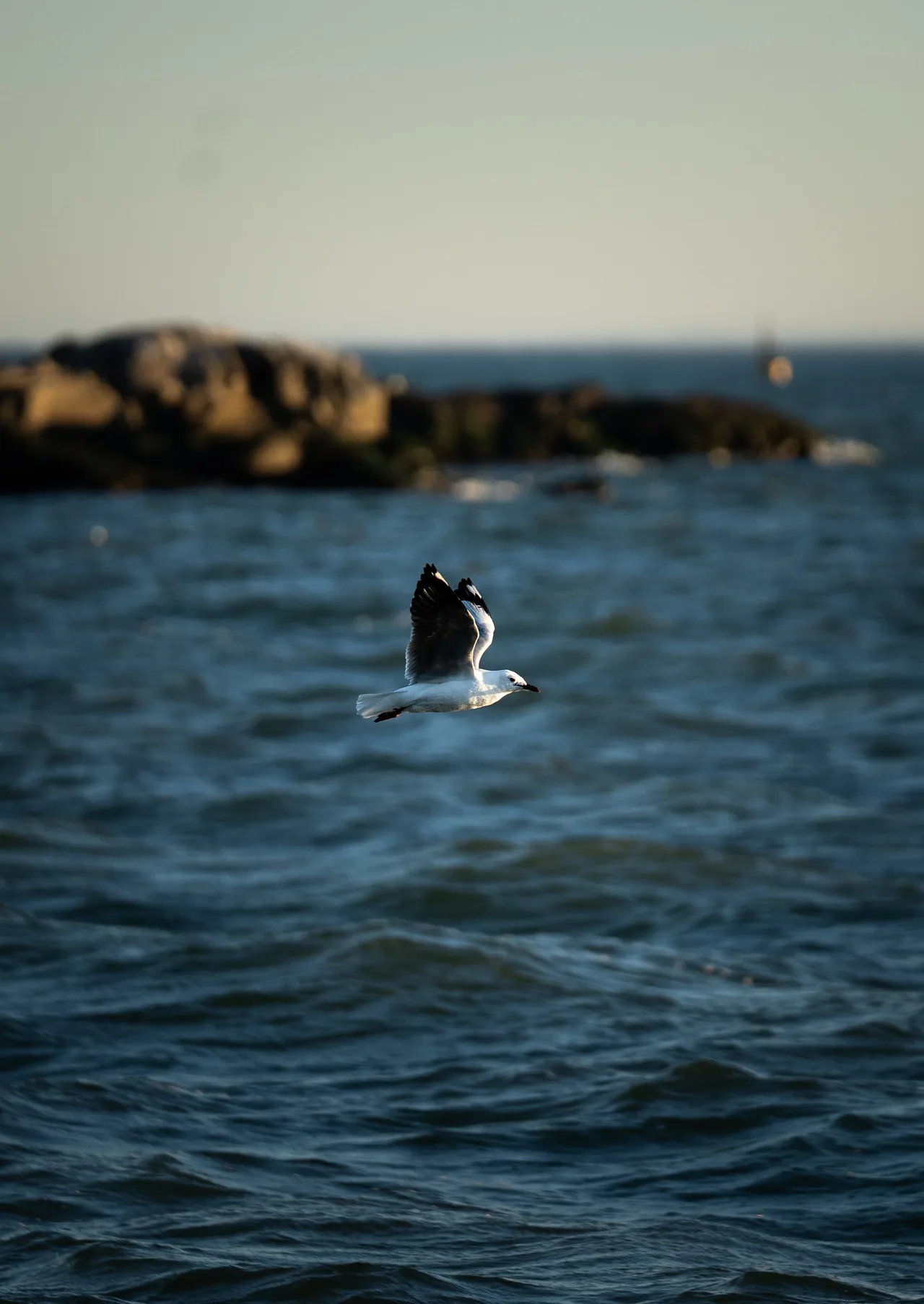
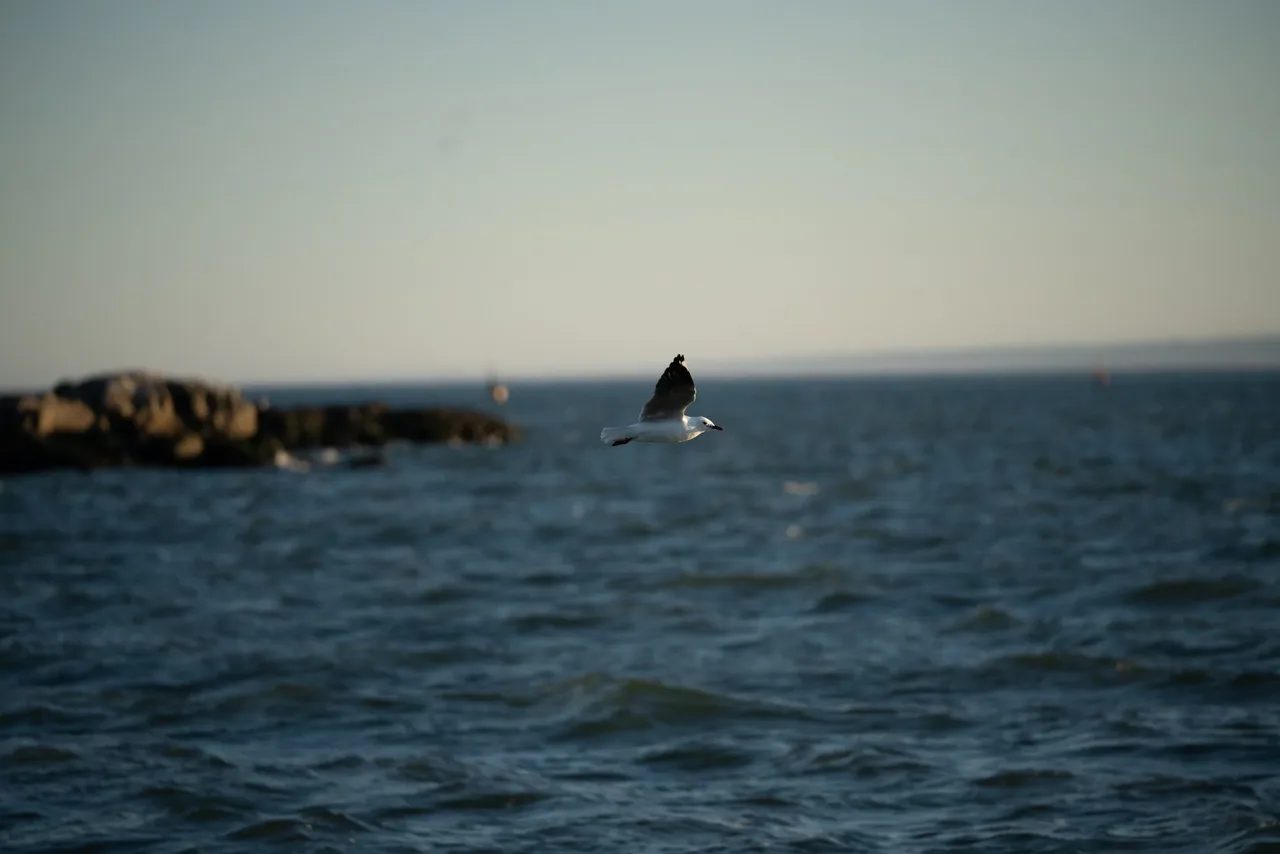
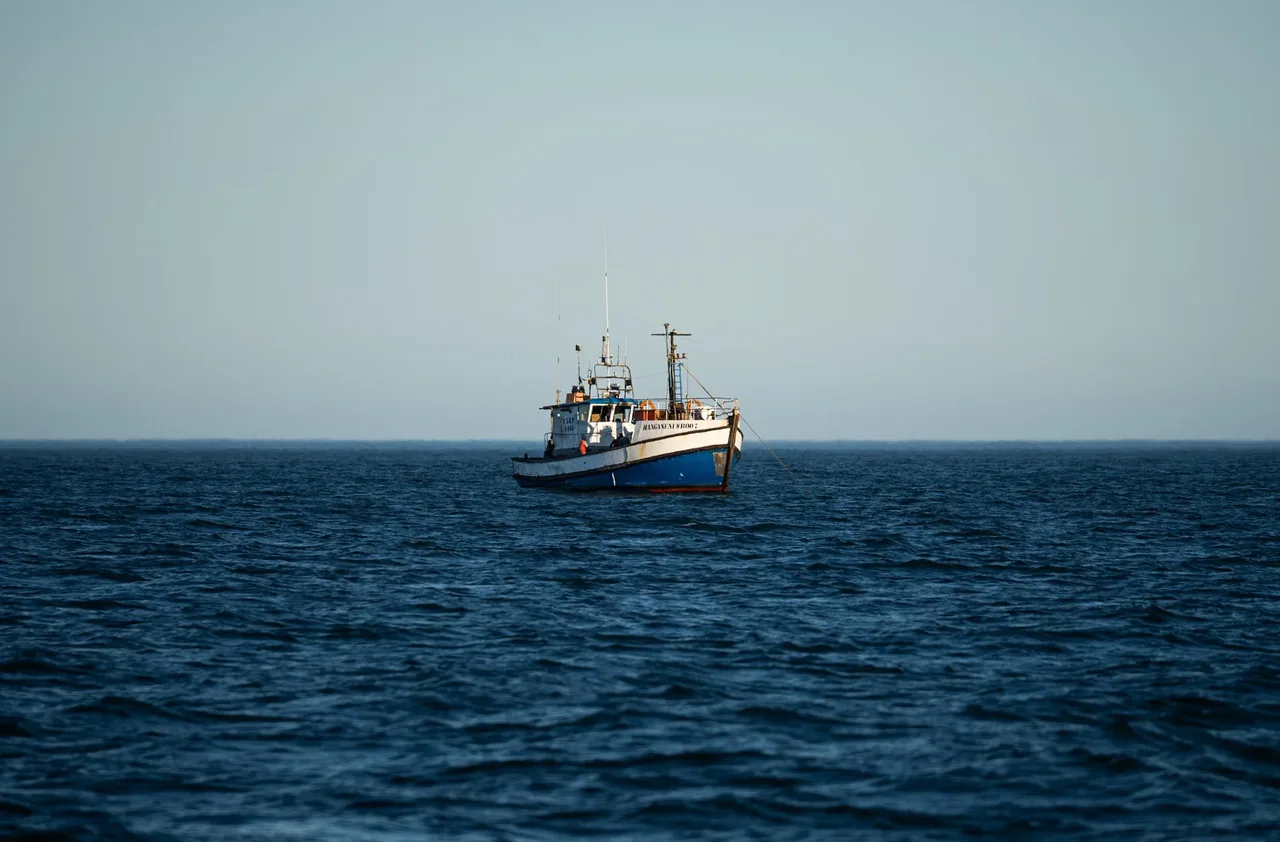
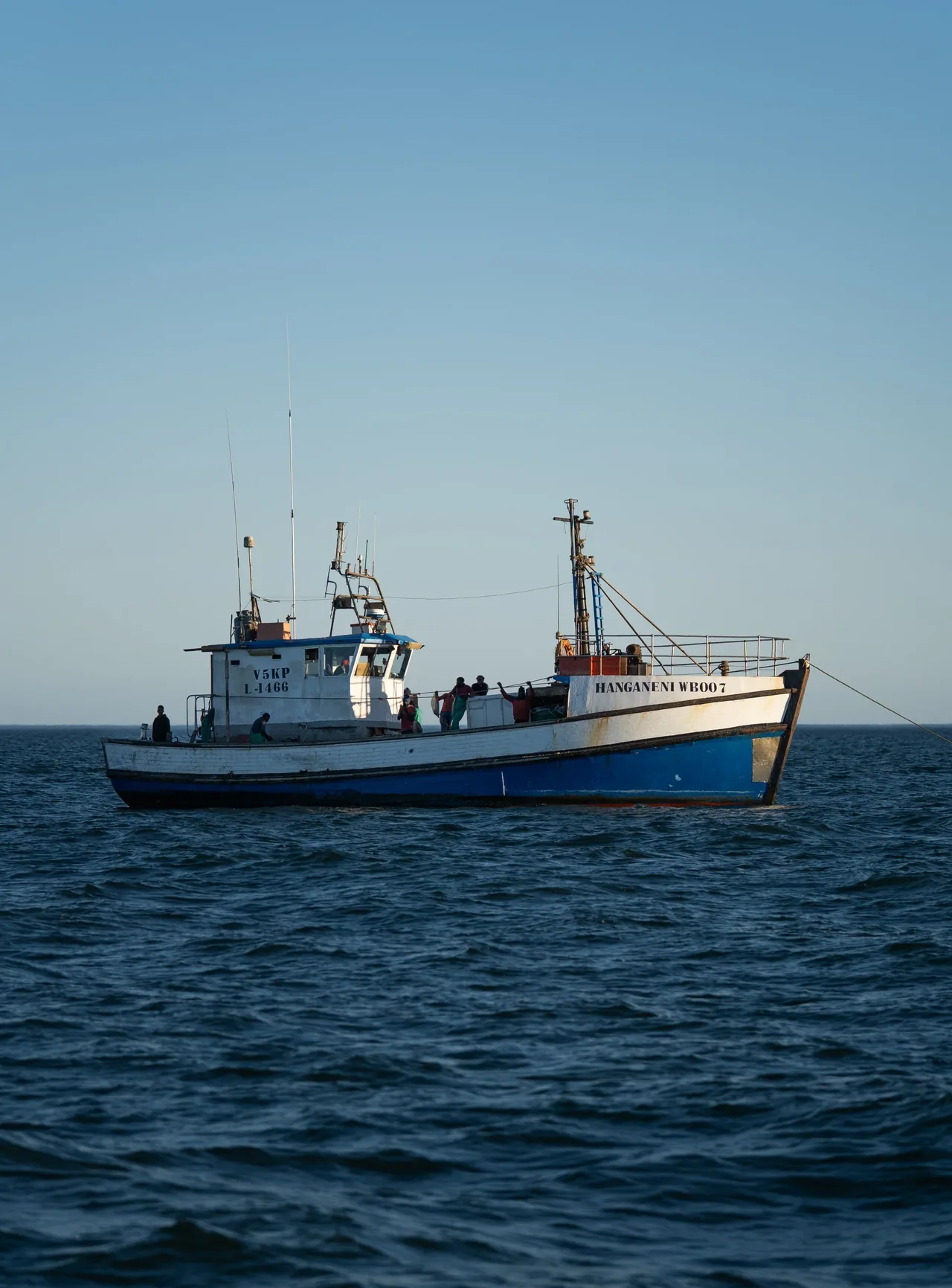
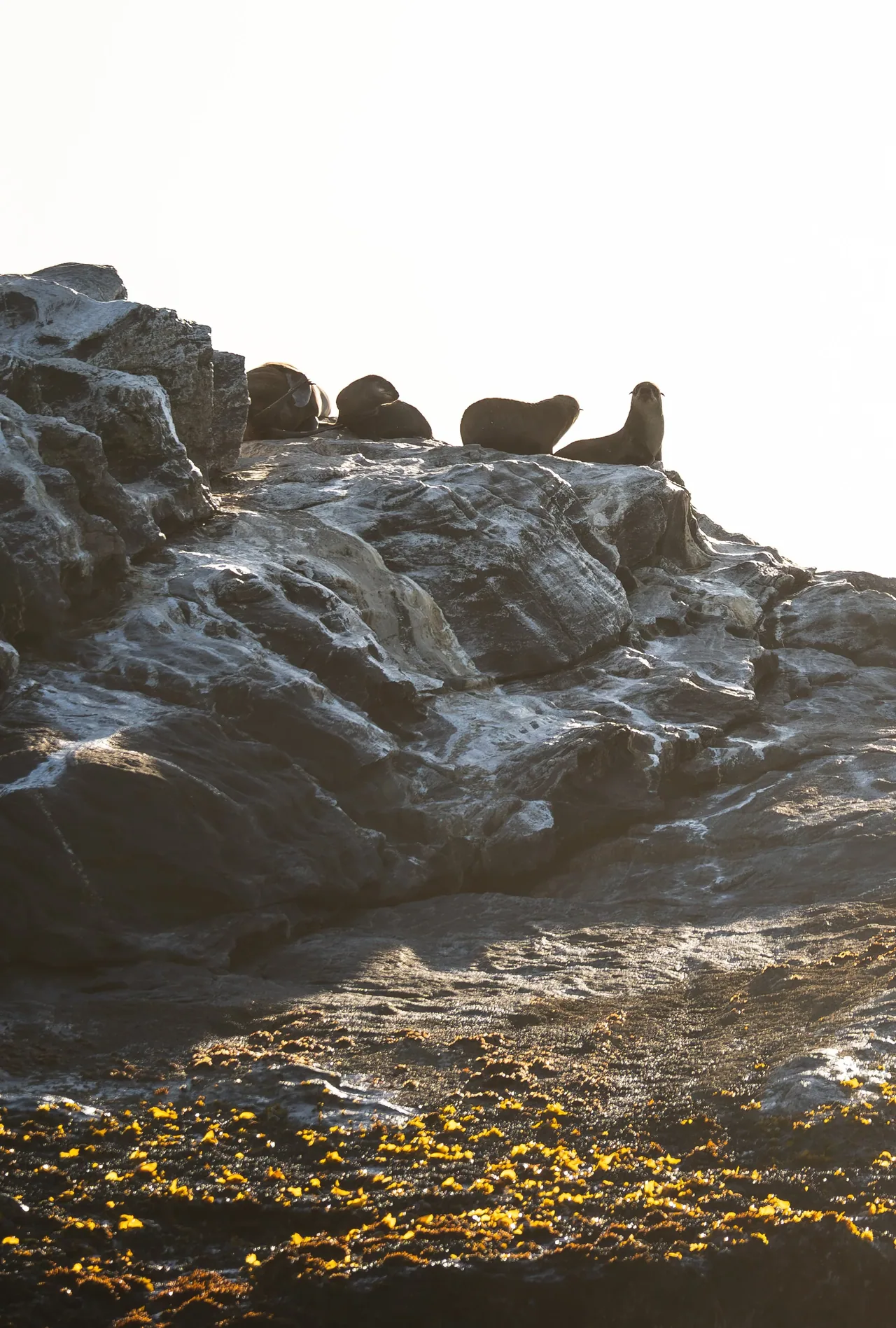
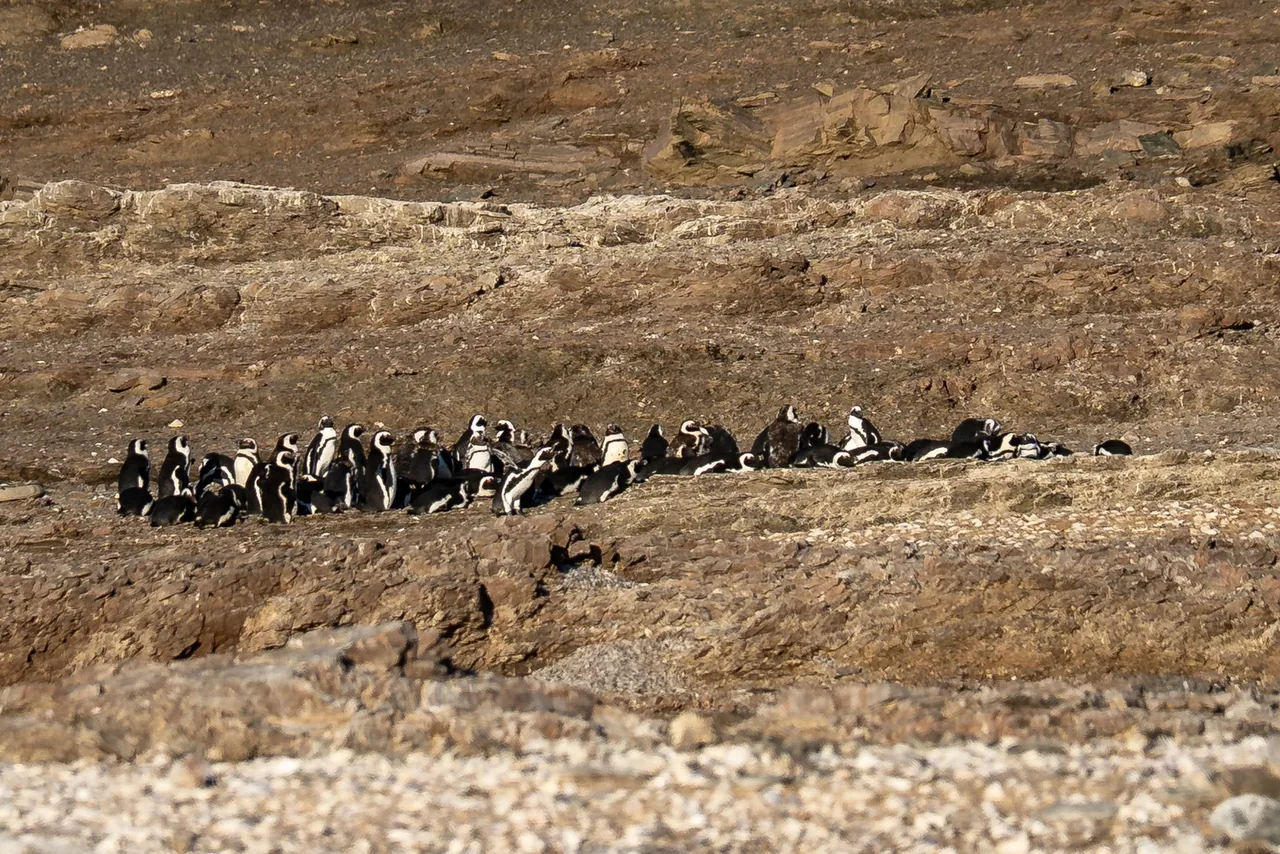
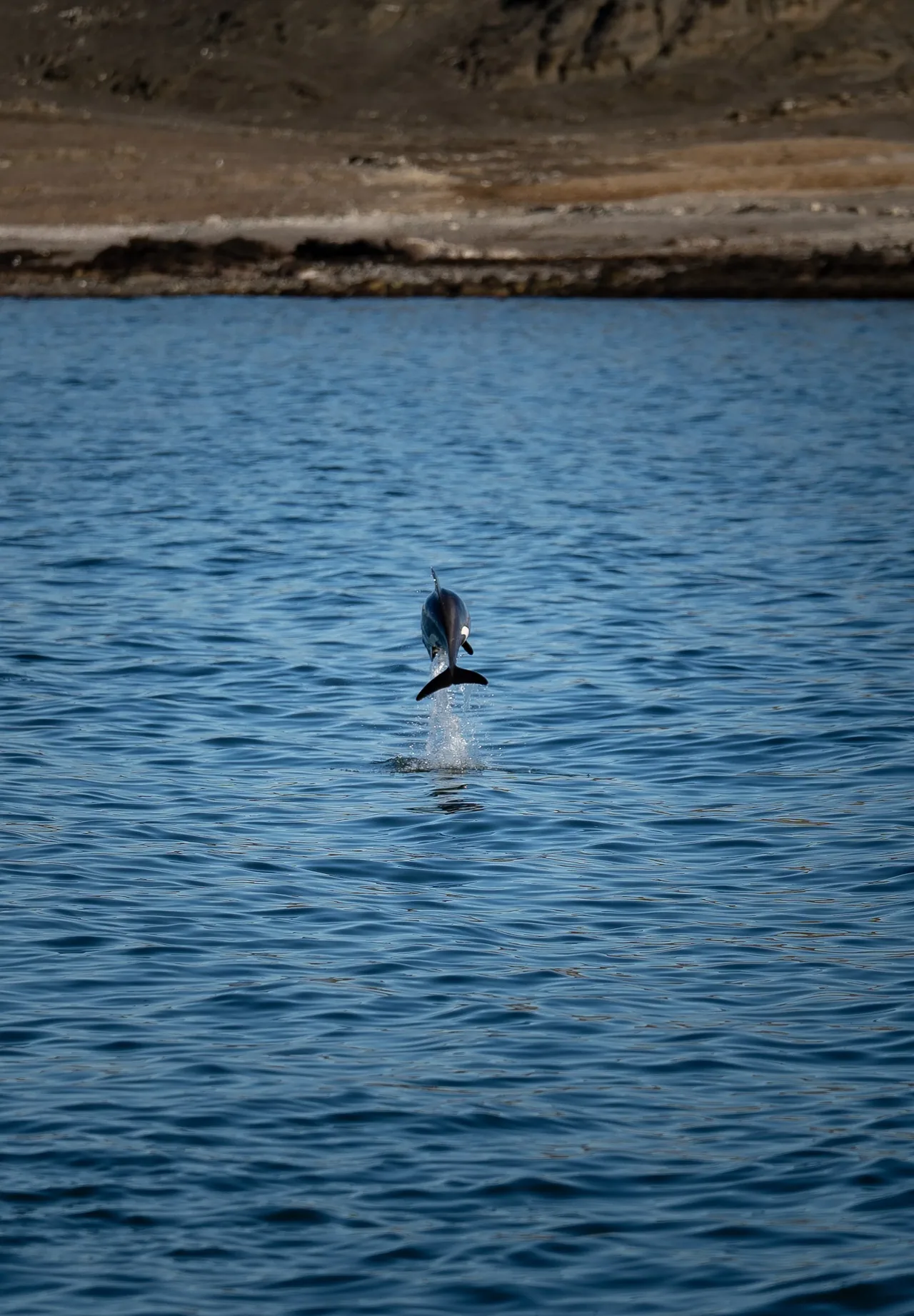
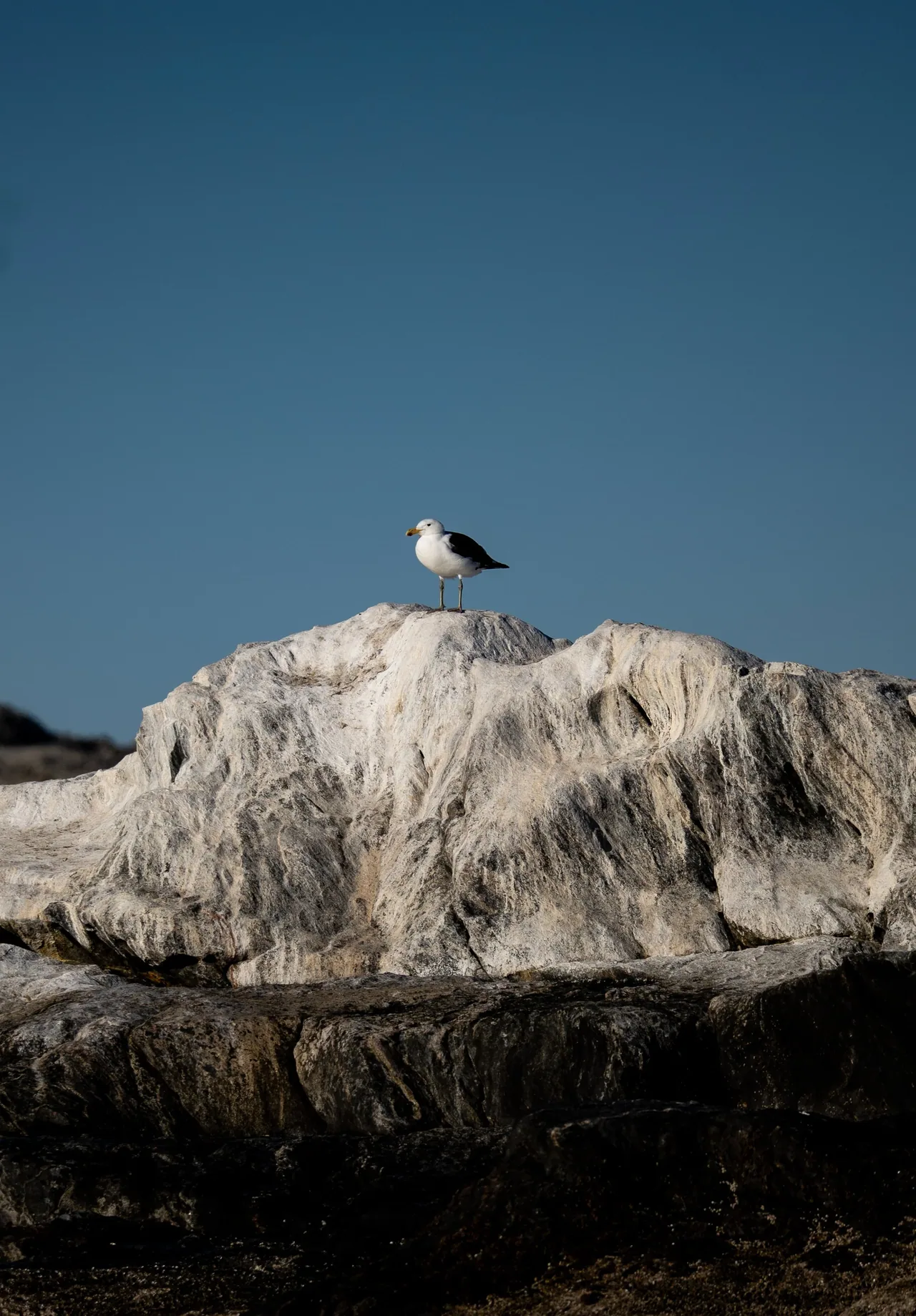
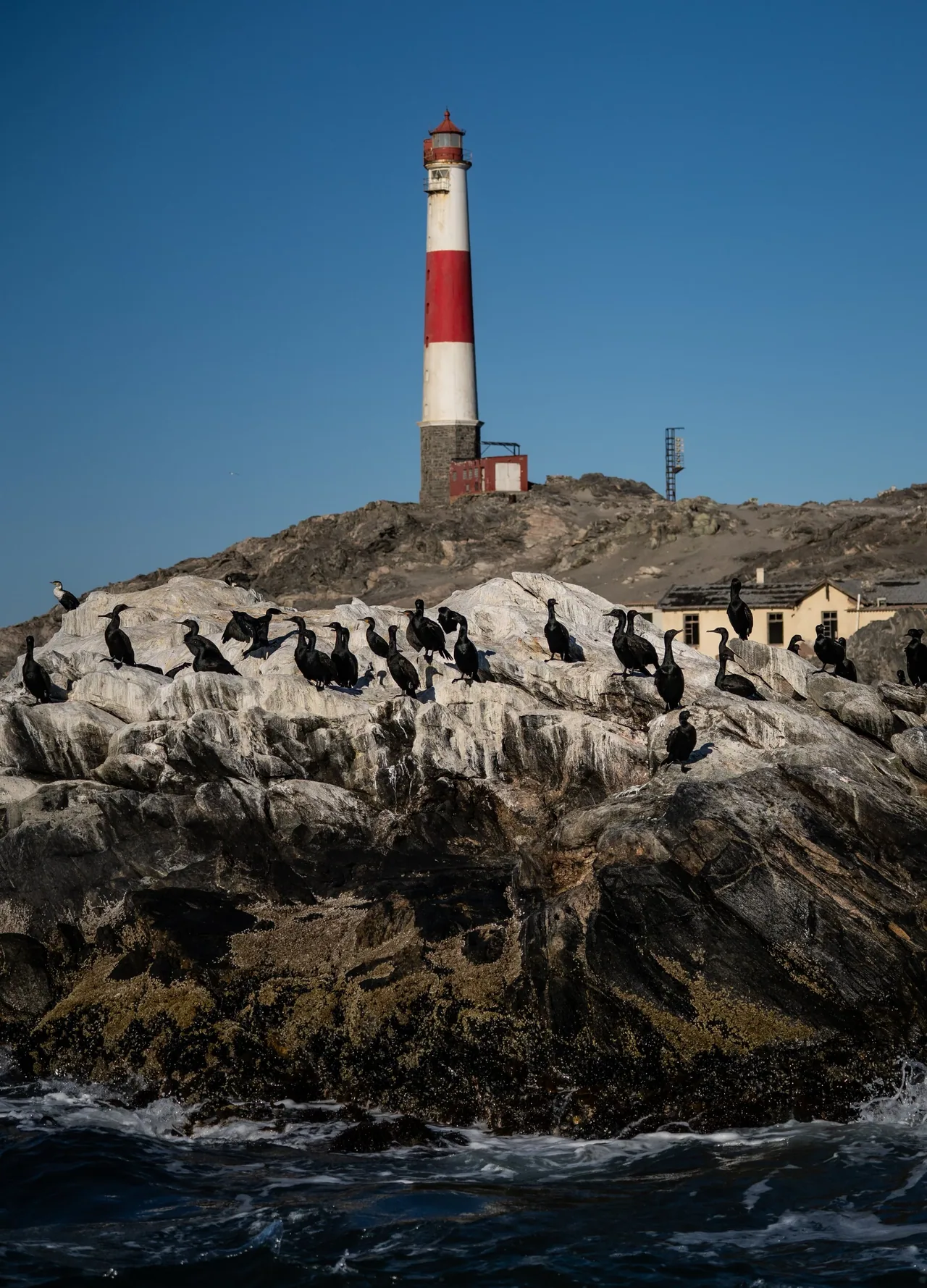
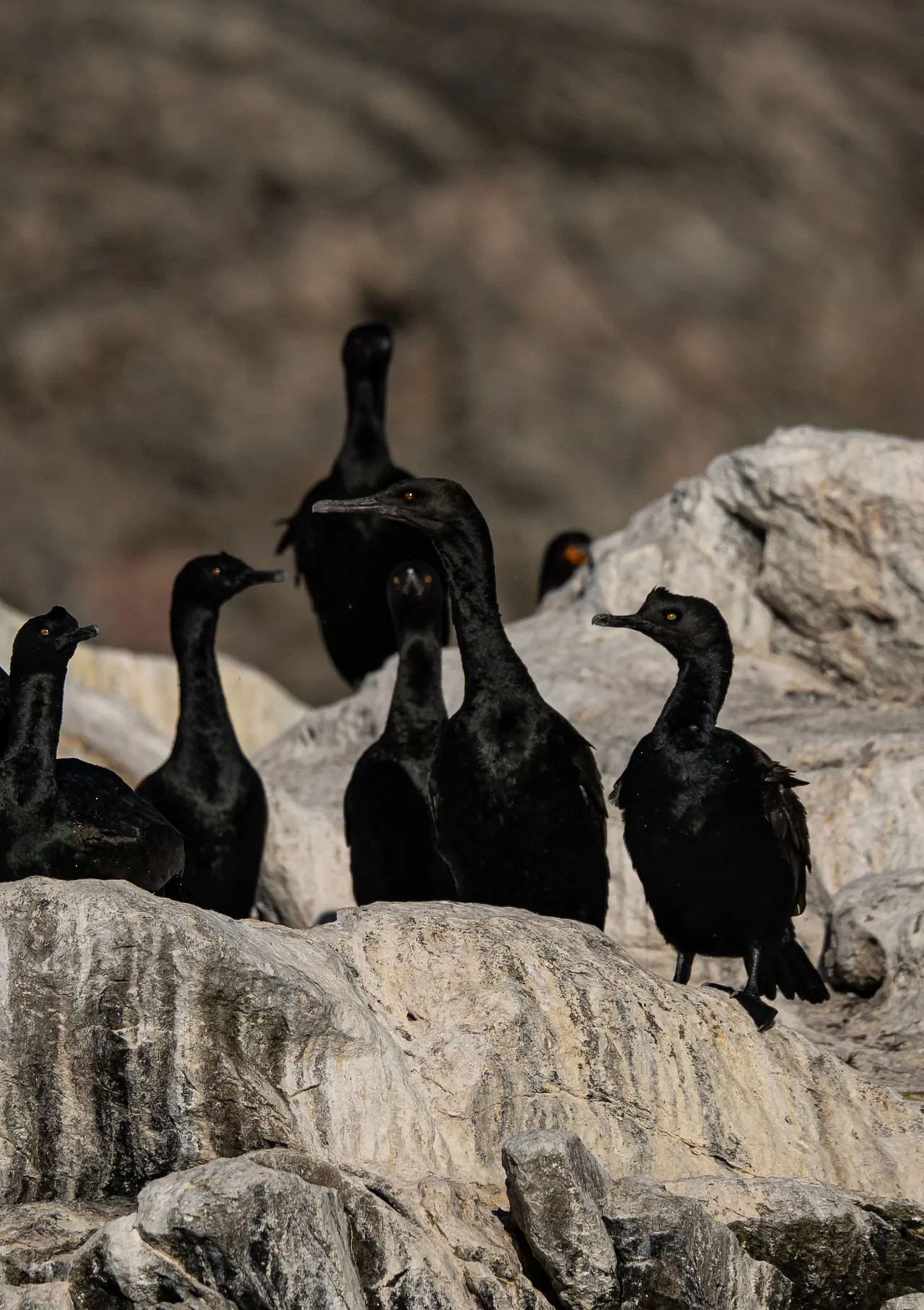
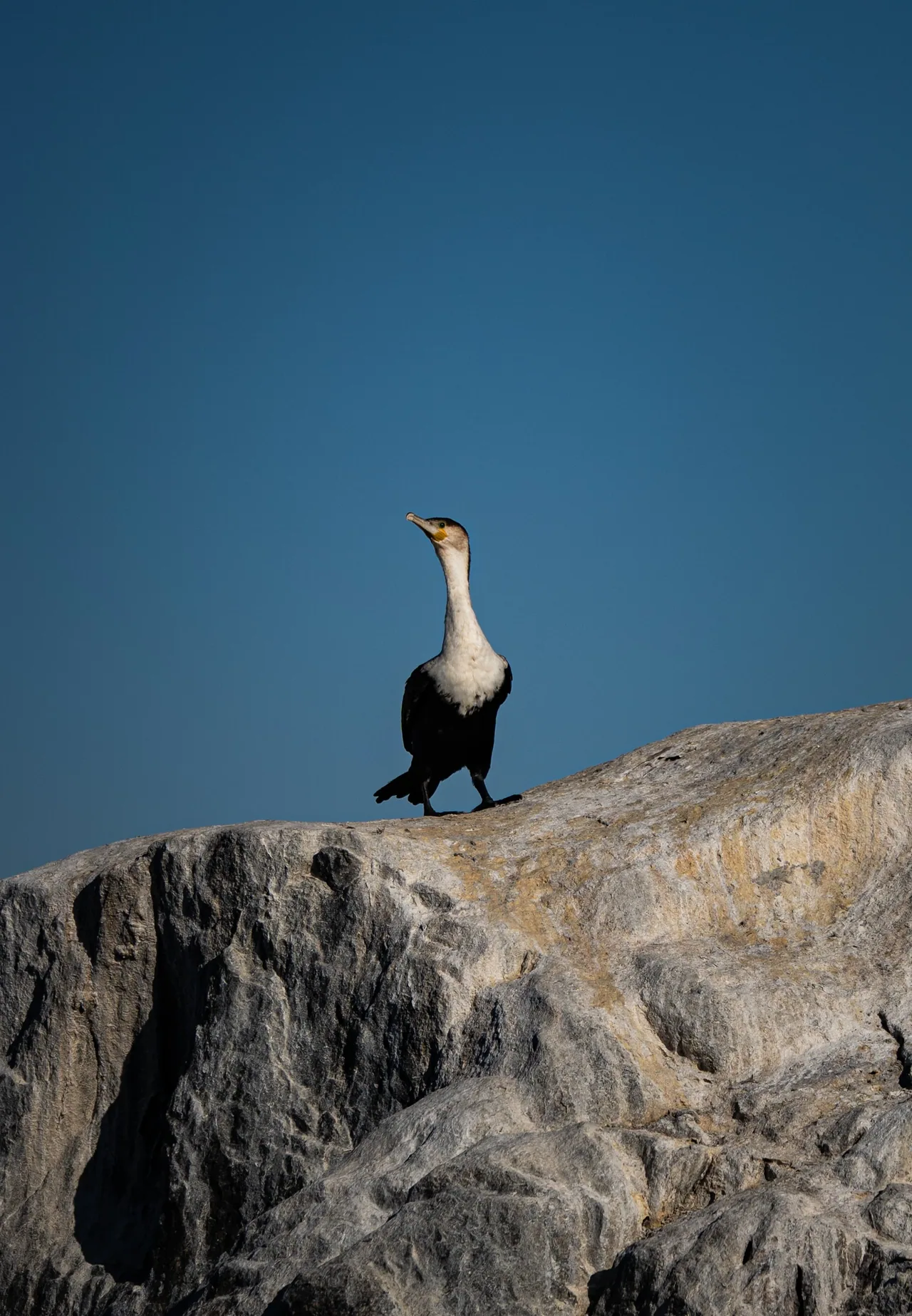
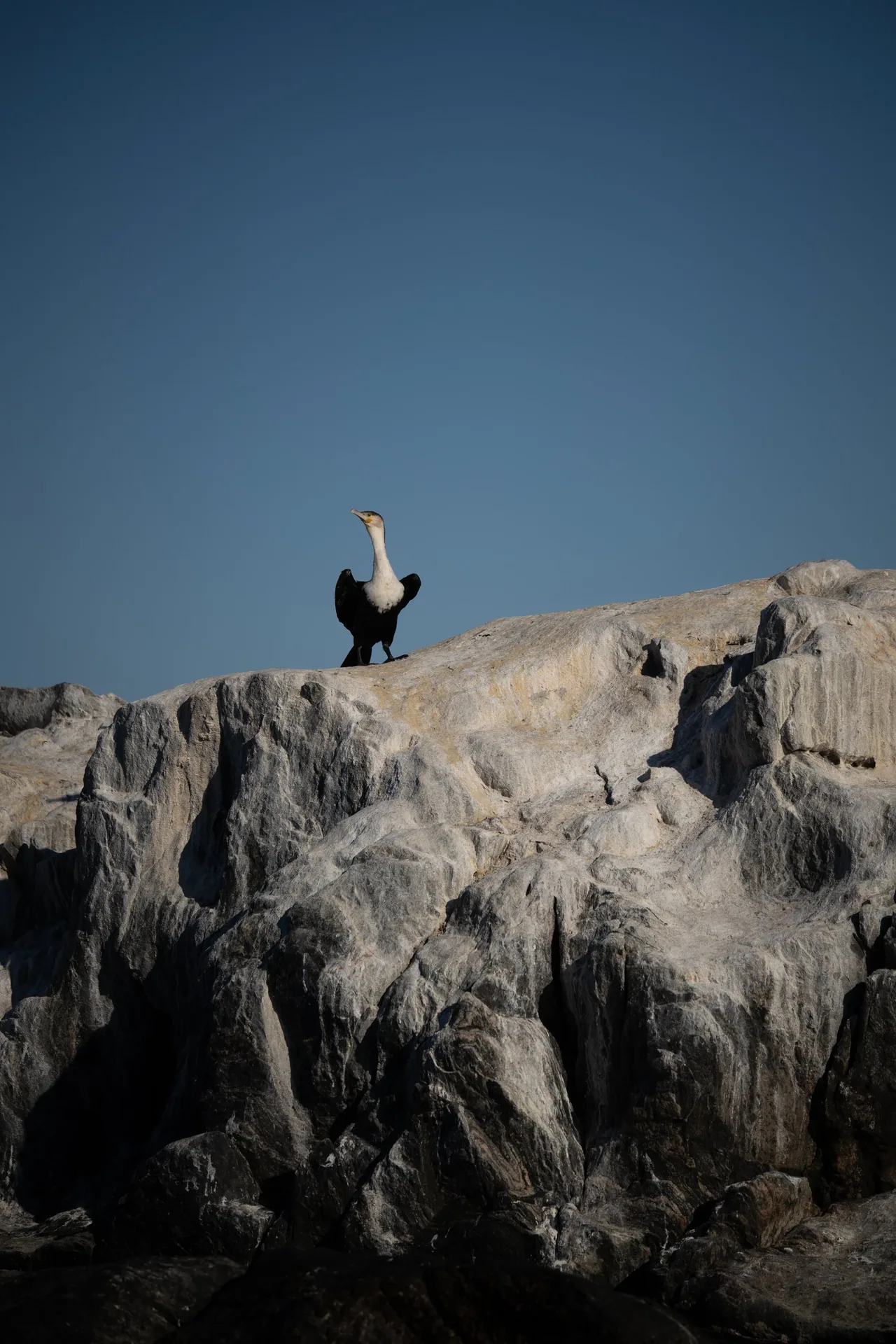
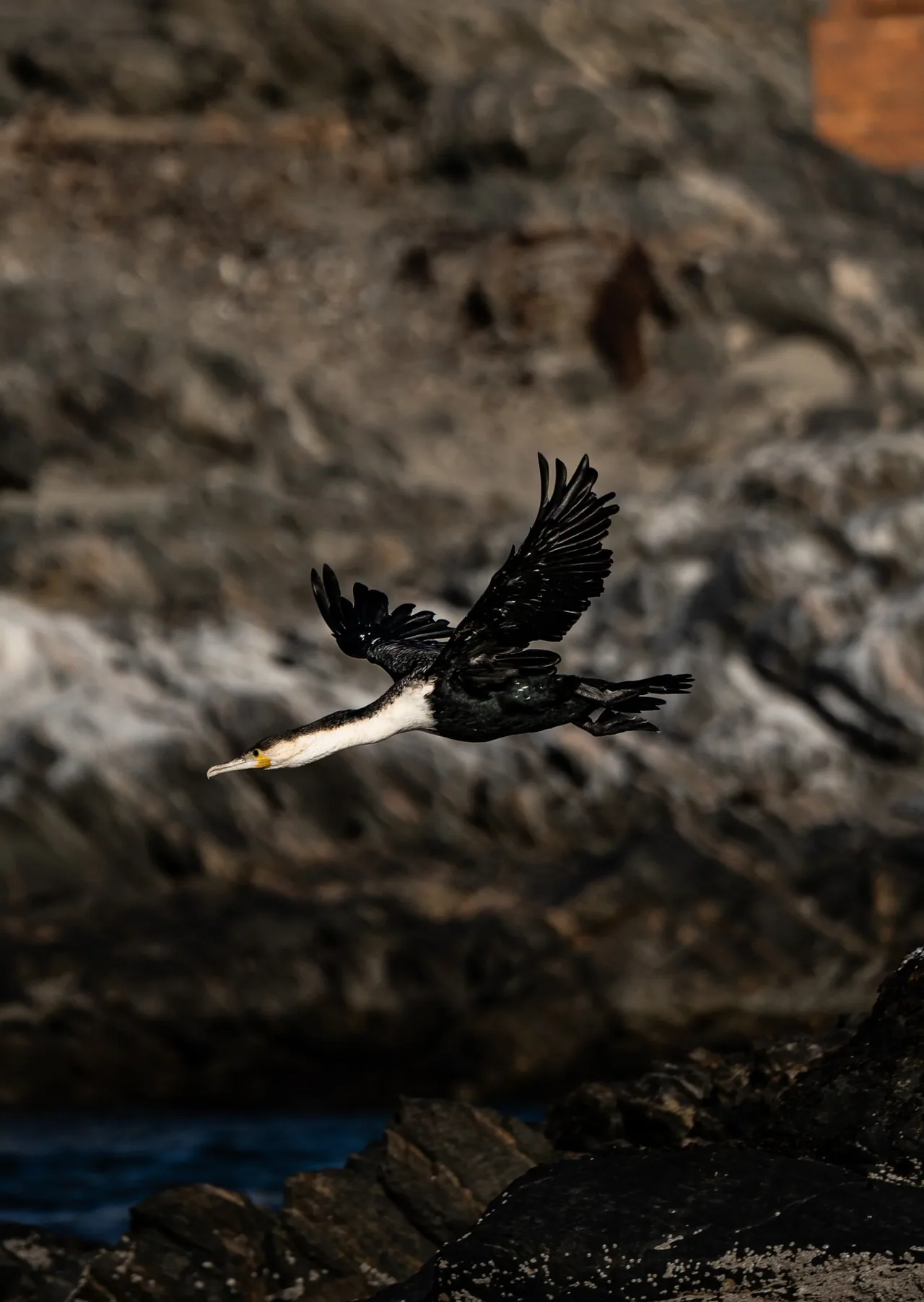
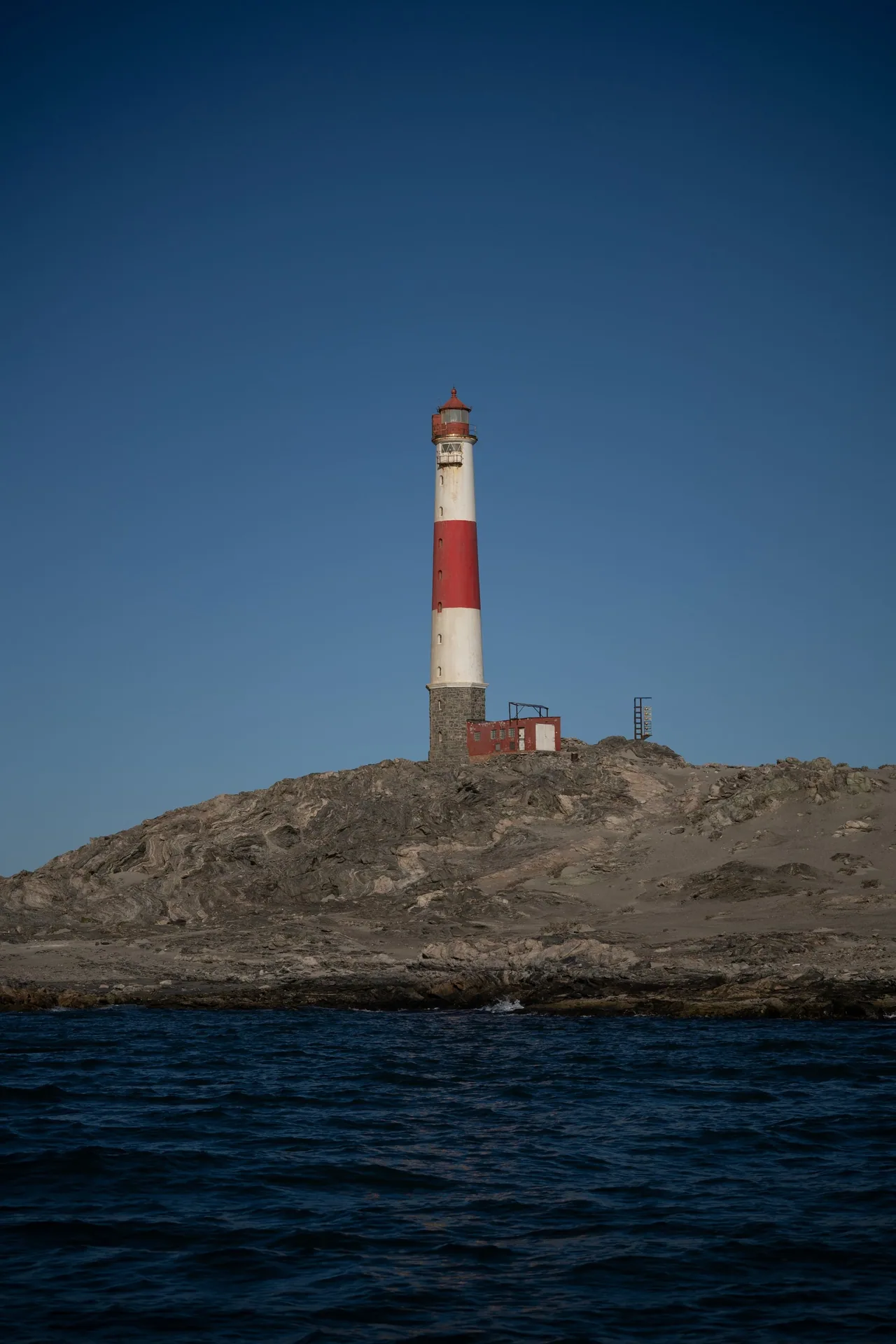
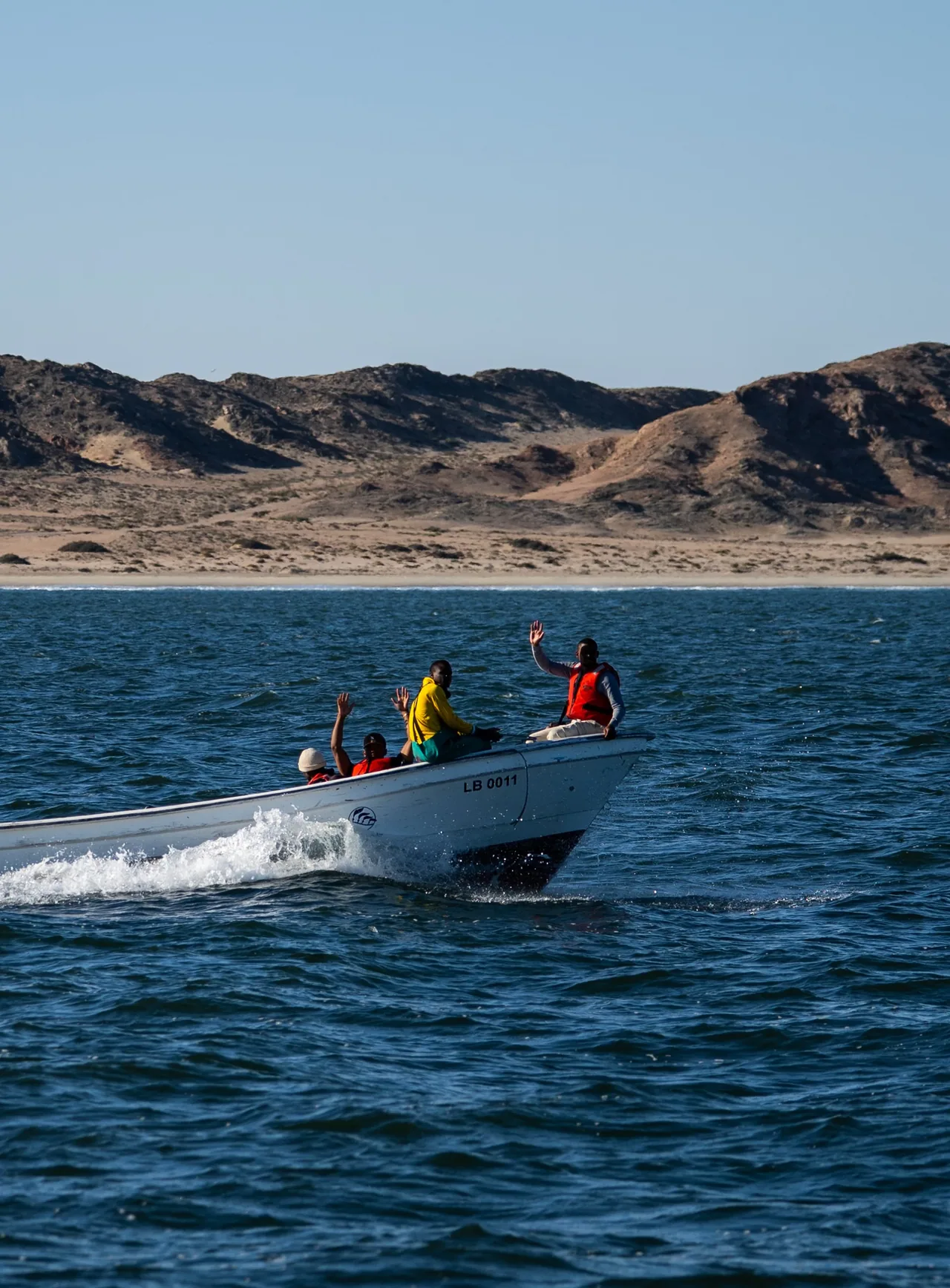
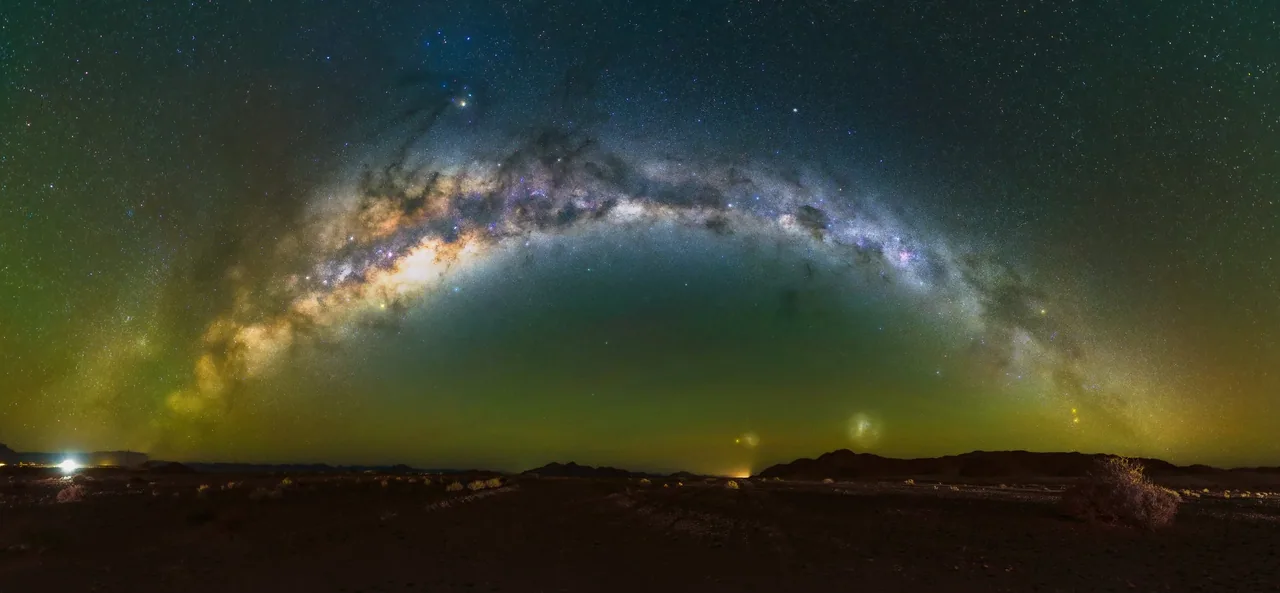
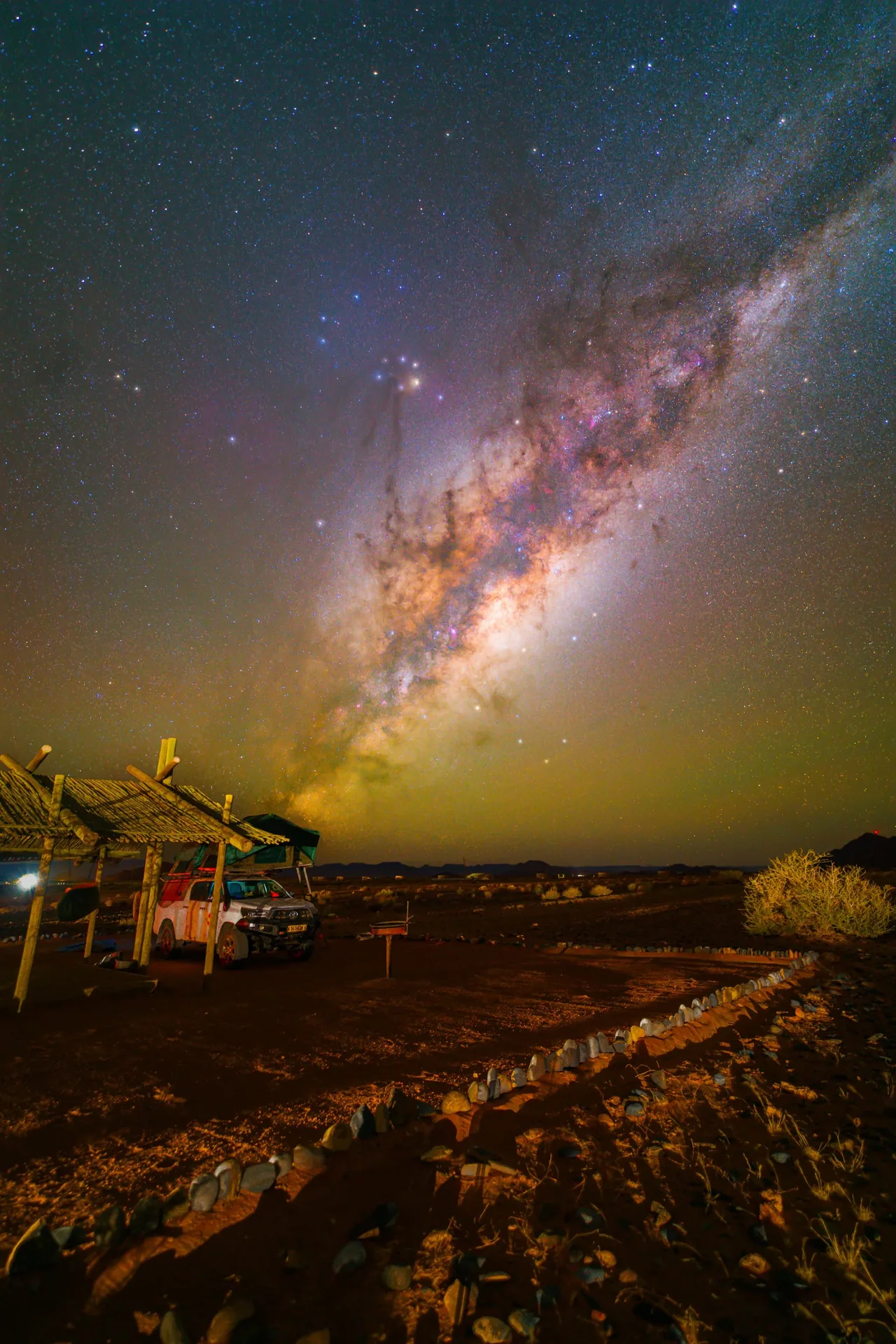
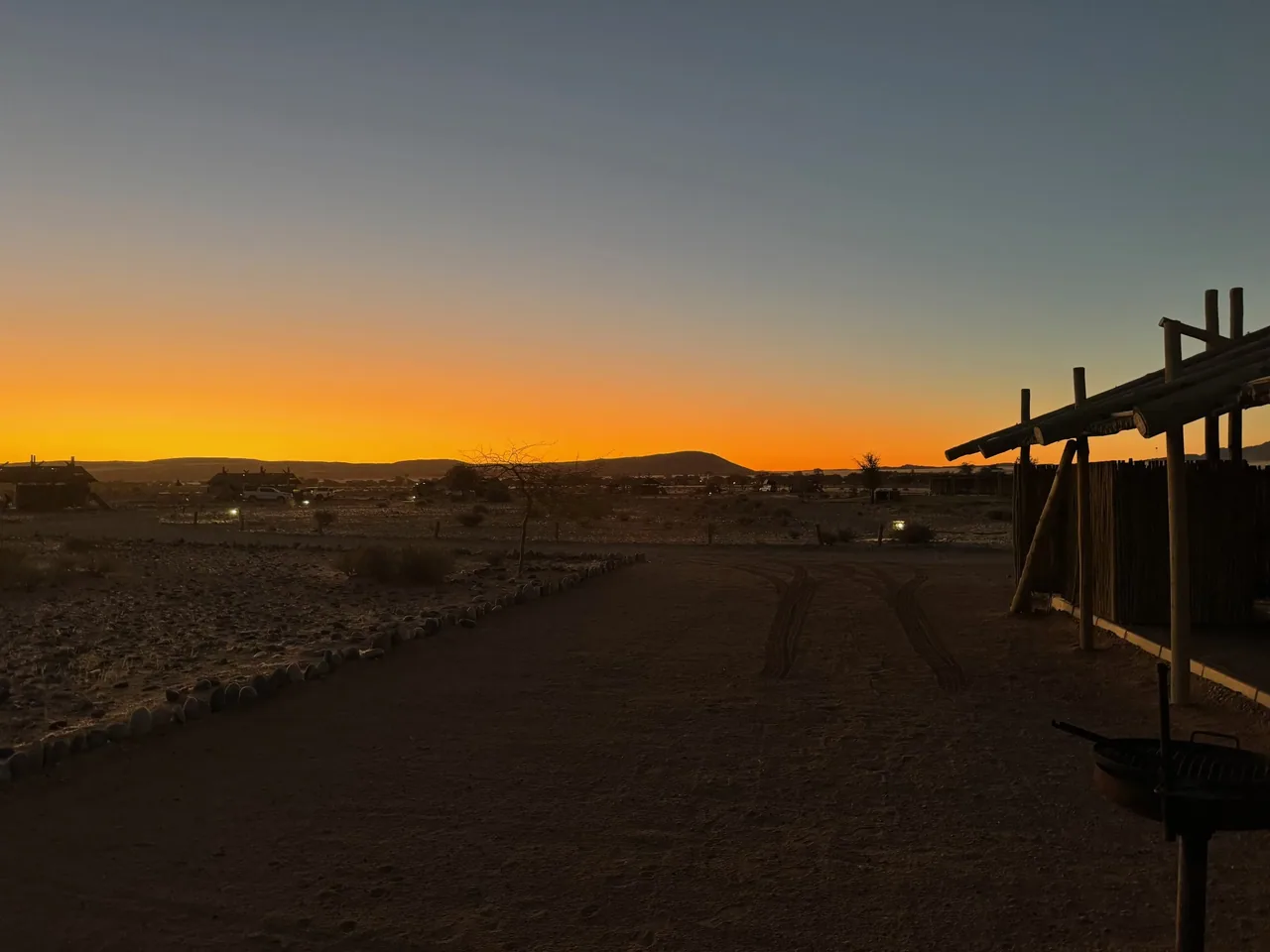
After we return, we drive to Sossus Oasis Campsite near Sesriem, another campsite under an incredibly dark sky. After dinner I again grab my camera and try to shoot a Milky Way panorama. This time I bring a camping chair to sit next to the tripod and just soak it all in. Between exposures I look up into the sky and see the texture of the Milky Way with my naked eyes in a way I usually only see on photos in Europe.
At one point a curious jackal creeps up to within just a few meters of me. I jump up, shine my light at him — he bolts, but then spends a good five minutes circling our camp in the darkness, watching us from a distance.
Day 5
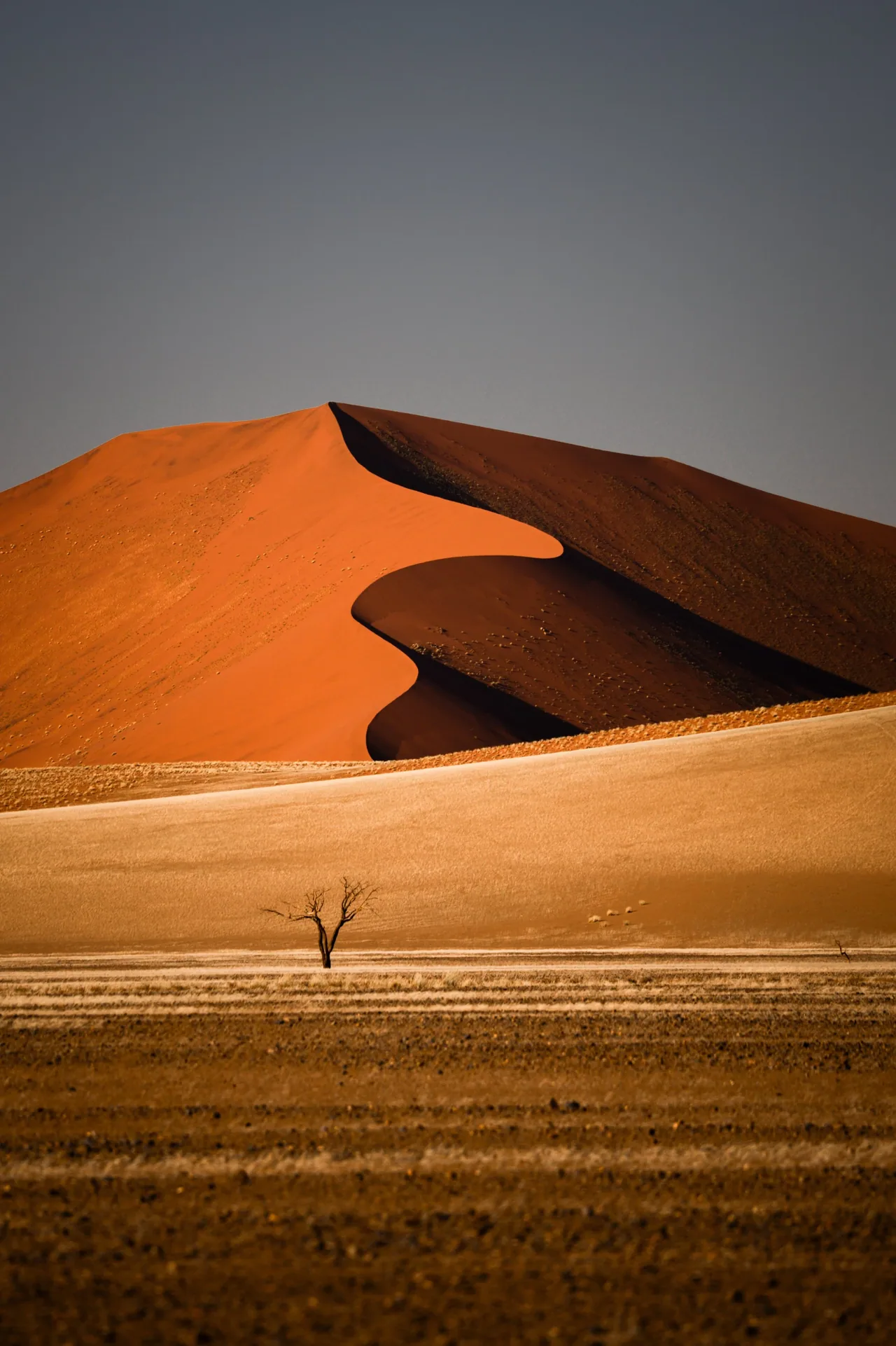
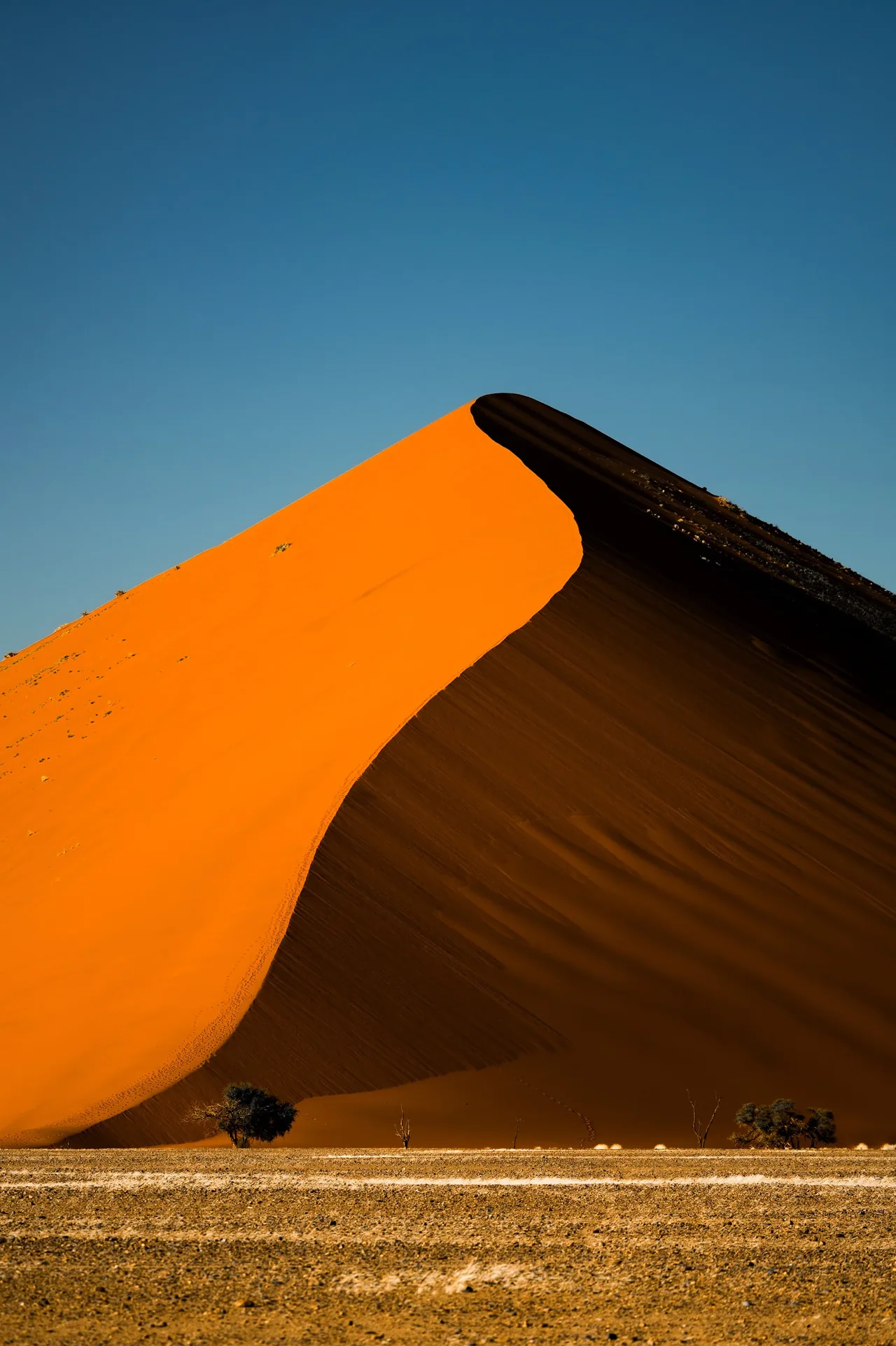
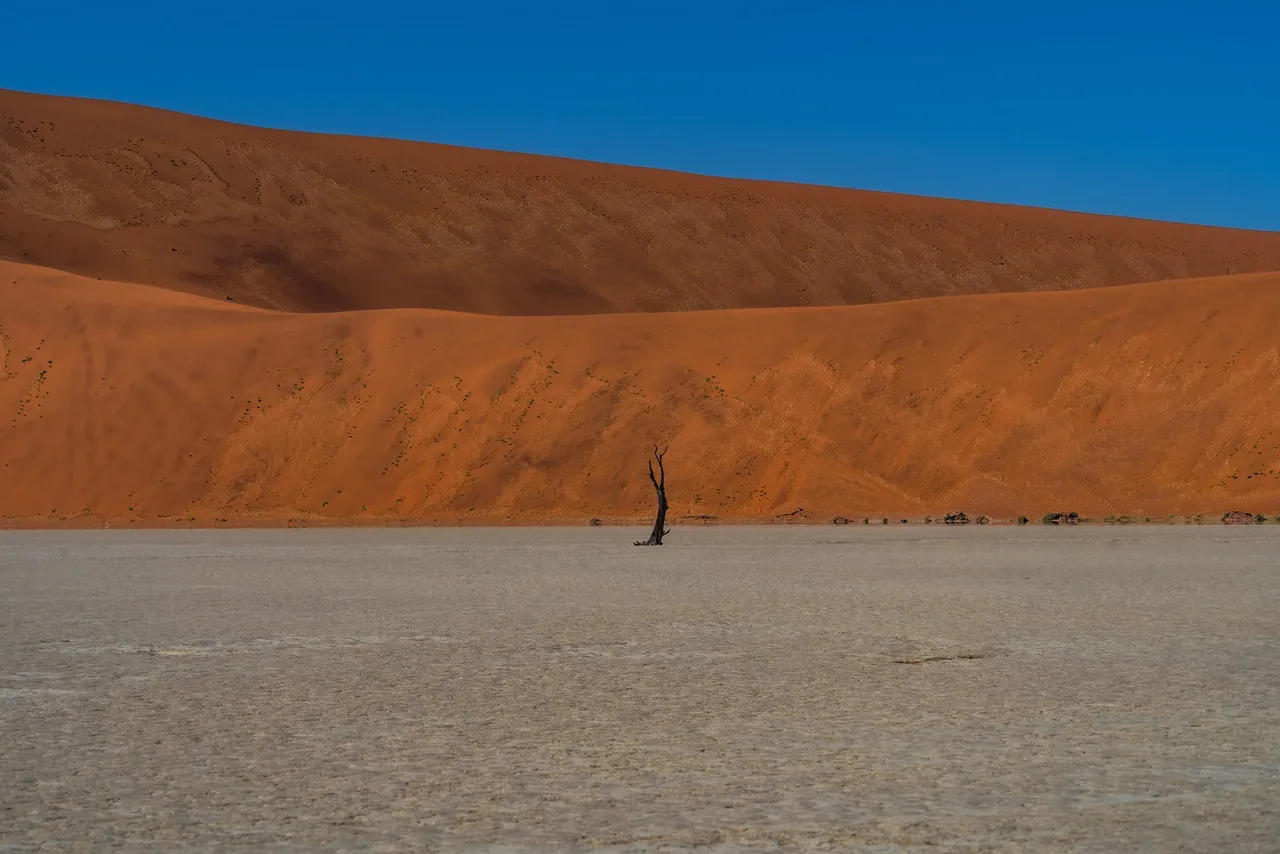
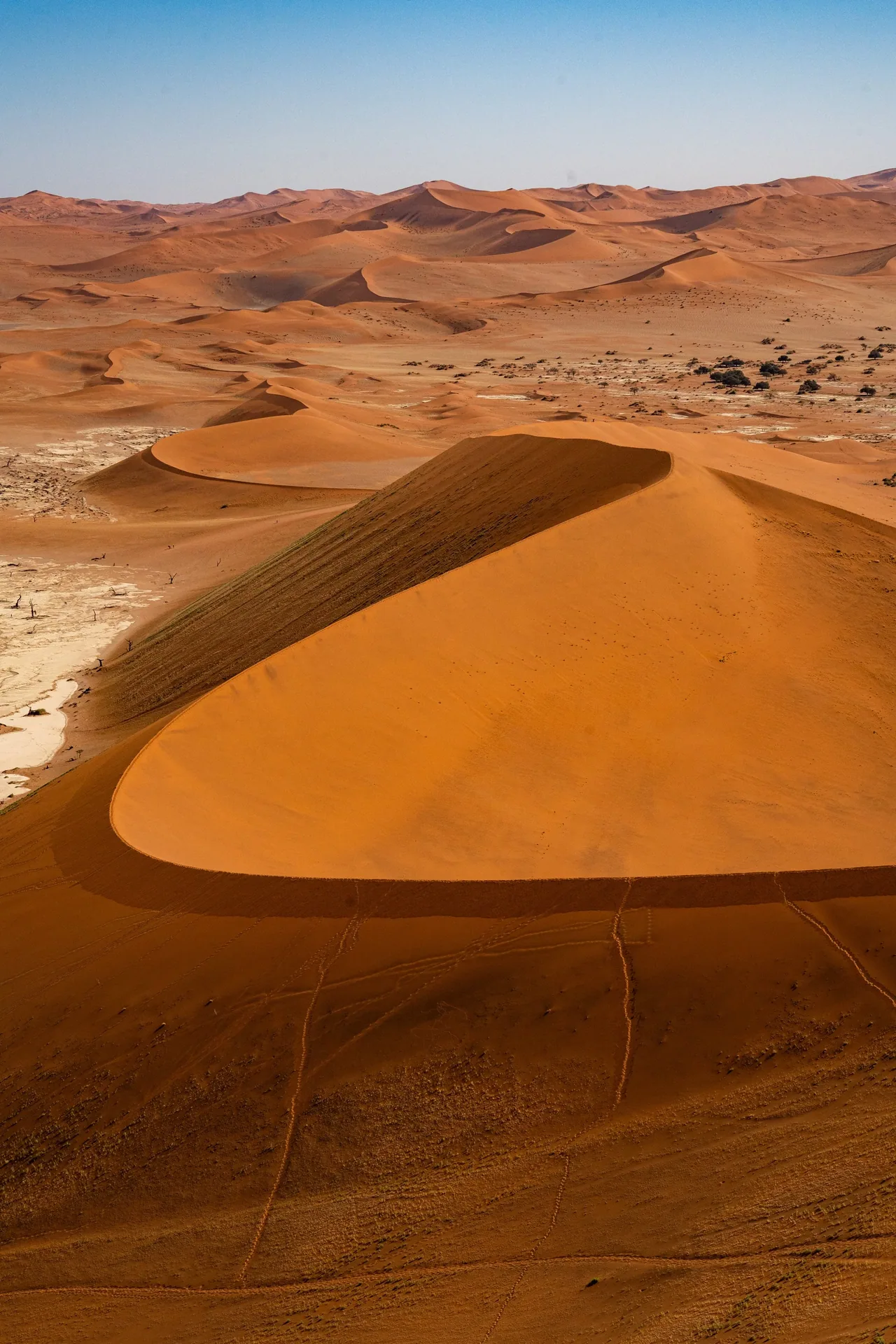
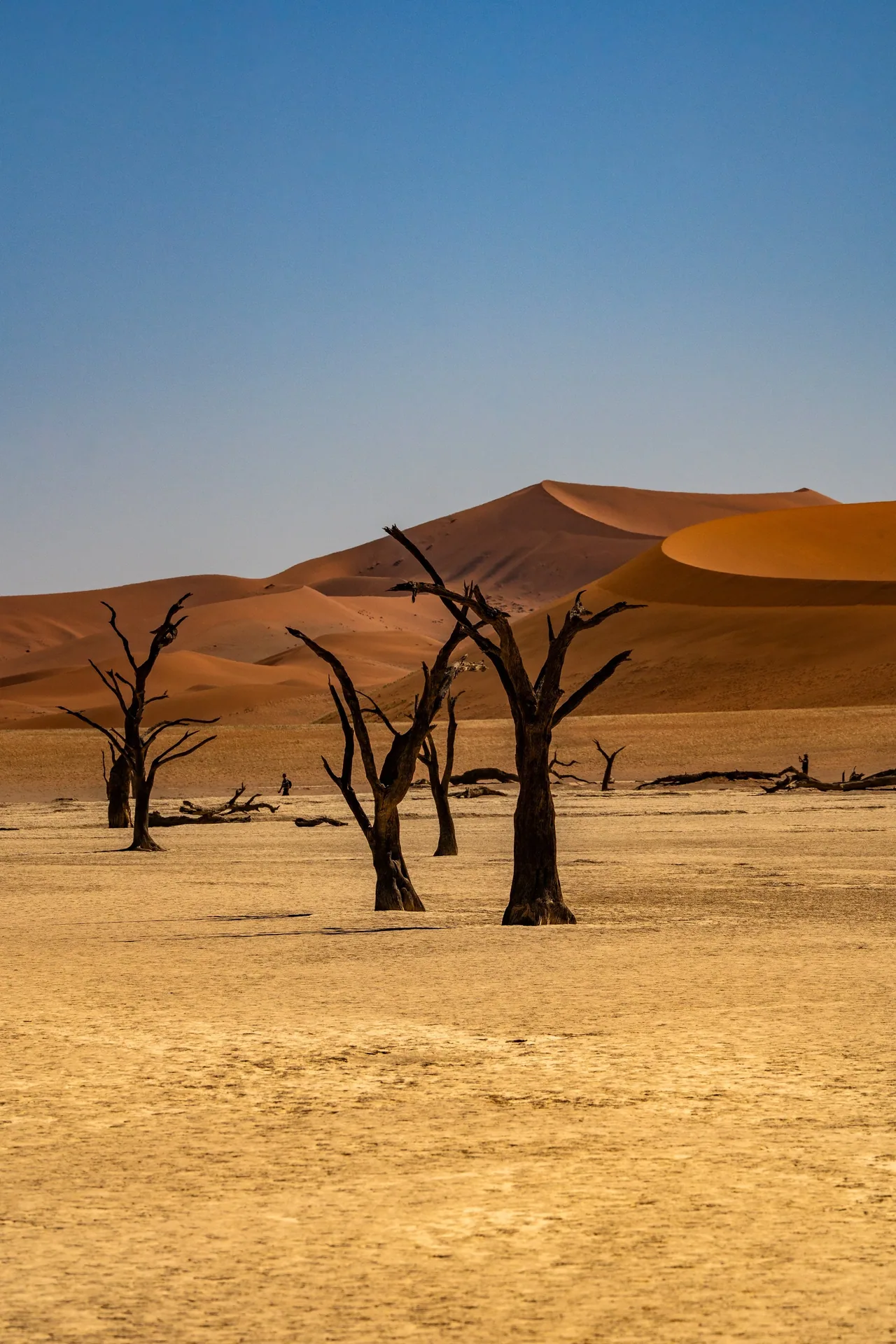
Early in the morning we drive toward Sossusvlei and Deadvlei in the Namib Desert. This is one of those landscapes almost everyone has seen on photos: endless dunes, salt pans and dead trees.
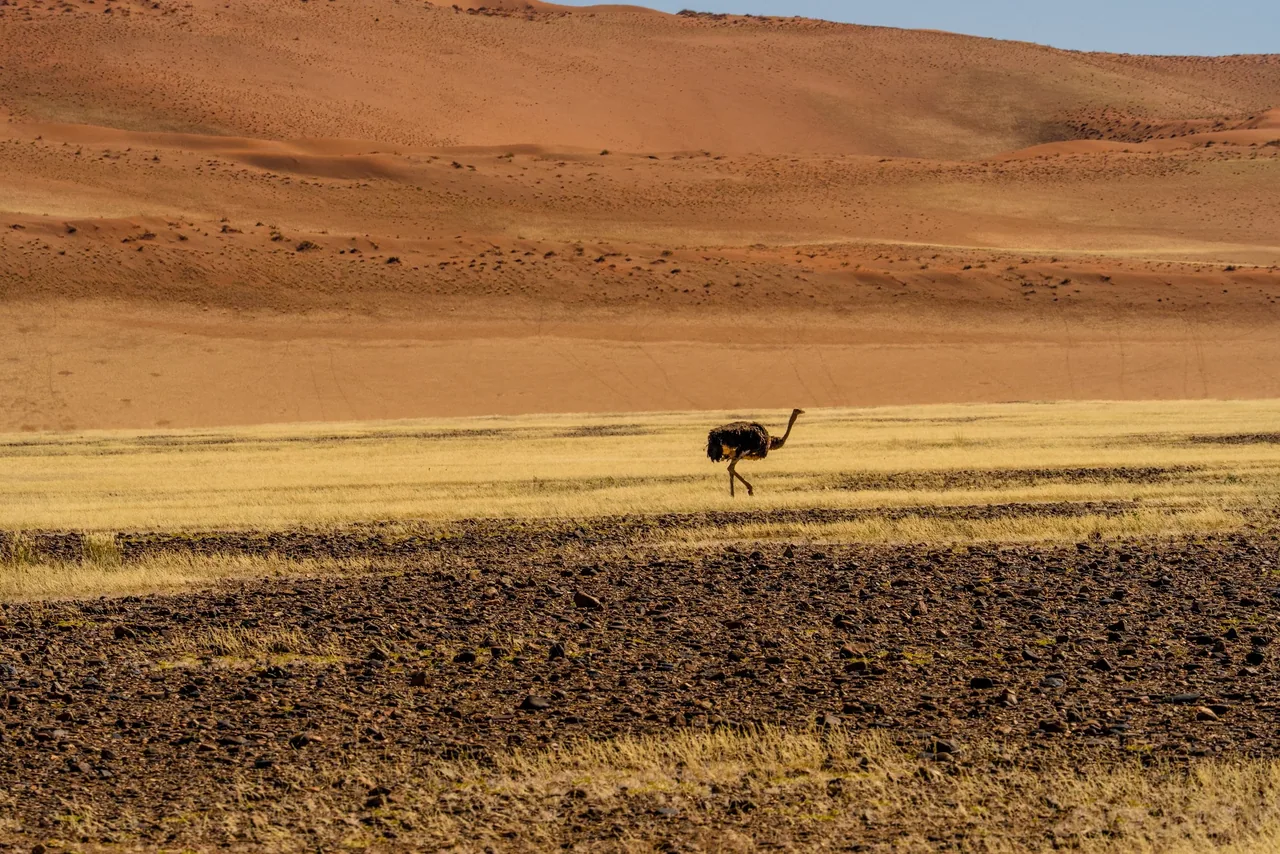
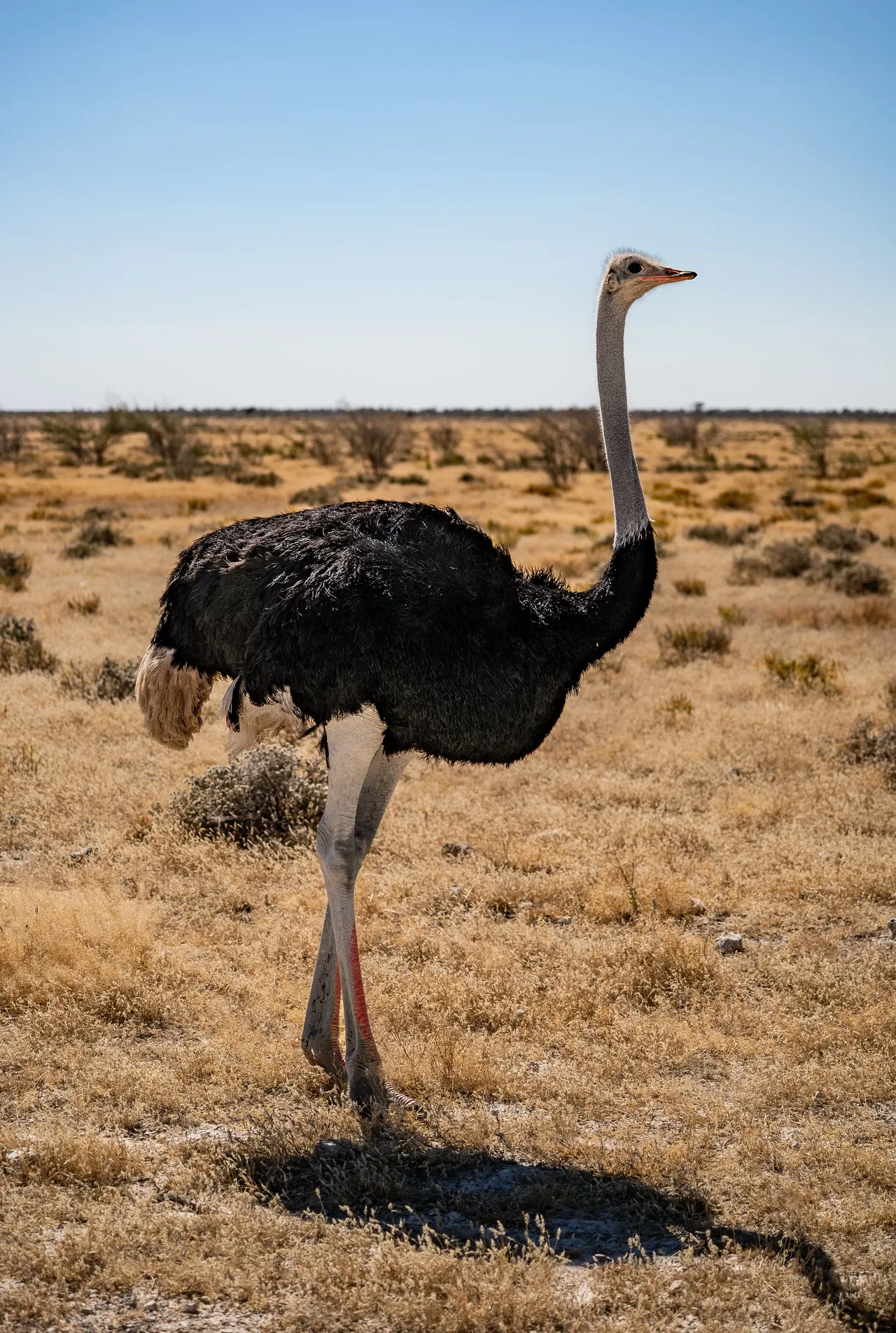
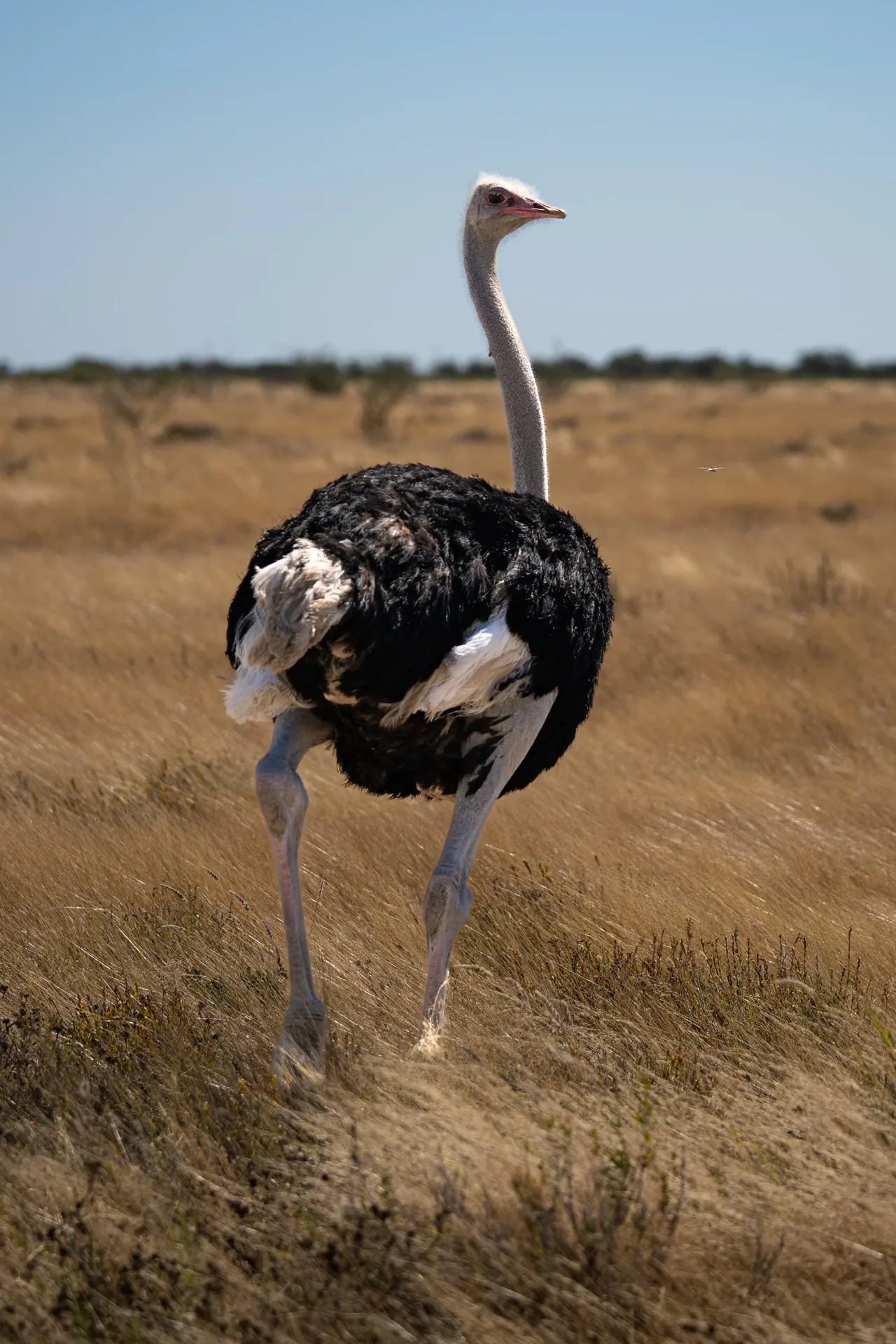
Along the way we spot more oryxes and an ostrich. The last few kilometres we finally switch into 4×4 mode for the first time and crawl through deep sand toward the parking area.
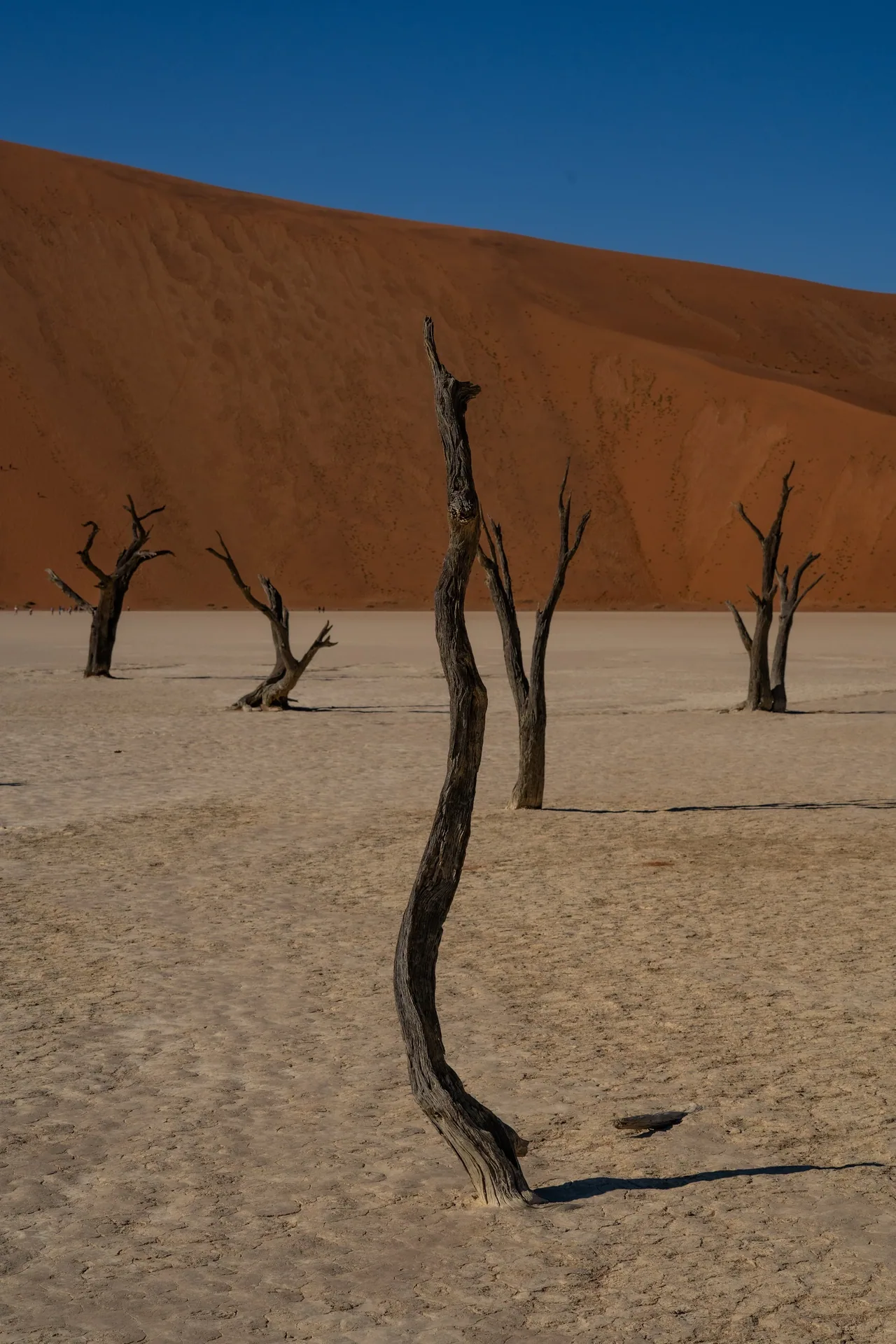
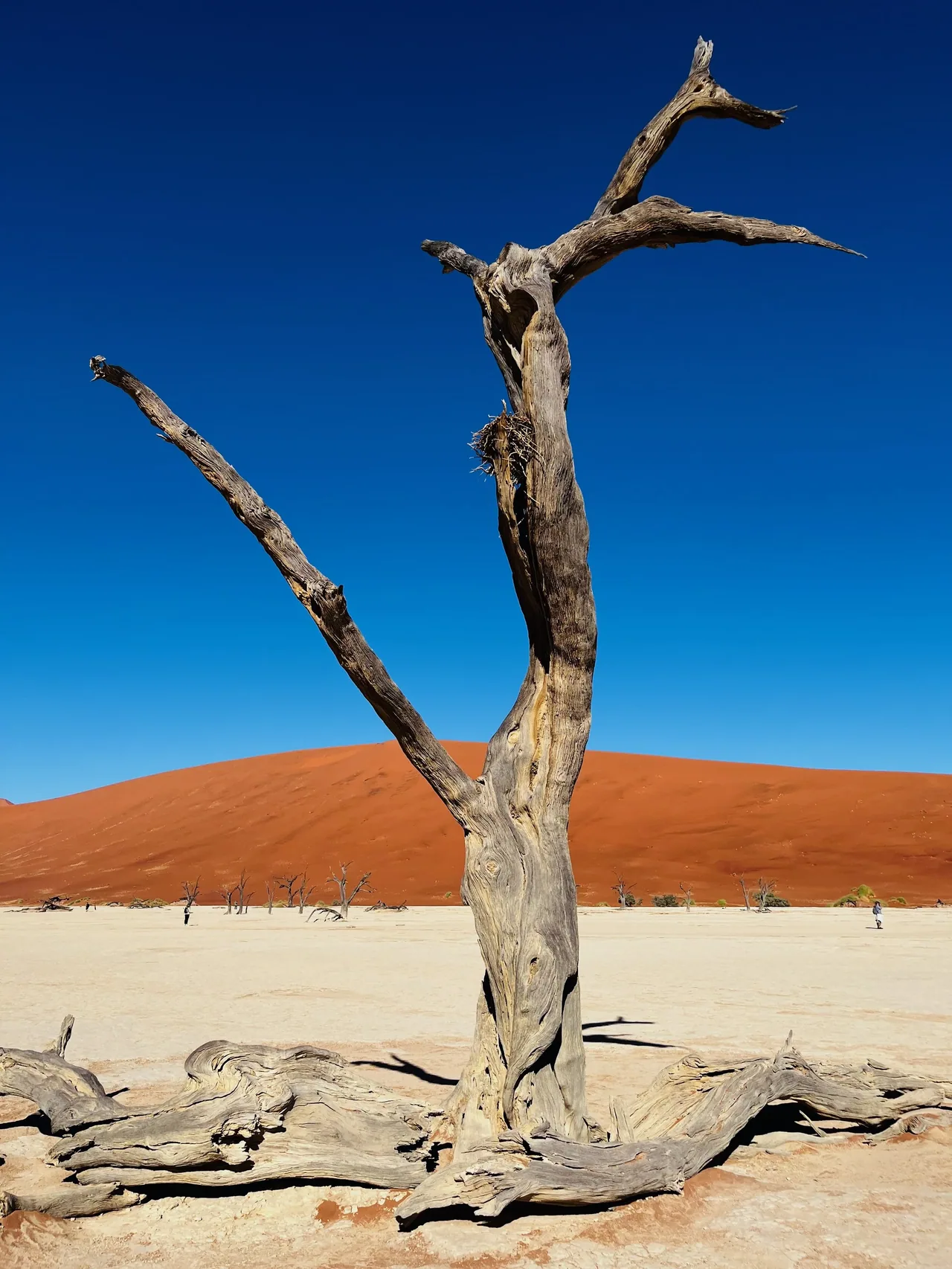
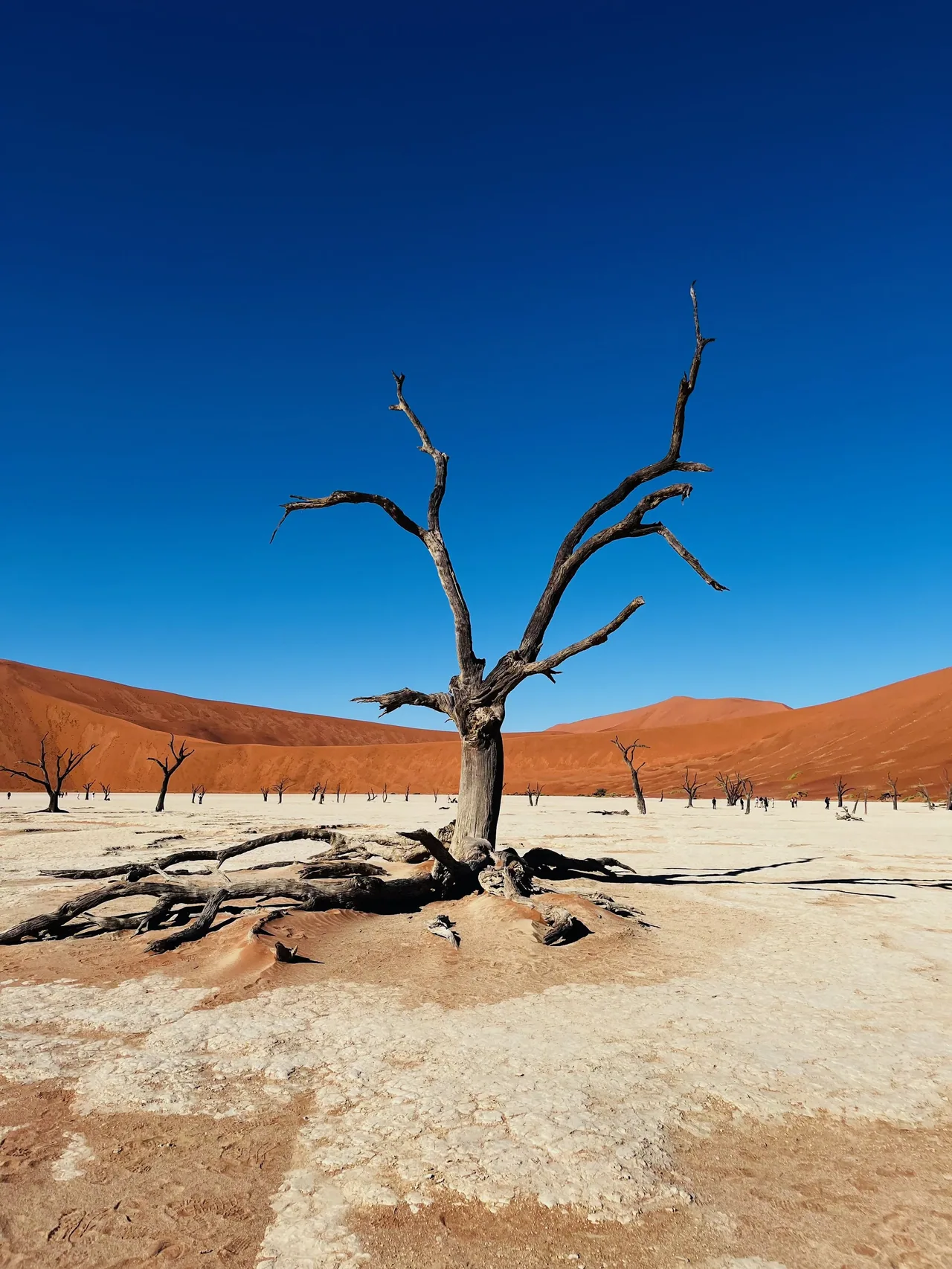
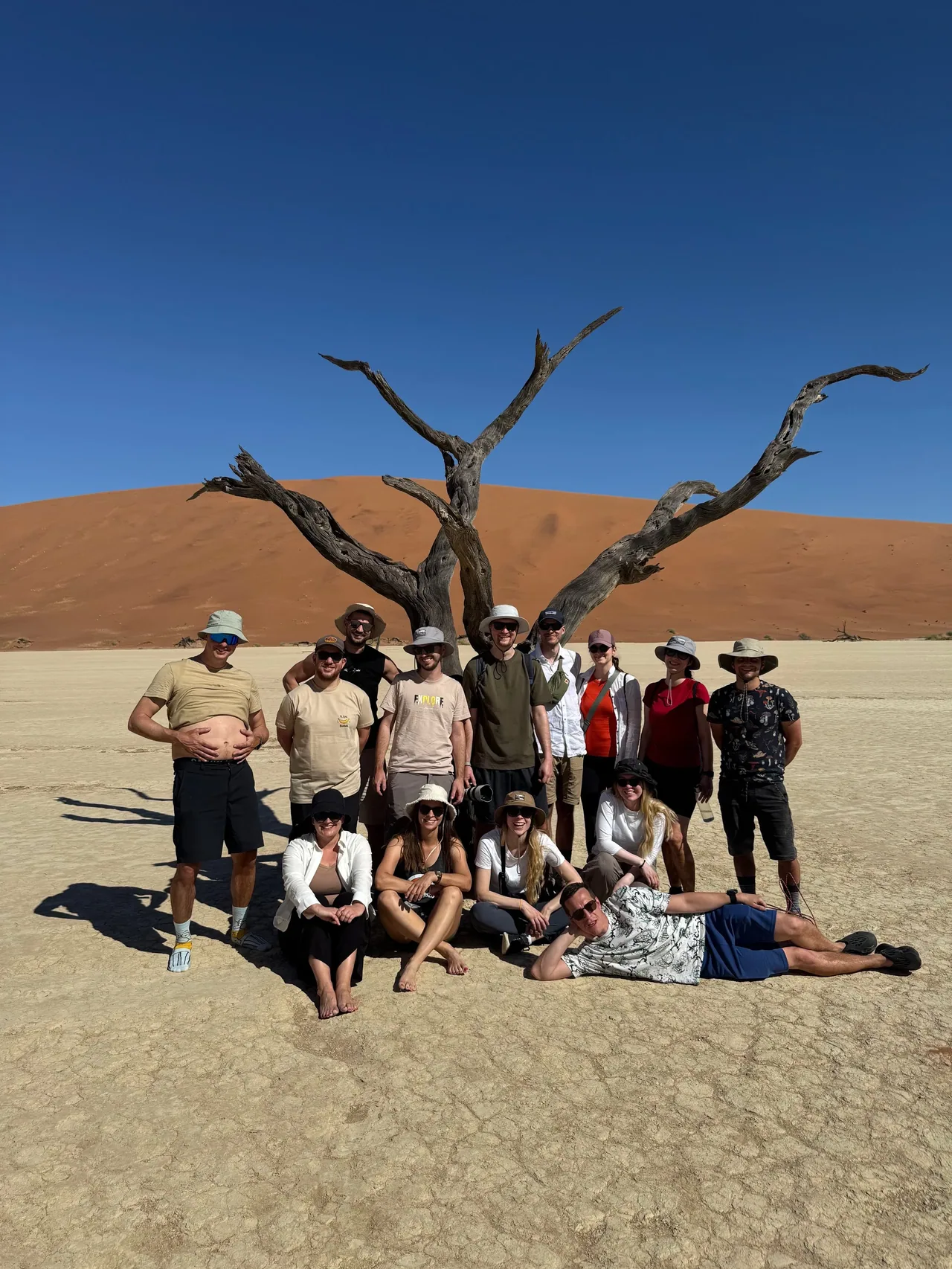
From there we walk to Deadvlei — an iconic, white clay pan where dead camel thorn trees stand like dark sculptures against red dunes and a bright blue sky.
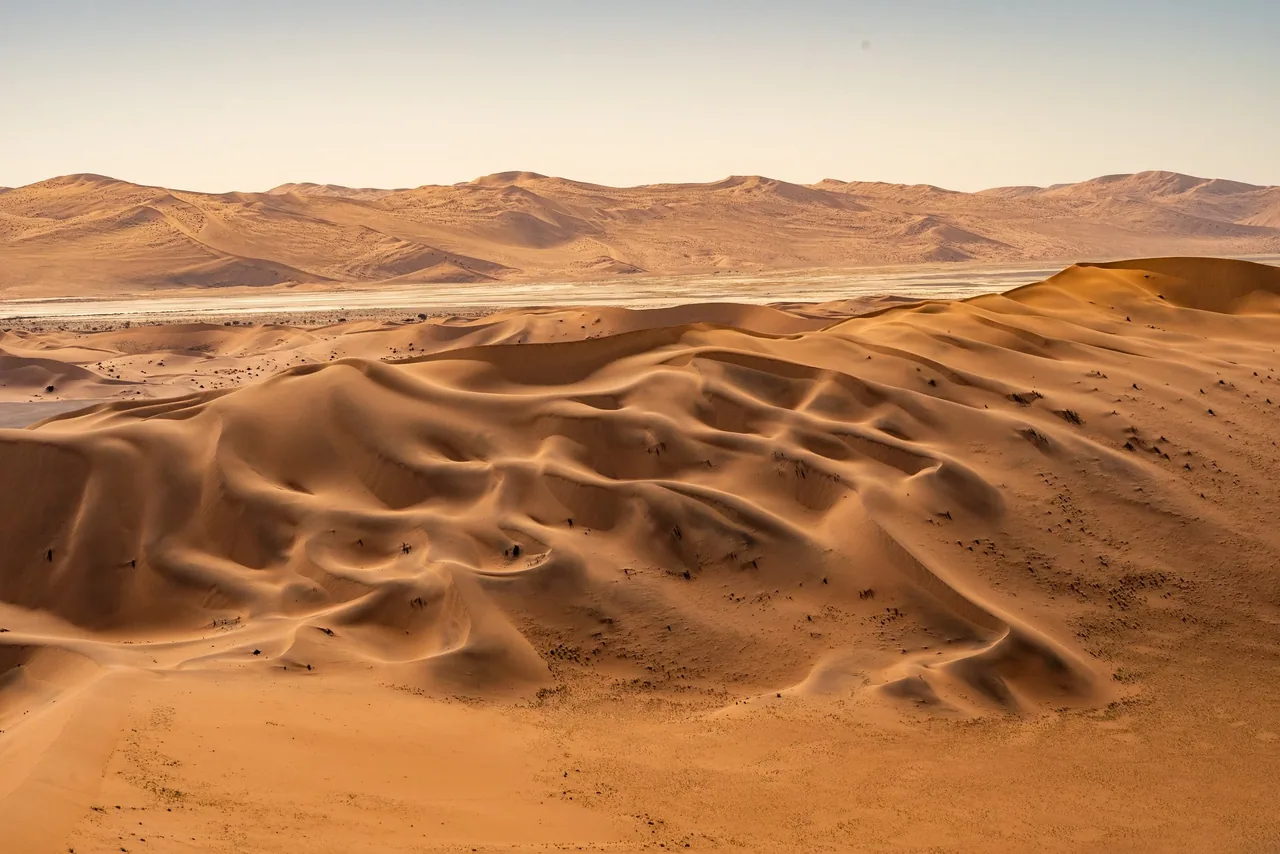
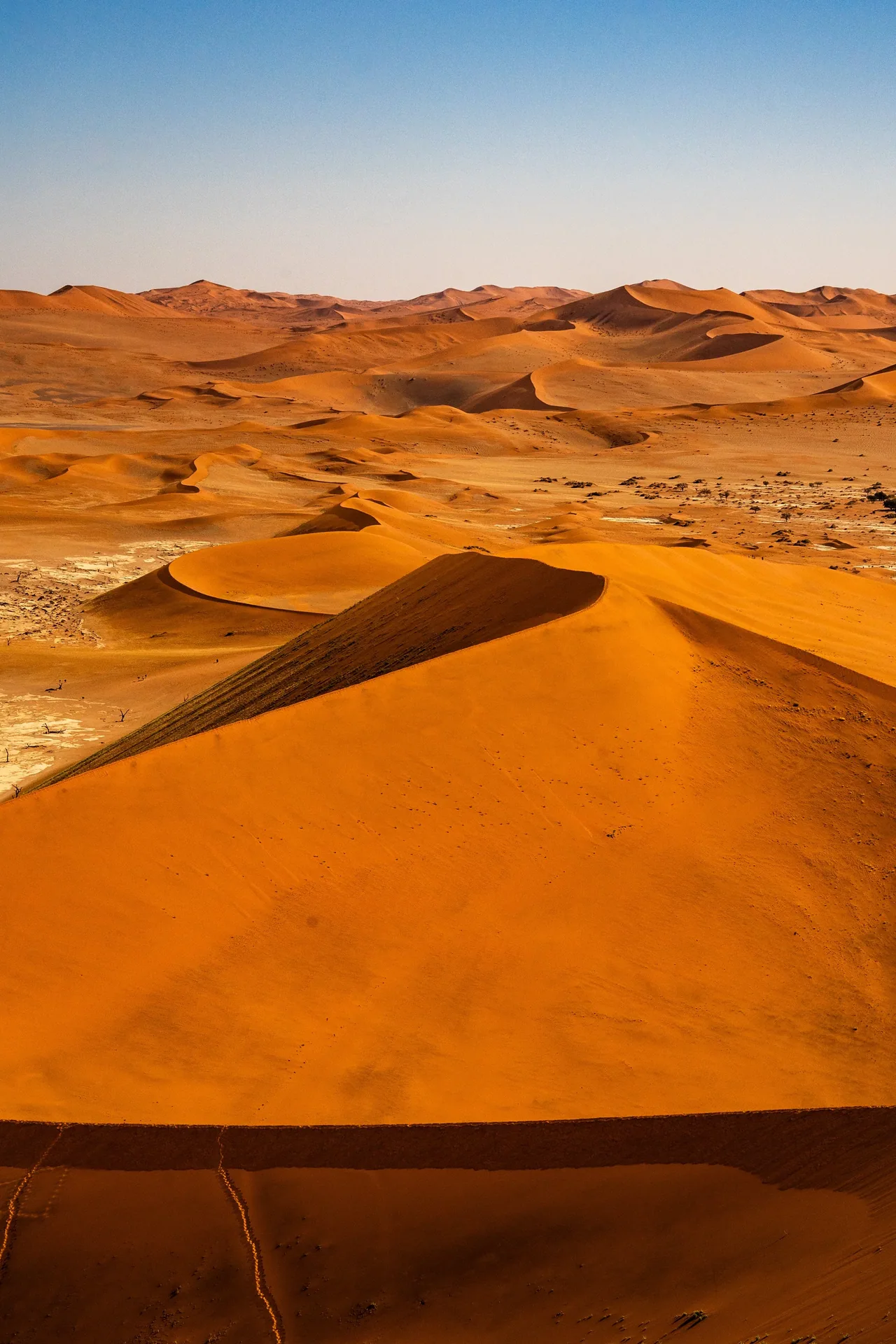
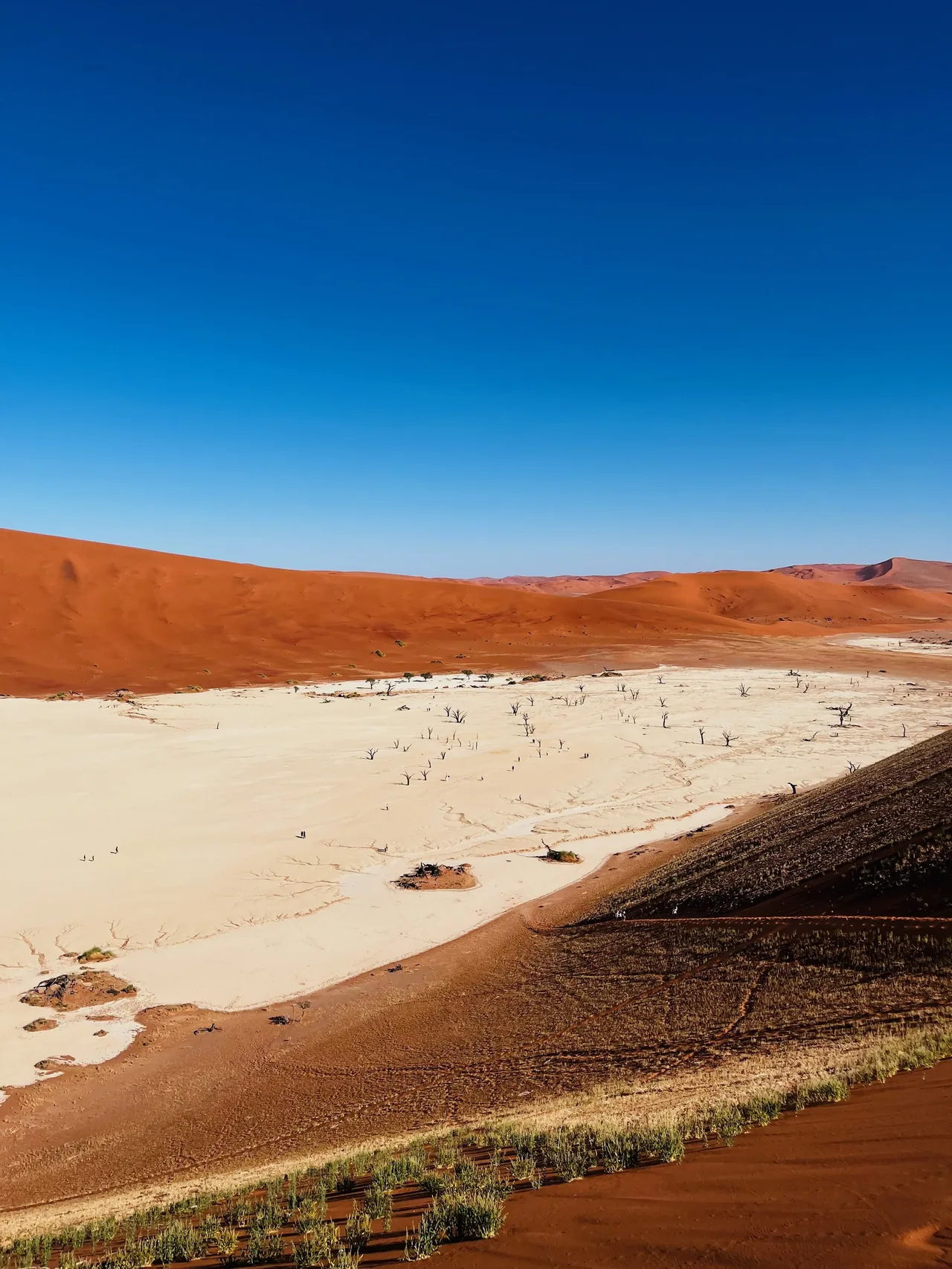
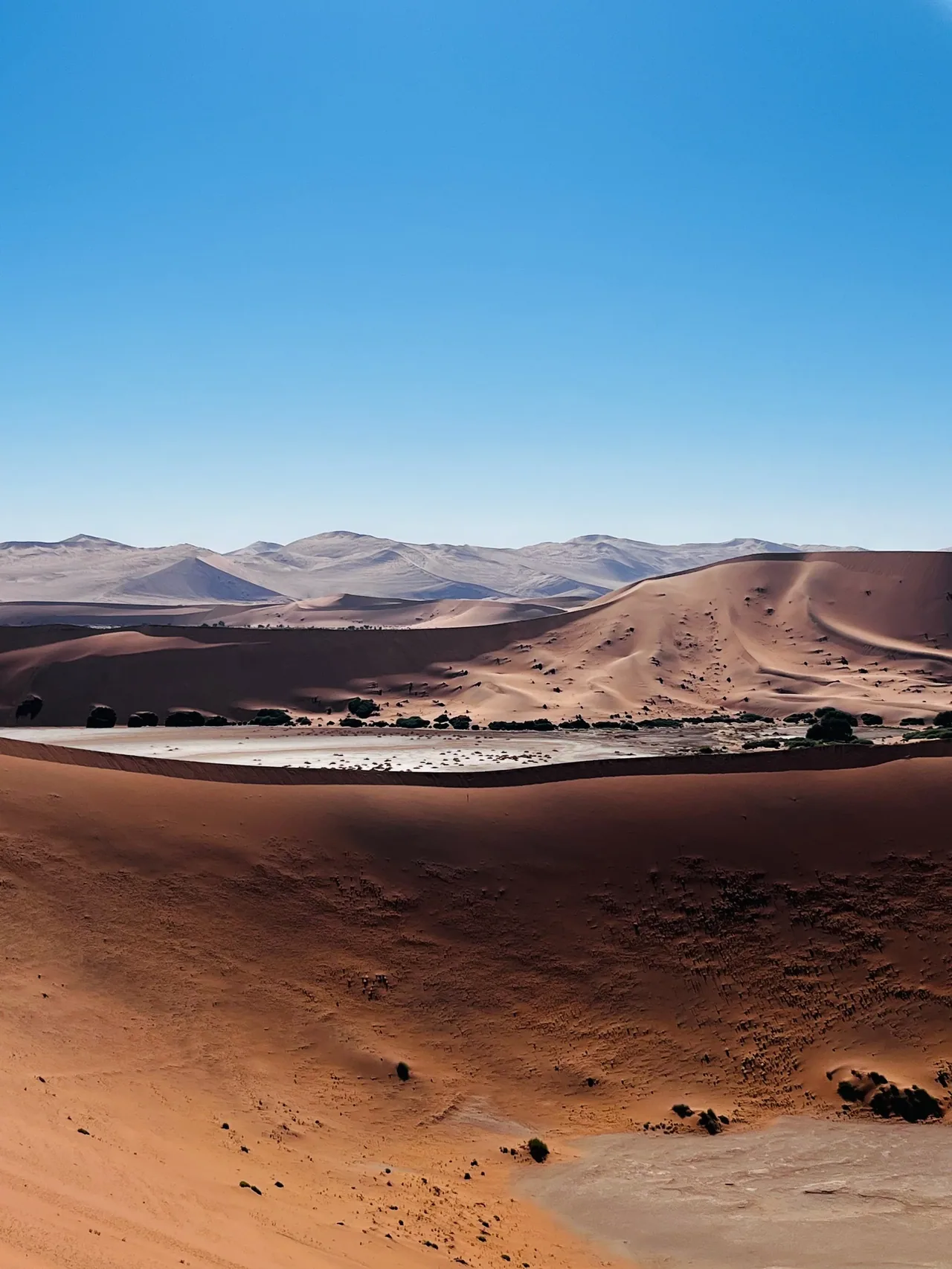
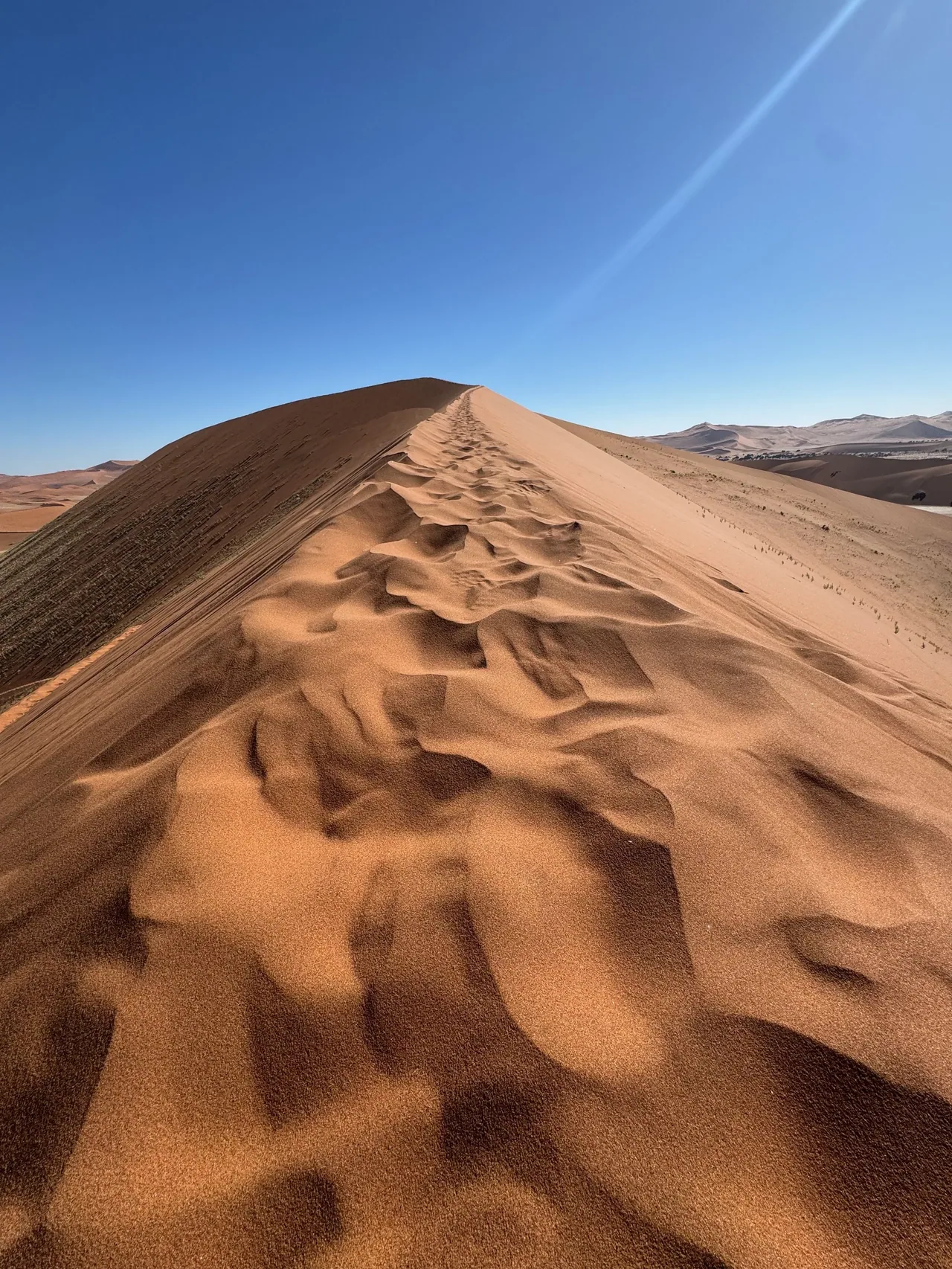
Then we head up Big Daddy, one of the highest sand dunes in the world at around 325 metres from its base — taller than the Eiffel Tower. The climb is brutal. The sand is soft, every step slides half a step back and the sun climbs higher in the sky. It takes us about an hour to reach the top, but the view is absolutely worth it: a panoramic vista over the dune sea and Deadvlei below.
Going down is pure joy. It takes an hour to climb up and maybe five minutes to run, jump and slide down the steep sandy slope — like diving into deep, soft snow.
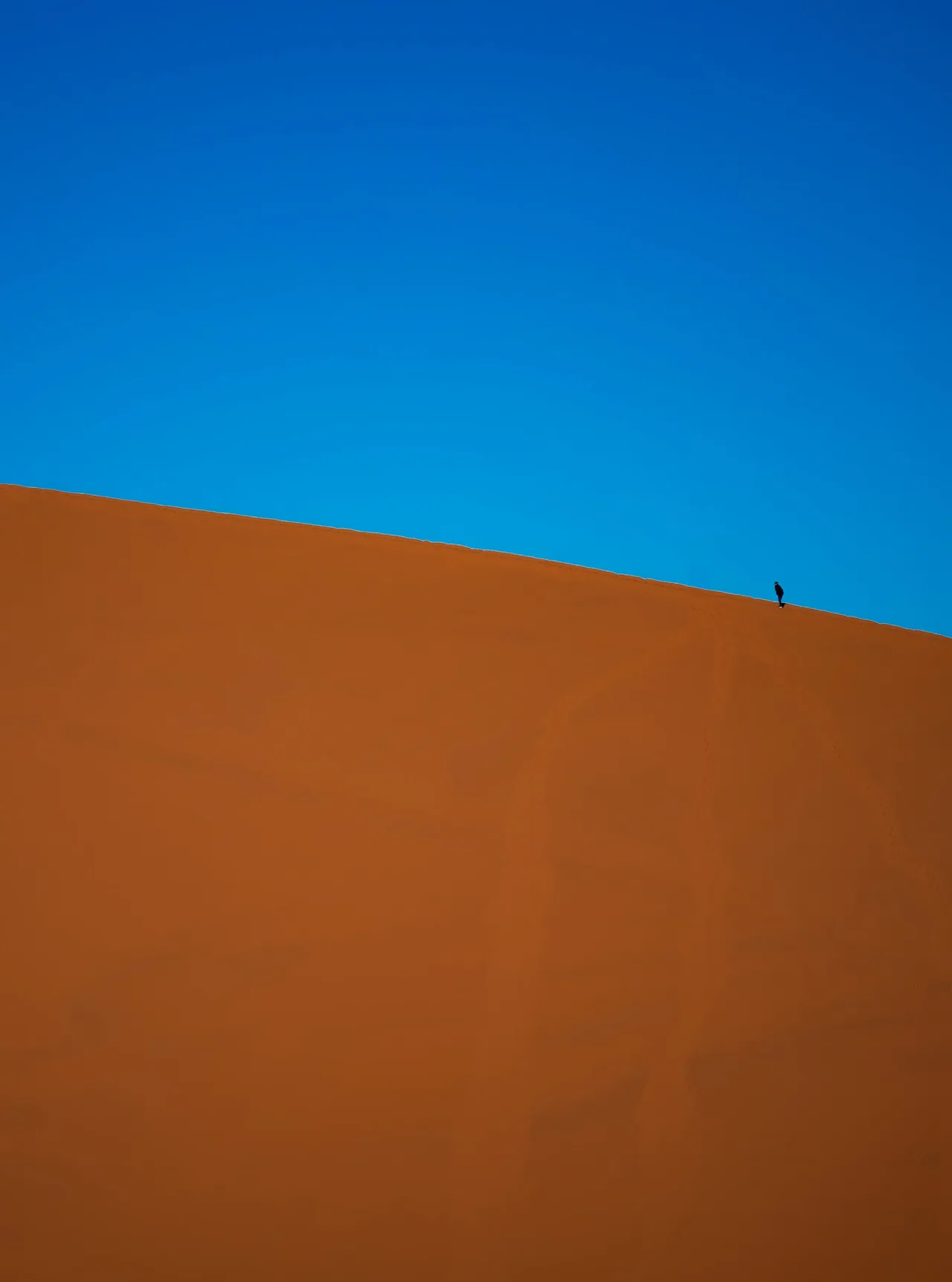
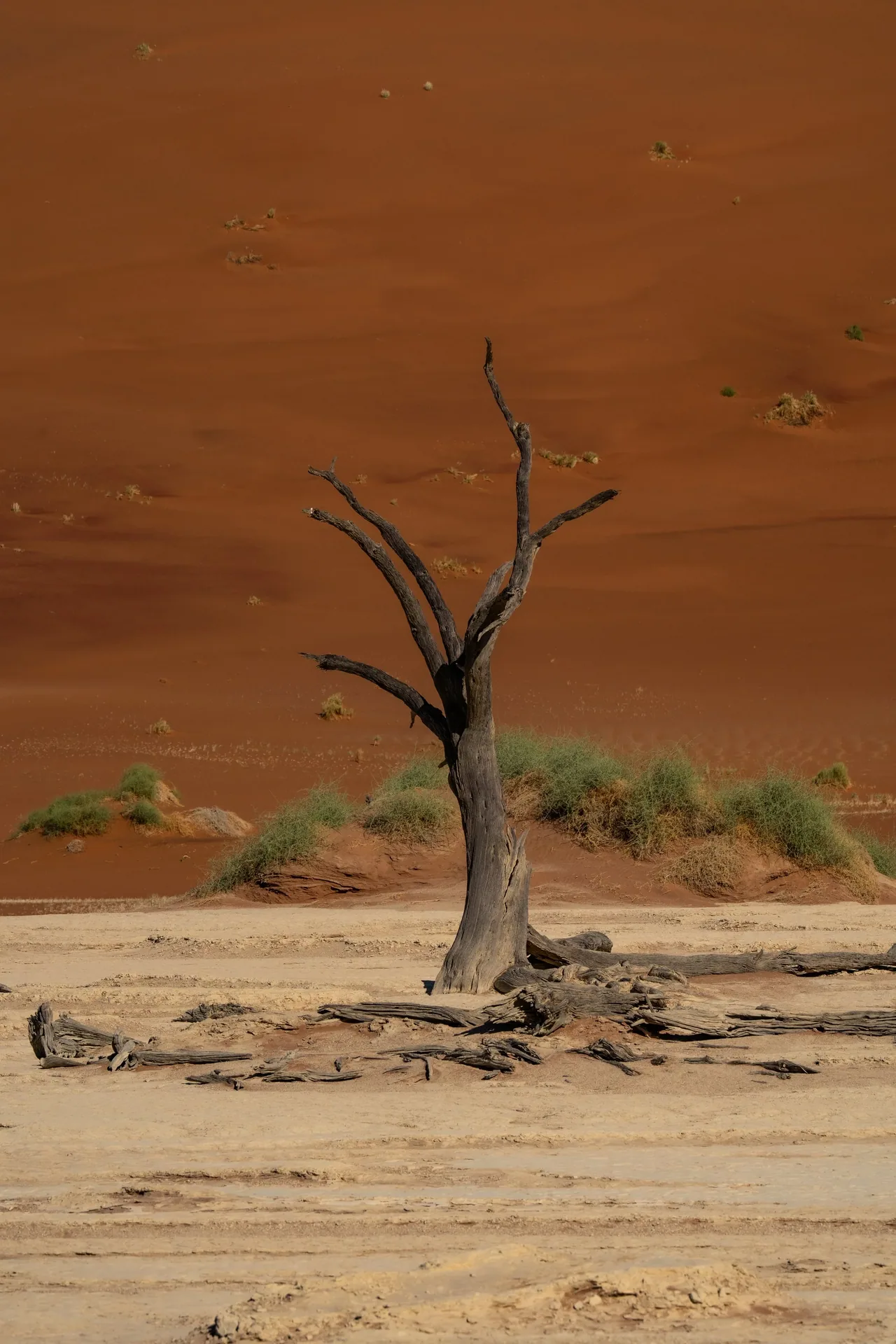
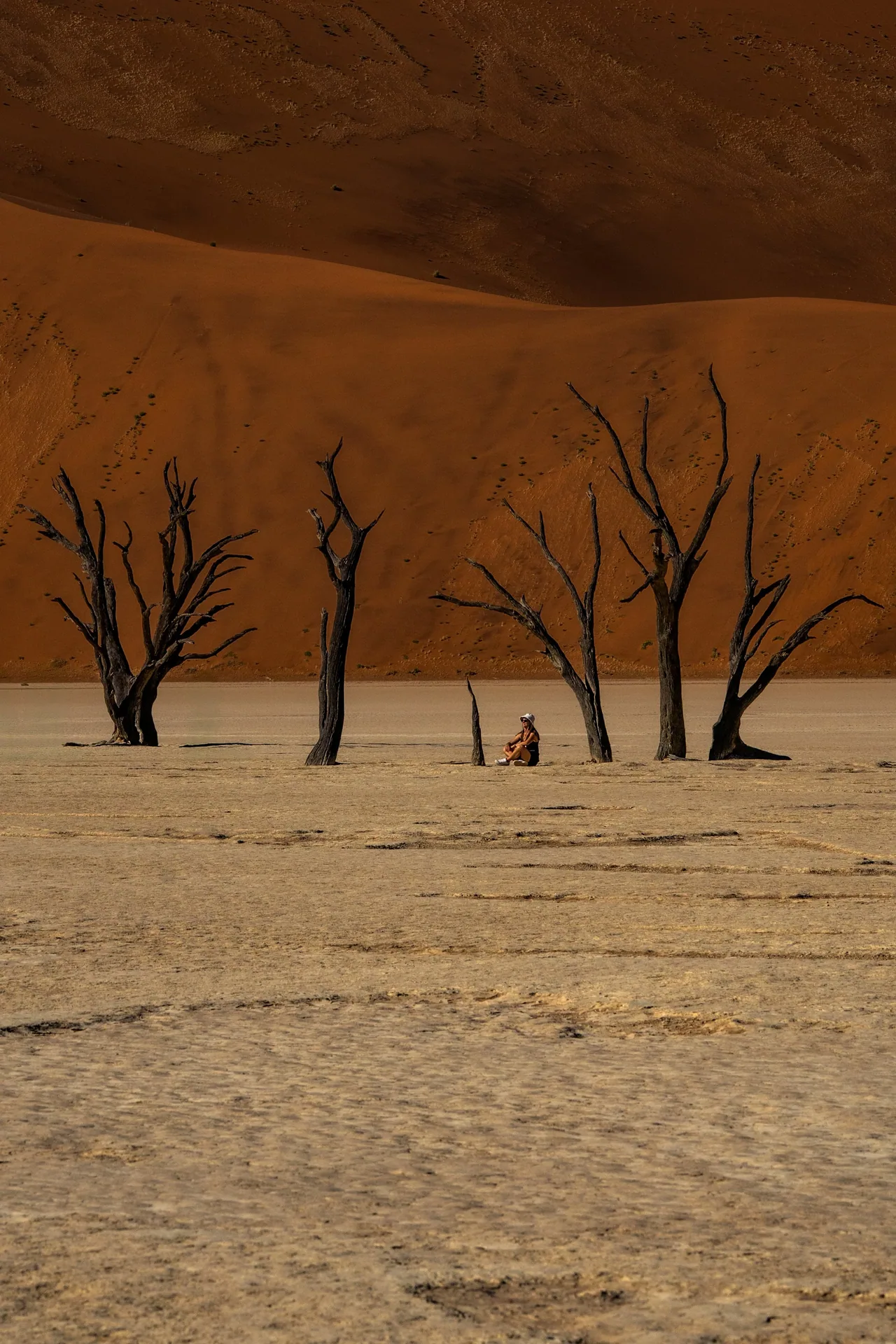
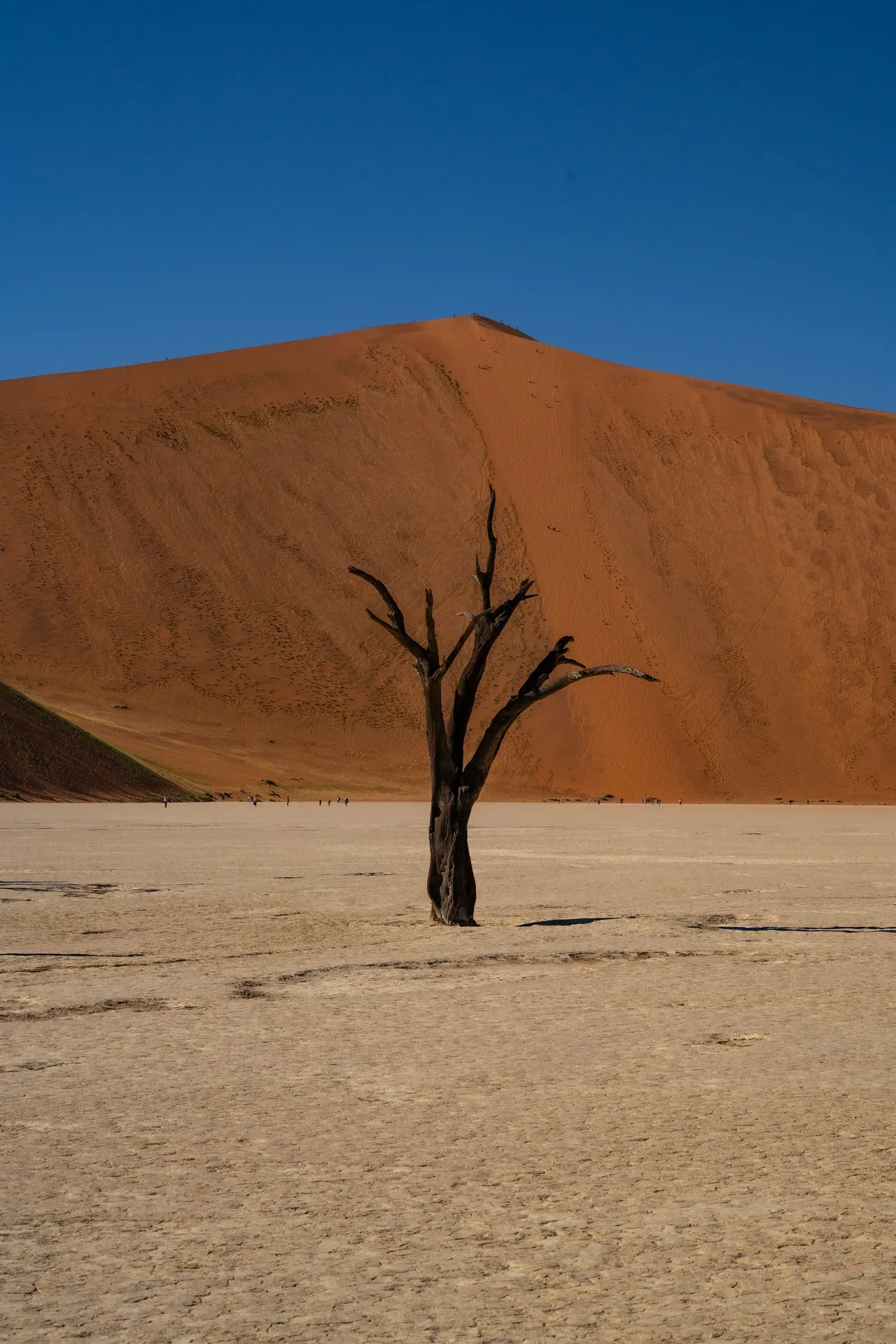
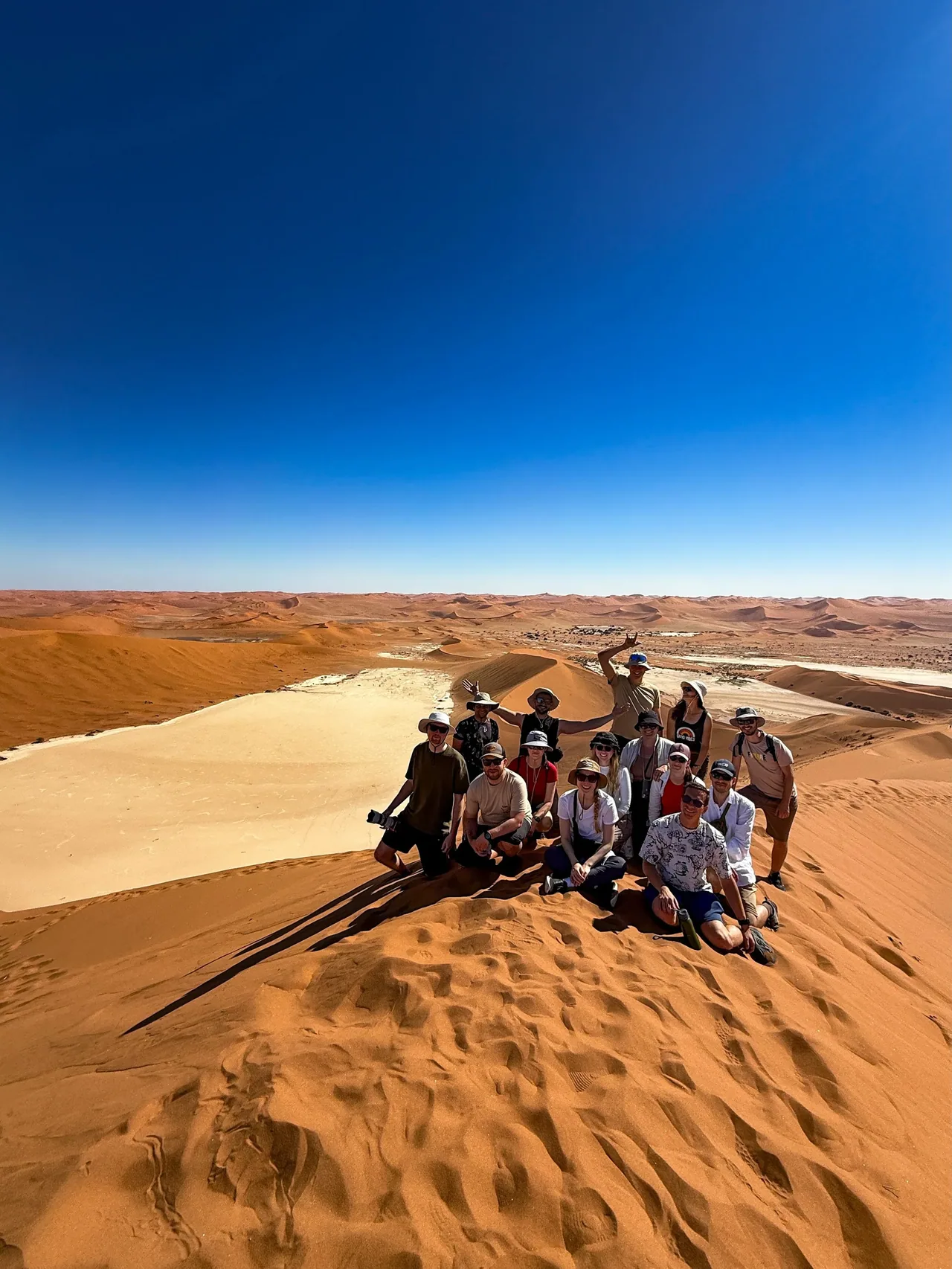
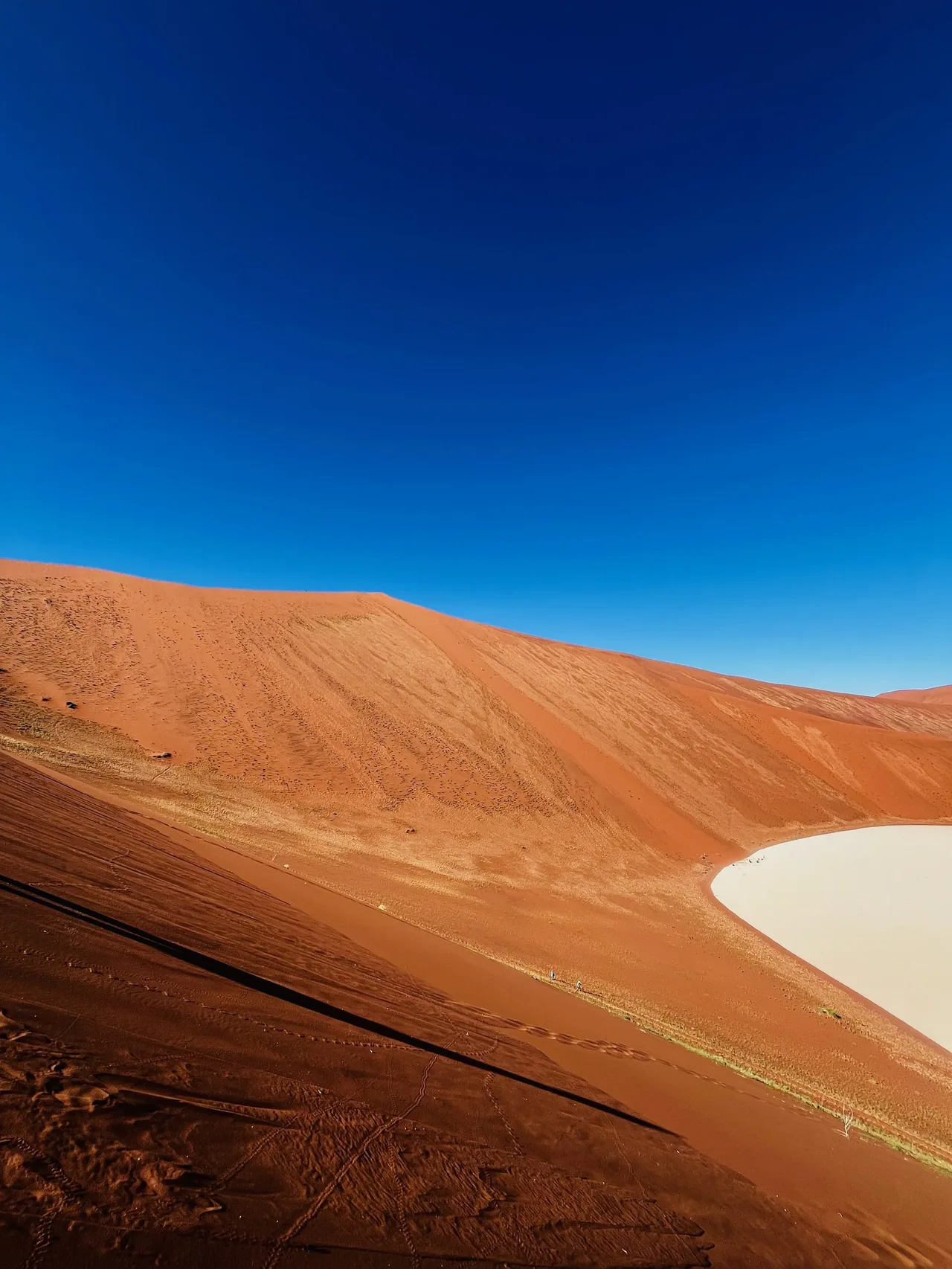
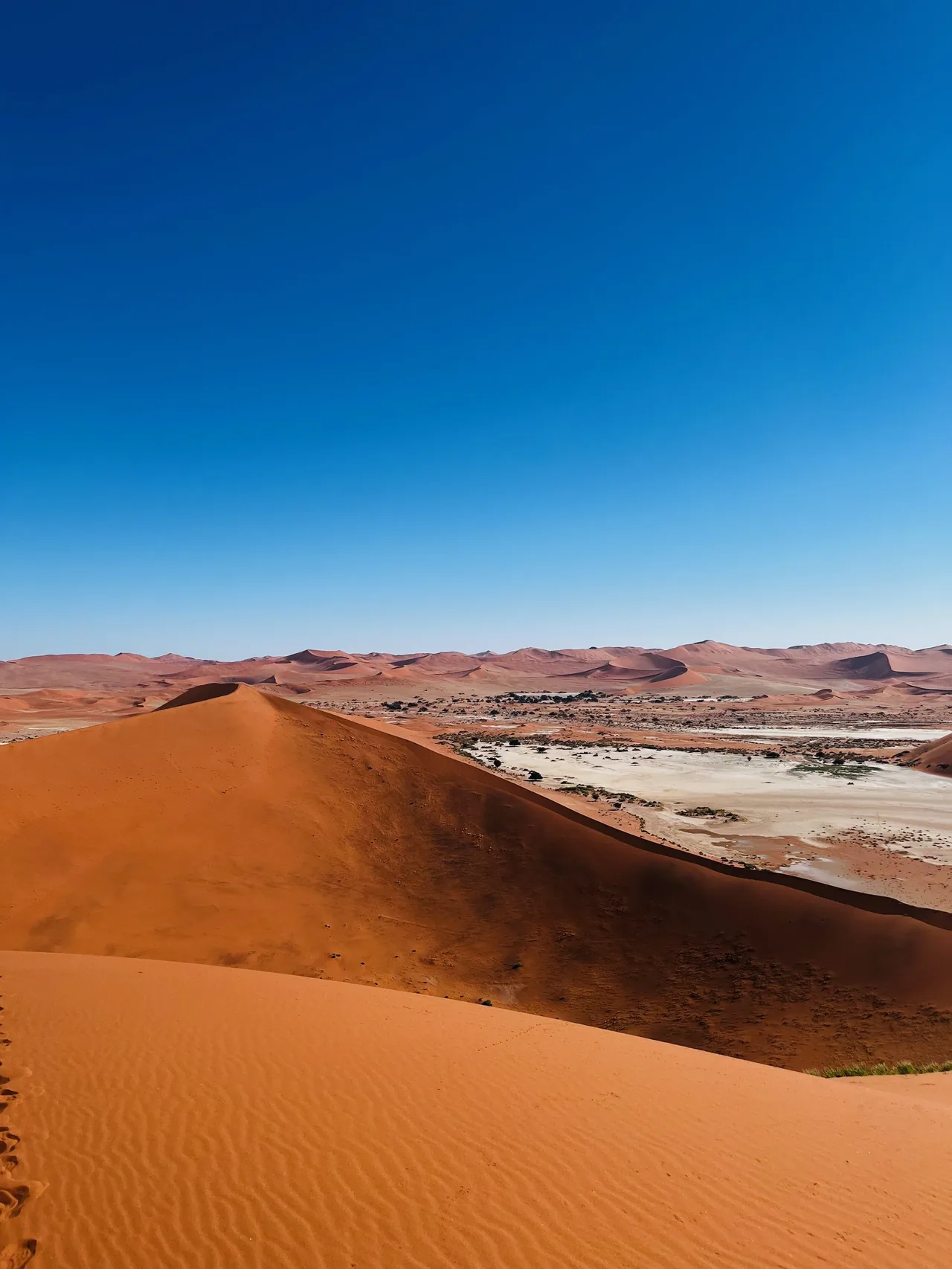
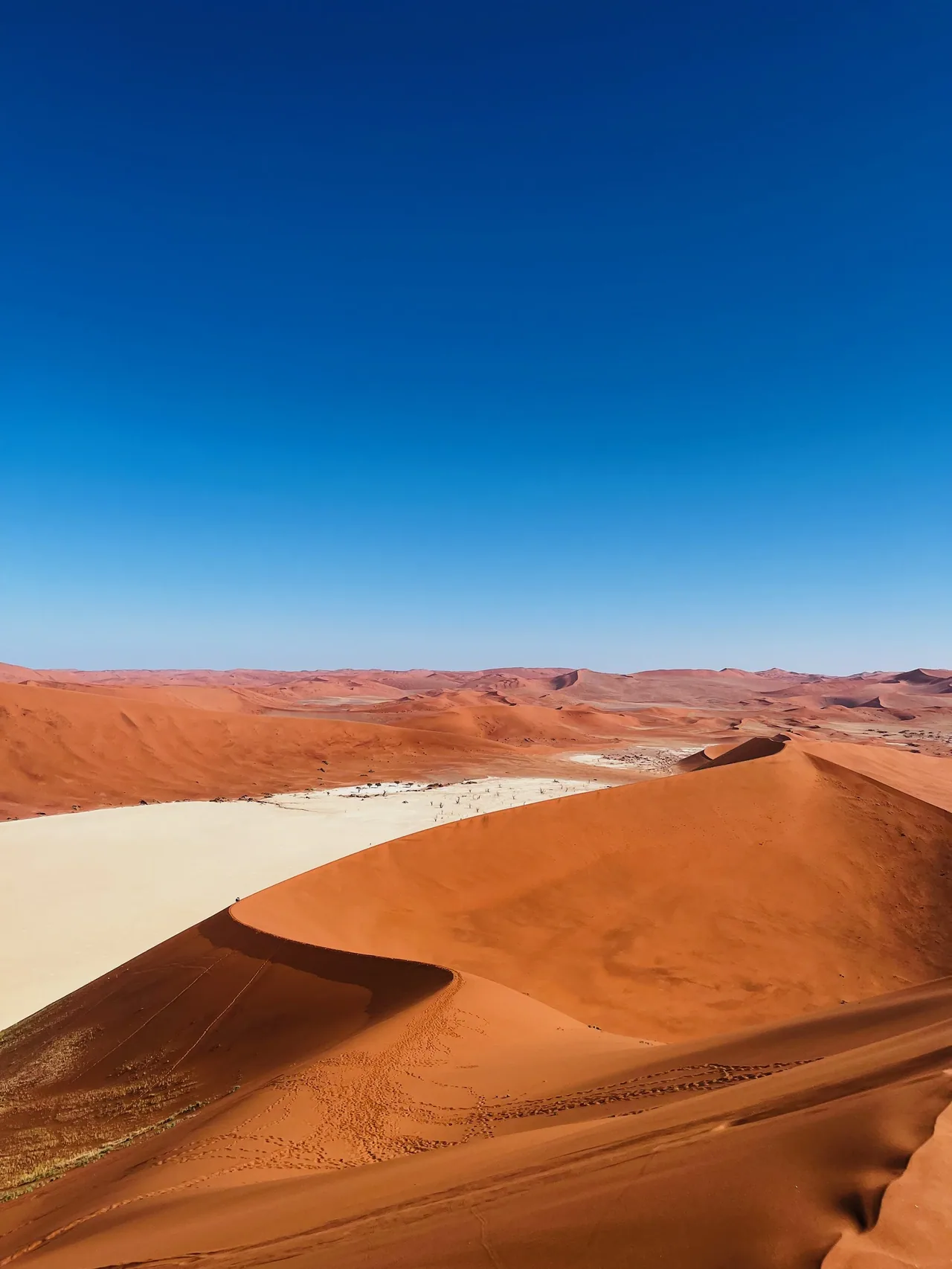
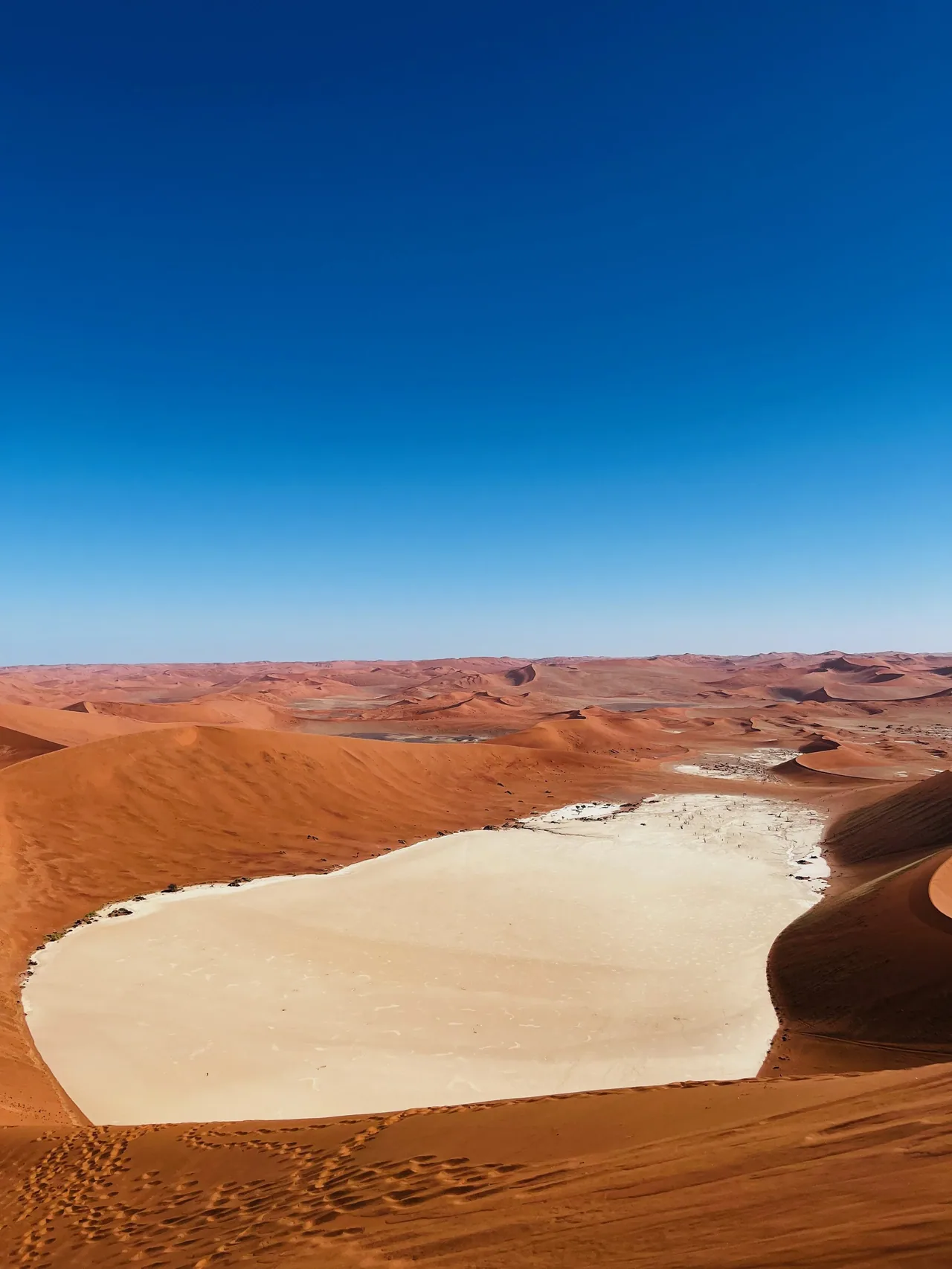
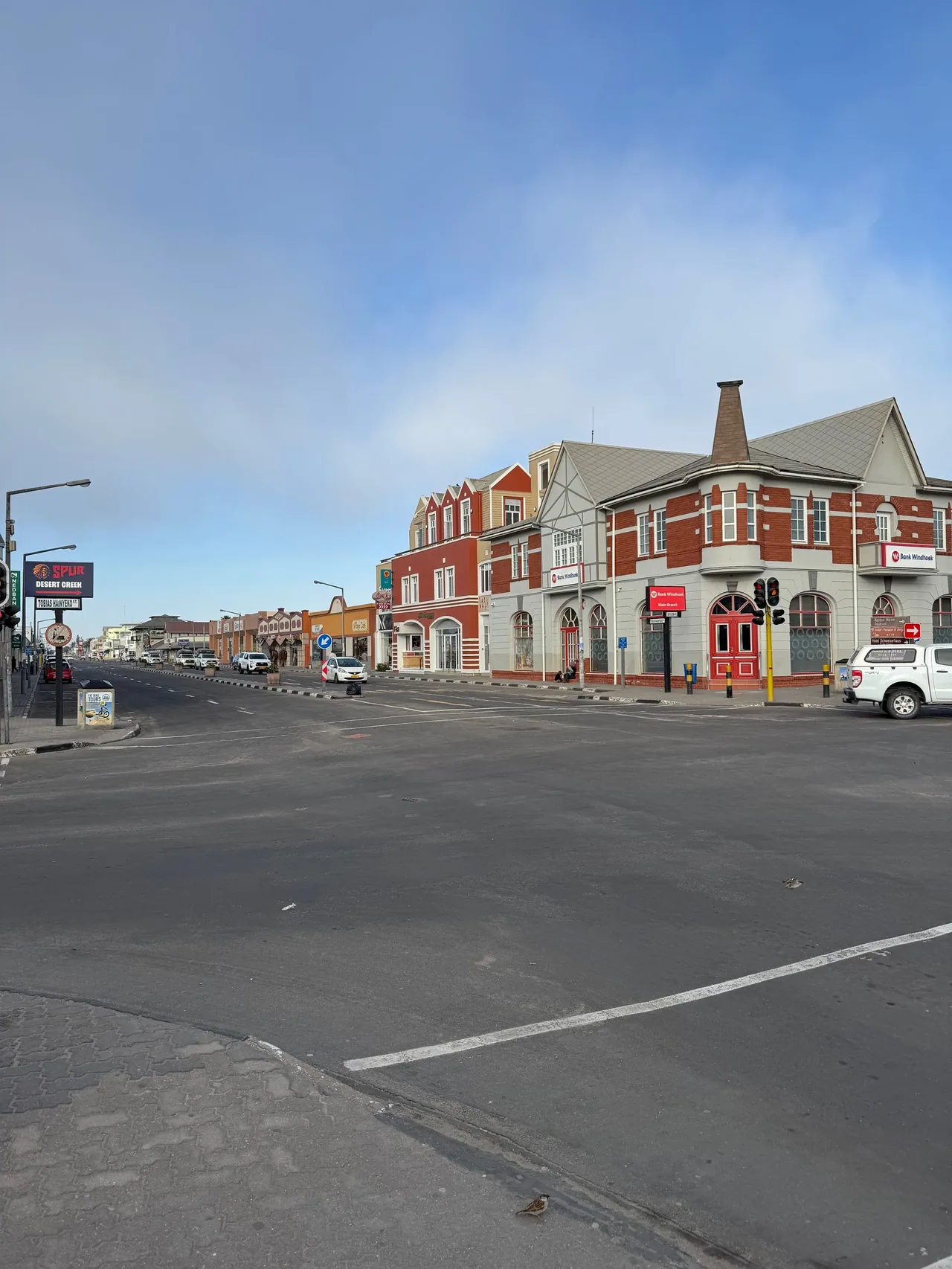
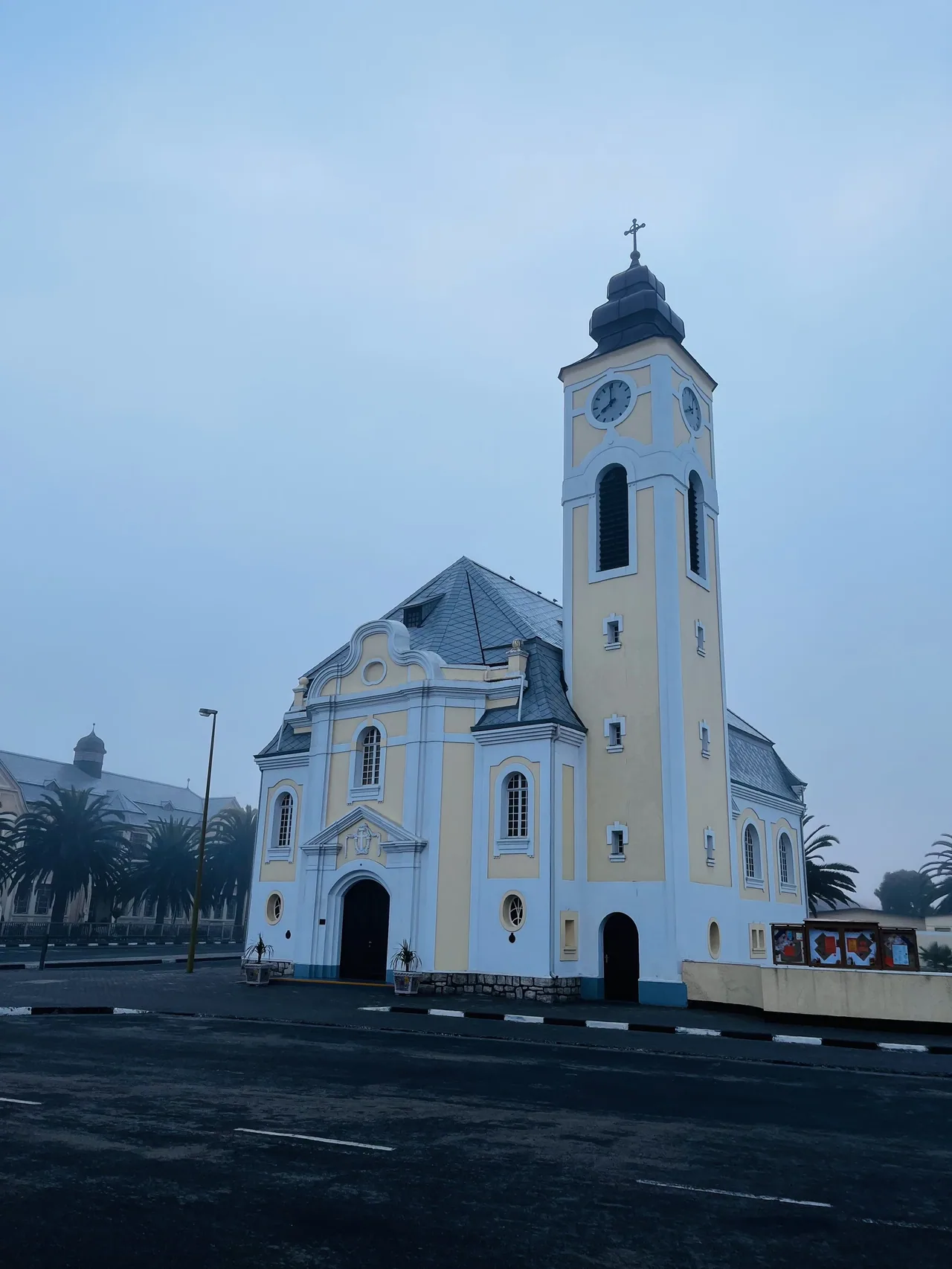
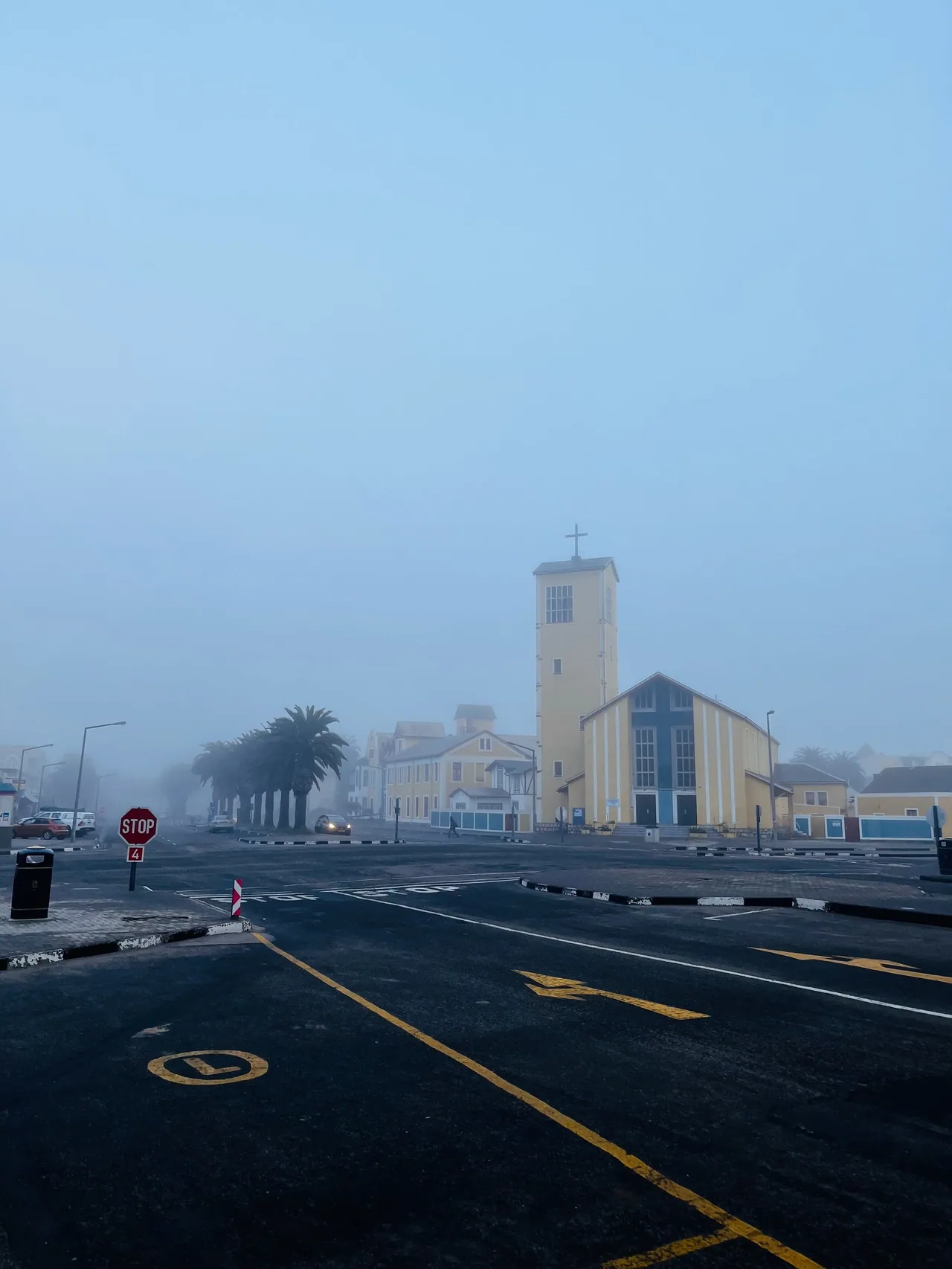
After we’ve had our fill of dunes and taken all the group photos we want, we drive on to Swakopmund and check into Desert Sands Boutique for two nights. A friend of ours, who is a doctor, gives me antibiotics to finally tackle the infection that’s still bothering me. That evening we go to a nice local restaurant and I have a Wagyu steak for 420 NAD — about 21 euros.
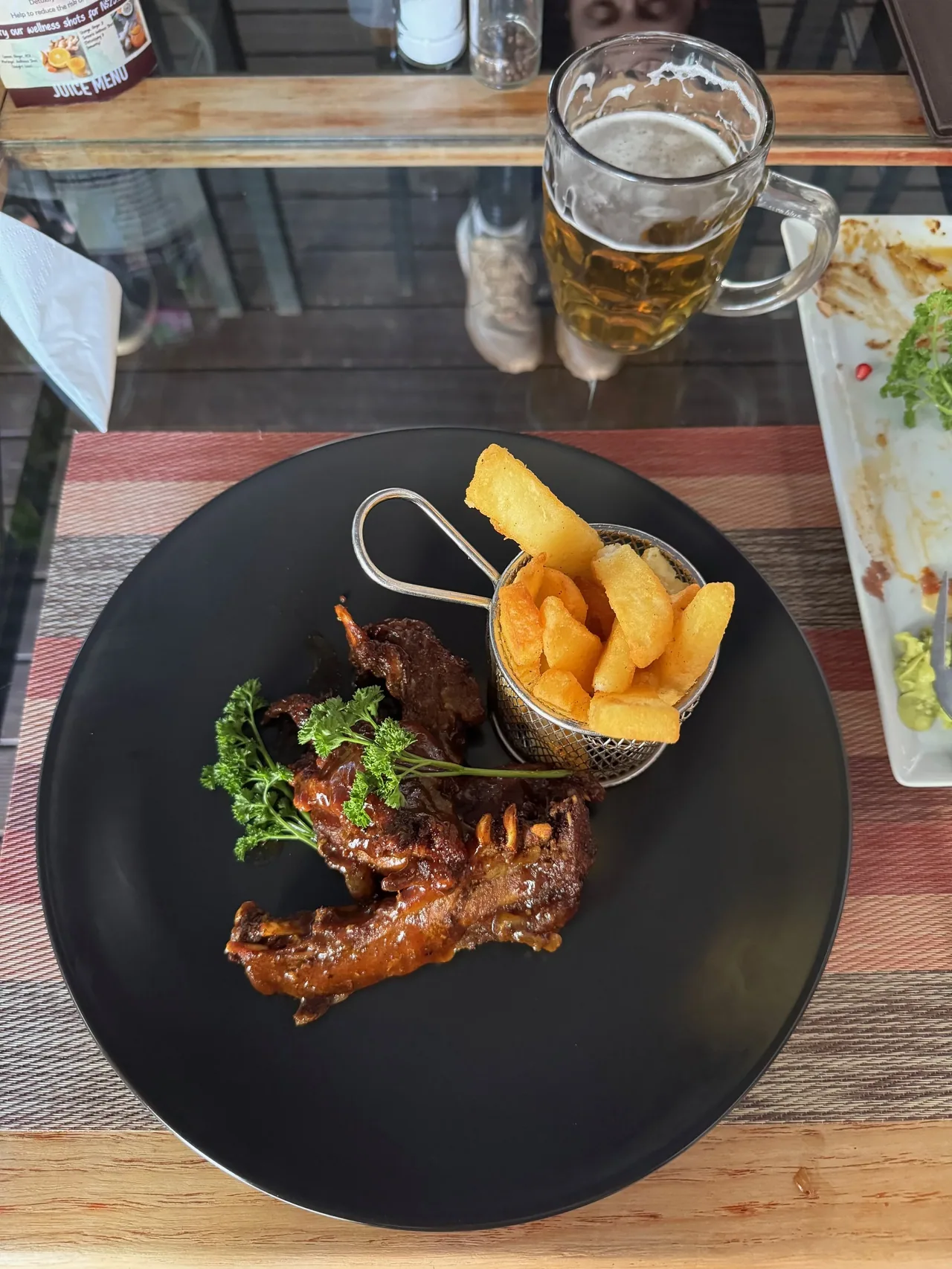
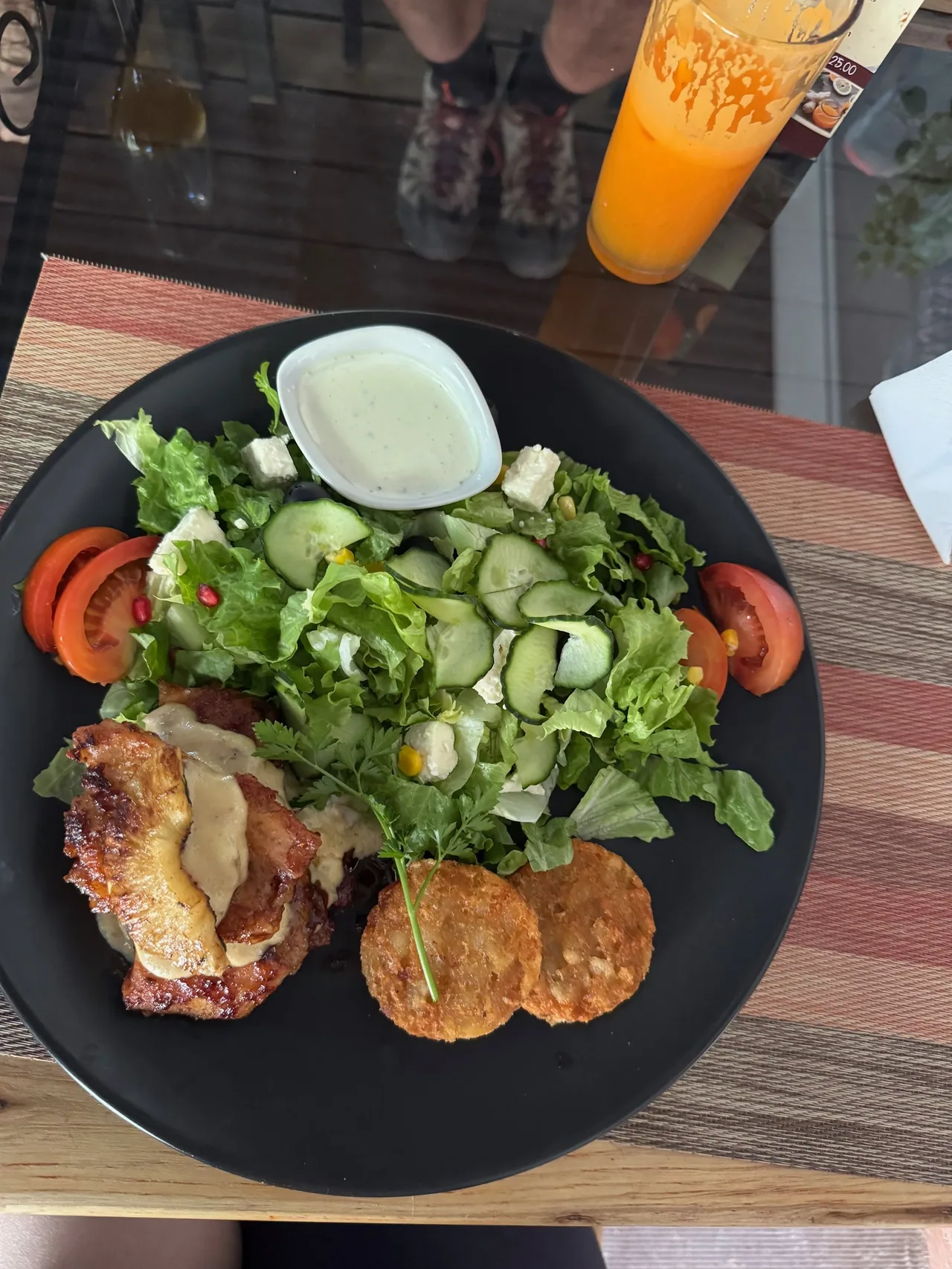
If there’s one thing I’d come back to Namibia for 200% — it’s the food. And the beer.
Day 6
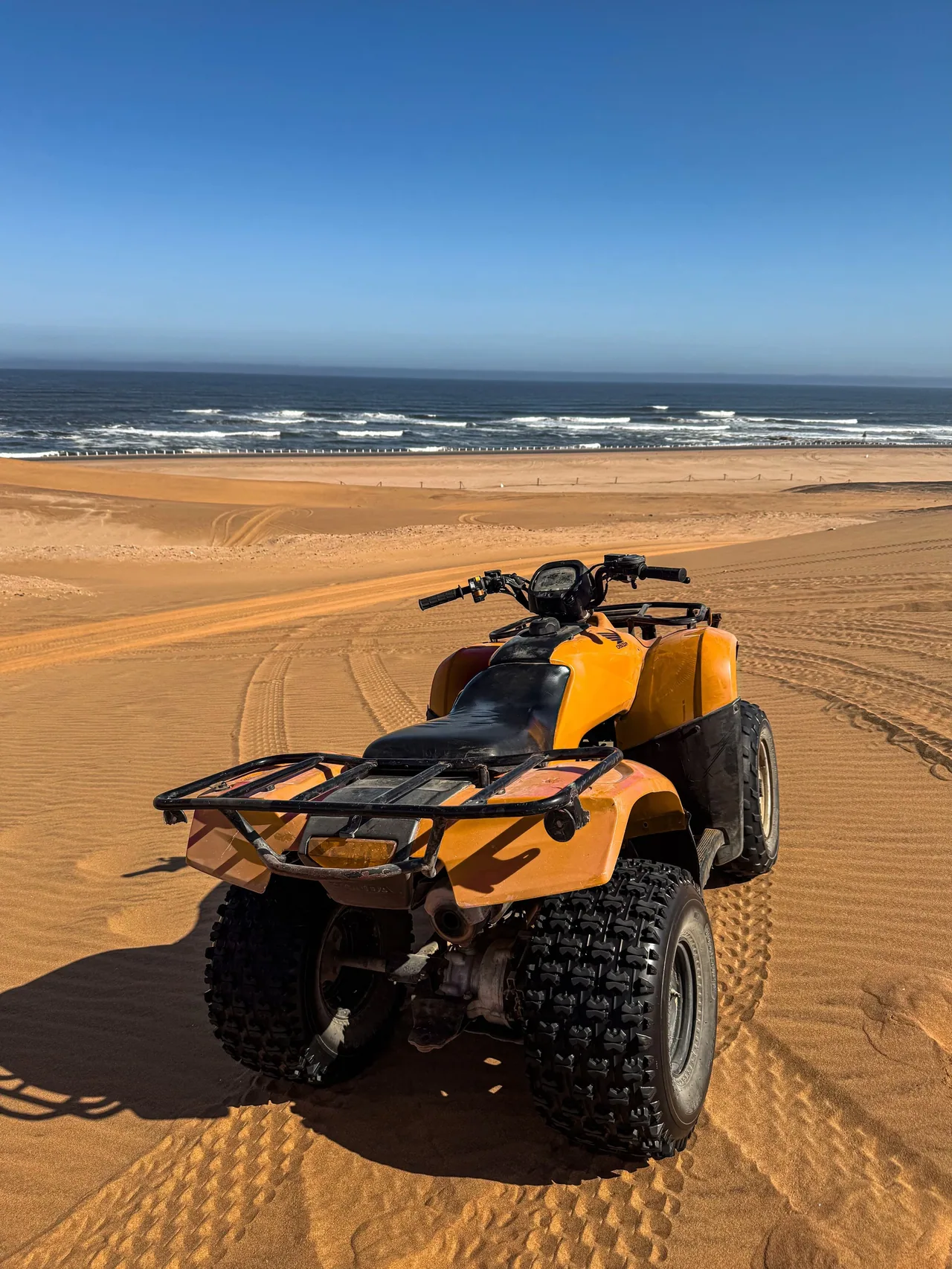
The next morning we head out on quads into the desert. After more than an hour of riding over dunes we stop by a steep slope. Our guides pull out narrow wooden boards and smear them with fat. Then they set them on the edge of the dune and call us, one by one, to lie on them and slide down the dune face-first. Each of us takes a few runs and then we continue riding.
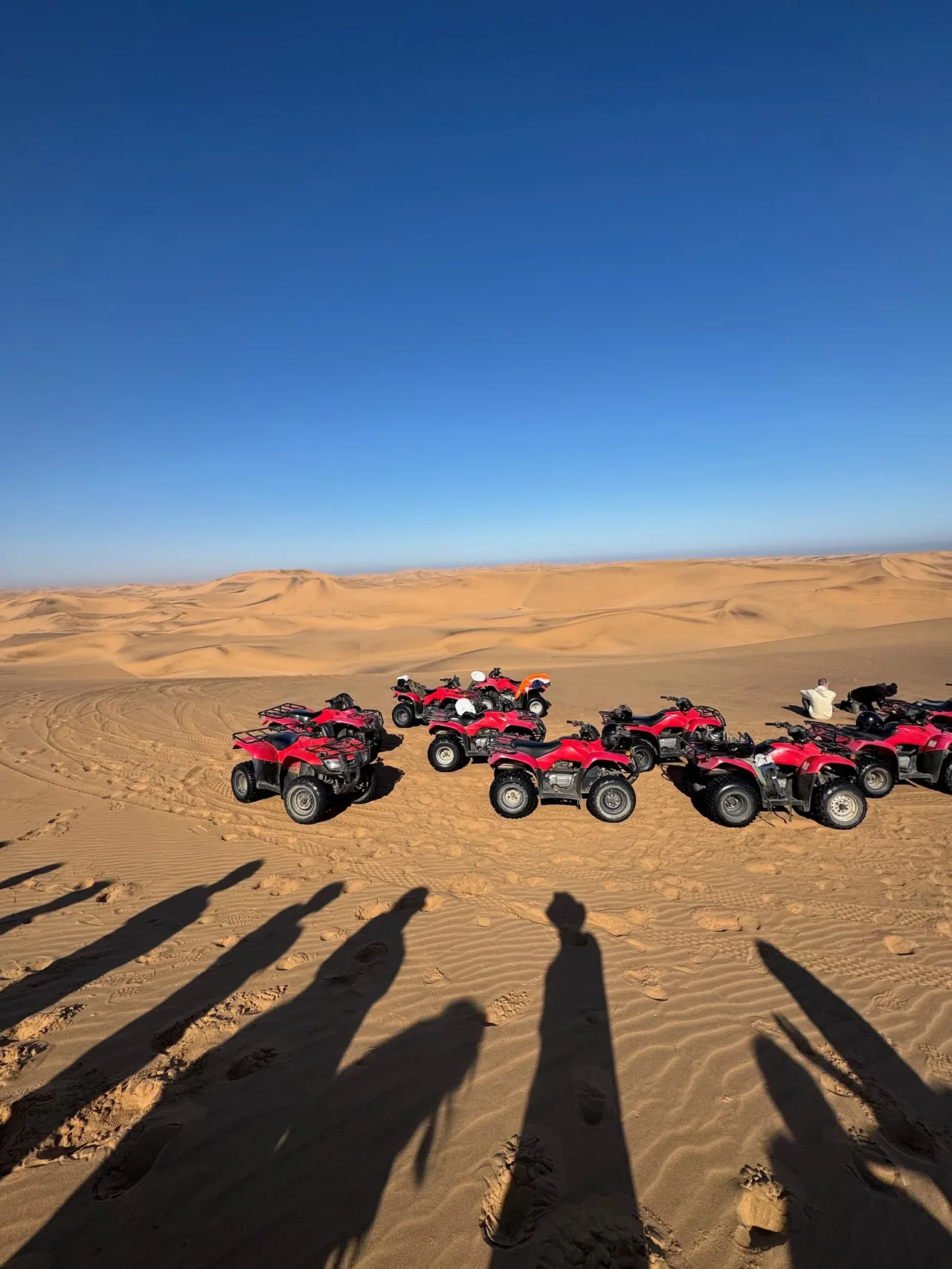
I’m genuinely impressed by our guides’ sense of direction. From our perspective we’re in the middle of nowhere — dunes in every direction, everything looks the same. But they know this desert the way we know our home city. Every dune has a shape and a feature that makes it recognisable.
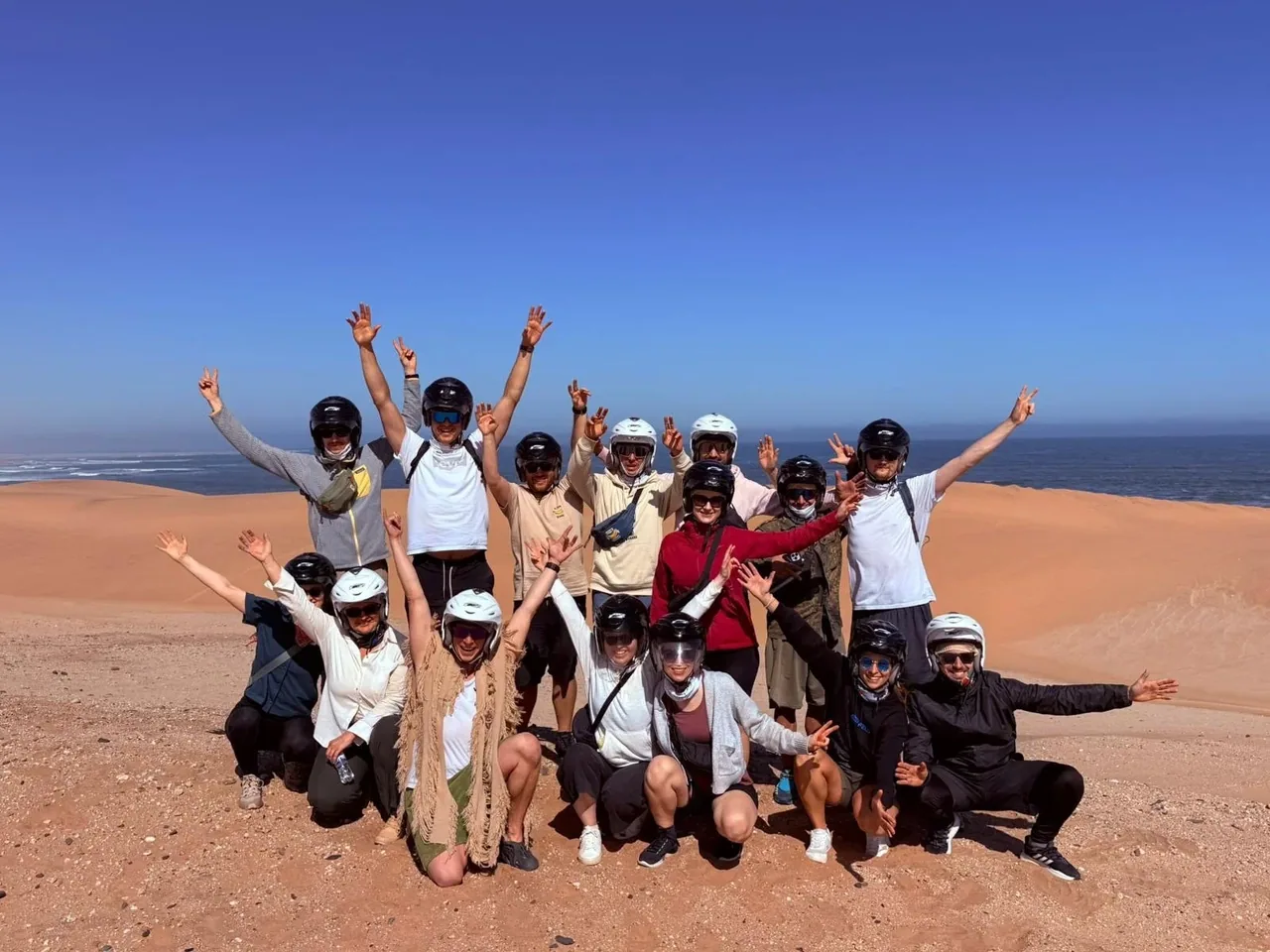
After about an hour, we reach a dune with a view of the ocean. We take group photos there and then head back toward town.
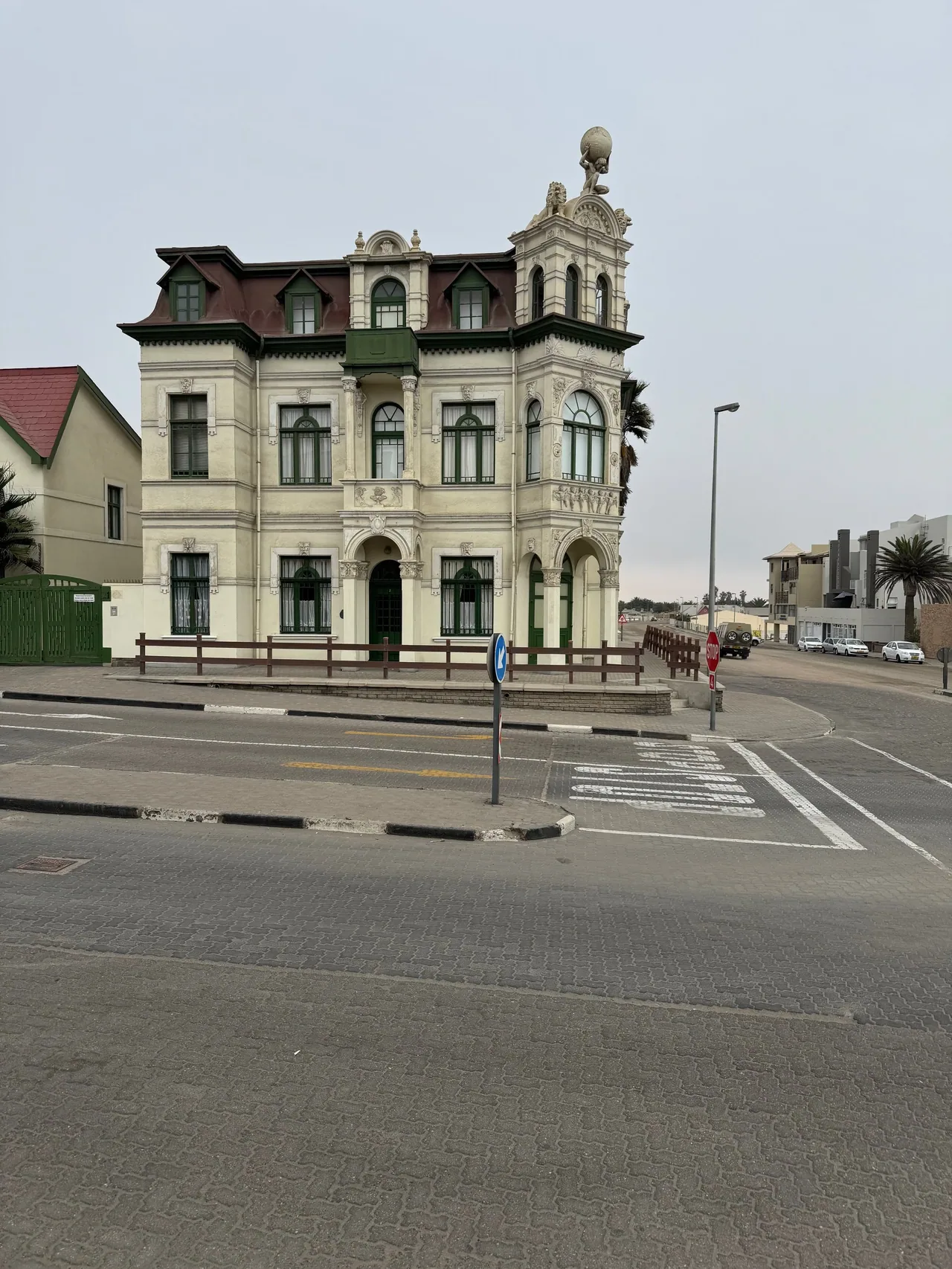
After lunch — and a few more excellent steaks — we walk to a local craft market. Men and women in traditional clothing sell carvings, masks, jewellery and all kinds of souvenirs.
At first glance the place feels like a pure tourist trap. The vendors know exactly how to talk to us, how to build emotional pressure, how to insist that everything is handmade by their family. Haggling is expected — a wooden mask that starts at 4,000 NAD ends up at 300 NAD, with “free gifts” thrown in. I feel uncomfortable — I hate being pushed to buy things.
The highlight is when one woman tries to sell me a small wooden giraffe. She swears that it’s hand-carved and made from ebony. As someone who studied wood engineering and had to learn to recognise wood species both macroscopically and microscopically, I can tell immediately that it’s a light, soft wood stained black to look like ebony.
Later, I look into it more and find out how it actually works: most of the souvenirs (up to 95%) are mass-produced in countries like Malawi or Zimbabwe, then distributed across tourist hotspots in Africa. The markup between production cost and selling price is huge.
Day 7
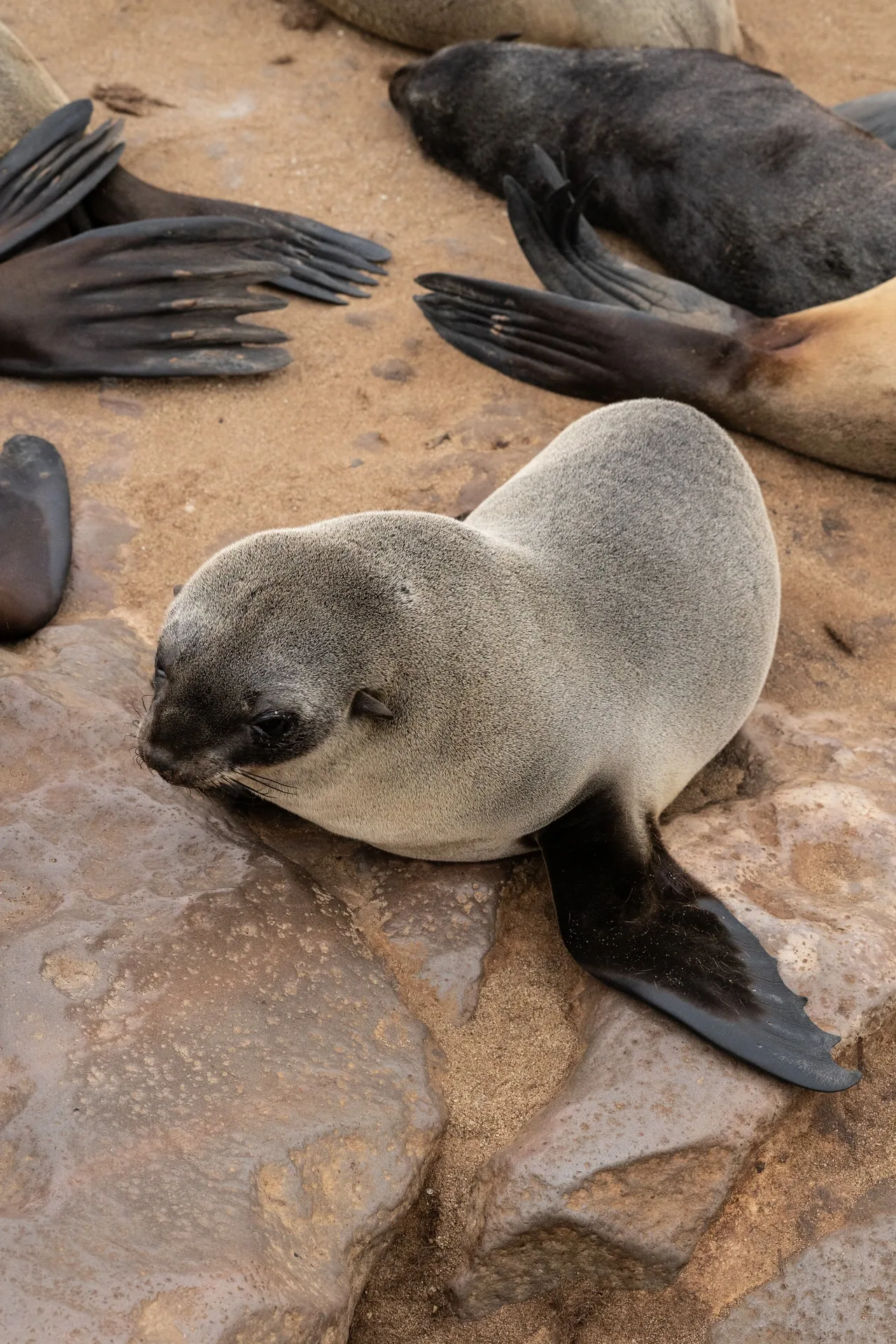
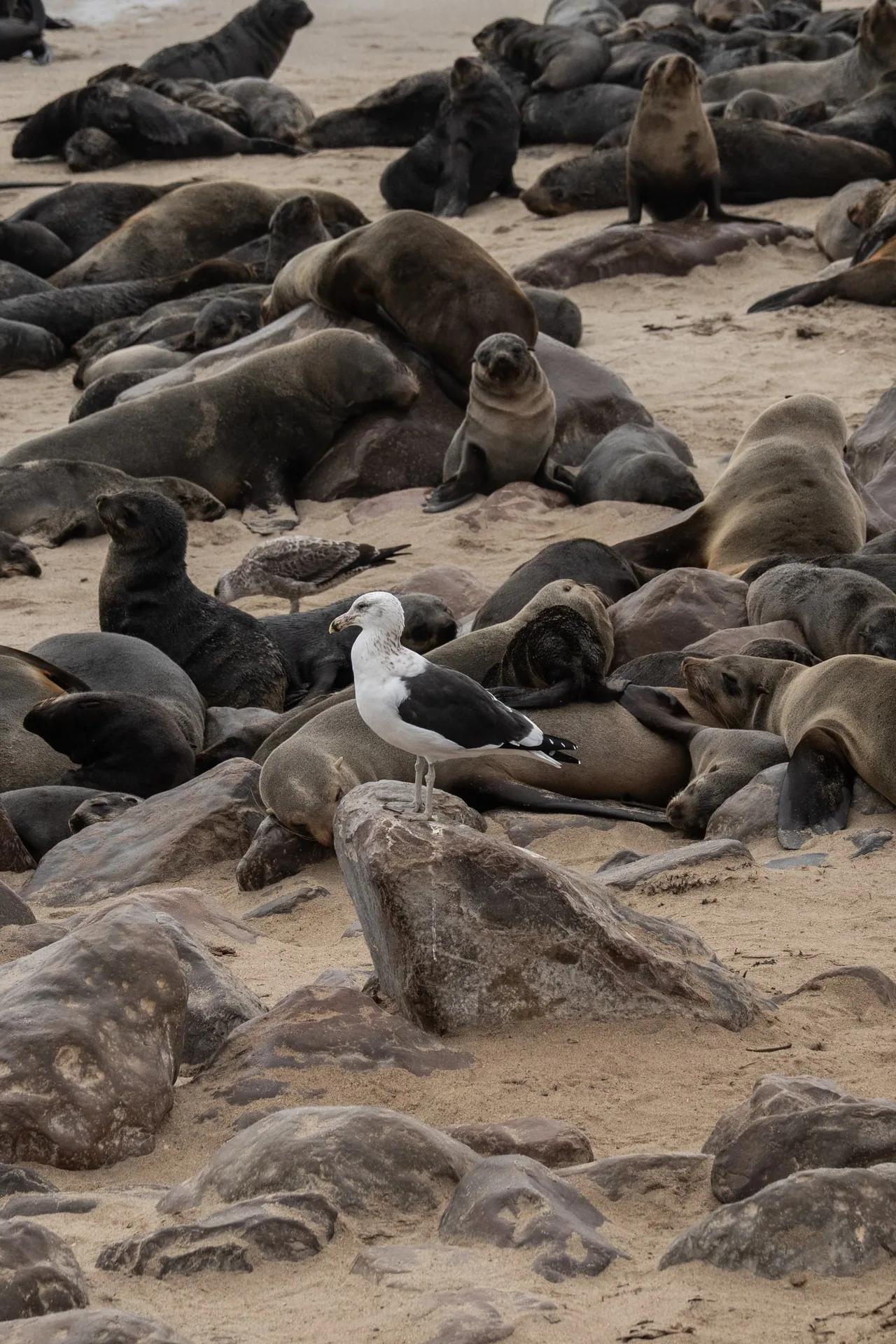
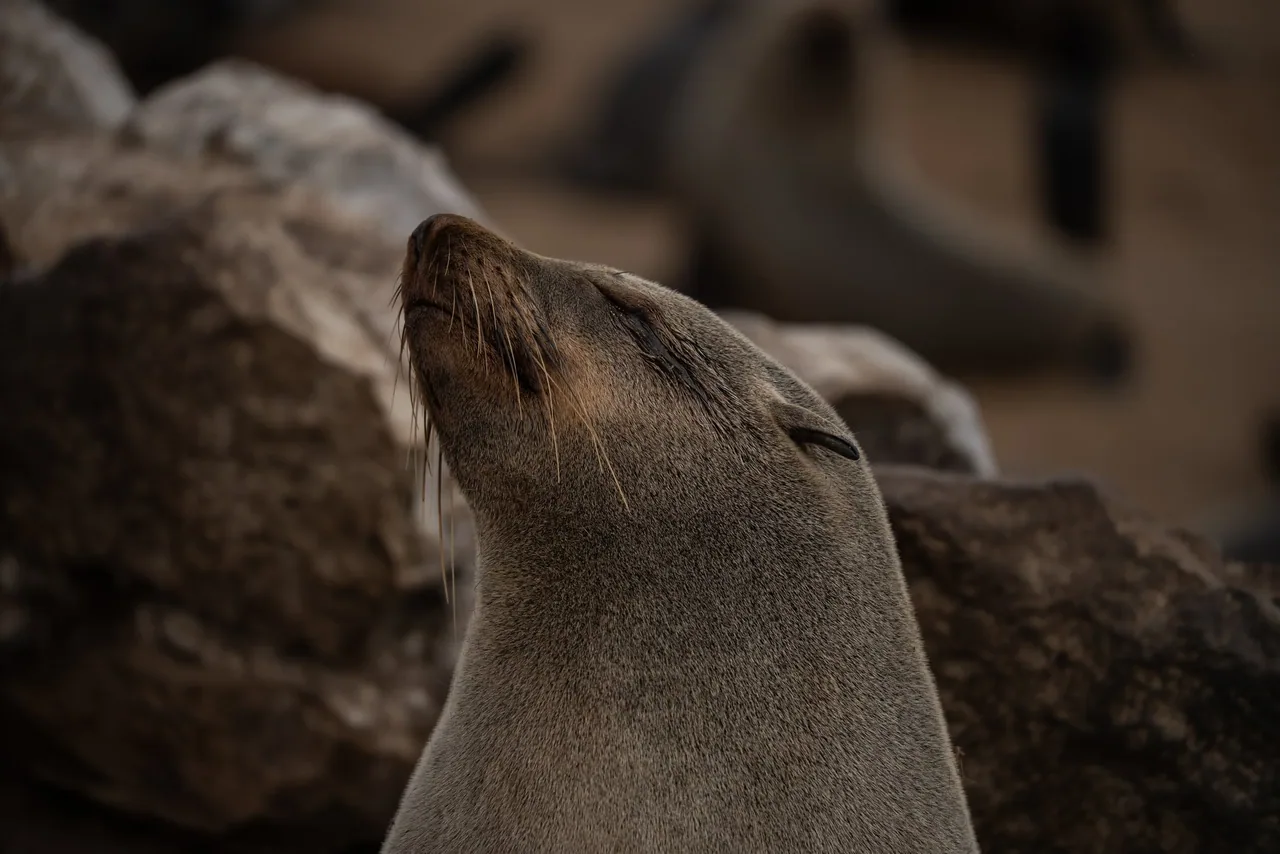
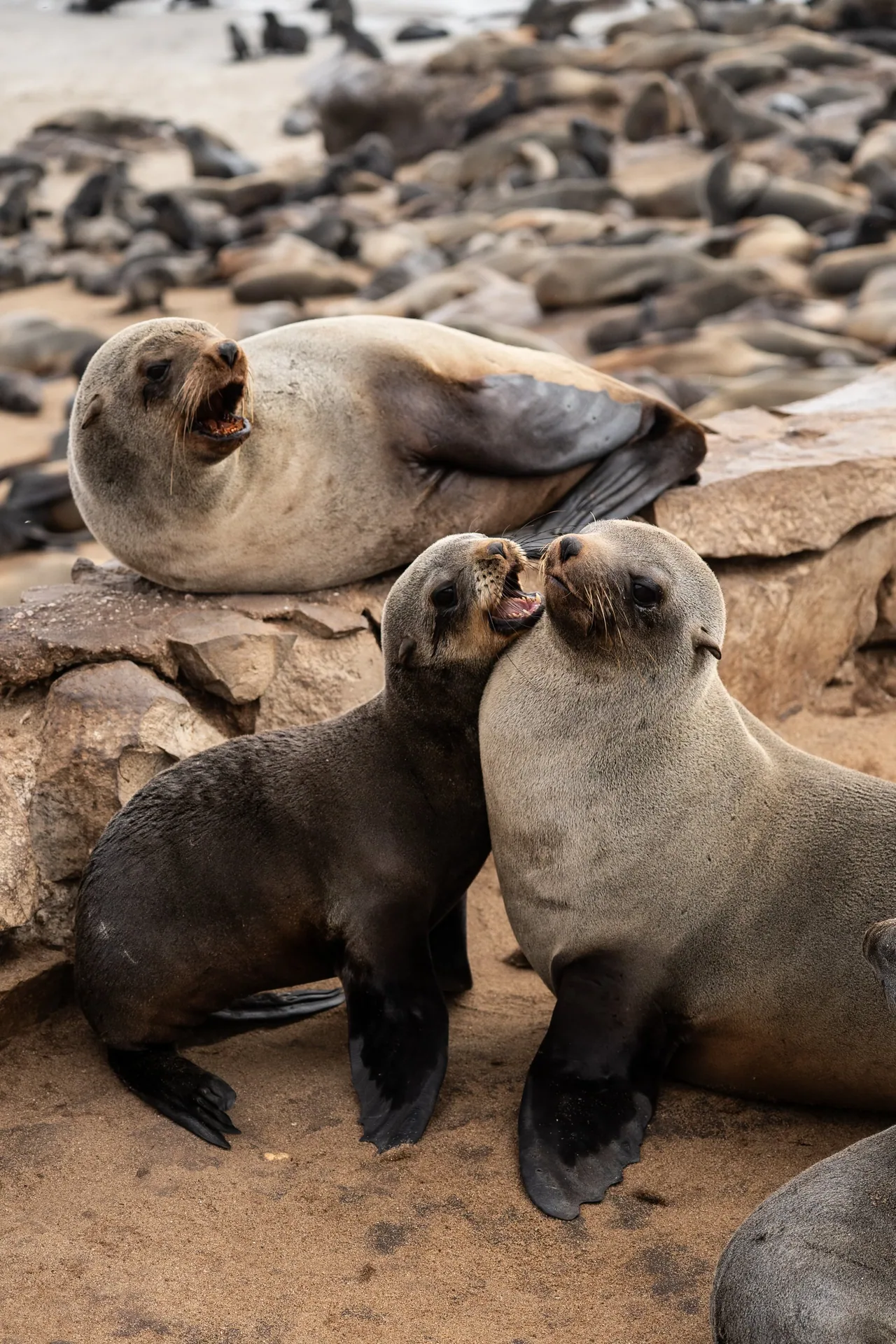
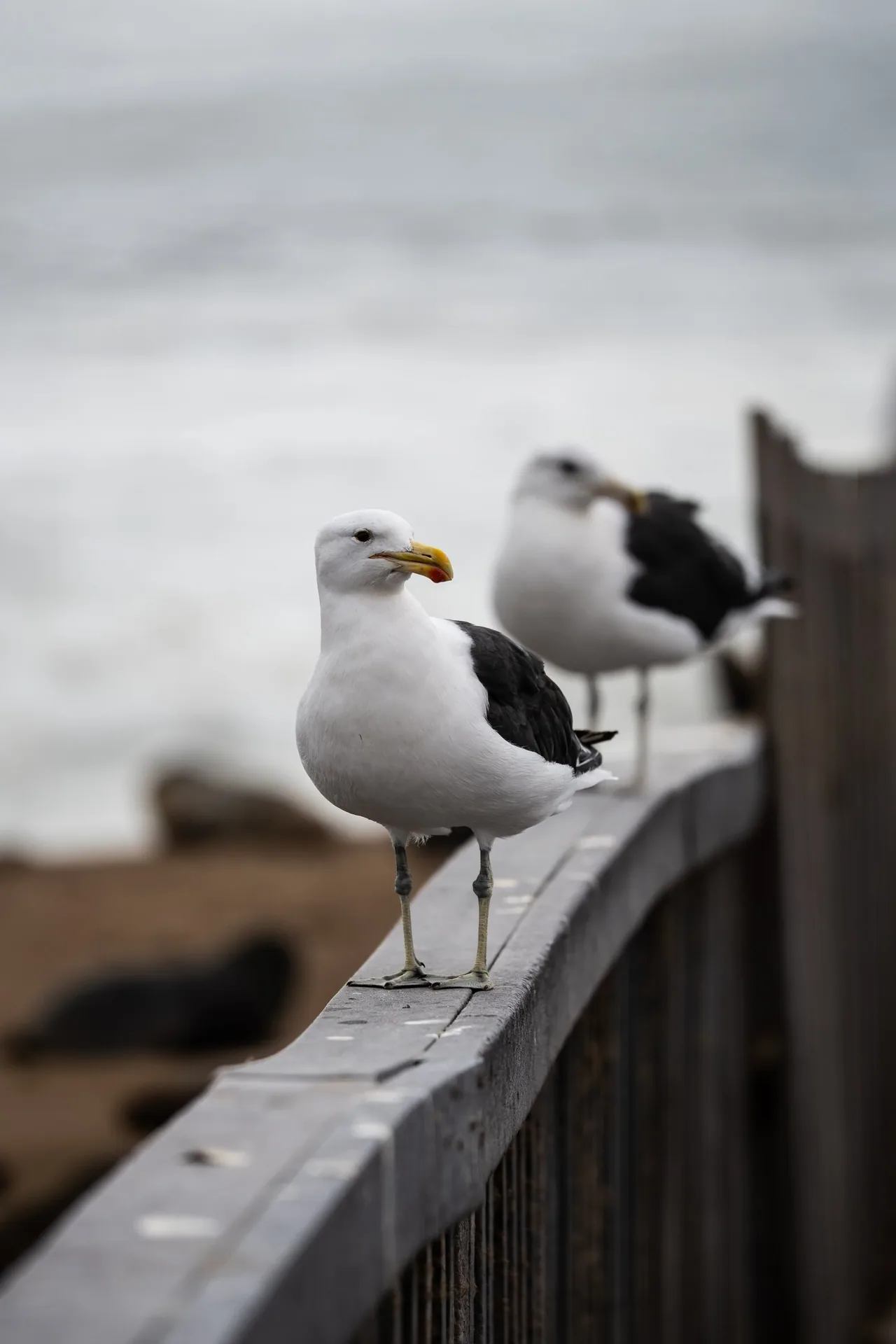
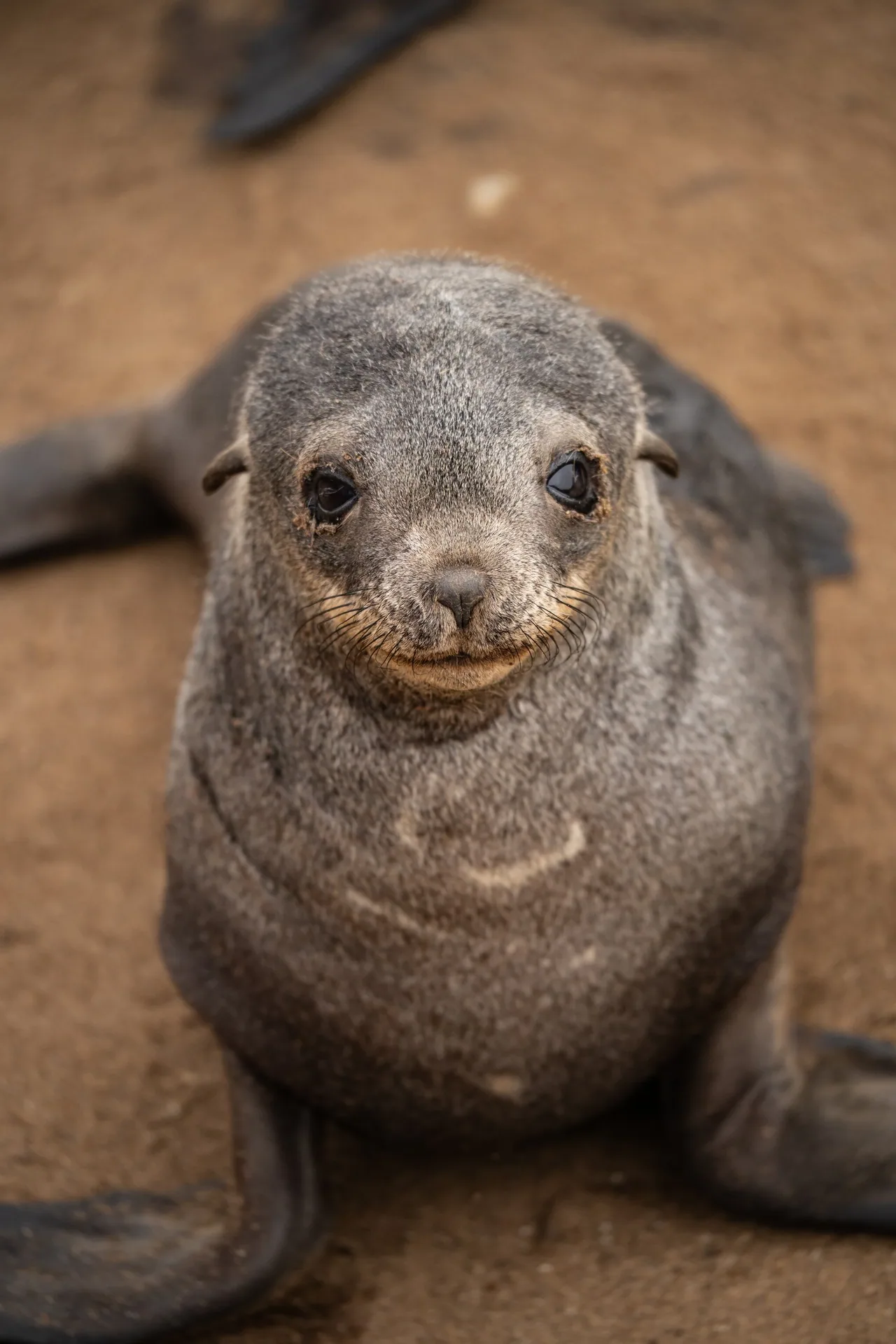
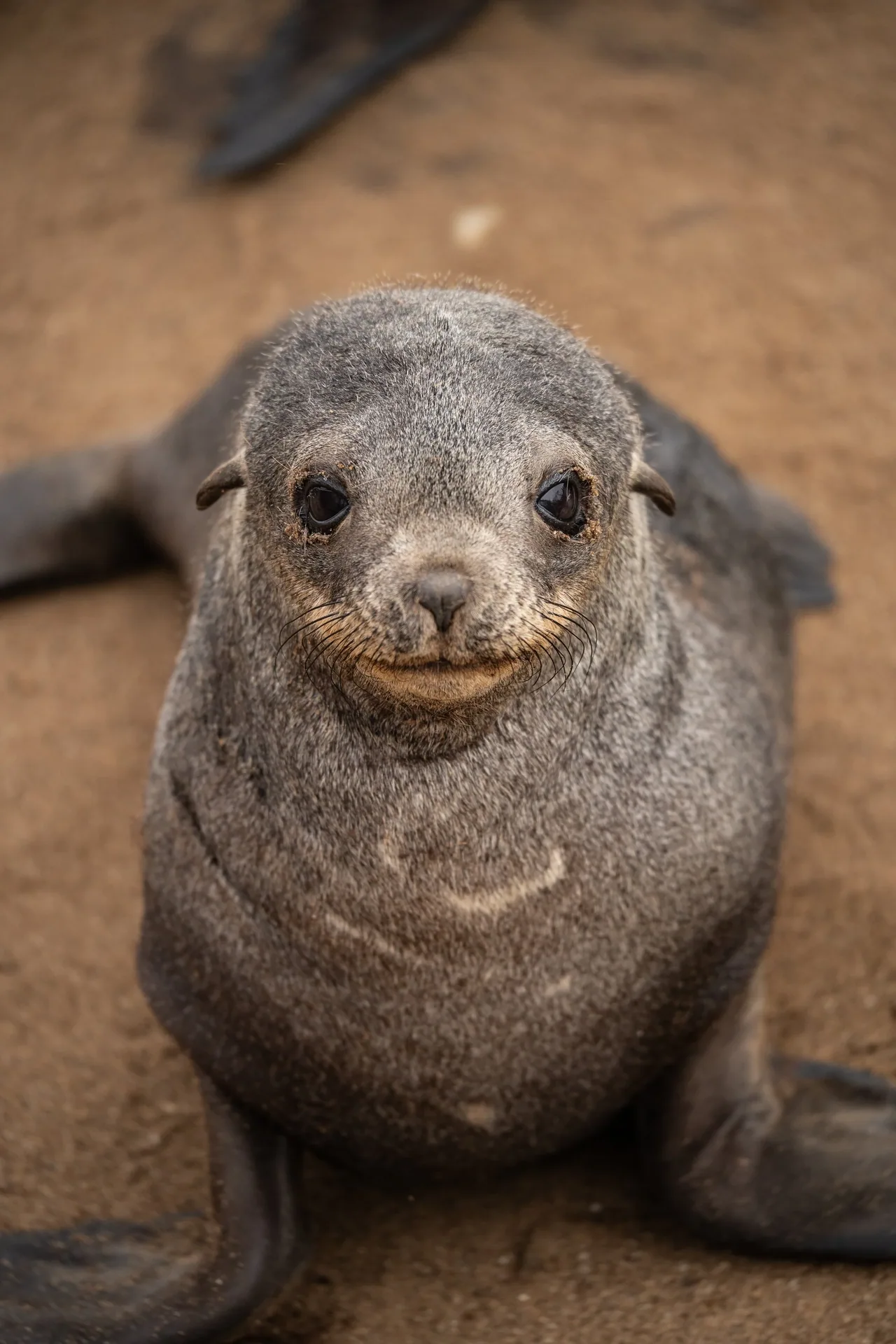
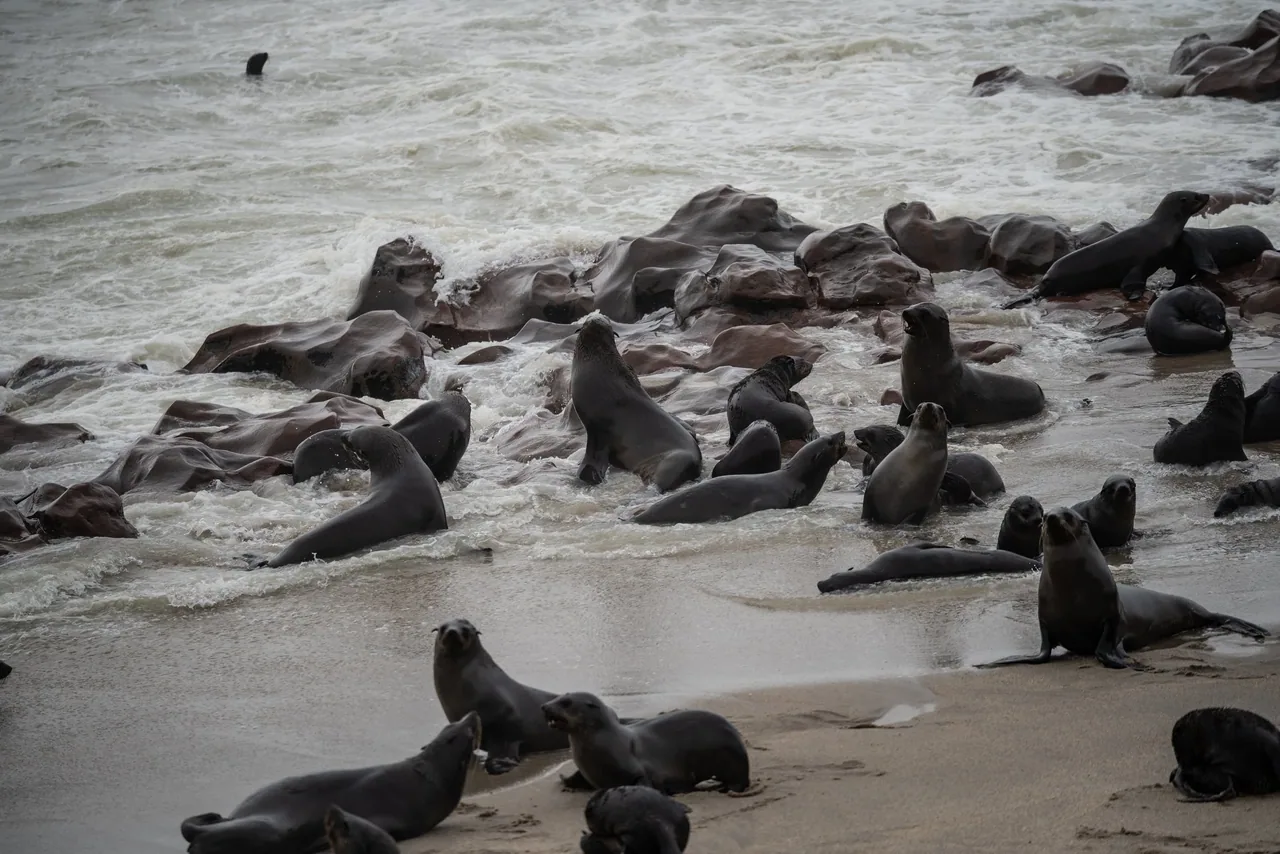
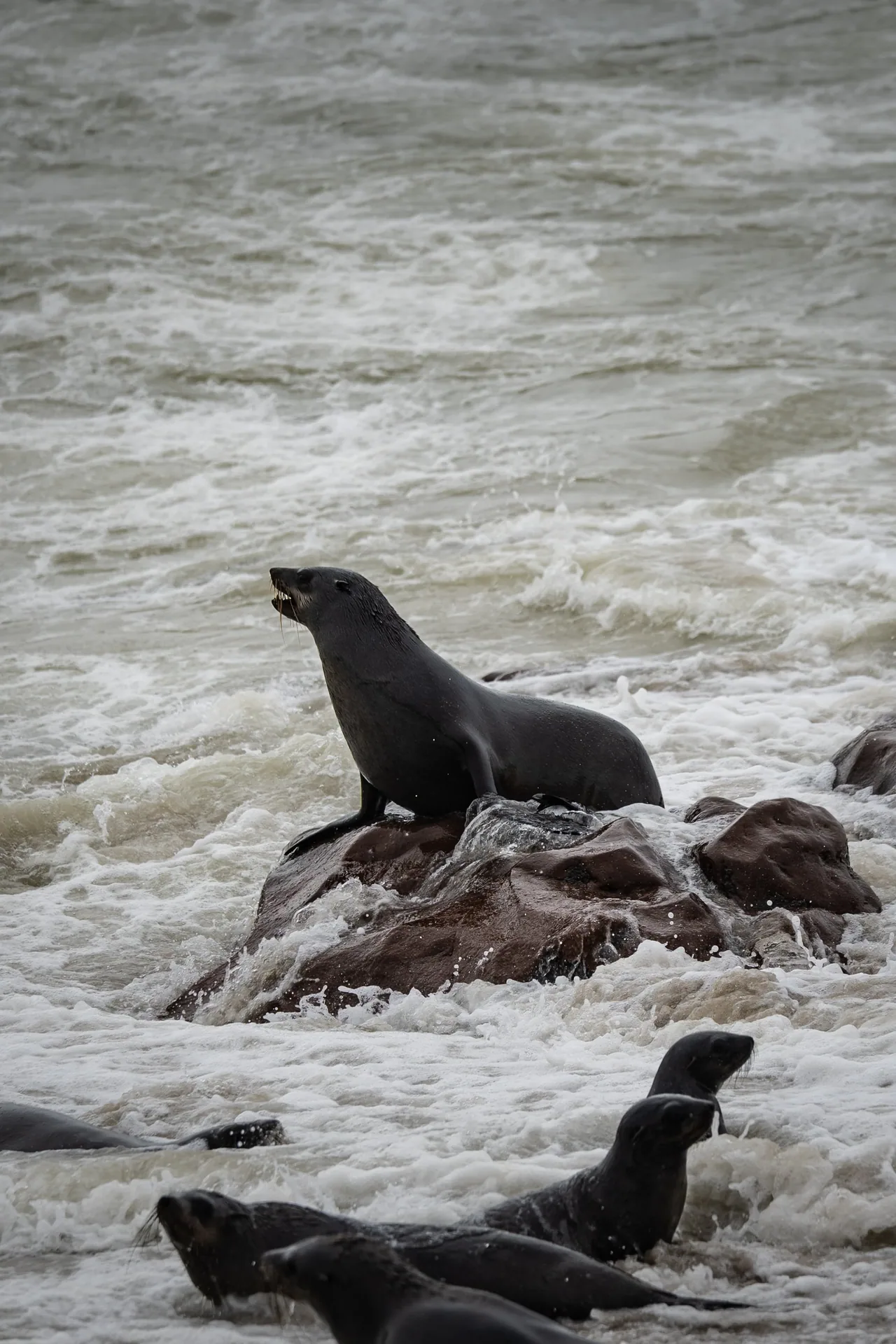
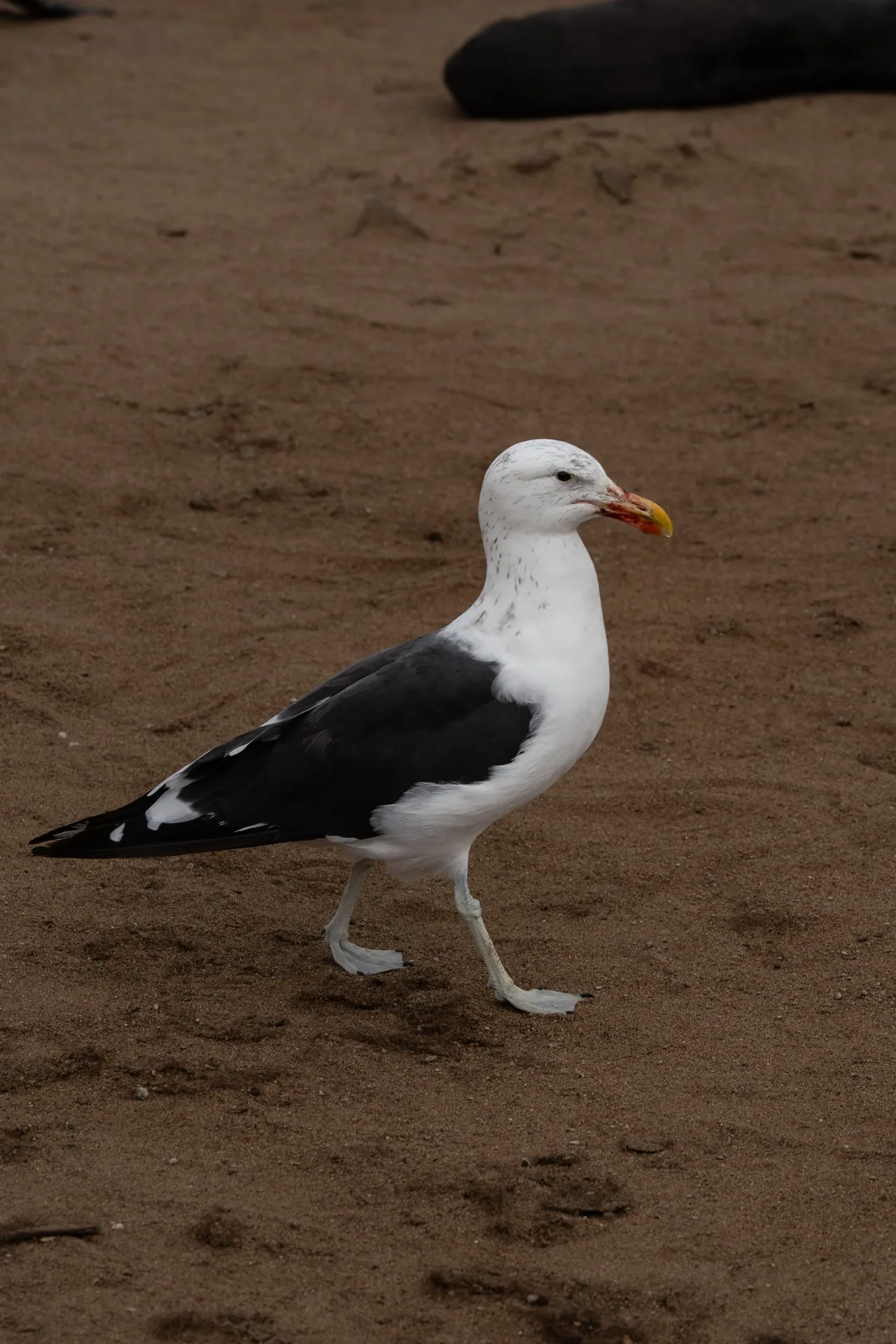
In the morning we leave Swakopmund and drive toward Spitzkoppe. On the way we stop at Cape Cross, home to one of the largest seal colonies in the world. There are seals everywhere — from big adults to tiny pups. The sound, the smell, the movement — chaotic and beautiful at the same time.
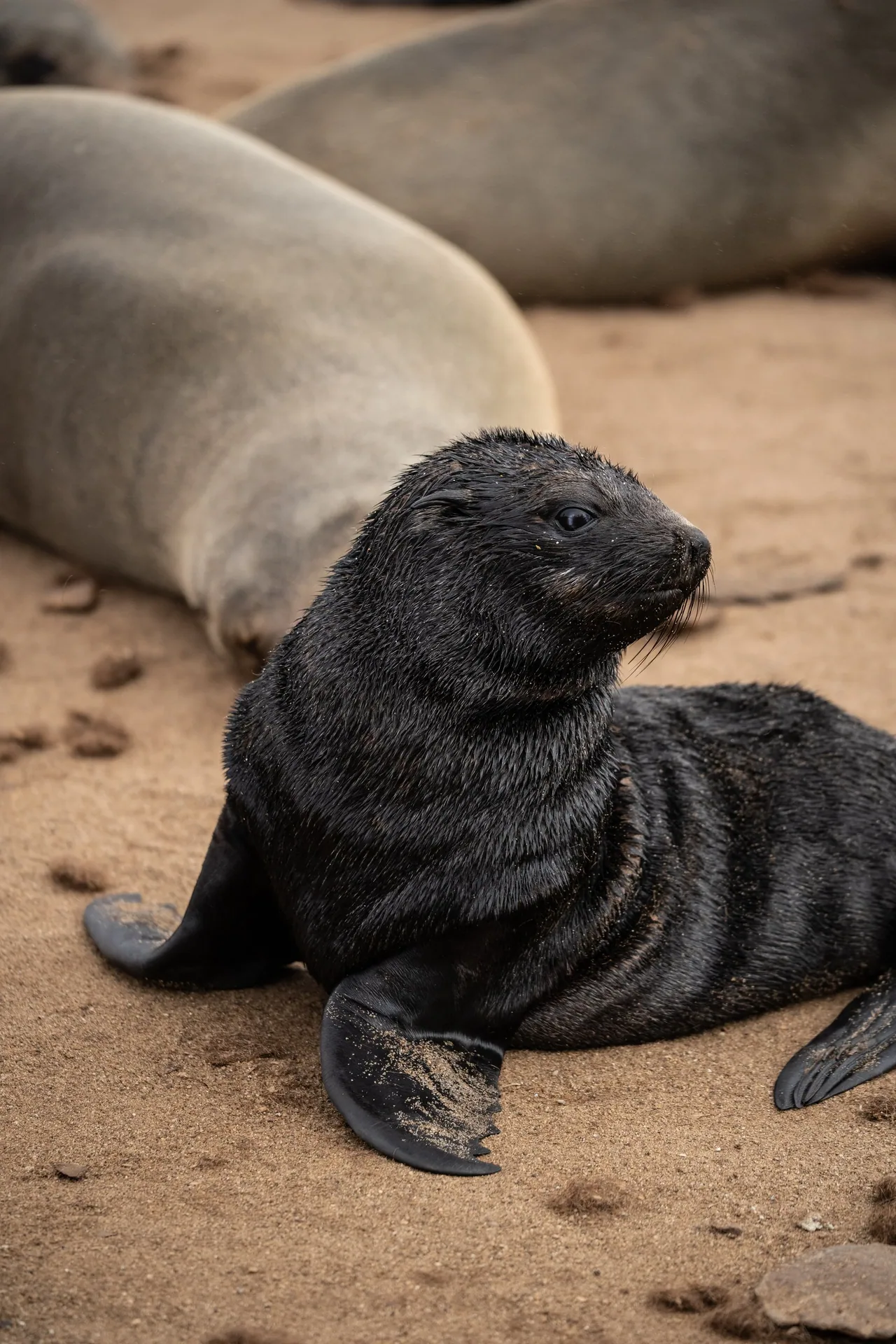
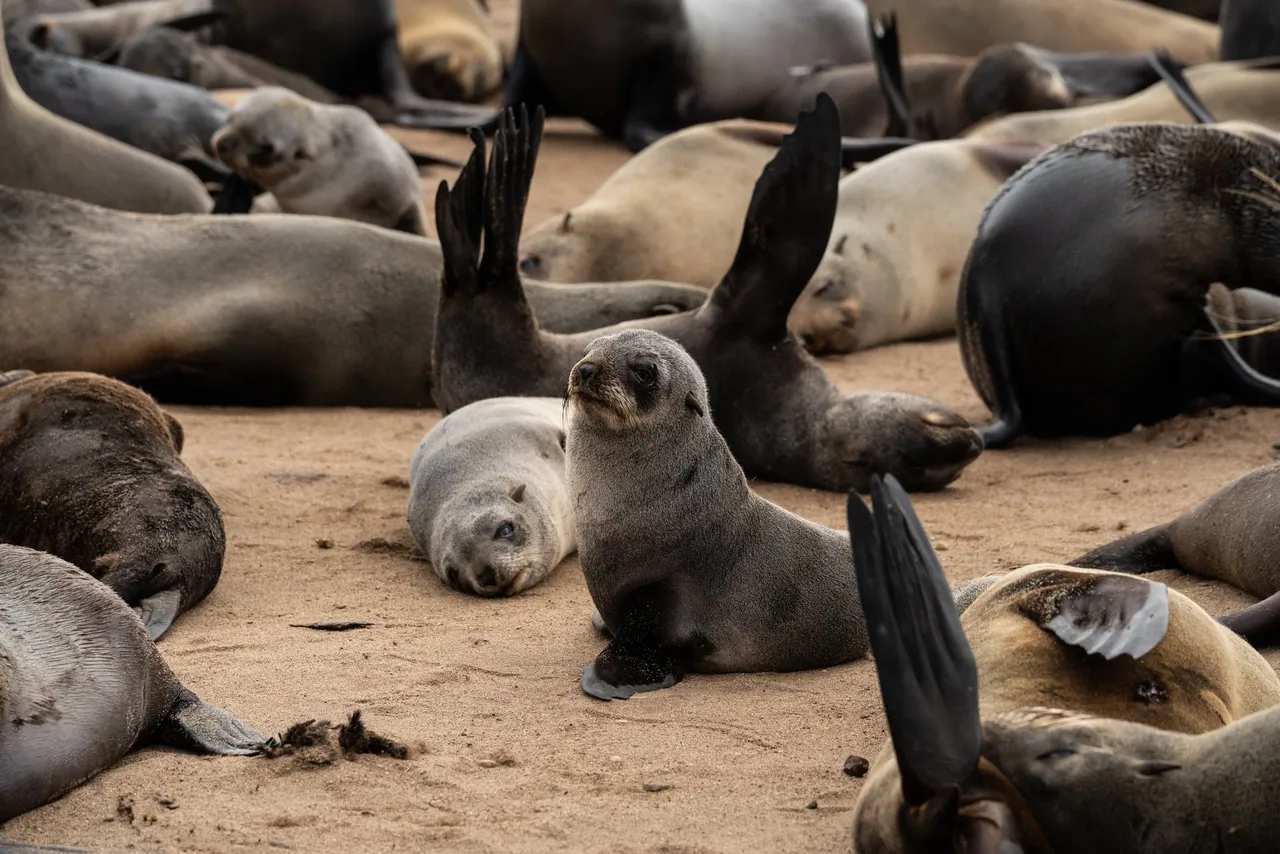
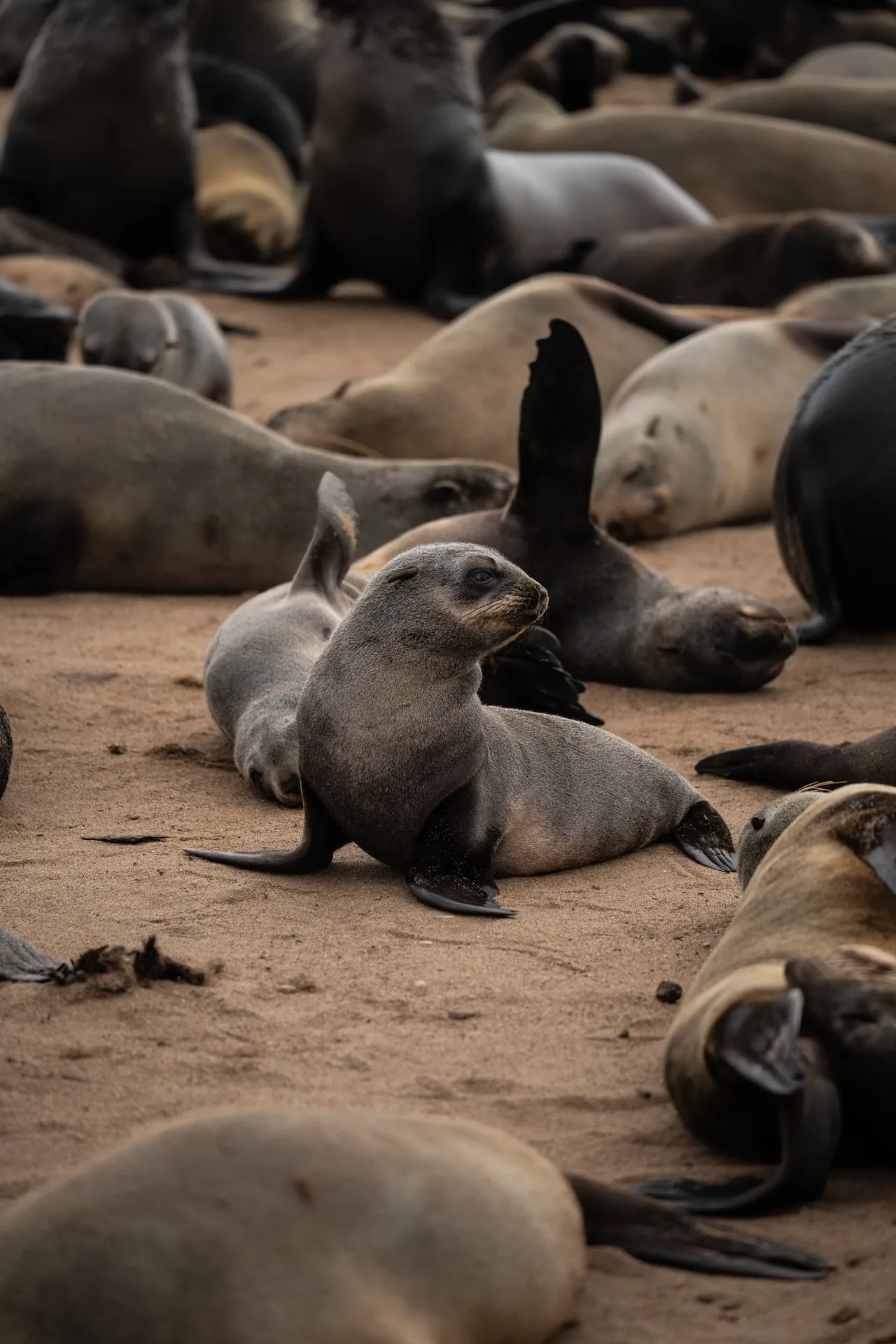
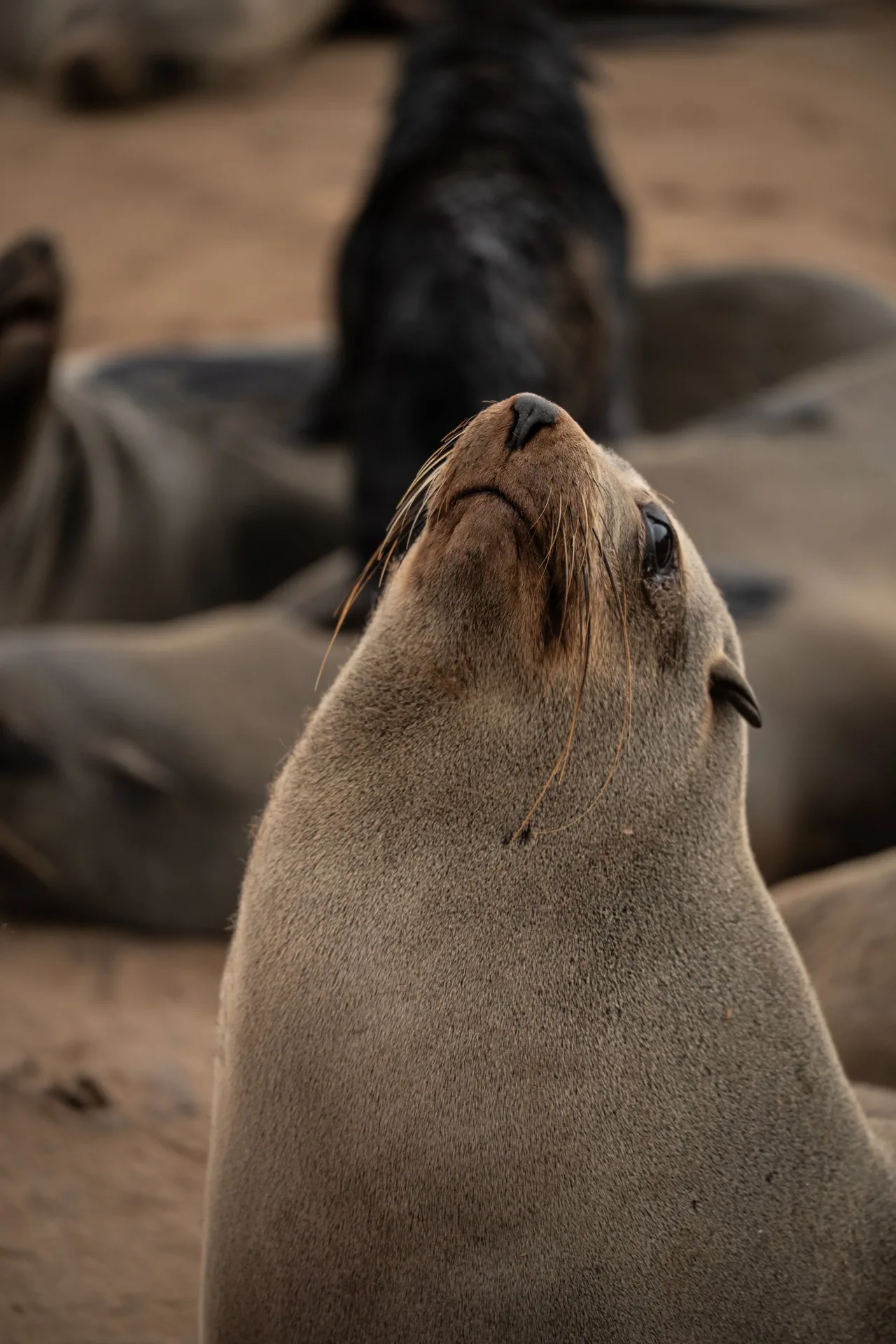
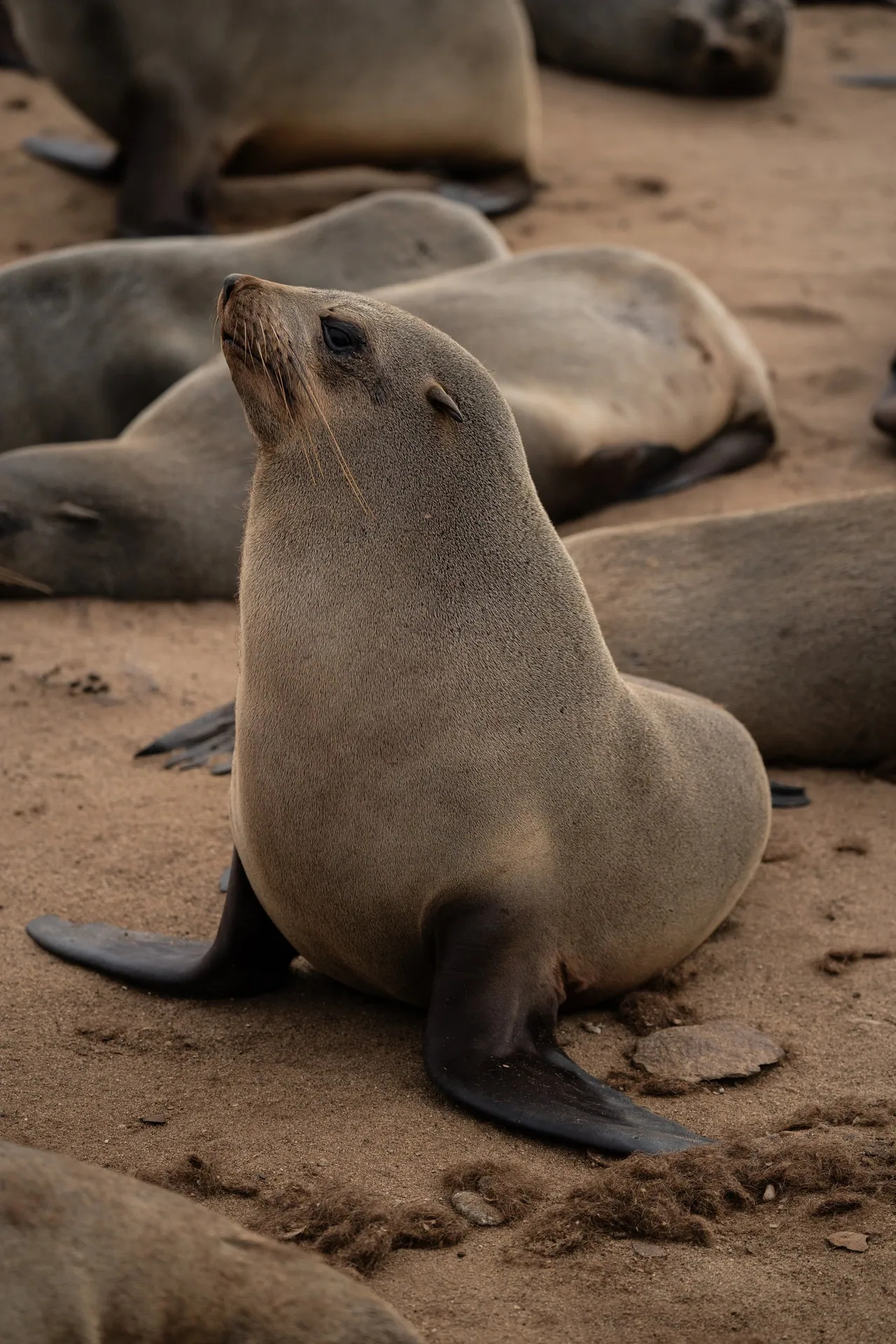
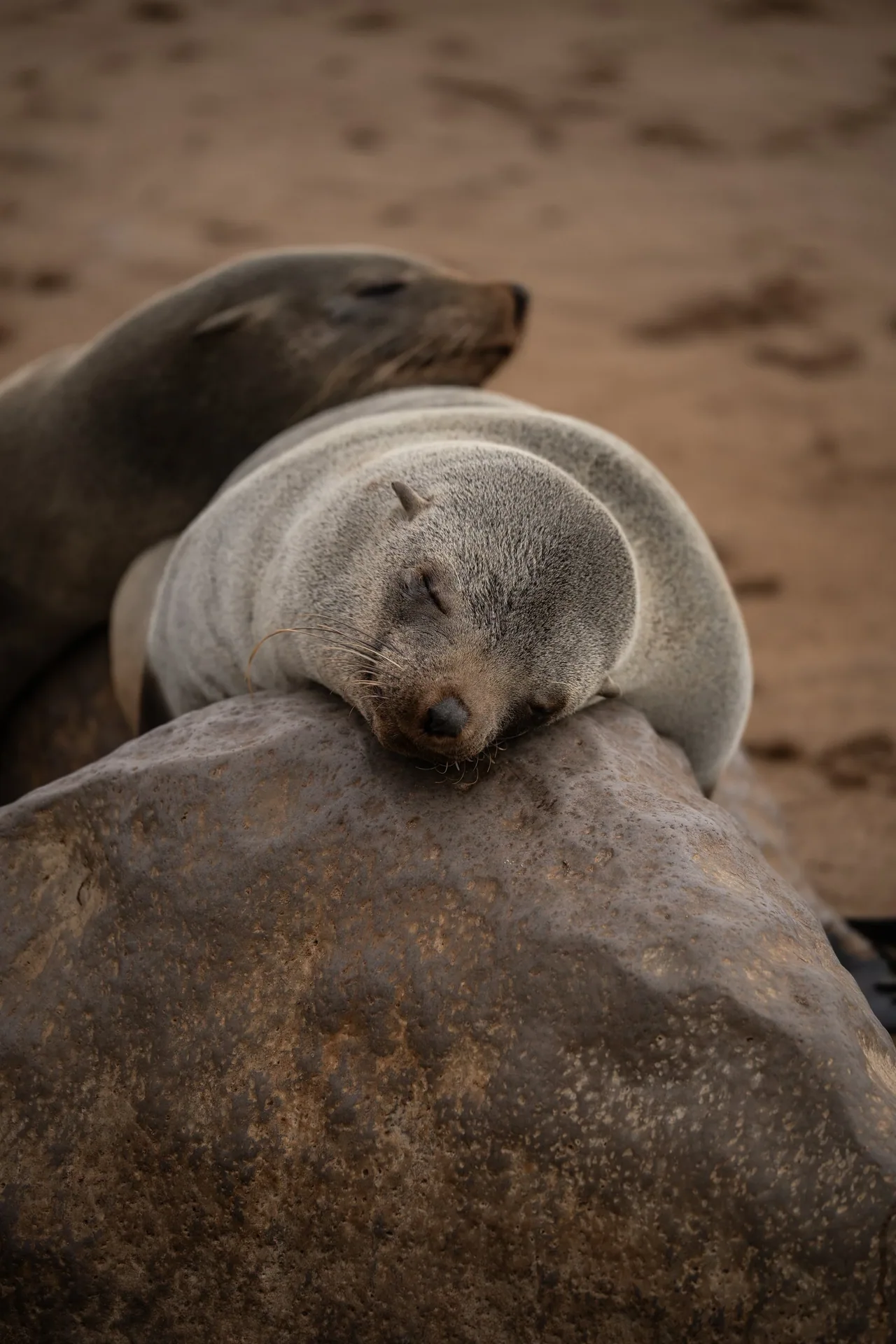
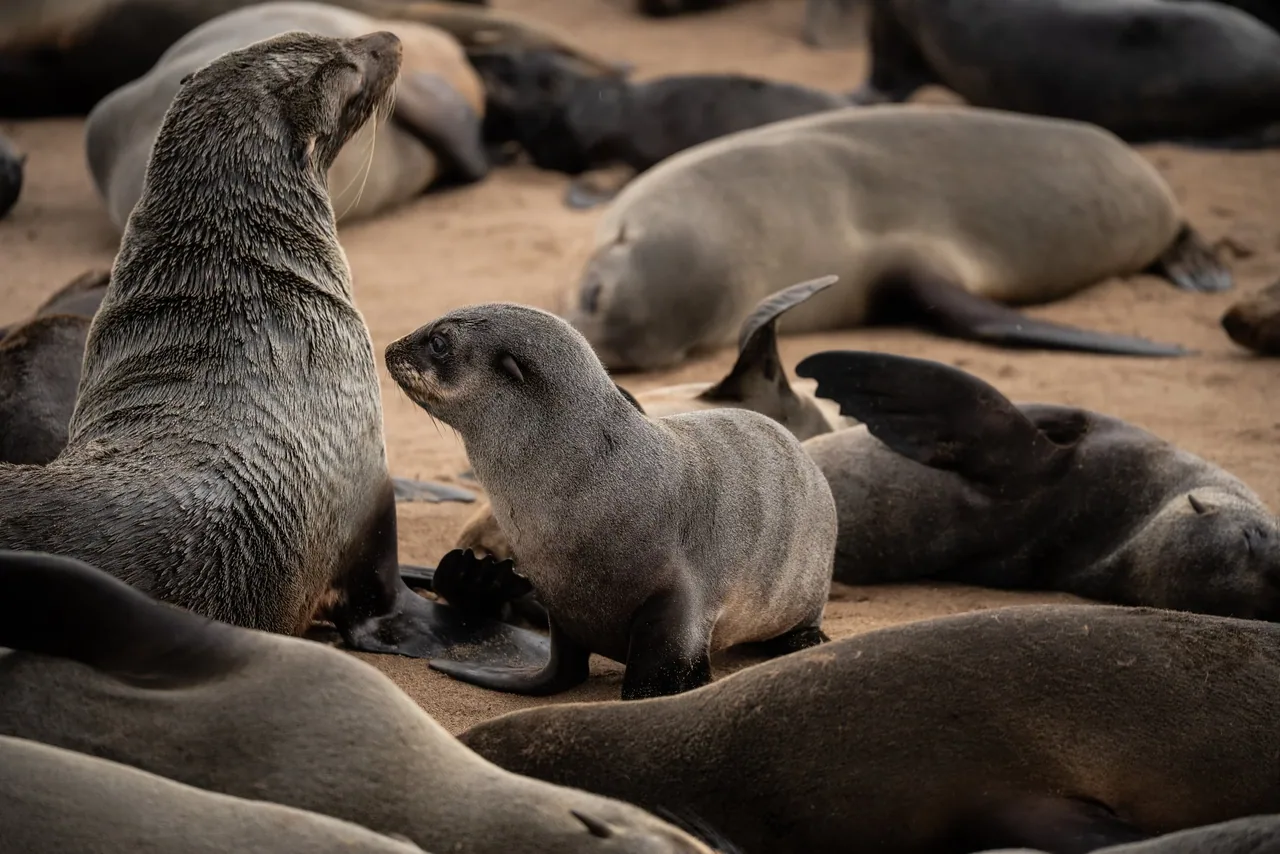
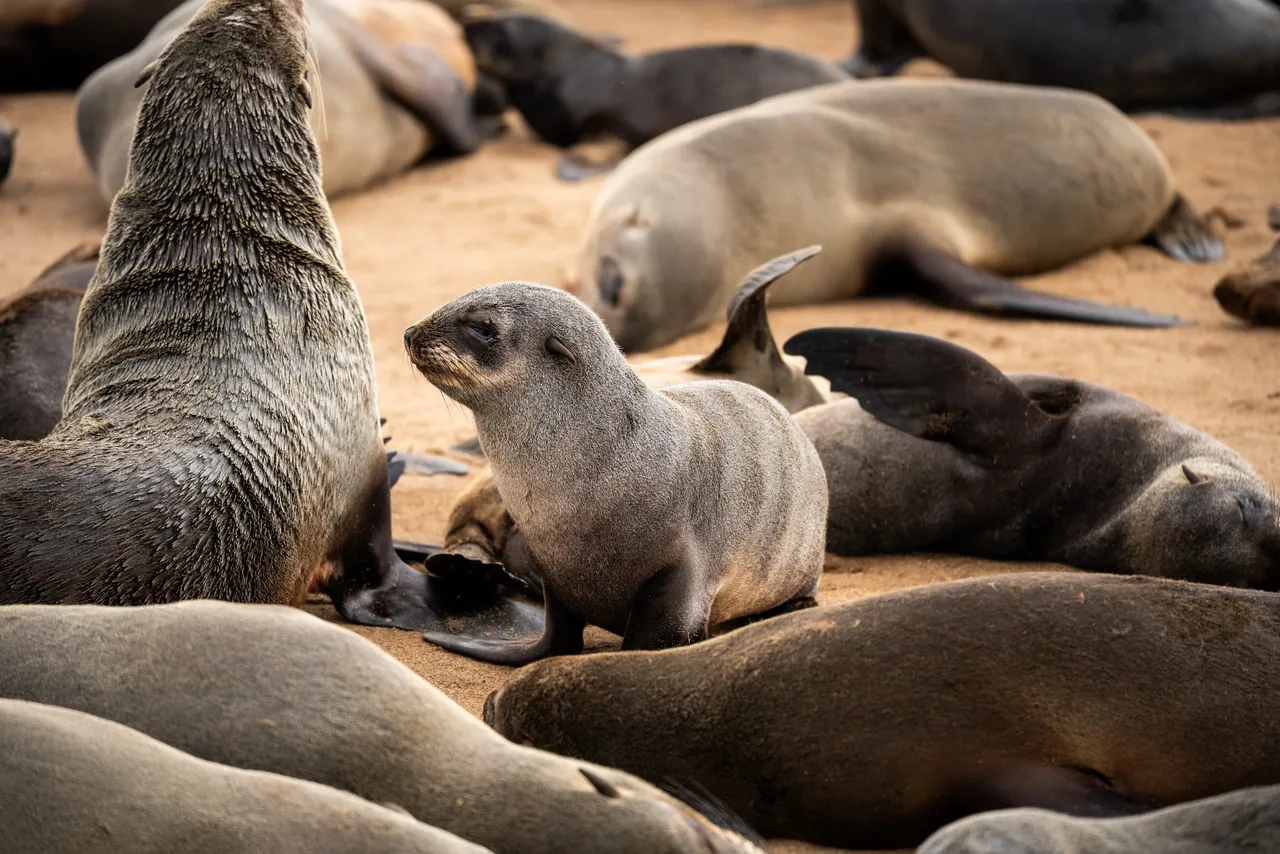
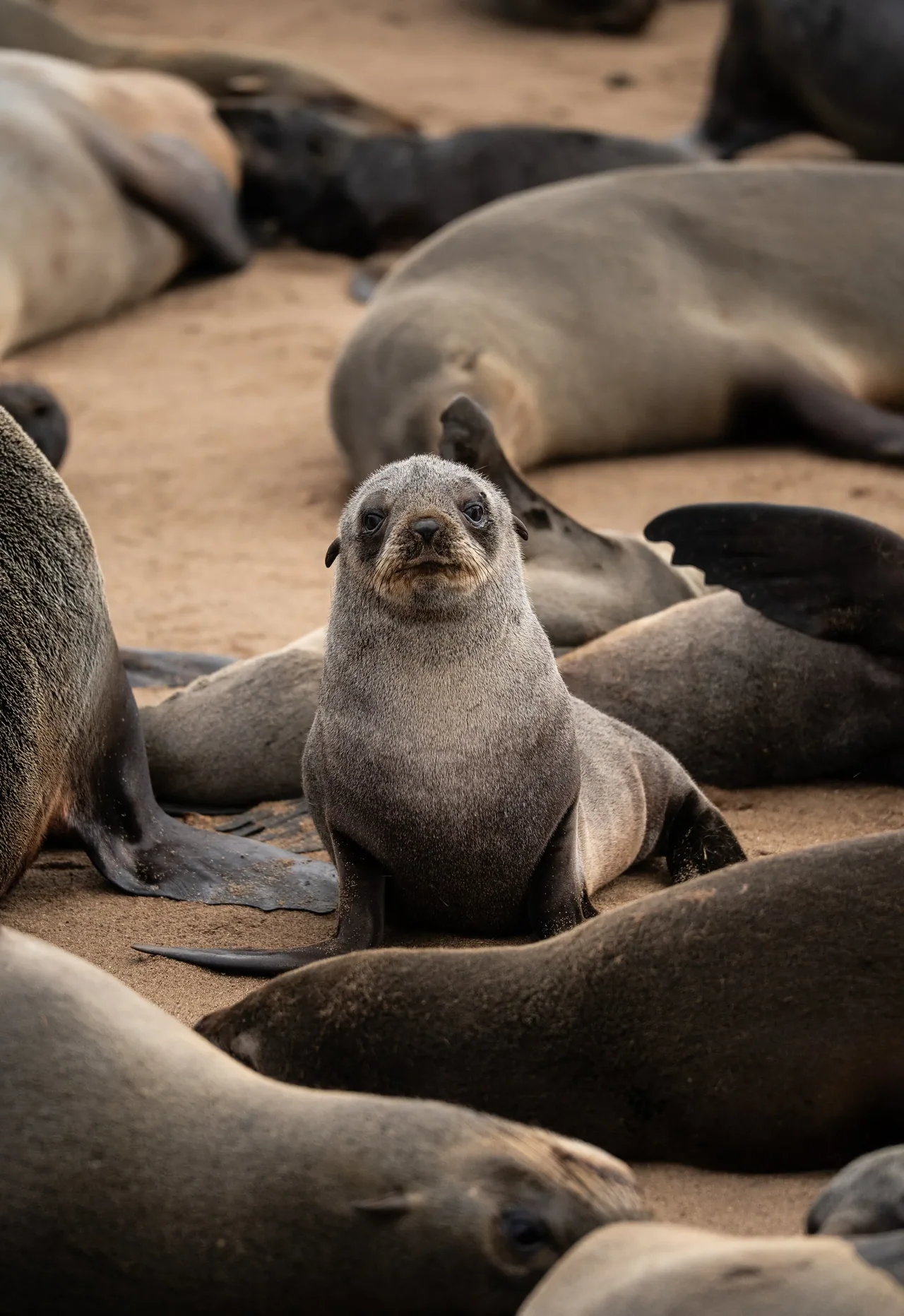
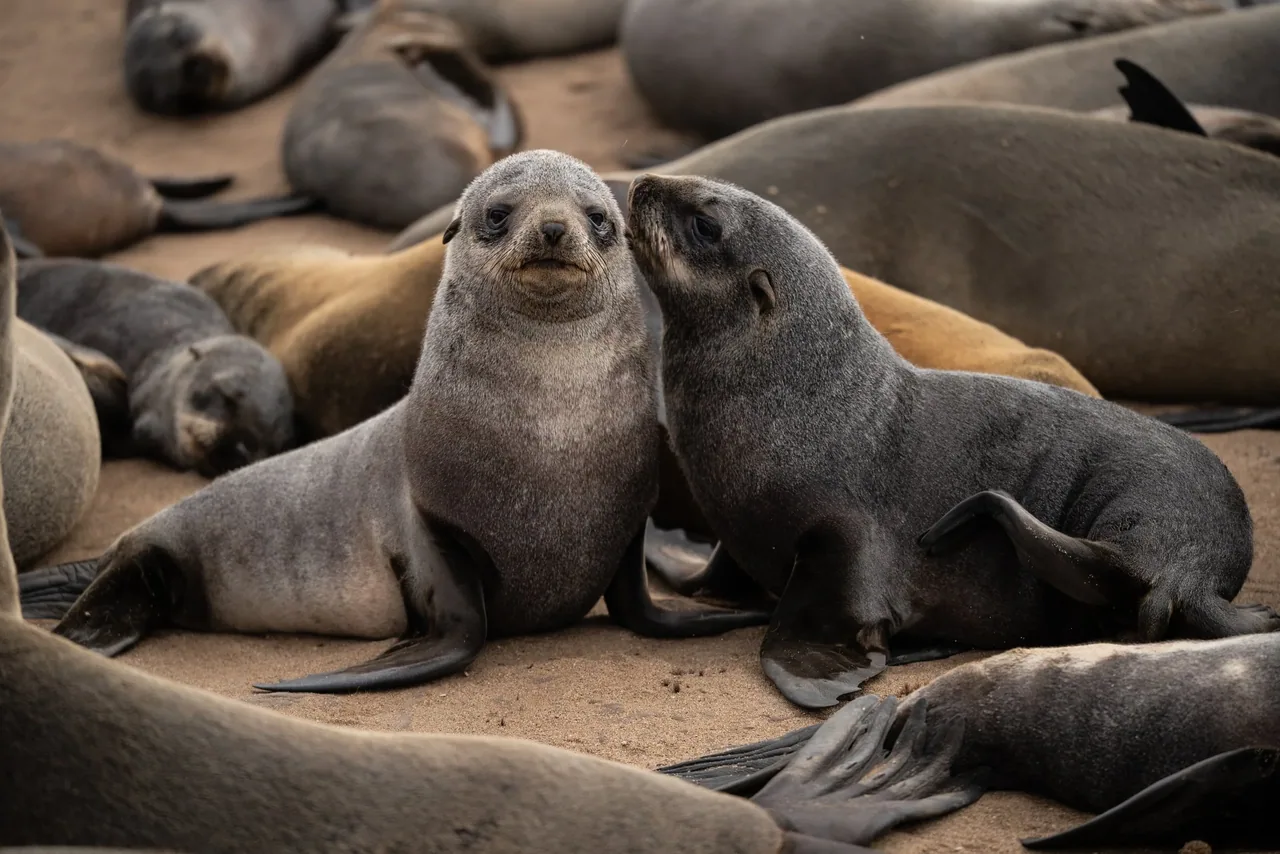
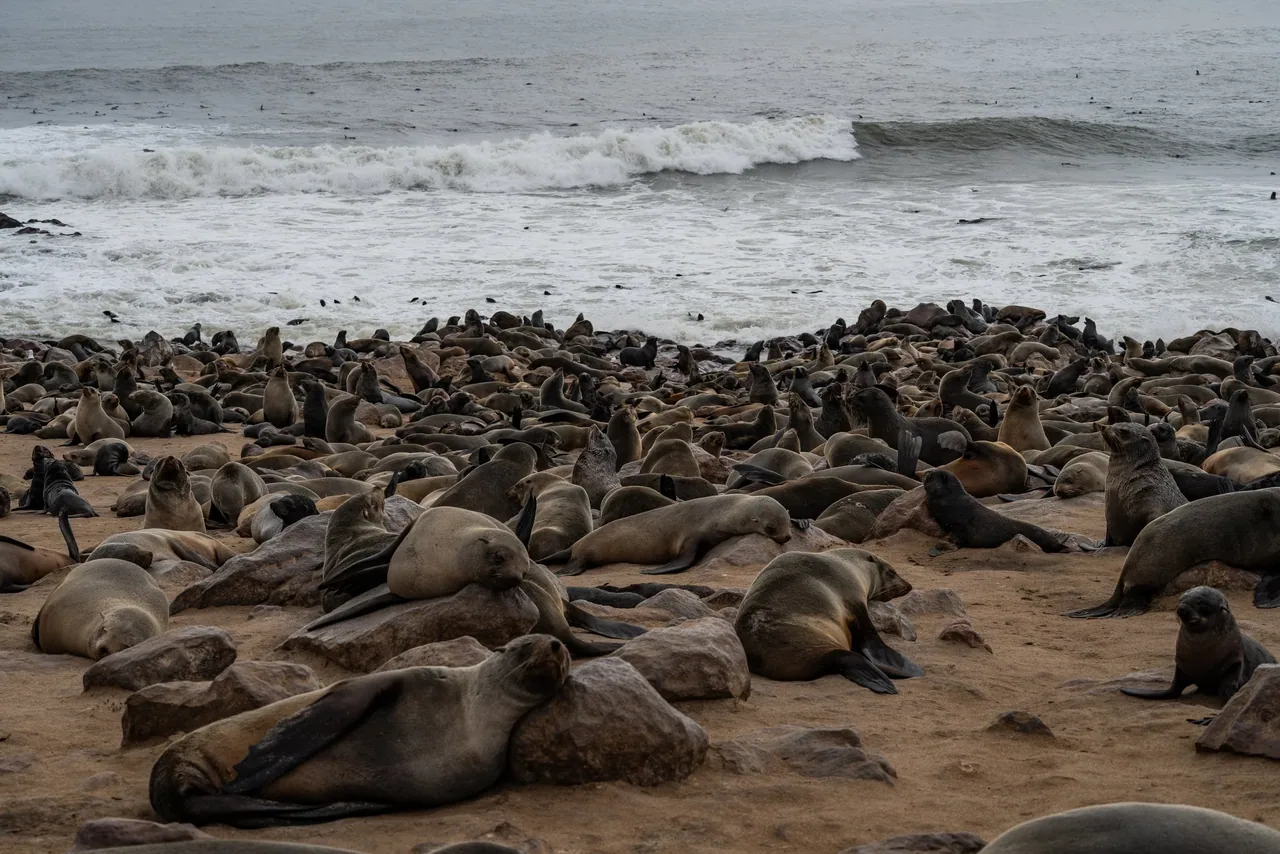
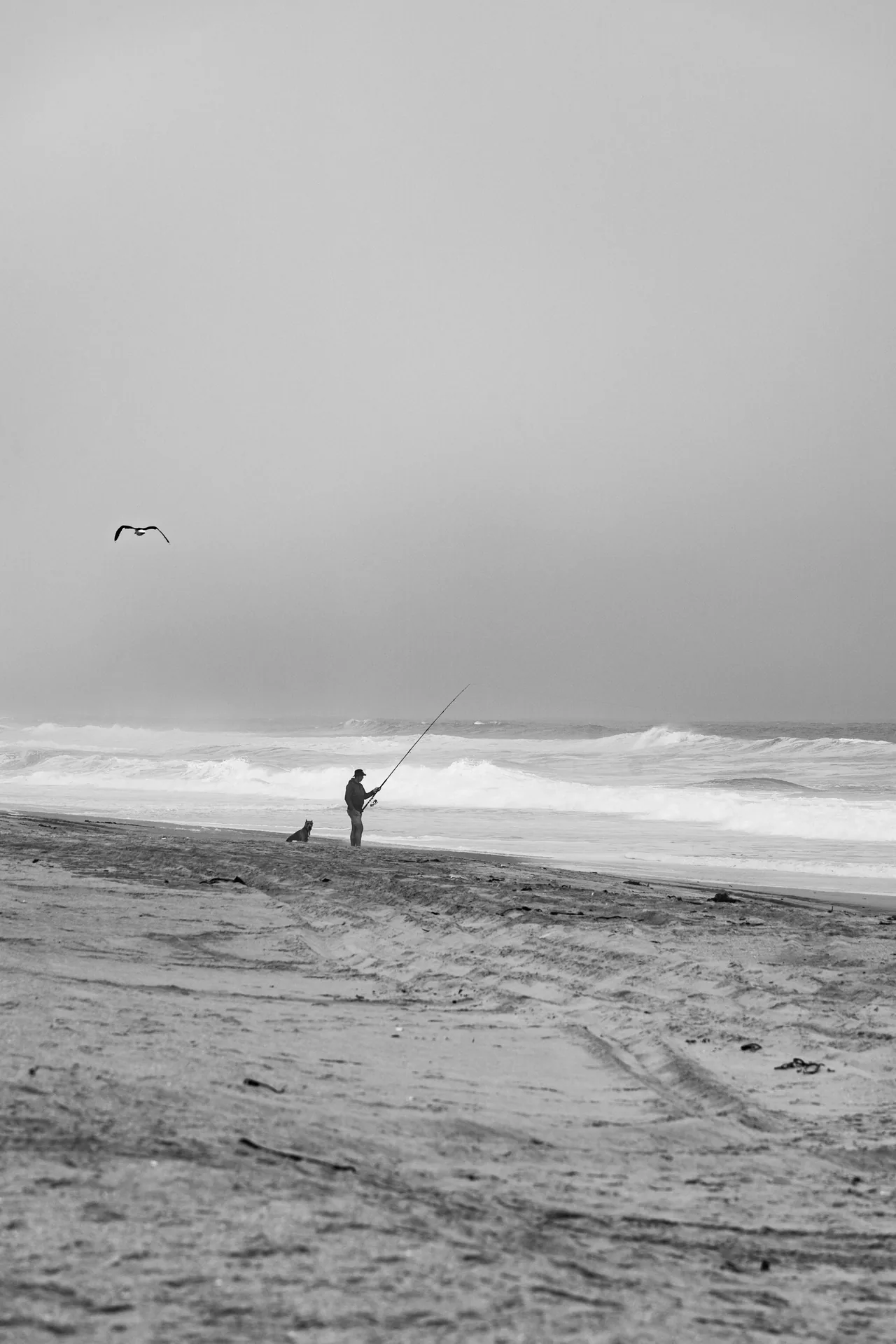
We continue along the Skeleton Coast, where we pass shipwrecks stranded near shore, victims of thick fog and treacherous currents.
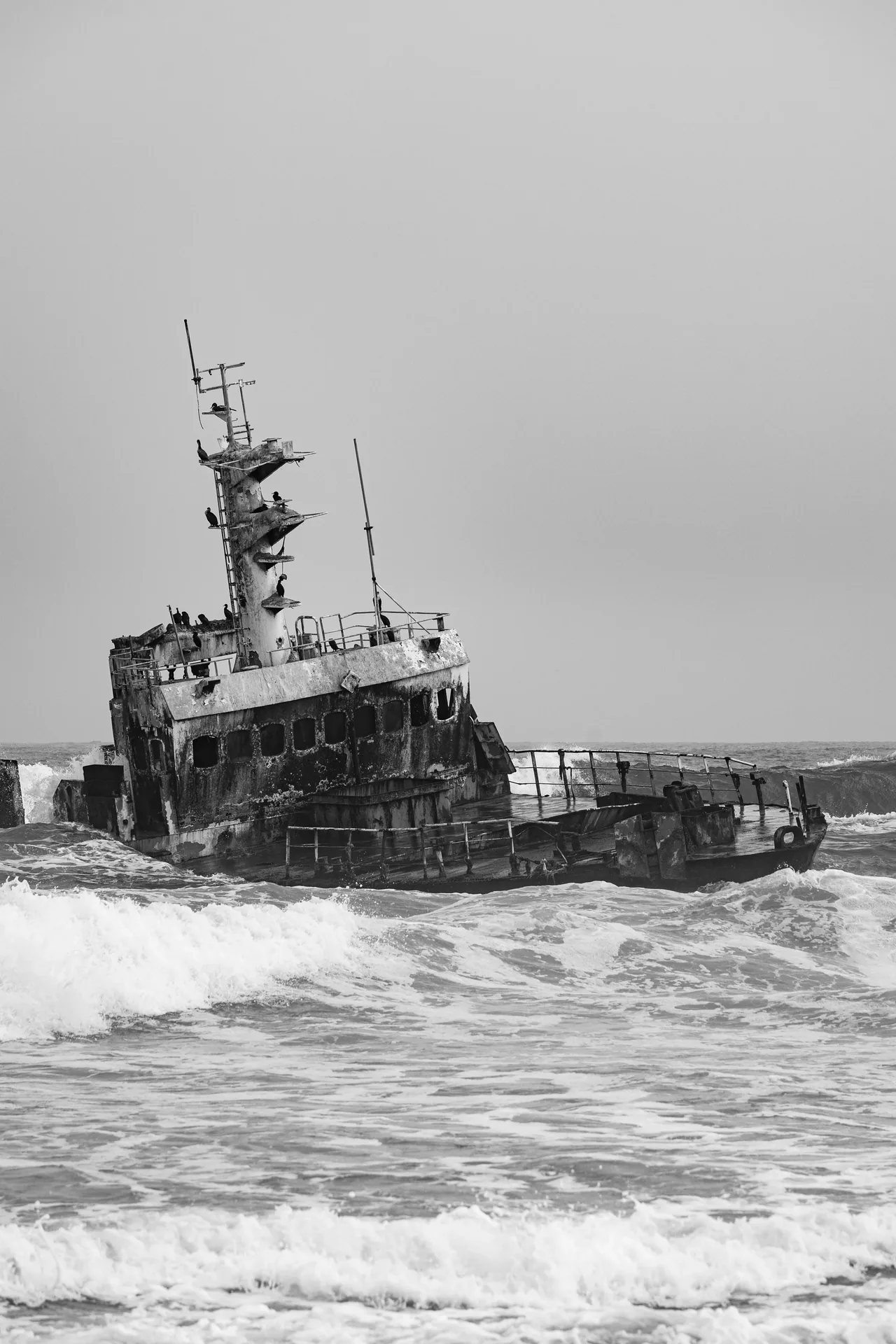
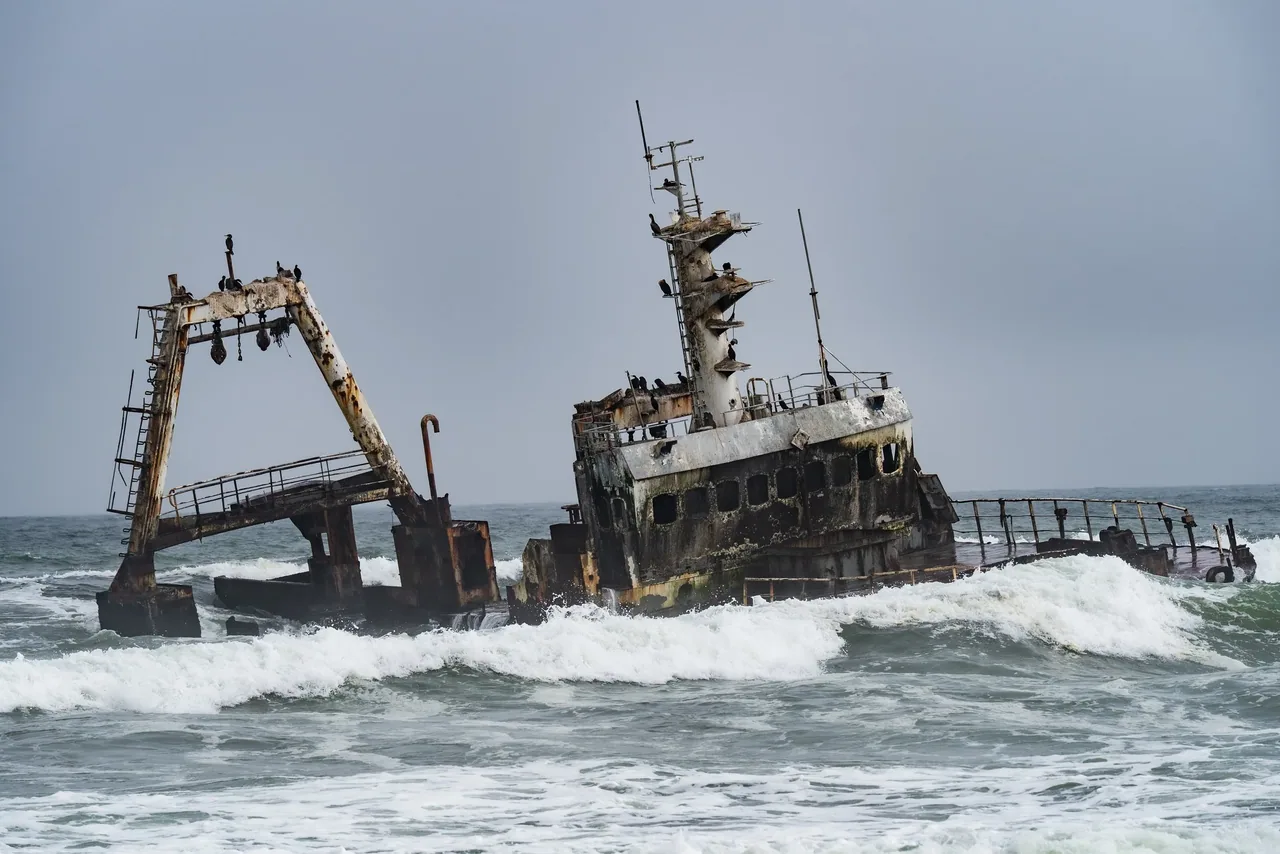
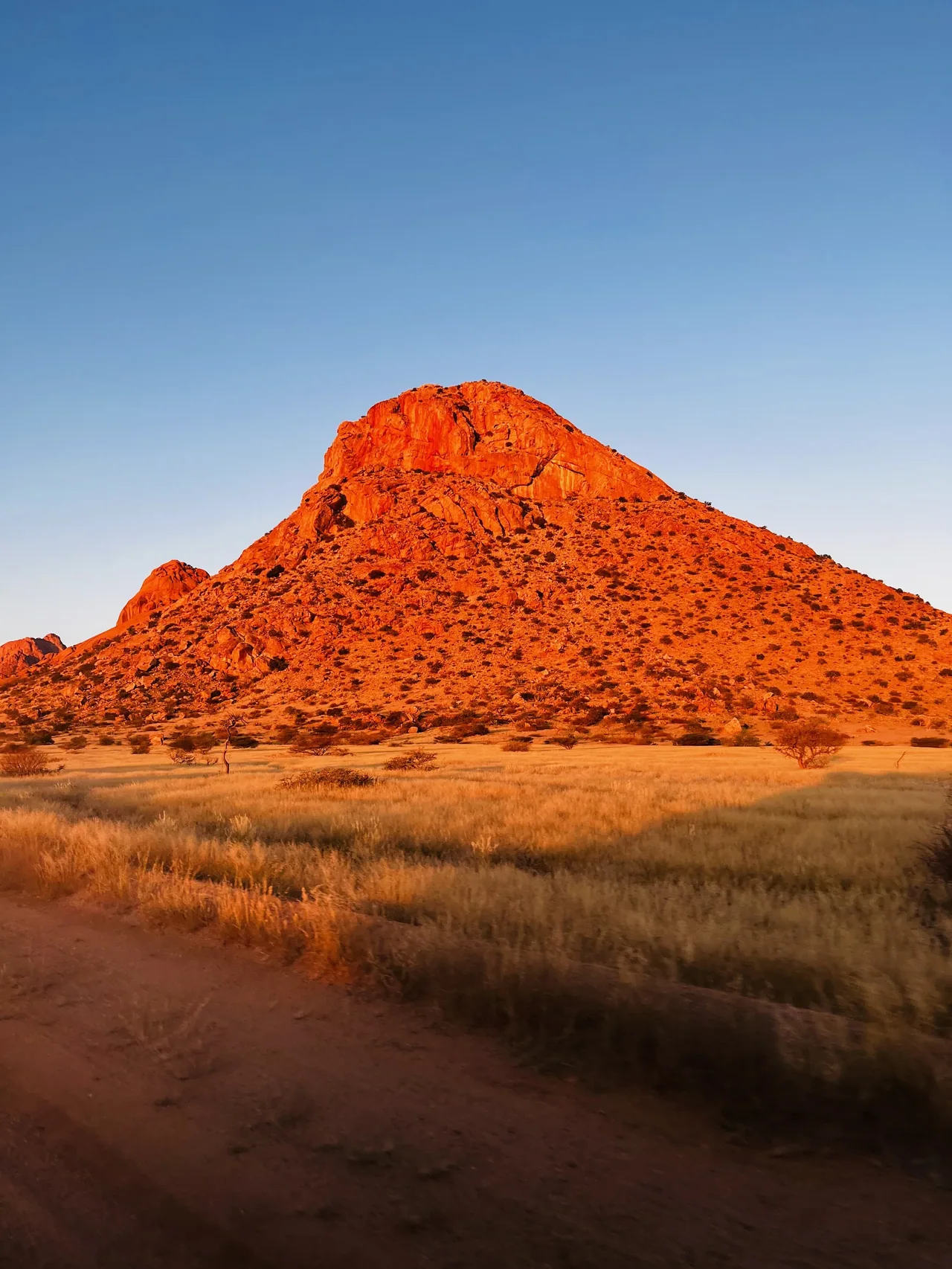
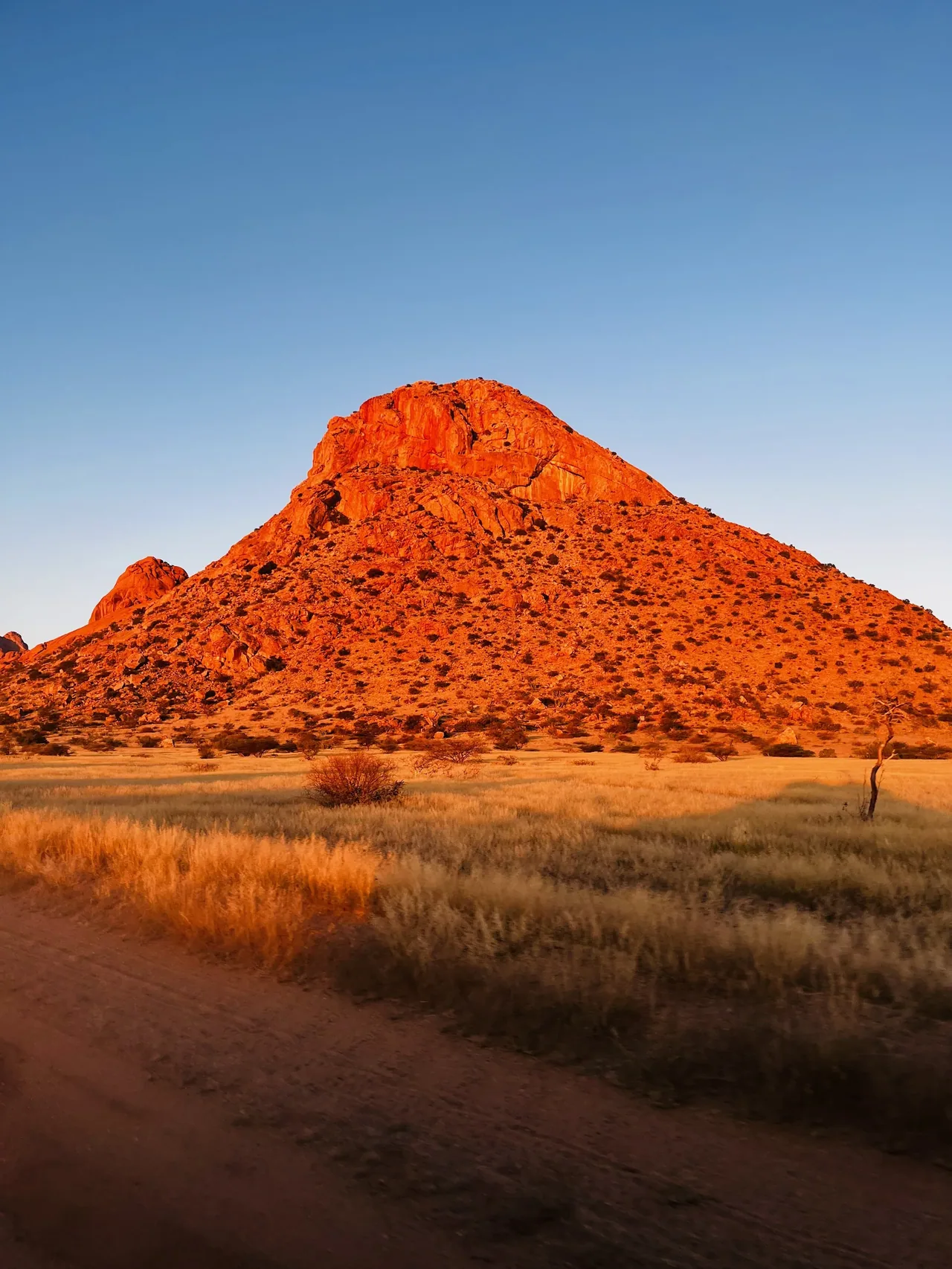
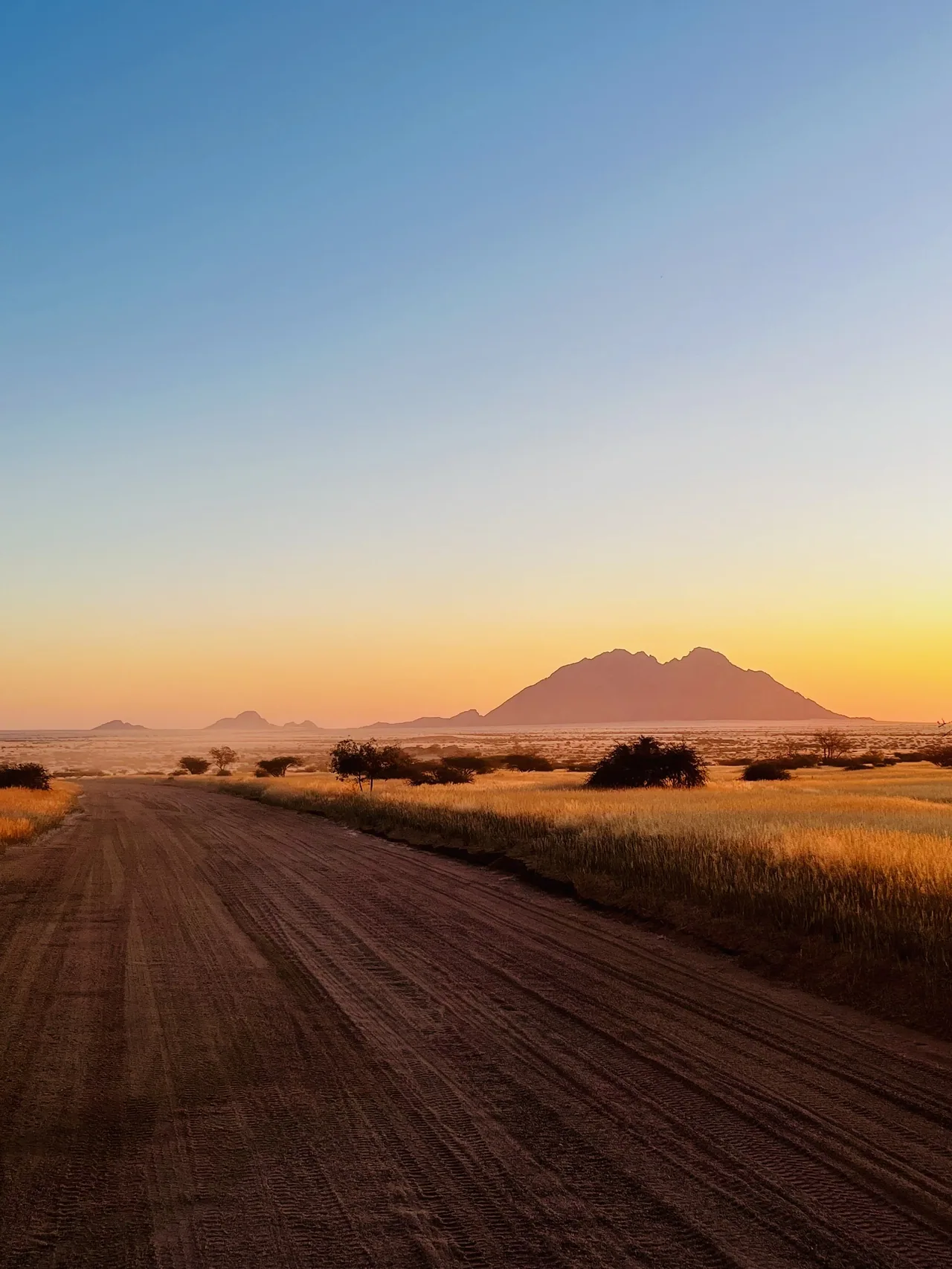
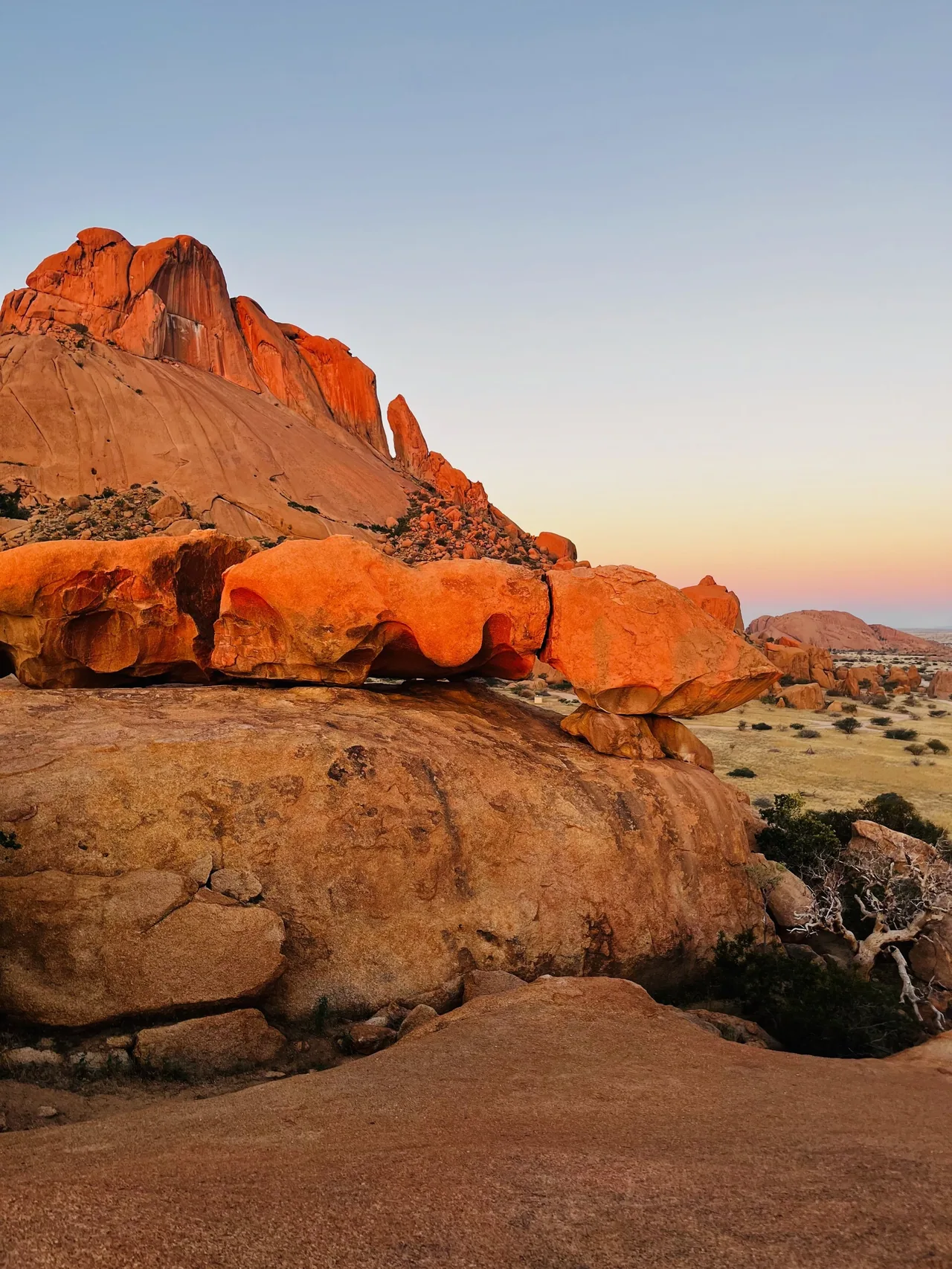
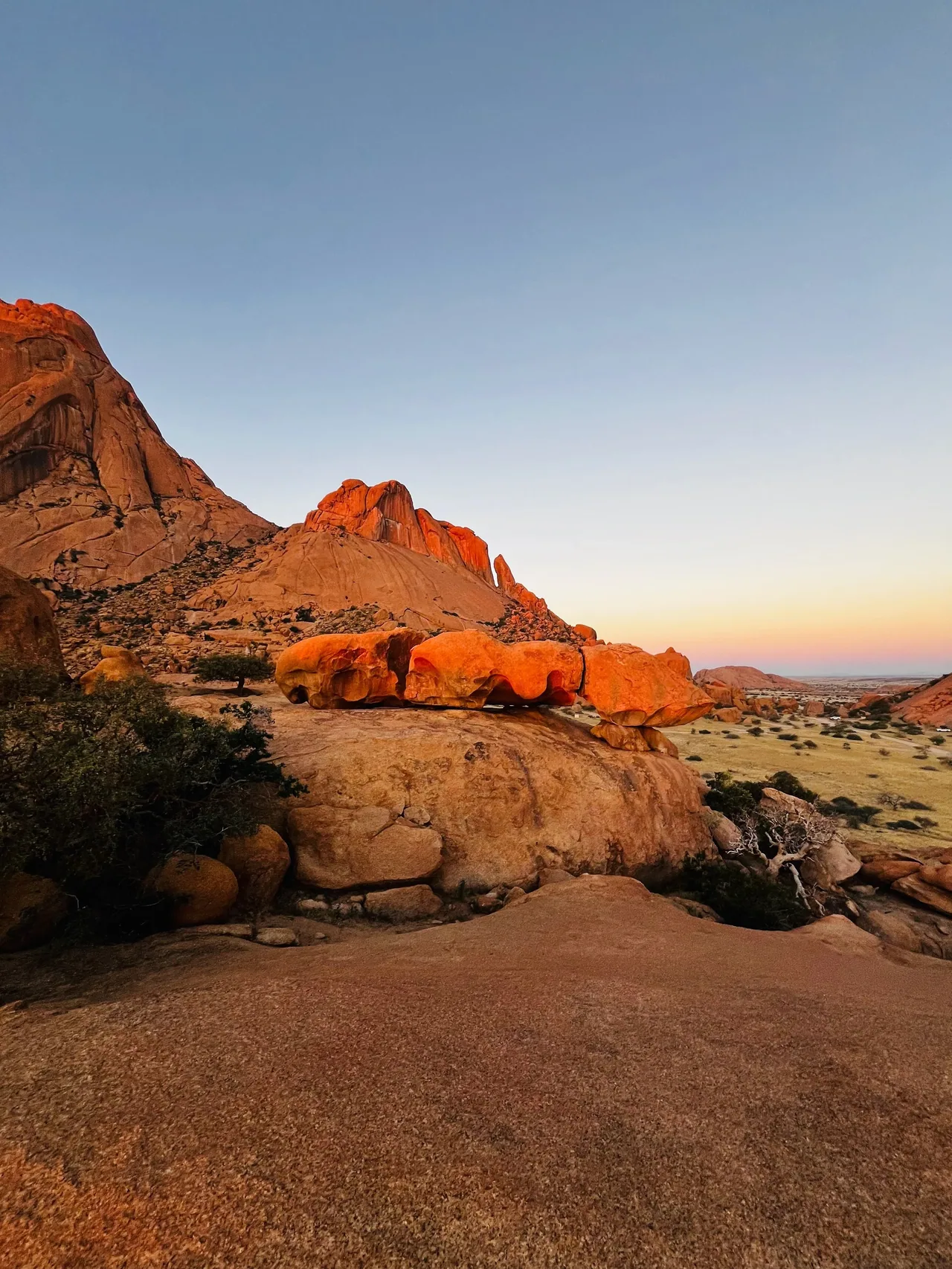
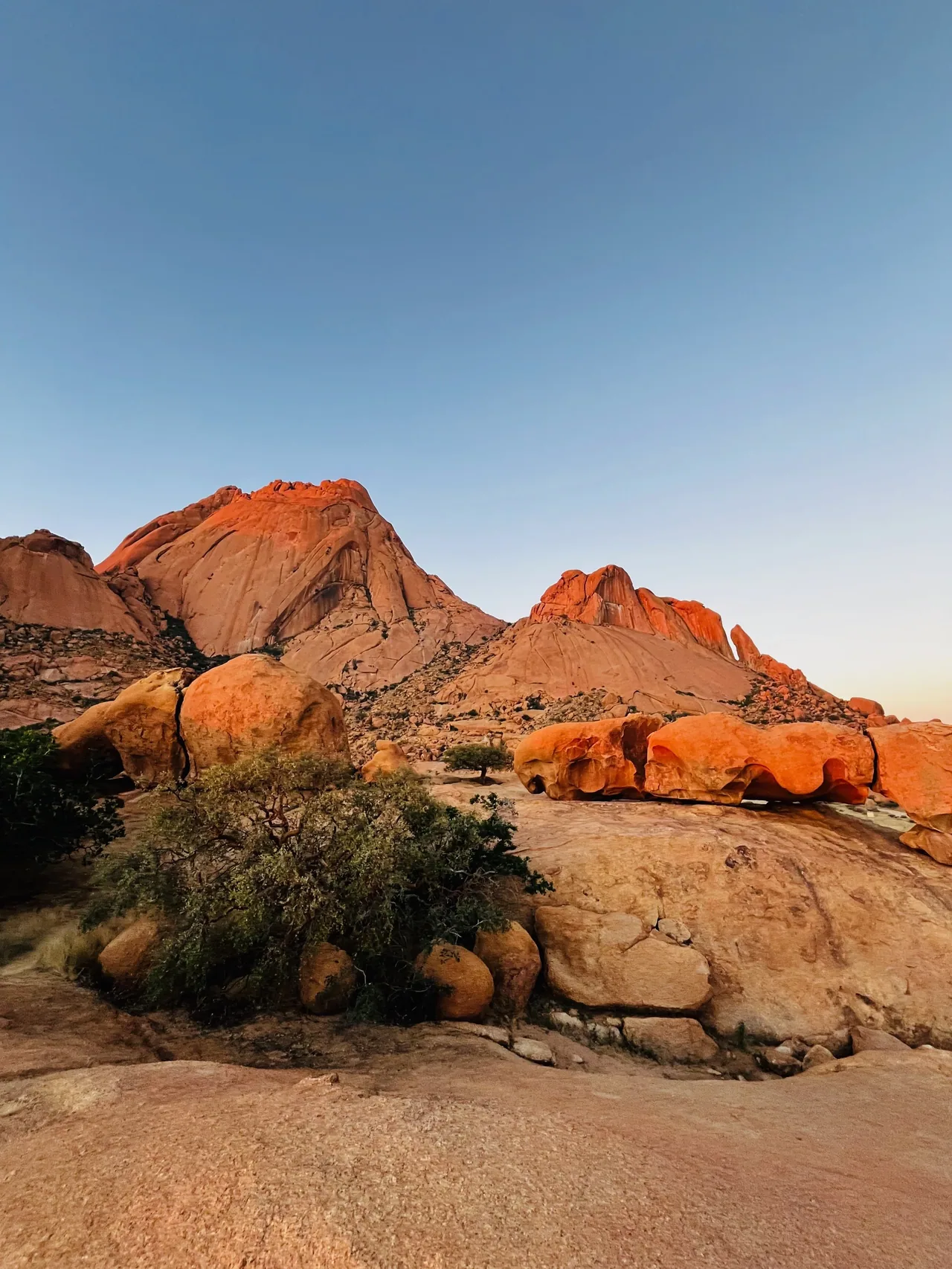
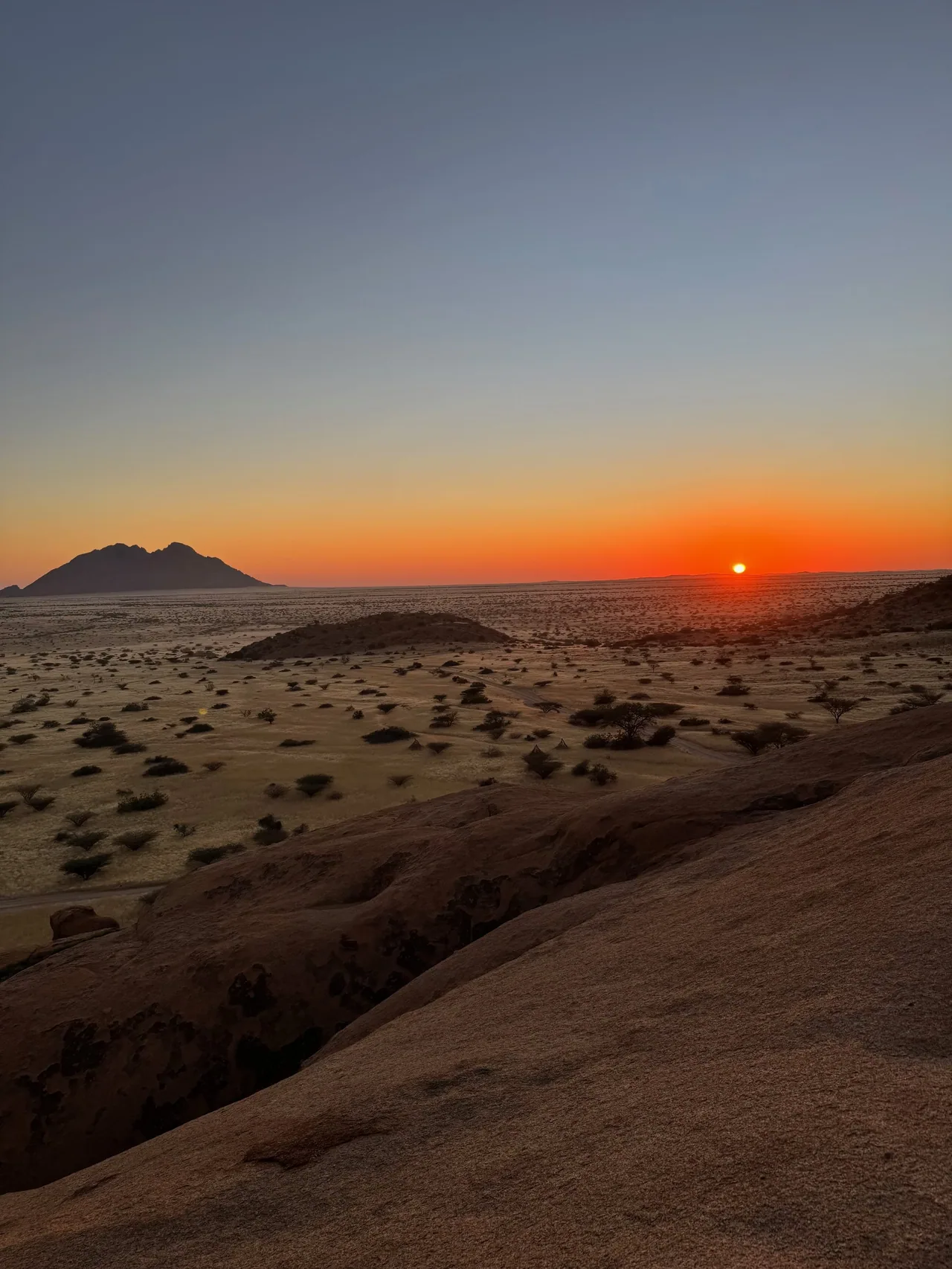
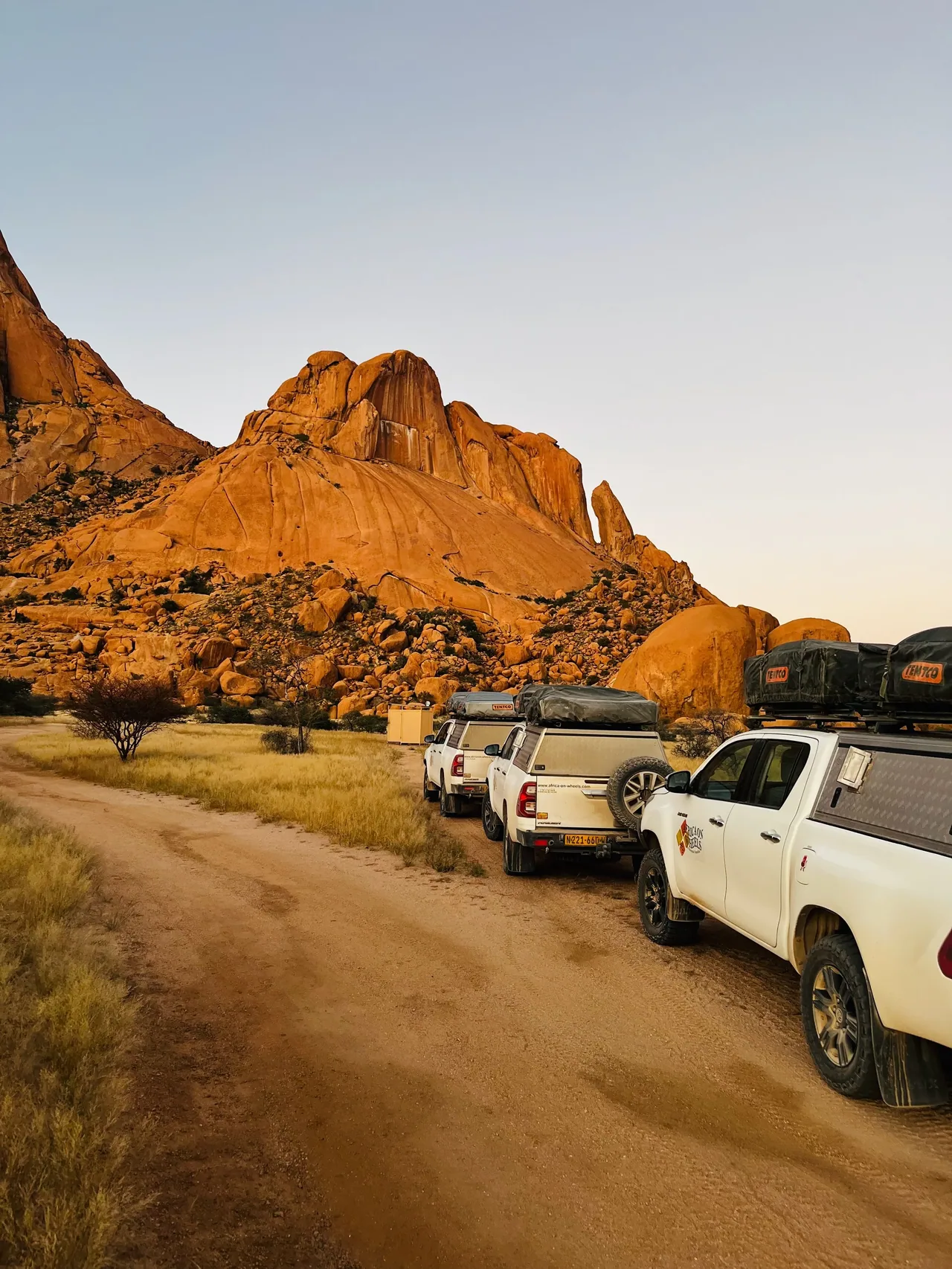
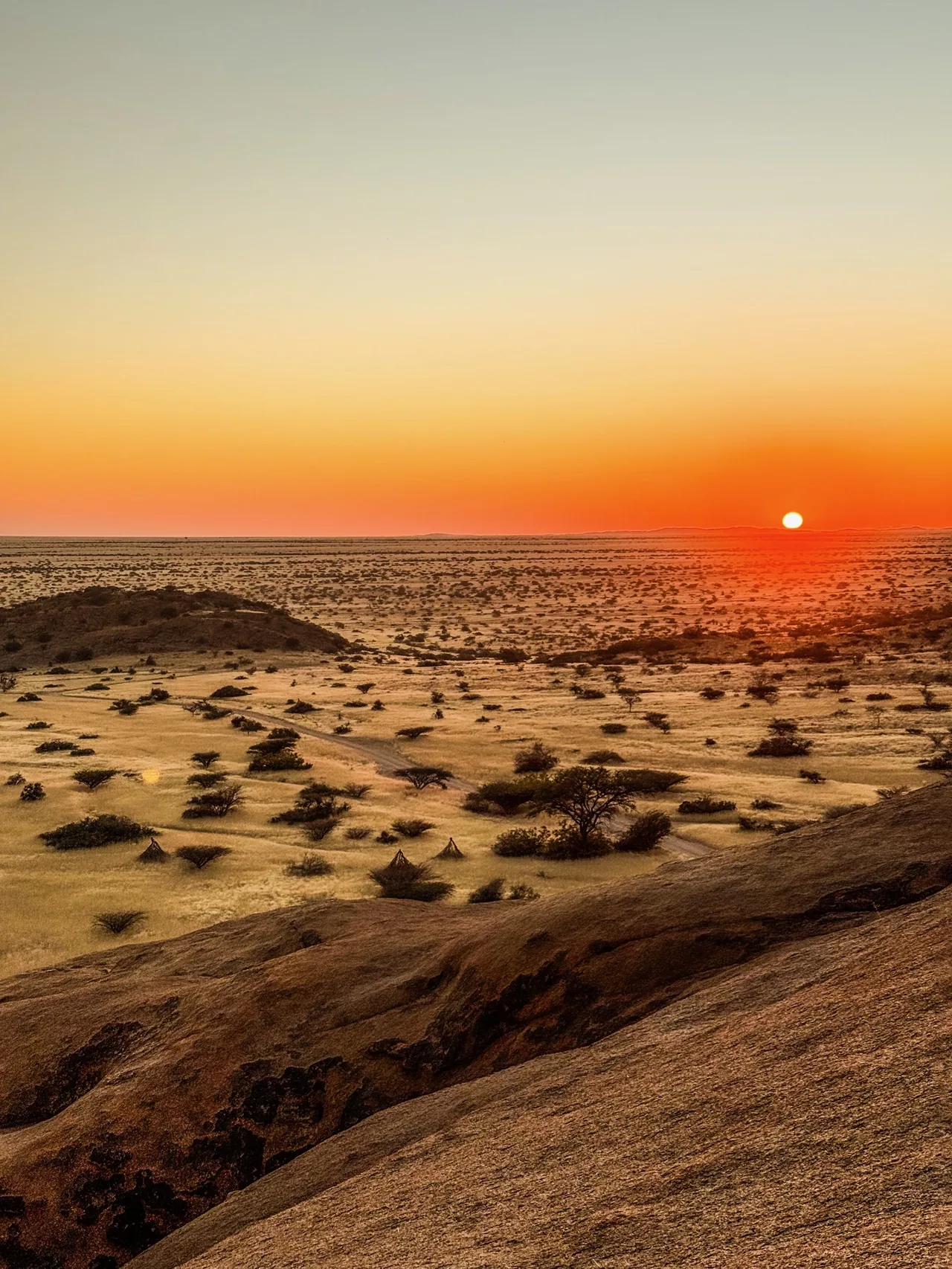
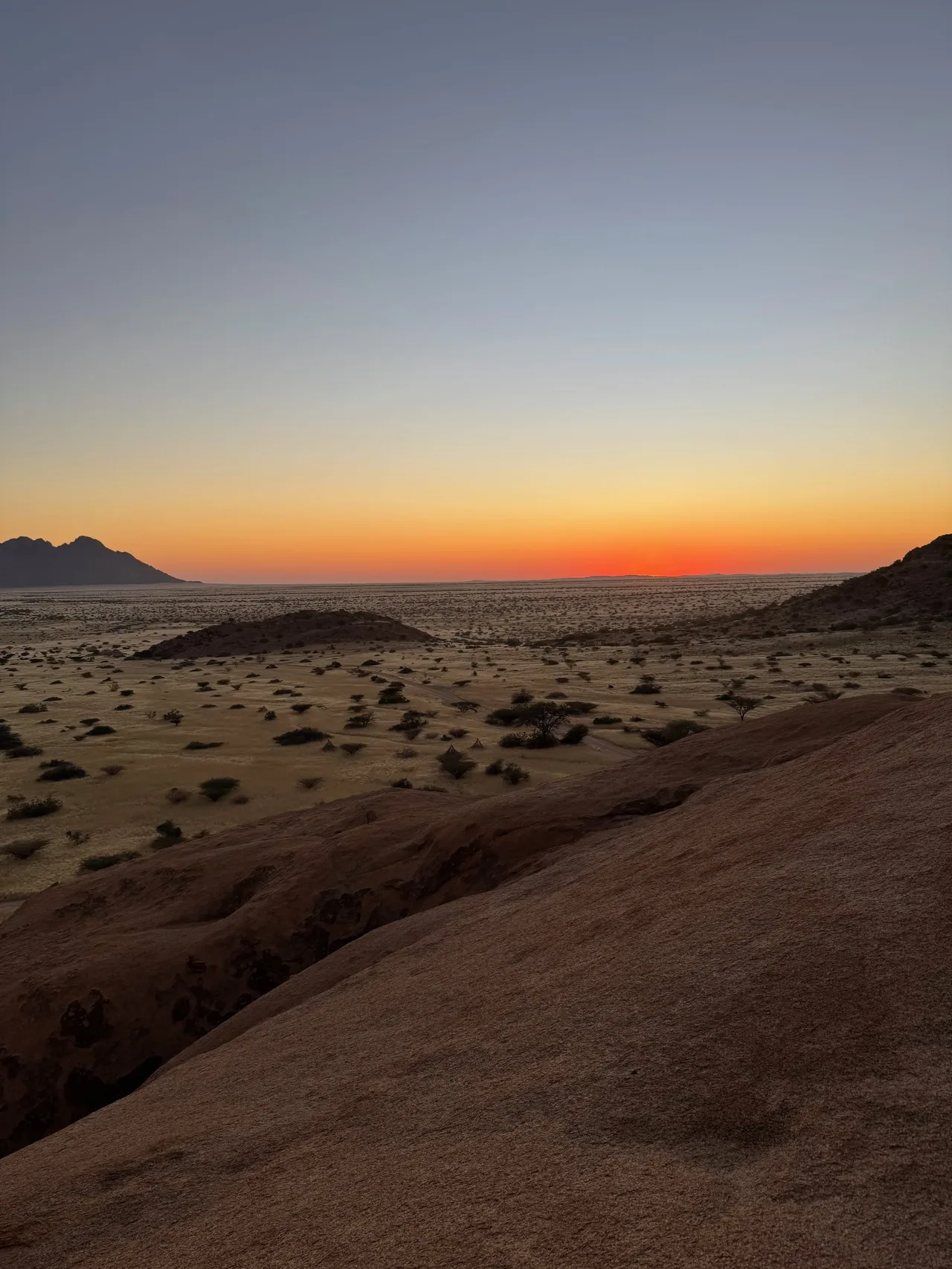
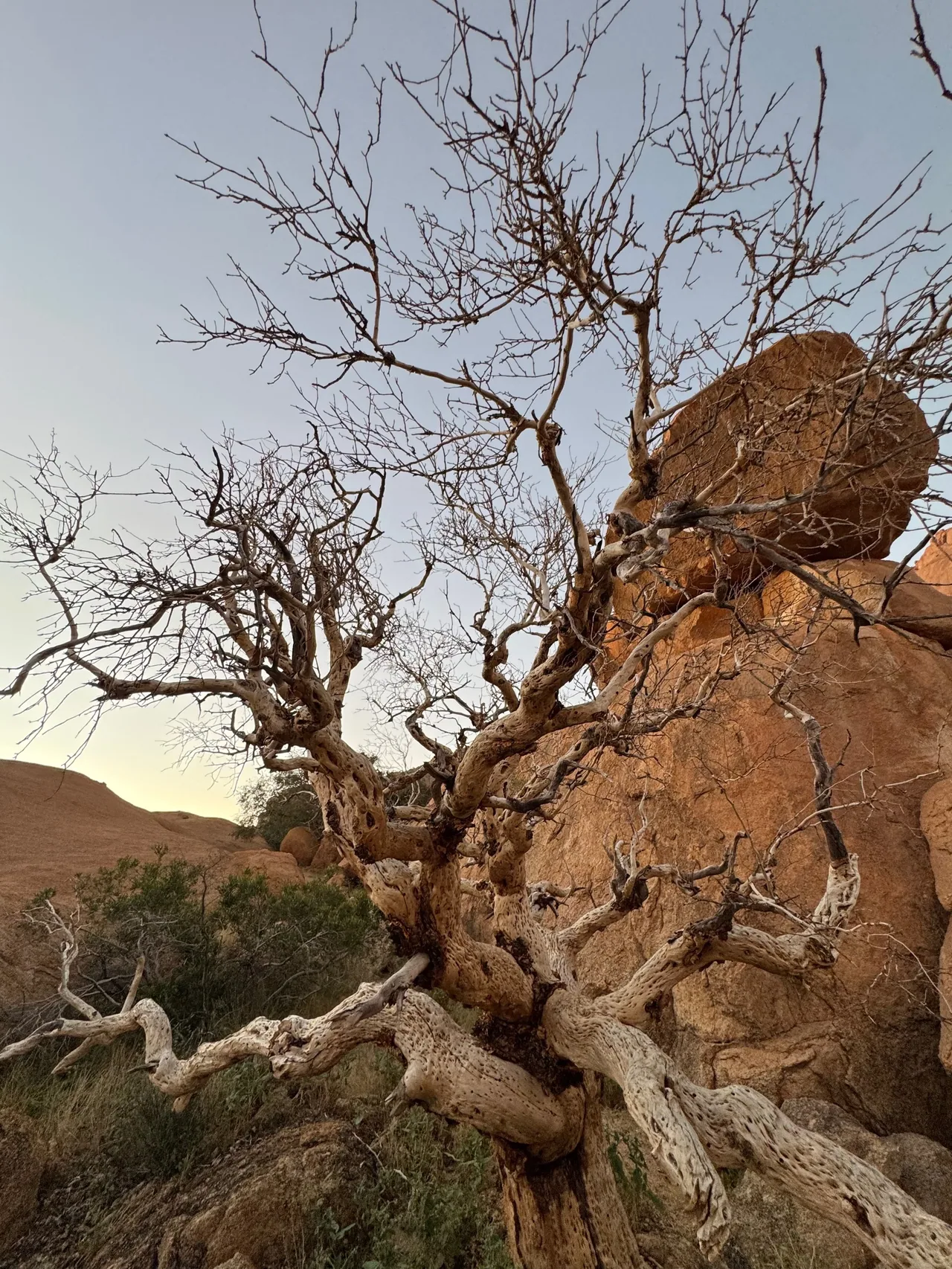
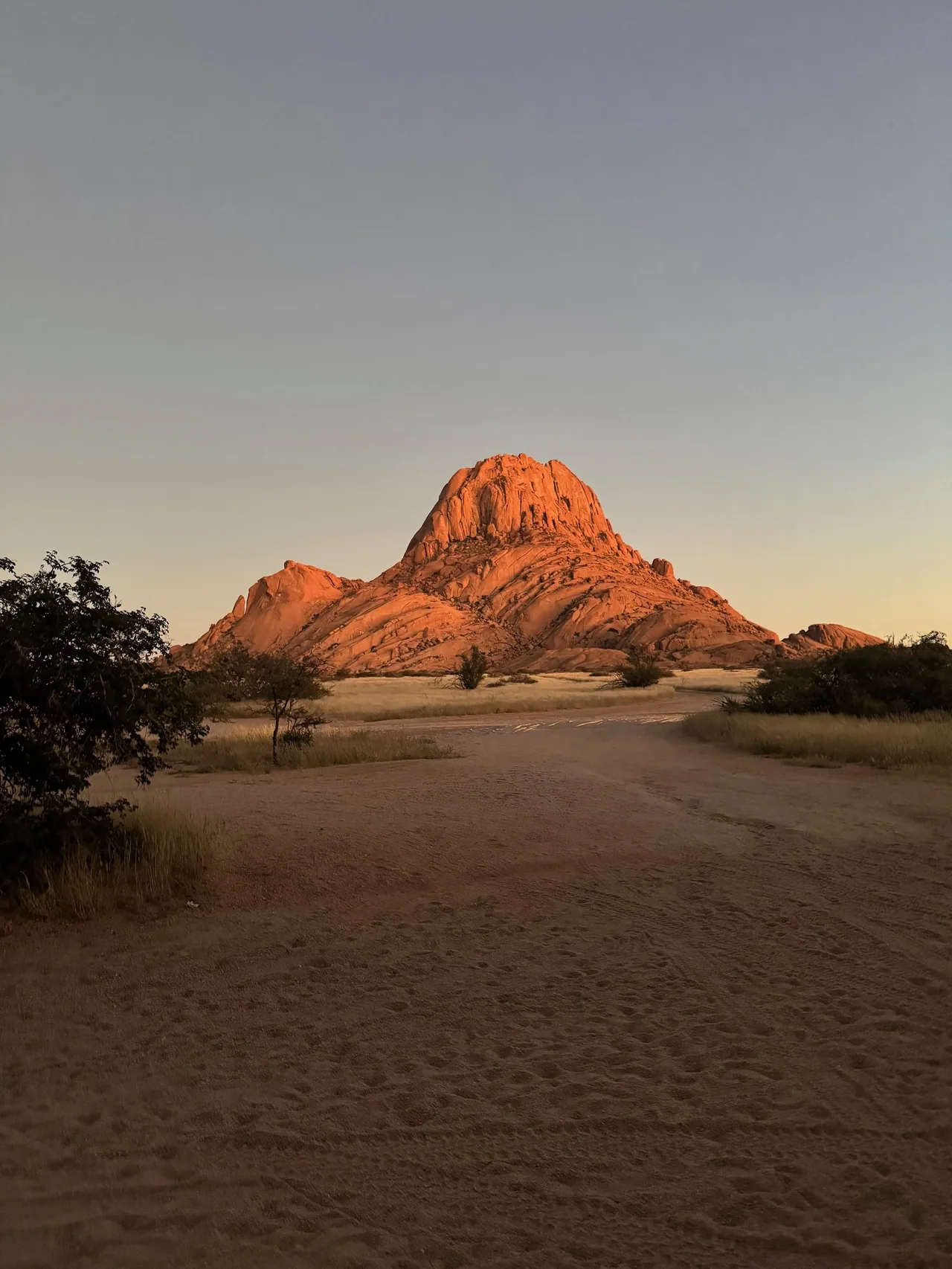
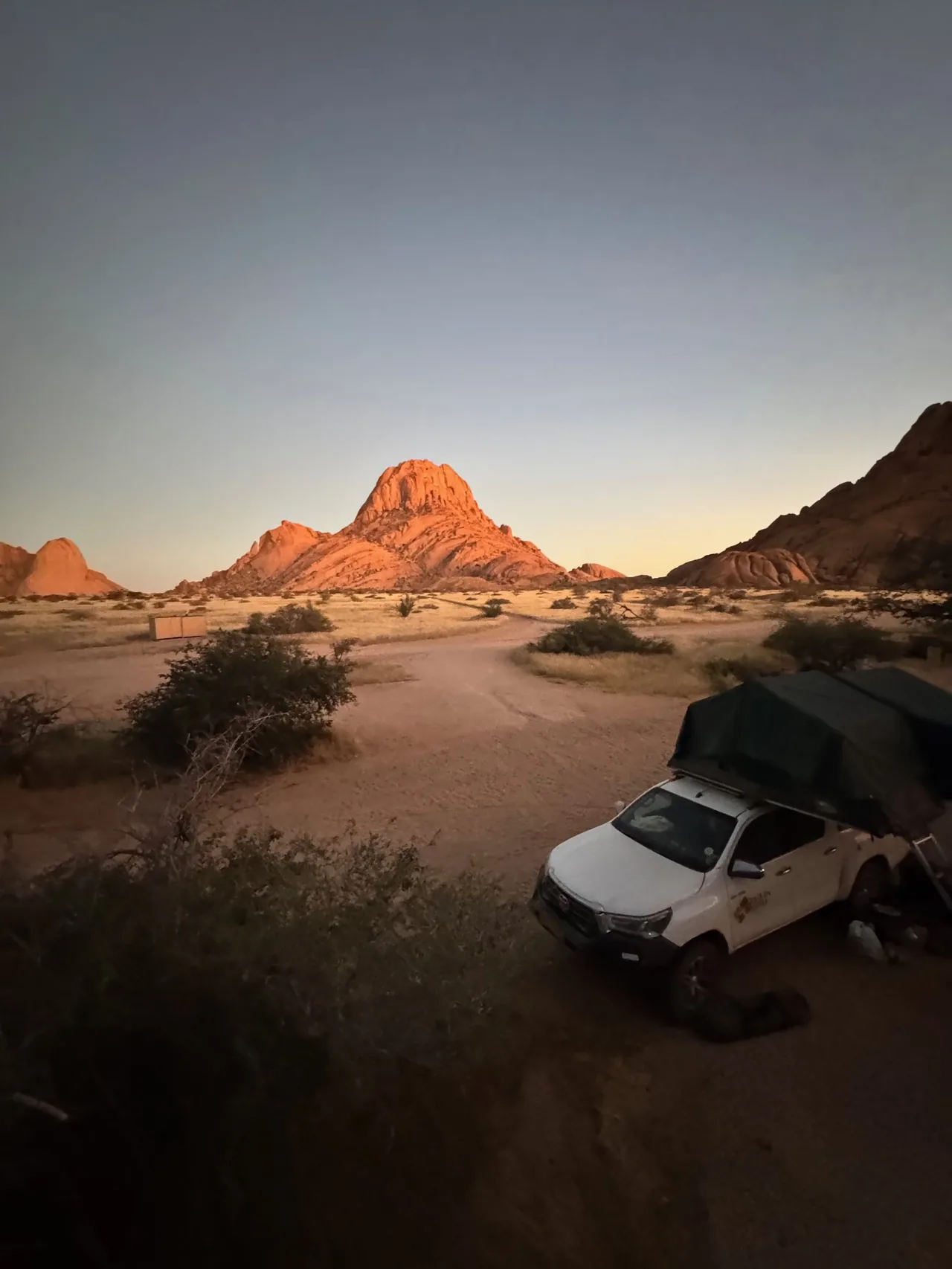
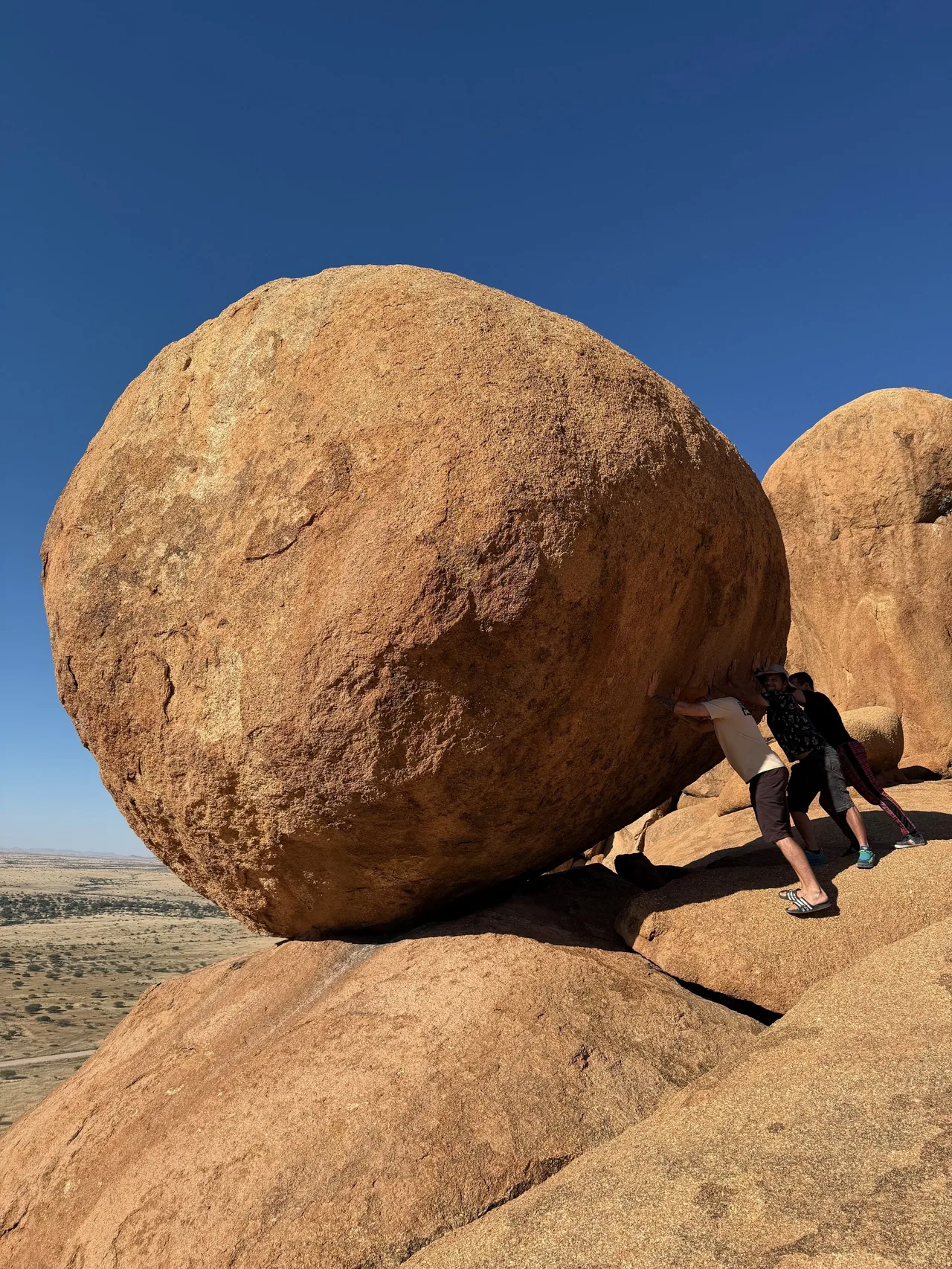
After a few hours we arrive at Spitzkoppe. The campsite here might be the most beautiful I’ve ever seen — scattered among massive rock formations with a huge solitary granite dome in the centre, often nicknamed the “African Matterhorn”.
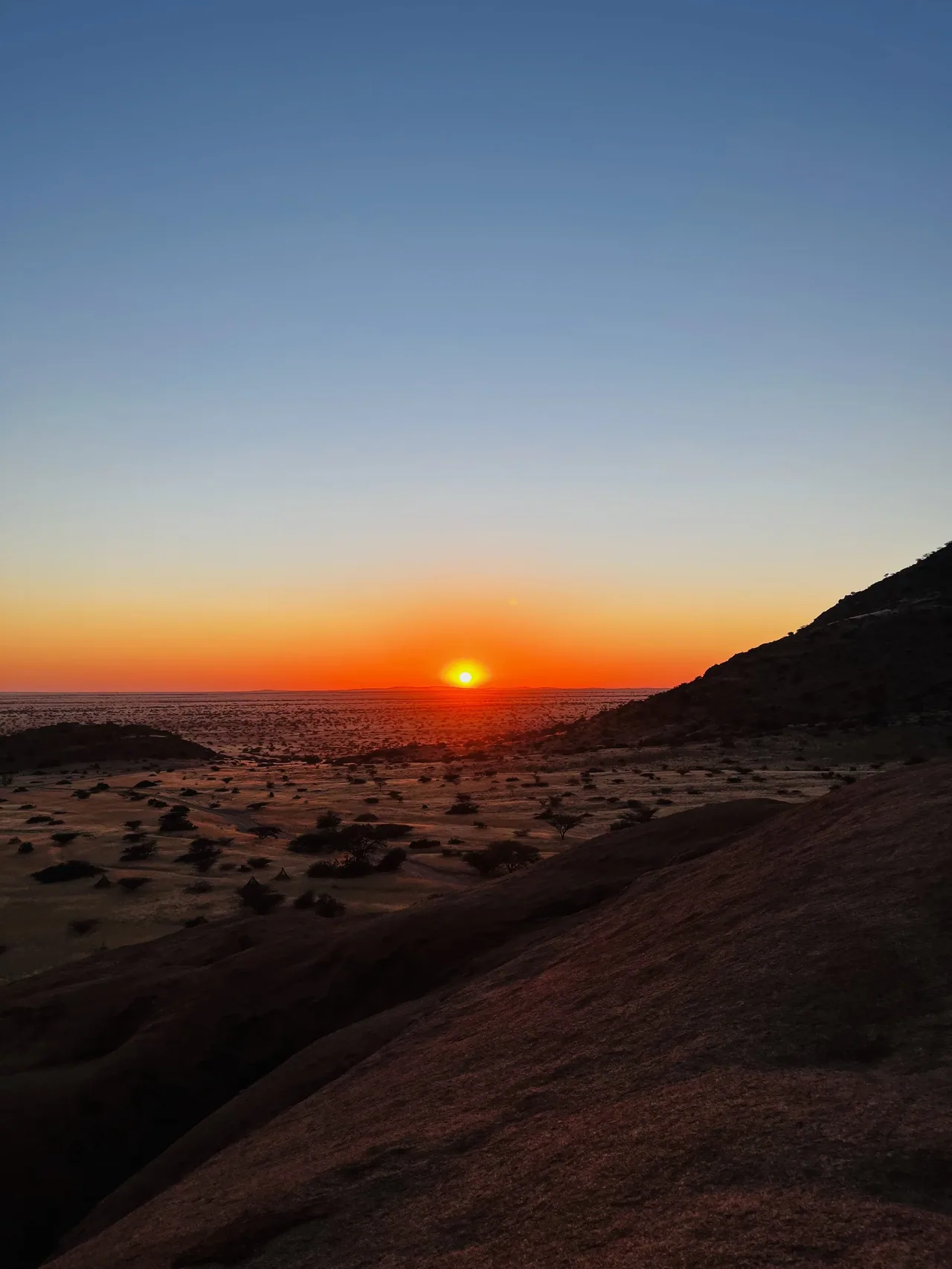
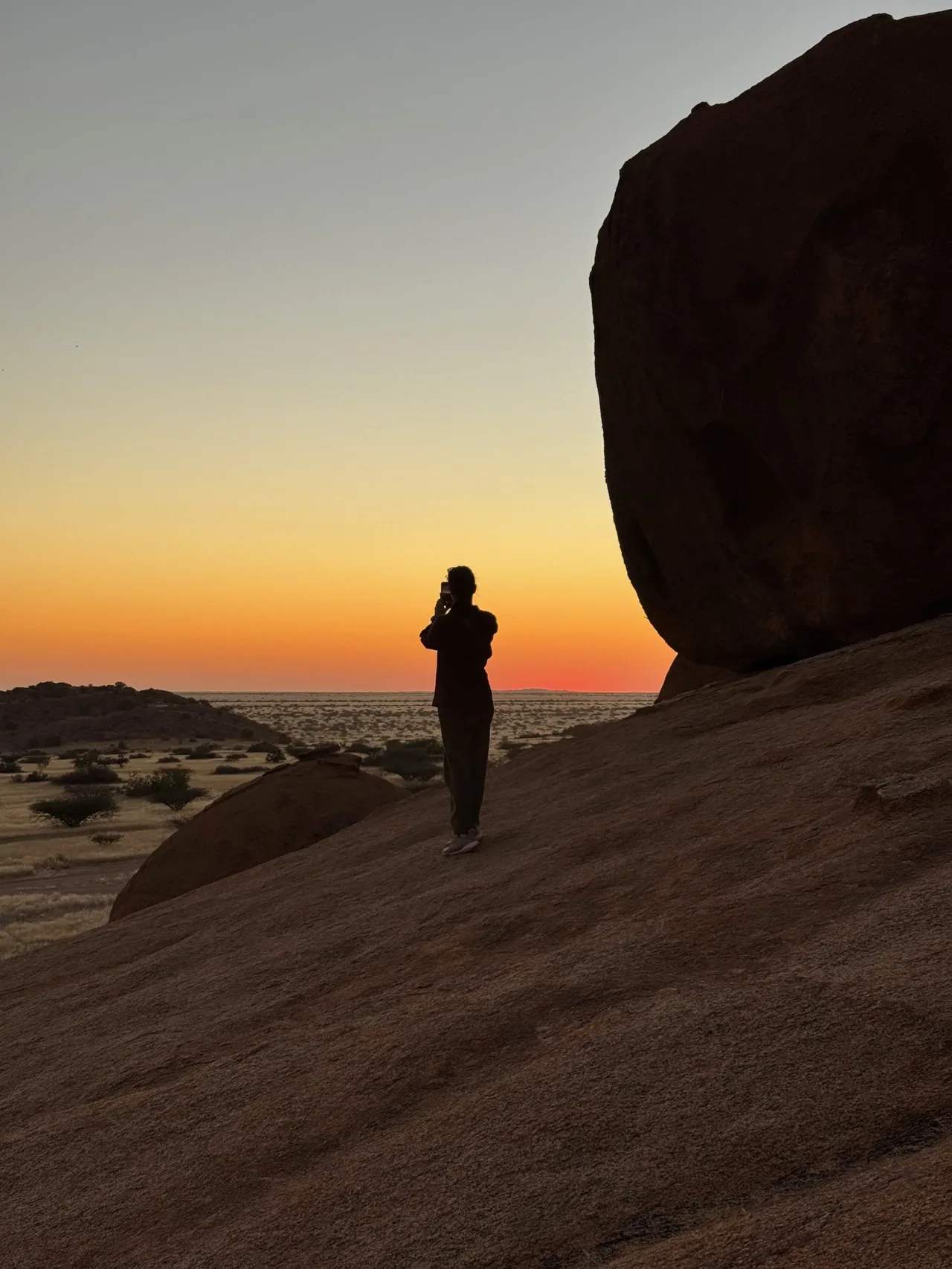
We arrive just in time for sunset. We stop at the gate, quickly climb the nearest rock and watch the sun go down over the desert.
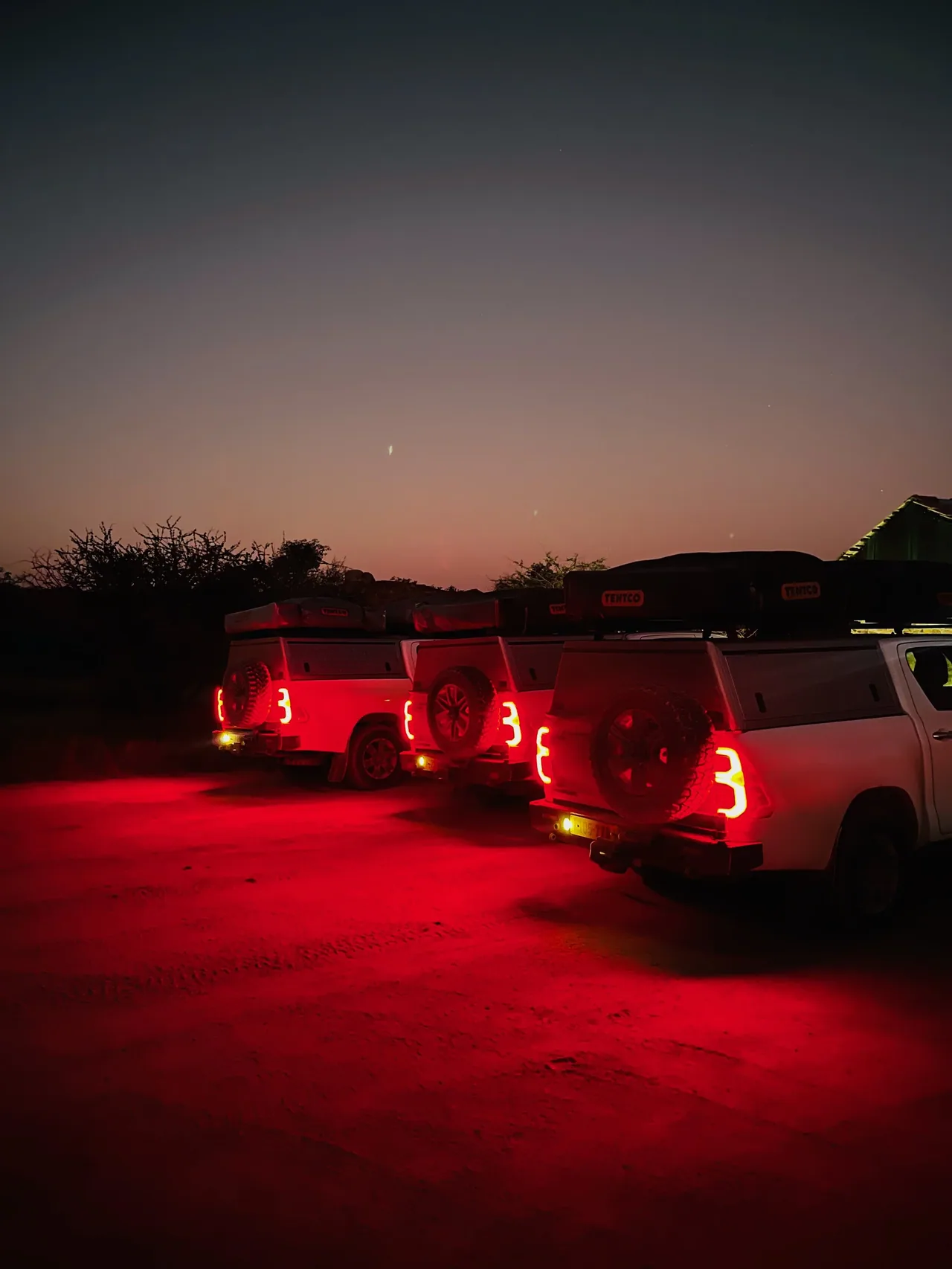
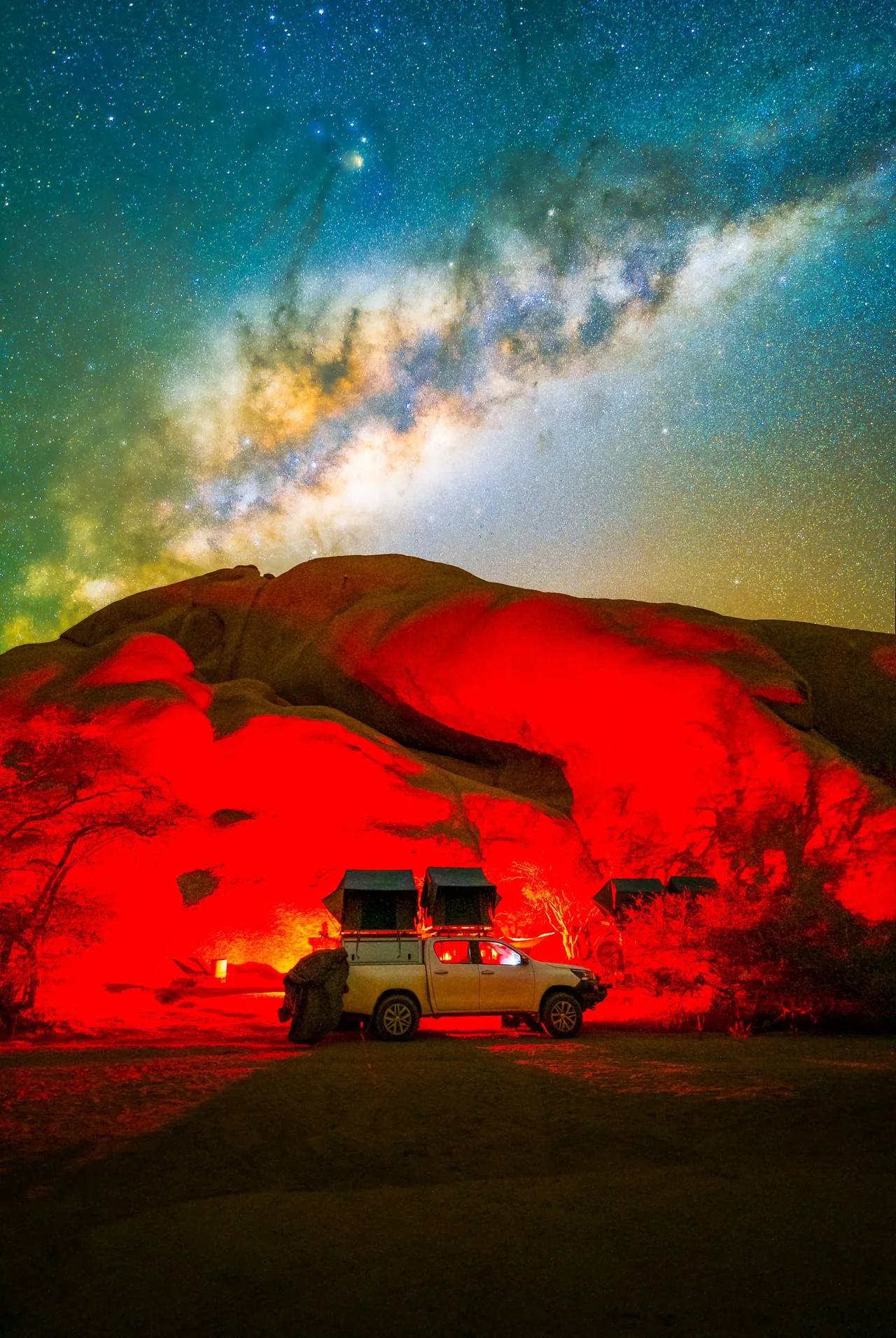
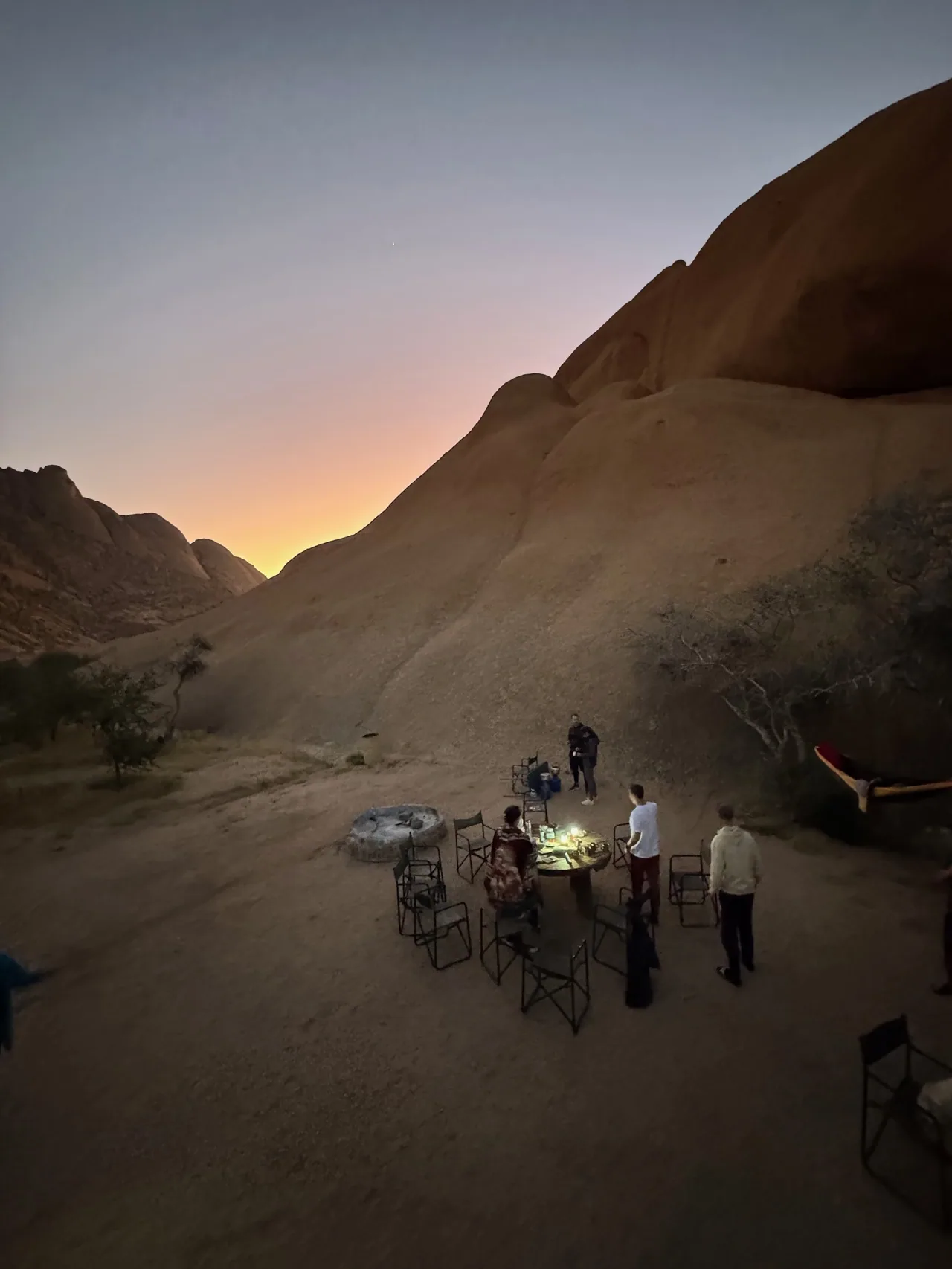
Then begins the hunt for a campsite spot. This is not a simple “row of pitches” kind of place. Sites are spread hundreds of metres apart, the camp is fully booked and nobody tells you which spots are taken and which aren’t. We’re the last ones to arrive, so we drive around in the dark for a good half hour.
In the end we find a free spot — and it turns out to be perfect, especially for photography.
Day 8
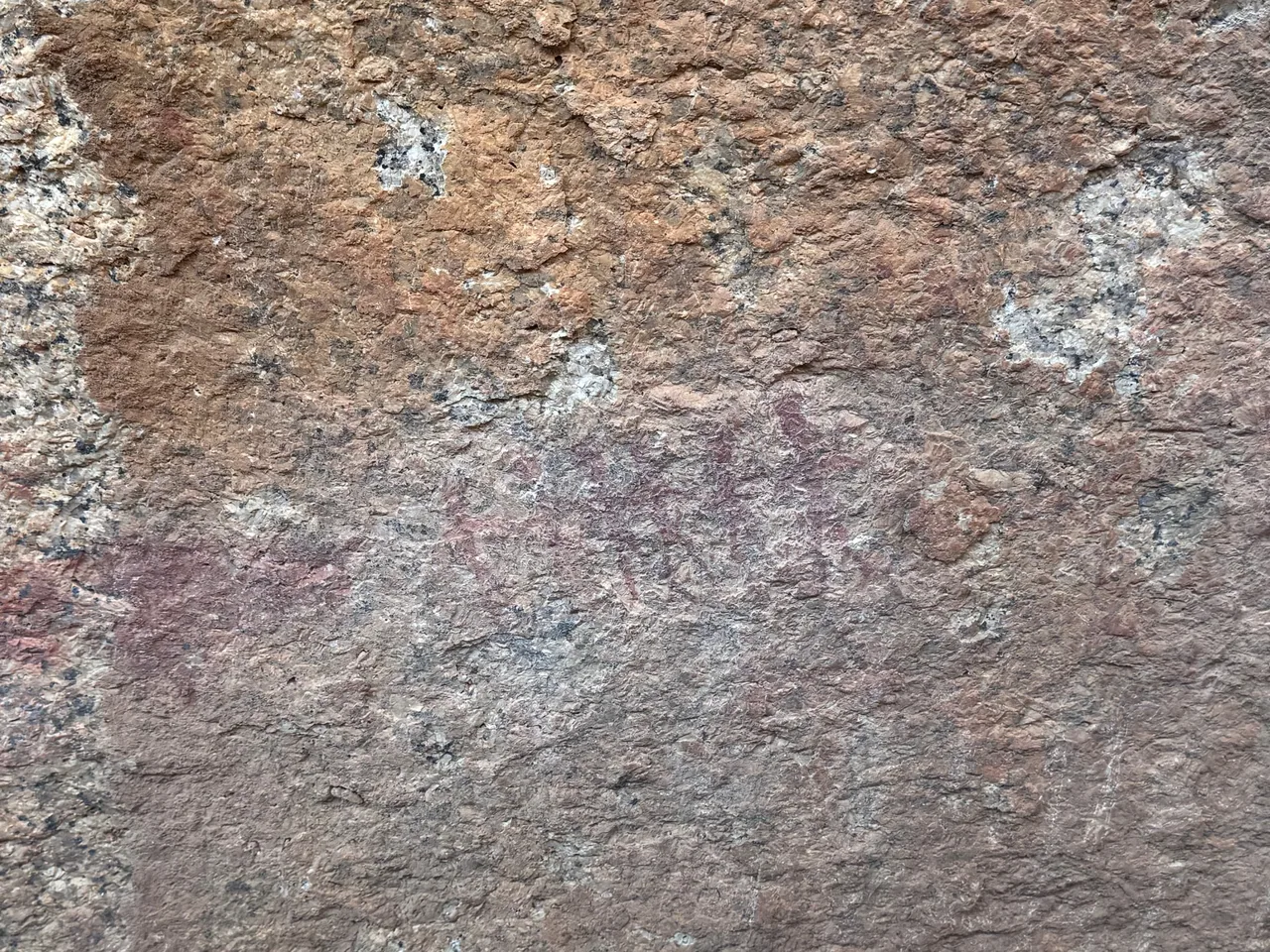
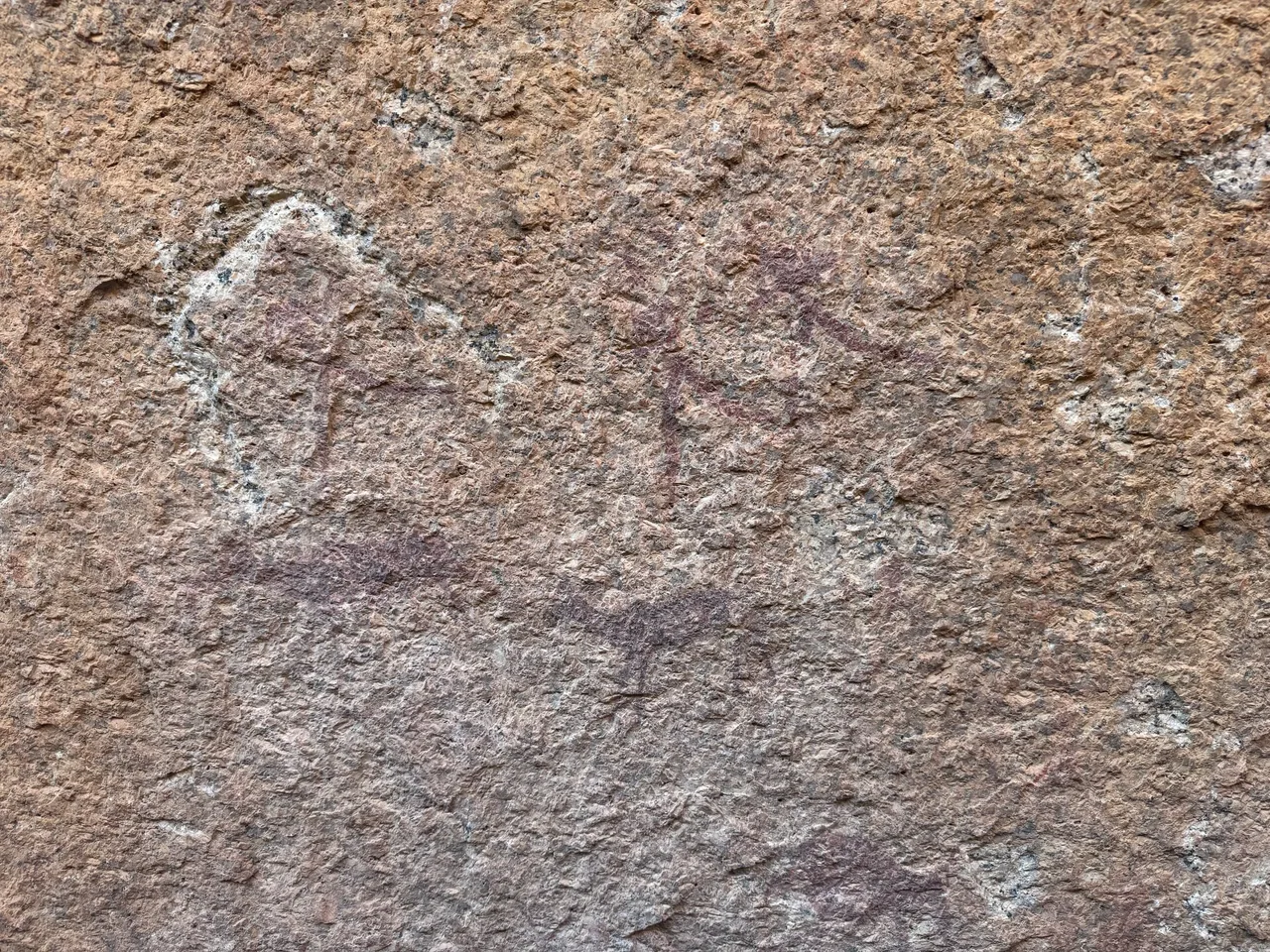
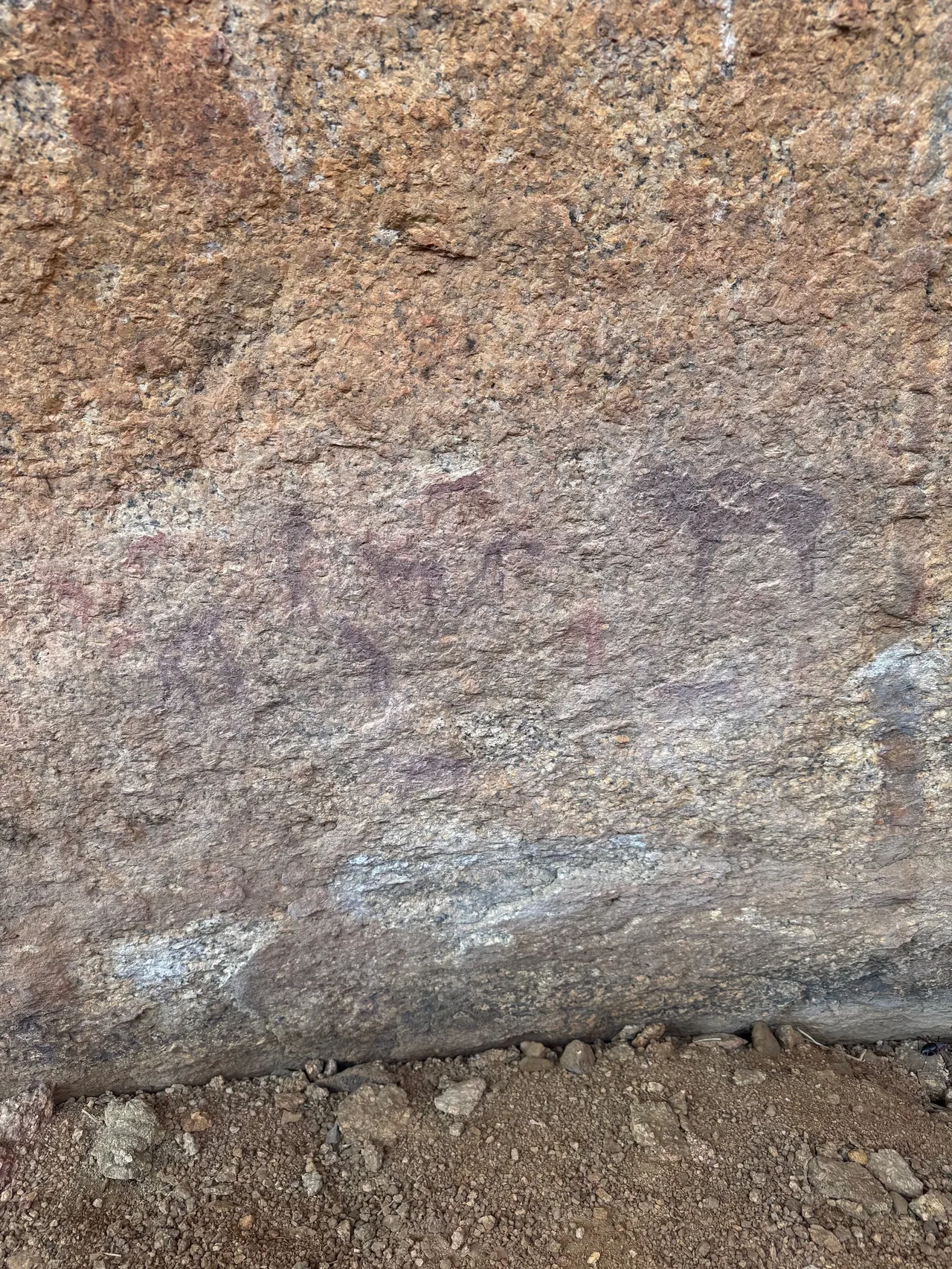
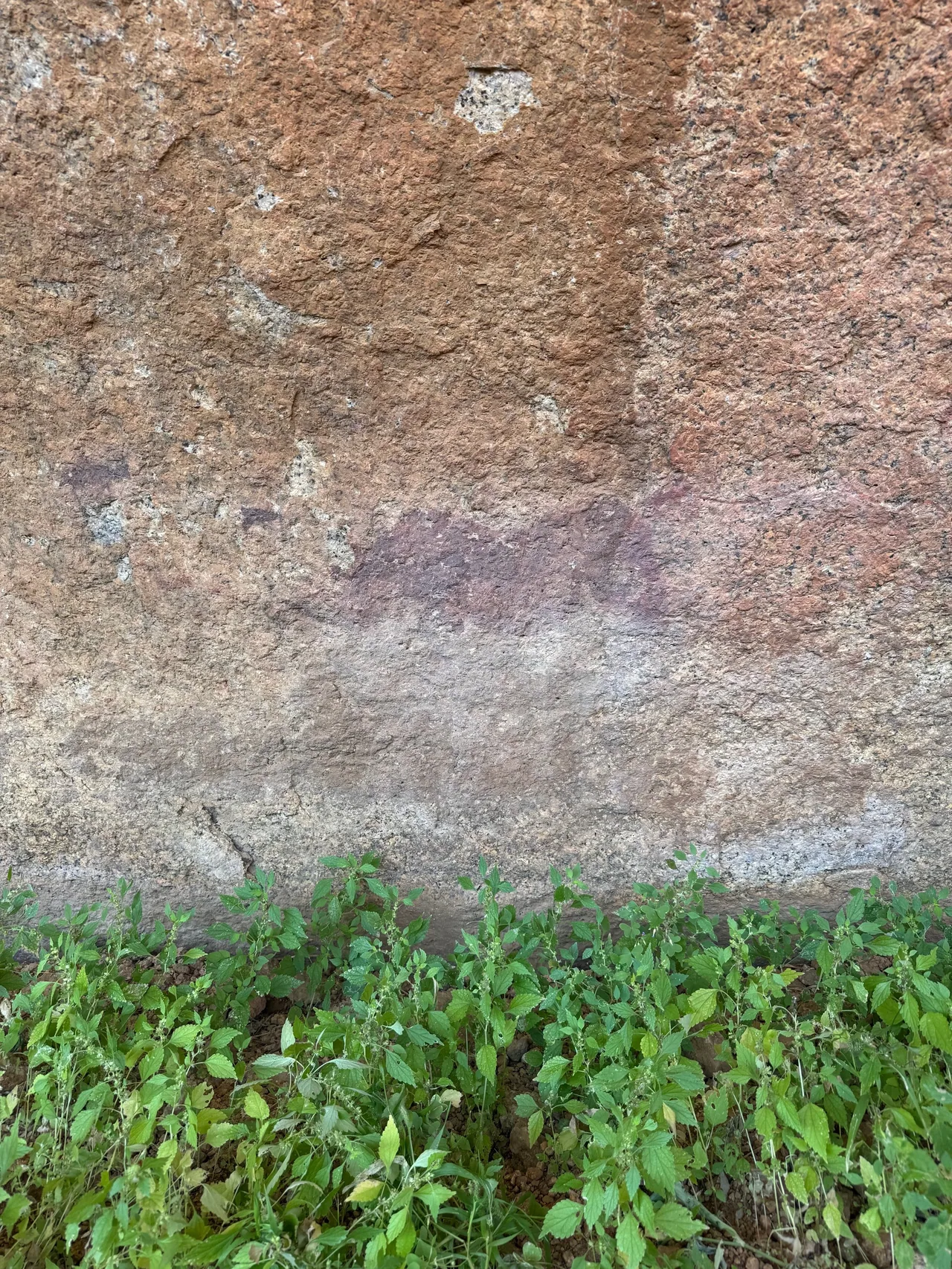
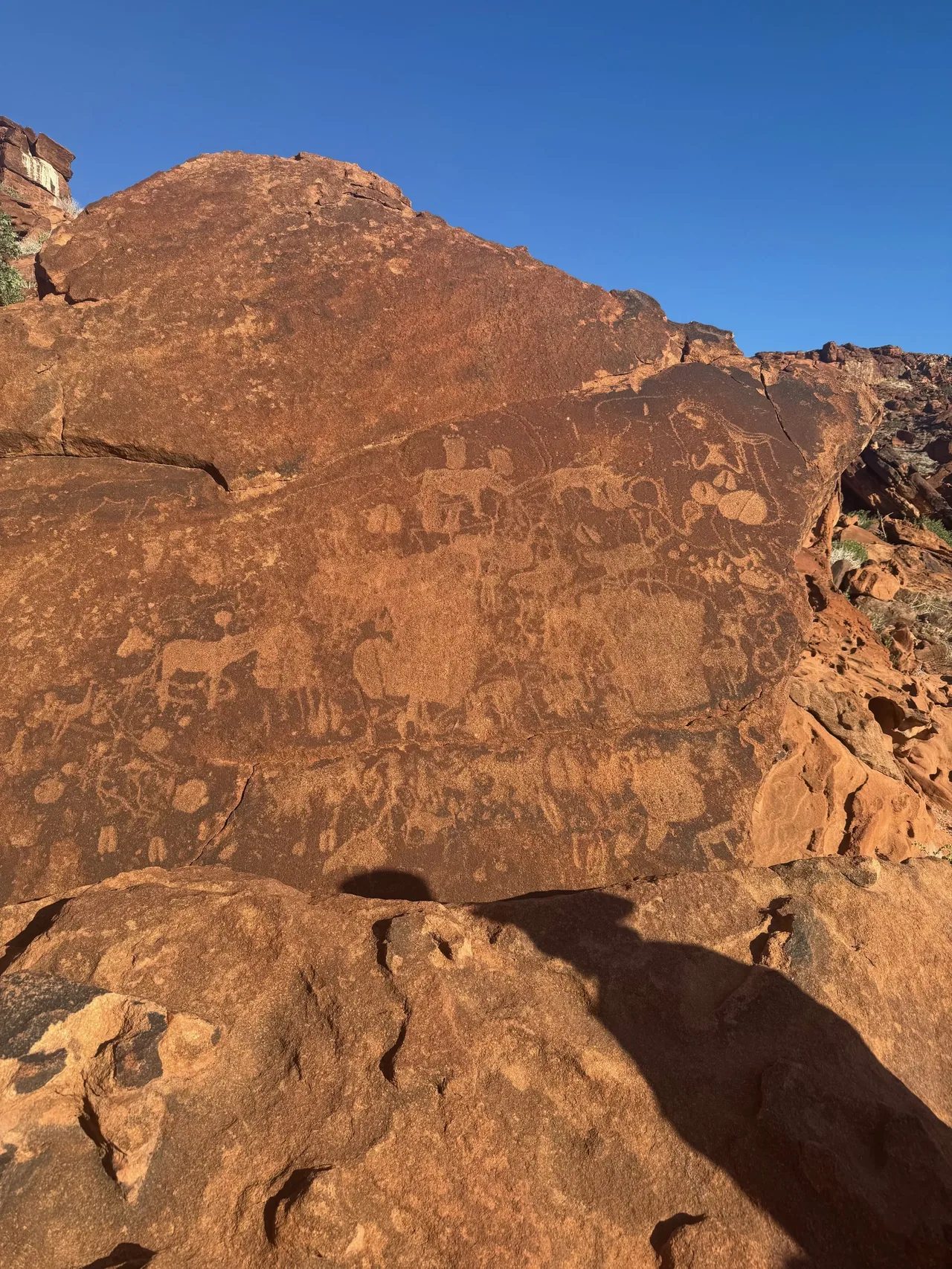
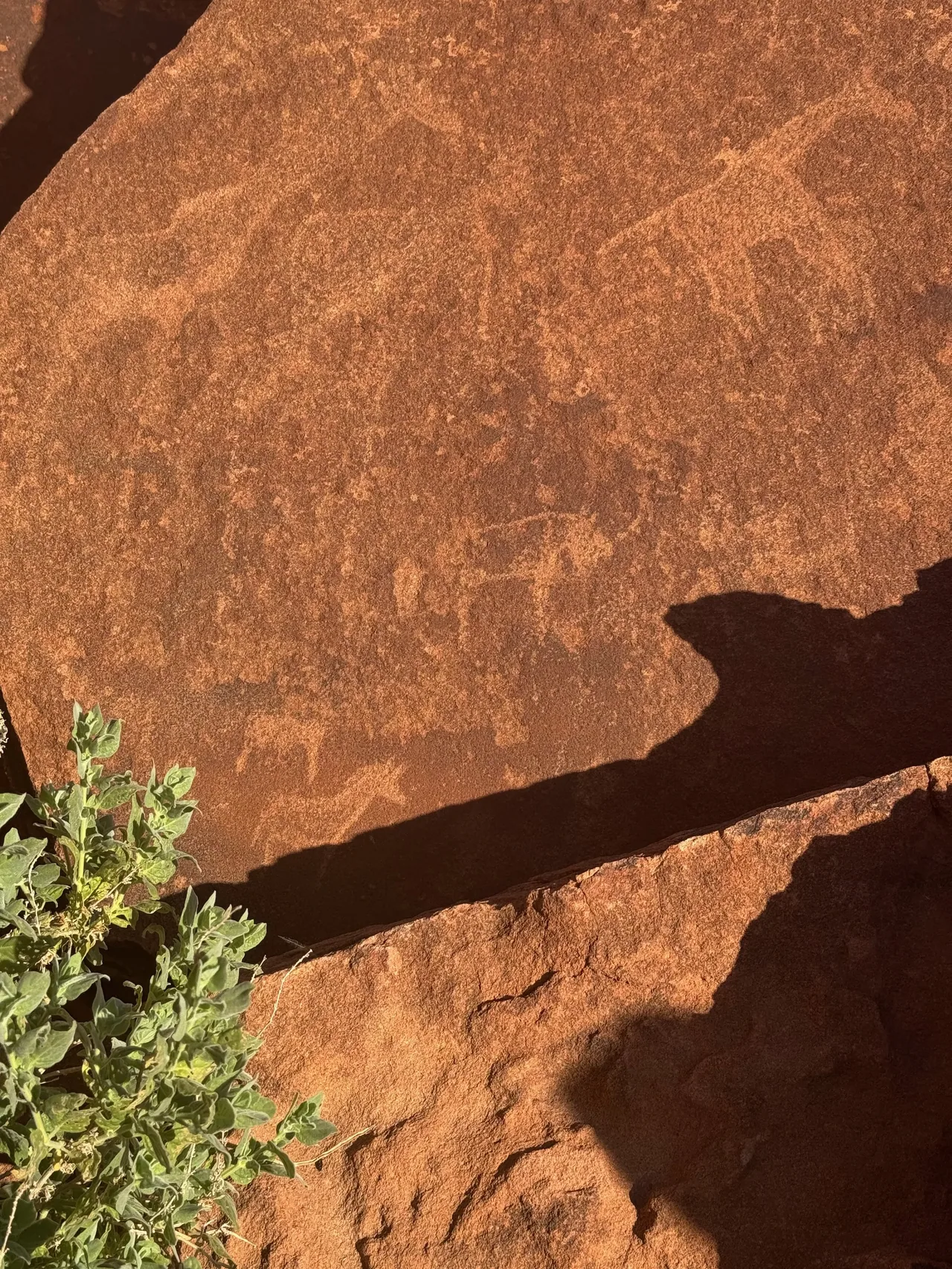
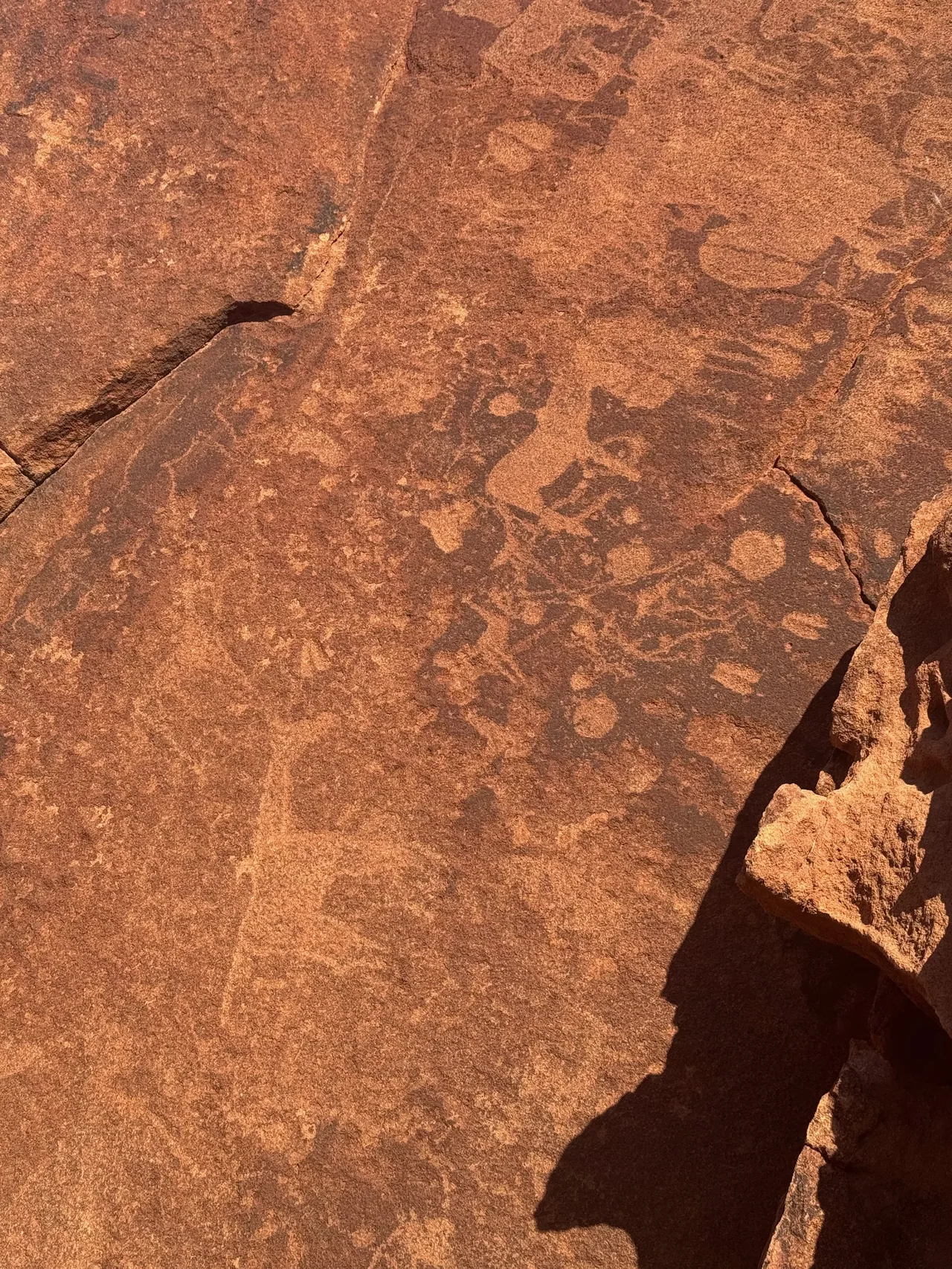
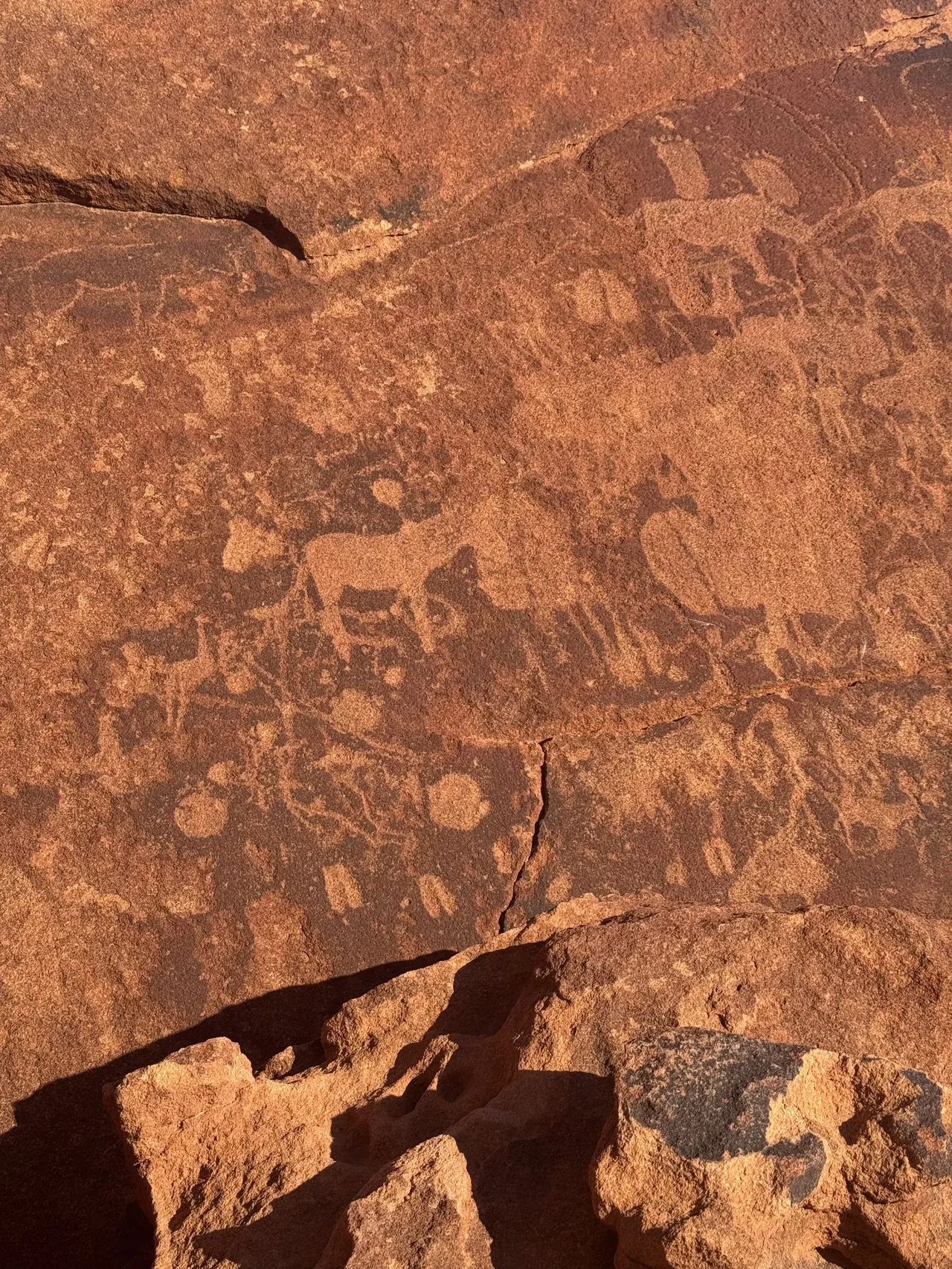
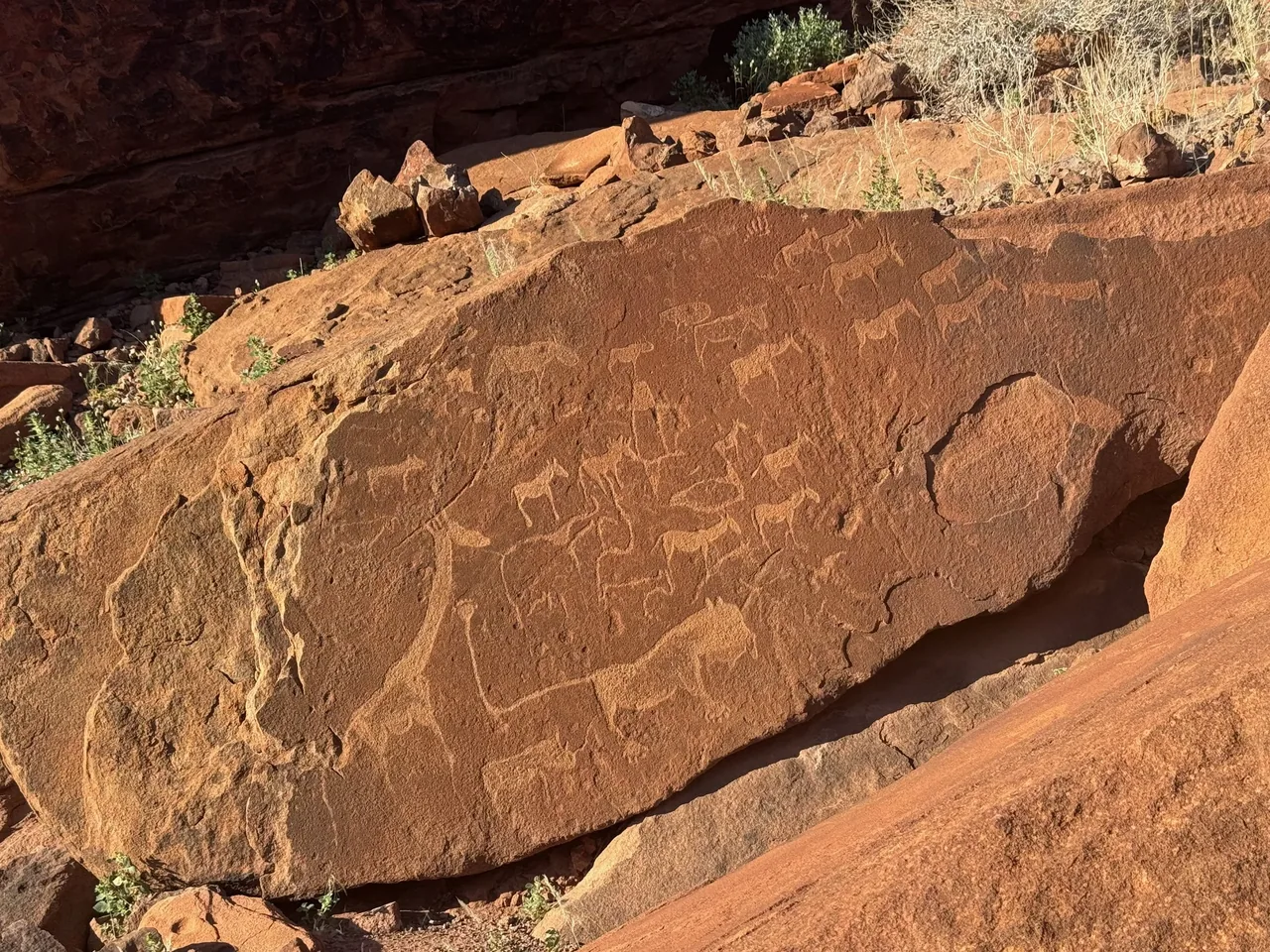
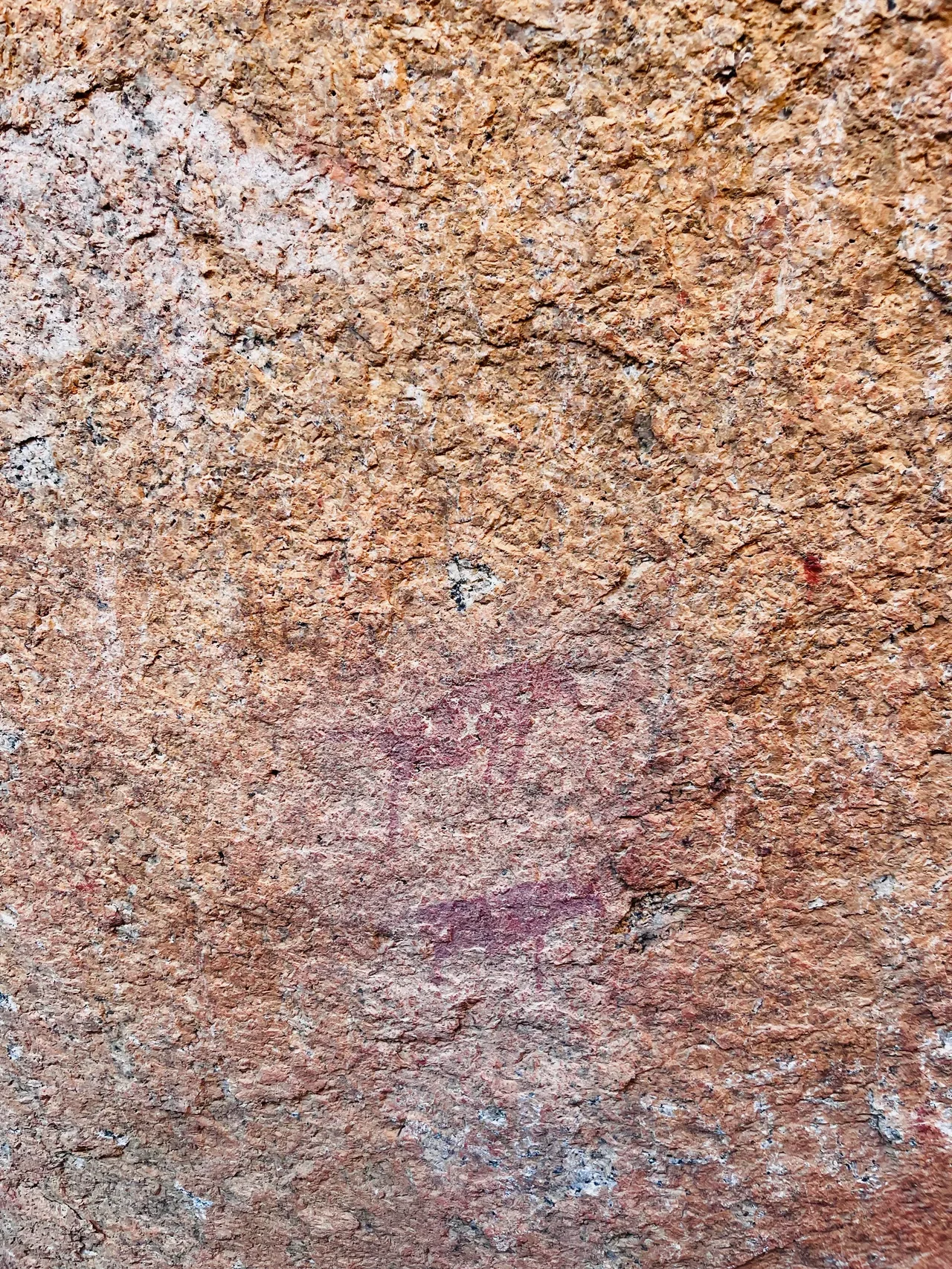
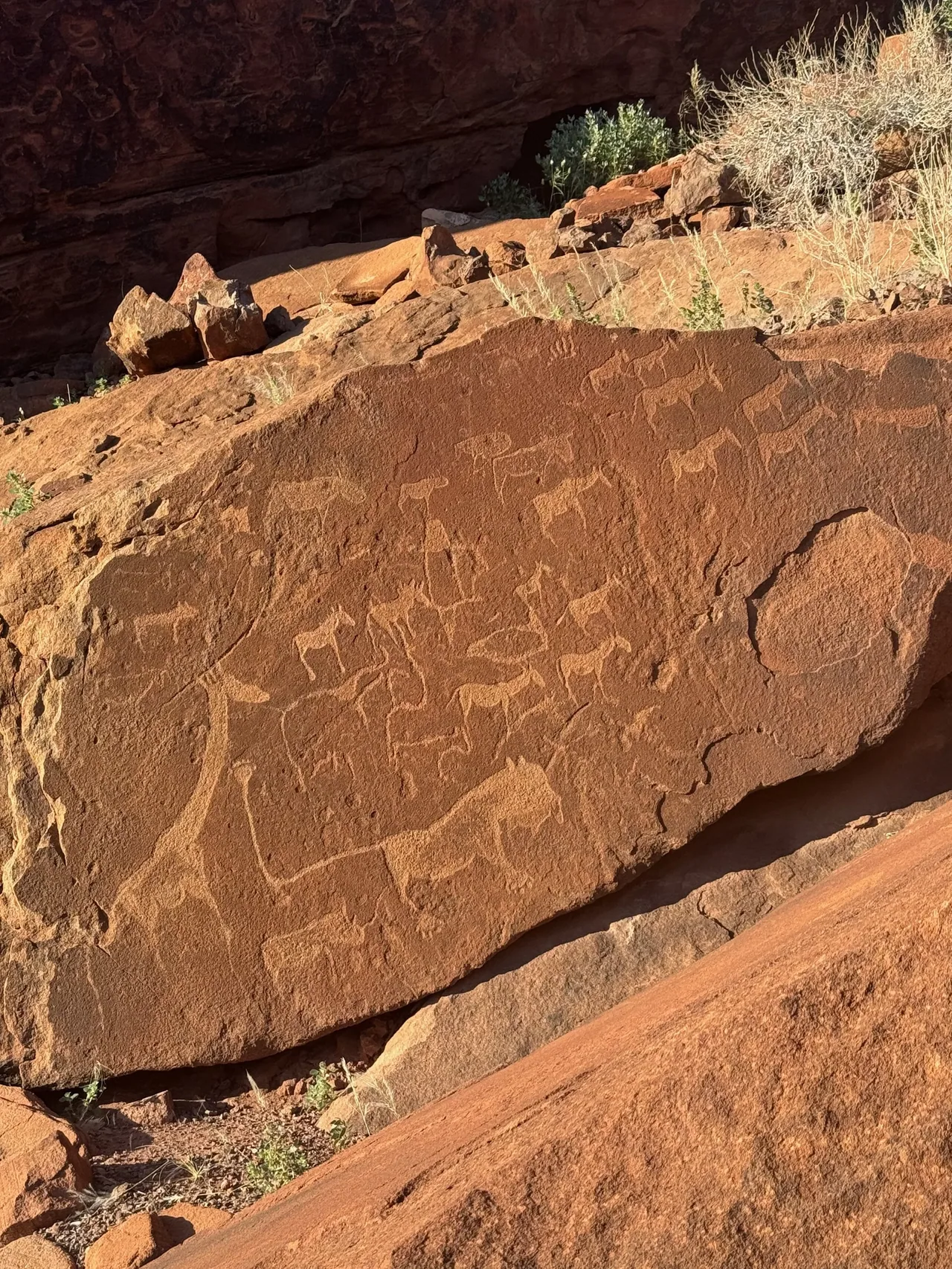
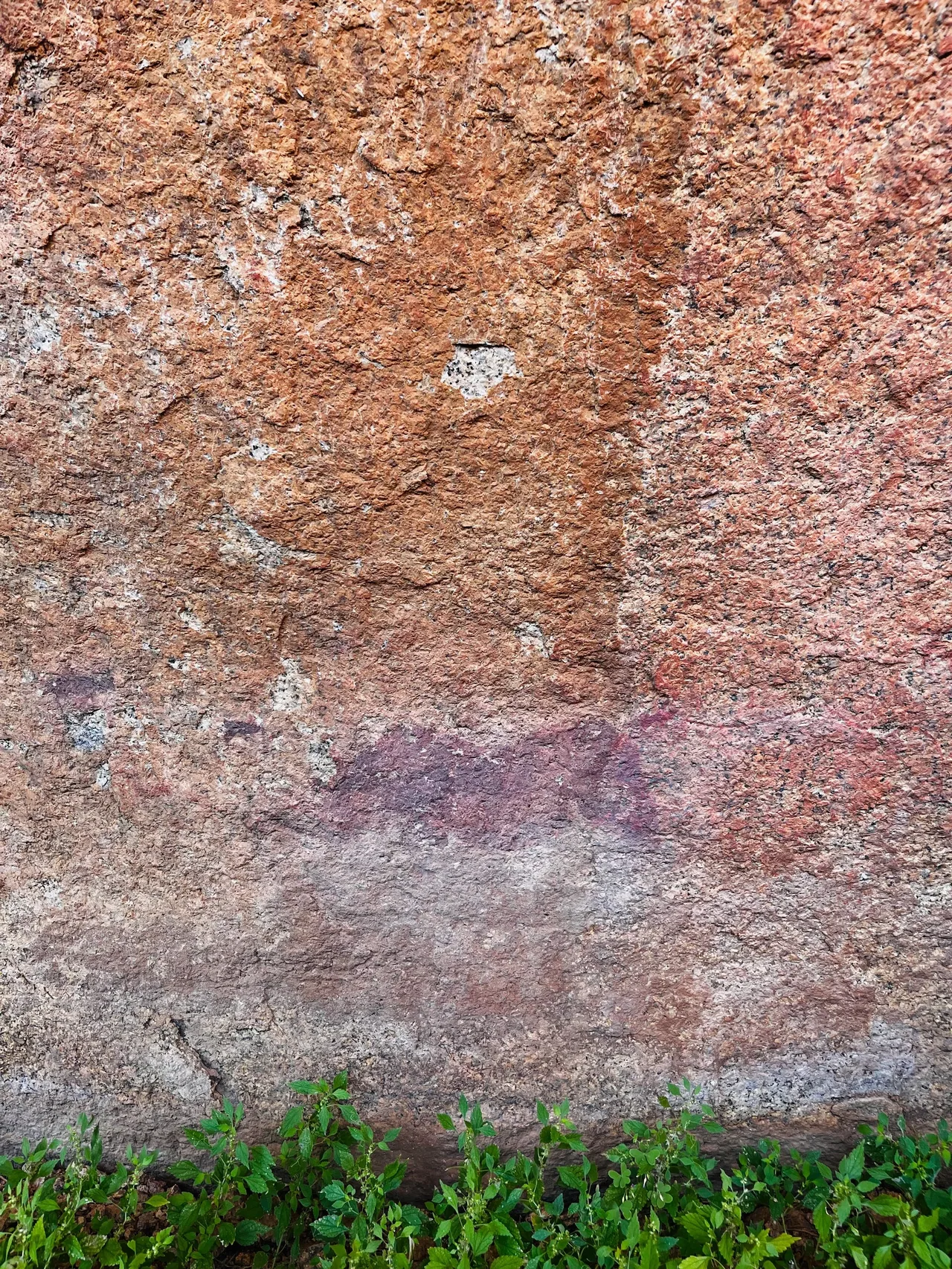
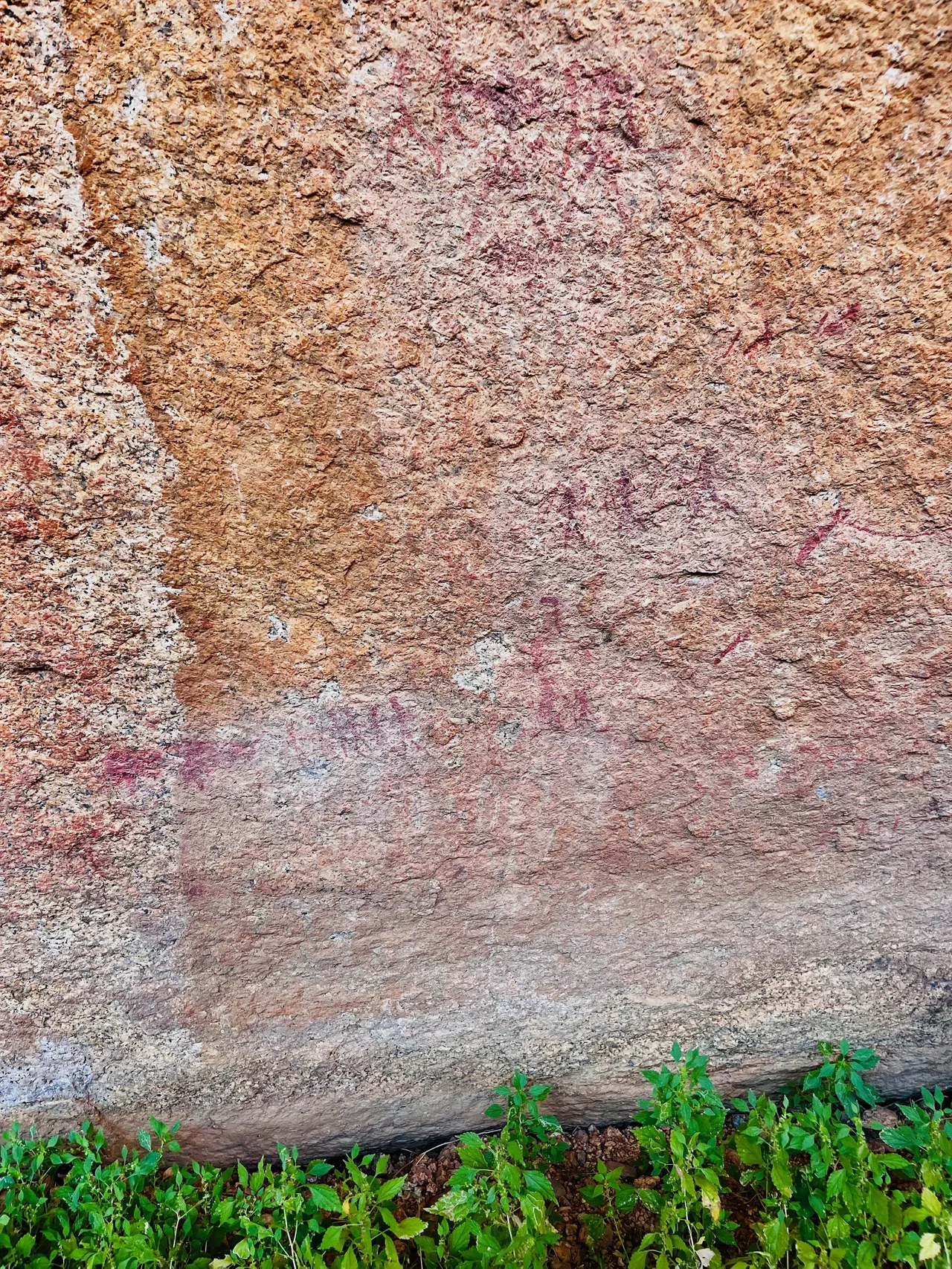
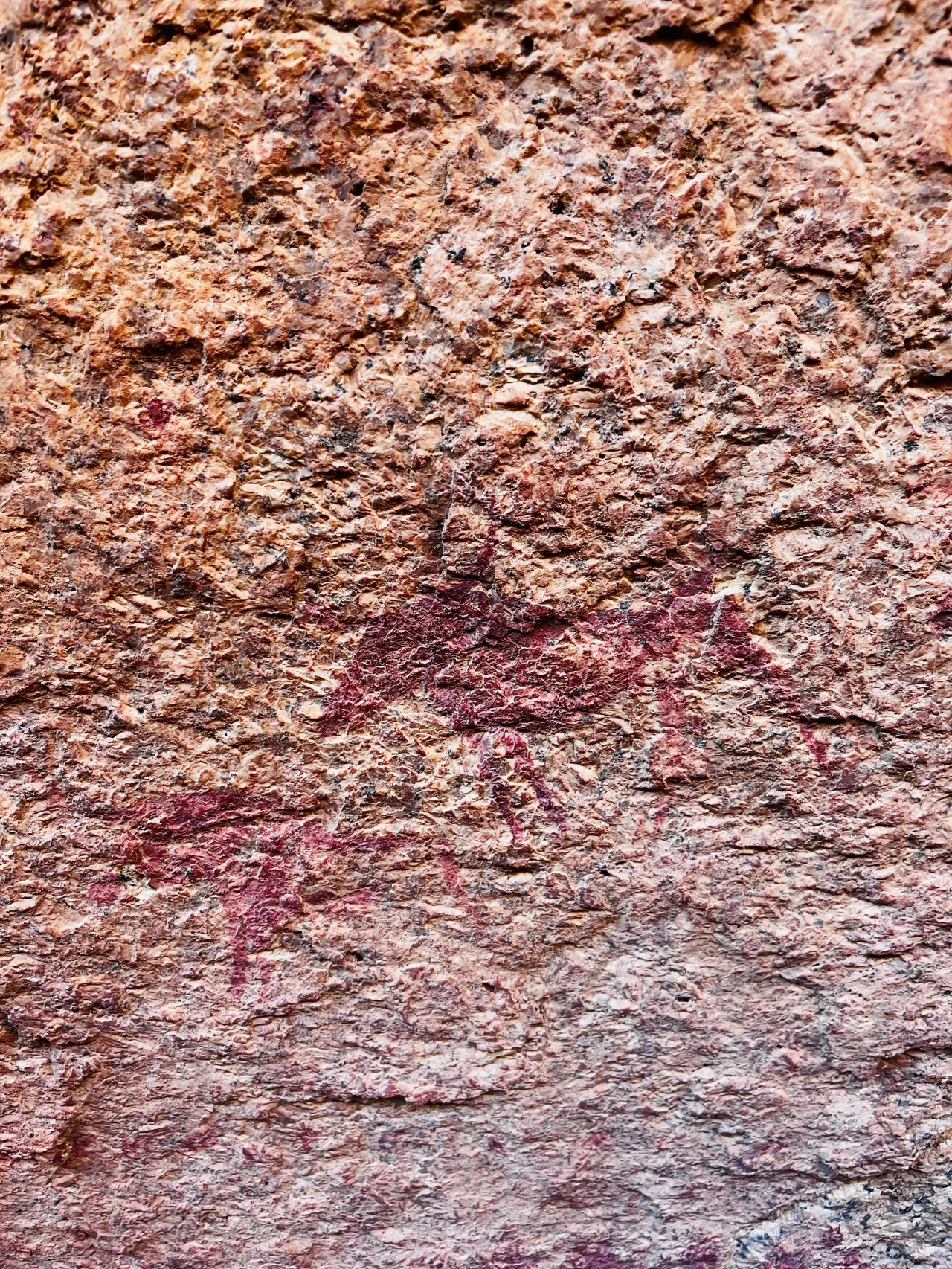
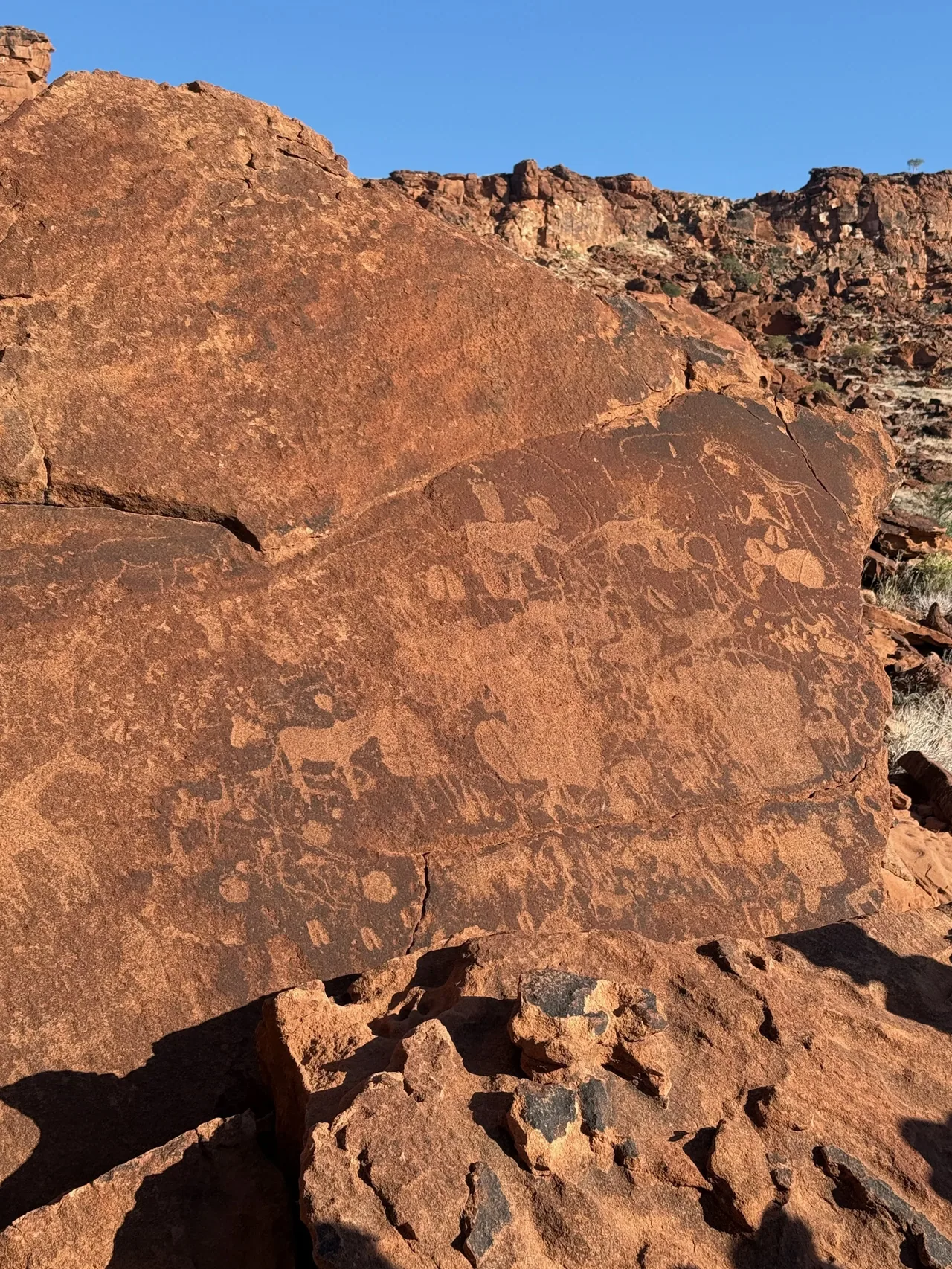
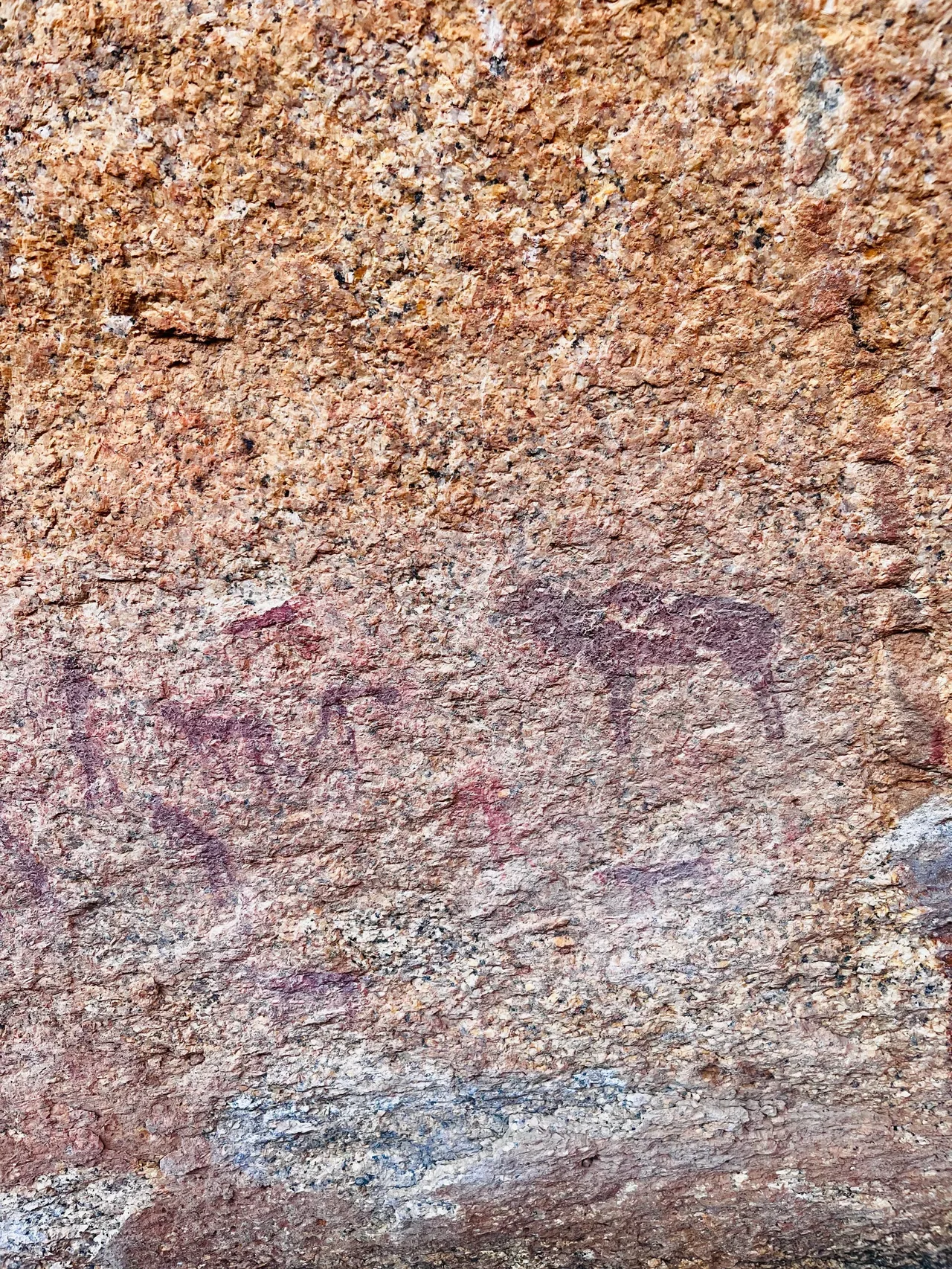
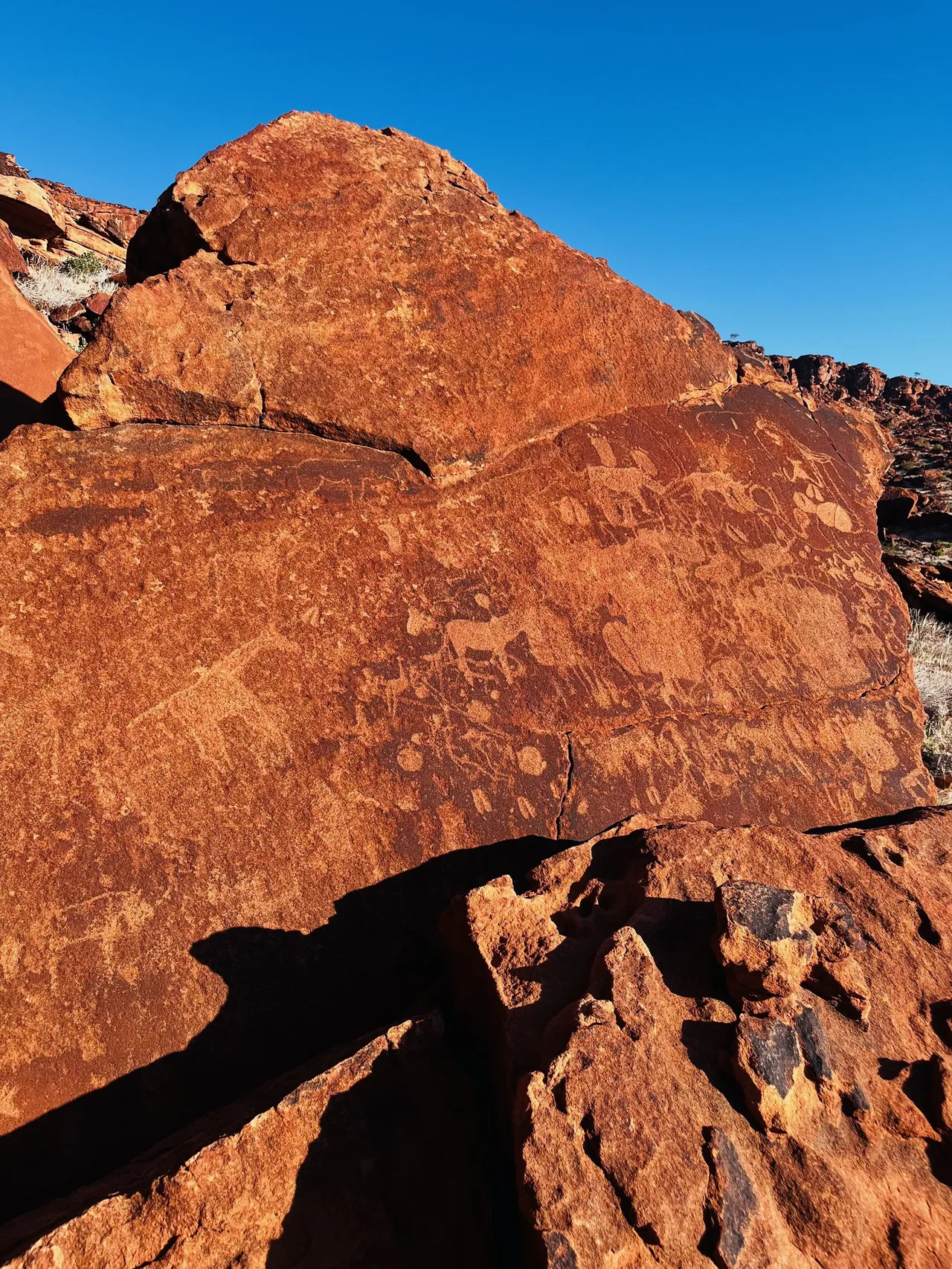
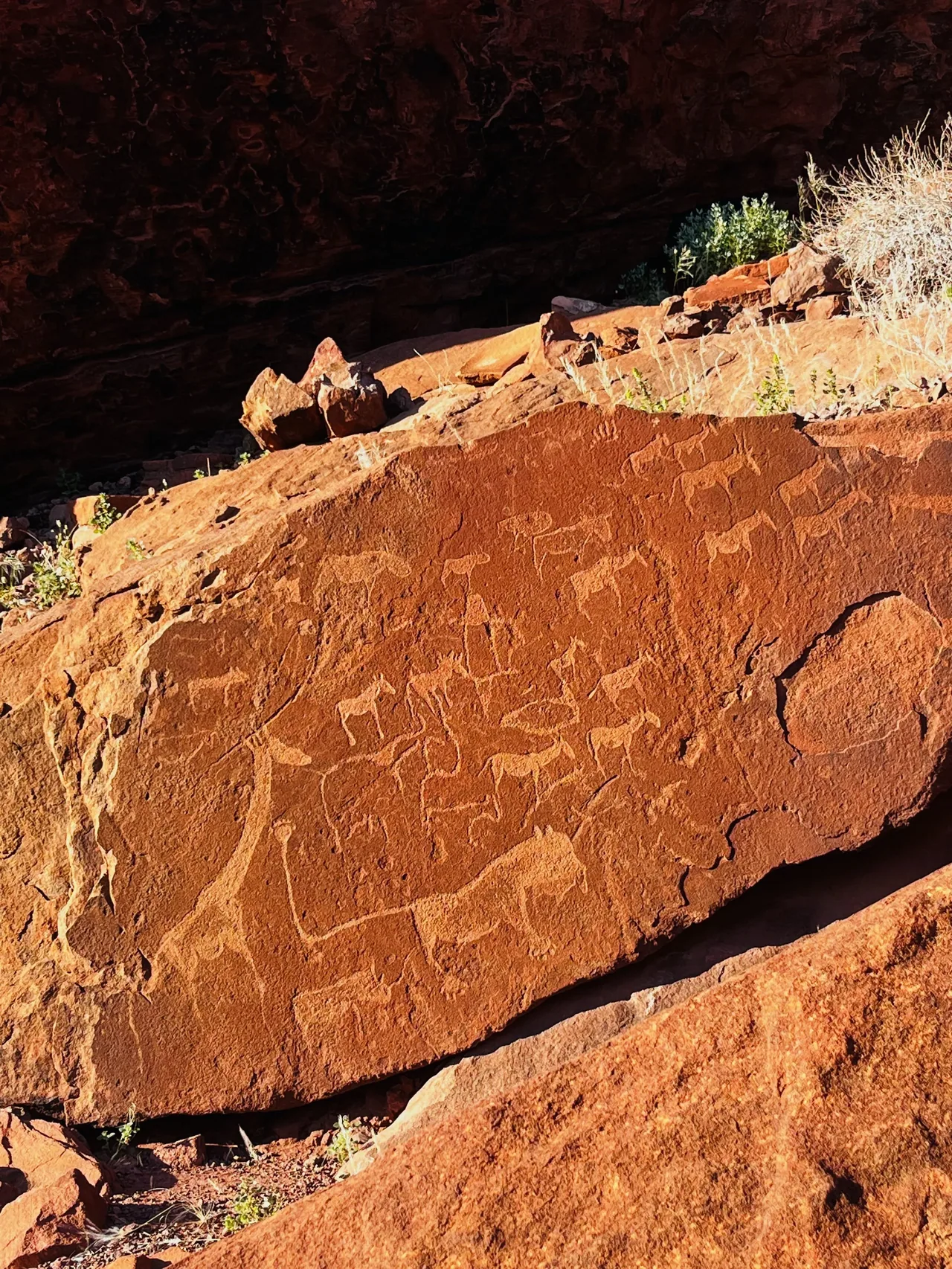
In the morning we join a guided walk to see ancient rock paintings — animals and hunters drawn on the rock walls thousands of years ago.
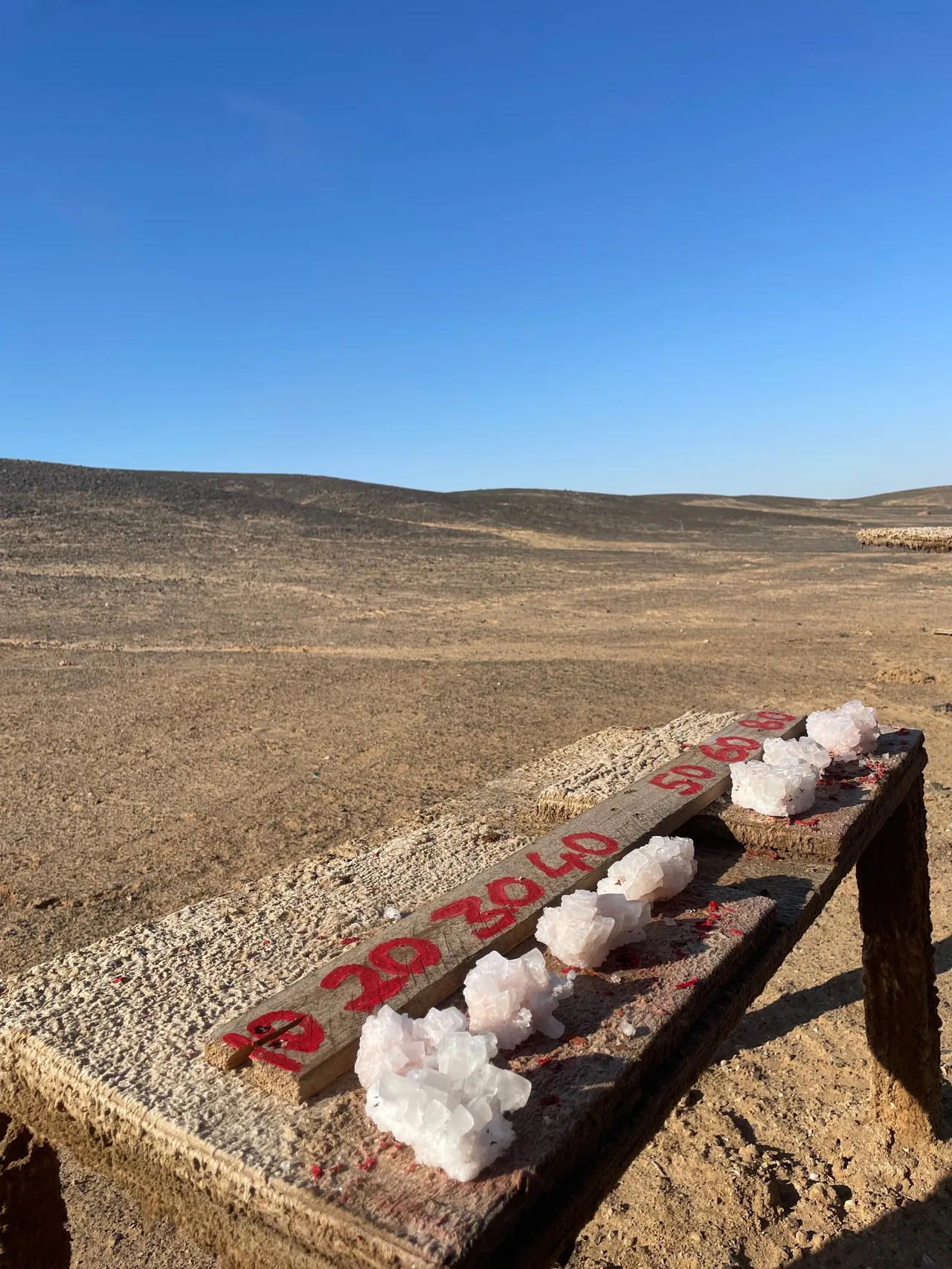
Right after that we grab quick showers and start the long drive toward Etosha National Park. Hours of driving, straight roads, sparse settlements. Every now and then we see locals sitting by small huts, with simple roadside stands built from sticks and branches. They sell carved toys, crystals, stones, little trinkets. In hindsight, I wish I had spent my money there rather than on mass-produced souvenirs in Swakopmund.
On the way we stop at a petrified forest — an area full of massive, fossilised logs scattered across the ground.
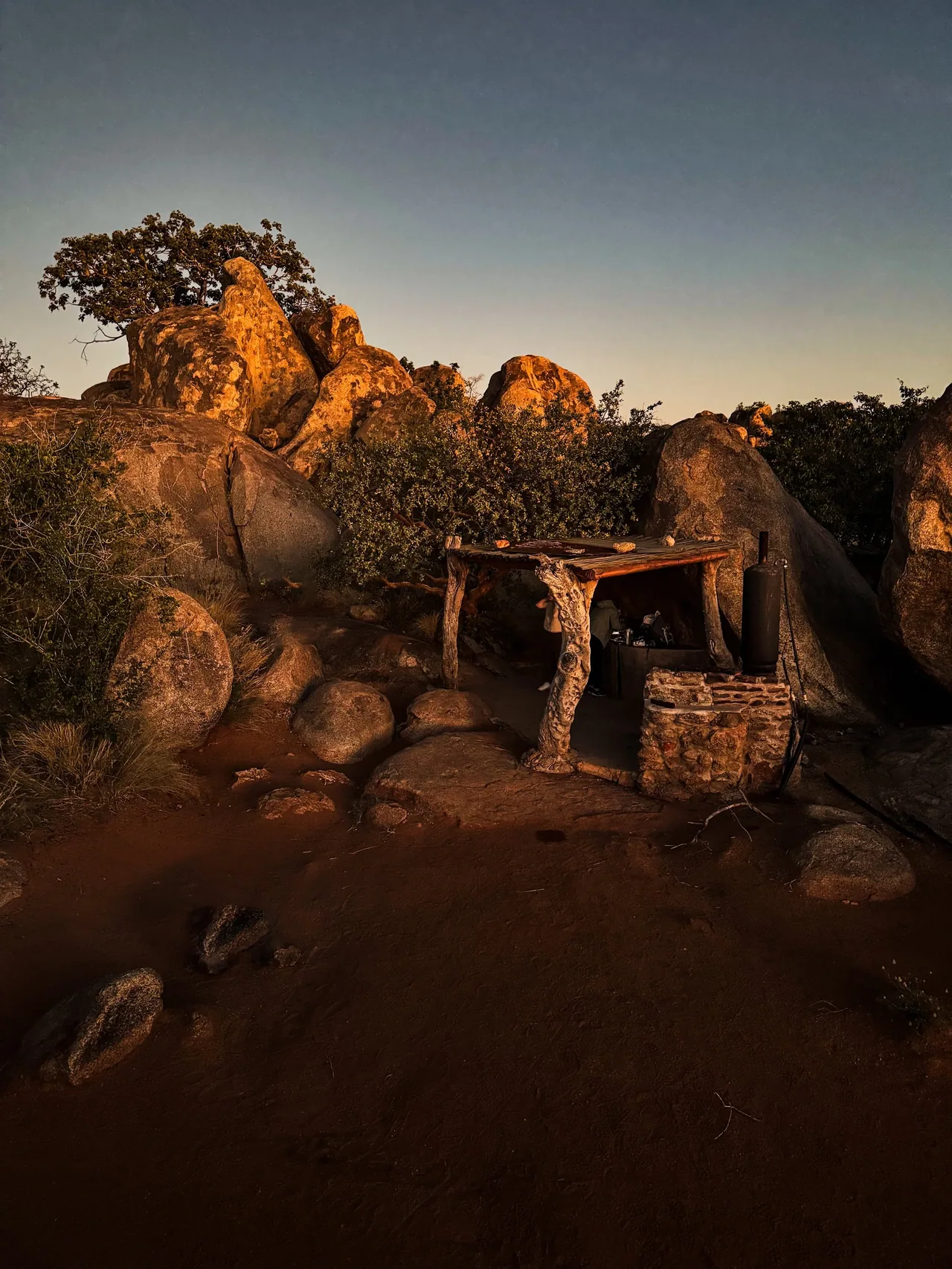
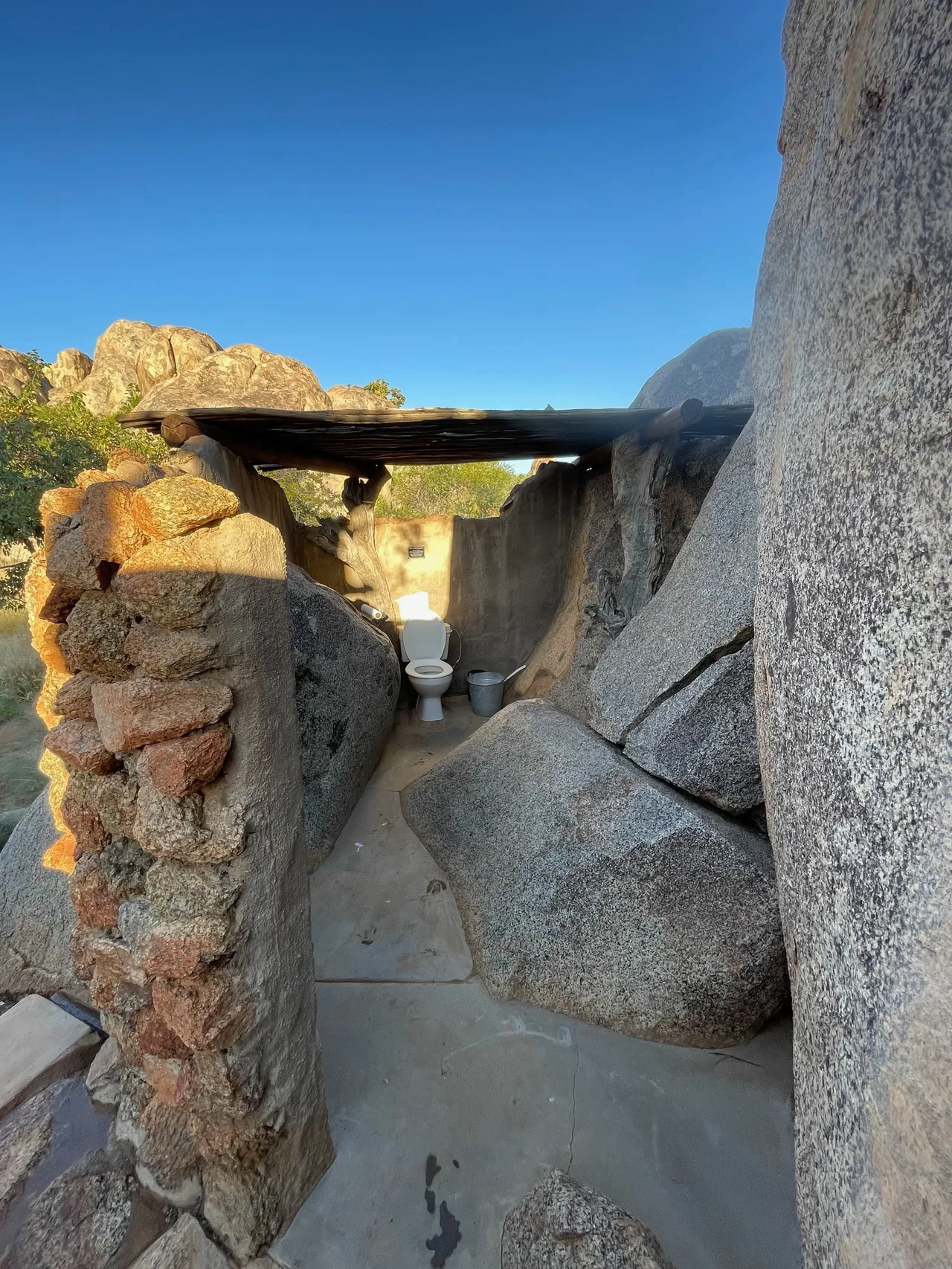
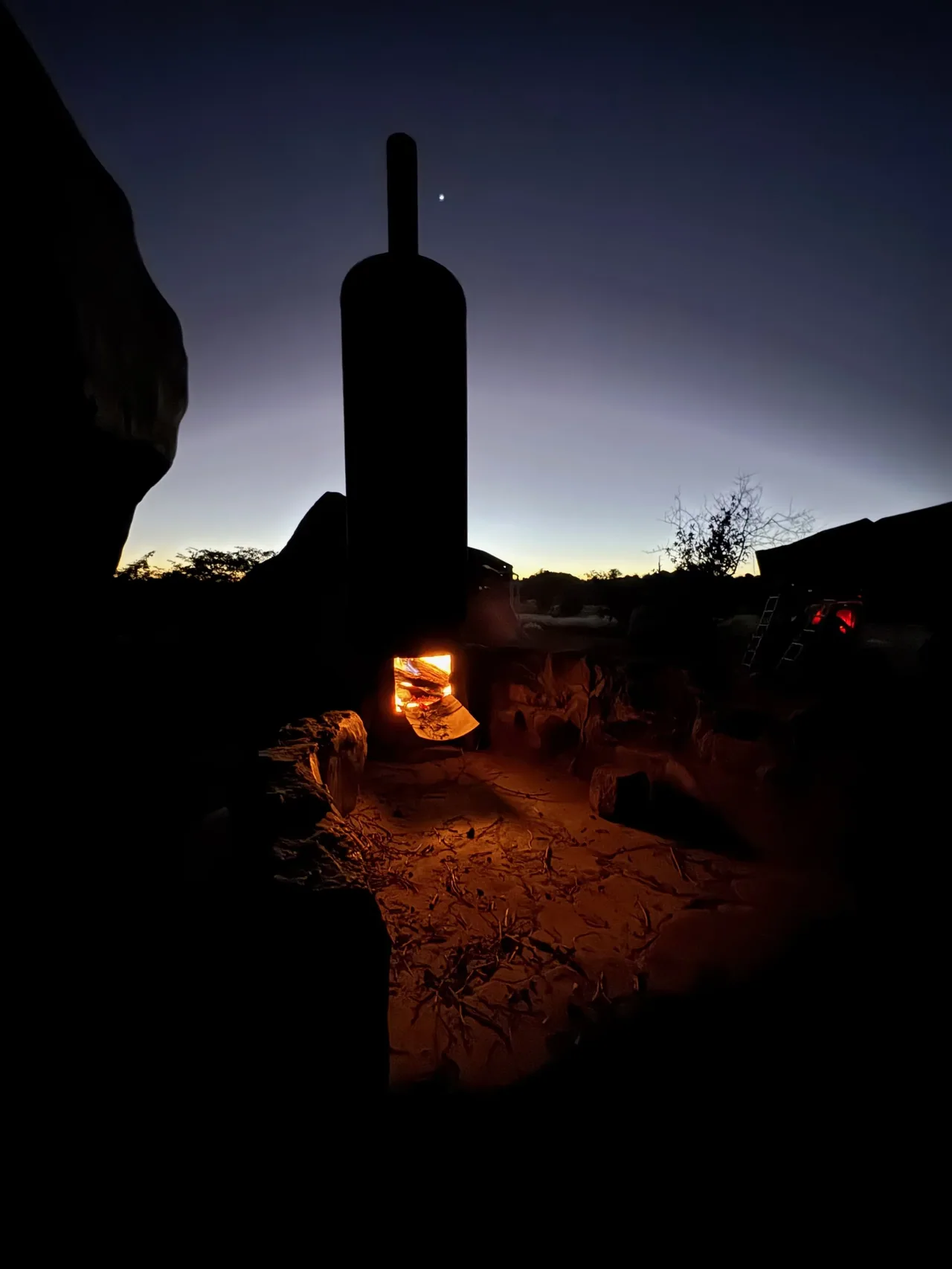
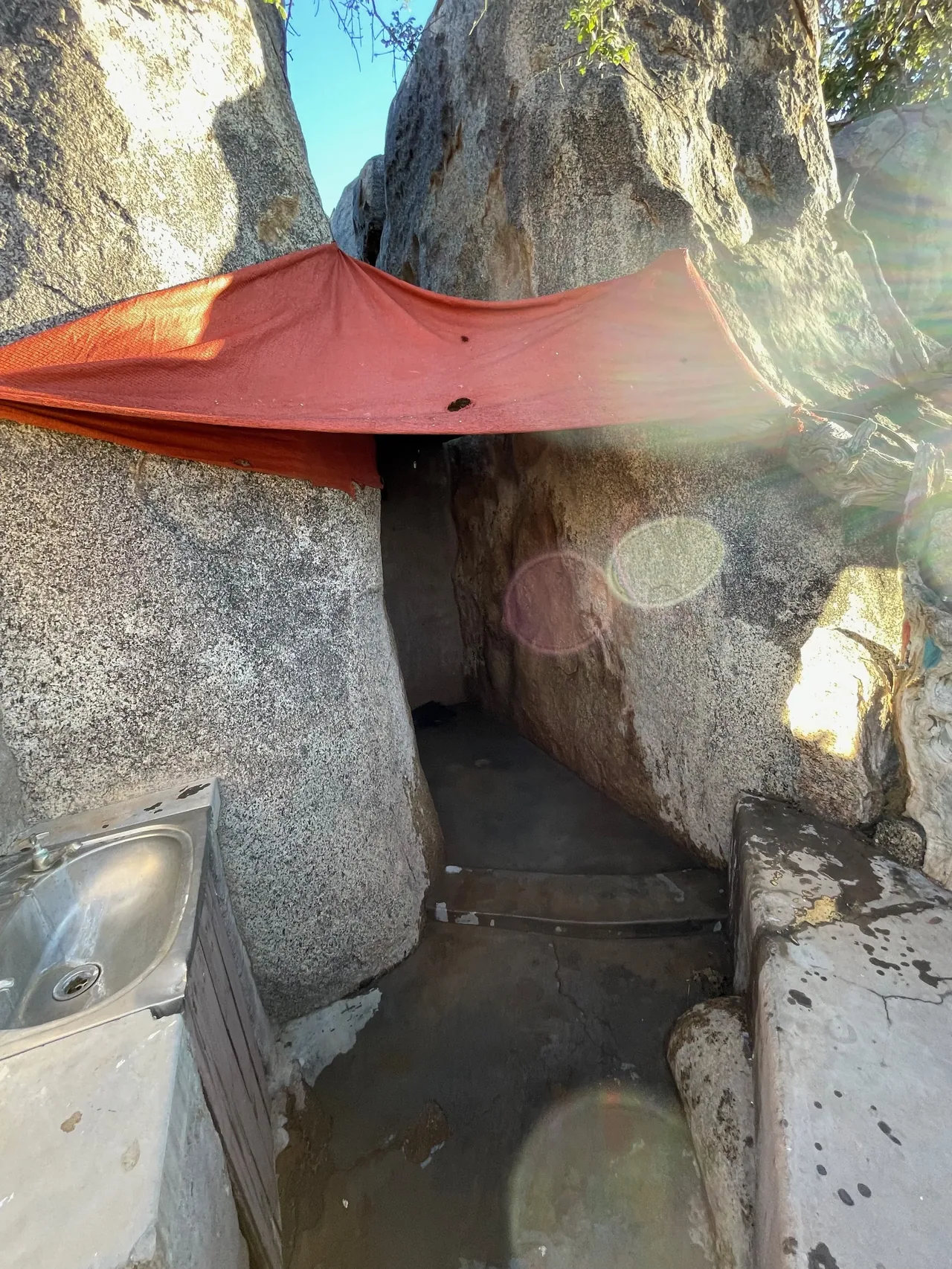
That night we stay at Hoada Campsite, which looks like something straight out of The Flintstones. We park among big boulders. Nearby we have a simple shelter with a sink and a metal water tank sitting above a fireplace we have to light ourselves if we want hot water. The shower and toilet are carved into the rock itself.
I set up my camera for a night timelapse and head off to join the group for dinner. It’s the first day I feel genuinely good — the antibiotics are finally working.
Day 9
Early in the morning we arrive at the gate of Etosha, one of Africa’s most famous national parks and the crown jewel of Namibia. A ranger welcomes us and explains the rules. There’s a mandatory search of the car and our luggage, and then we get to the topic of drones: absolutely no drones allowed.
He asks if anyone has a drone. I admit that I do. He tells me I have to leave it at the gate. That surprises me a bit. Previously, the rule was that you had to seal the drone in a bag. If the seal was still intact when you left, everything was fine; if not, you paid a fine and faced consequences.
But people — especially wealthy tourists — abused this system and simply accepted the fine in exchange for a few aerial shots. On top of that, poachers began using drones with thermal cameras to hunt animals, especially rhinos.
In our case, the rule is stricter: either I leave the drone, or we don’t get in. Since it’s an FPV drone I built myself, I decide to remove all the expensive components and leave only a barebones version behind. That still means leaving about 300 euros’ worth of parts at the gate, instead of 500. The ranger doesn’t like it and wants me to reassemble the drone and explain how it works — he’s clearly never seen one like this.
I nervously put it back together in front of him. Once he understands how it functions, he finally stops me, issues our entry permit and I go with him alone to sign the protocol. At least I manage to convince him to let me keep the video unit, which alone costs about 200 euros.
We’ve delayed the group by about 30 minutes — but we’re in.
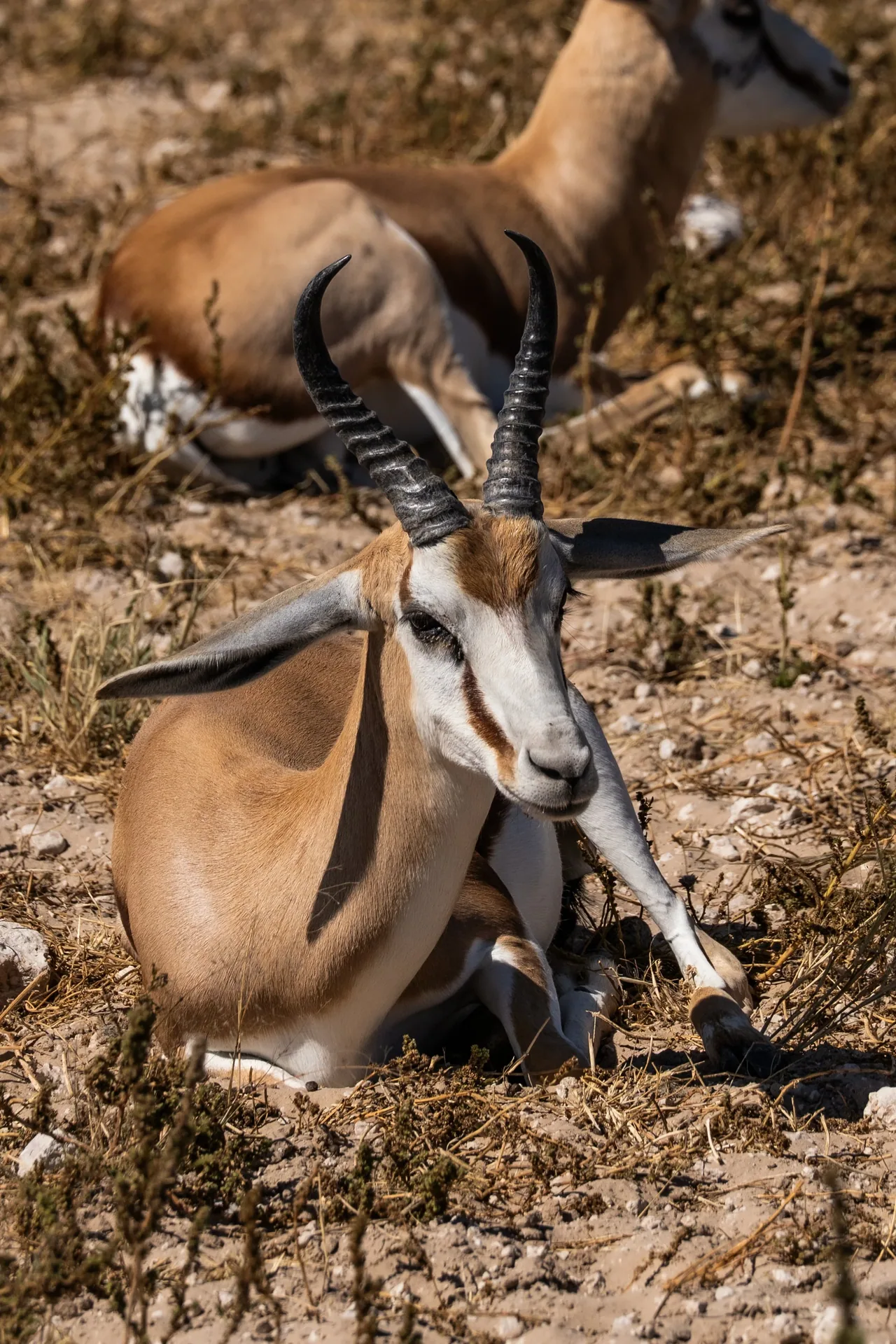
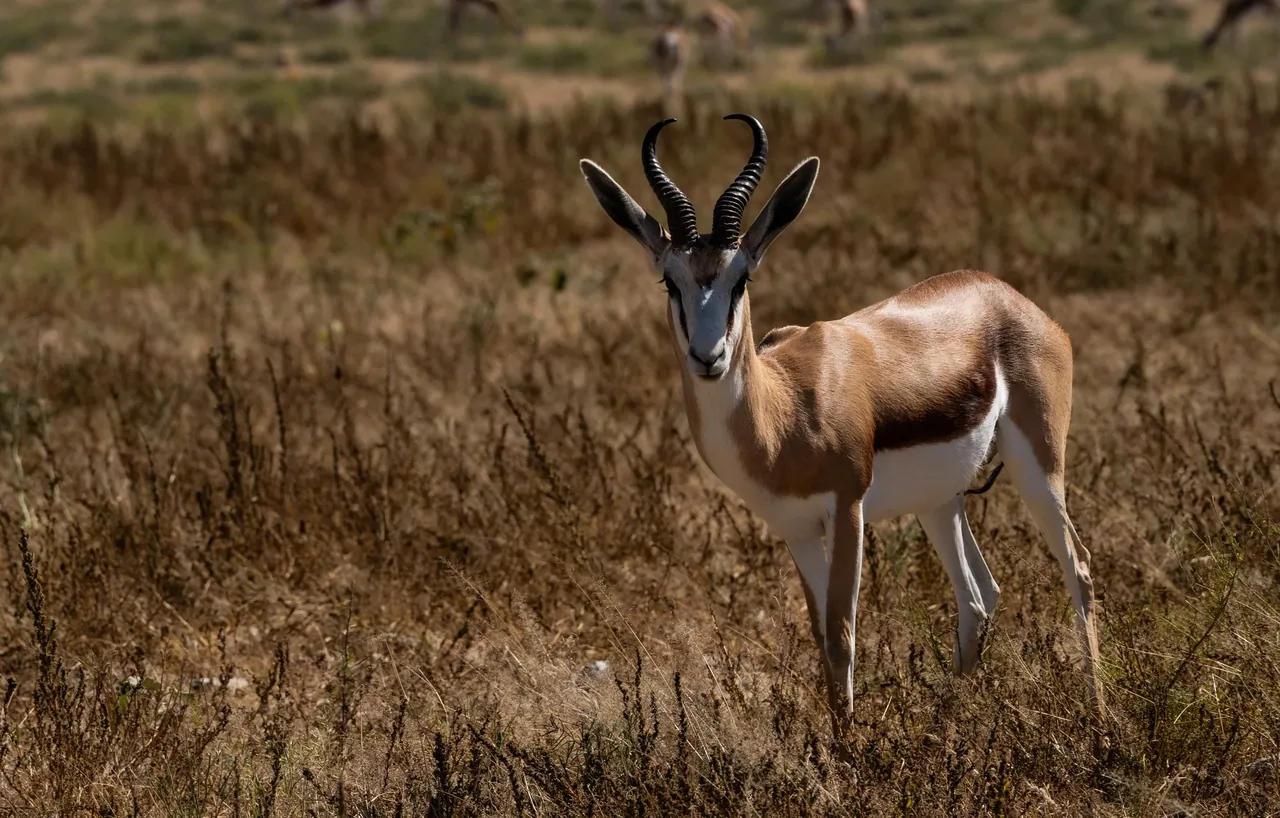
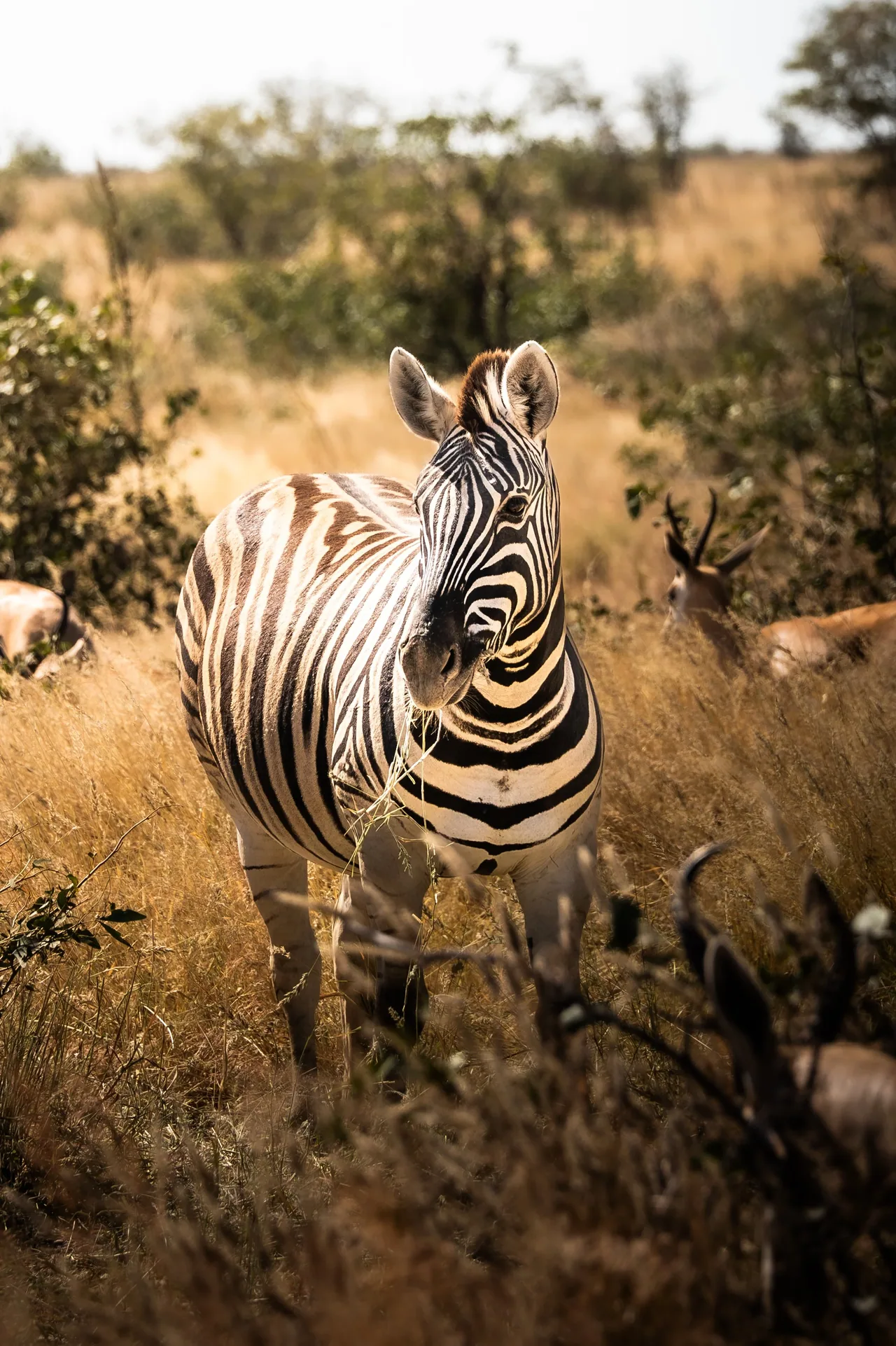
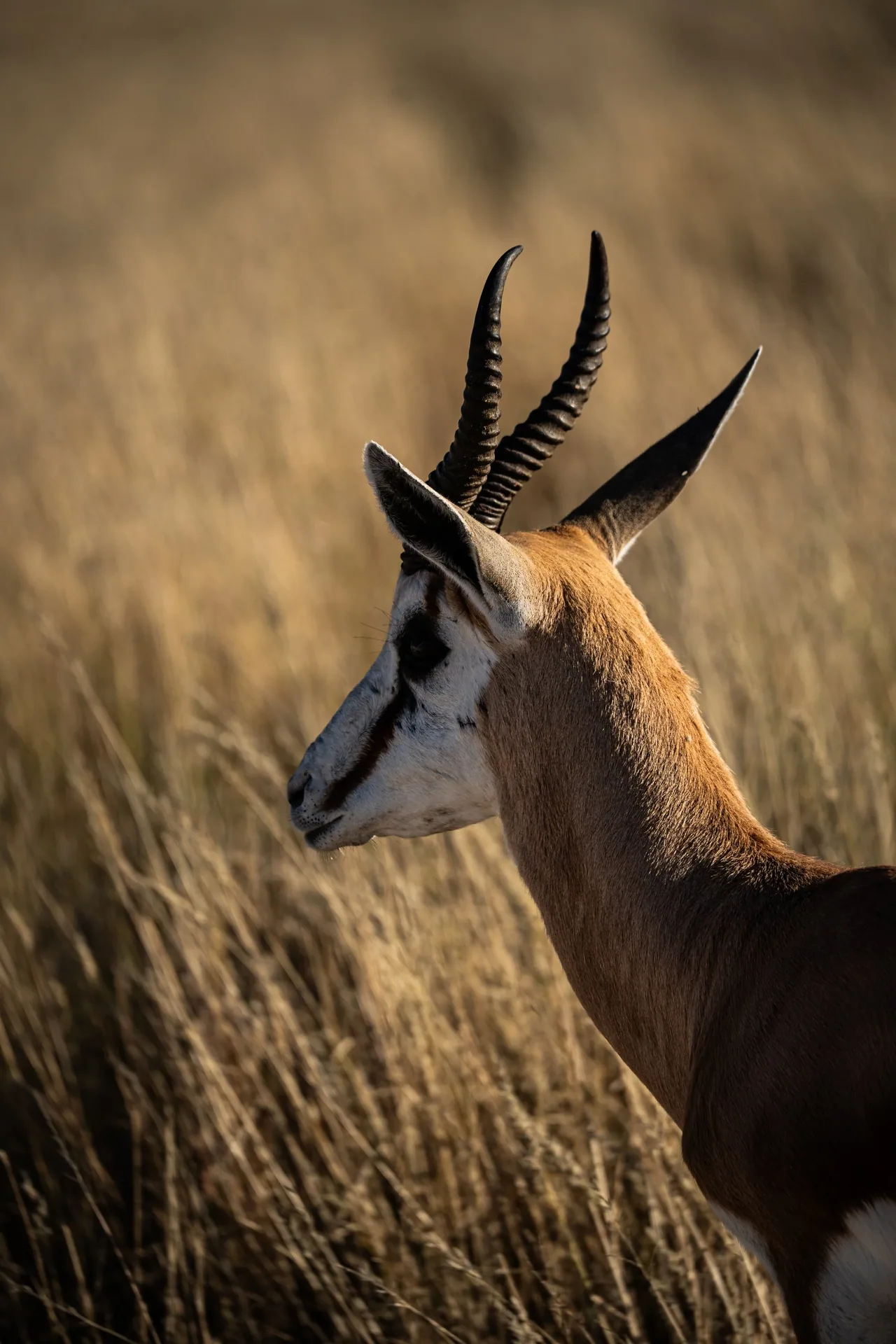
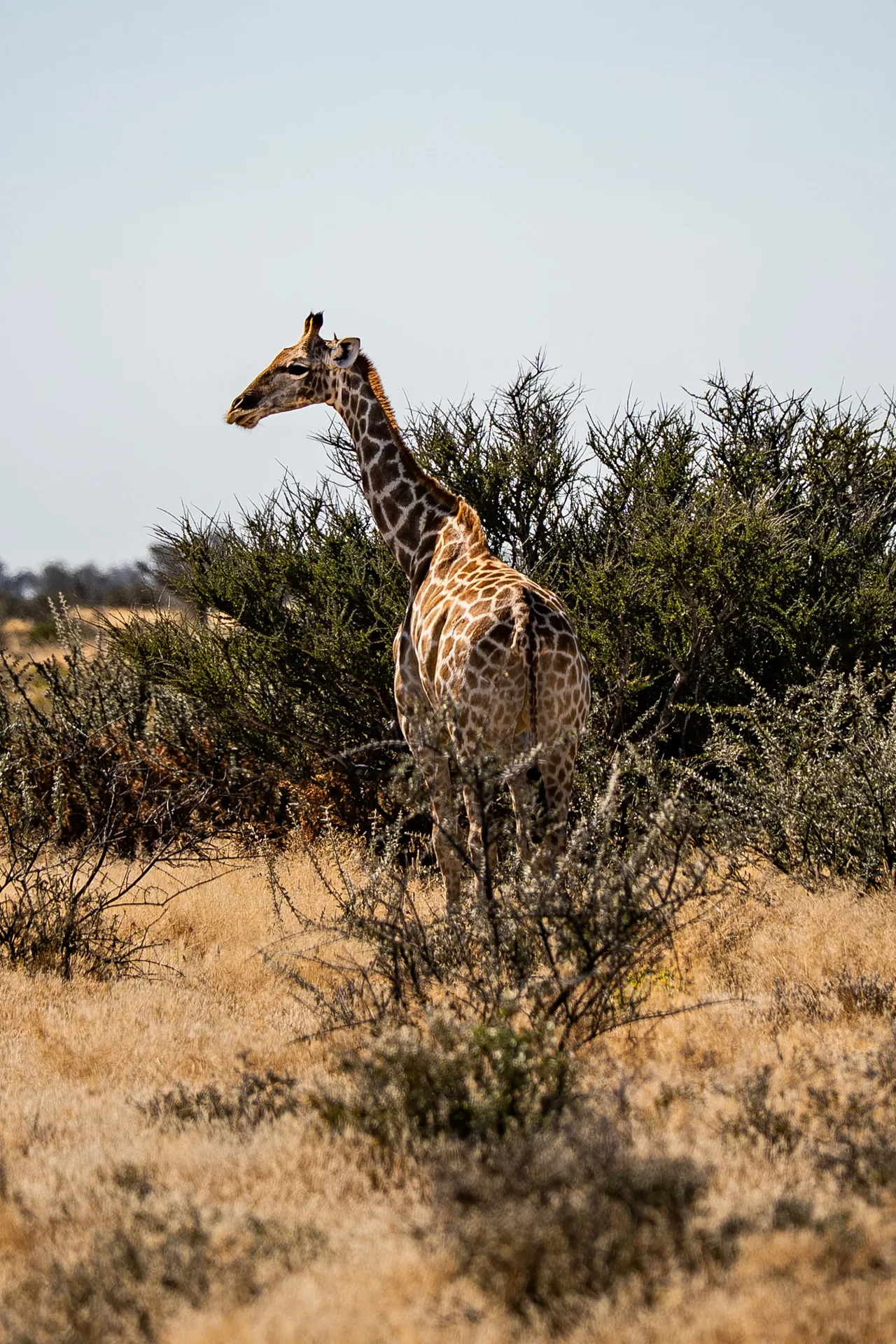
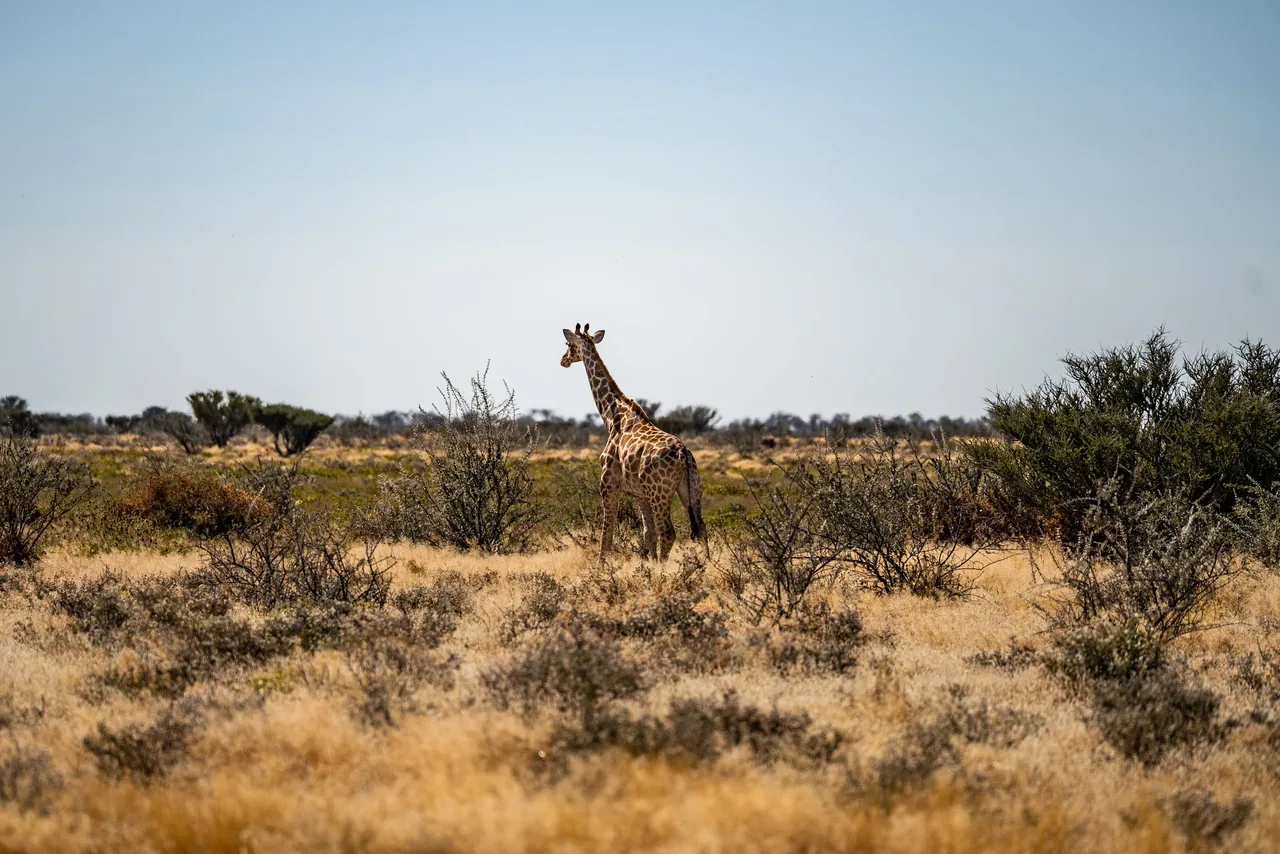
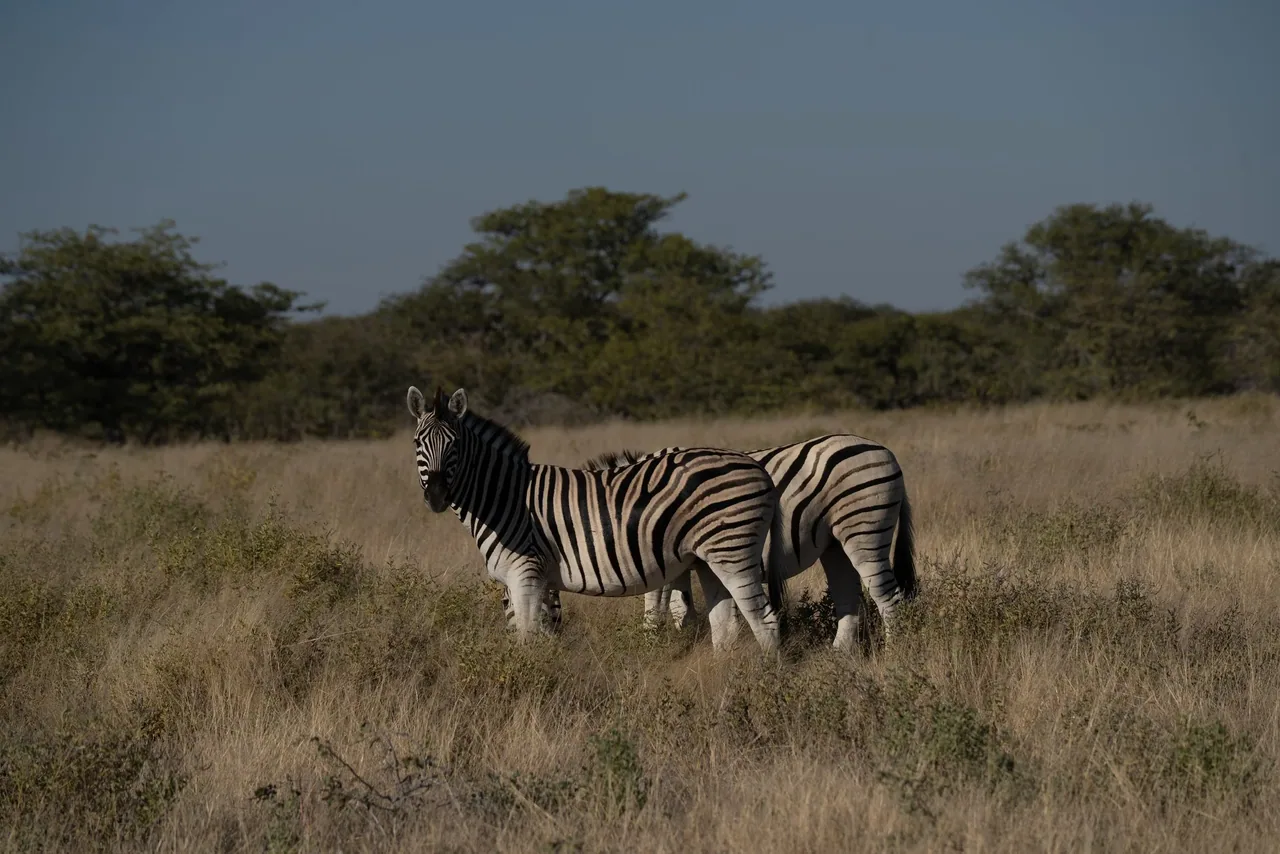
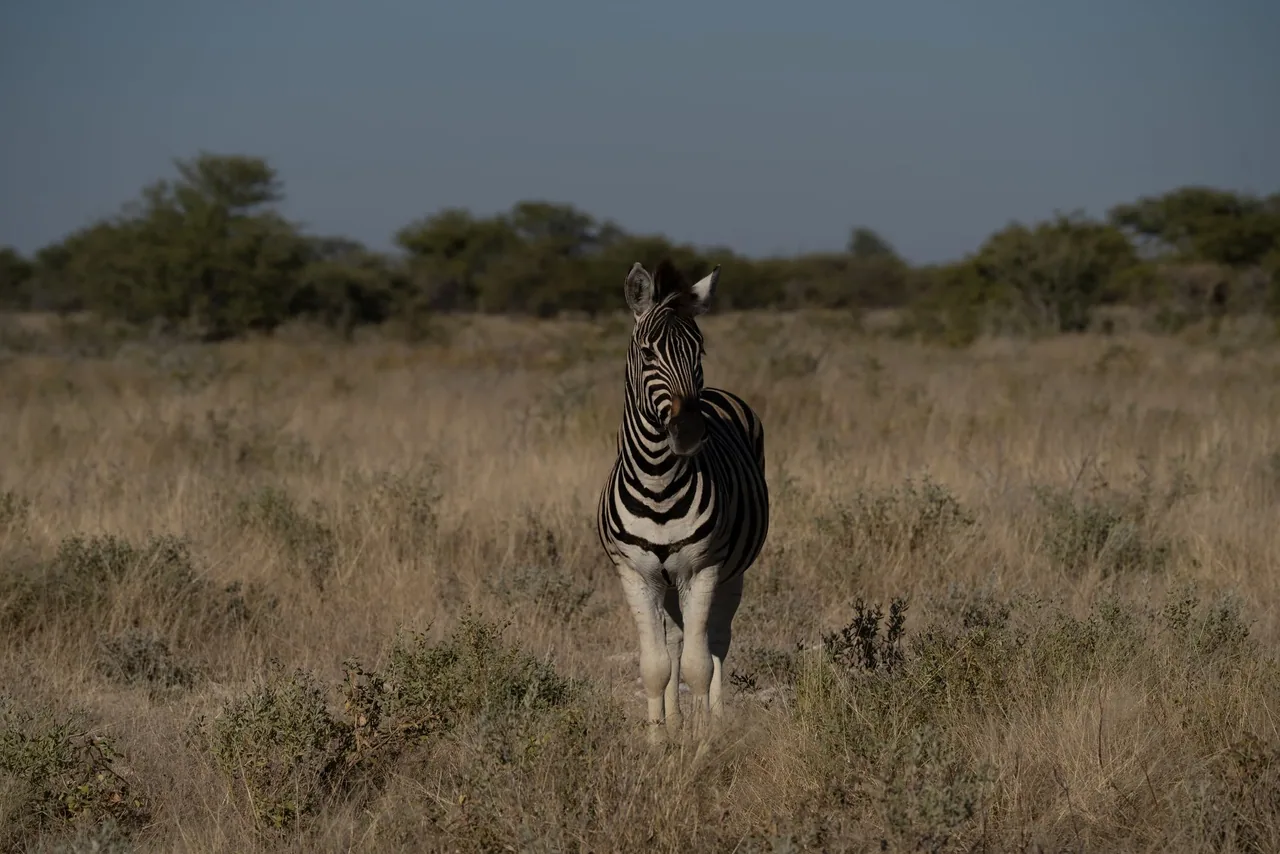
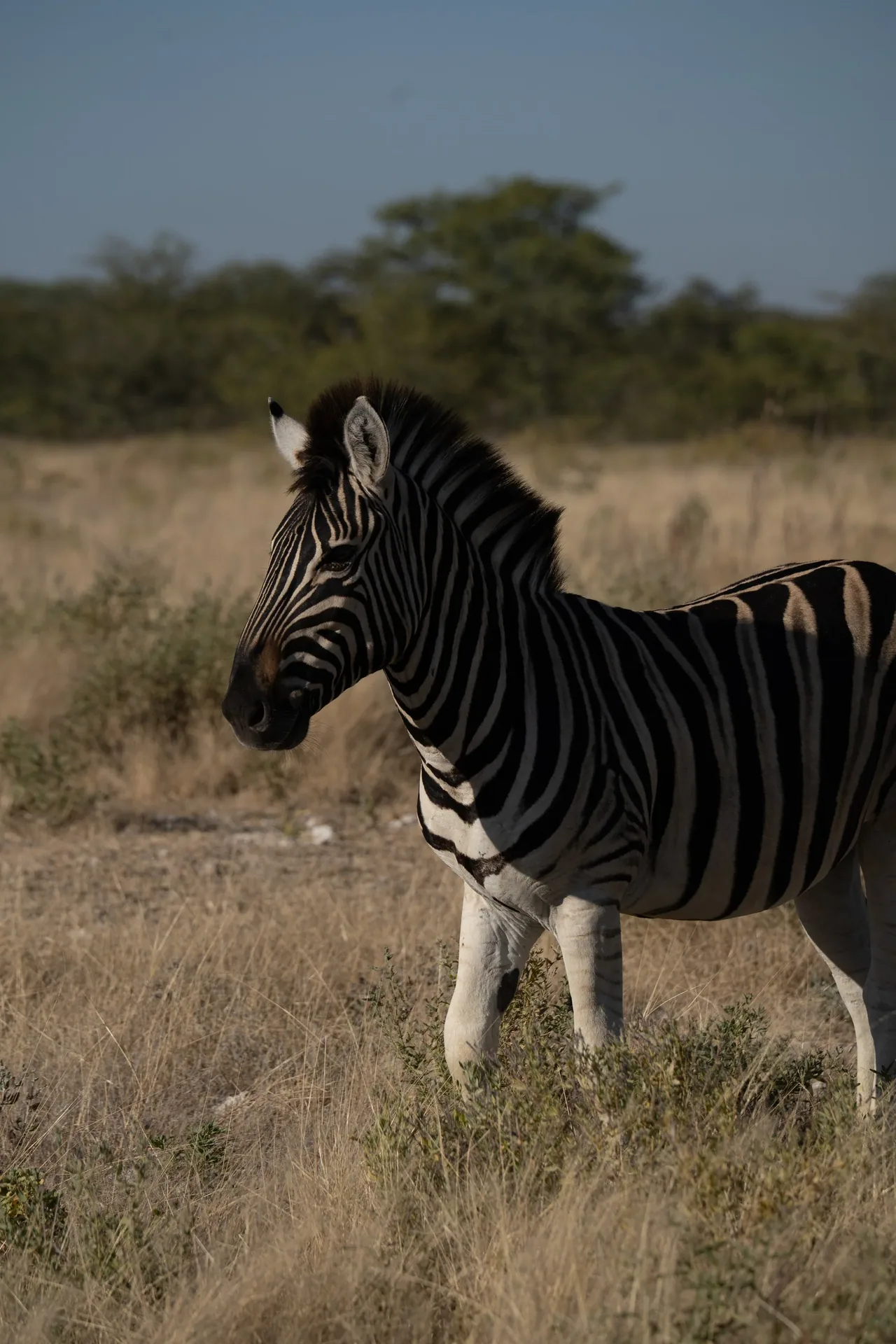
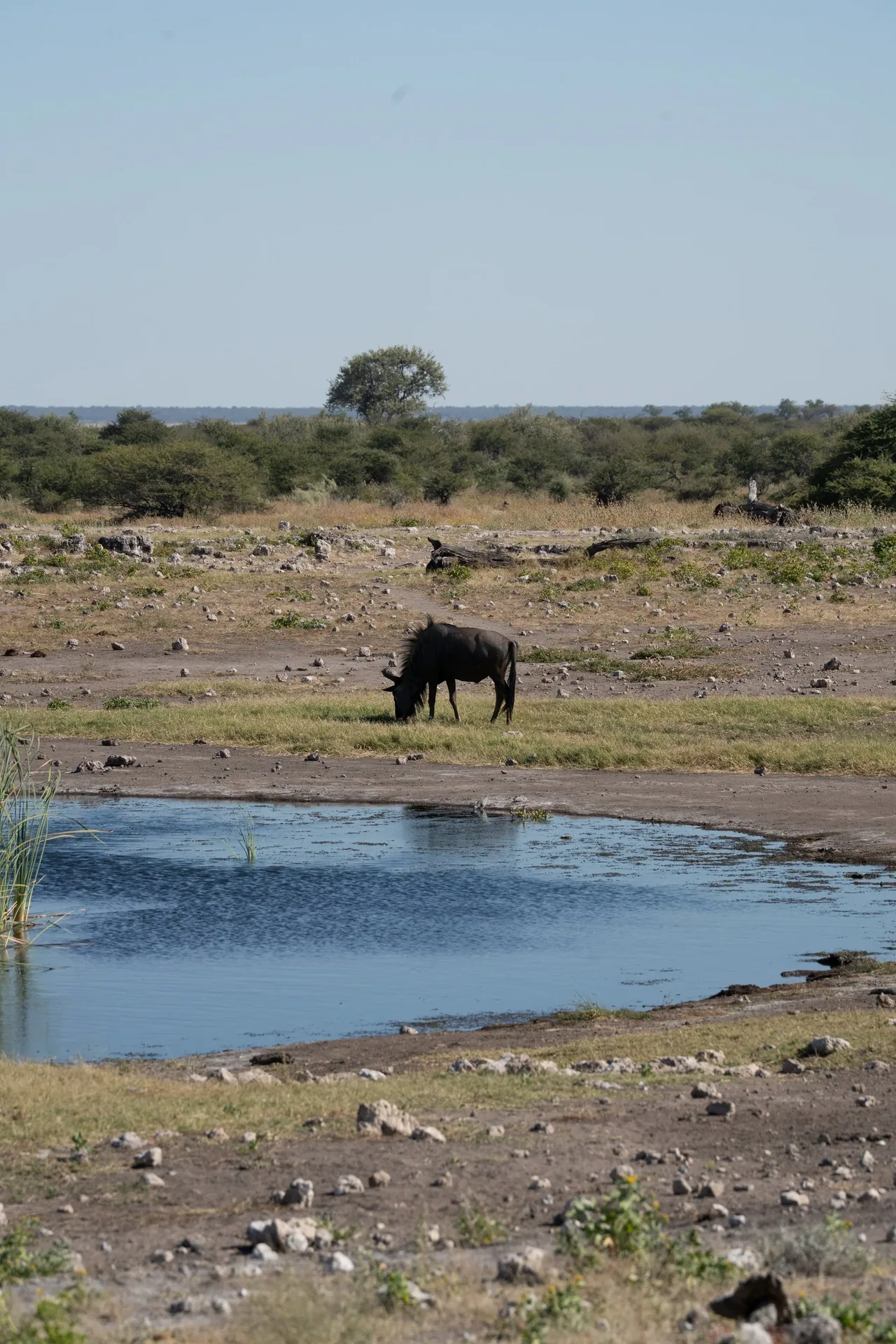
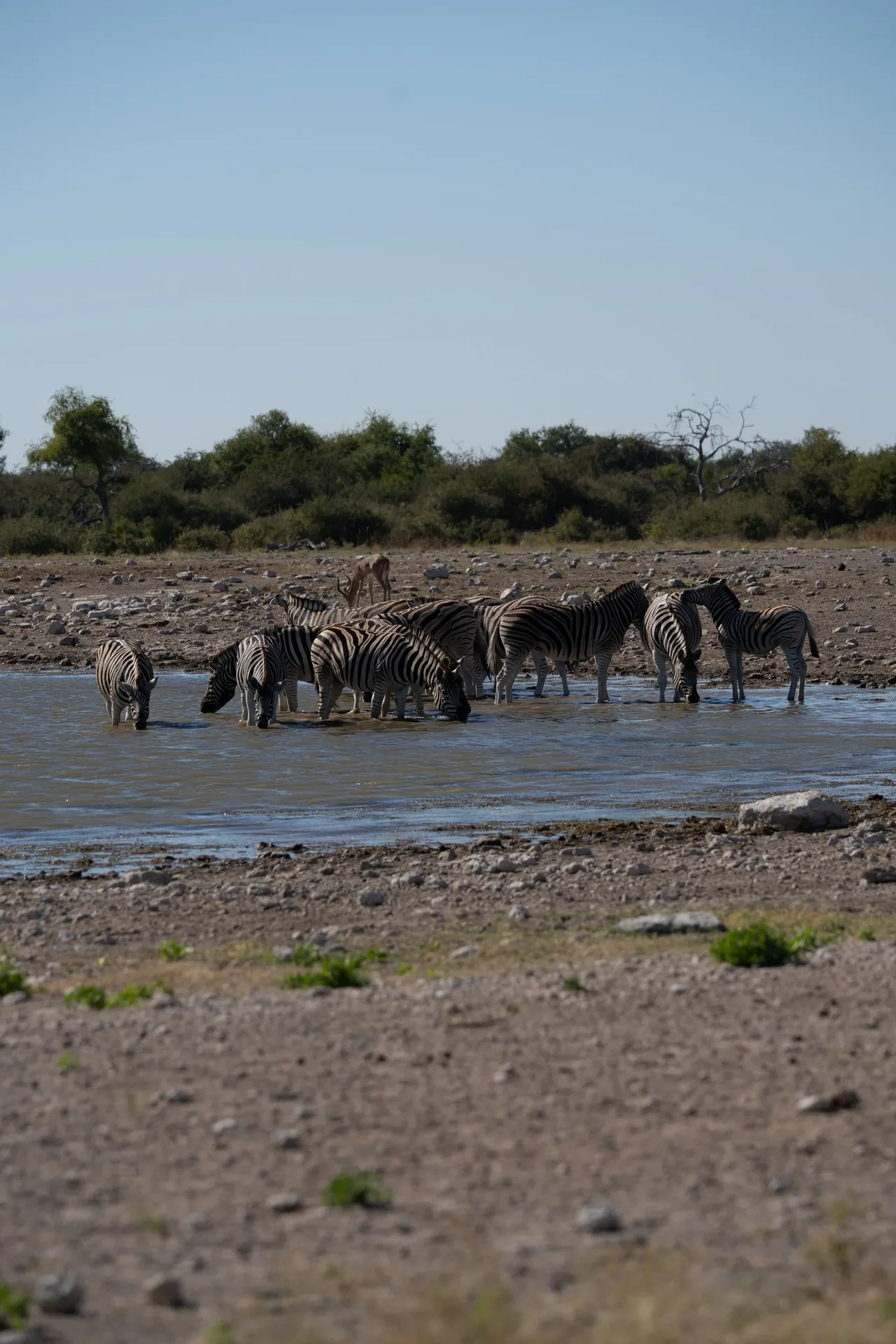
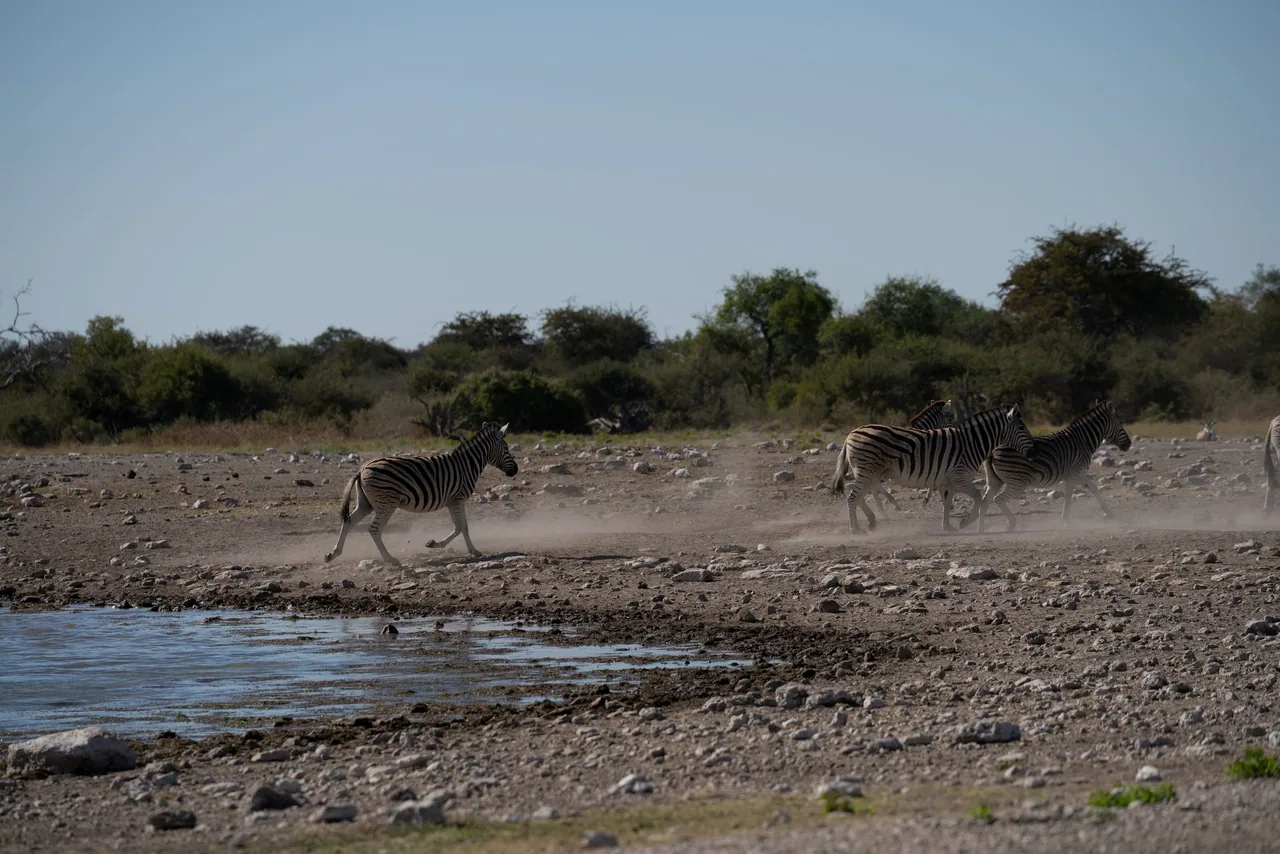
Just a few minutes after entering the park we see our first antelopes. Later we arrive at a waterhole where we see giraffes, more antelopes, wildebeest, oryx, lots of zebras and hartebeest. At another waterhole we spot an ostrich.
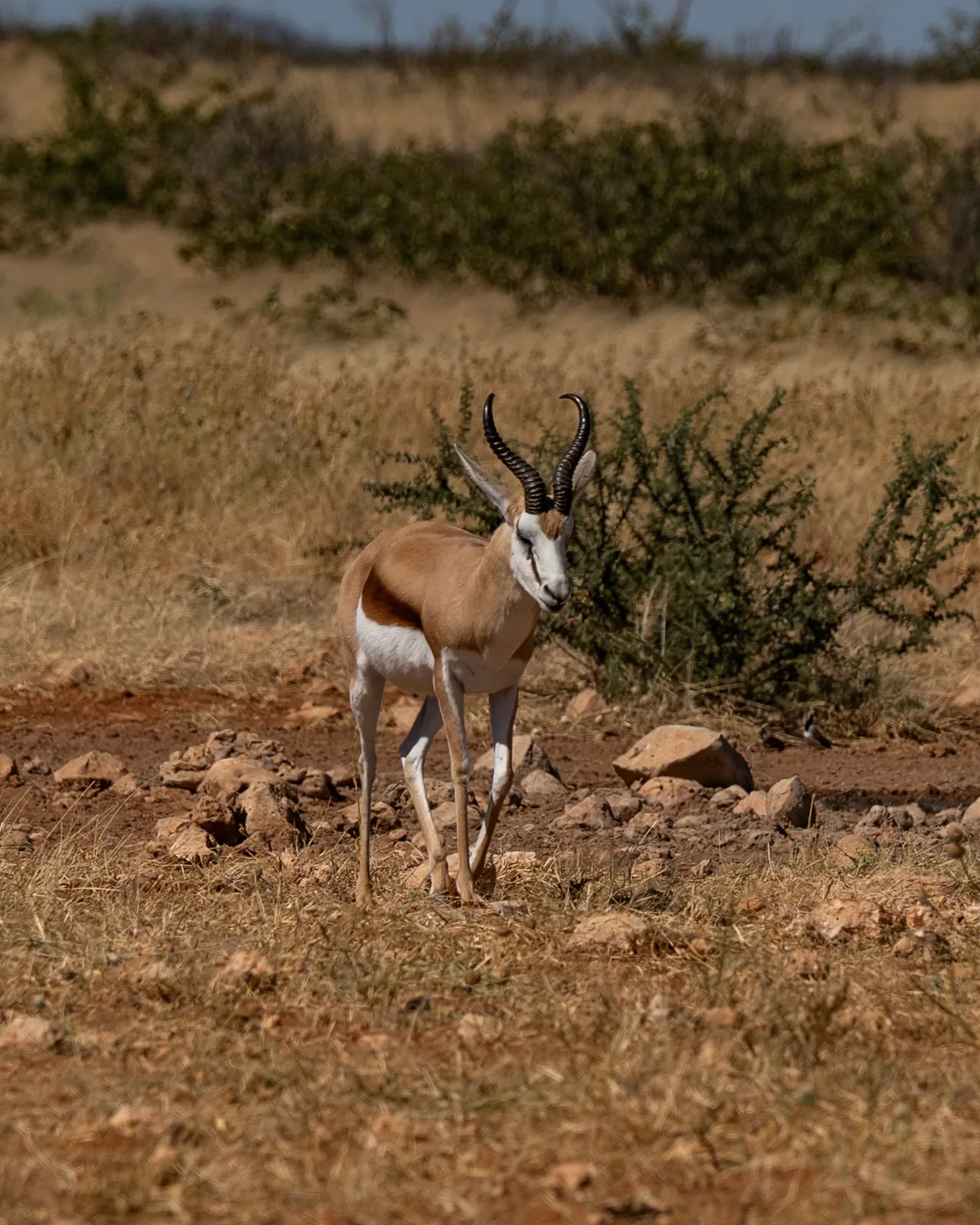
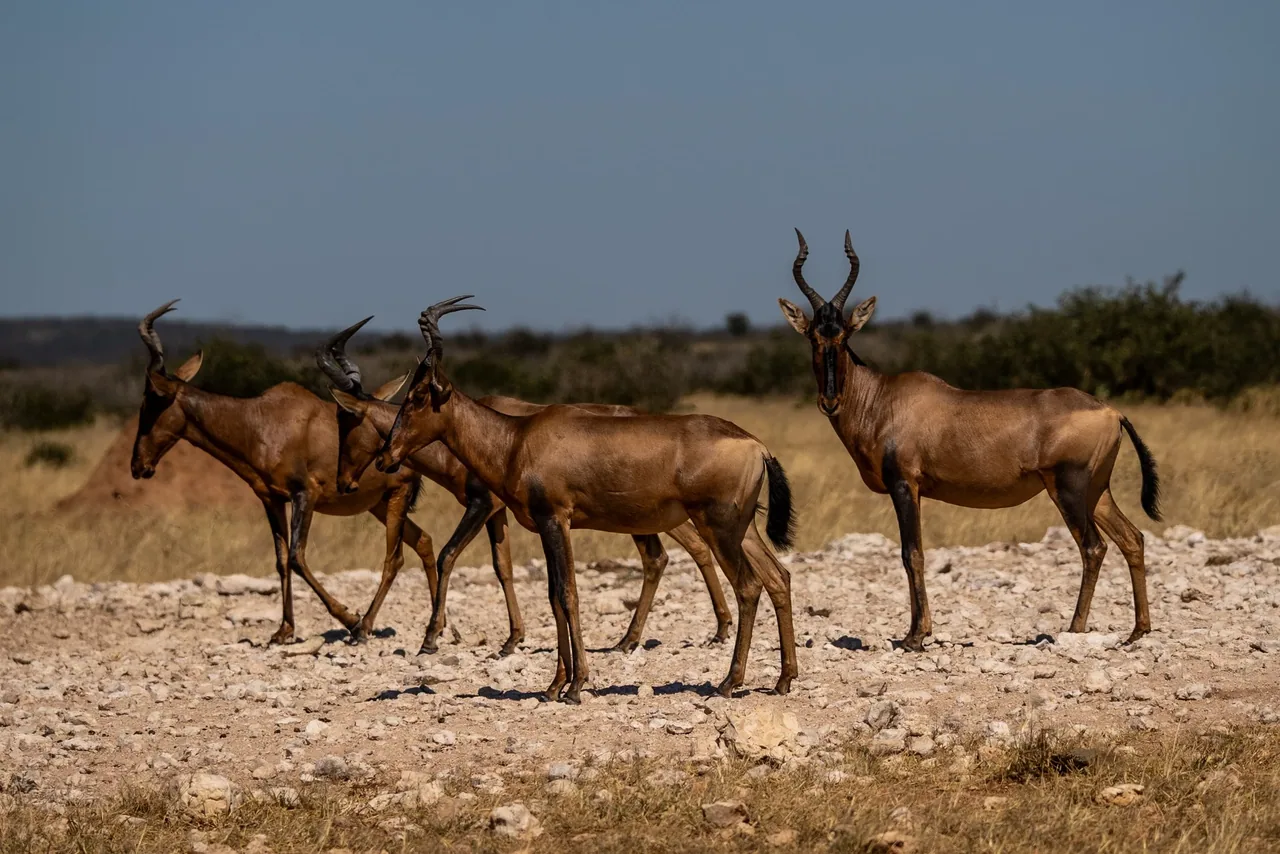
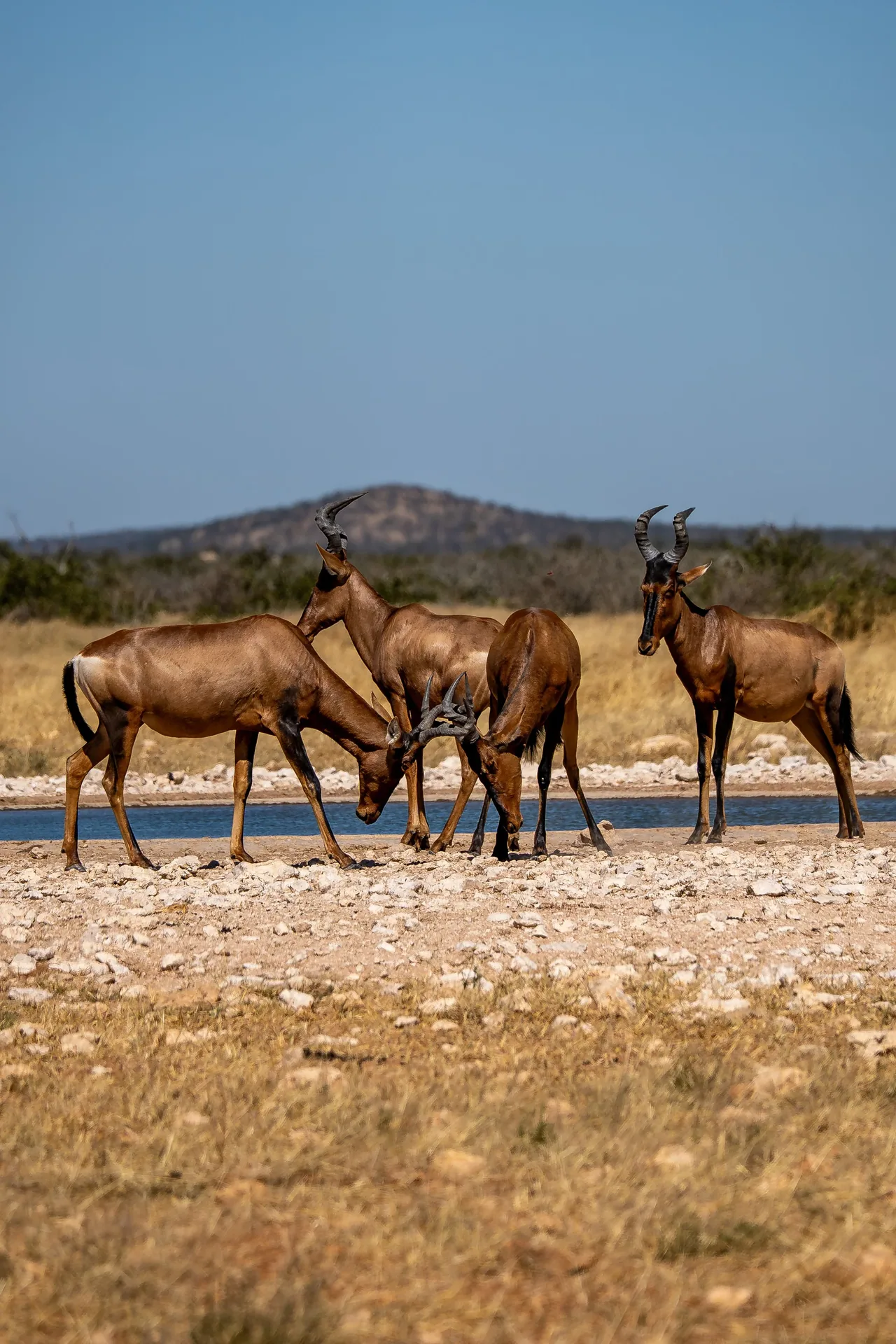
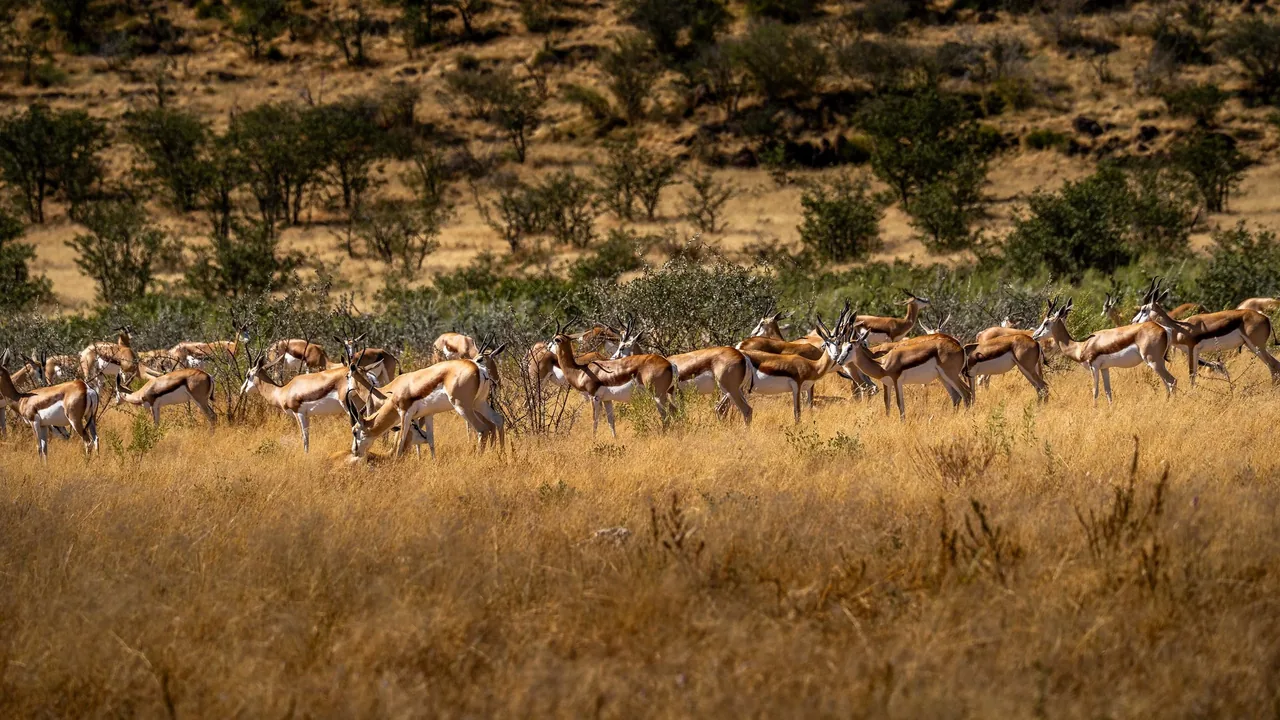
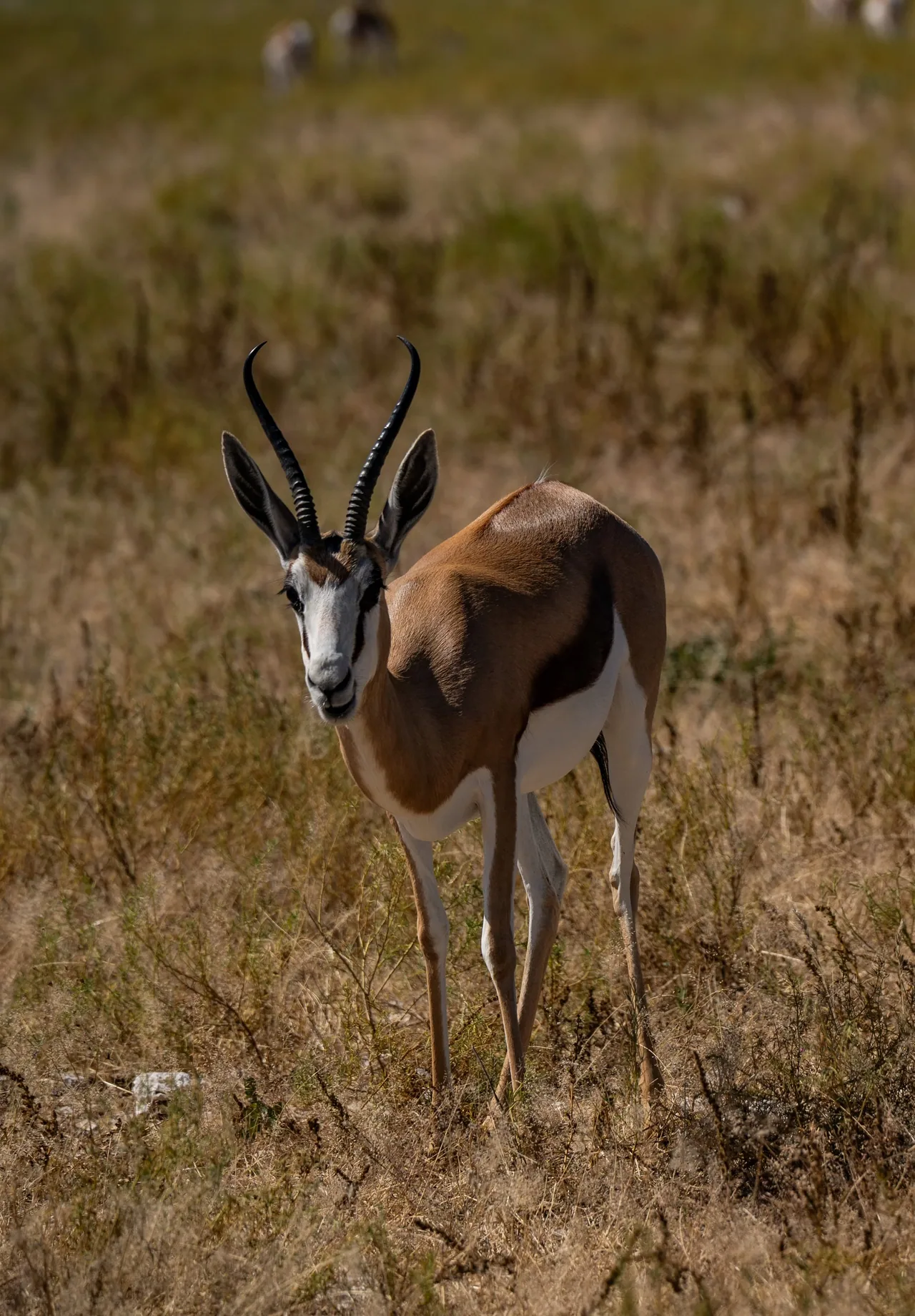
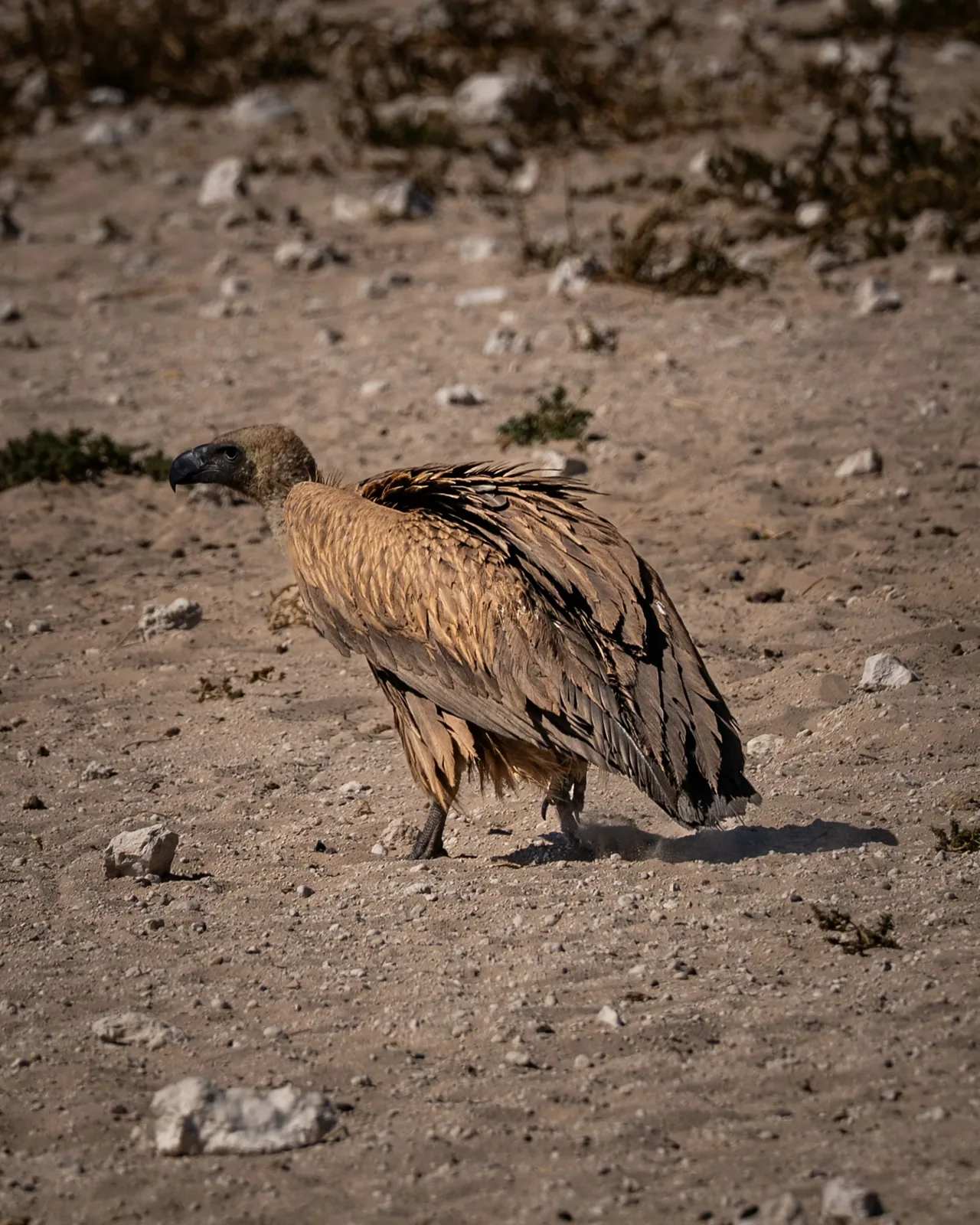
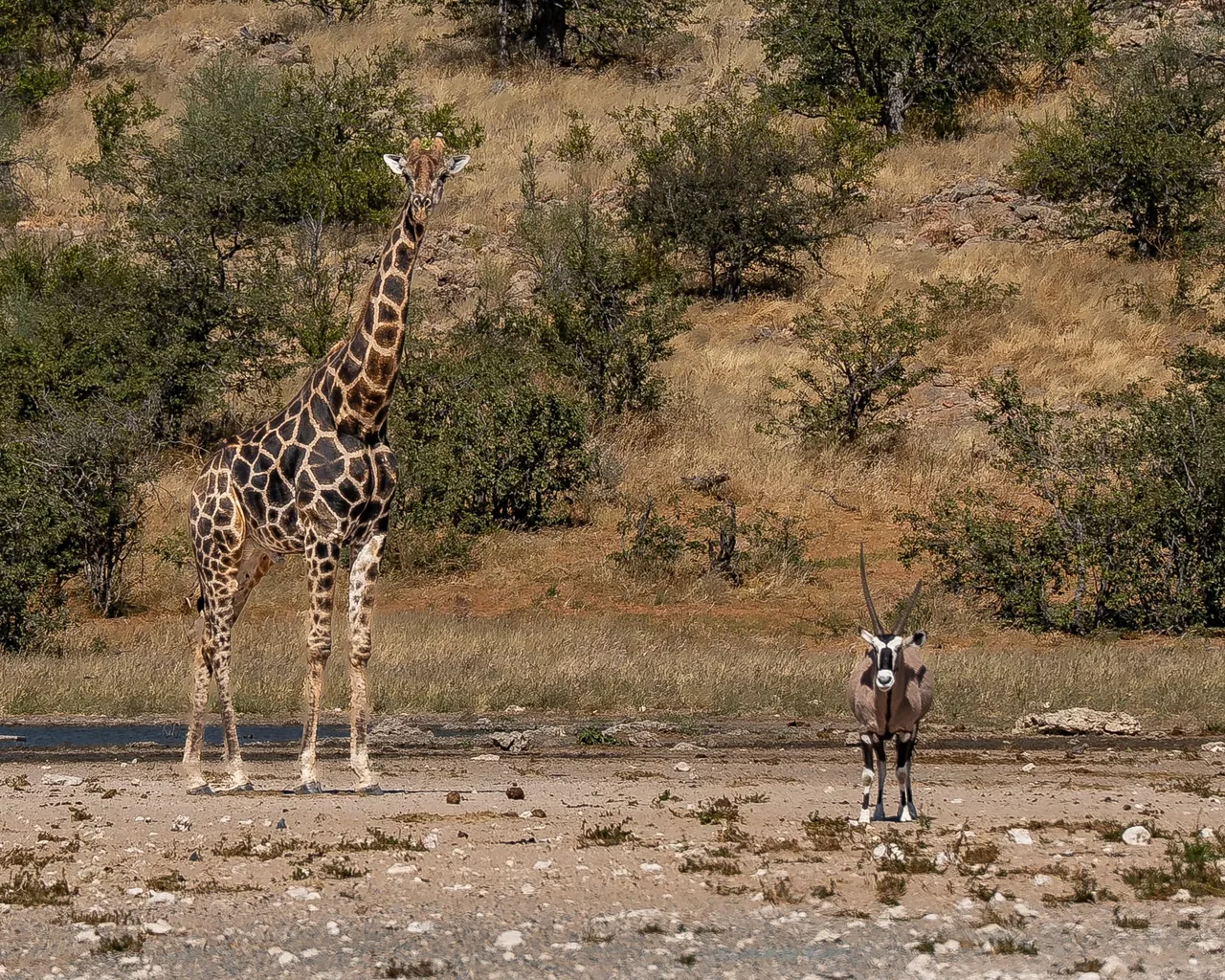
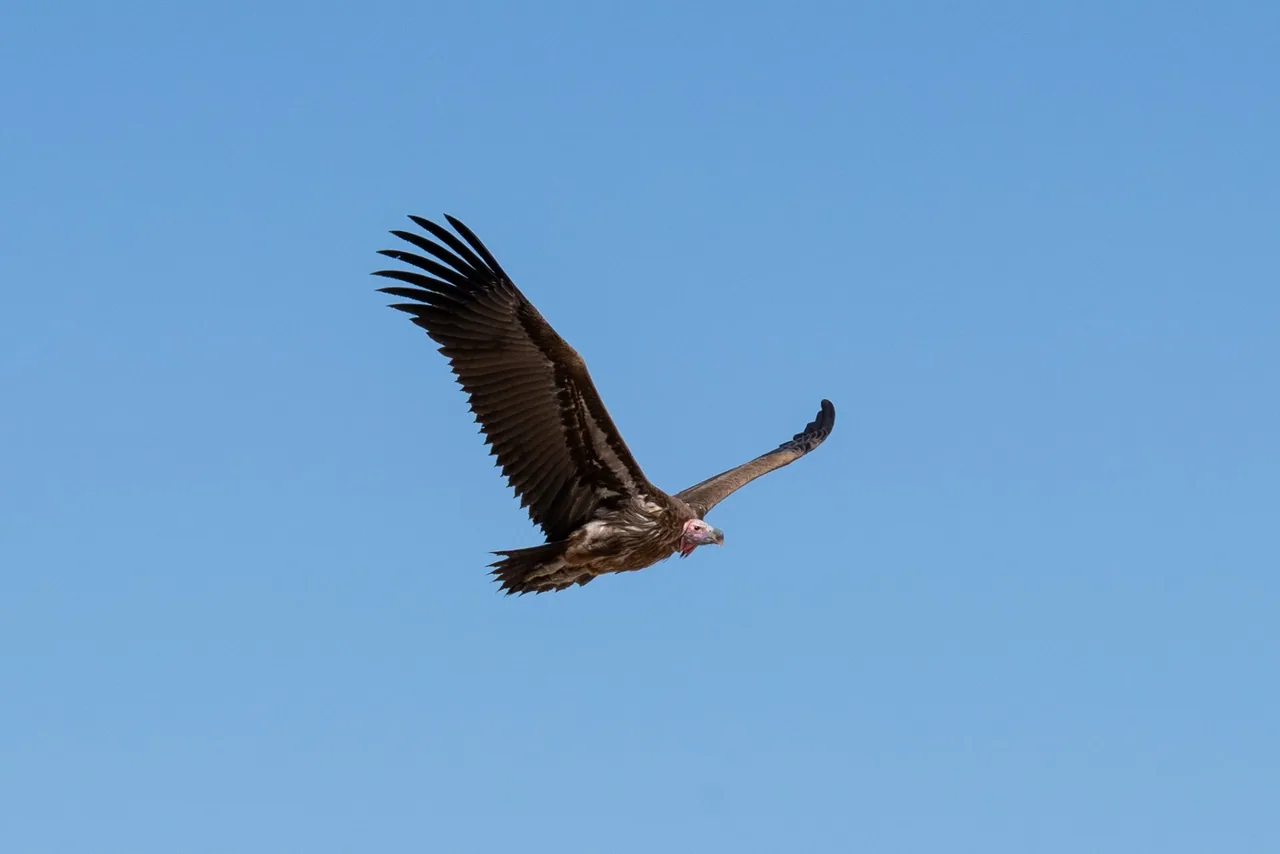
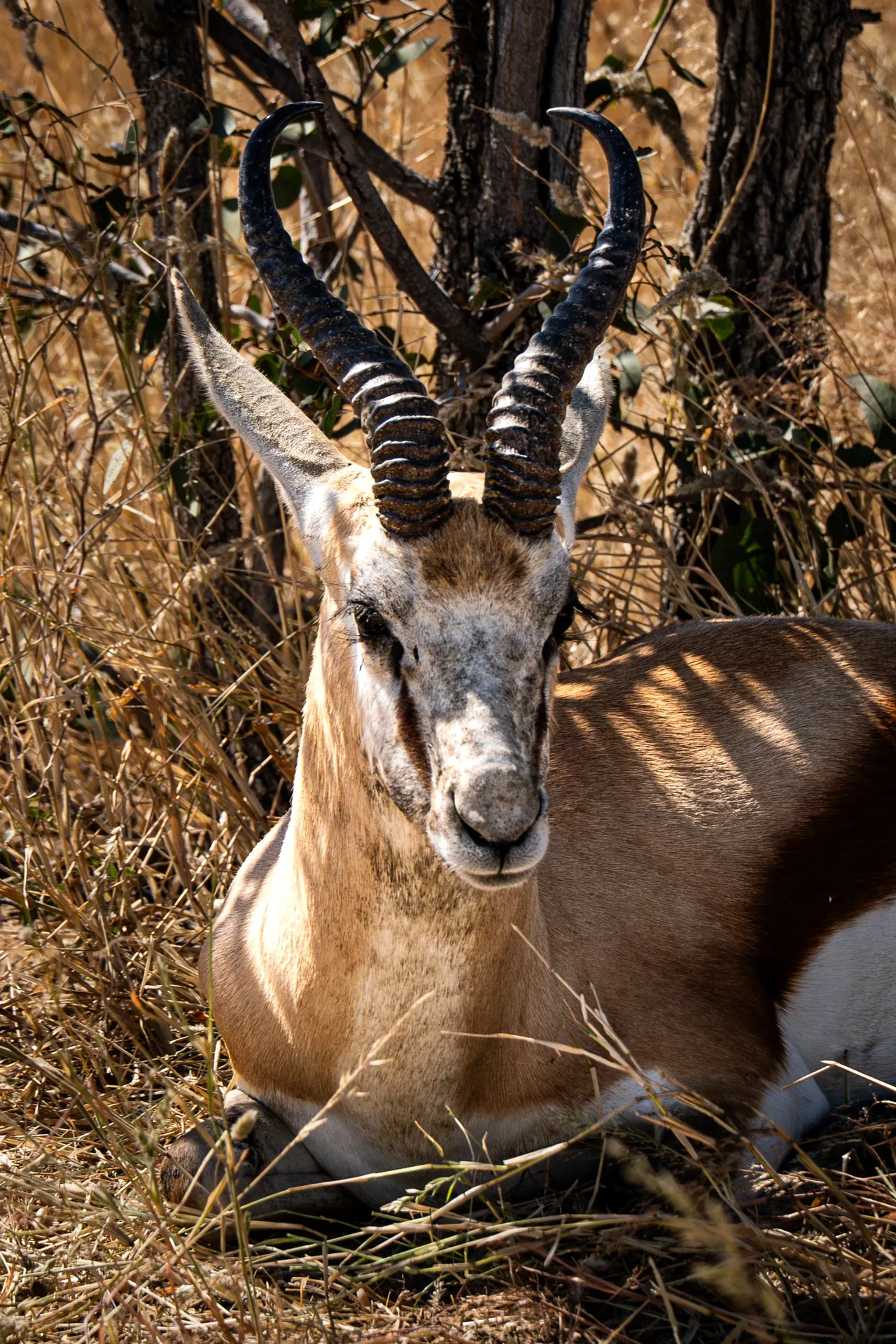
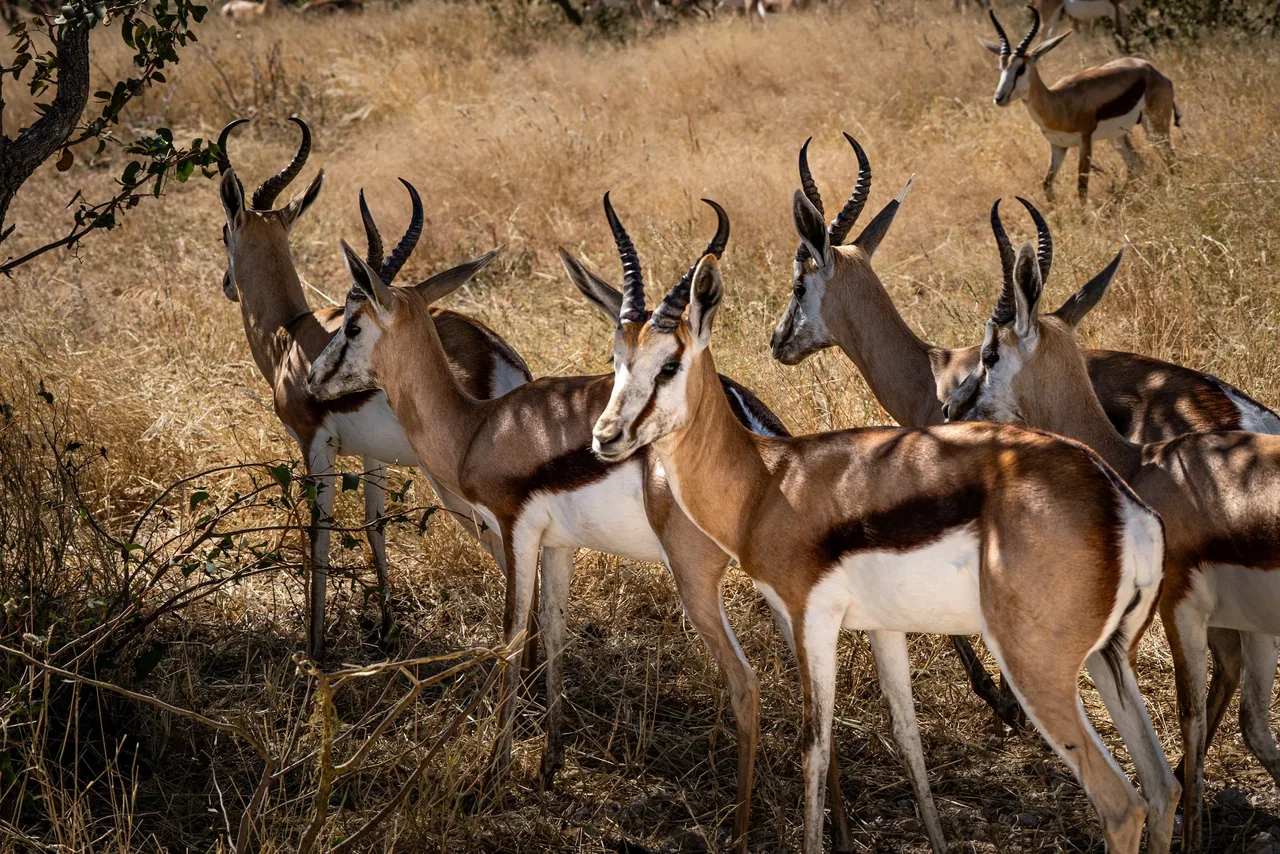
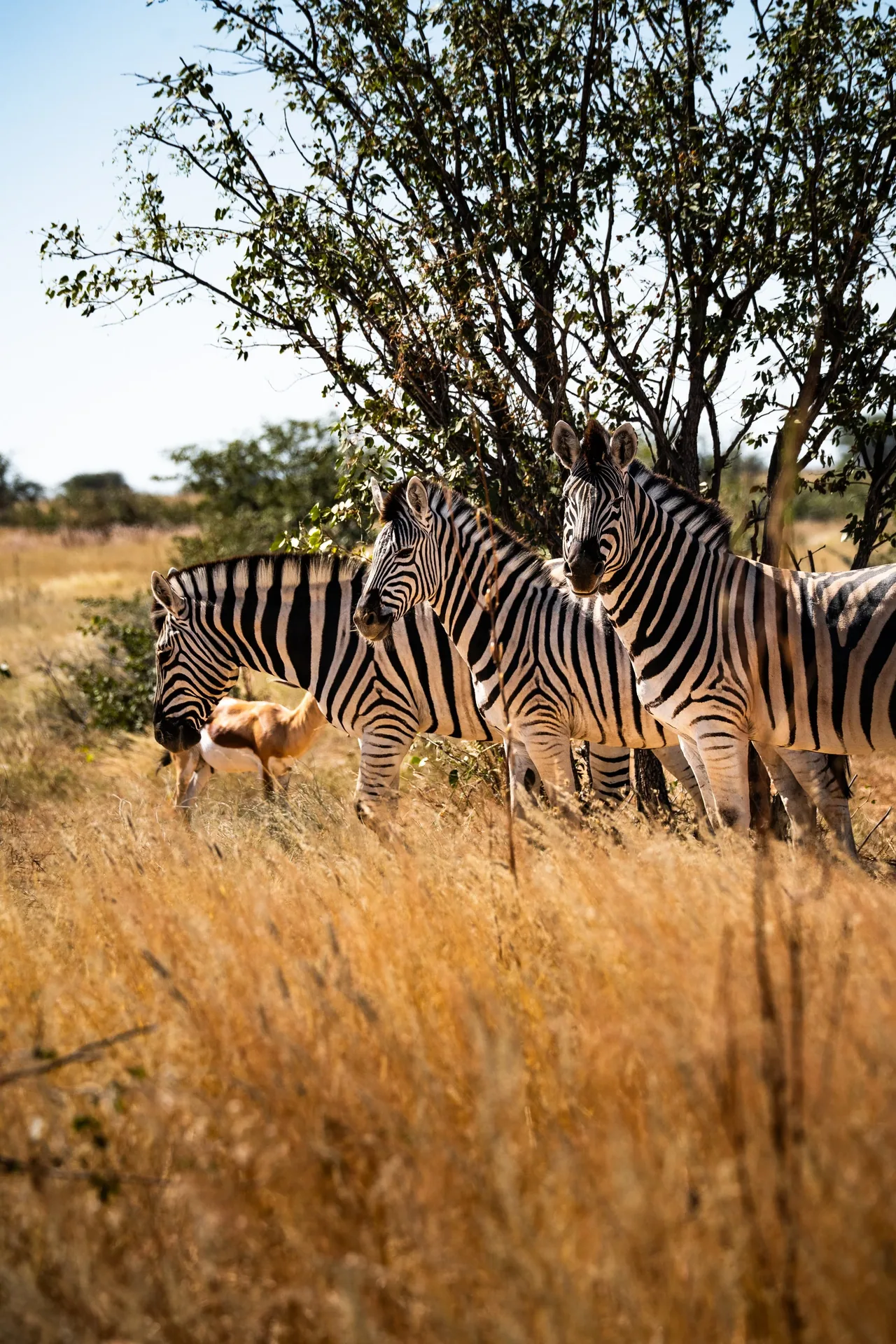
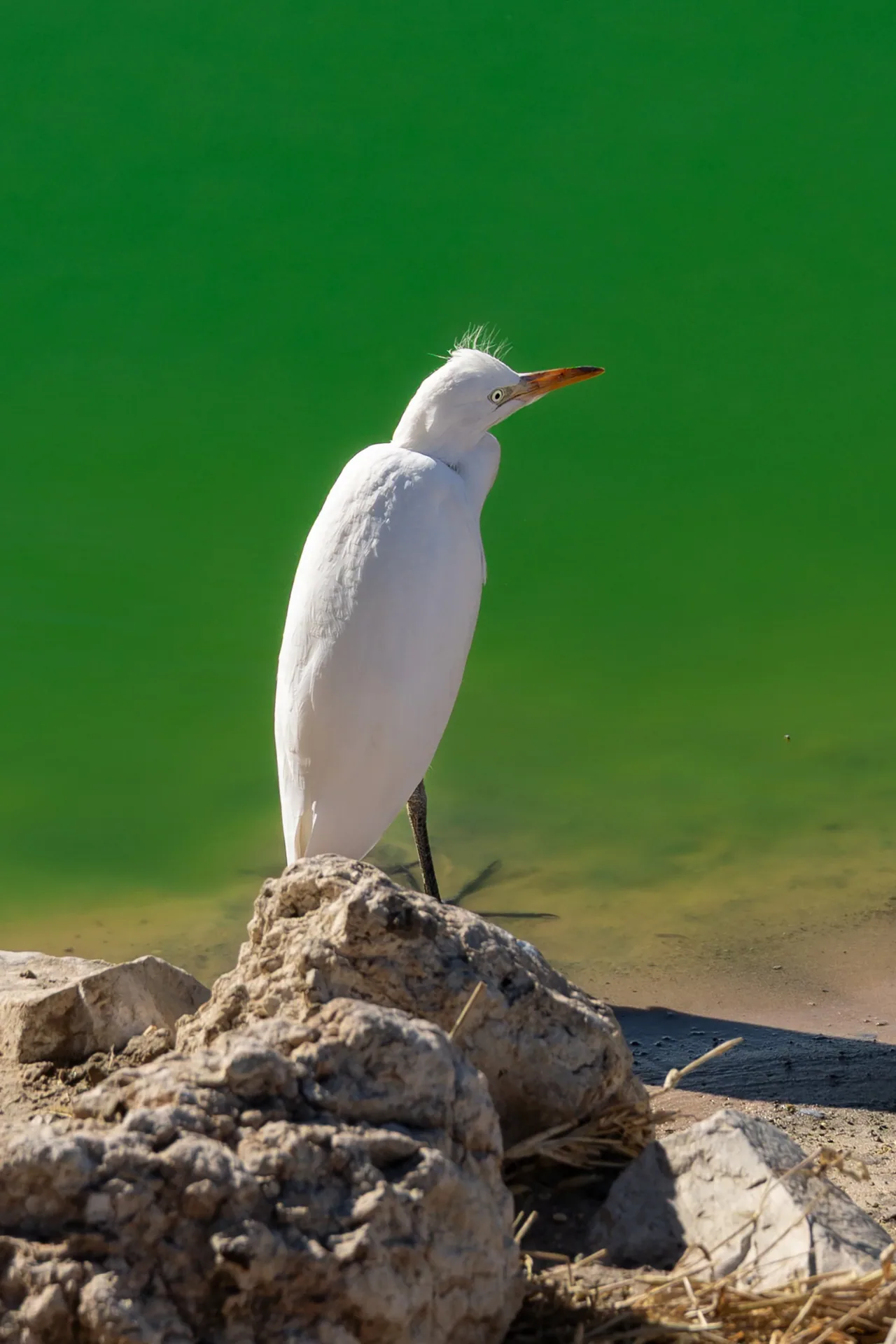
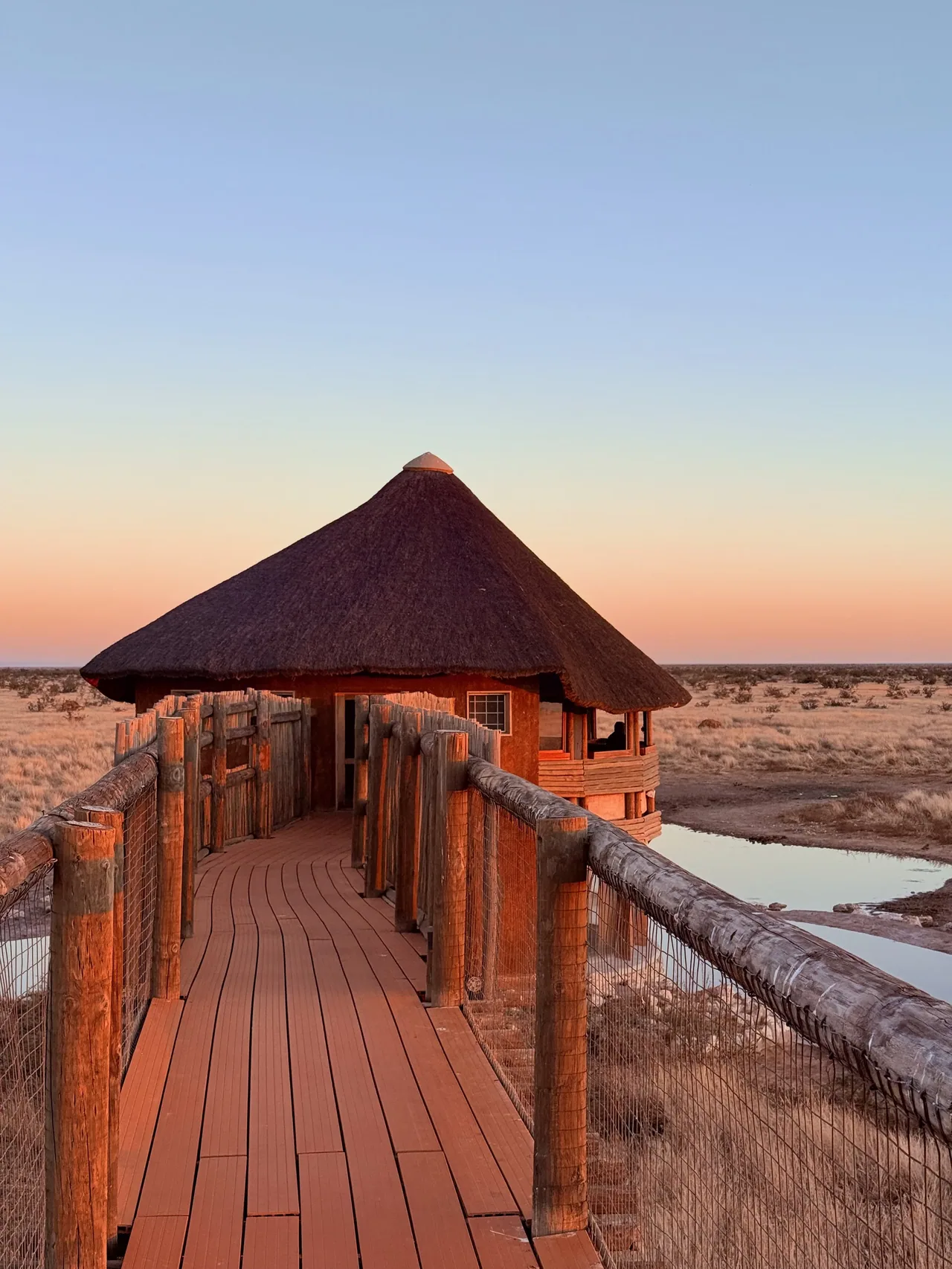
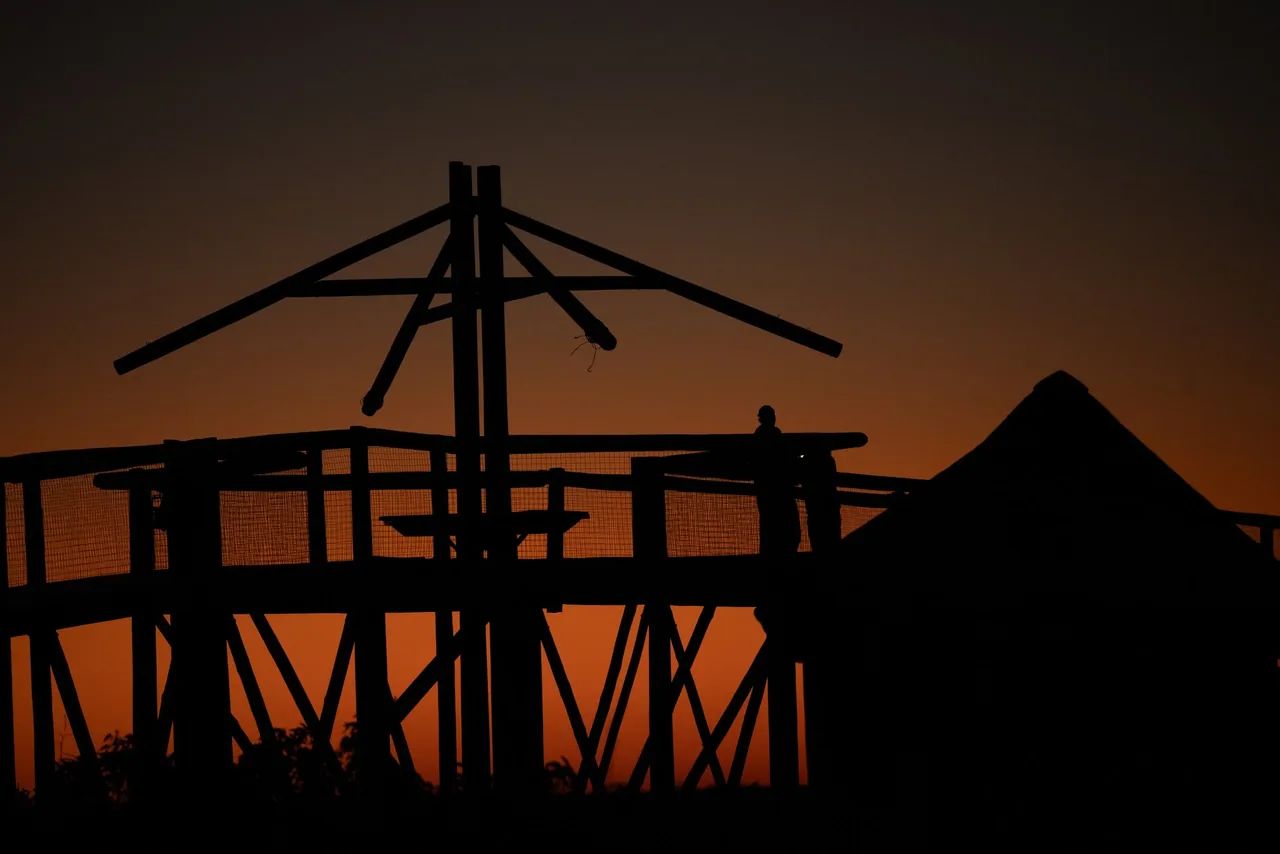
On the way to our campsite — Olifantsrus Campsite — we see more animals and vultures circling overhead. The campsite is surrounded by a high electrified fence because of predators in the area. From the camp, a raised walkway leads to a two-storey hide overlooking a waterhole — the perfect place for wildlife watching.
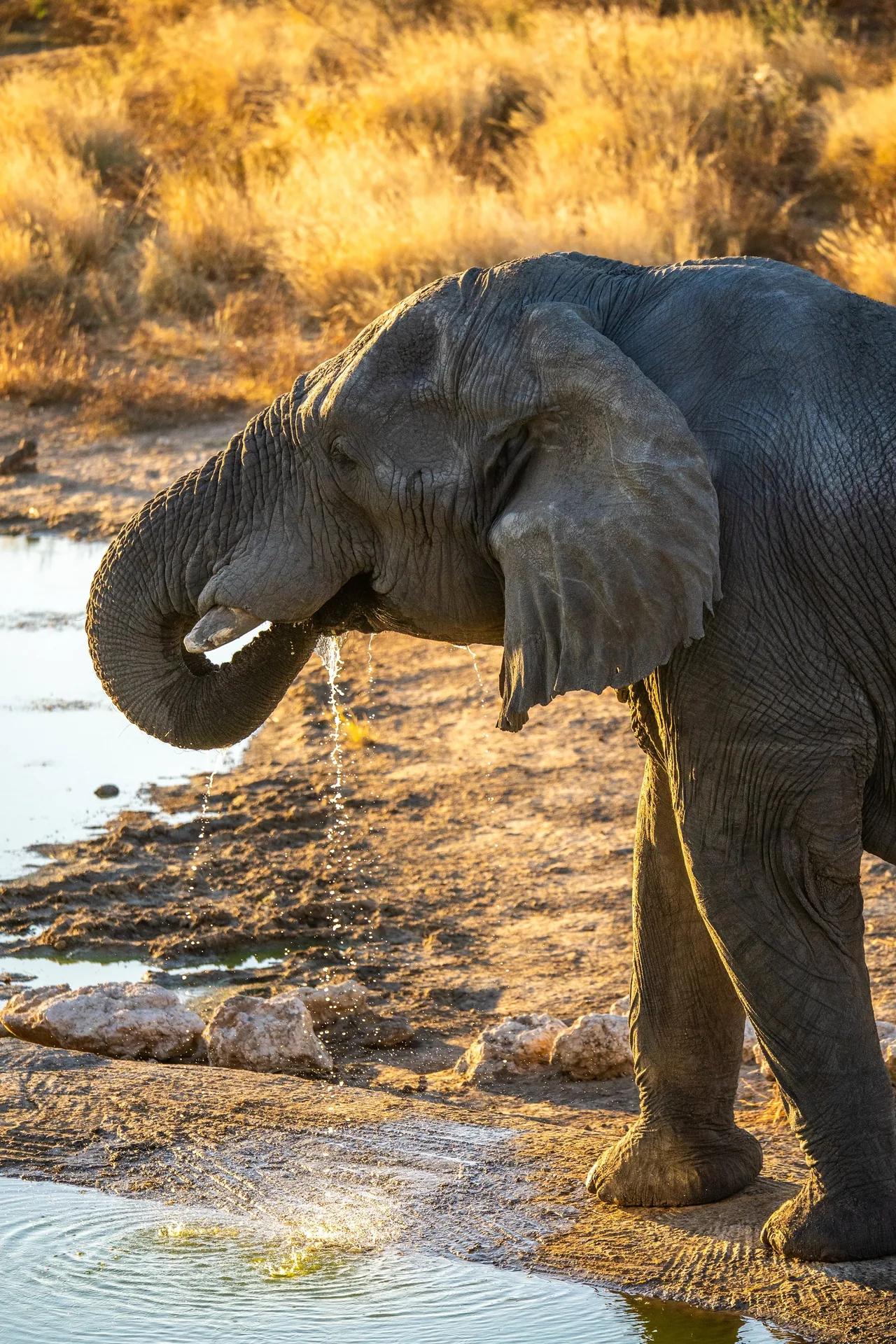
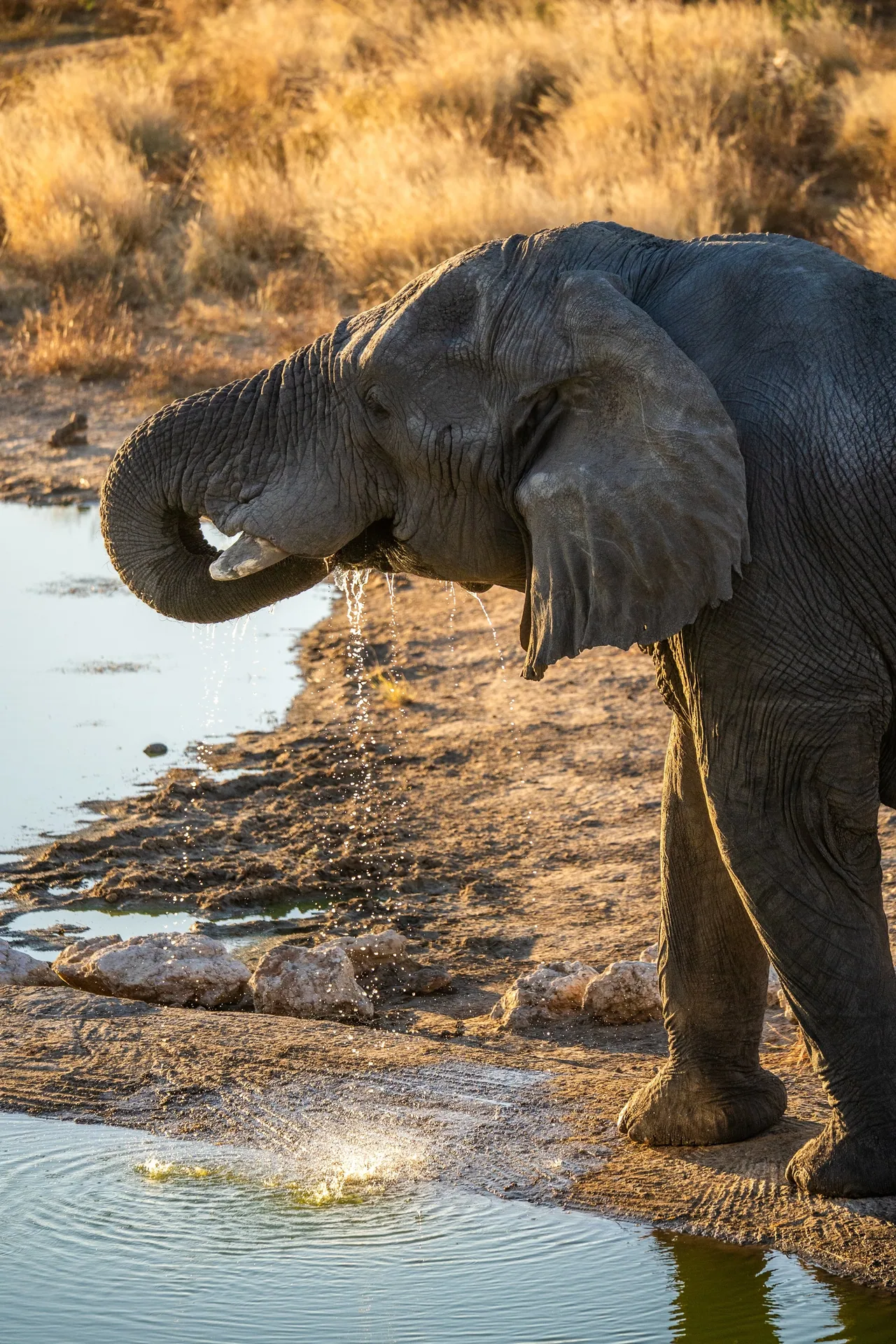
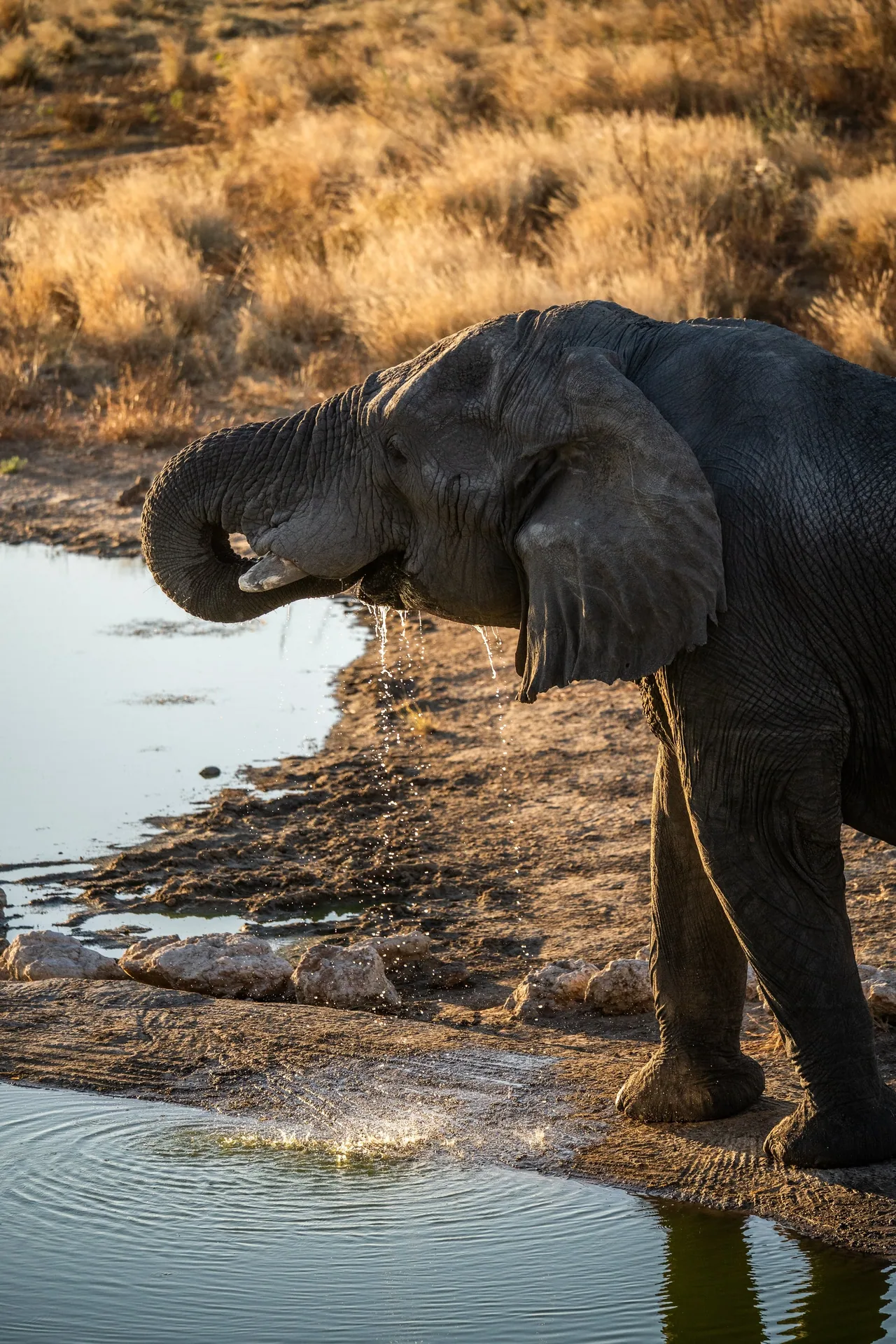
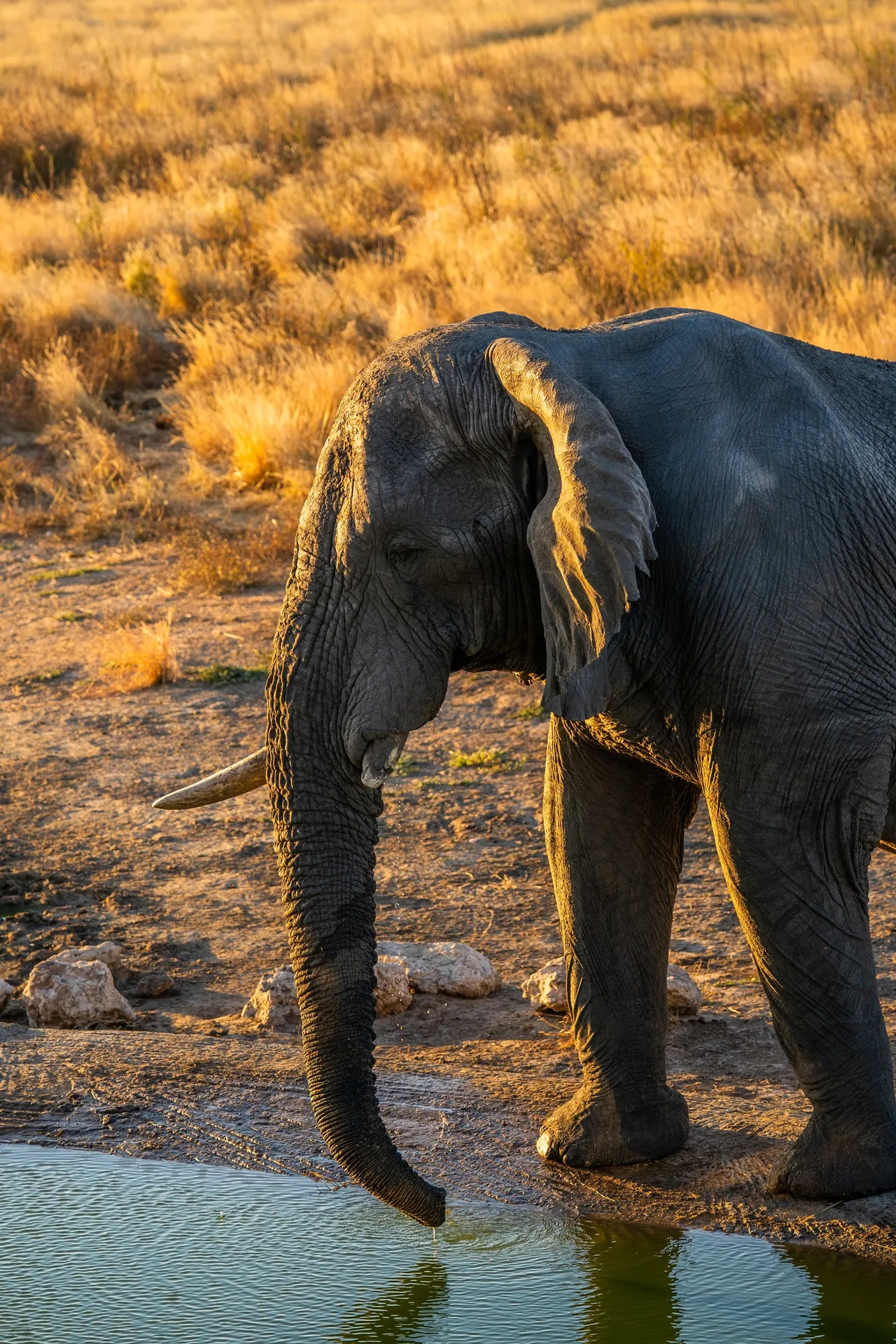
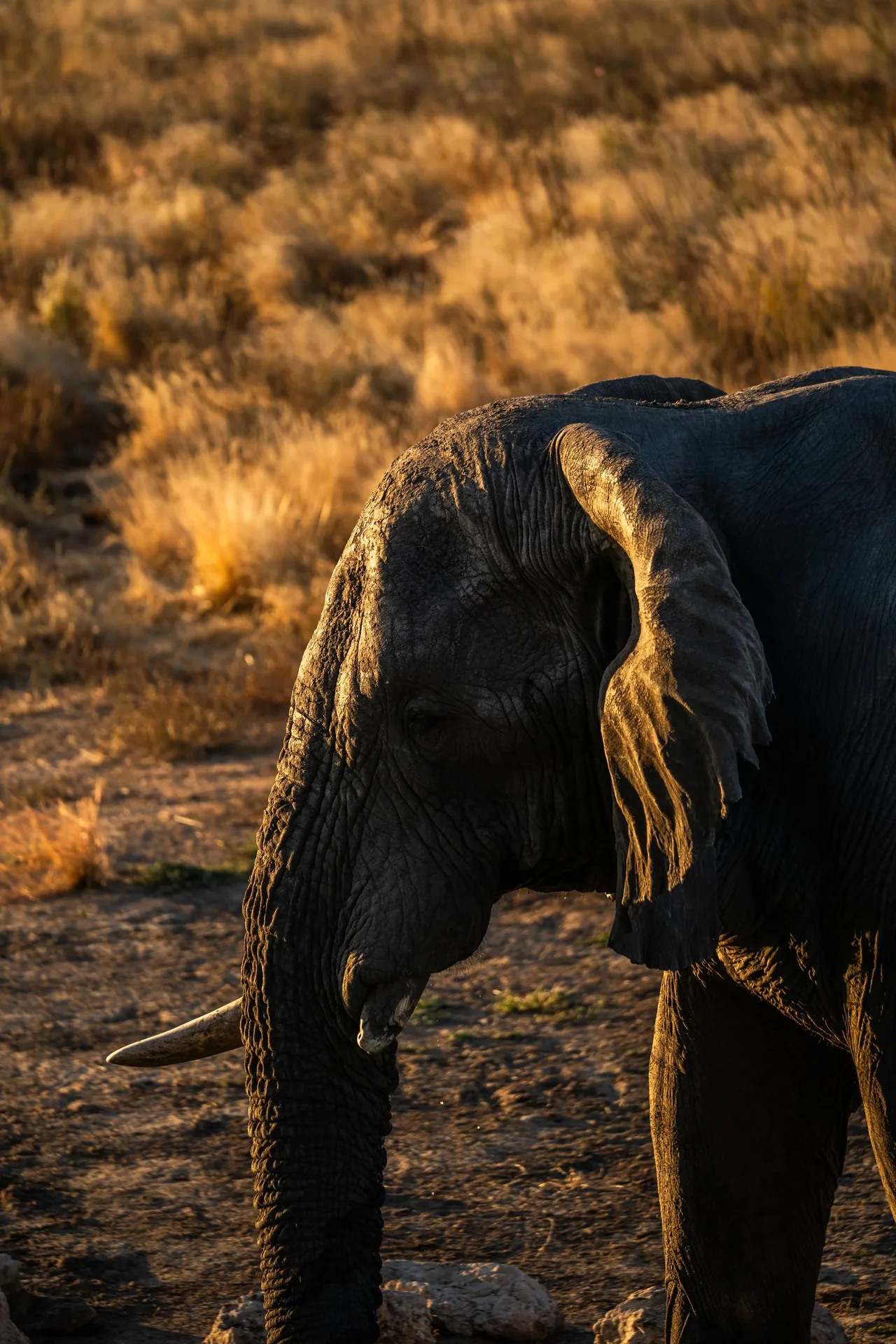
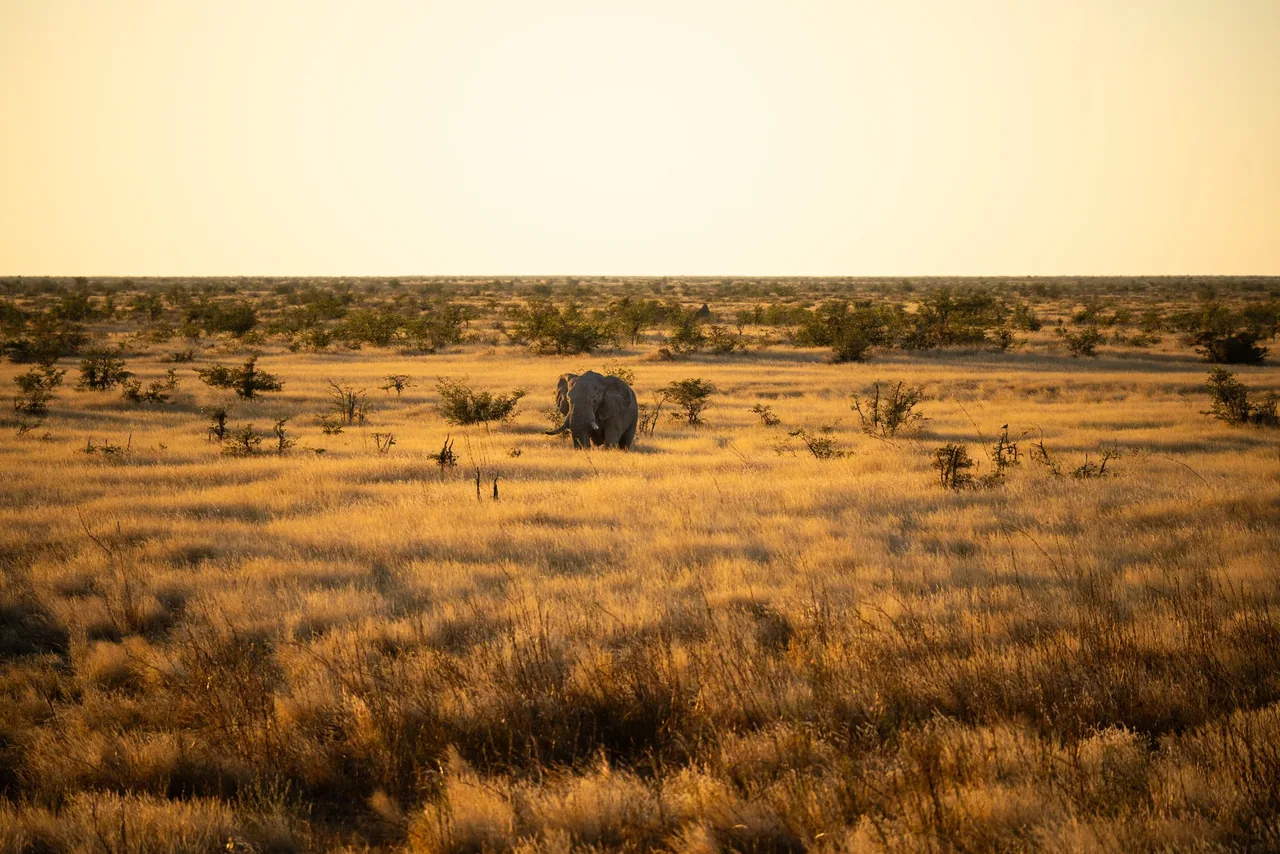
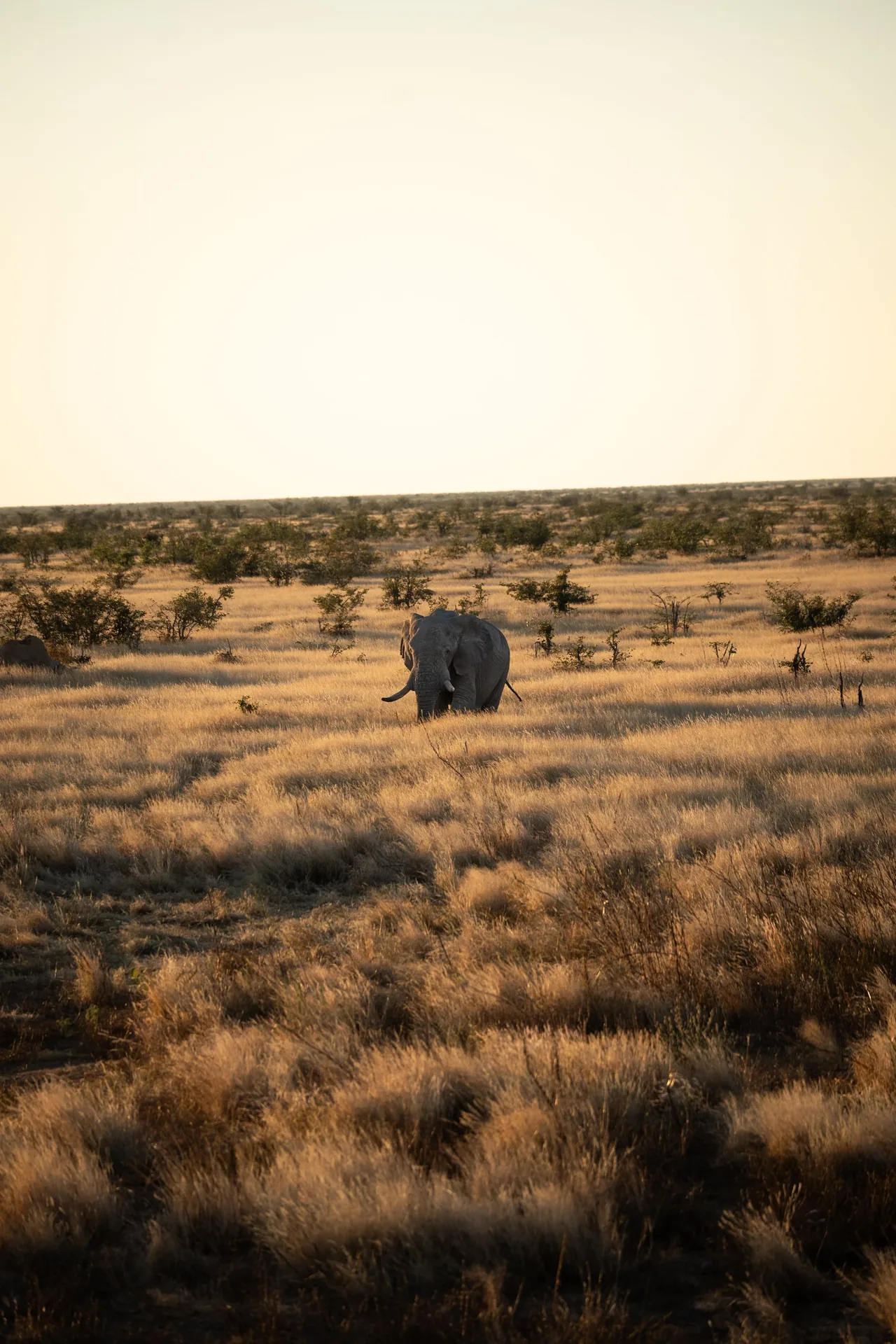
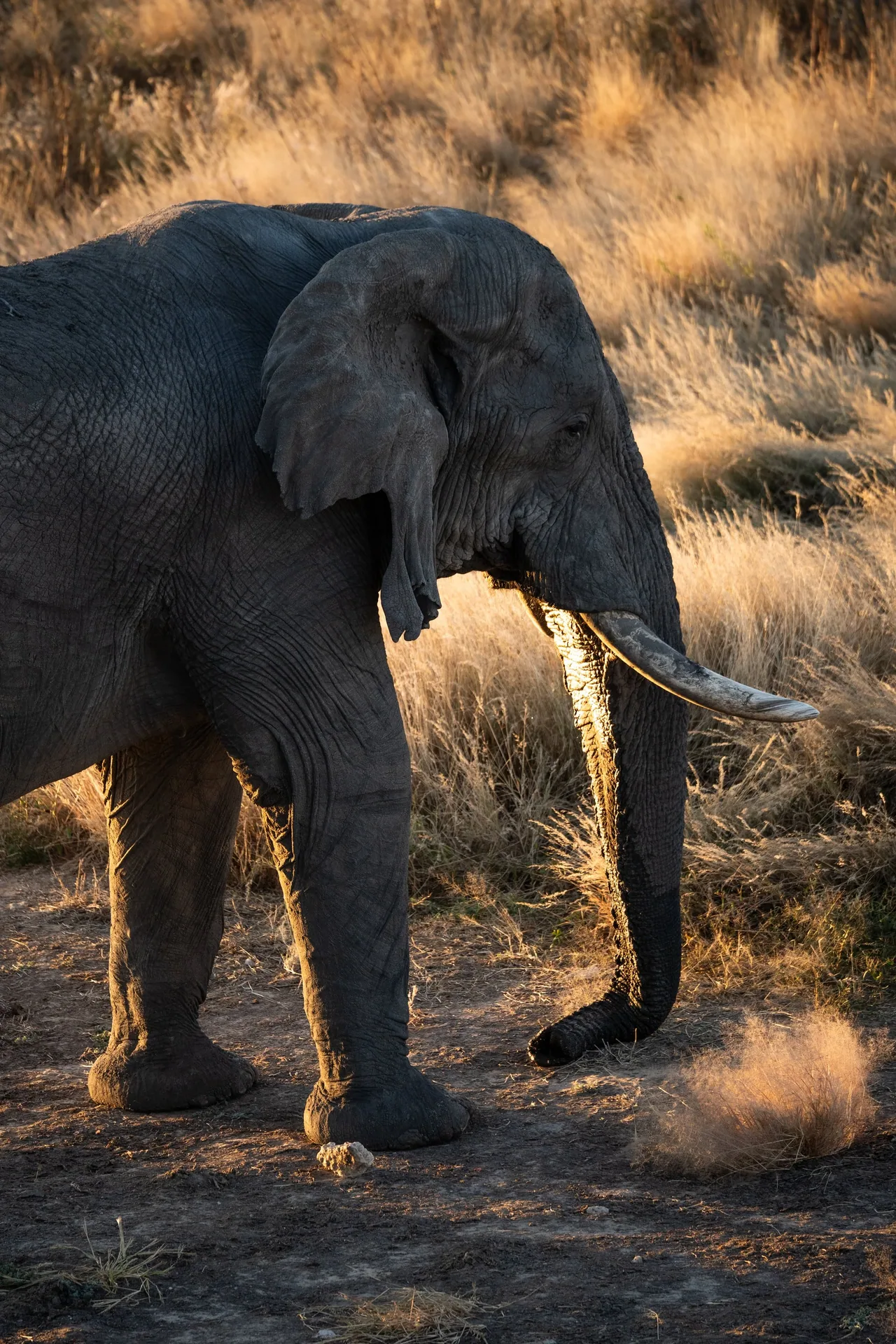
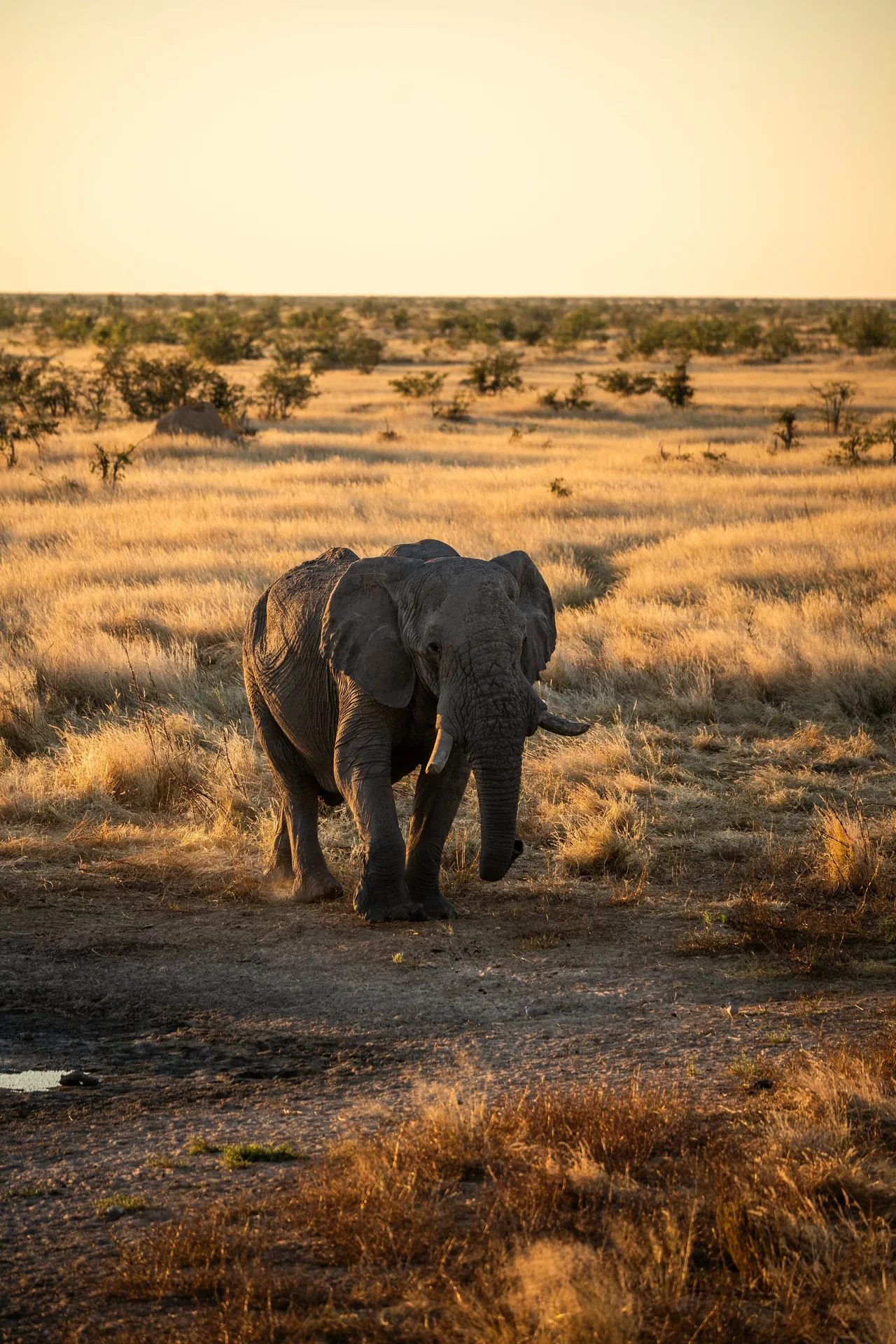
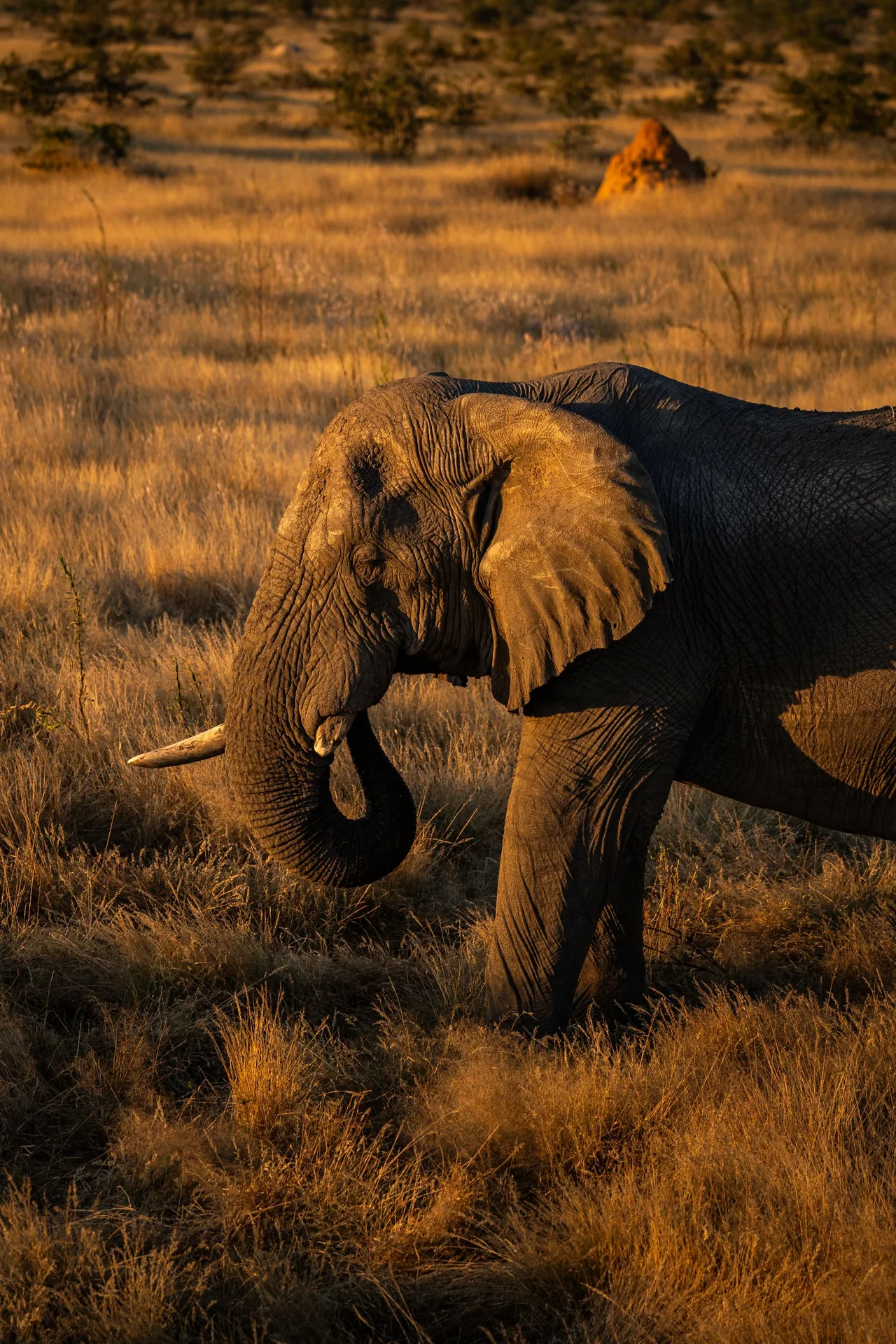
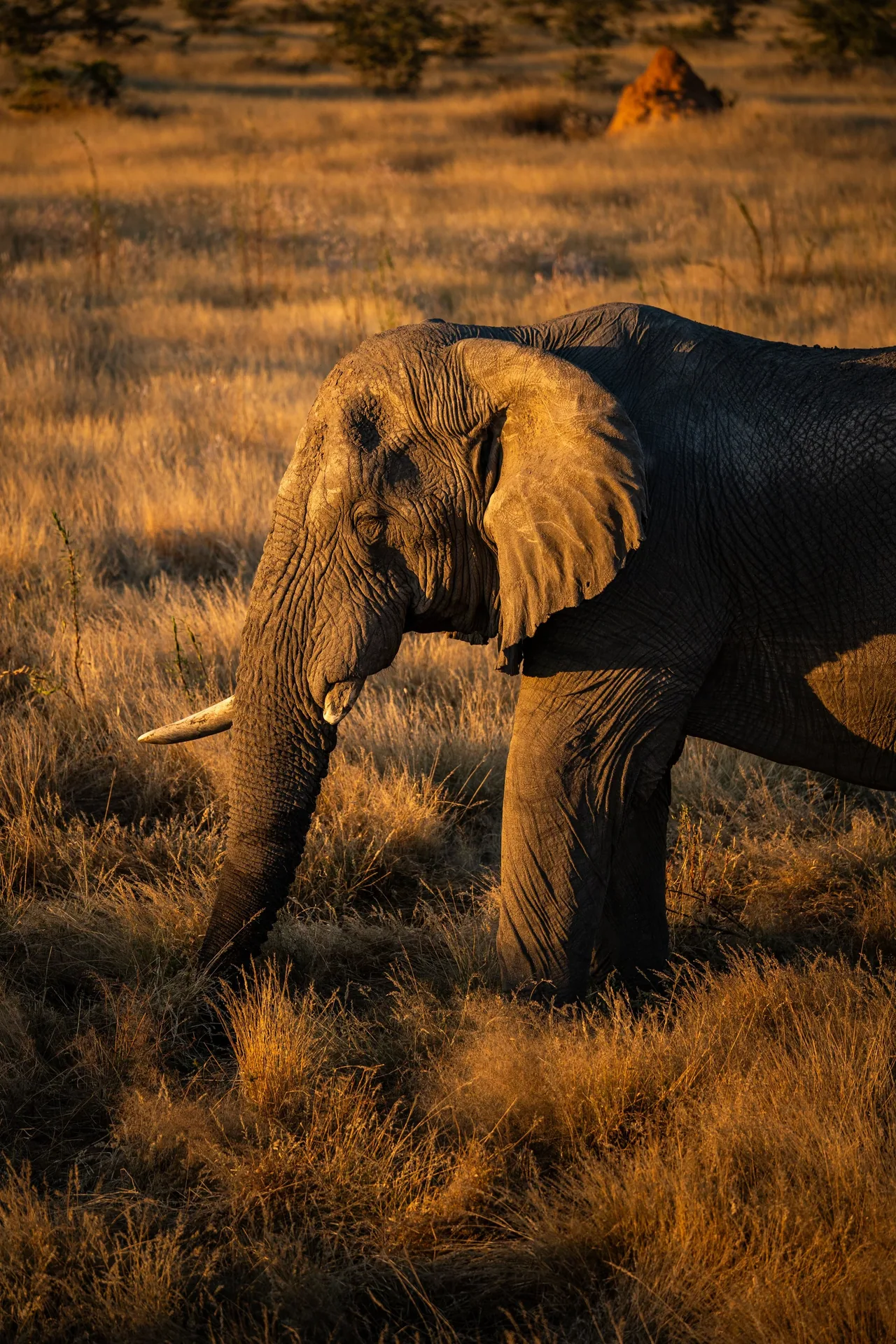
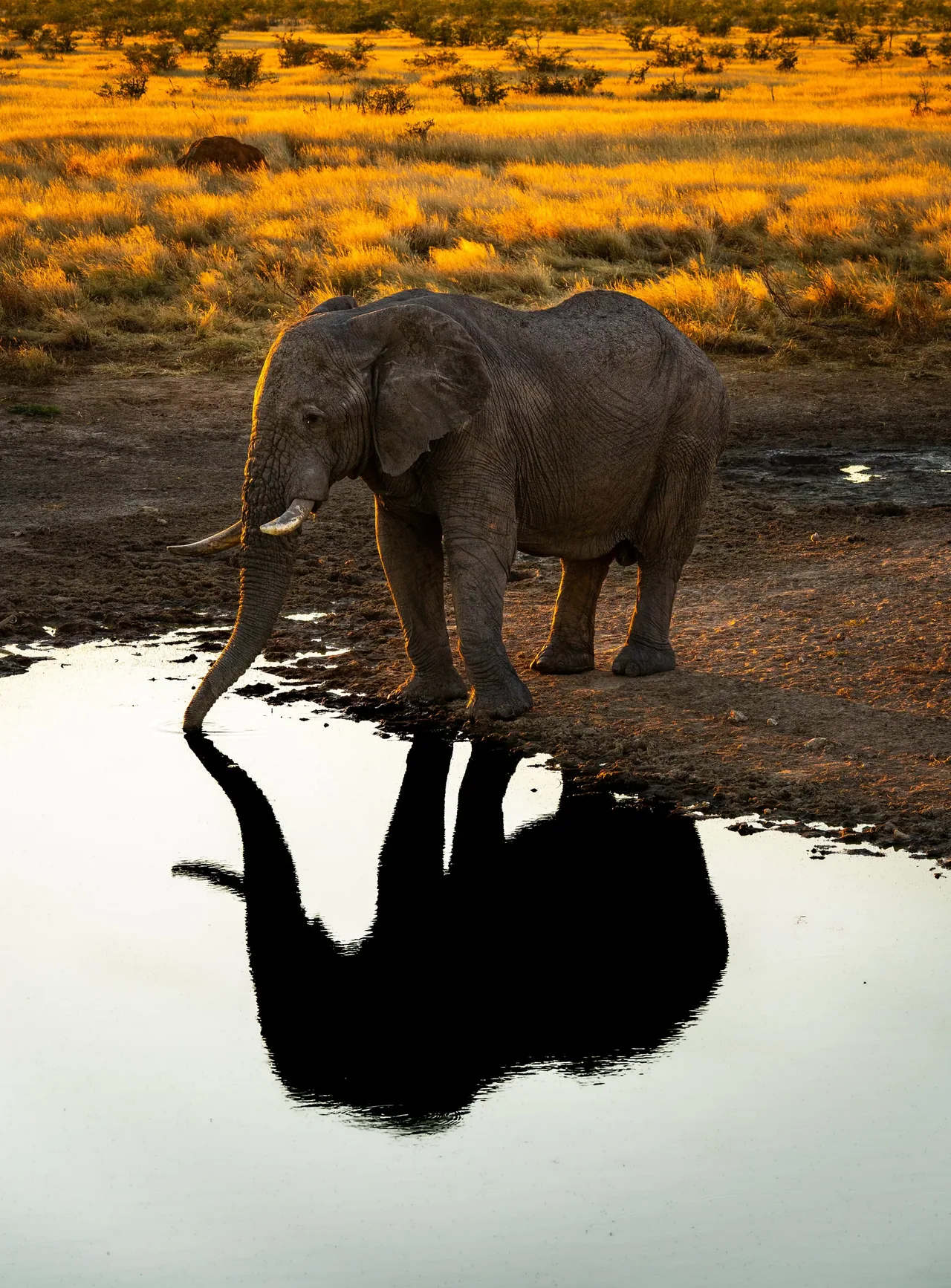
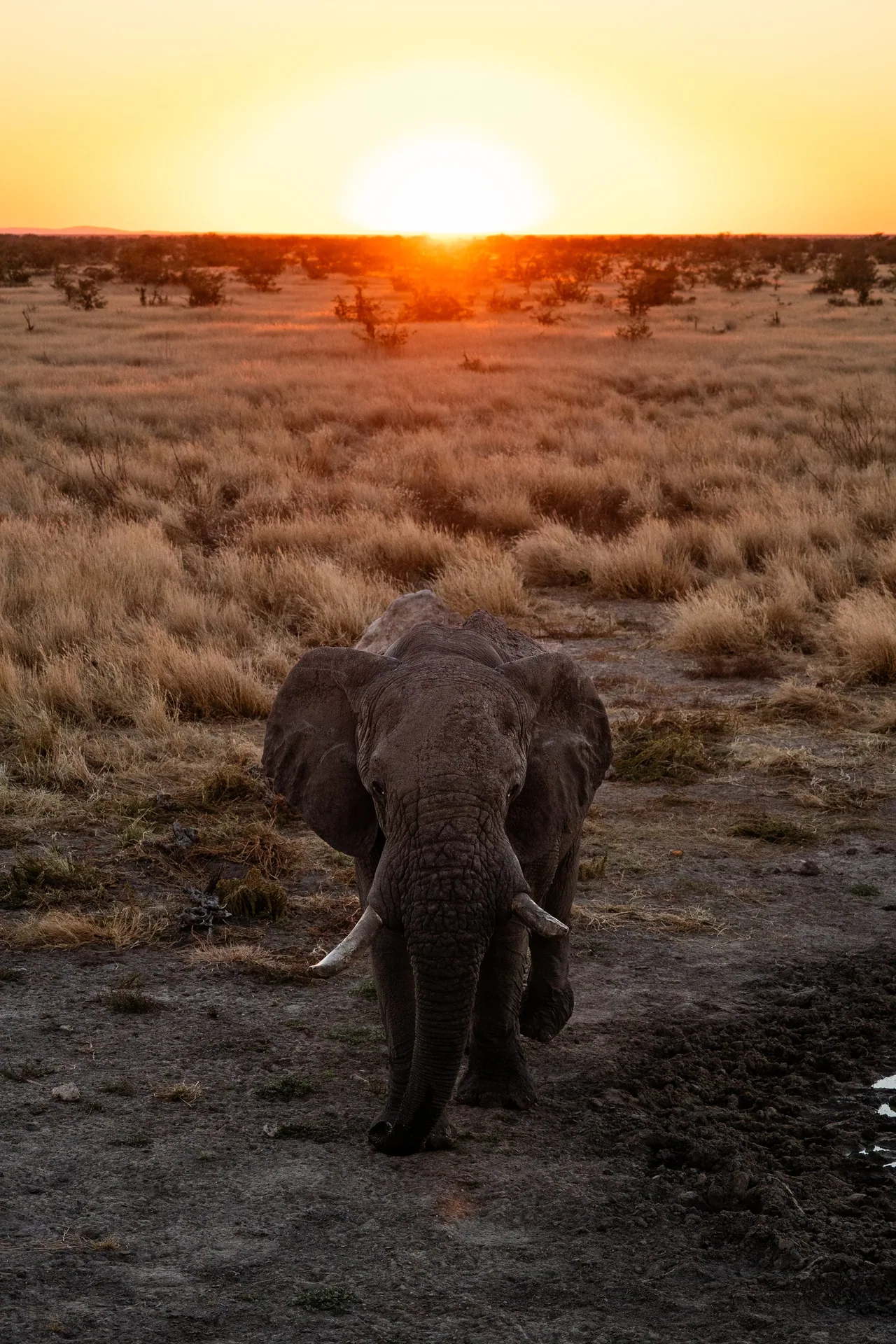
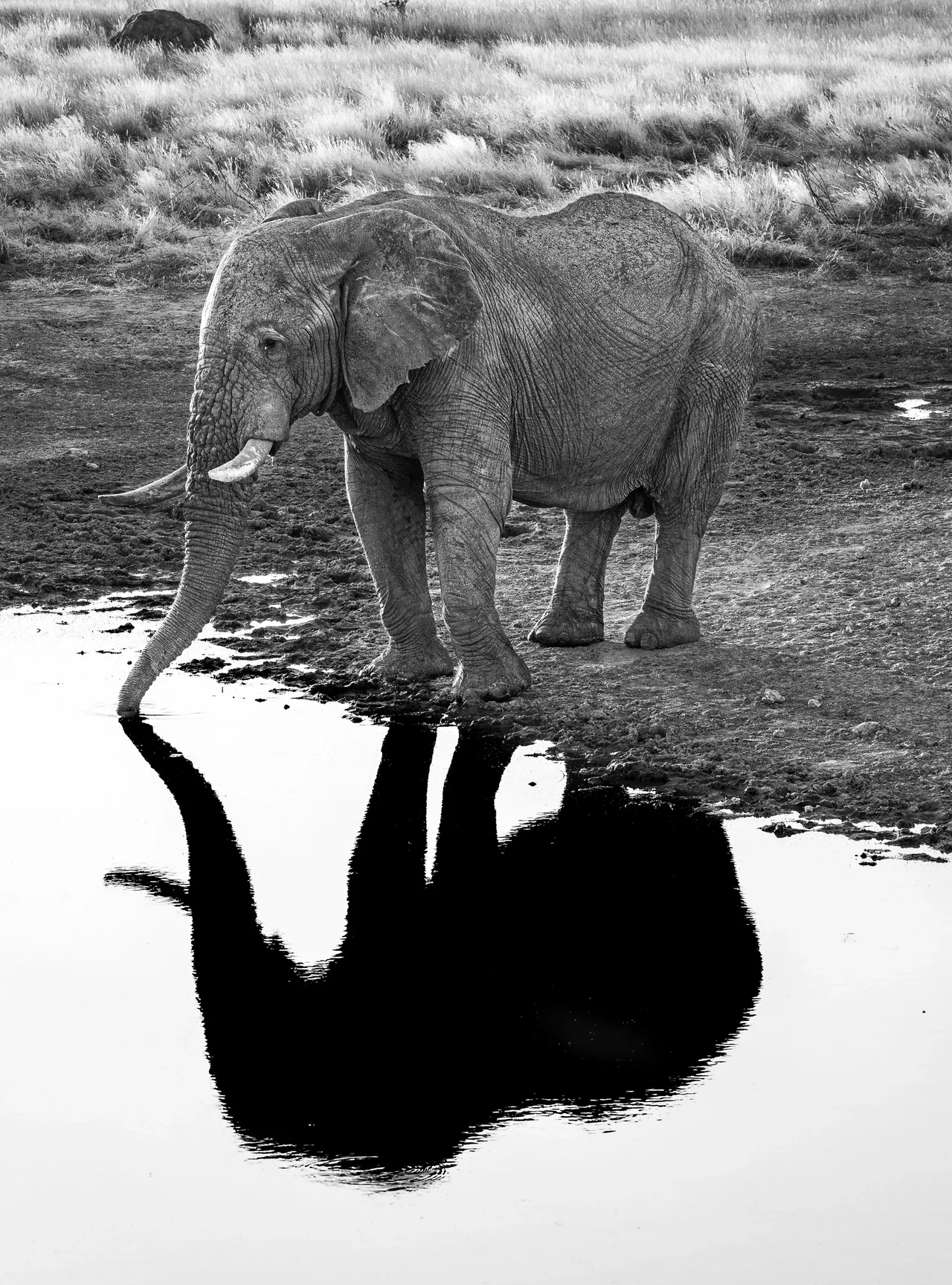
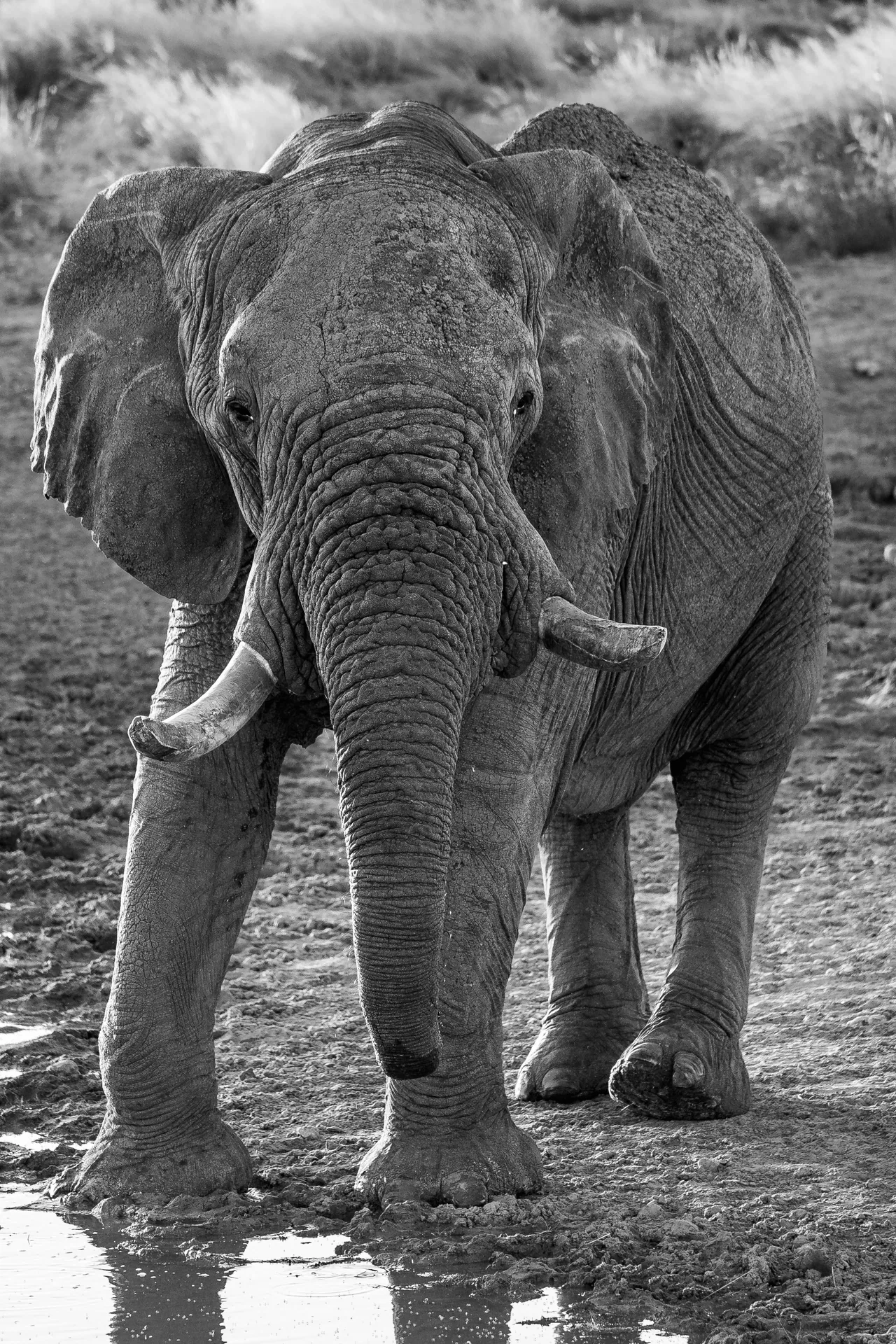
The staff tell us that in the last three days no animals have come to drink there. Even so, we take turns on watch. During golden hour, someone suddenly says they see an elephant in the distance. We grab binoculars — it’s really there. Slowly, very slowly, it approaches.
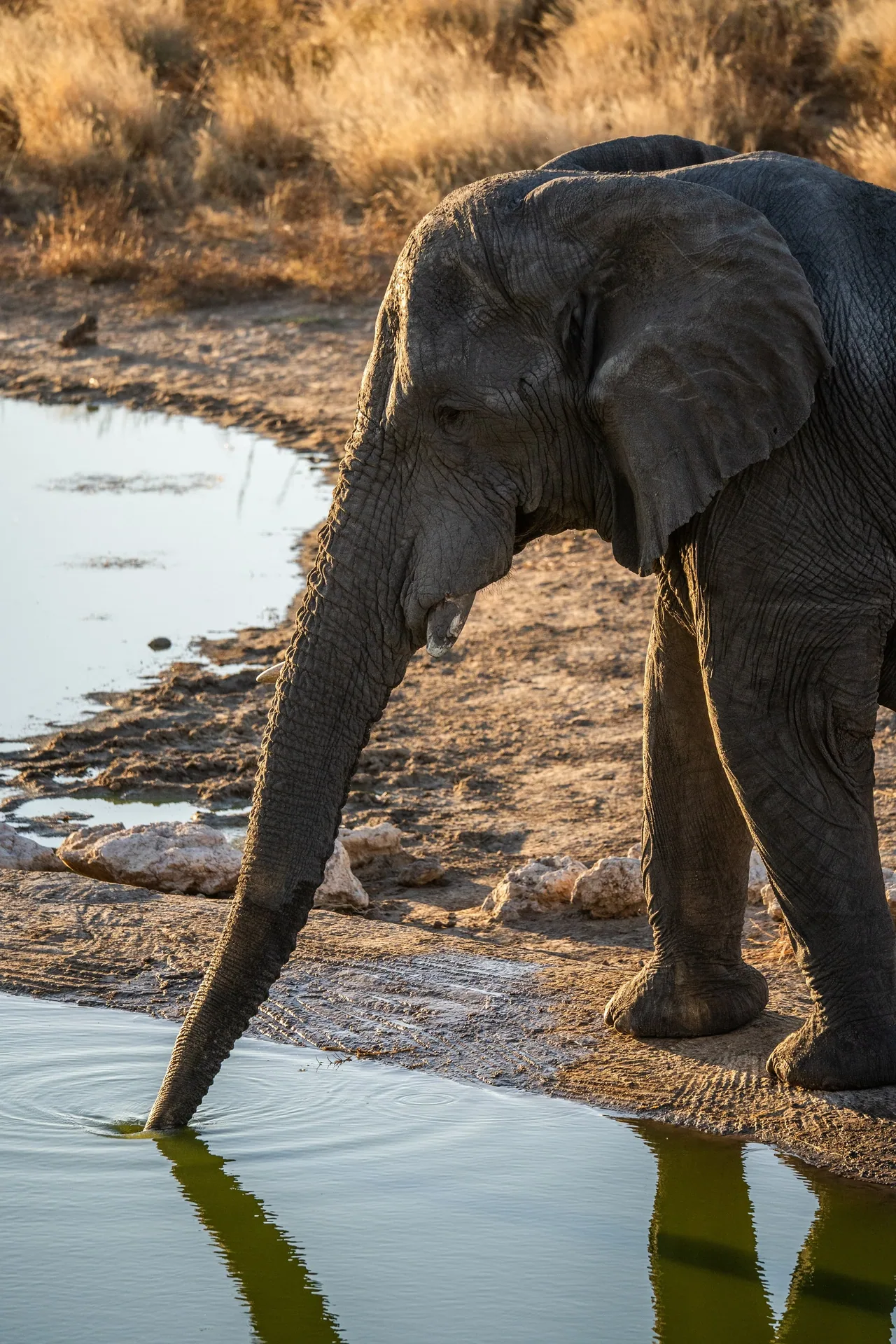
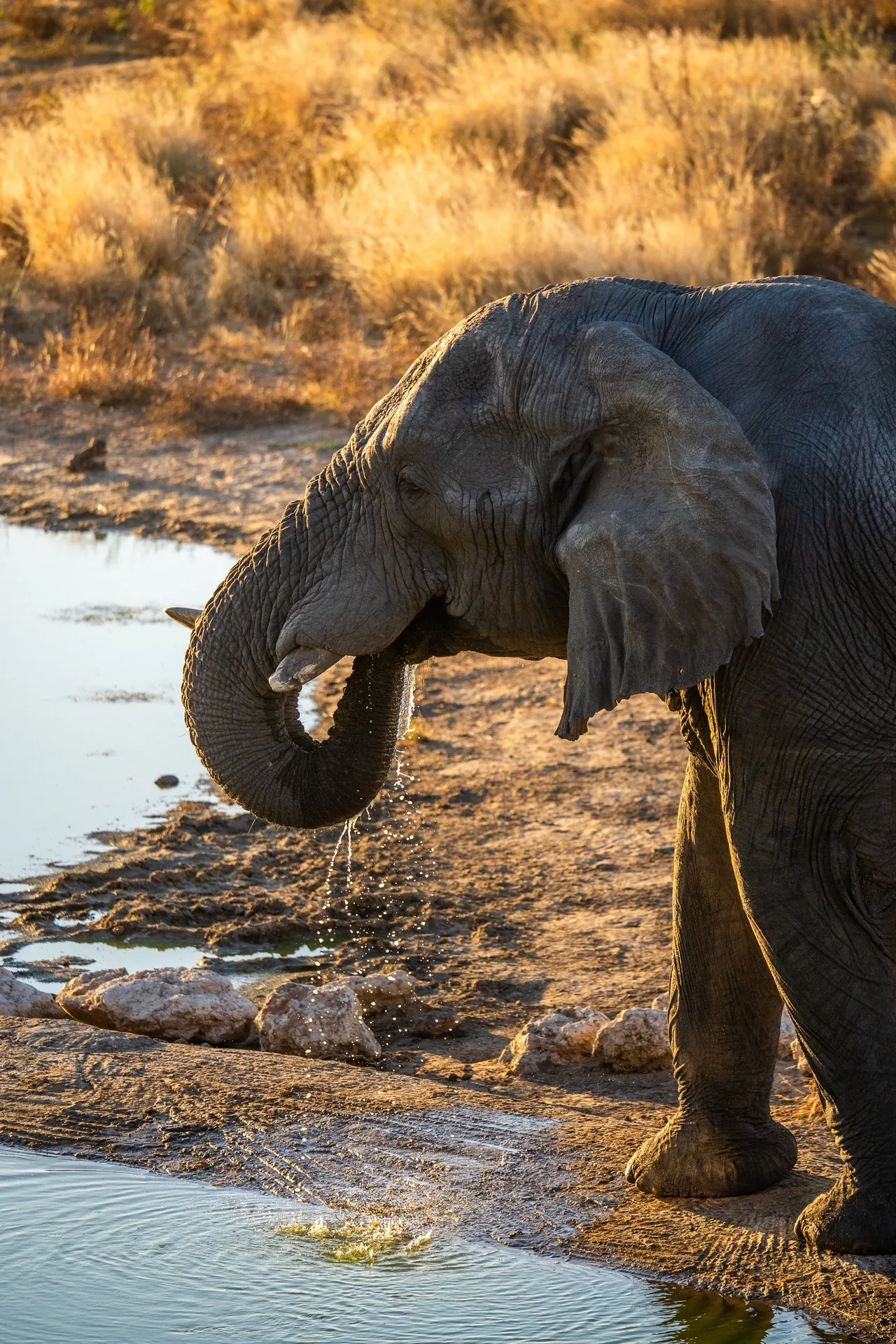
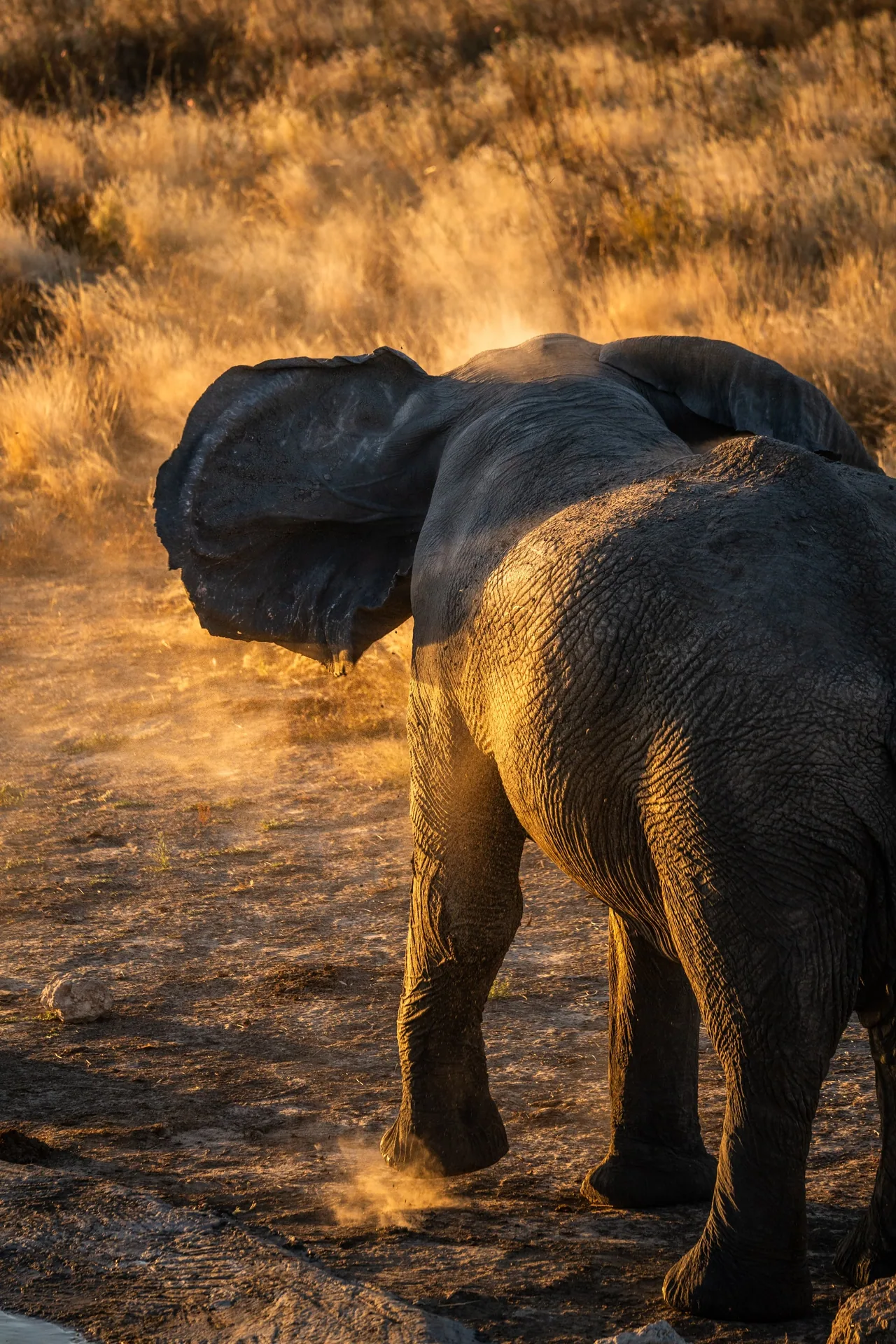
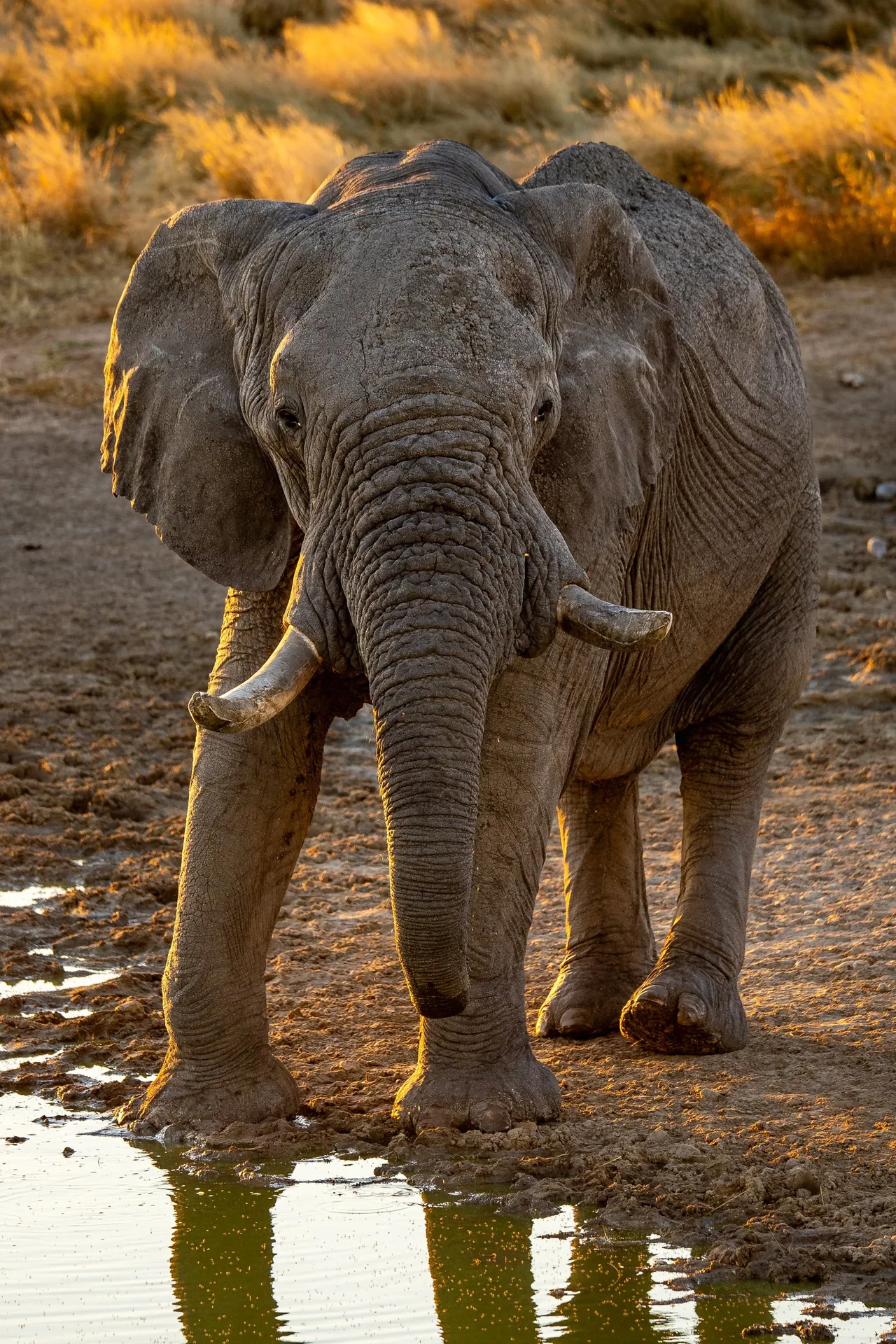
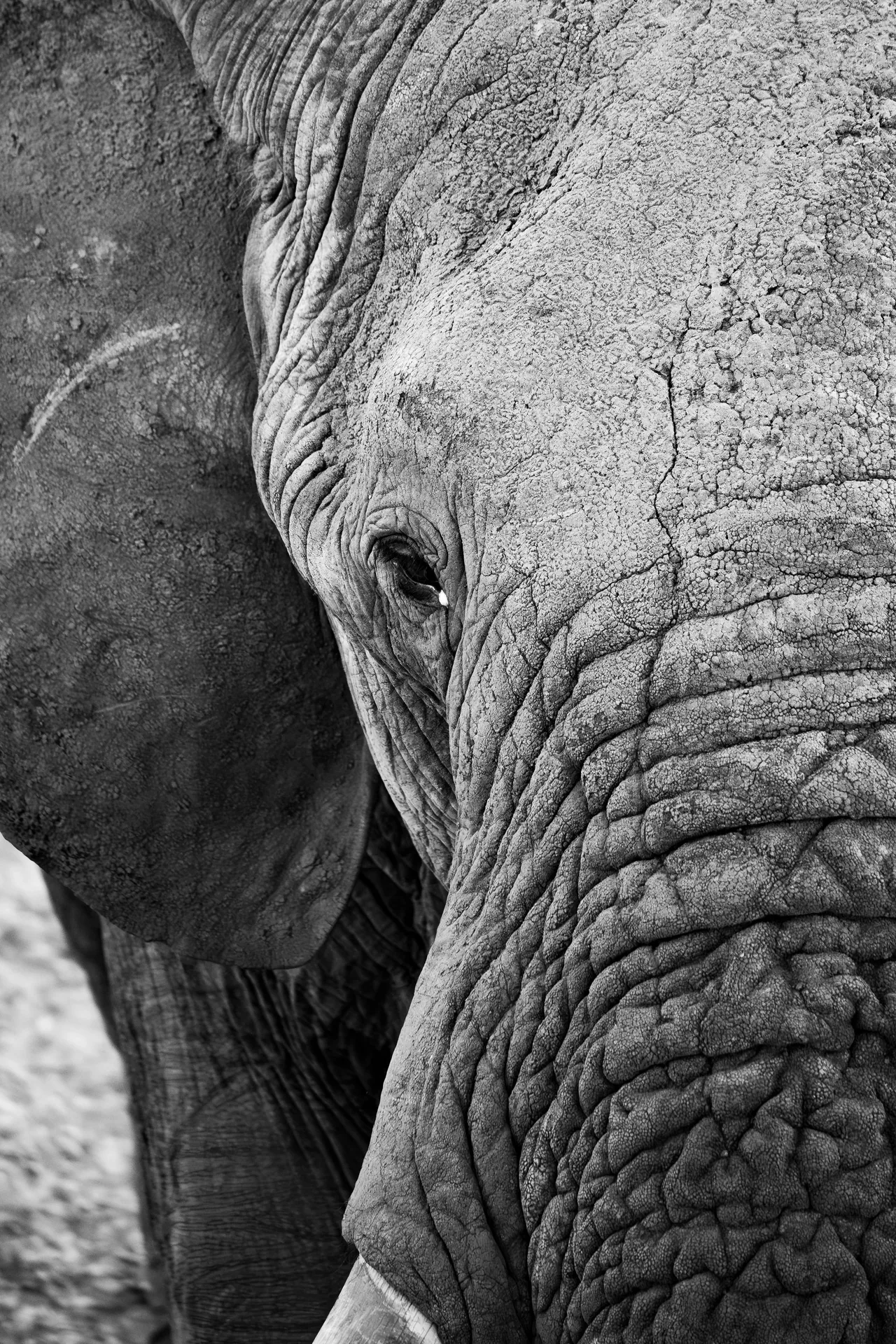
After a while, the elephant is standing right in front of us. He’s clearly old, with scarred and cracked ears. He sucks water up into his trunk and pours it into his mouth, water spilling down onto the ground. The entire hide is silent — you could hear a pin drop.
Then a second, younger elephant appears. They keep some distance at first, each drinking from a different part of the waterhole. Eventually, they gently move toward each other, almost like old friends, and walk away together into the sunset. It’s one of those moments that stay with you forever.
Day 10
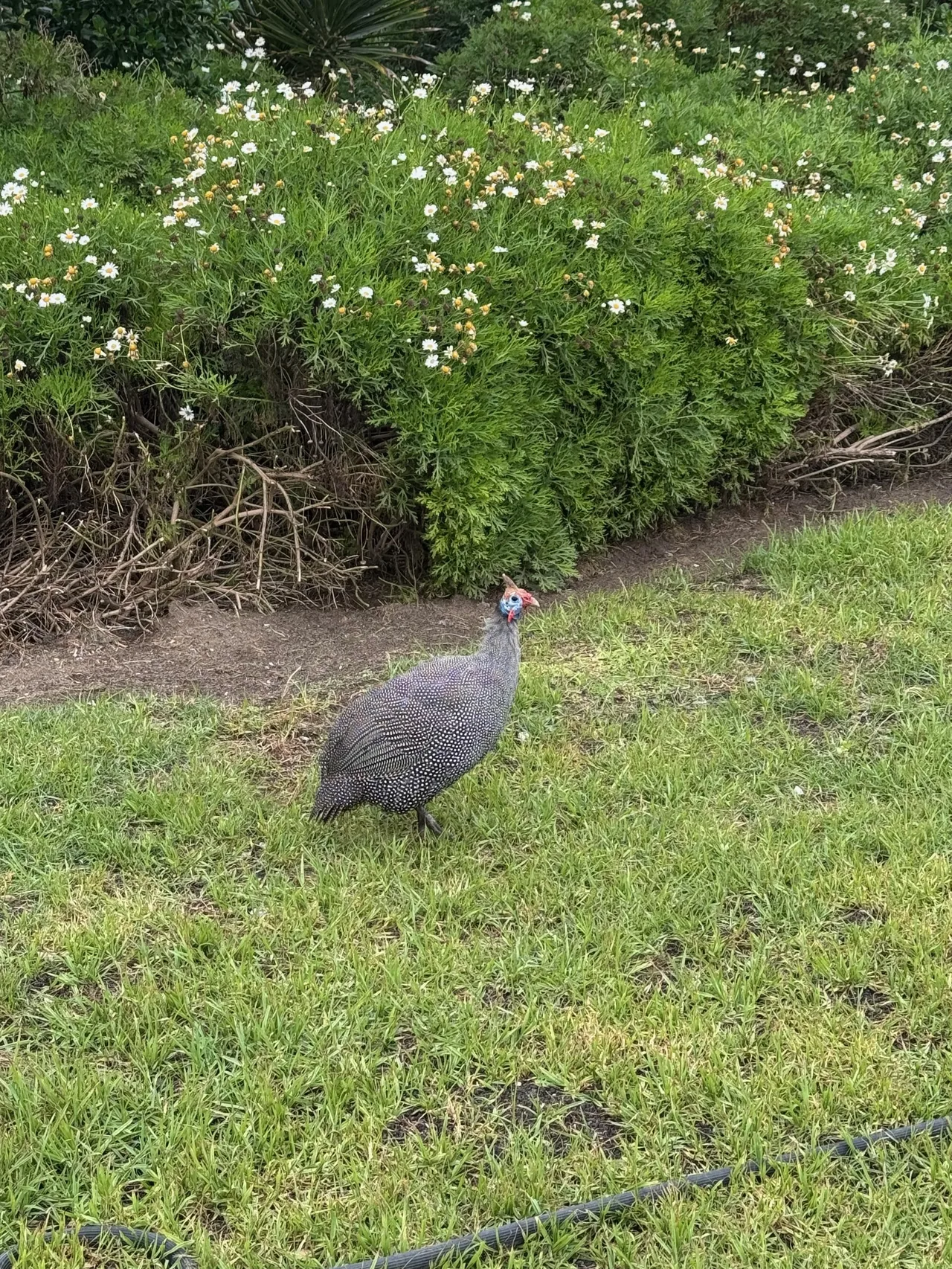
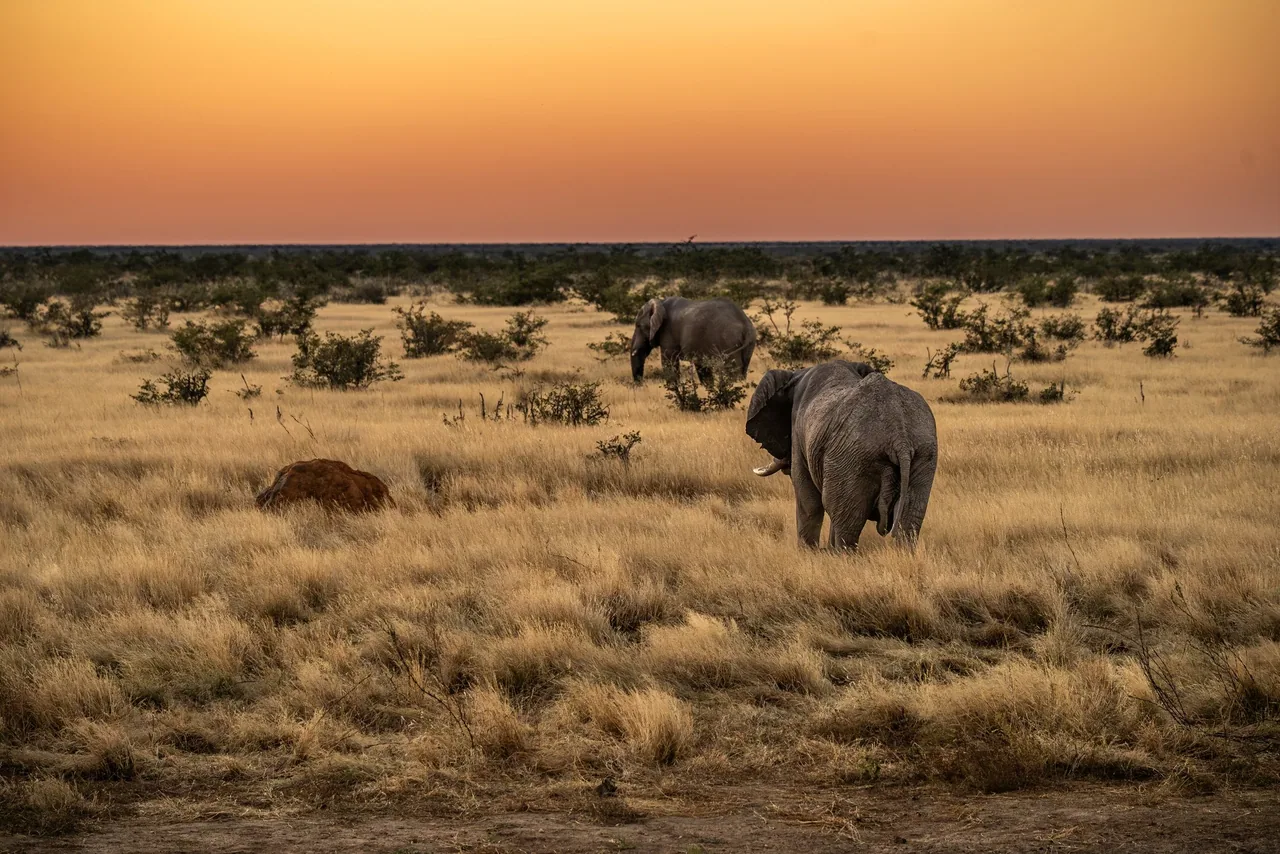
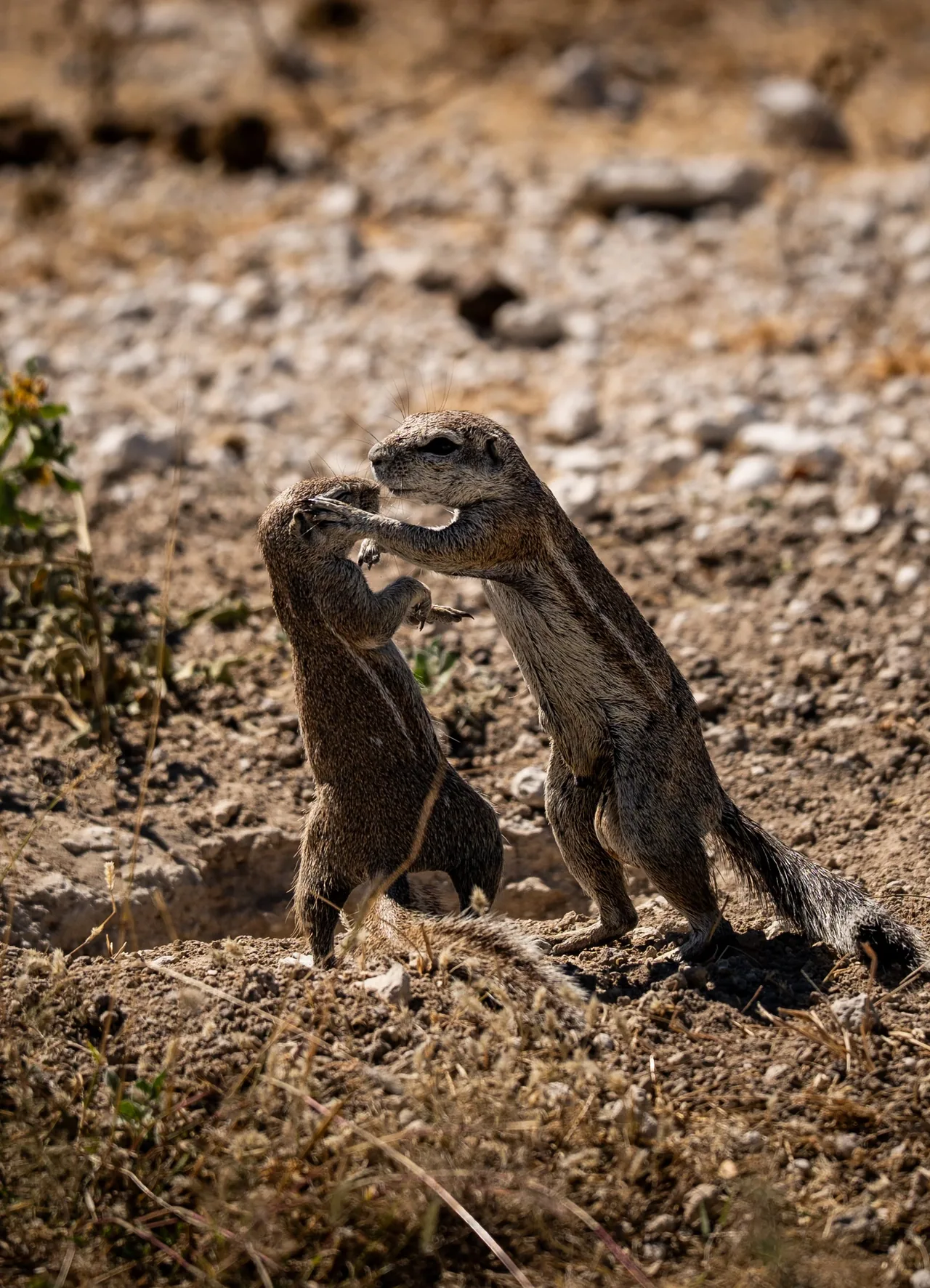
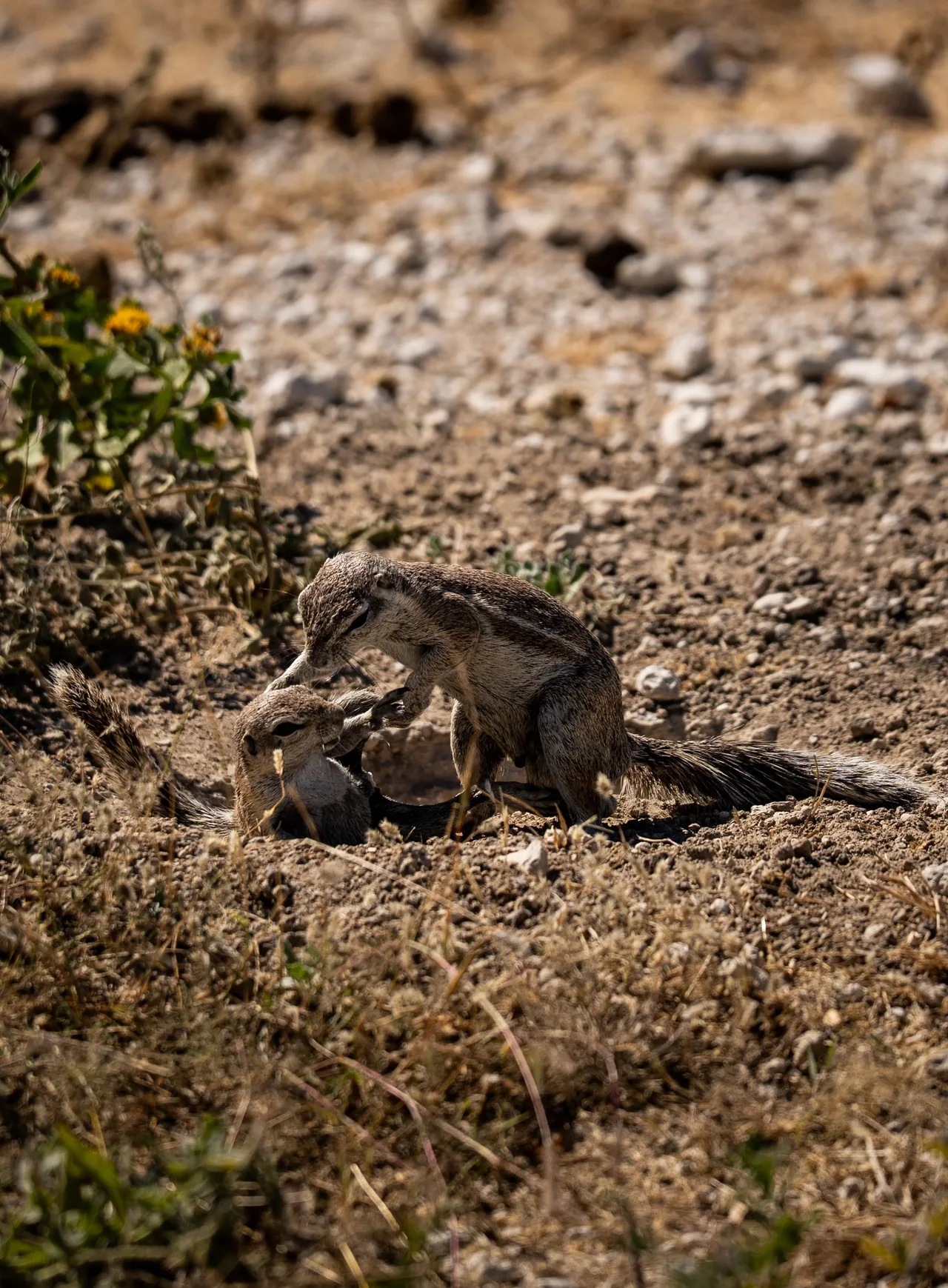
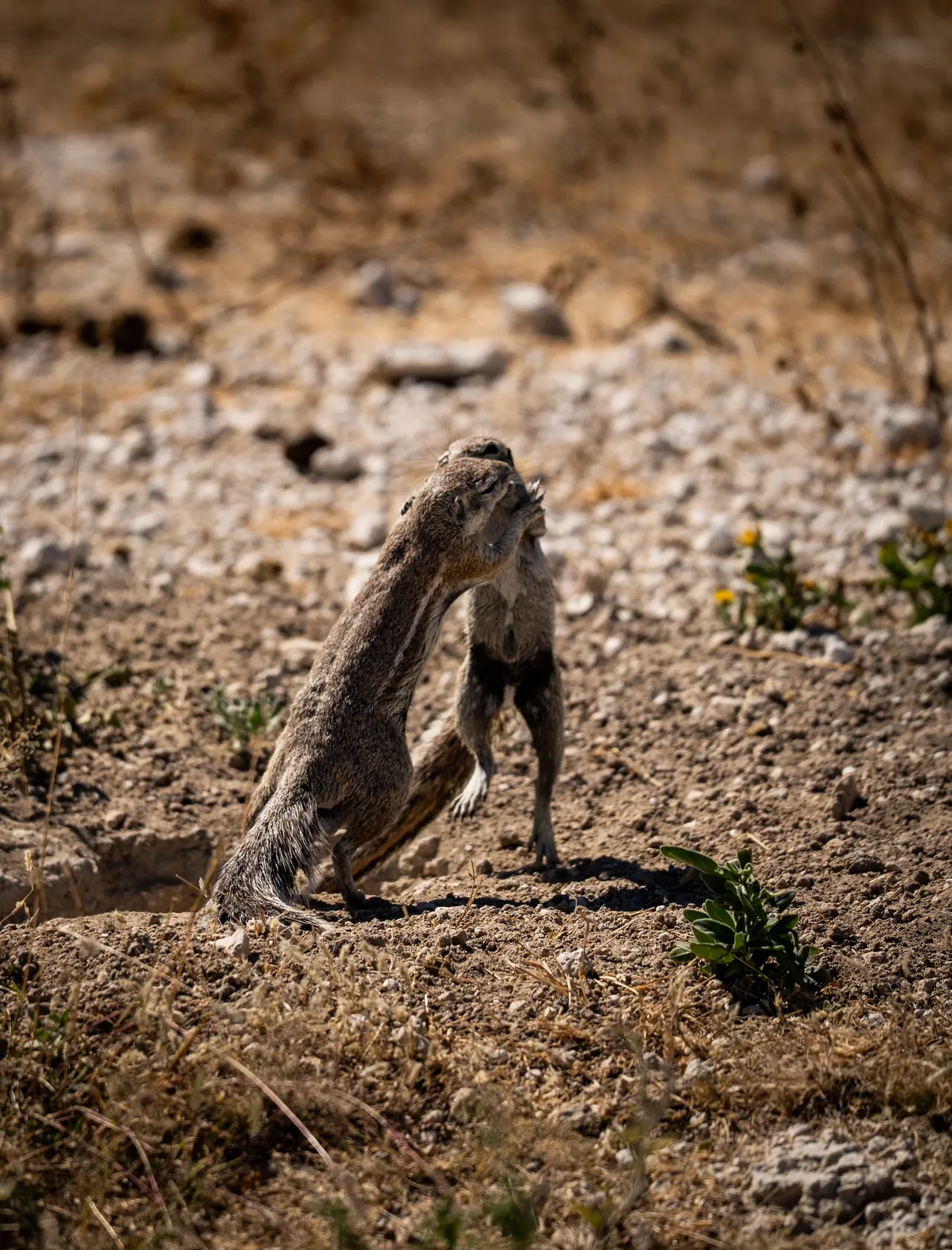
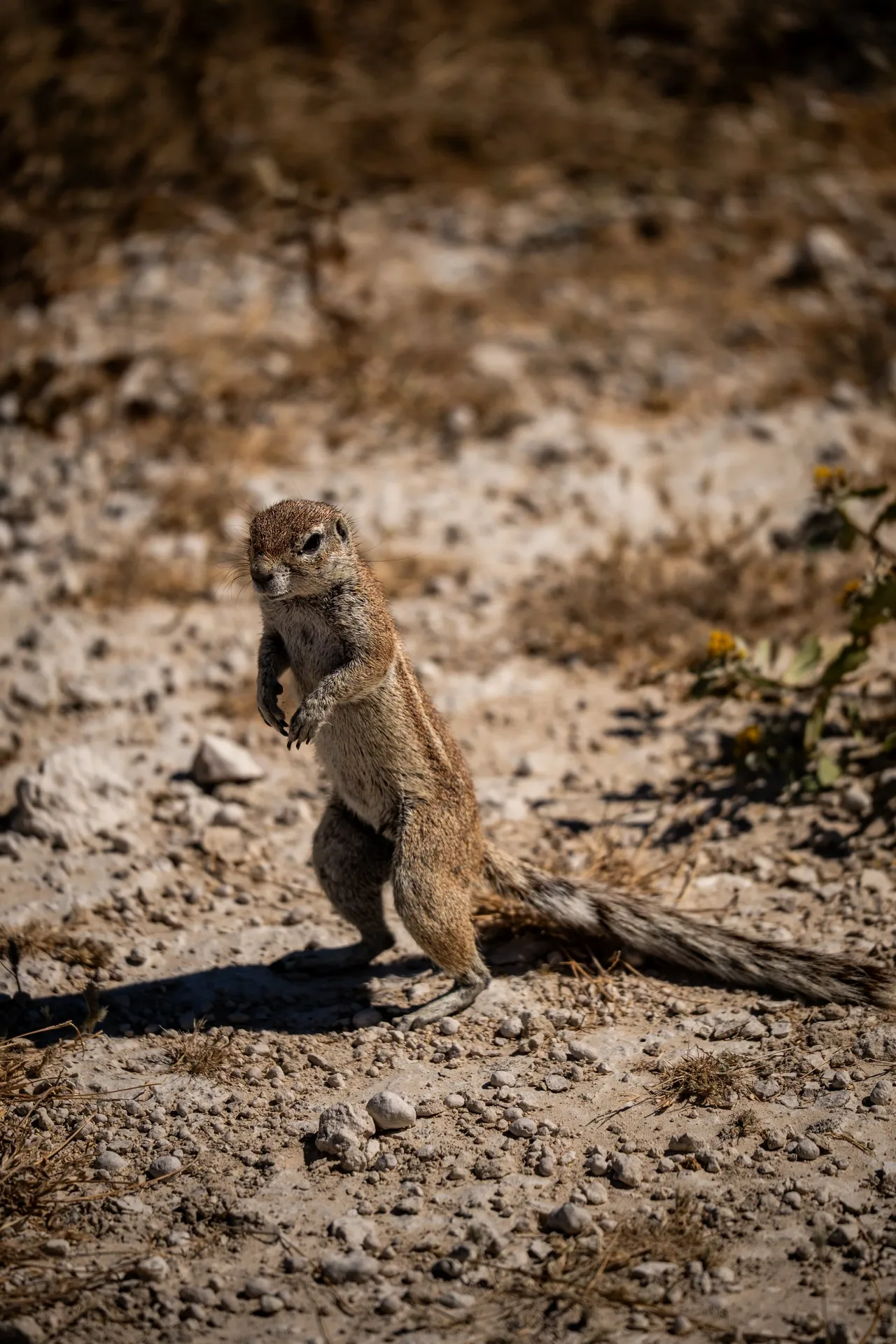
In the morning we break camp and drive further through Etosha. Over the course of the day we see dozens, maybe hundreds of zebras, antelopes and wildebeest. We spot more giraffes, ostriches, smaller animals like ground squirrels and what we start calling “African chickens” — helmeted guineafowl.
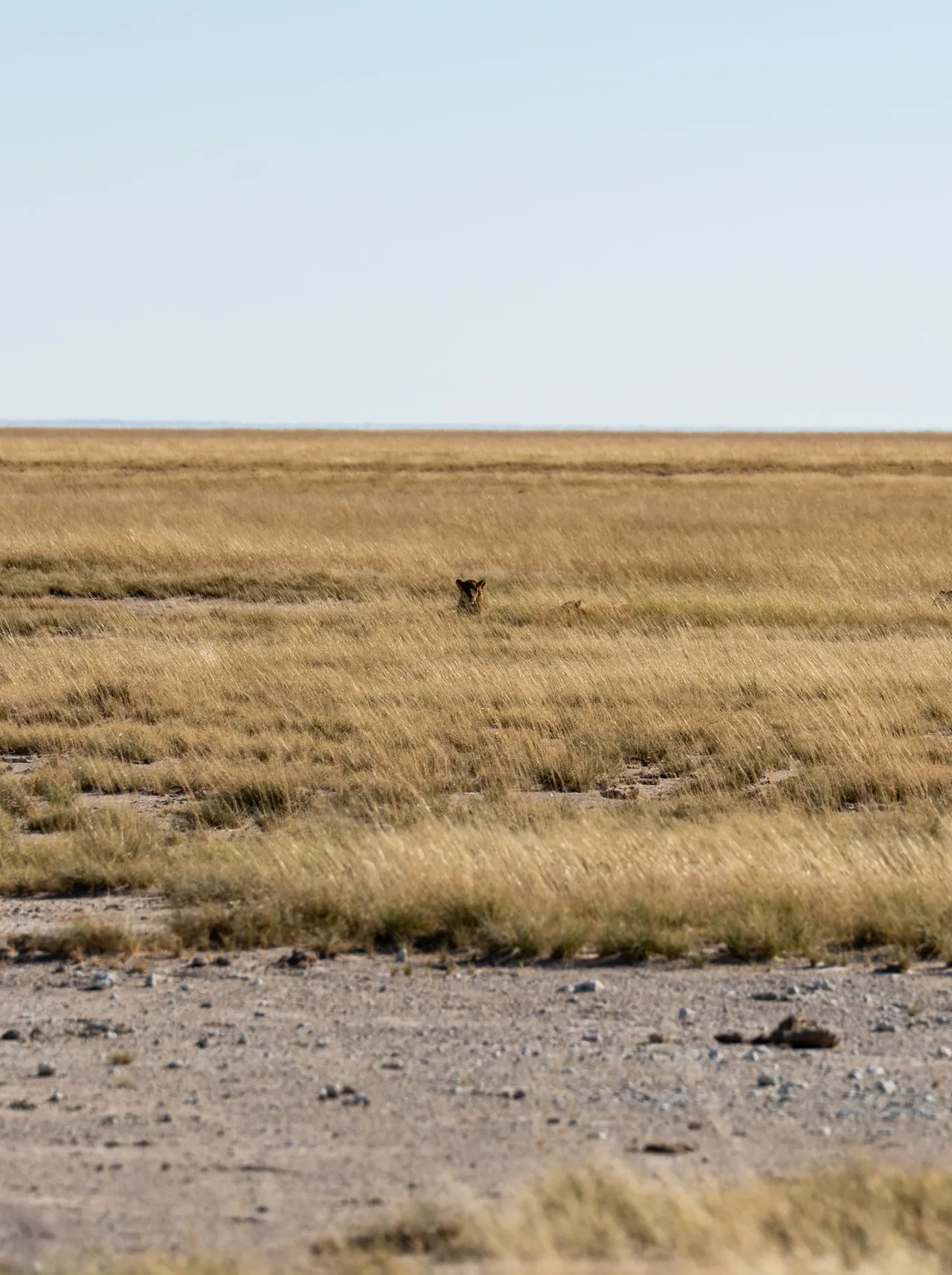
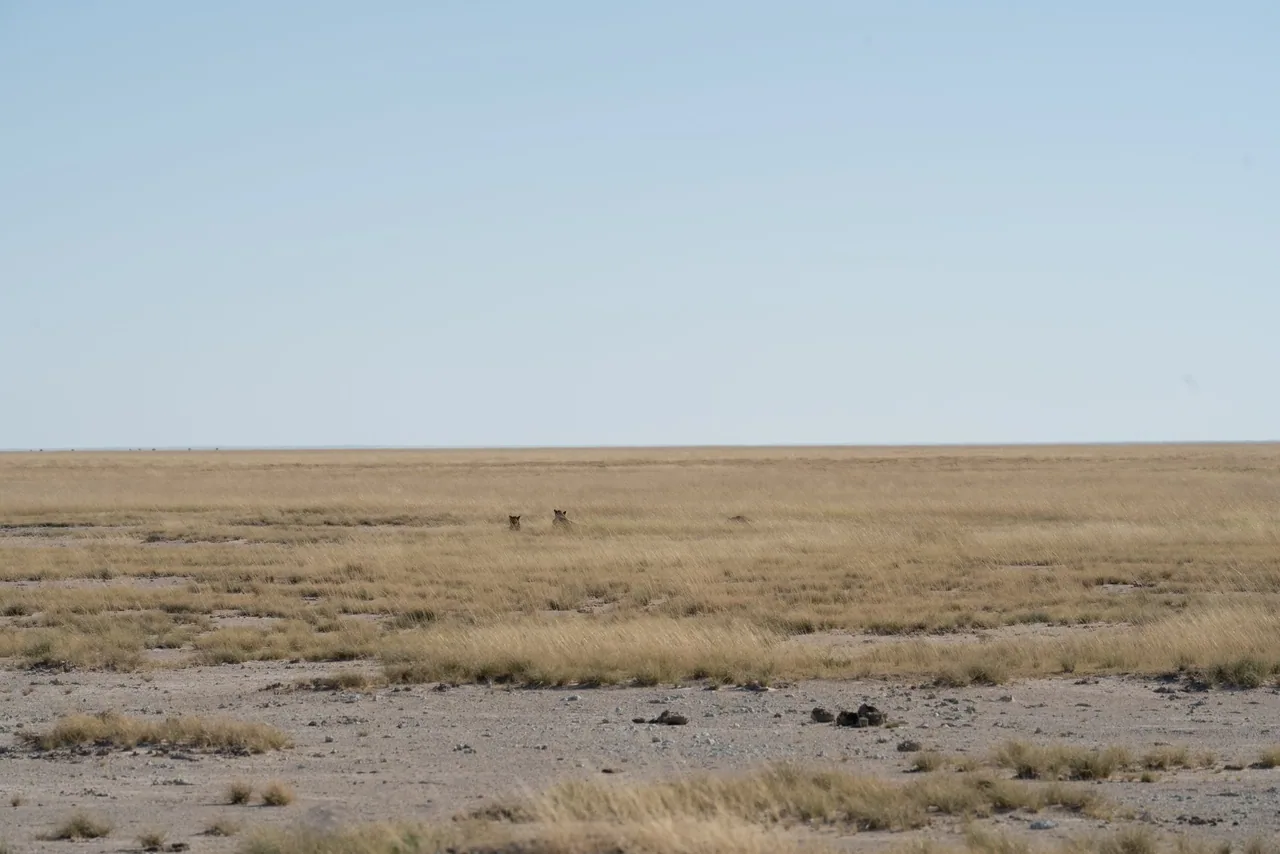
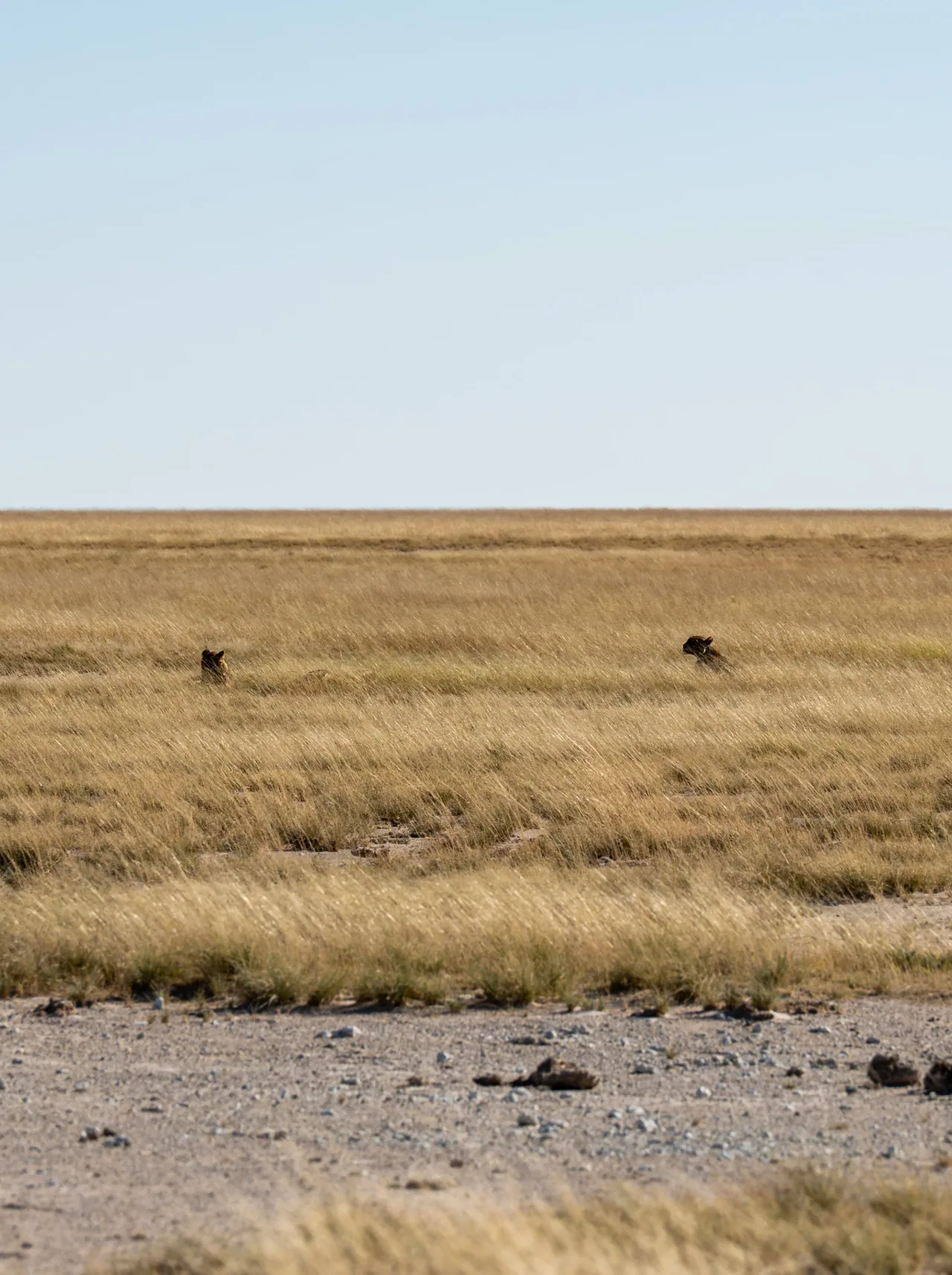
At one waterhole we spot lions in the grass in the distance, just visible through binoculars. It’s fascinating to see how all the other animals are facing the exact direction where the lions are hiding, as if they can sense them even when they can’t see them.
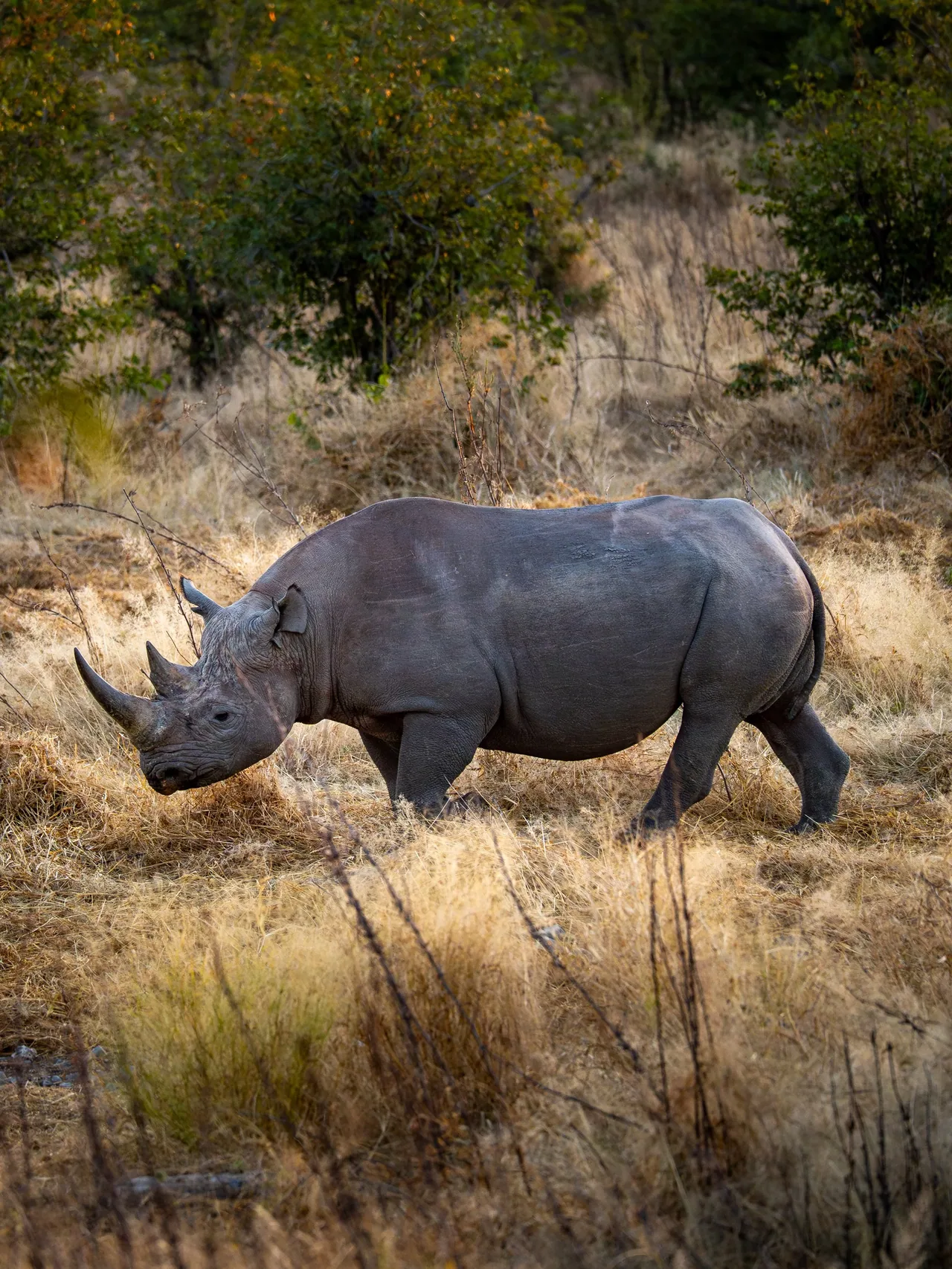
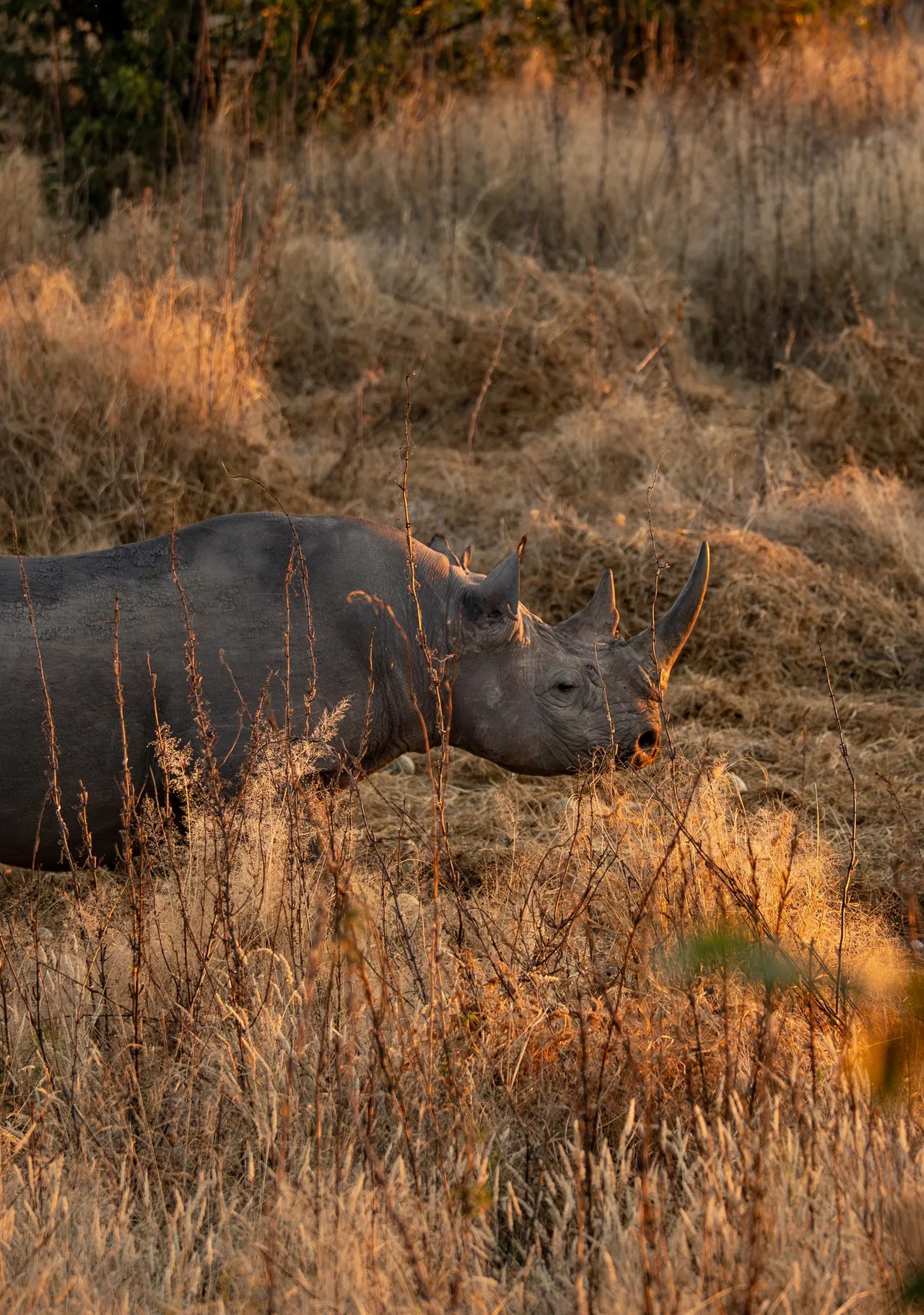
One of our cars splits off and drives ahead to the next camp. On their way, a rhino crosses the road right in front of them — something we all wanted to see, but only they get lucky. When a picture of the rhino appears in our WhatsApp group, we don’t believe it at first — it looks like an AI image.
In the afternoon we arrive at Halali Camp. We set up our tents and start preparing dinner. This camp has its own waterhole with a viewing area, so we again take turns keeping an eye on it.
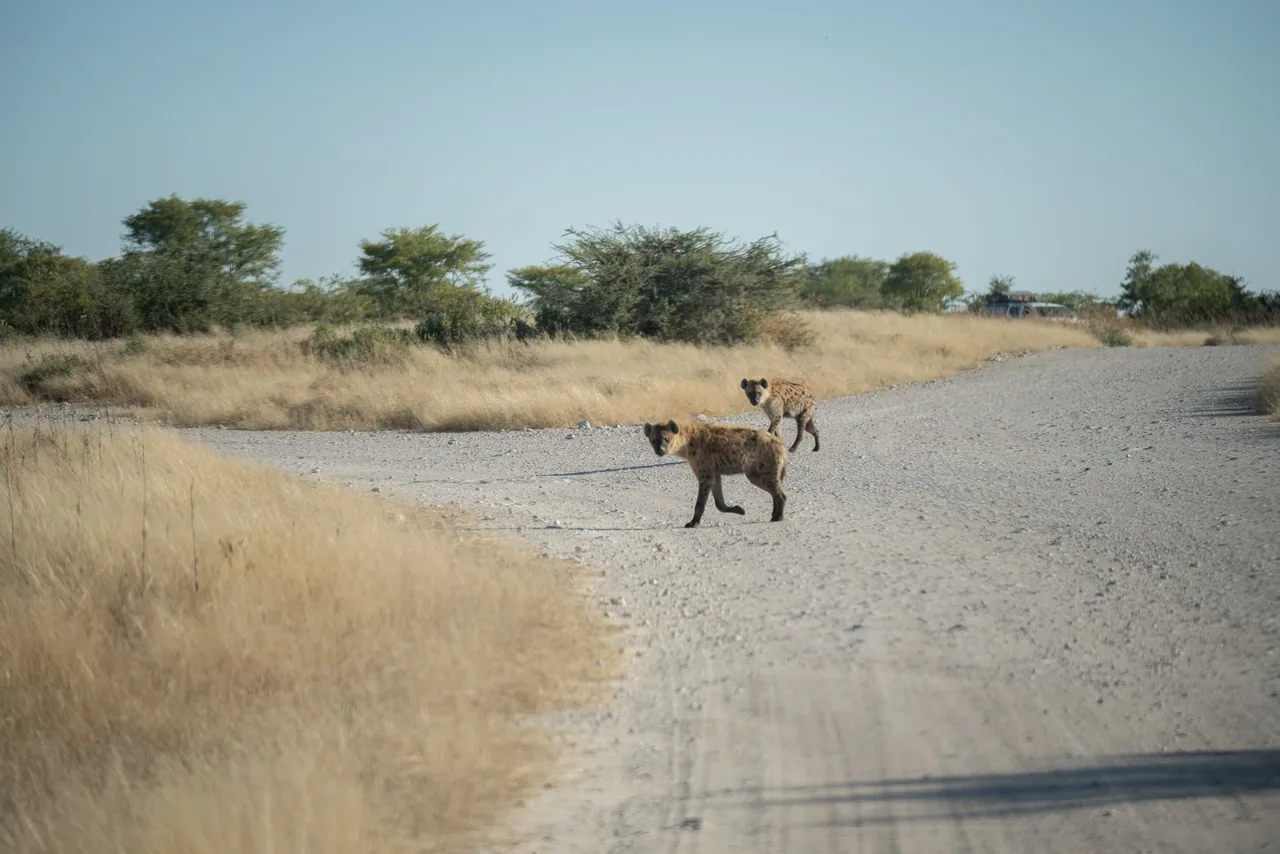
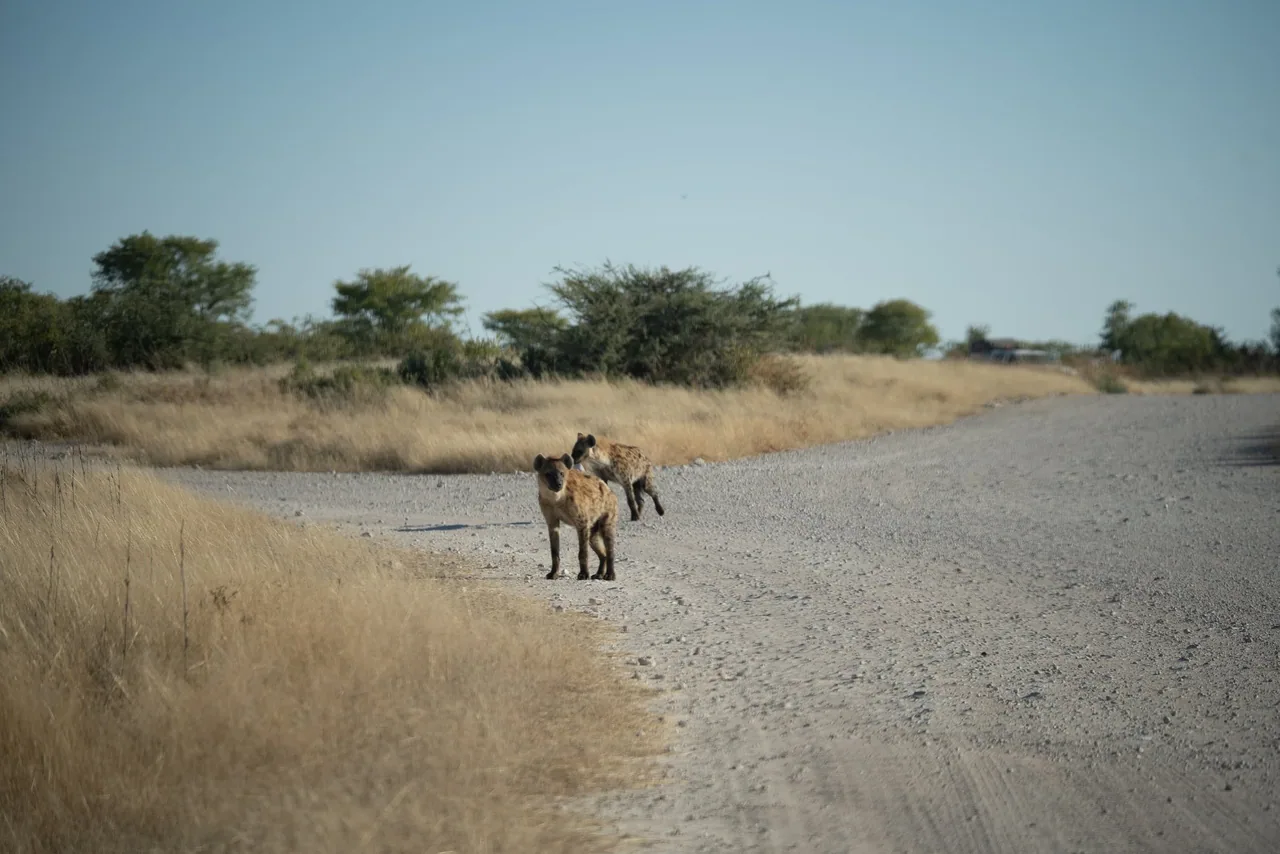
While we’re in the middle of cooking, a message comes in: “Hyenas and a rhino are here!” We drop everything and run, but we’re too late — the rhino has just left.
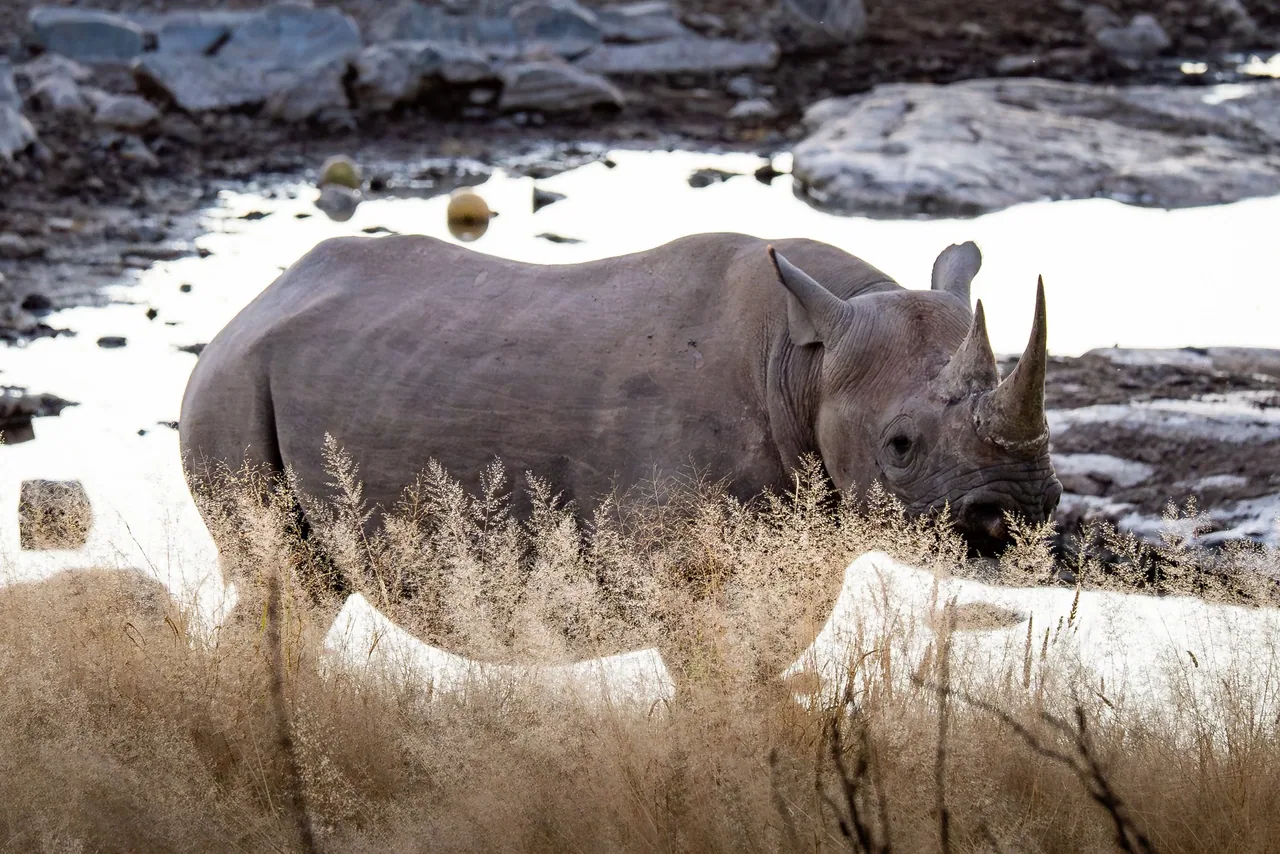
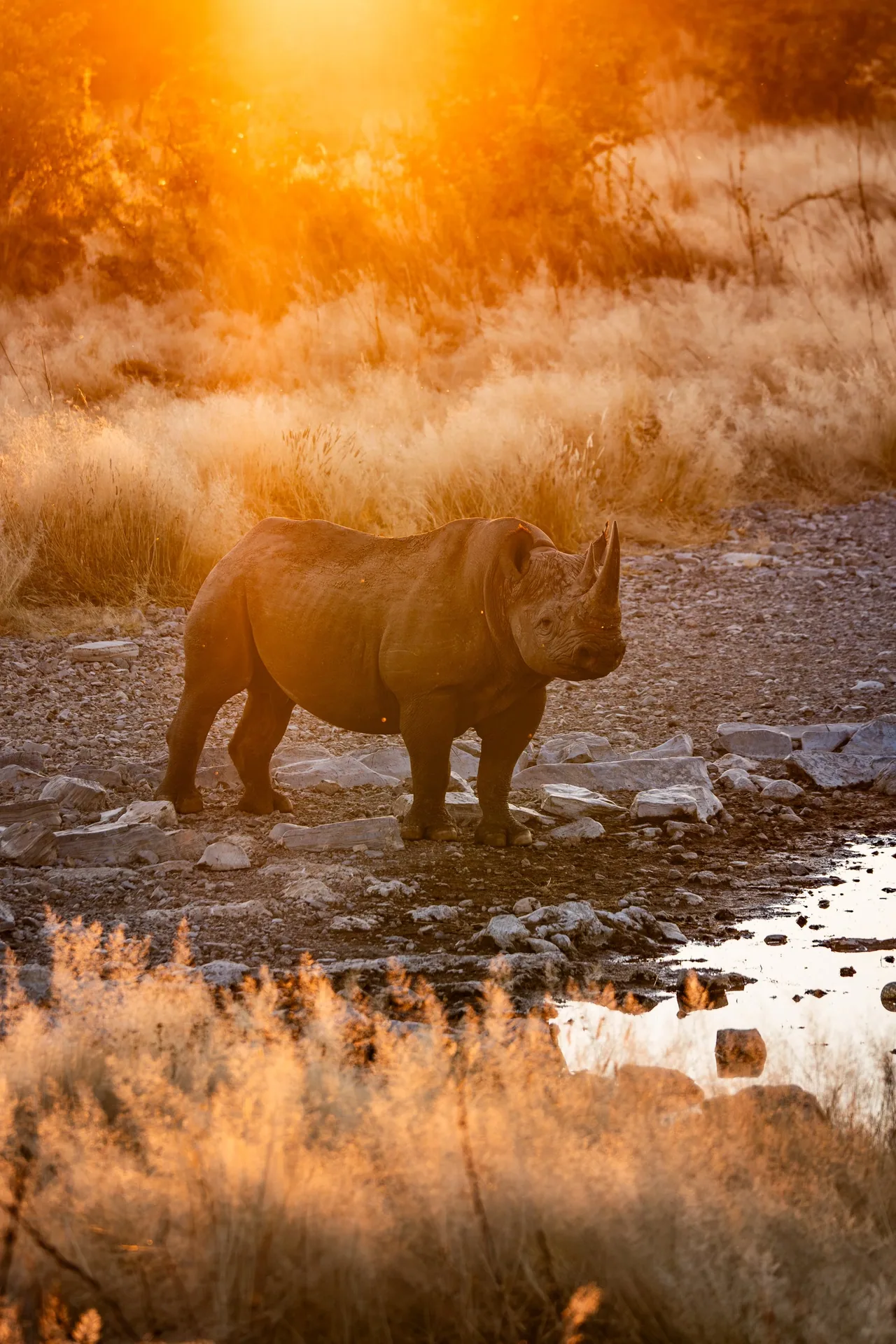
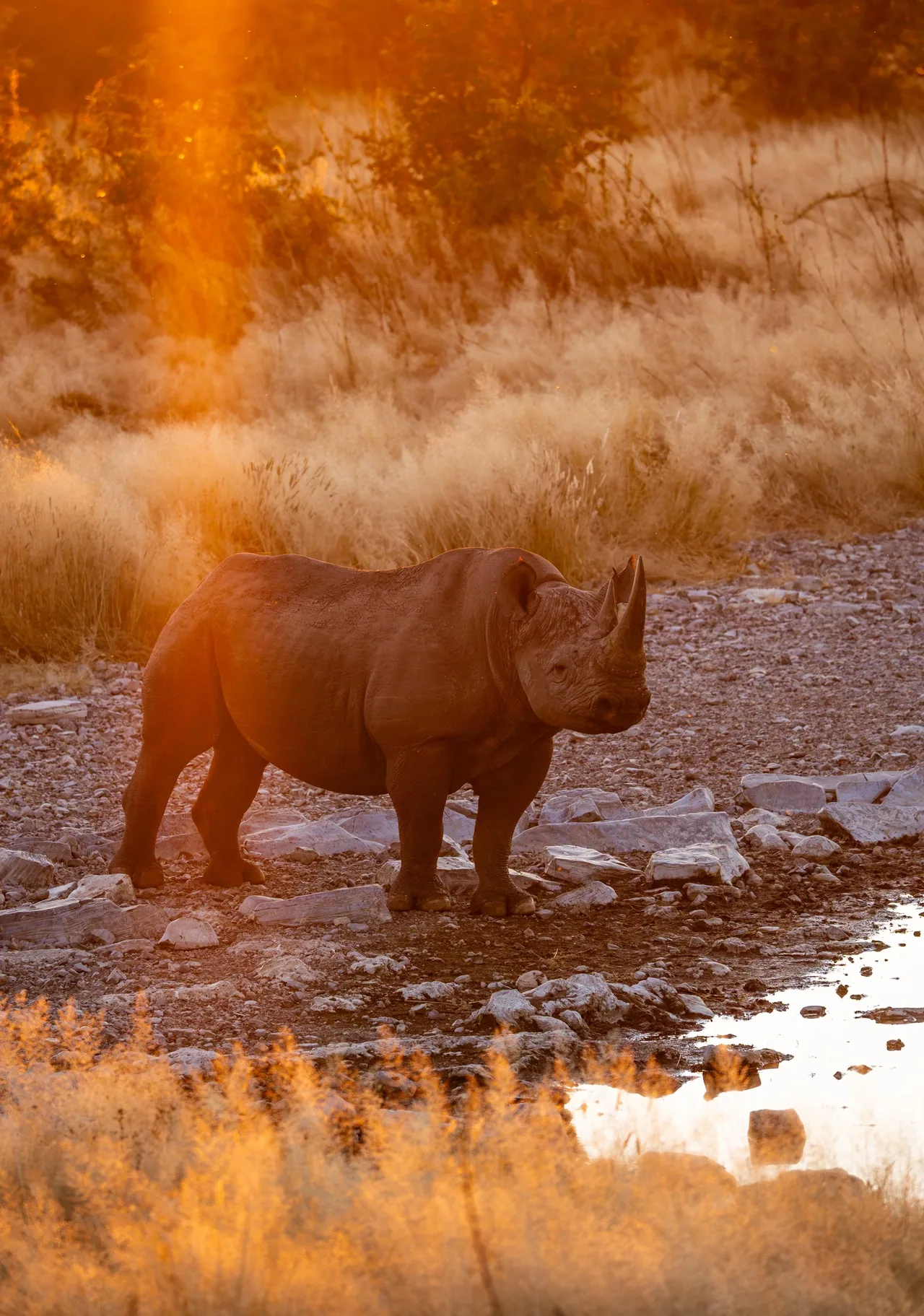
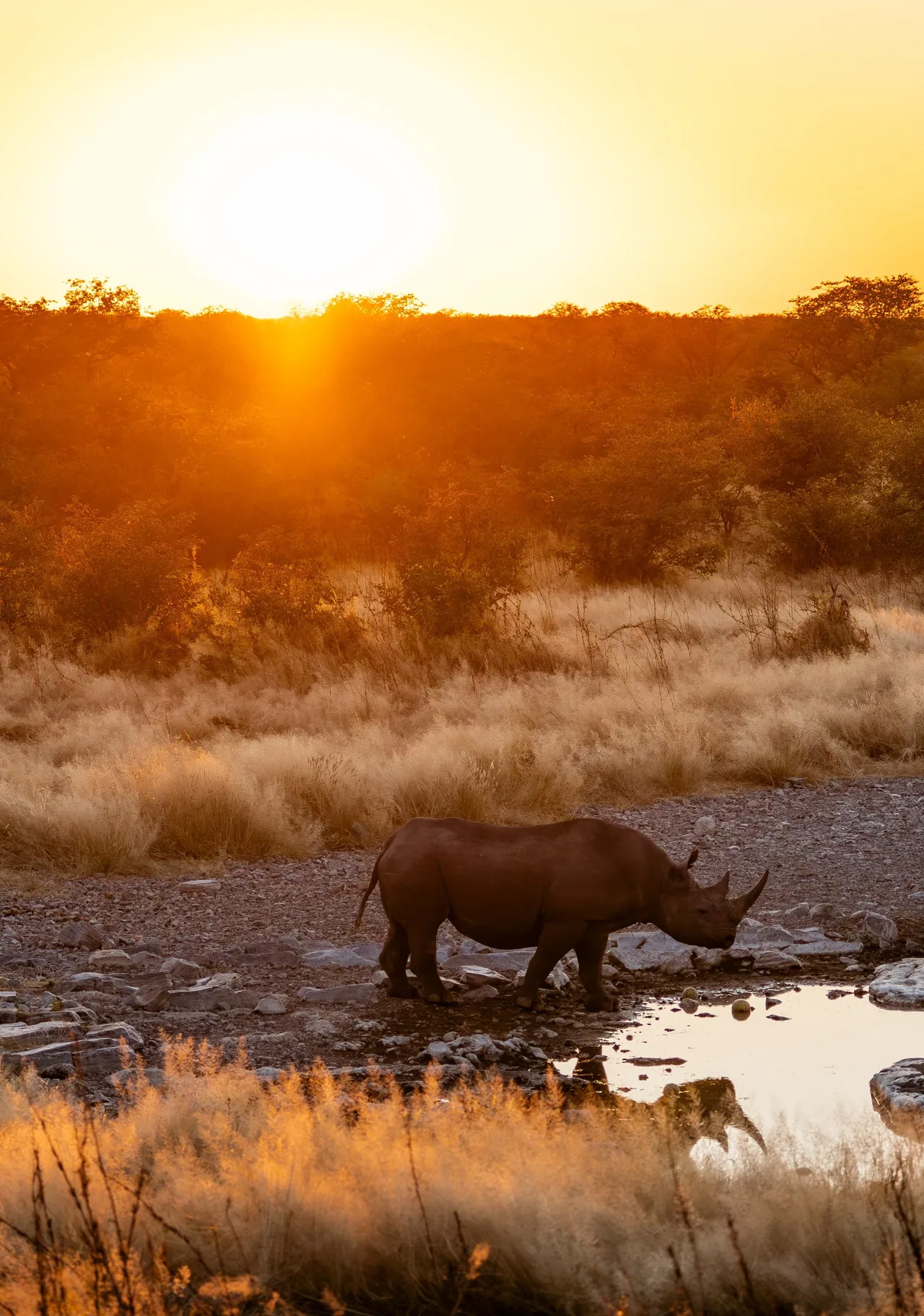
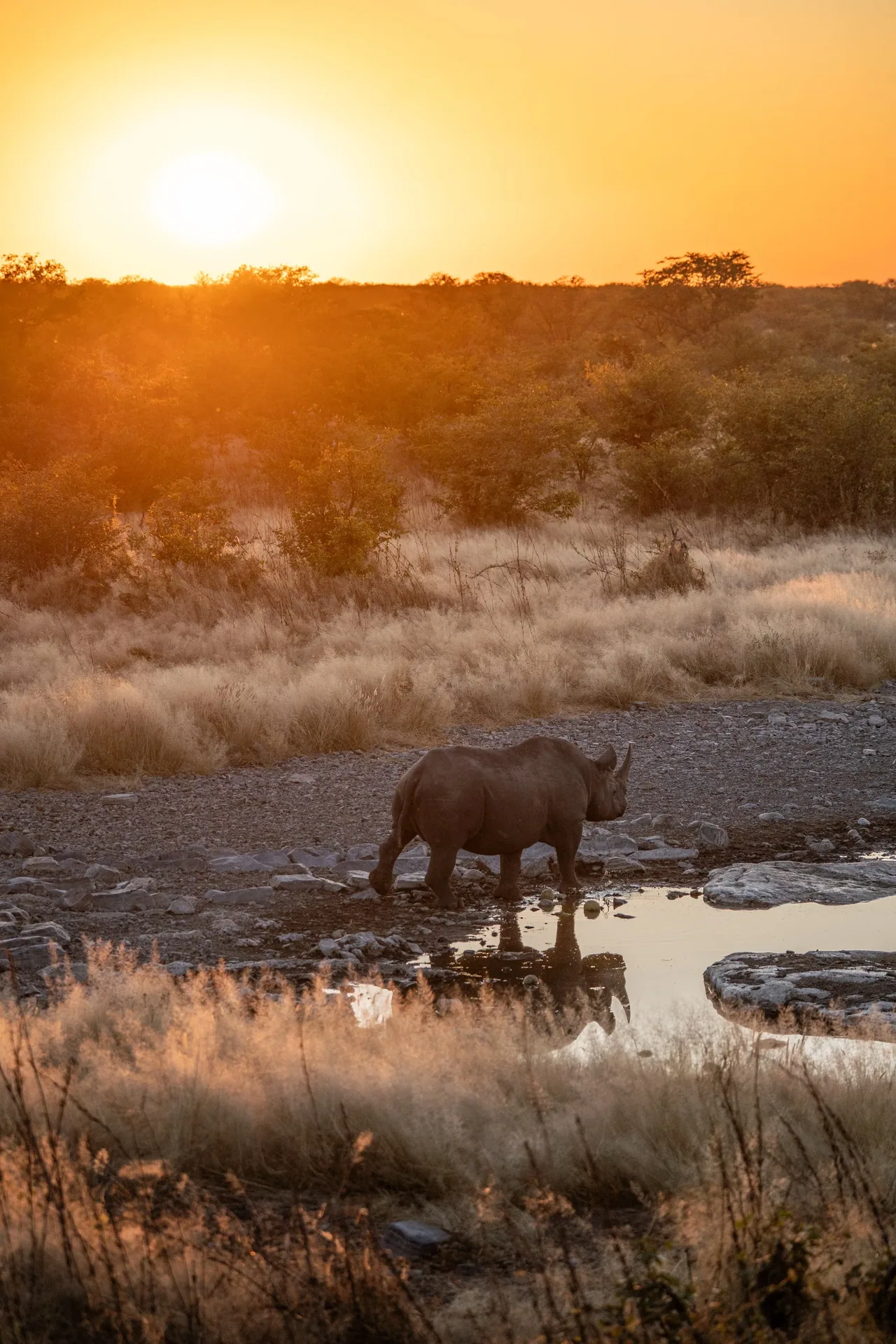
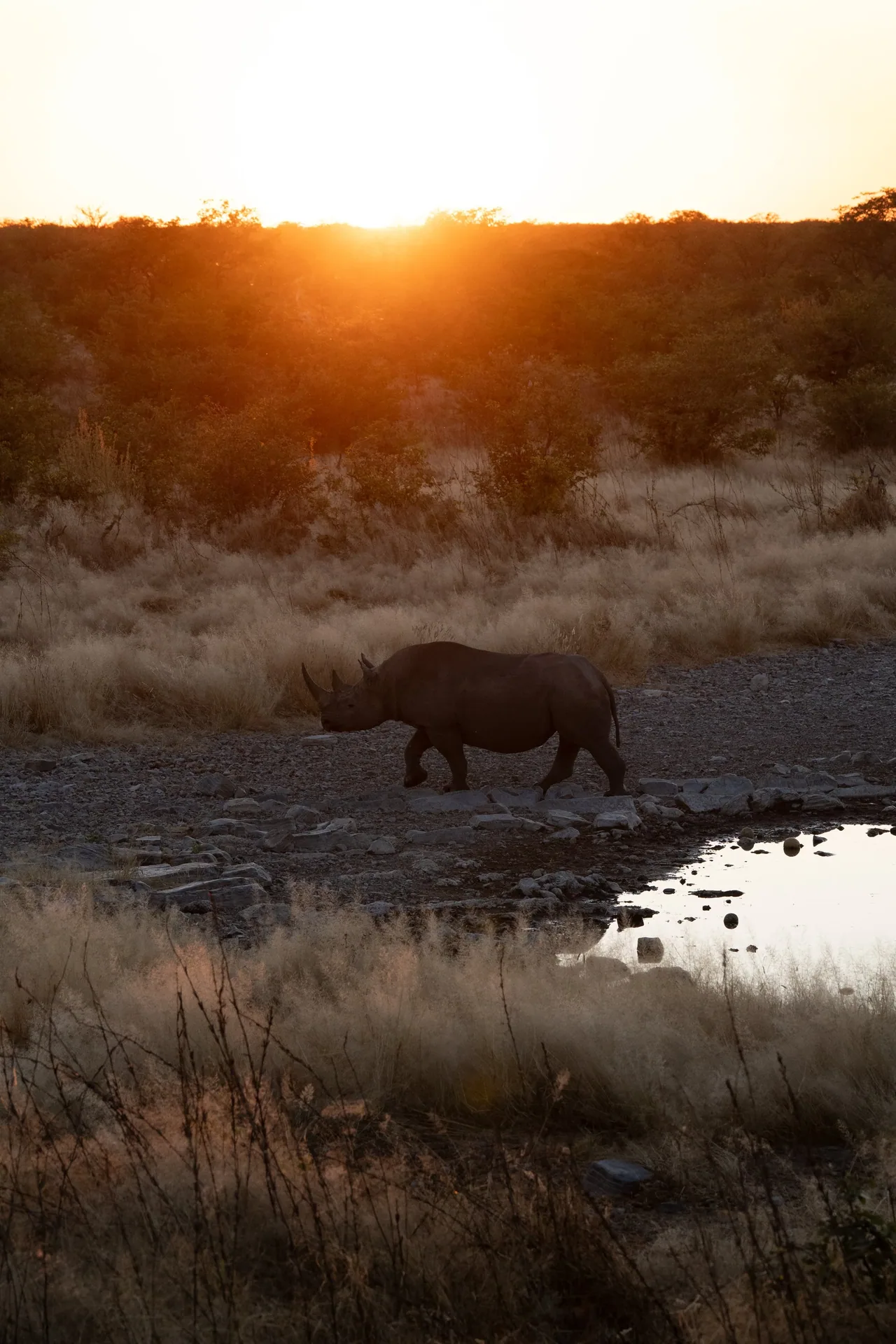
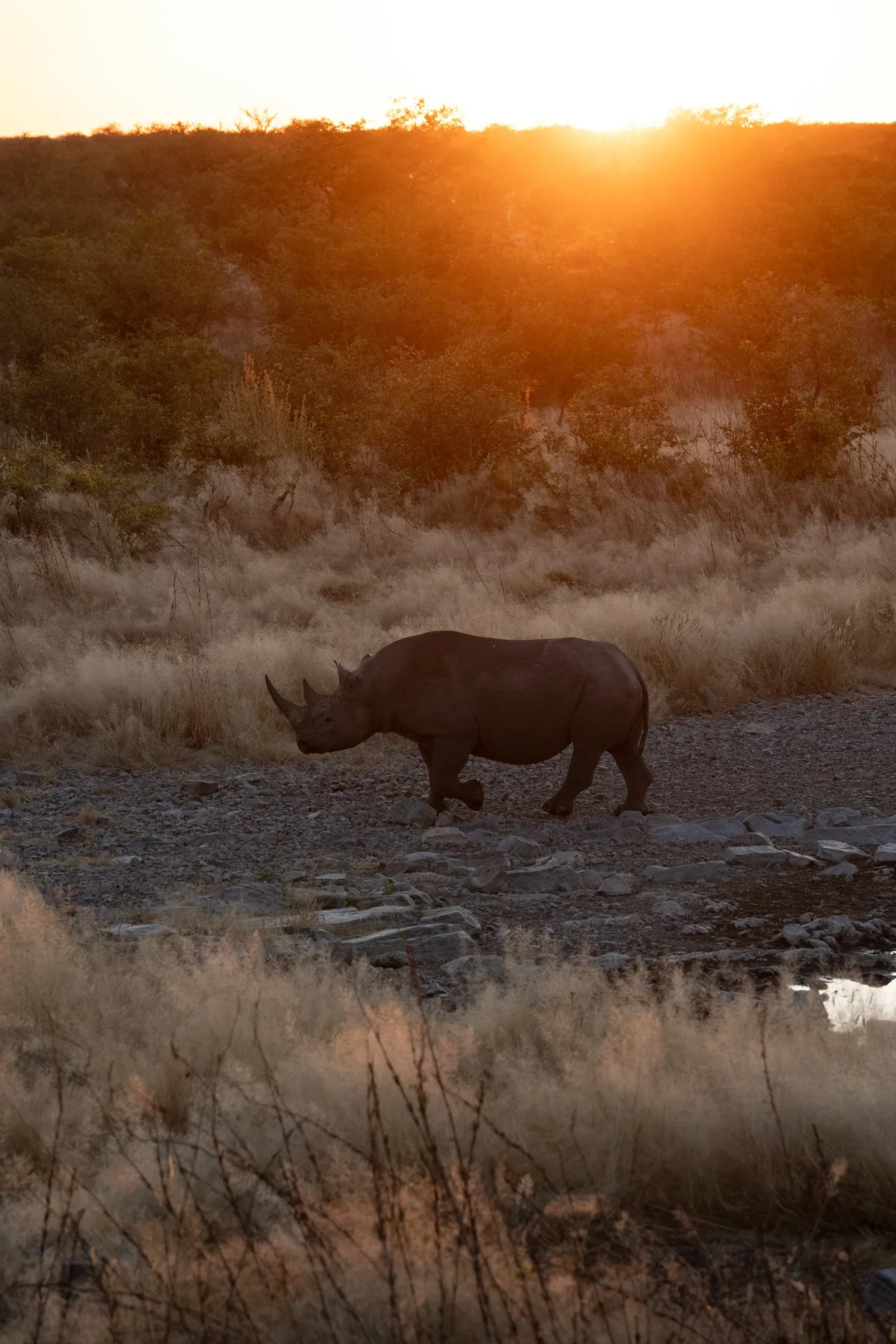
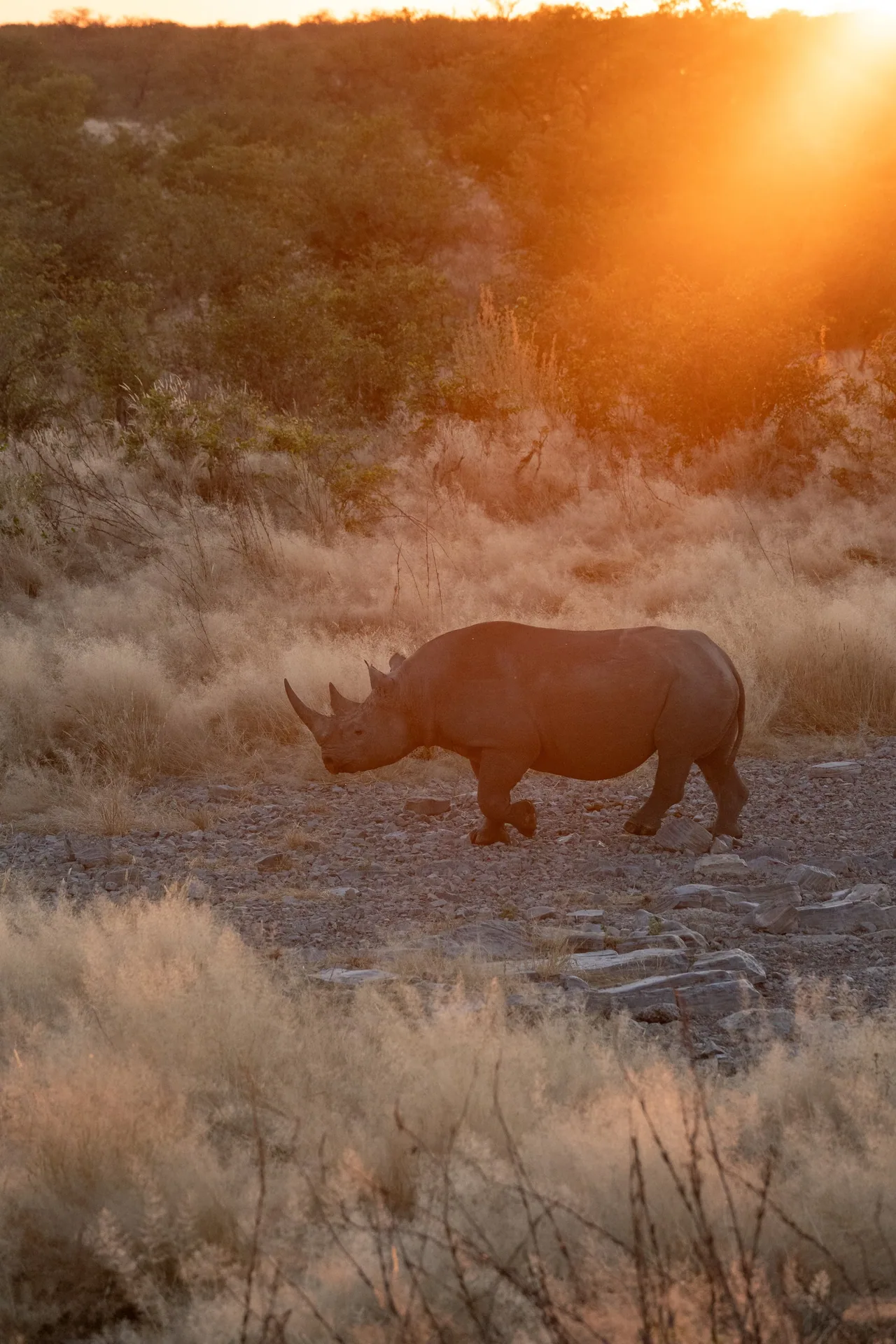
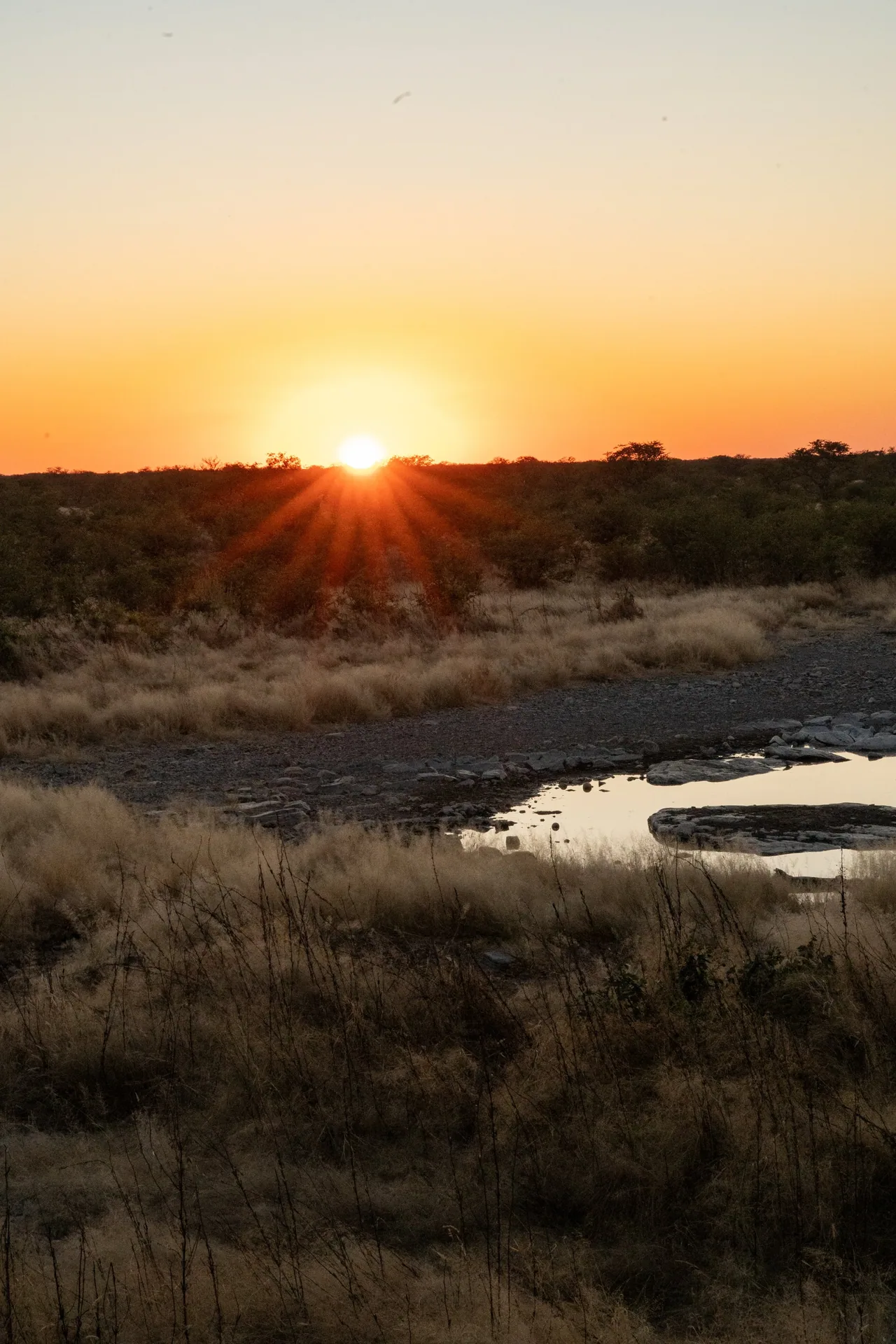
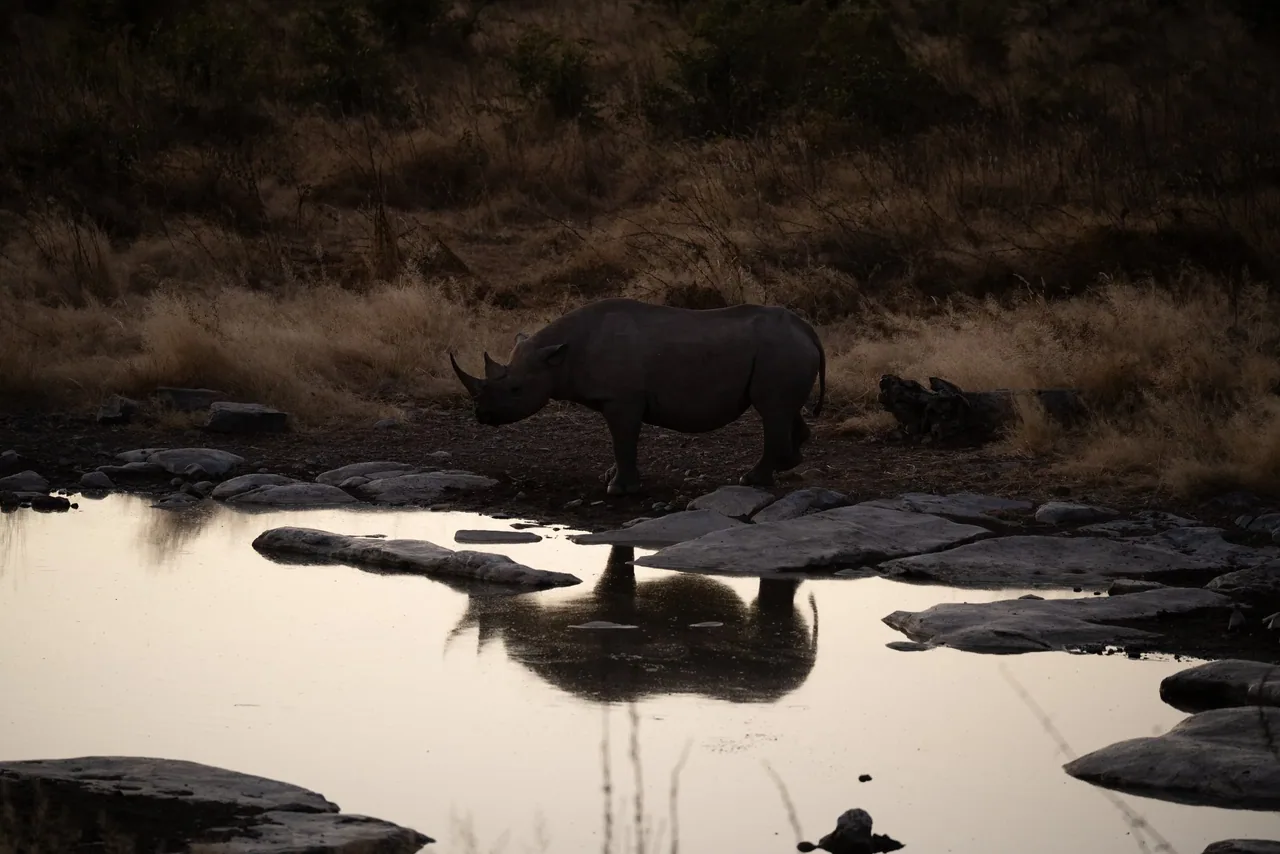
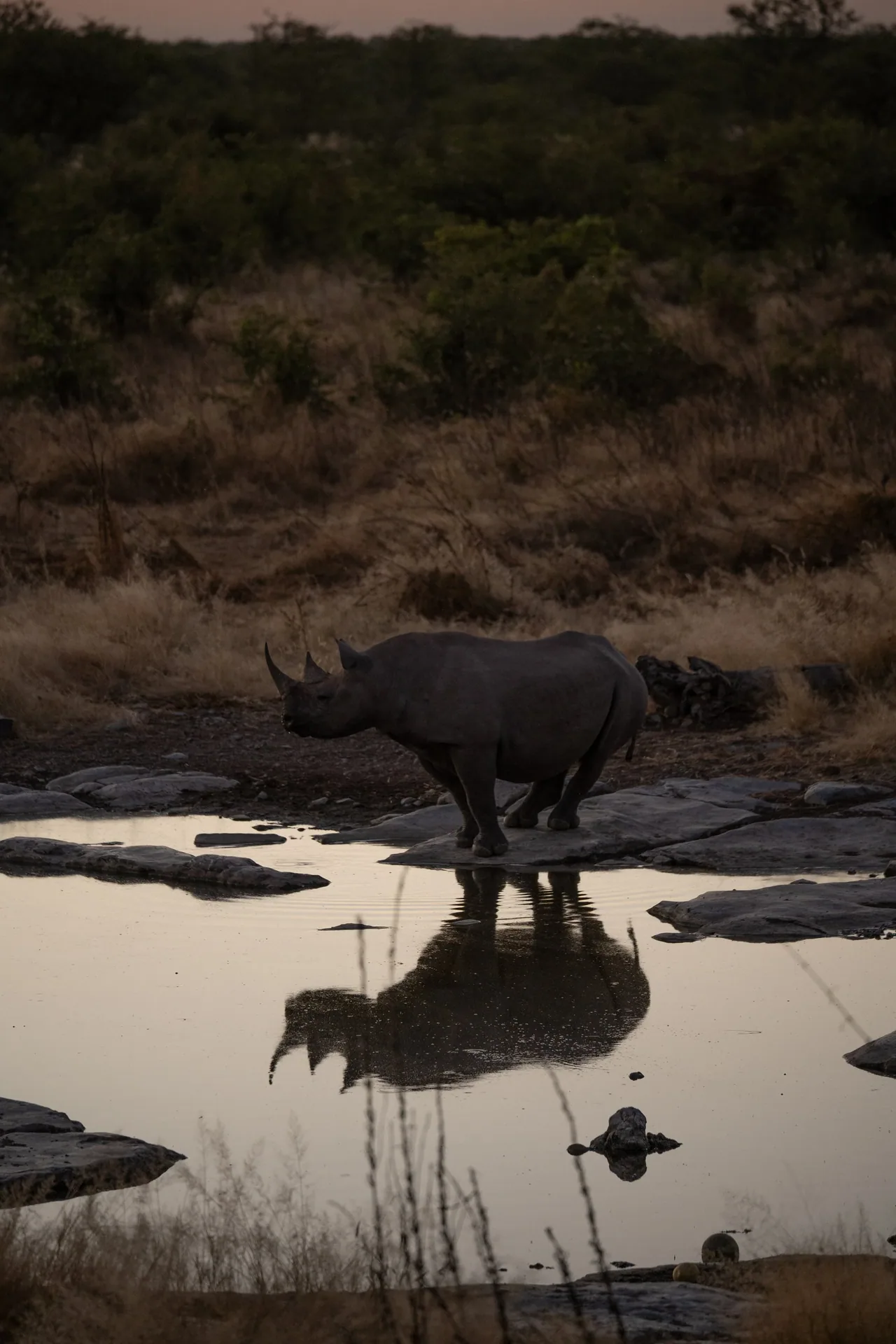
We stay anyway. After about twenty minutes, people suddenly turn their heads in one direction. Through the bushes, another rhino walks toward the waterhole. This time we’re just in time. He approaches the water, looks in our direction as if he can sense us, and then starts to drink in the orange glow of the sunset. It’s another magical moment.
We go back, finish dinner, and then another message comes in: “Three rhinos now, and the hyena is back!” So once again we abandon everything and run to the hide with full stomachs.
We get to see three rhinos at once: one is standing in the middle of the water, bathing; another is drinking on one side; the third is trying to get into the water but is being blocked by the first. Hyenas are circling around, trying to sneak in and drink between them.
It’s an incredible wildlife show. We go to bed absolutely full of impressions.
Day 11
We leave Etosha and head toward Waterberg Plateau National Park.
On the way we stop at the Hoba meteorite, the largest known meteorite on Earth.
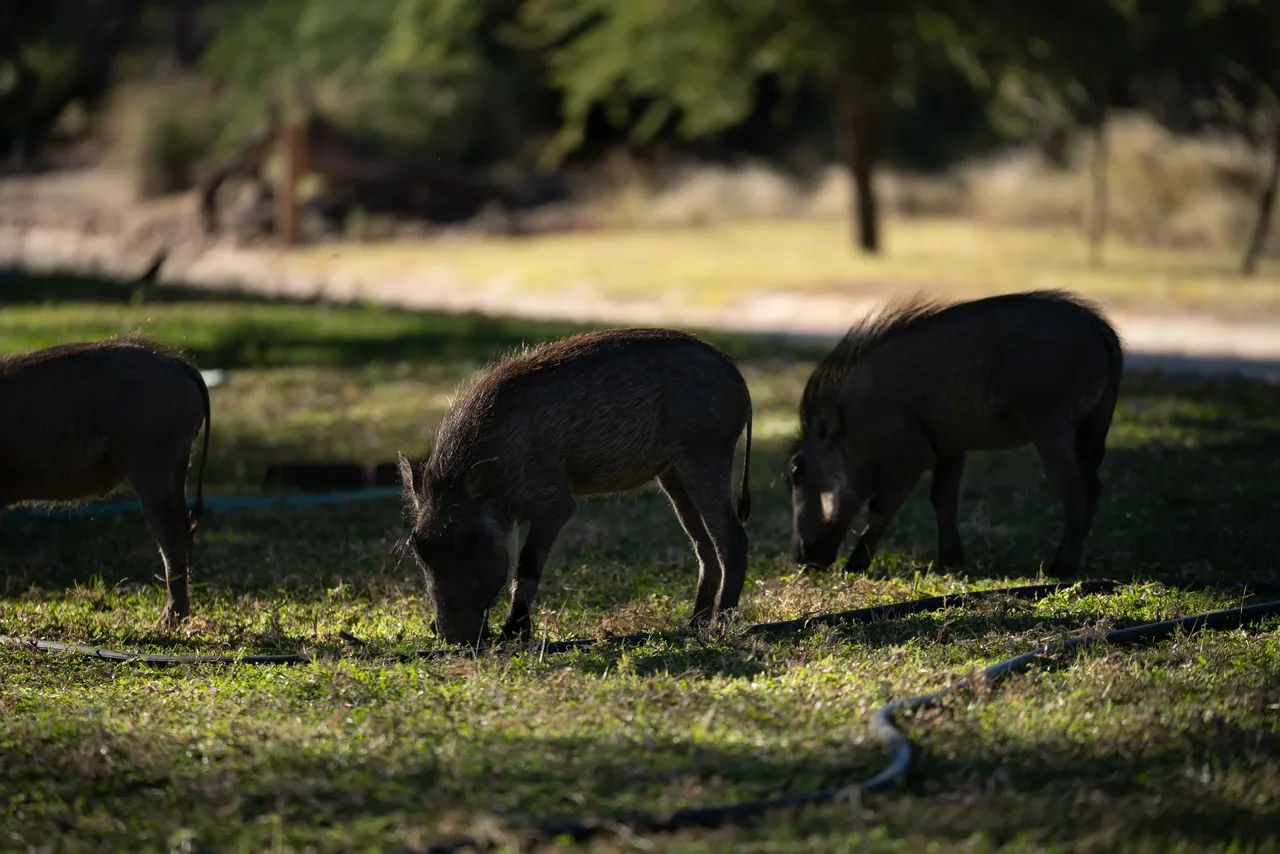
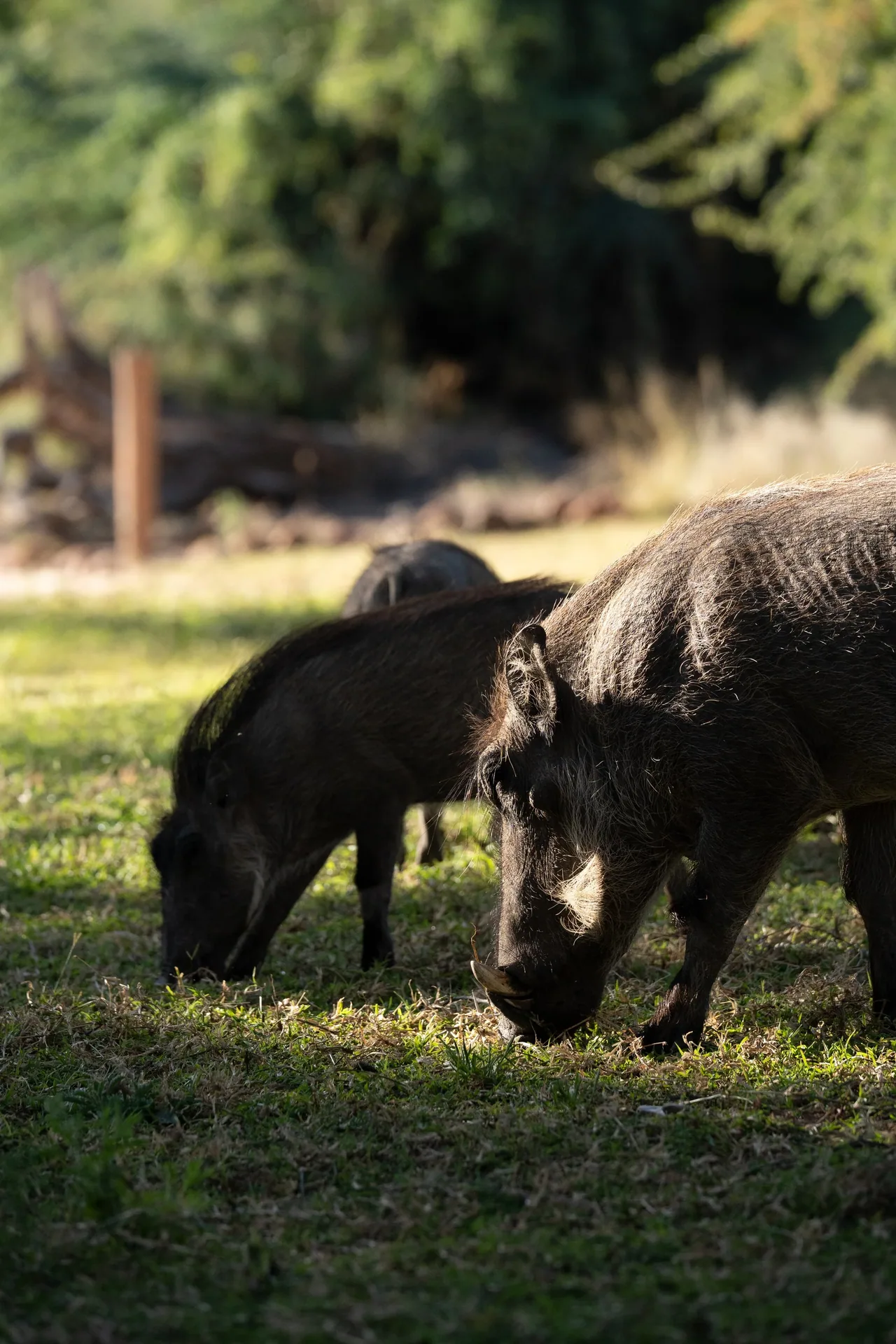
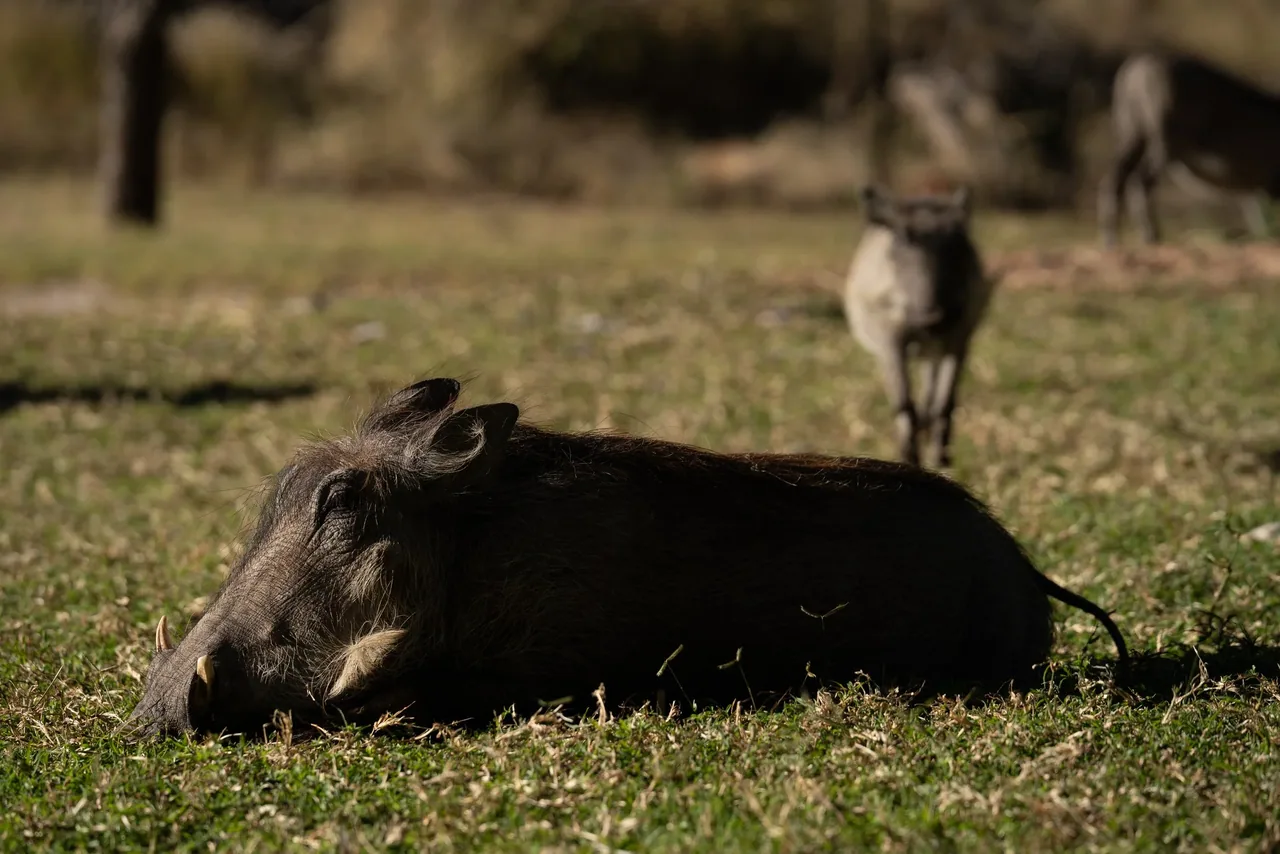
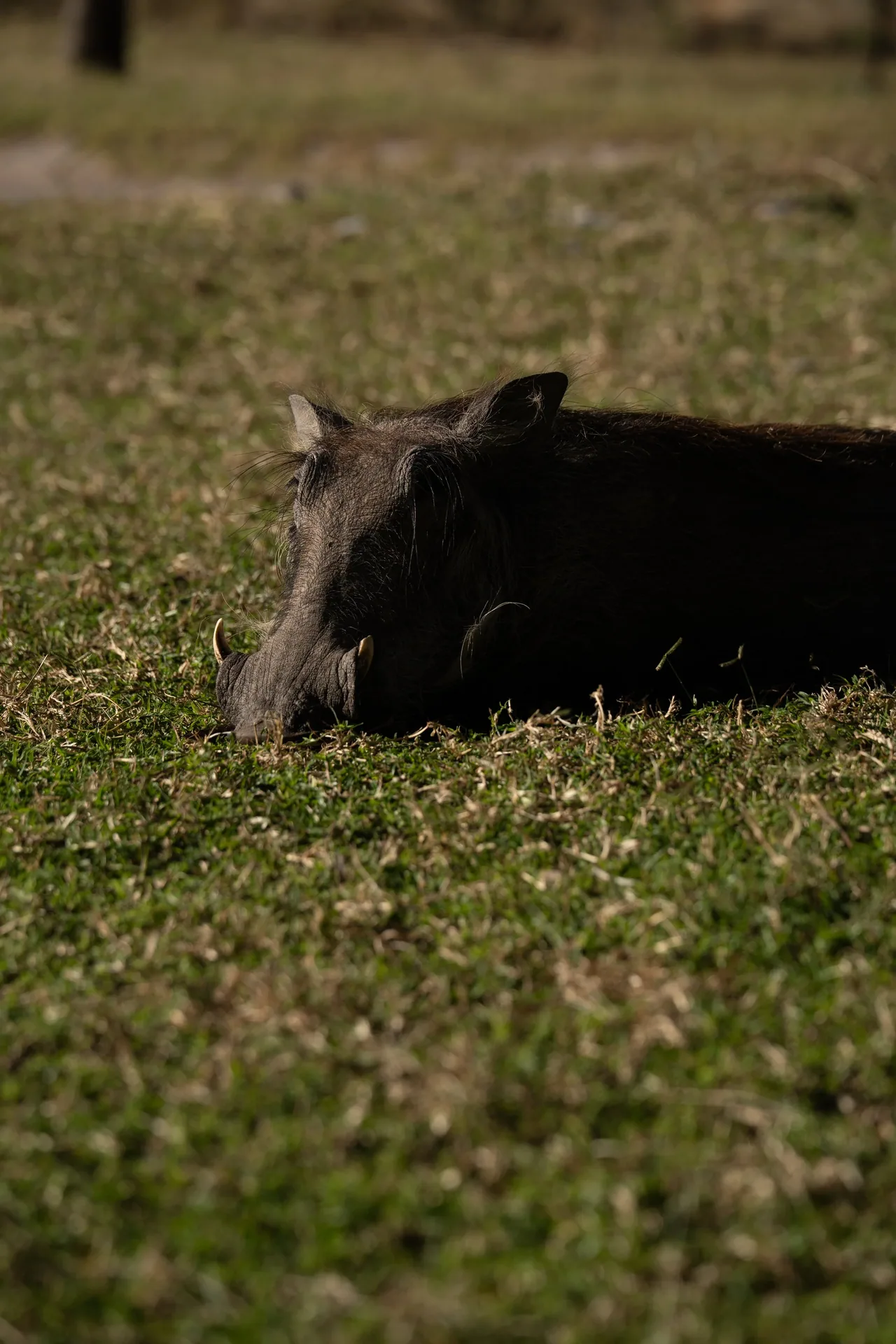
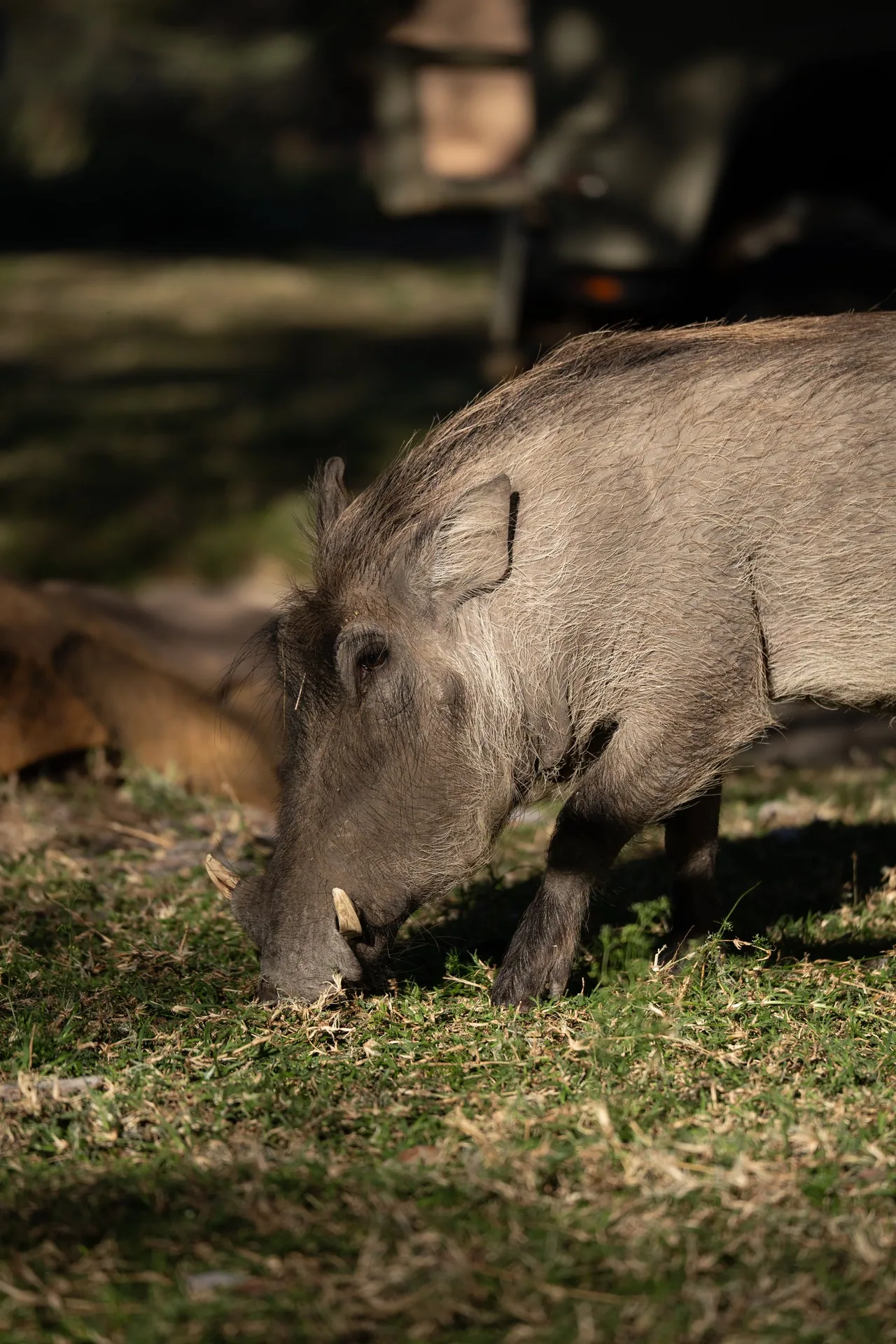
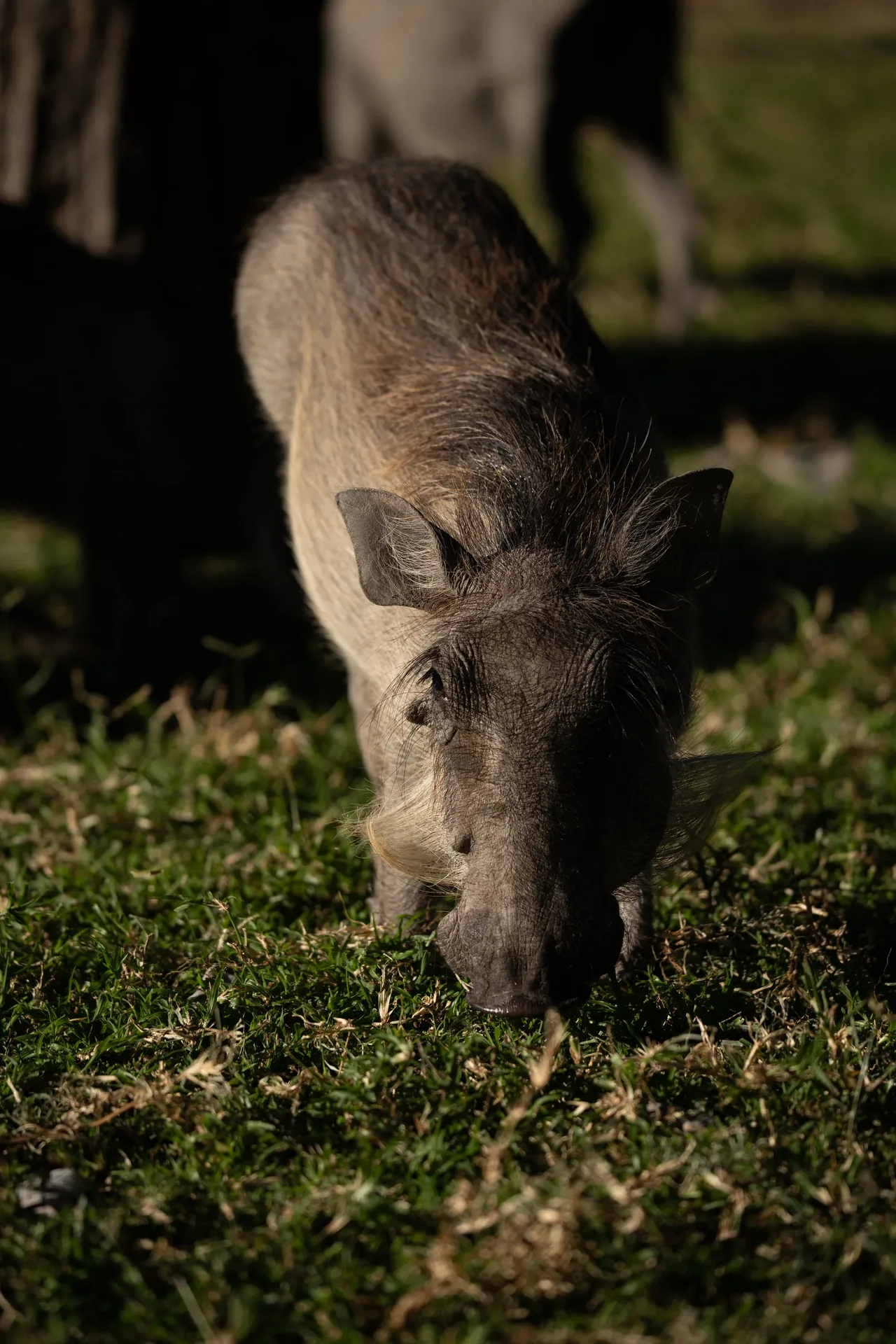
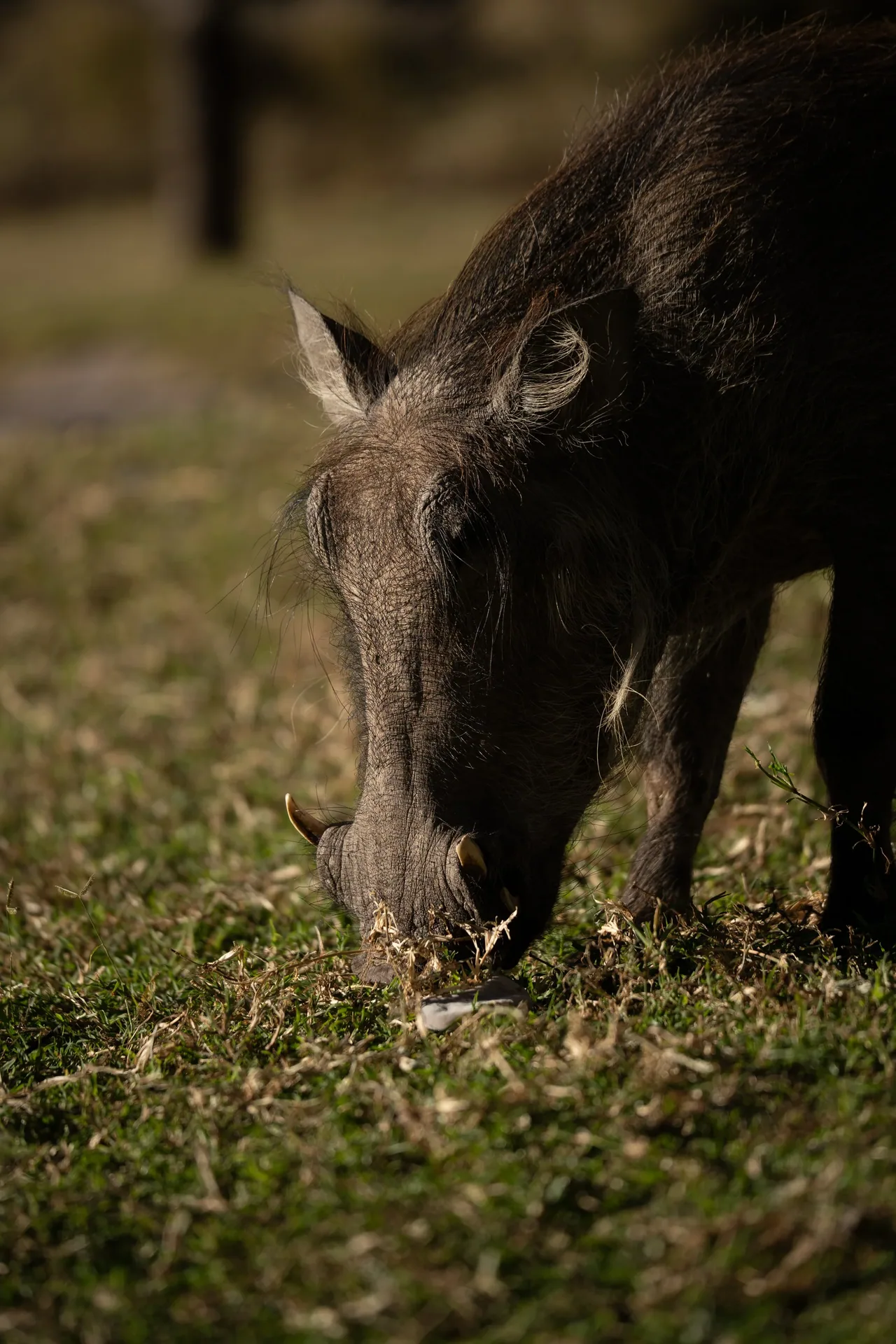
When we arrive at the campsite in Waterberg, we are greeted by Pumbaa — or rather, several warthogs grazing right in front of the reception. A little farther away, among the bushes, we see a group of baboons.
We spend the evening with a relaxed dinner and a bit of quiet time after the intense days in Etosha.
Day 12
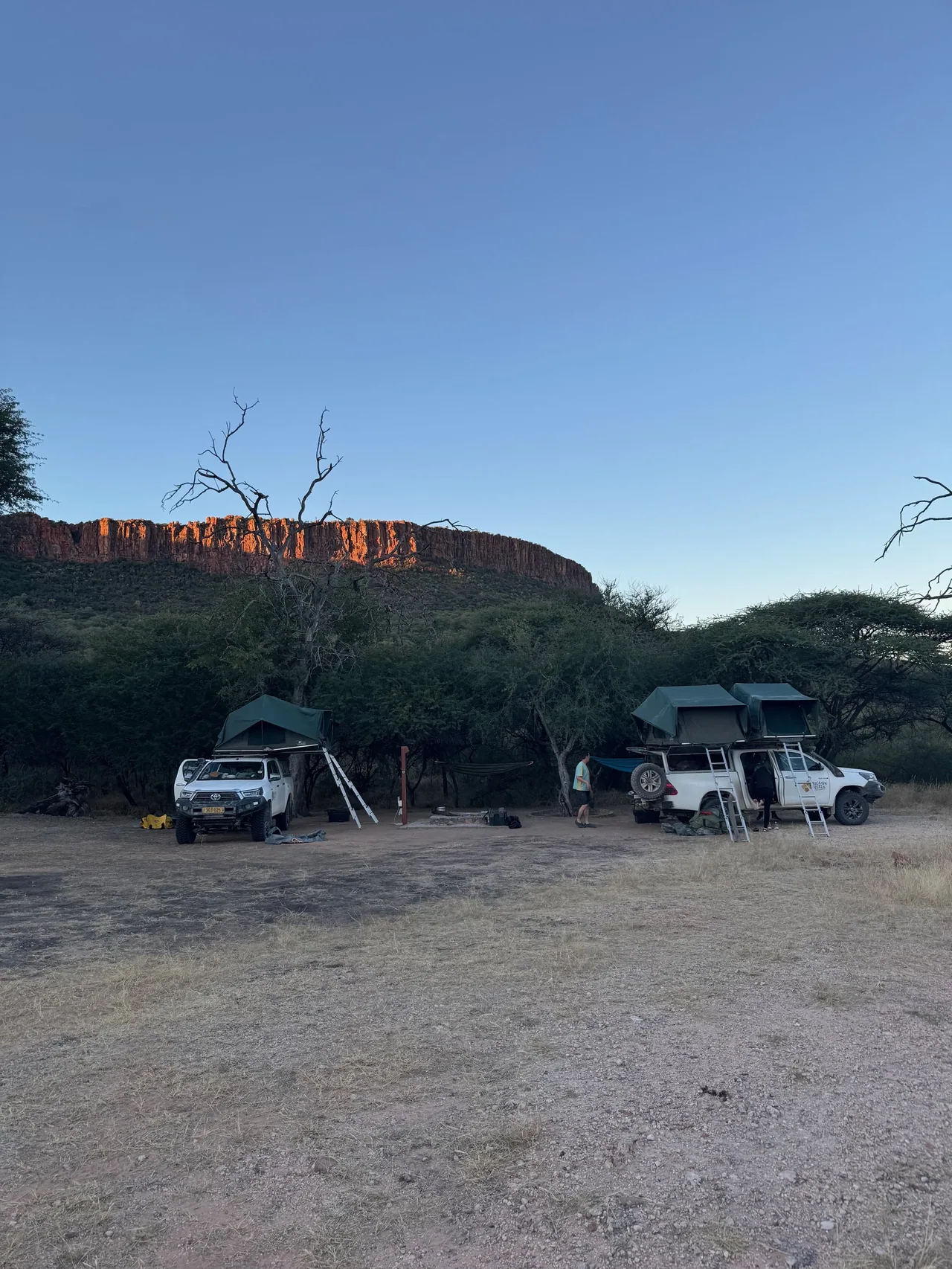
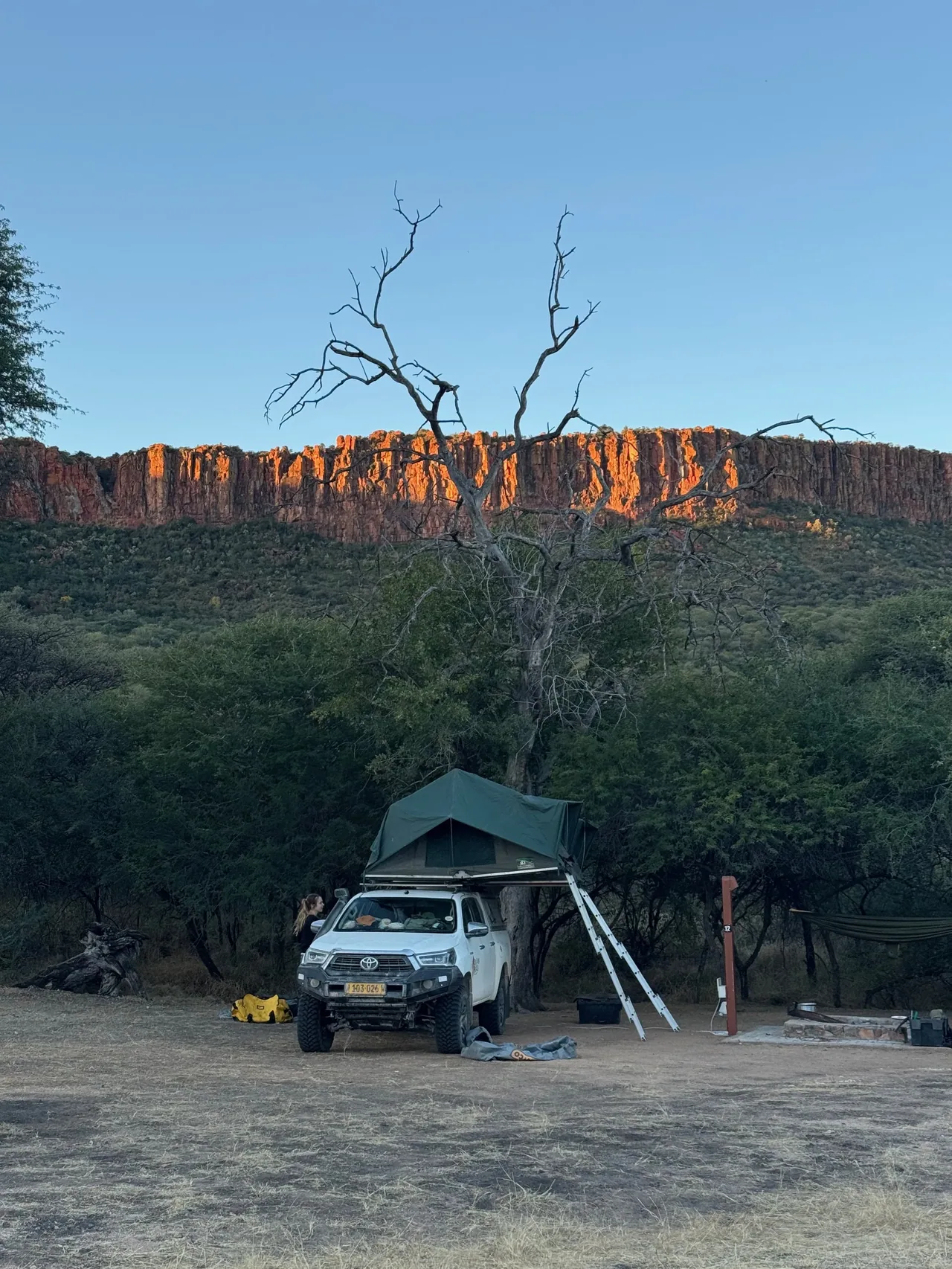
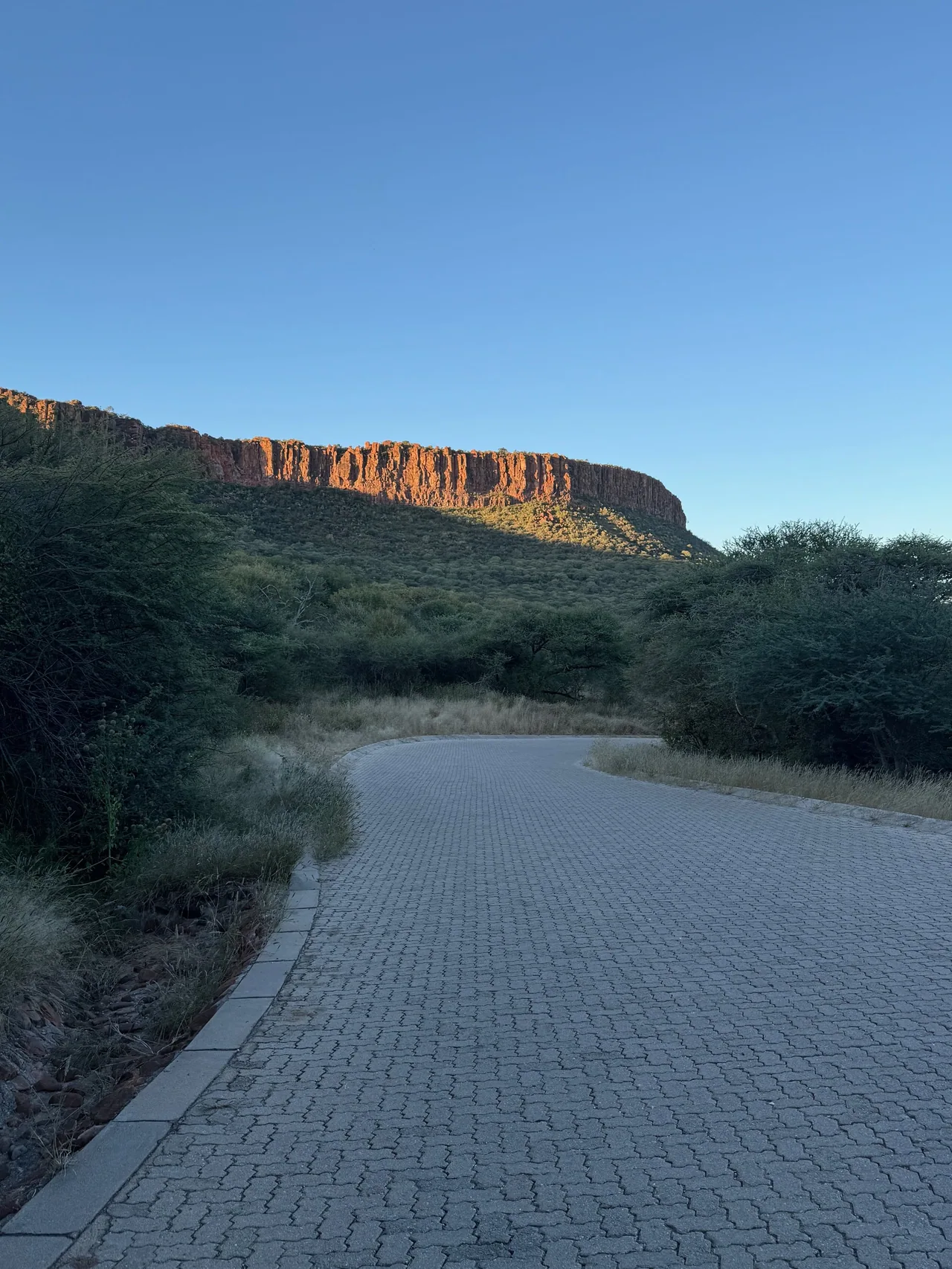
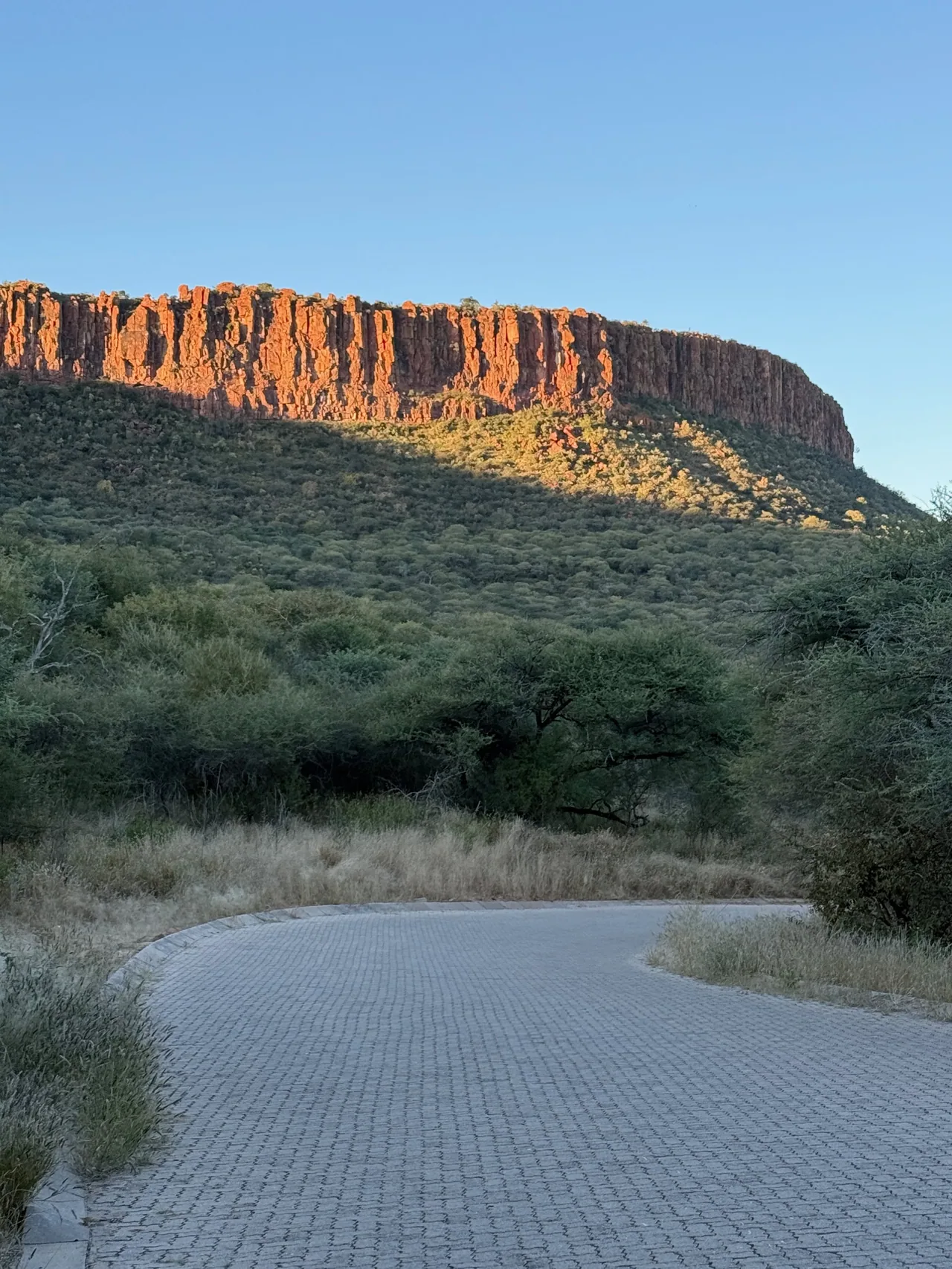
Early in the morning, before sunrise, we set off on a safari up onto the Waterberg — literally “Water Mountain.” It’s a rocky plateau draped in dense greenery, a place that traps moisture and shelters a surprising amount of wildlife.
We sit on the open backs of the vehicles, wrapped in blankets, hoping the sunrise will warm us soon. The air is just above freezing, but the wind from the drive cuts through everything, making it feel like ten degrees below zero.
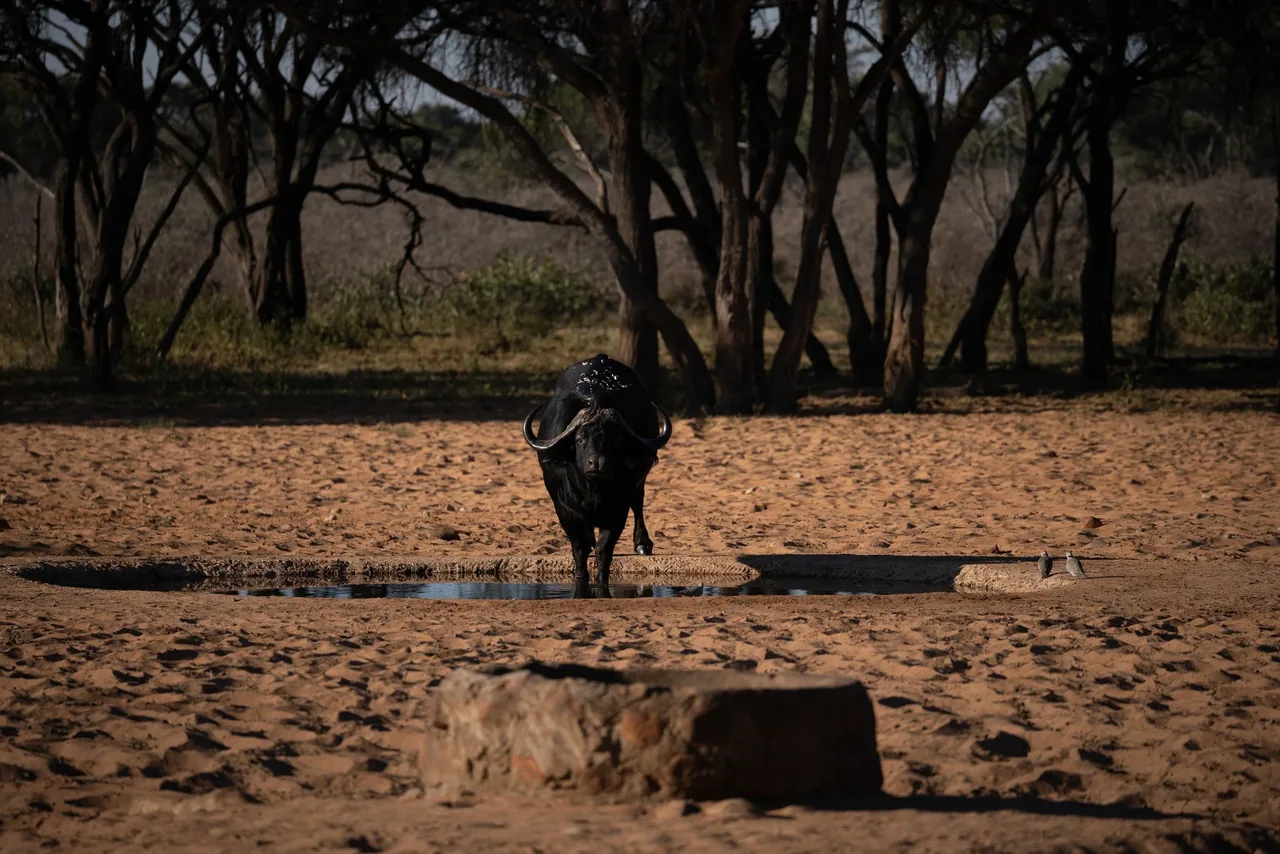
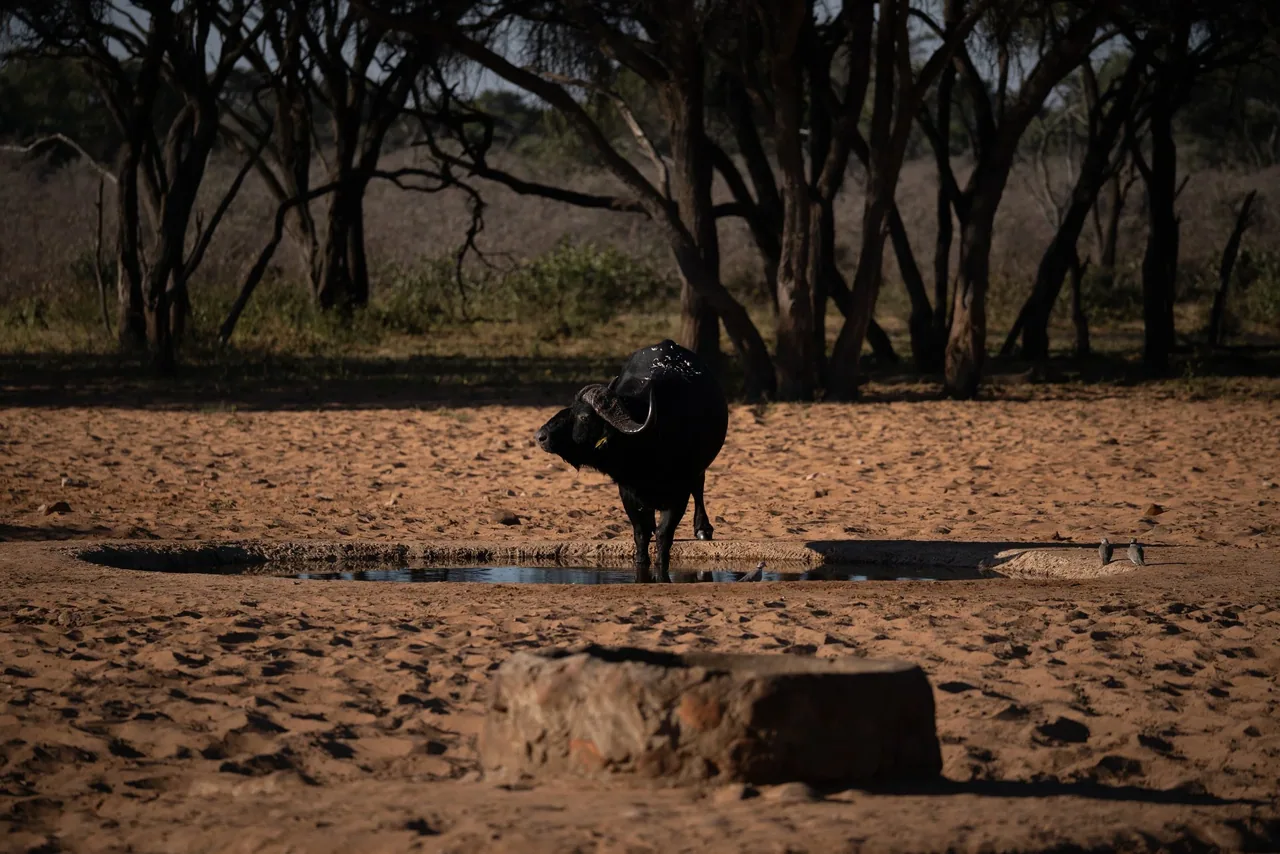
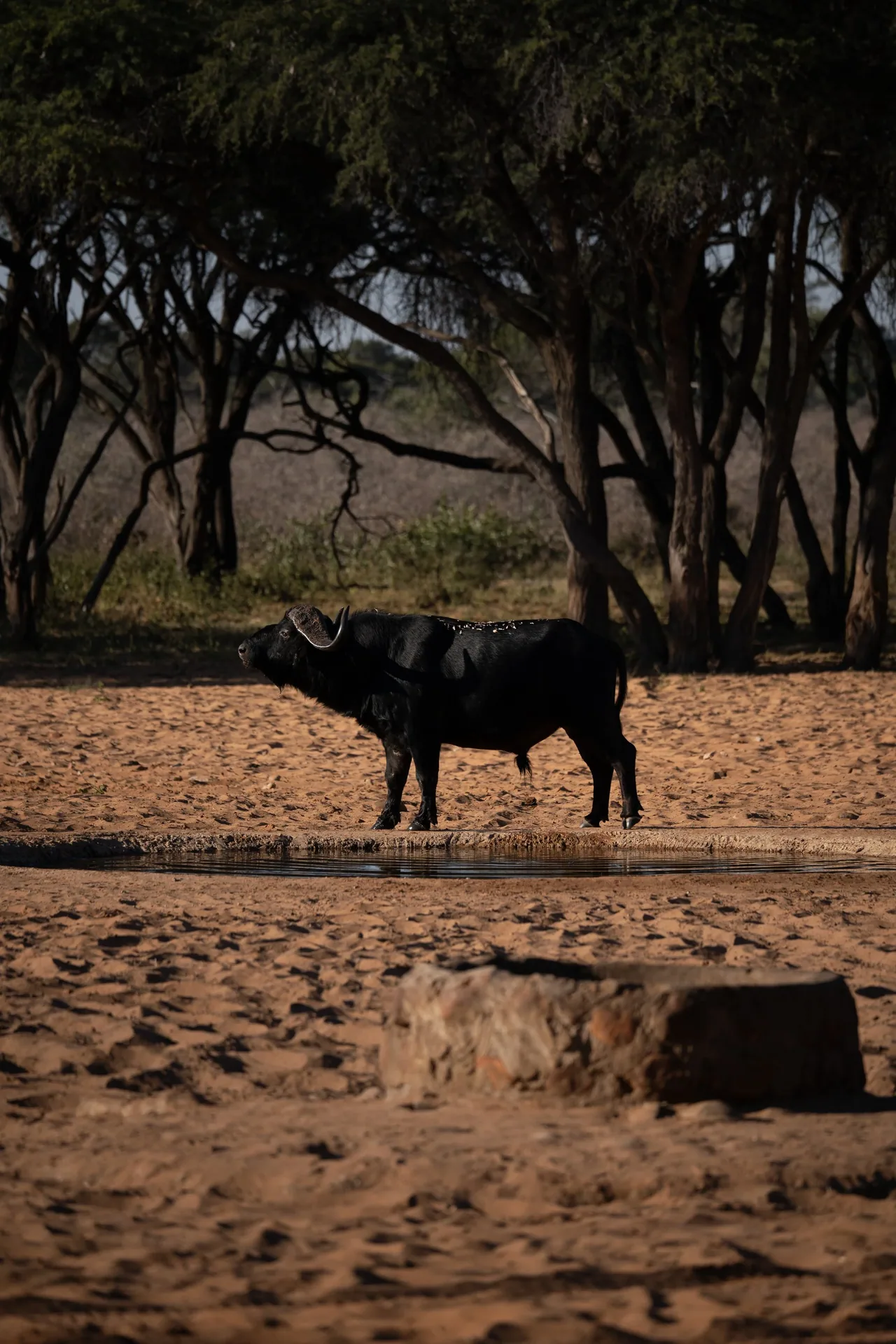
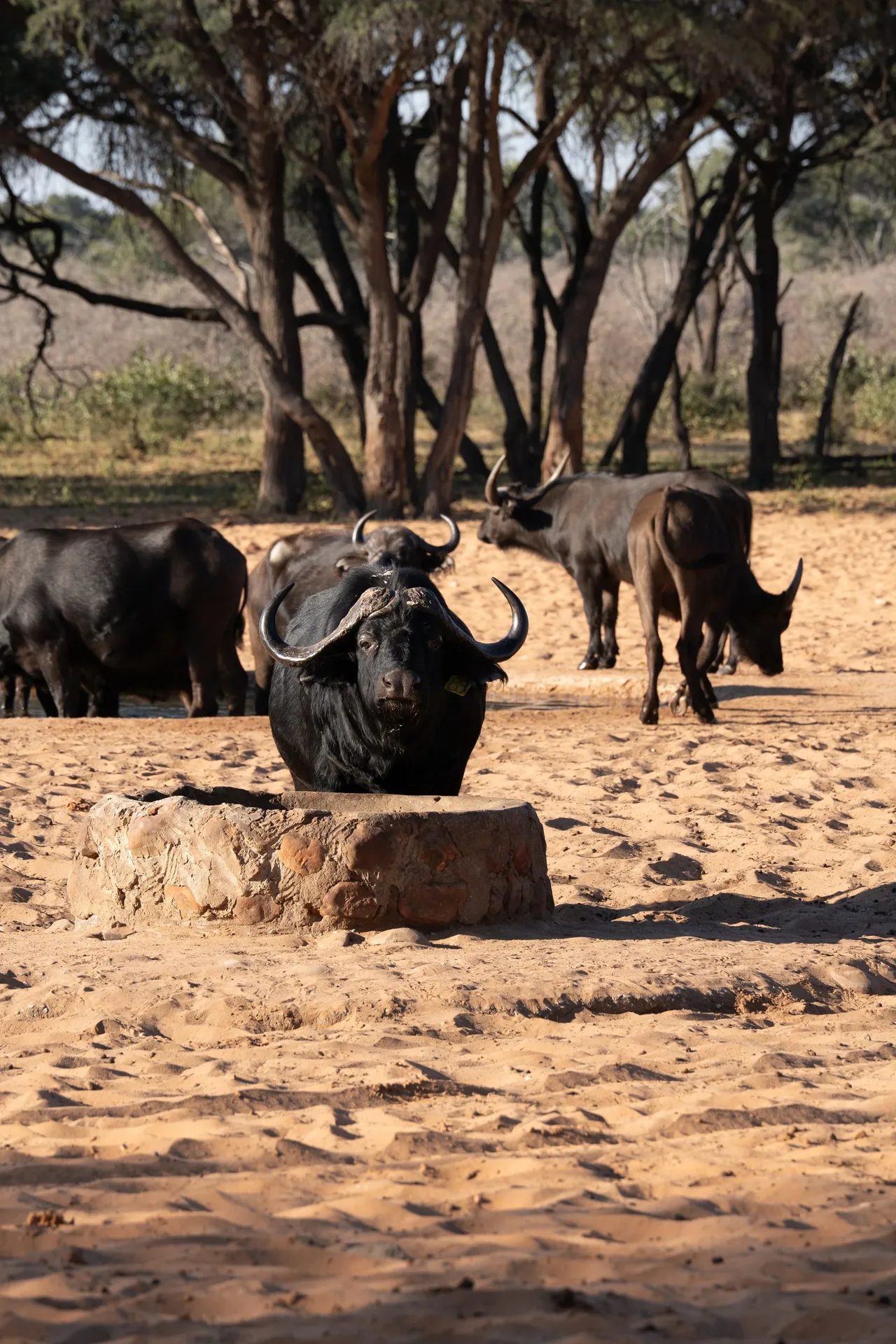
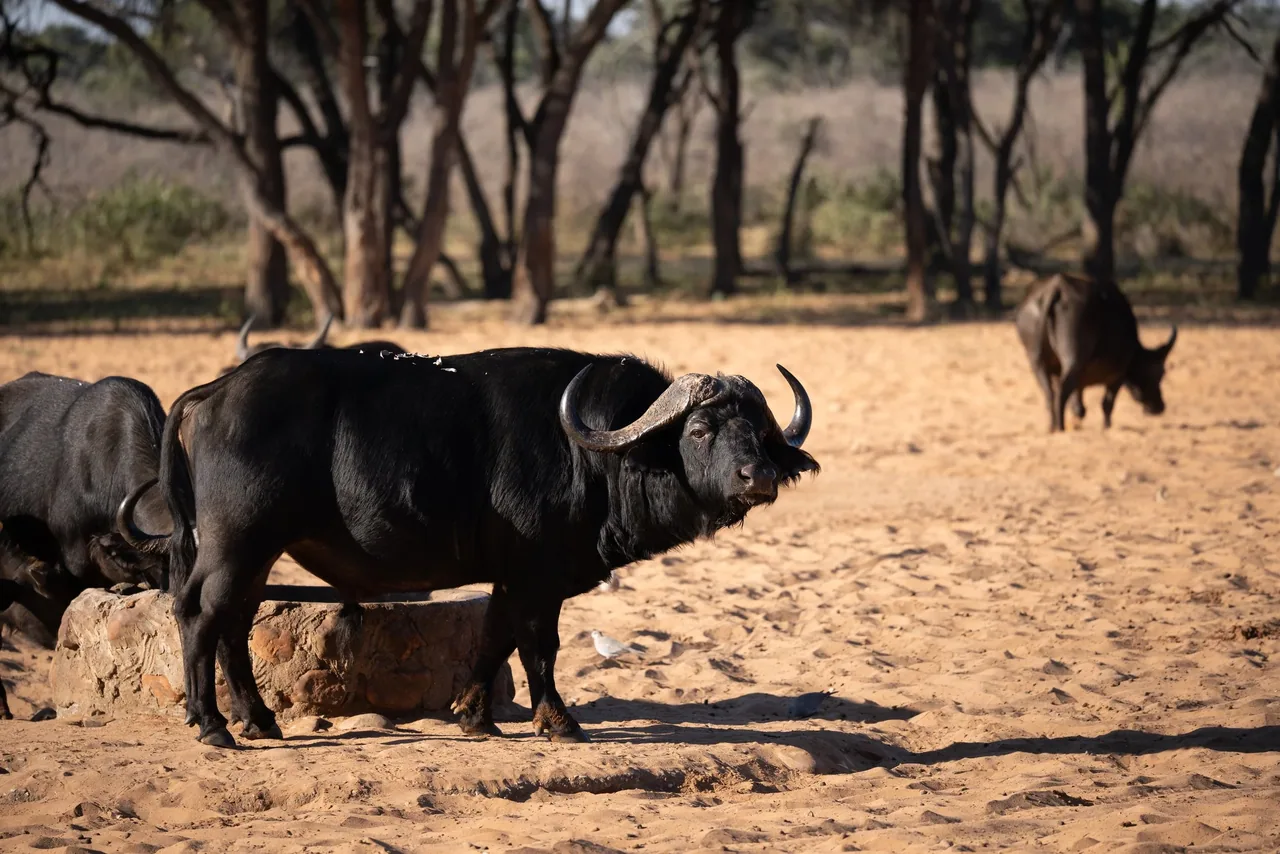
At the first viewpoint there’s no sign of animals, only a few birds flitting between the trees. We continue to a second hide, where we finally stop, settle into a quiet bush breakfast, and take in the landscape. After a while, African buffalo begin to appear — first one large bull, then the rest of the herd pushing through the brush. We sit there in silence, watching, taking photos, and soaking in the calm of the moment.
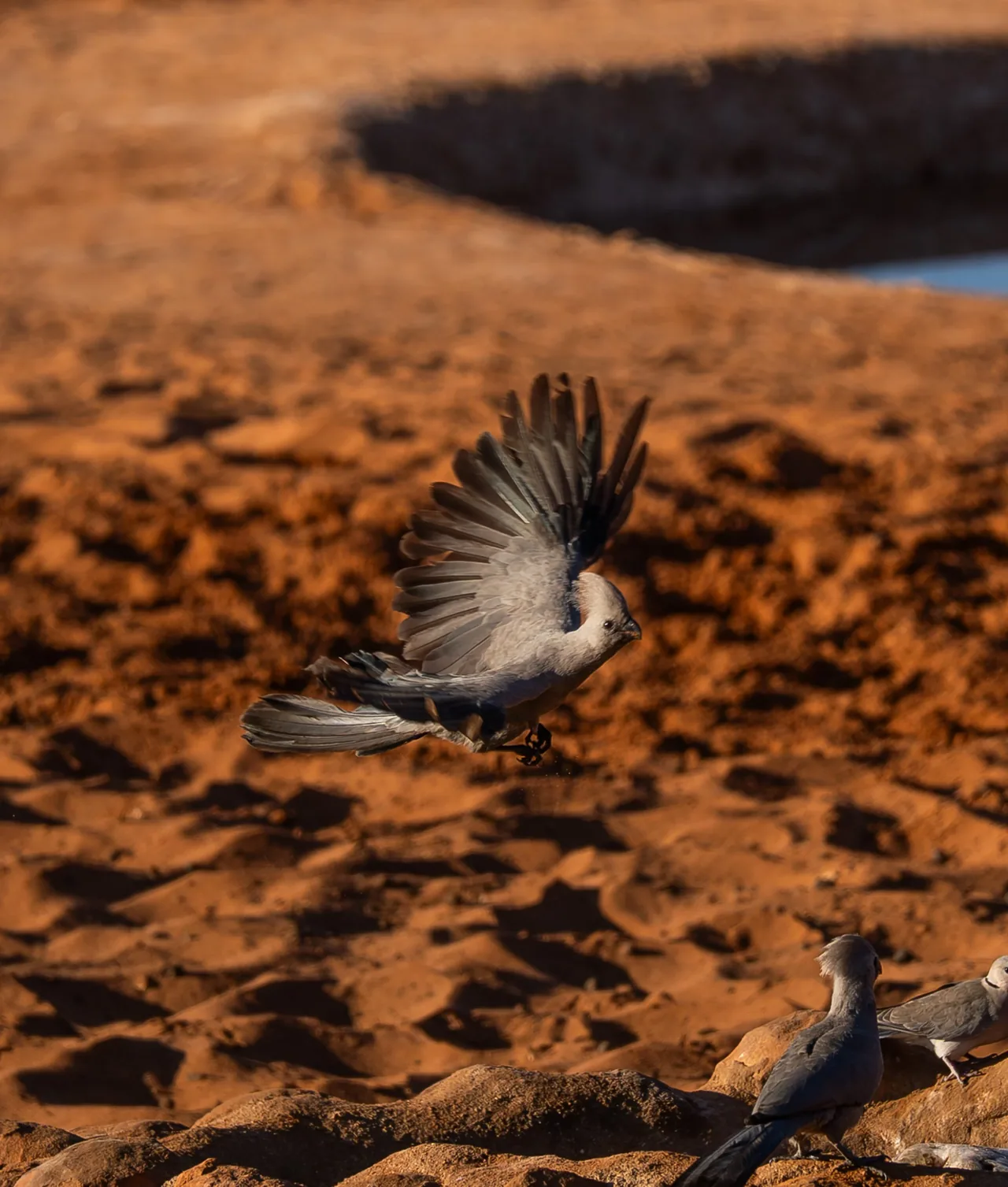
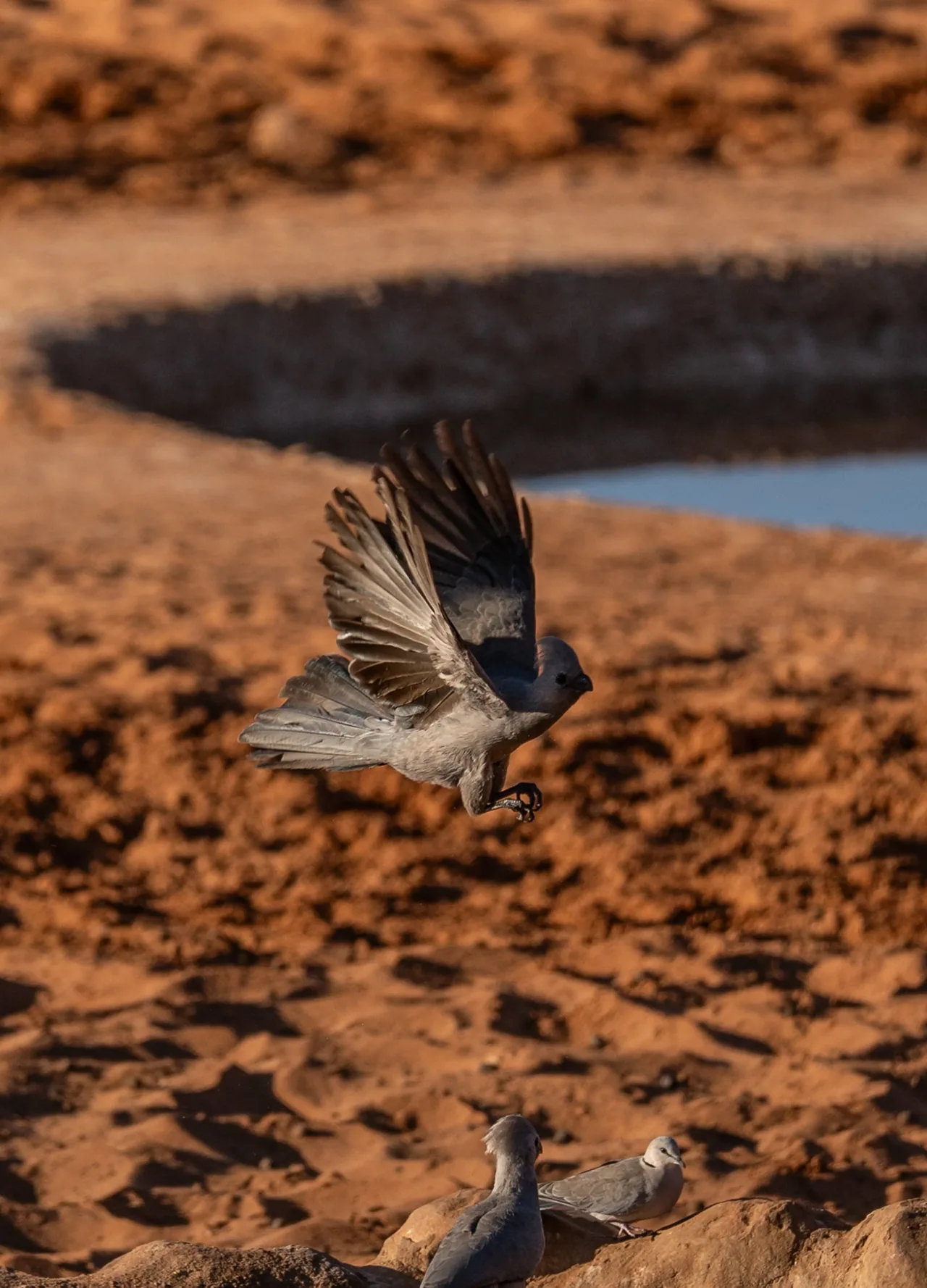
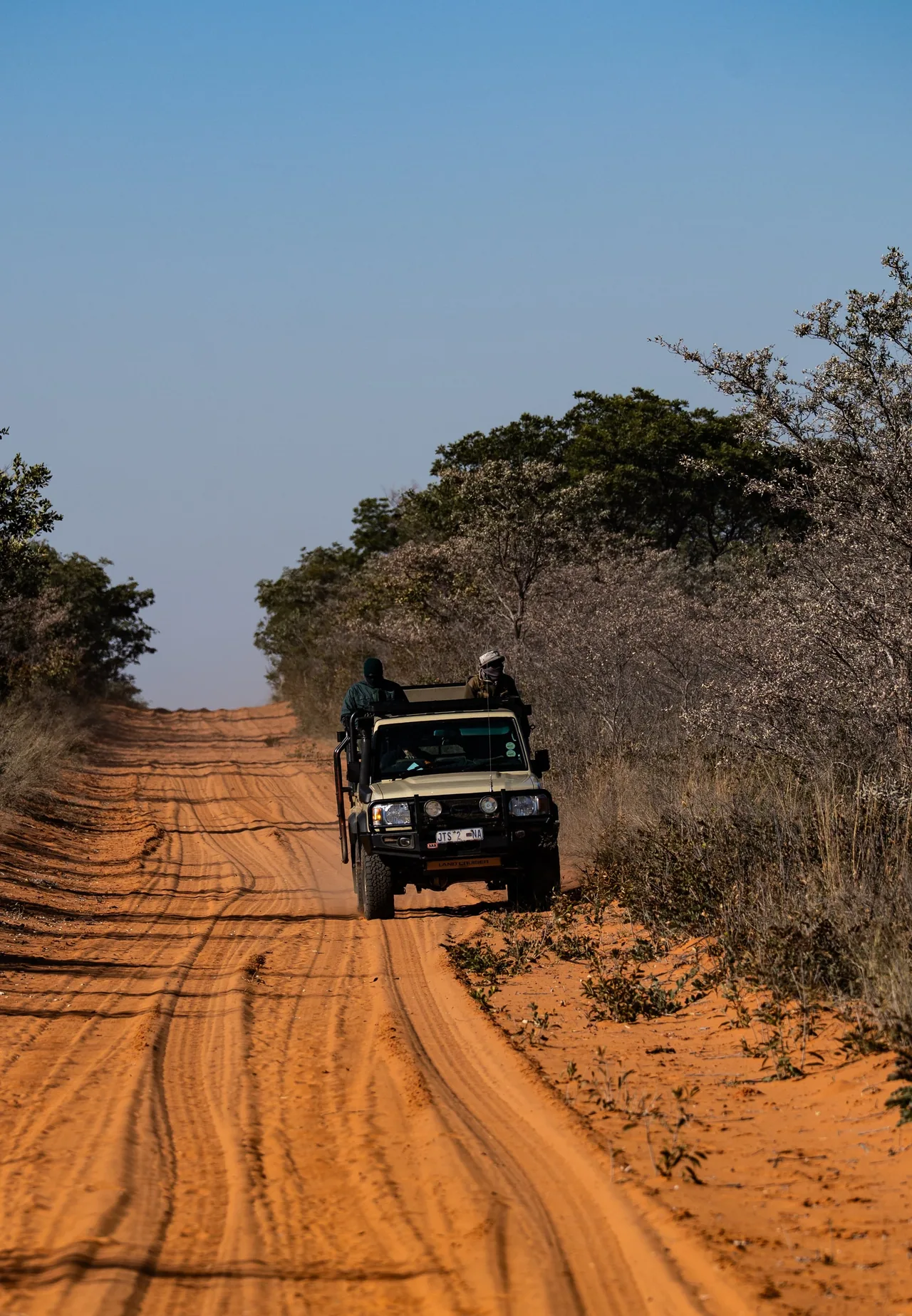
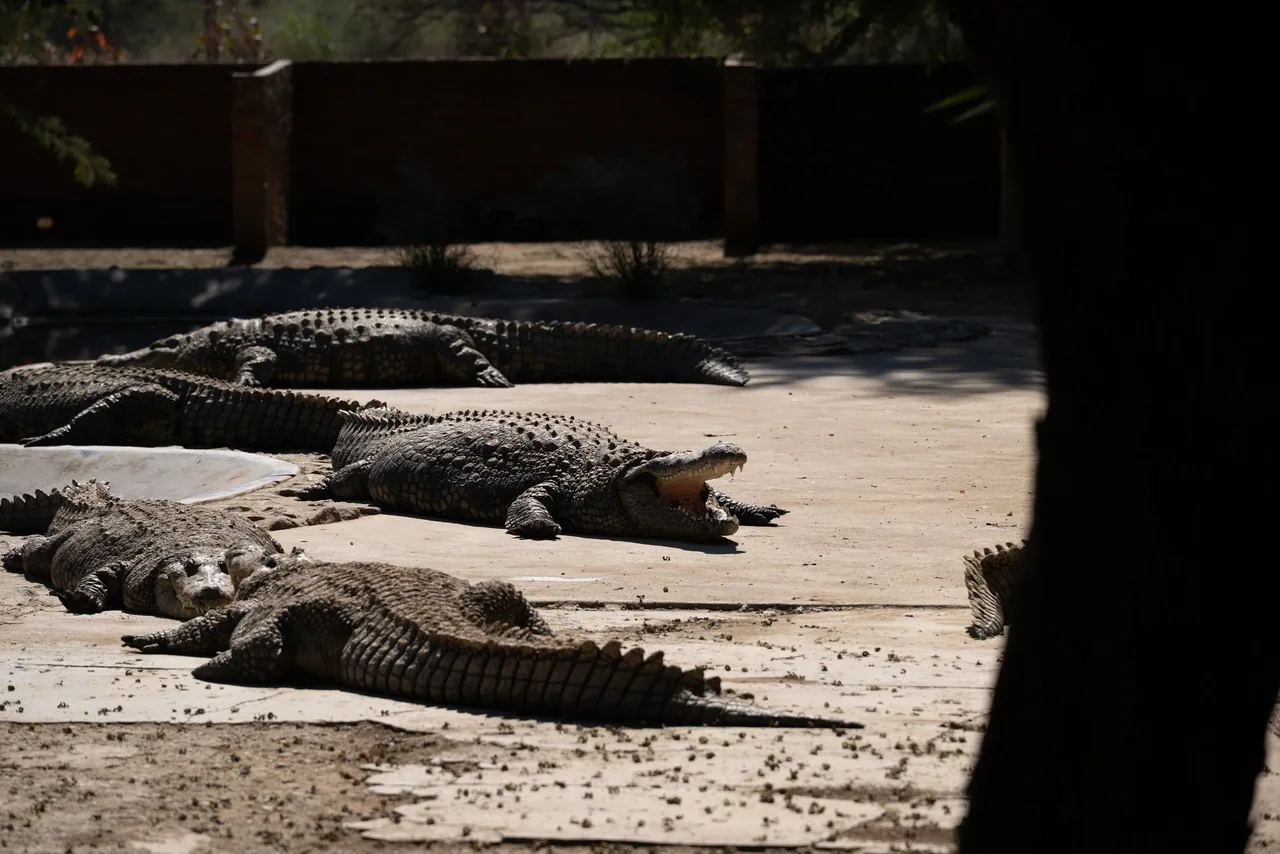
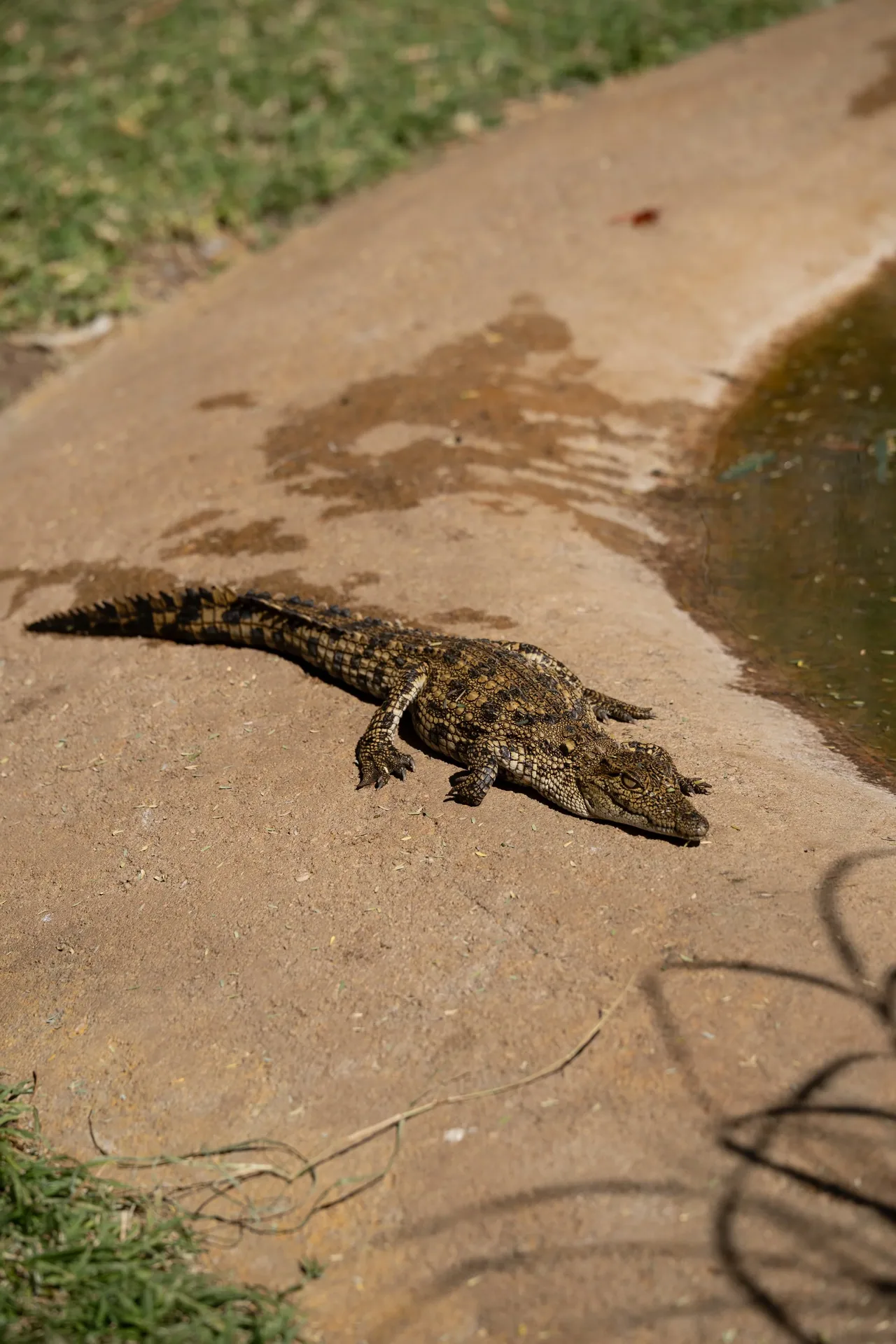
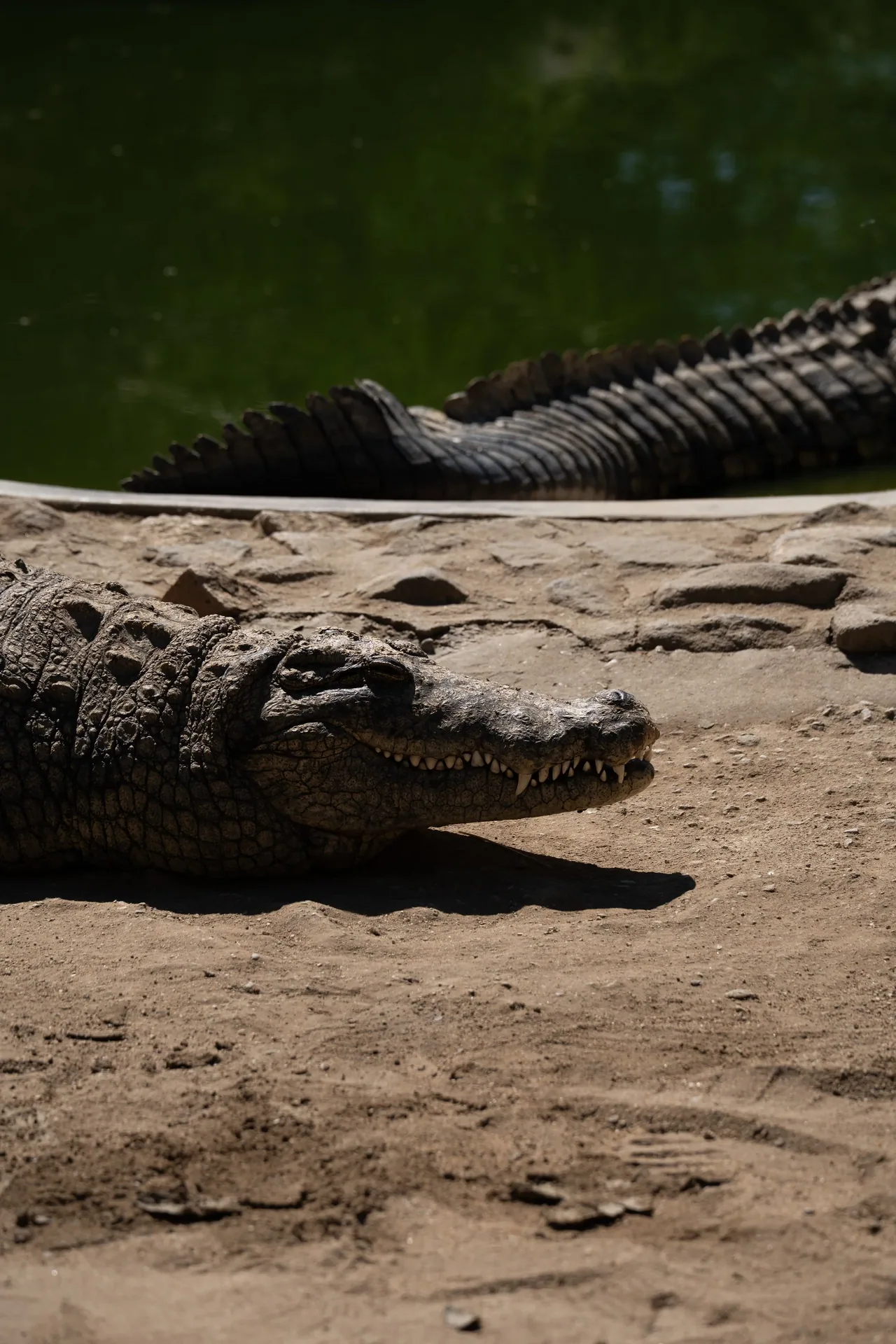
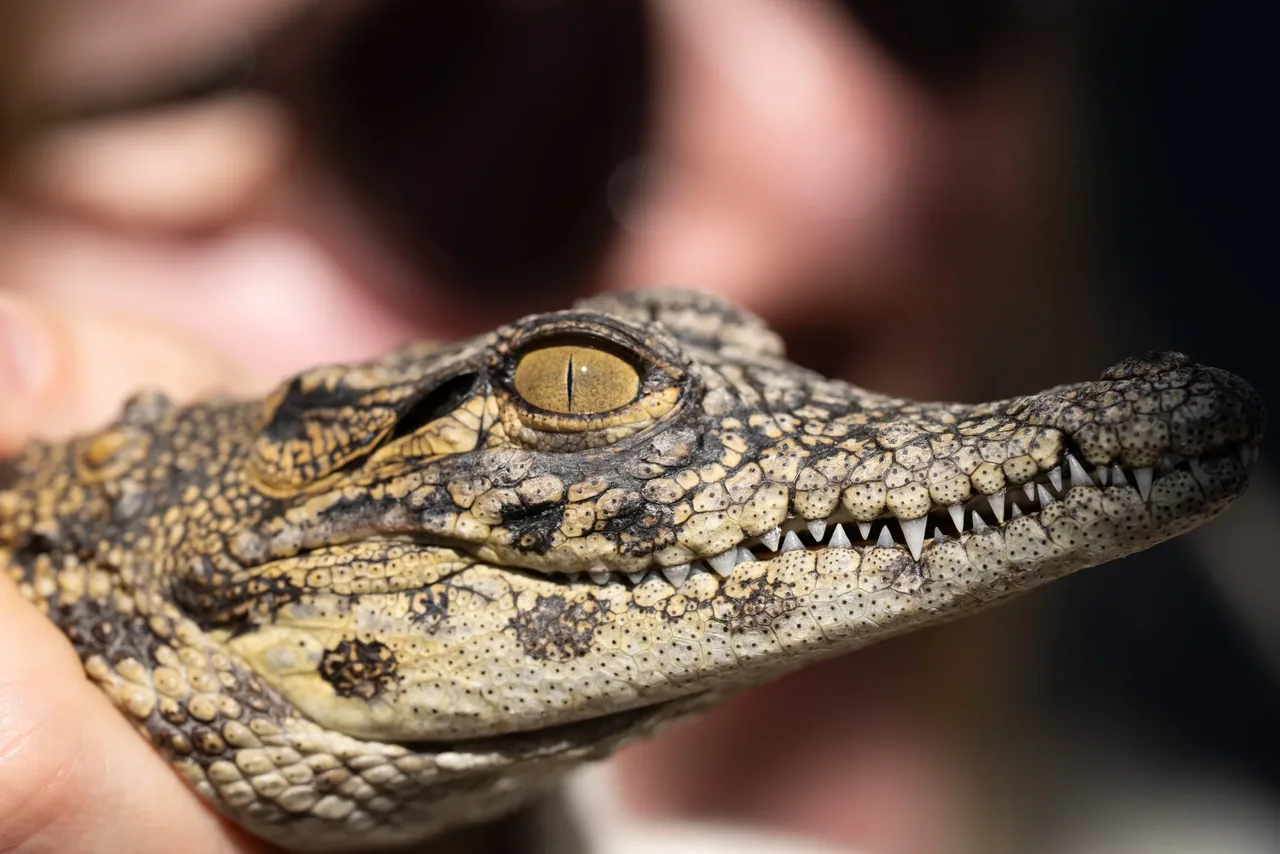
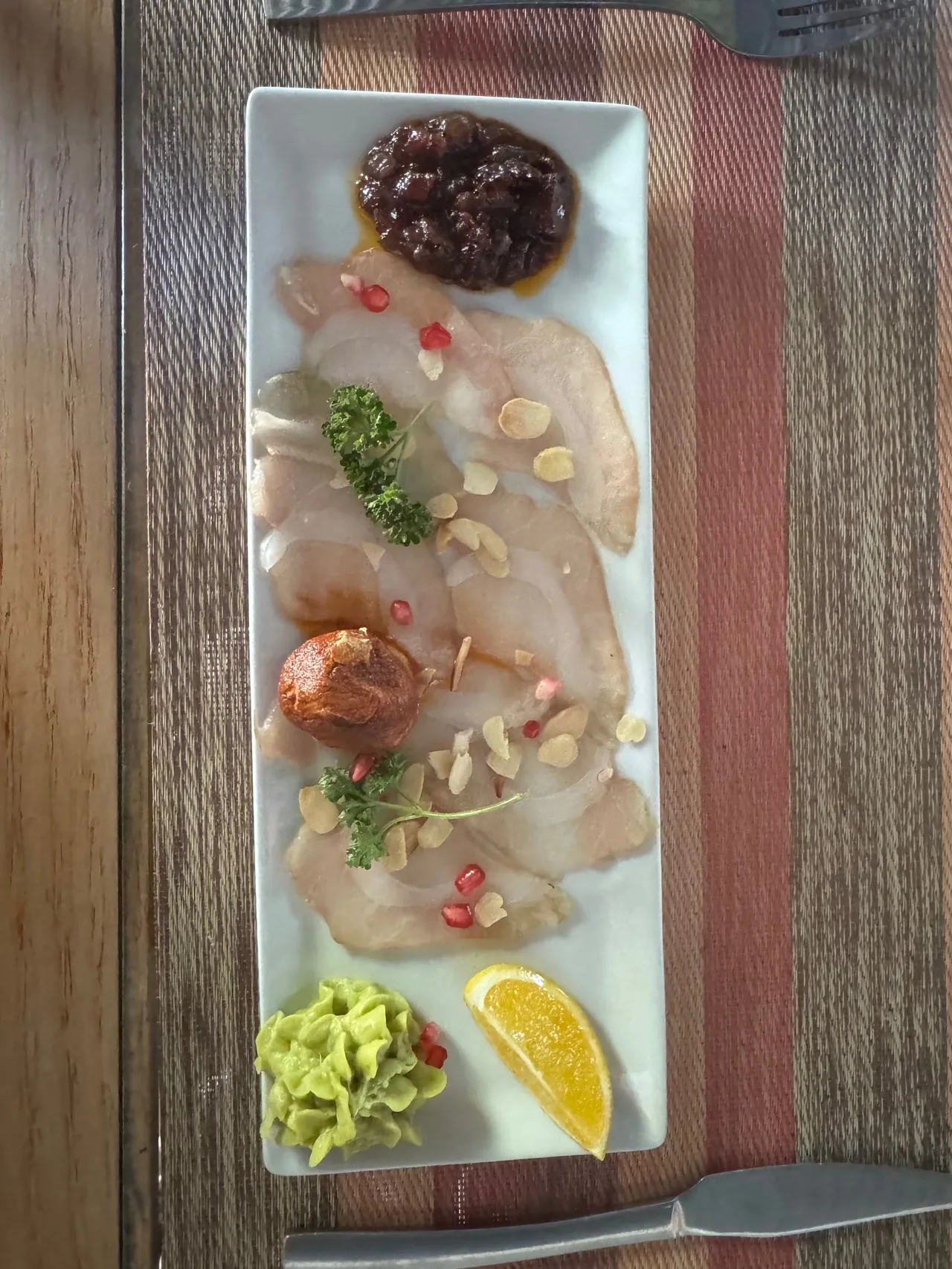
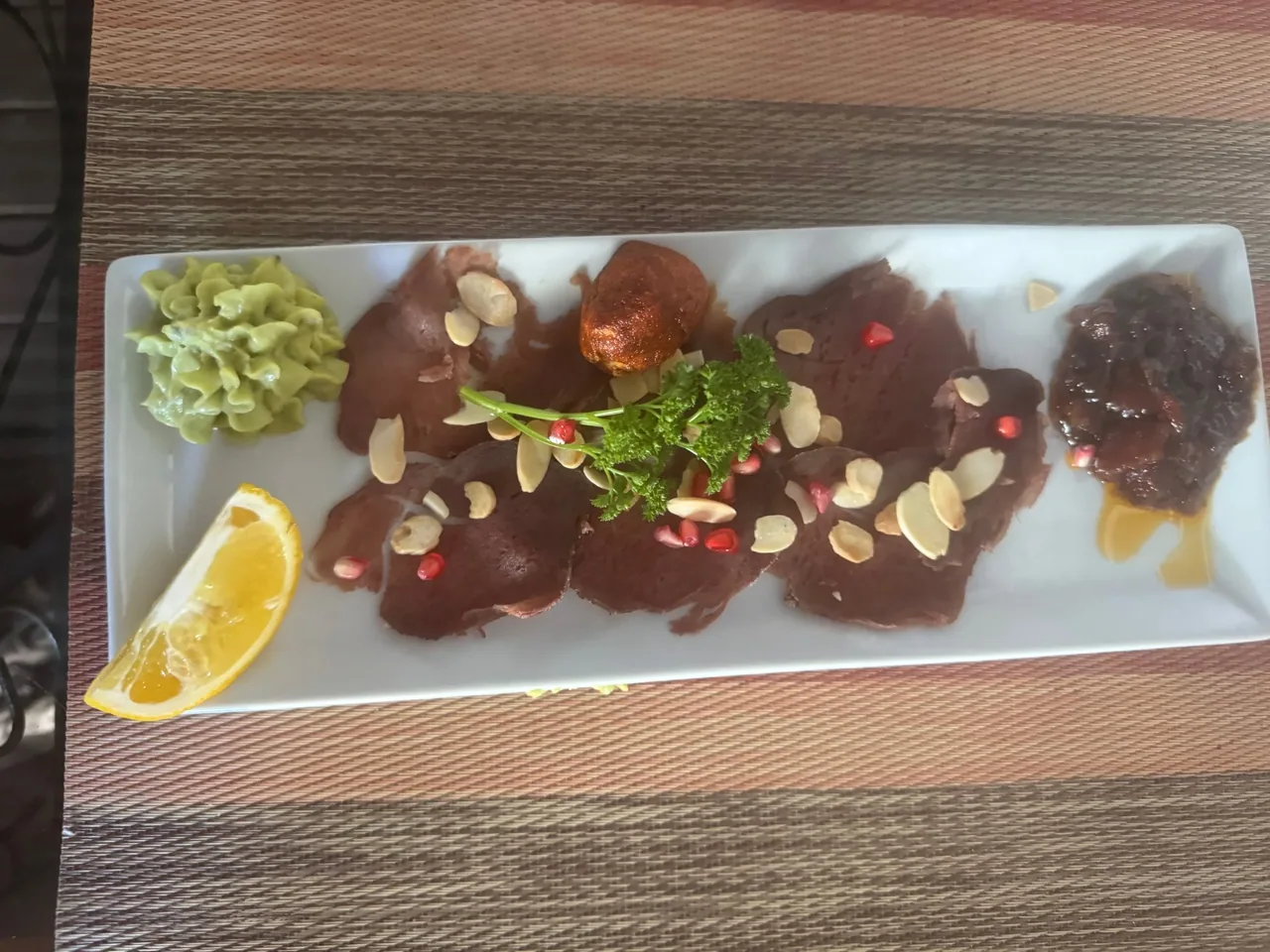
After some time we head back to the campsite, make another round of breakfast, pack up our tents, and start the drive back to Windhoek. On the way we stop at a crocodile farm, where we get a look at how the animals are raised, even have the chance to touch them, take photos with them… and then taste them, served as ham or steak.
Once in Windhoek, we check into Chameleon Backpackers & Guesthouse and spend the rest of the day wandering the city and picking up the last of our souvenirs.
Day 13
Our last day in Namibia. We return the cars, say goodbye to this incredible country and head to the airport.
Final Thoughts
I wrote this blog a few months after returning from Namibia, and as I think back on everything we saw, experienced, and went through, a part of me just wants to start planning another trip to Africa. I always thought I wasn’t the “Africa type,” that I was more drawn to mountain regions. But Namibia captivated me — and surprised me — in ways I never expected.